
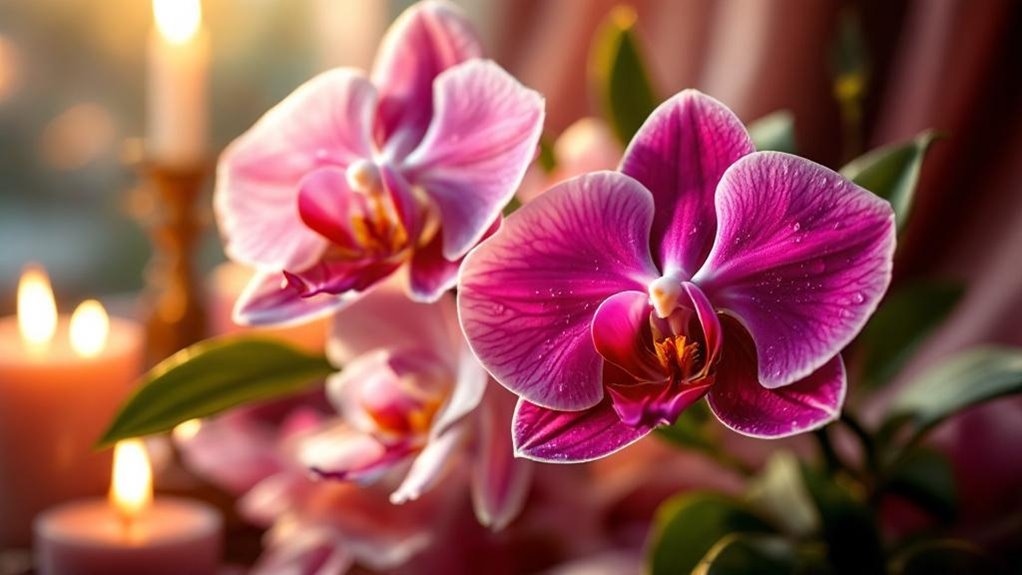
Yes, orchids are excellent Valentine’s Day flowers, especially phalaenopsis, because you’re giving a living plant rather than a cut bouquet; blooms can hold for up to three months, rebloom within six to nine months, and convey cultivated affection without the stagnant brevity of roses. You can choose pink, white, or purple tones to fit the relationship, and with bright indirect light and modest weekly watering, the gift remains observational, durable, and quietly meaningful; the practical distinctions become clearer just ahead.
- Key Takeaways
- Are Orchids Good Valentine’s Day Flowers?
- Why Do Orchids Last Longer Than Roses?
- How Long Do Orchid Blooms Last?
- Why Do Orchids Make a Meaningful Gift?
- Who Should You Give Orchids To?
- Which Orchid Type Is Best for Valentine’s Day?
- Which Orchid Colors Say “I Love You”?
- Are Valentine’s Day Orchids Easy to Care For?
- How Do You Care for a Valentine’s Day Orchid?
- When Do Orchids Bloom Again?
- How Do You Choose a Healthy Orchid?
- When Are Orchids Better Than Roses?
- Where Can You Buy Valentine’s Day Orchids?
- Frequently Asked Questions
- Conclusion
Key Takeaways
- Orchids are excellent Valentine’s Day flowers because phalaenopsis blooms can last up to three months, far longer than cut roses.
- As living potted plants, orchids keep growing after gifting and can rebloom in about six to nine months with proper care.
- Orchids symbolize lasting love, refined devotion, and enduring affection, making them especially meaningful for Valentine’s Day.
- Color options personalize the message: pink for romance, white for sincerity, purple for admiration, and yellow for warm newer relationships.
- Phalaenopsis orchids are low-maintenance gifts, needing bright indirect light, good drainage, and roughly weekly watering.
Are Orchids Good Valentine’s Day Flowers?
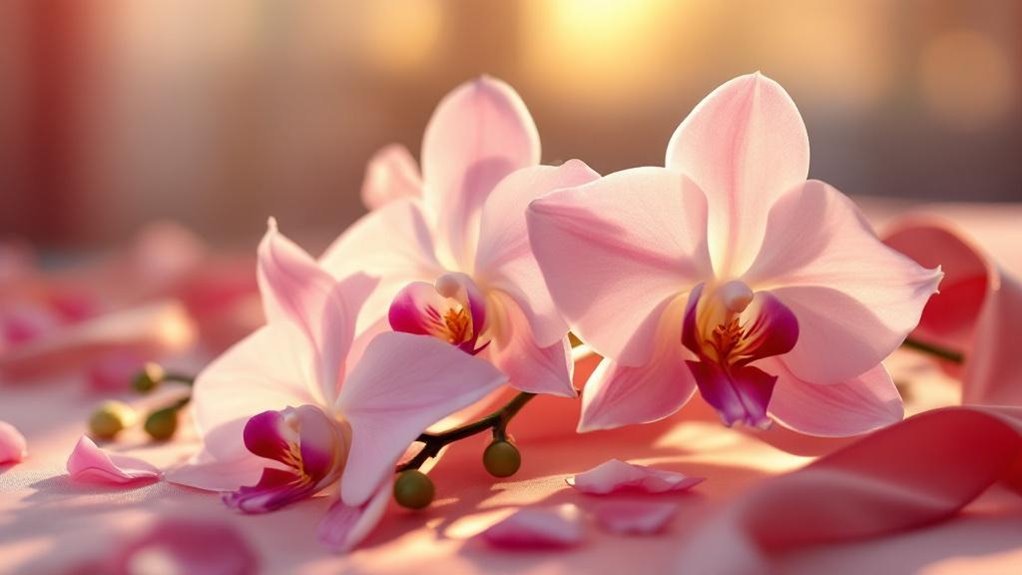
Elegance makes orchids especially well suited to Valentine’s Day, because they combine the romantic symbolism people expect from flowers with a cultivated longevity that cut bouquets rarely provide; a Phalaenopsis orchid, in particular, can hold its blooms for up to three months, so your gift remains present and observational rather than fading into a stagnant memory after only a few days.
You also give something manageable: Orchids need bright, indirect light, ordinary room temperatures, and only weekly watering with three ice cubes, so even a non-gardener can keep a premium 5-inch plant looking composed.
Their colors, from pink and white to purple and blue, let you match sentiment to the recipient rather than defaulting to red, and their exotic forms make the gesture feel distinctive, sustainable, and quietly more considered than conventional bouquets.
White orchids also carry meanings of purity, peace, and sincere affection, making them a graceful choice when you want Valentine’s Day to feel thoughtful rather than overdone.
Why Do Orchids Last Longer Than Roses?
Consider what each gift still possesses after purchase: an orchid remains a living plant, with roots intact and leaves still photosynthesizing, so it can keep drawing water and nutrients to support its blooms, while a rose bouquet has already been cut off from the system that sustained it and begins senescing almost at once.
An orchid remains biologically alive after purchase, still rooted and nourished, while cut roses begin declining the moment they are severed.
When you compare them observationally, the difference becomes practical as well as biological; Orchids come cultivated in pots, receive bright, indirect light, and benefit from light weekly watering that avoids stagnant moisture and the decay common in cut stems.
Their blooms sit on long-lived spikes, with durable petals and thicker stems that resist wilting, whereas roses expose delicate petals and damaged vascular tissue.
With proper care, you maintain the same plant for years, something cut roses can never offer. A well-drained orchid mix and generous drainage also help prevent stagnant moisture, keeping the plant healthier for longer.
How Long Do Orchid Blooms Last?
Longevity is one of the orchid’s clearest advantages as a Valentine’s gift, because a Phalaenopsis orchid in bloom will often hold its flowers for as long as three months after purchase, and with bright, indirect light and minimal watering, individual blooms commonly remain intact for weeks before they begin to drop.
| Factor | Typical span |
|---|---|
| Full display | Up to three months |
| Single flowers | Several weeks to months |
| Best purchase stage | Blooms plus buds |
| Rebloom window | About 6–9 months |
| Plant lifespan | Often many years |
If you select a cultivated plant with both open flowers and buds, you extend the orchid’s blooms through staggered opening; that observational advantage outlasts roses, avoids stagnant decline, and, with routine care, supports annual flowering cycles for decades. Orchids are also linked with lasting love and devotion, which makes them especially fitting for a thoughtful Valentine’s gesture.
Why Do Orchids Make a Meaningful Gift?
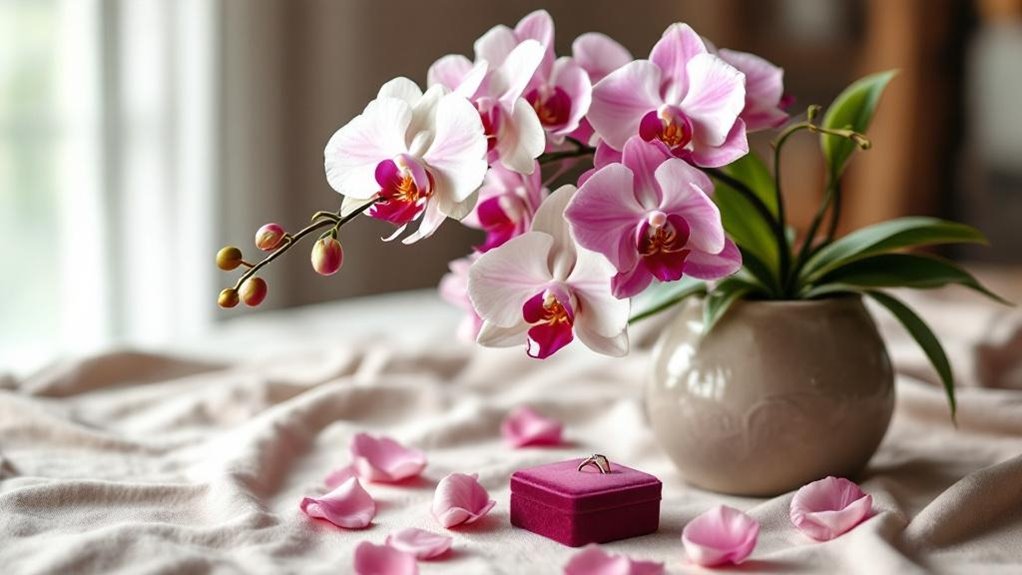
When you give an orchid for Valentine’s Day, you offer a lasting symbol of love, since phalaenopsis blooms can remain beautiful for up to three months and the plant itself can rebloom, which keeps your gesture from feeling stagnant or fleeting.
You can also make the gift more personal through cultivated color choices, because pink, purple, white, blue, and other orchid shades carry distinct meanings that let you align the plant with the recipient’s character or the sentiment you want to express.
Finally, you choose something observably more thoughtful and distinctive than standard flowers, since orchids come in many unique varieties, look exotic without being difficult to keep, and continue rewarding simple care with quiet persistence.
Orchids also carry a tradition of refined devotion, making them especially fitting when you want to express steady affection with grace and restraint.
Lasting Symbol Of Love
Endurance gives an orchid its particular meaning on Valentine’s Day, because you aren’t giving a gesture that fades into stagnant memory within a week; you’re giving a cultivated living plant whose blooms, especially on a phalaenopsis, can remain intact for up to three months after purchase, creating a sustained and observational reminder of affection that cut roses rarely match.
| Feature | Duration | Meaning |
|---|---|---|
| Blooms | Up to 3 months | Sustained affection |
| Reblooming | Every 6–9 months | Recurring devotion |
| Plant life | Decades | Enduring love |
With Orchids This Valentine’s, you give something elegant and lasting; bright, indirect light and weekly watering help it rebloom, and over years, even decades, it quietly confirms that your care wasn’t temporary, conventional, or forgettable. Cymbidium orchids often symbolize eternal love and bonds that grow stronger over time.
Personalized Colors And Meaning
Choose an orchid color with intention, and the gift becomes more than a refined Valentine’s gesture; it becomes a cultivated message that parallels the familiar language of roses while offering greater individuality, with pink signaling affection, white suggesting purity, purple conveying admiration and luxury, and yellow marking new beginnings in a way that feels deliberate rather than conventional.
- Pink shades express tenderness without becoming stagnant.
- White blooms suggest clarity, restraint, and sincerity.
- Purple or blue tones convey rarity and admiration.
- Speckles and splashes reflect observational, personal attention.
You can refine that message further through Phalaenopsis varieties, whose broad palette, patterns, and hand-painted effects align with personality rather than habit.
Because blooms persist for months, and rebloom with proper orchid fertilizer, your chosen color continues communicating long after Valentine’s Day has passed, with steadiness and visible intention.
Unique And Thoughtful Choice
That cultivated attention to color becomes even more persuasive in the gift itself, because orchids offer a form of Valentine’s expression that resists the stagnant brevity of cut flowers and remains present in daily life for weeks and often months.
You give more than a momentary display; many potted phalaenopsis blooms last up to three months, require only bright, indirect light and weekly watering with three ice cubes, and suit even non-gardeners.
You also choose a flower whose observational richness carries meaning, because its exotic form suggests luxury, strength, and beauty without relying on convention.
With more than 200 phalaenopsis varieties and colors ranging from white to purple and blue, you can match cultivated preferences precisely.
If cared for properly, it can rebloom every six to nine months and endure for decades.
Who Should You Give Orchids To?
You can give orchids to romantic partners, especially in established relationships, because the plant endures, reblooms, and serves as a cultivated symbol of affection that doesn’t grow stagnant after the holiday.
You can also choose them for new relationships, where their observational elegance conveys admiration with restraint rather than excessive intensity, and for family or friends, whose appreciation for lasting blooms and living décor makes the gift feel considered rather than ornamental.
If you’re choosing for someone practical, an orchid also suits recipients who prefer low-maintenance plants, since a phalaenopsis asks for little beyond bright indirect light and simple weekly watering.
Romantic Partners
When Valentine’s Day calls for a gift that feels cultivated rather than predictable, an orchid suits a romantic partner with unusual precision, because it conveys care without becoming stagnant in meaning after a single evening;
for a new relationship, a potted phalaenopsis reads as thoughtful and composed, offering elegance without the heightened symbolism of long-stemmed red roses, while for a spouse or long-term partner, the same plant suggests enduring attachment, since its blooms can last up to three months and the plant itself may live and rebloom for decades with proper care.
- Pink signals admiration.
- White suggests purity.
- Purple conveys esteem.
- Bright hues personalize.
If your partner prefers simplicity, choose a 5-inch phalaenopsis; bright, indirect light and weekly ice cubes support easy upkeep gracefully.
Family And Friends
Orchids also suit the broader circle of family and friends, where Valentine’s Day often calls for appreciation rather than romance; given to a mother or daughter, a potted orchid conveys admiration in a cultivated, observational way, and because its blooms last far longer than cut flowers, the gift doesn’t feel stagnant after a few days.
You can also give orchids to friends, especially for Galentine’s Day, when pink, purple, or white varieties create a celebratory but non-romantic gesture that still feels elegant and enduring; for loved ones who prefer practical gifts, a 5-inch phalaenopsis asks little in return, needing bright indirect light and roughly three ice cubes each week, yet it can bloom for up to three months, which makes your appreciation visible without becoming burdensome or overly formal.
New Relationships
Because a new relationship benefits from restraint as much as attention, a potted orchid works especially well at this stage, offering elegance and thoughtfulness without the concentrated passion that red roses usually imply; a phalaenopsis, in particular, keeps the gesture cultivated and measured, since its blooms can last for up to three months, and in softer shades such as pink, white, or light purple, it conveys affection and admiration without suggesting a depth of commitment that the relationship may not yet support.
- You present care without pressure.
- You avoid stagnant symbolism.
- You offer a new plant with lasting presence.
- You give beauty that unfolds gradually.
Choose some open blooms and buds, so the gift feels immediate yet observational, and reblooming in six to nine months quietly extends your presence.
Which Orchid Type Is Best for Valentine’s Day?
For Valentine’s Day, you’ll generally do best with a Phalaenopsis orchid, the cultivated moth orchid that has become the standard choice for good reason; its broad sprays of blooms look composed rather than showy, the flowers often remain attractive for up to three months, and its care needs stay straightforward, requiring bright, indirect light and modest weekly watering, which makes it well suited to a gift recipient who may admire plants more than manage them.
| Type | Why choose it |
|---|---|
| Phalaenopsis | Long bloom period; simple care |
| Beallara/Oncidium hybrids | More observational character; seasonal variation |
When you select any orchid, choose one with open flowers and unopened buds, firm roots, and healthy green leaves, because stagnant roots or tired foliage usually shorten the display after gifting.
Which Orchid Colors Say “I Love You”?
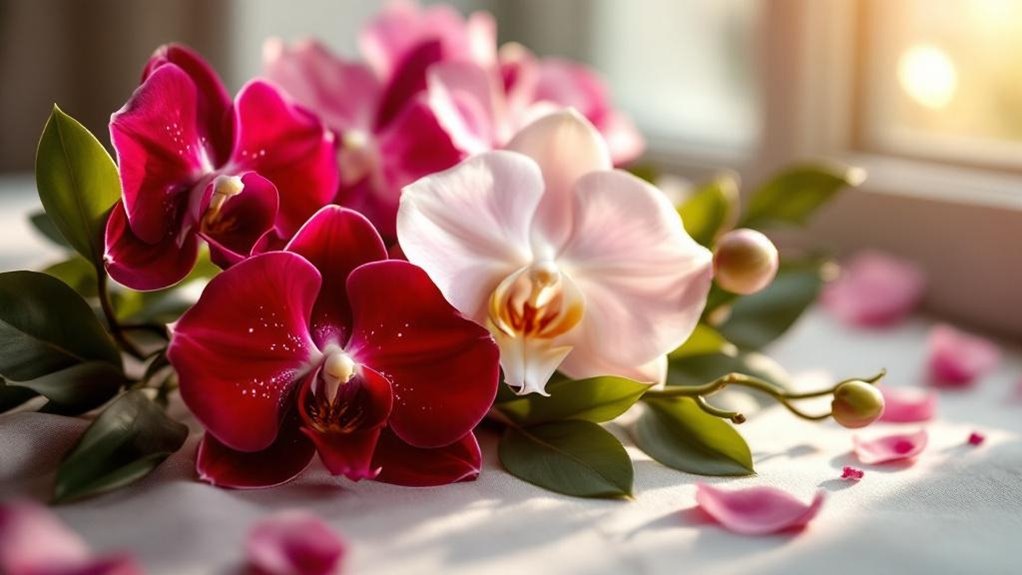
When you choose an orchid for Valentine’s Day, you’re also choosing a message, because pink suggests affection and romance, red or deep burgundy conveys desire, and white signals a cultivated, timeless devotion rather than something fleeting or stagnant.
You can also match color to personality with an observational eye; purple suits someone you admire for their depth and elegance, while yellow fits a newer bond, a friendship, or a Valentine’s gesture that stays warm without turning overtly romantic.
If you want your gift to say “I love you” with precision, you should let color guide the meaning, because the right orchid can express feeling clearly, quietly, and with more permanence than many traditional flowers.
Romantic Orchid Color Meanings
Several orchid colors carry a cultivated romantic meaning, and each one lets you shape “I love you” with more precision than a stagnant bouquet of generic blooms ever could; pink orchids suggest affection and admiration, which makes them a classic choice if you want to express love with restraint and grace, while white orchids convey purity, elegance, and a sincere, enduring devotion that feels timeless rather than performative.
- Pink lets you Say I Love with gentle clarity.
- White communicates sincerity, steadiness, and cultivated devotion.
- Purple adds respect, admiration, and a luxurious romantic note.
- Blue suggests rarity, mystery, and one-of-a-kind attachment.
If you want stronger observational nuance, choose purple for passion tempered by esteem, or blue, often dyed, when you want your message to feel singular rather than conventional.
Matching Colors To Personality
Color meaning becomes more useful once you match it to the recipient’s temperament, because the orchid that says “I love you” most clearly isn’t always the most overtly romantic one; it’s the one that fits how that person moves through the world and how you want your regard to be read.
| Color | Personality | Message |
|---|---|---|
| Pink | Warm, observational | Gentle affection |
| White | Cultivated, reserved | Sincere admiration |
| Purple | Confident, passionate | Deep romantic regard |
Choose pink if you want tenderness without pressure; choose white when elegance suits a formal bond, or when stagnant symbolism would feel misplaced. Choose purple for someone drawn to richness and depth. If they resist convention, blue or variegated orchids make a distinct statement. Yellow fits new, friendly connections, making Valentine’s the perfect time to show care without overstating romance.
Are Valentine’s Day Orchids Easy to Care For?
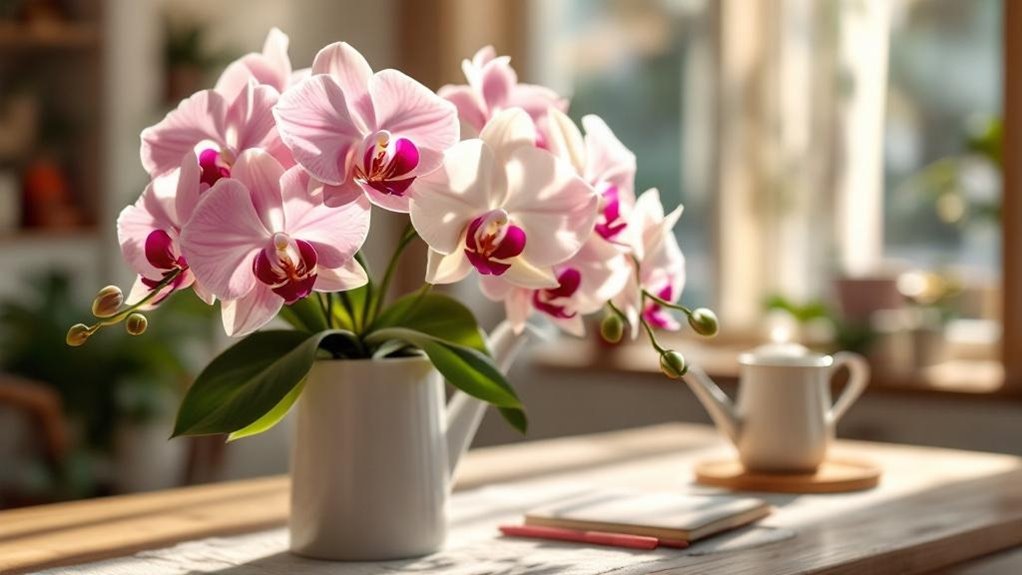
Choose a phalaenopsis orchid for Valentine’s Day, and you’re choosing a plant that’s generally easy to maintain, because it asks for a narrow set of conditions rather than constant intervention; most cultivated moth orchids do well in bright, indirect light, ordinary room temperatures, and modest watering, which means your care routine can remain simple and observational instead of demanding.
A phalaenopsis orchid stays easygoing when you give it bright, indirect light, room temperatures, and modest watering.
- You won’t water constantly; restraint matters.
- You avoid stagnant conditions by draining fully.
- You feed lightly after flowering, not obsessively.
- You can expect longevity with basic consistency.
That makes orchids genuinely Easy to Care for, provided you respect limits rather than overmanage; slight drying between waterings prevents root rot, occasional fertilizer supports future blooms, and annual repotting, only if needed, helps maintain a healthy plant that can rebloom for years.
How Do You Care for a Valentine’s Day Orchid?
Because a Valentine’s Day orchid is usually easy to maintain, its care routine stays focused and observational: keep a phalaenopsis in bright, indirect light at normal room temperatures, ideally 65–75°F, and protect it from direct midday sun, which can scorch leaves and shorten bloom life; water a 5-inch plant about once a week with the common three-ice-cube method, or soak the roots thoroughly every 7–10 days and let the pot drain completely, since stagnant moisture is more damaging than slight dryness.
For proper care, maintain 40–60% humidity with a pebble tray, light daily misting, or a humidifier, and use an airy bark-based orchid mix in a pot with excellent drainage.
After flowers fade, apply balanced liquid orchid fertilizer at half strength every 2–4 weeks, flushing the mix periodically. Repot annually if roots crowd.
When Do Orchids Bloom Again?
Typically, a phalaenopsis orchid will bloom again within about six to nine months after its main flowering cycle, and with cultivated, consistent care it often settles into a reliable annual rhythm, reblooming at roughly the same time each year.
- Give it cooler nights, about 10–15°F below daytime temperatures, to signal rest.
- Water weekly, avoid stagnant roots, and keep bright, indirect light steady.
- After blooms finish, cut the spike to a healthy node or base, then fertilize every two to four weeks.
- Watch for new spikes or buds; that observational change means reblooming has begun.
If stress from overwatering, low light, or temperature extremes interrupts growth, your orchid may take longer than a year, yet steady conditions, moderate 65–75°F days, and good drainage still support its return to flowering.
How Do You Choose a Healthy Orchid?
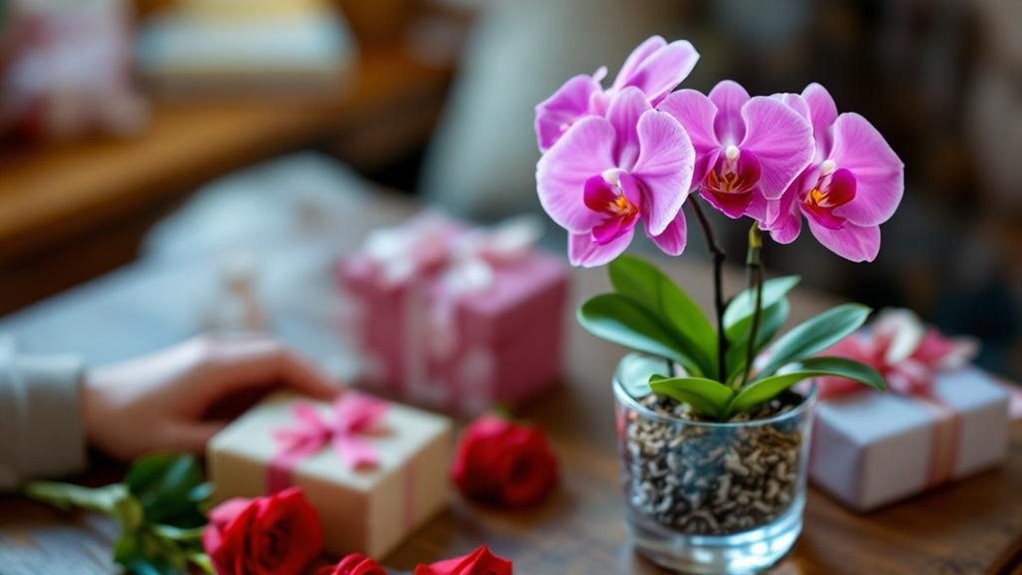
Start by examining the foliage and roots, since a healthy orchid will usually present firm, green leaves without yellowing or soft patches, along with plump, silvery-green aerial roots that reflect sound hydration and steady cultivation rather than stagnant stress.
| Feature | Healthy sign | Avoid |
|---|---|---|
| Leaves | Firm, green | Yellow, soft |
| Roots | White/green, plump | Black, soggy |
| Flowers | Open blooms, buds | Damaged spikes |
Make sure you also inspect the potting medium; if it smells foul or feels waterlogged, decline it, because overwatering often conceals rot. Choose orchids with upright, undamaged spikes, several open flowers, and unopened buds, since that balance gives you immediate beauty and continued blooming. Prefer clear or breathable pots, which support observational care and reveal hidden pests or sticky residue.
When Are Orchids Better Than Roses?
Once you’ve selected a healthy plant, orchids often prove better than roses when you want a Valentine’s gift to remain cultivated and visible well beyond a single week; a phalaenopsis can hold its blooms for up to three months, while cut roses usually fade within days, which makes the orchid a steadier expression of regard rather than a brief display.
For a Valentine’s gift that lingers gracefully, orchids outlast roses, offering months of bloom instead of mere days.
- You give a living plant that can rebloom within six to nine months.
- You avoid stagnant upkeep; three ice cubes weekly often suffice.
- You can choose blooms that come in a variety of colors and patterns.
- You offer something exotic, reusable, and sustainable, not merely decorative.
If you want affection to feel enduring rather than momentary, orchids serve you better; they live for years with proper care, ask little, and carry a quietly luxurious, observational presence.
Where Can You Buy Valentine’s Day Orchids?
For Valentine’s Day, you can buy orchids through online florists and specialty growers, at local independent florists, and from large retailers, garden centers, supermarkets, and big-box stores, each source serving a slightly different purpose; online sellers such as Just Add Ice® Orchids and The Bouqs Co. offer greenhouse-to-door delivery with seasonal packaging, which suits a cultivated gift sent directly to someone’s home, while nearby florists can often source more distinctive varieties, including Oncidium hybrids or Beallara Big Shot ‘Hilo Sparkle,’ when you want something less standardized than a common phalaenopsis.
Large retailers and garden centers usually carry 3–5 inch moth orchids in pink, purple, blue, and white; supermarkets and big-box stores suit giving the gift quickly, provided you avoid stagnant media, choose firm roots, and select stems with open blooms plus unopened buds.
Frequently Asked Questions
Is an Orchid a Good Valentine’s Gift?
Yes, you’ll give a wonderful Valentine’s gift with an orchid. You’re choosing long-lasting blooms, easy care, and personalized color meanings. It feels unique, symbolizes lasting affection, and can rebloom for years with simple attention.
What Flowers Not to Give on Valentine’s Day?
Obviously, you should give funeral flowers for romance—said no one ever. You shouldn’t give culturally negative blooms, allergy-triggering flowers, bulky arrangements, cheap short-lived bouquets, or heavily perfumed varieties if your recipient dislikes strong scents.
Which Flower Is Best for Valentine’s Day?
You can’t go wrong with roses for Valentine’s Day, especially red ones for classic romance. If you want something more distinctive, choose an orchid—you’ll give beauty, symbolism, and blooms that last far longer than most bouquets.
What Do Orchids Symbolize in Love?
Orchids symbolize love with luxury, strength, beauty, and lasting devotion—because obviously your heart needed better branding. You show admiration with pink, purity with white, royalty with purple, and rare, mysterious uniqueness through blue blooms.
Conclusion
If you want a Valentine’s gift that feels cultivated rather than conventional, orchids are a sound choice; while roses often fade within a week, orchid blooms can last 6 to 10 weeks, a statistic that quietly reframes what lasting affection can look like. You give more than color, because you’re offering continuity, observational beauty, and a living presence that resists the stagnant pattern of disposable flowers, which is why orchids often leave a steadier impression.