
Yes, in folklore you often find orchids treated as aphrodisiacs, largely because their tubers resembled male anatomy and encouraged observational herbal beliefs about virility, fertility, and desire; the Greek word *orchis*, meaning “testicle,” strengthened that association, and remedies such as salep turned it into cultivated practice rather than stagnant superstition. Over time, other cultures emphasized beauty, status, or renewal instead, though the older erotic symbolism never entirely disappeared, as the fuller history makes clear.
- Key Takeaways
- Are Orchids Really Aphrodisiacs in Folklore?
- Why Orchids Became Symbols of Desire
- How the Word Orchis Shaped Orchid Lore
- What the Greek Myth of Orchis Says
- Why the Orchis Myth Is Disputed
- How Greeks Linked Orchids With Fertility
- How Herbal Medicine Made Orchids Erotic
- Why Vanilla Orchids Mattered to the Aztecs
- What Orchids Meant in Chinese Culture
- Why Orchids Symbolized Status in Hawaii
- How Victorian Orchid Mania Changed Their Image
- Why Orchid Folklore Still Fascinates Today
- Frequently Asked Questions
- Conclusion
Key Takeaways
- Yes, many folk traditions treated orchids as aphrodisiacs linked to fertility, virility, and sexual desire.
- The Greek name *orchis*, meaning “testicle,” strengthened beliefs that orchids enhanced male potency.
- Ancient writers like Theophrastus and Pliny described orchid tubers as remedies for increasing sexual power.
- The Doctrine of Signatures encouraged aphrodisiac beliefs because orchid tubers resembled male anatomy.
- Salep, a drink made from orchid tubers, was traditionally consumed as a love tonic and strengthener.
Are Orchids Really Aphrodisiacs in Folklore?
Although the idea can sound ornamental by modern standards, orchids were genuinely treated as aphrodisiacs in several strands of folklore, and that belief rested on a cultivated network of symbols, medical assumptions, and sacred associations rather than on stagnant superstition alone.
In Greek observational thought, you find Orchids tied to fertility because orchis named the plant after testicles, and Theophrastus recorded rhizomes as agents of sexual potency within herbal practice. Pliny the Elder and later herbalists repeated those claims, giving the flower durable aphrodisiac properties in literary and medical tradition.
In Aztec practice, the vanilla orchid entered sacred drinks and was valued for strength and liveliness, which reinforced its intimate reputation.
Even the myth of Orchis preserved a longstanding folkloric link between the flower, transgression, and embodied sexual power.
Why Orchids Became Symbols of Desire
You can trace much of the orchid’s erotic symbolism to its testicle-shaped tubers, a form that early observers linked to male anatomy and sexual power. That observational connection gave the flower a cultivated reputation as an aphrodisiac rather than a stagnant ornamental curiosity.
You can also see how ancient writers, including Greek and Roman authorities, reinforced that view by tying orchids to fertility, potency, and libido, which gave desire a natural and medicinal framework in the historical imagination.
As these beliefs passed through myth and folklore, you find orchids steadily associated with beauty, fertility, and seduction, and that long cultural memory helps explain why they became enduring symbols of desire.
Testicle-Shaped Tuber Symbolism
Symbolism sits at the center of this history, because the very name orchid comes from the Greek *orchis*, meaning testicle, and that direct anatomical comparison gave the plant an unusually strong association with sexual power, fertility, and cultivated desire. You can see how bulbous tubers shaped a clear observational logic; resemblance suggested potency, and that idea rarely remained stagnant.
| Feature | Meaning |
|---|---|
| Tuber shape | Virility, desire |
| Mythic Orchis | Desire, punishment |
When you read Theophrastus, you find that orchid rhizomes entered ritual and medicine because people treated form as evidence; in Greek practice, anatomy, fertility, and sexual health aligned. Across folklore, that likeness to male anatomy preserved the orchid as a sign of masculine force, while the Orchis myth deepened its symbolic gravity through transgression and divine retribution.
Ancient Aphrodisiac Beliefs
Because ancient cultures often treated visible form as evidence of hidden power, orchids didn’t become symbols of desire by accident; their testicle-shaped tubers, already linked through the Greek *orchis* to male anatomy, invited an observational logic in which resemblance implied sexual potency, fertility, and cultivated virility.
You can see this belief deepen in Theophrastus, who recorded that certain orchid rhizomes were taken to strengthen sexual power, giving Orchids a practical aphrodisiac reputation rather than a stagnant symbolic one alone.
Greek myth reinforced that charge: Orchis, punished for sexual misconduct, became the flower, so desire, transgression, and bodily consequence stayed fused.
Beyond Greece, you find the vanilla orchid in Aztec cacao drinks promising strength and energy, while Chinese traditions connected orchids with spring, beauty, and renewed affection in intimate human bonds.
Myths Of Fertility
How did orchids come to stand for fertility so persistently across cultures, despite the distance between their habitats and traditions; in large part, the answer lies in an observational habit of thought that treated visible form, seasonal renewal, and cultivated rarity as signs of hidden generative power.
When you trace the myths and legends, you see why desire clung to orchids: the Greek name orchis tied the flower to male sexuality, while the tale of Orchis, transformed after transgression, made fertility inseparable from punishment and longing.
In Aztec practice, vanilla orchids entered sacred cacao drinks, so you encounter a divine stimulant linked to bodily vigor and the heart’s appetite.
In China, spring-blooming orchids suggested renewal rather than stagnant decline, beauty joined to reproductive strength.
How the Word Orchis Shaped Orchid Lore
Although the orchid’s reputation as an aphrodisiac may seem like a later flourish, its lore begins with language itself, since the Greek word *orchis*, meaning “testicle,” tied the plant directly to male anatomy and cultivated an enduring association with virility and desire. You see that link repeated in Theophrastus, whose observational writings preserved beliefs about potent roots, and in names like *satyrion*, which connected orchids to fertility cult imagery rather than stagnant botany.
| Source | Term | Association |
|---|---|---|
| Greek | orchis | male anatomy |
| Theophrastus | orchis | sexual potency |
| Greek texts | satyrion | fertility cults |
| Petronius | orchid | lust |
| Folklore | orchis | desire |
As you trace the word’s history, you find that language didn’t merely label the flower; it shaped how generations interpreted its powers.
What the Greek Myth of Orchis Says
Language gave the orchid its earliest erotic charge, yet the myth of Orchis fixed that association within a moral narrative, one that joined beauty, sexuality, and punishment in a single observational frame.
In this account, you see Orchis as a young man whose assault on a priestess of Dionysus brings divine retribution; his body is torn apart, and orchids rise from his remains, so the flower becomes a cultivated emblem of desire disciplined by consequence.
You can also trace why the tale mattered: orchis meant testicles in Greek, the paired root invited readings of fertility, and ancient people treated orchids as aphrodisiacs because form suggested function.
Later, Louis Liger helped circulate this stagnant yet durable story, giving the flower a mythic lesson about sexuality, beauty, and the gods.
Why the Orchis Myth Is Disputed
When you examine the Orchis story against the surviving record, the dispute becomes difficult to dismiss, because no classical Greek or Roman source has been shown to preserve this transformation myth, and the earliest known appearance of the tale comes much later, in Louis Liger’s 1704 *Le Jardinier Fleuriste et Historiographe*.
This makes the narrative look less like an inherited ancient tradition than a cultivated early modern construction.
If you follow the observational evidence, you see why scholars remain cautious; the tale echoes genuine myths, especially Pentheus and Hyacinthus, yet that resemblance suggests borrowing rather than continuity.
Early herbalists did note orchid rhizomes that resemble male anatomy, but that stagnant anatomical association doesn’t authenticate Orchis itself.
Instead, you’re looking at folklore that likely accreted from older motifs, then hardened into apparent antiquity through repetition alone.
How Greeks Linked Orchids With Fertility
When you look at how ancient Greeks classified plants, you can see how that name helped orchestrate a wider symbolism of virility, divine blessing, and reproductive promise; orchids became cultivated signs of fertility in ritual settings and seasonal celebrations.
Theophrastus added observational weight, noting associations between certain species and sexual potency, and although mythology remained unstable, you can still trace a durable Greek pattern: visible form suggested function, and function invited sacred meaning.
How Herbal Medicine Made Orchids Erotic
As you trace herbal medicine’s influence, you can see how the doctrine of signatures gave orchids an erotic reputation, because their paired tuber roots seemed to mirror male anatomy and, in observational thinking, promised cultivated desire rather than stagnant vigor.
You can also see how writers such as Theophrastus and Pliny the Elder reinforced that belief, turning resemblance into remedy and encouraging the view that orchid roots could strengthen sexual potency.
From there, you arrive at salep, a drink made from orchid tubers, which herbal tradition treated as a love tonic and which helped carry these ideas from medical texts into enduring cultural belief.
Doctrine Of Signatures
Although the doctrine of signatures now reads like a relic of observational medicine, it once gave orchids a cultivated erotic authority, because herbalists believed a plant’s form disclosed its purpose, and the paired underground tubers of many orchids seemed to mirror male anatomy with unmistakable clarity.
You see that logic echoed across stagnant centuries:
- The Greek orchis, meaning testicle
- Theophrastus listing orchid virtues
- Pliny repeating their sexual potency
- Seventeenth-century names shaped by genital likeness
- Petronius binding orchids to desire
When you follow those records, you find orchids treated as aphrodisiacs not through experiment but resemblance; form became evidence, language became medicine, and ancient authors gave the idea authority.
That observational habit, however limited, helped fix orchids within herbal practice and erotic symbolism alike.
Tuber Roots And Desire
Because herbal medicine treated resemblance as guidance, orchid tubers acquired an erotic reputation that seemed observational rather than speculative; the very word orchis tied the plant to male anatomy, and writers such as Theophrastus recorded claims that its rhizomes could stir desire, giving that association the weight of cultivated authority.
When you trace that belief forward, you see how tuber roots became evidence within a medical imagination that distrusted stagnant coincidence; their form suggested virility, their use promised function, and repetition made the idea durable.
Petronius then placed orchids inside a sexual literary setting, so you encounter not only remedies but a broader culture that treated orchids as erotically charged.
In that tradition, medicine didn’t merely describe desire; it organized, authorized, and transmitted it through botanical interpretation across generations and regions.
Salep As Love Tonic
That erotic reputation moved easily from theory into consumption through salep, a drink made from powdered orchid tubers, which many cultures treated not simply as nourishment but as a love tonic that could heighten desire and sustain sexual strength.
You can trace that belief from Theophrastus, whose observational herbal writing linked orchids with potency, into folklore, where tubers’ resemblance to male anatomy seemed cultivated proof.
- steaming cups before dawn
- powdered tubers stirred thick
- sailors seeking warmth and strength
- market stalls in stagnant streets
- herbal manuals beside hearthlight
In early modern Europe, you see salep embraced by sailors and laborers, who valued vigor; writers such as Culpepper carried those claims into medical discussion, reinforcing orchids’ erotic reputation and tying herbal medicine, attraction, and performance into one persistent tradition.
Why Vanilla Orchids Mattered to the Aztecs
For the Aztecs, the vanilla orchid mattered on at least three levels: it was a cultivated crop within Mesoamerican agriculture, a flavor bound to elite cacao drinks, and a sacred emblem of strength and vigor that carried observational meaning far beyond taste.
When you look at Aztec belief, you see vanilla treated as a divine gift, never stagnant or merely decorative; the orchid carried cultural weight because it joined farming, ritual, and bodily experience in one plant. Mixed with cacao, it entered sacred beverages thought to strengthen the body, sharpen energy, and heighten sexual force, so you can understand why elites and priests valued it.
Its flavor also honored gods in ceremonies, invoked favor, and, through later colonial contact, shaped European respect for vanilla’s enduring prestige and symbolic power.
What Orchids Meant in Chinese Culture
In Chinese culture, you find orchids standing for beauty, refinement, and virtuousness, and that symbolism carries an observational weight because their cultivated elegance suggested moral integrity rather than stagnant ornament.
You can see this esteem in Confucius’s praise, where he compared orchids to virtuous men and affirmed their place in philosophical thought; through that lens, the flower signaled character as much as appearance.
You also encounter orchids as signs of spring and good fortune, so when people gifted them or painted them in art and literature, they weren’t only admiring beauty, they were also expressing renewal, prosperity, and happiness.
Symbols Of Virtue
Orchids carried a cultivated moral weight in Chinese culture, where they signified beauty, refinement, and virtuousness not as stagnant decorative ideals but as living qualities a person was expected to preserve. Confucius’s admiration strengthened this meaning, since he compared orchids to virtuous men whose integrity remained intact even when they stood apart from society.
You see that symbolism in:
- a quiet scholar’s room
- a valley holding one bloom
- restrained brushwork beside poetry
- a noble figure standing alone
- fragrance lingering without display
Unlike Greek mythology, which often ties flowers to divine drama, Chinese thought made orchids observational emblems of character. When you contemplate them, you’re meant to recognize disciplined beauty, solitude without corruption, and refinement shaped by philosophy, so the flower becomes less ornament than moral instruction for daily conduct.
Spring And Good Fortune
That moral symbolism also opened onto a seasonal one, because the orchid’s appearance signaled spring’s return, and with it came a cultivated sense of renewal, restored liveliness, and the quiet promise that what had seemed dormant wouldn’t remain stagnant.
In Chinese culture, you read the orchid as more than a flower; you recognize an observational emblem of warmer days, moral steadiness, and beauty disciplined by restraint.
You also encounter it as a sign of good fortune, since prosperity, wealth, and social flourishing gathered around its image in art and literature, where admired forms often carried civic meaning.
When you see the orchid standing apart yet composed, you’re meant to understand integrity under pressure; its grace suggests strength without display, and its spring arrival joins personal virtue to favorable worldly conditions.
Why Orchids Symbolized Status in Hawaii
Across much of Hawaiian society, orchids came to signify status because people linked them with royalty, cultivated beauty, and a kind of divine elegance that set them apart from more ordinary adornments. Their presence in leis worn at weddings, graduations, and other ceremonial gatherings marked respect and honor, so they carried social meaning rather than serving as stagnant decoration.
- leis resting on formal shoulders
- petals offered between families
- rare blooms guarded by elites
- Pele’s presence in volcanic landscapes
- ceremonial tables bright with color
When you observe Hawaiian custom, you see orchids express luxury and exoticism, yet also devotion. People gave them to honor affection, admiration, and lineage, and their rarity strengthened that observational message.
Because Pele was linked with orchids, the flowers also suggested sacred favor, which deepened their prestige within households and public ritual alike.
How Victorian Orchid Mania Changed Their Image
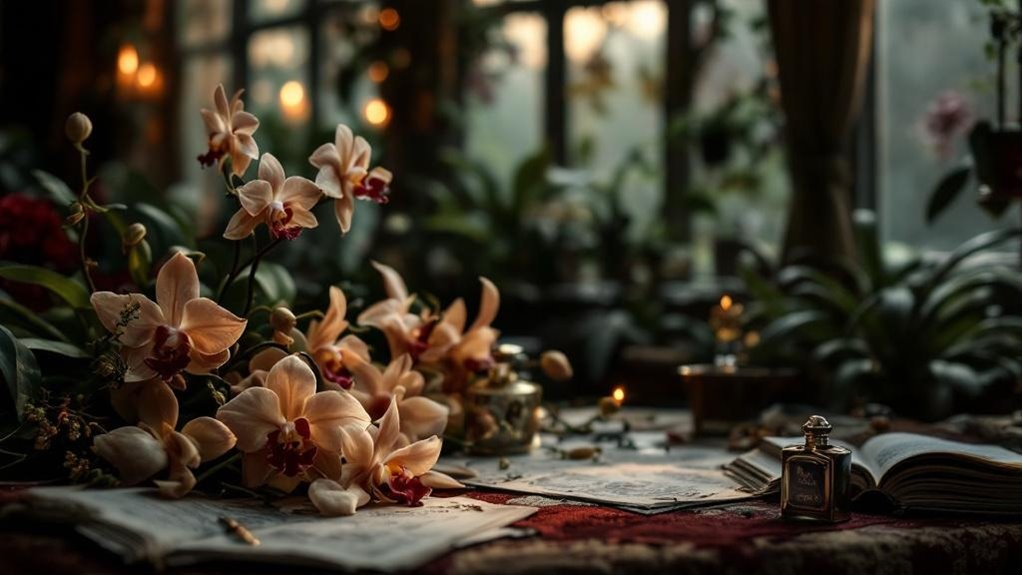
During the Victorian era, collectors and social elites recast orchids as emblems of luxury, exoticism, and cultivated taste. This shift changed how people read the flowers in public and private life; no longer confined to older associations with sexuality and fertility, they became markers of refinement, wealth, and aesthetic discipline.
Displayed in drawing rooms, conservatories, and ceremonial settings as proof that their owners possessed both money and observational discernment, you can see how Orchid mania elevated Orchids beyond older folklore. Rarity, costly cultivation, and claims of noble blood made them fashionable signs of rank rather than stagnant symbols of desire alone.
As collectors pursued new specimens, you’d read Orchids as evidence of disciplined taste, social ambition, and a carefully managed household culture, not merely sensual suggestion anymore.
Why Orchid Folklore Still Fascinates Today
Why does orchid folklore still hold your attention when so many flower traditions have gone stagnant? It persists because orchids gather several powerful meanings into one form, joining Greek ideas of sexual potency, myths such as Orchis with their moral complexity, Aztec reverence for vanilla orchids, and Chinese associations with beauty and cultivated virtue. So each bloom seems to carry both sensual implication and observational depth.
- a marble statue beside orchids
- vanilla scent in dry air
- silk petals in lamplight
- a scholar’s brush and ink
- a Victorian glasshouse at dusk
You also inherit Victorian orchid mania, which fixed orchids as luxurious, exotic signs of desire and wealth. When you read modern interpretations, you see folklore, science, art, and history meeting, and that layered continuity keeps orchids culturally persuasive today.
Frequently Asked Questions
Is Orchid Greek for Testicle?
Yes—you’d find that Greek names the orchid “orchis,” meaning “testicle.” Like a key fitting an old lock, the word reflects the plant’s bulbous roots, and you can trace later folklore directly to that anatomical resemblance.
What Is the Myth of the Orchid Flower?
You’d trace the orchid flower myth to Orchis, a youth punished for attacking Dionysus’s priestess. After wild beasts killed him, the gods transformed his remains into orchids, making the bloom symbolize beauty, desire, and caution.
What Does the Orchid Symbolize in Lgbtq?
In LGBTQ+ symbolism, you’ll find orchids represent beauty, diversity, pride, and nonconformity. But there’s more: they also celebrate individuality, love, acceptance, and empowered self-expression, mirroring the community’s vibrant identities and deeply rooted emotional connections.
Do Orchids Symbolize Fertility?
Yes, you can see orchids symbolizing fertility across many cultures. Their Greek name links them to reproductive power, while myths and traditions in Greek, Chinese, Aztec, and Hawaiian lore connect them with regeneration, abundance, and liveliness.
Conclusion
When you examine the theory closely, you find that orchids weren’t universally treated as aphrodisiacs, yet folklore repeatedly linked them to desire because their name, shape, rarity, and cultivated beauty invited symbolic reading; that pattern, rather than any single belief, explains their enduring reputation. You’re left with an observational truth: orchid lore isn’t stagnant myth but a layered record of how different cultures attached status, fertility, and longing to one remarkable flower.