
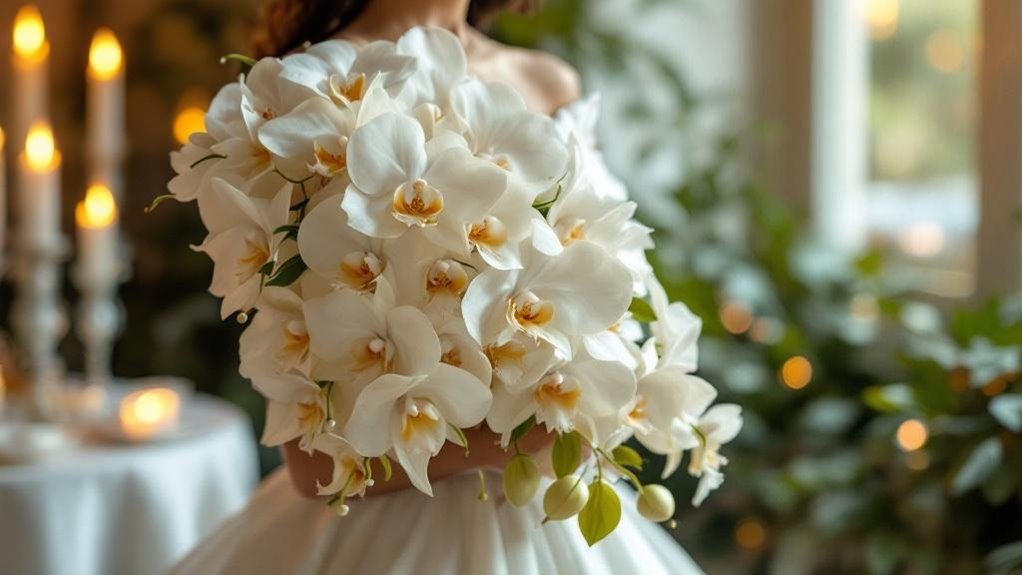
Orchids are popular wedding flowers because they give you cultivated elegance, durable structure, and quiet symbolism in one bloom; you get beauty that feels refined, not stagnant, and flowers that hold their shape through long ceremonies and receptions. They also adapt easily to classic, modern, bold, or observational designs, since varieties like Phalaenopsis, Cymbidium, and Dendrobium offer different forms, sizes, and colors. Their meaning, longevity, and flexibility explain their lasting place in wedding design, with more distinctions ahead.
- Key Takeaways
- Why Are Orchids Popular Wedding Flowers?
- What Makes Orchids Look So Luxurious?
- Why Orchids Fit Any Wedding Style
- Why Orchids Last So Well at Weddings
- Why Orchids Carry Romantic Meaning
- Most Popular Orchid Flowers for Weddings
- Why Phalaenopsis Orchids Are a Favorite
- Why Dendrobium Orchids Suit Many Weddings
- When to Choose Cymbidium or Mokara Orchids
- Why Orchids Work in Bouquets
- Why Orchids Shine in Centerpieces
- Why Orchids Pair Well With Other Flowers
- Why Orchids Create Dramatic Installations
- Where to Use Orchids Beyond Bouquets
- How Orchids Match Any Wedding Palette
- Why Orchids Feel Both Classic and Modern
- How to Choose Wedding Orchids
- Frequently Asked Questions
- Conclusion
Key Takeaways
- Orchids symbolize love, beauty, and strength, making them meaningful wedding flowers that reflect devotion and lasting partnership.
- Their elegant shapes, layered textures, and wide color range suit both classic and modern wedding styles.
- Orchids are long-lasting and durable, resisting wilting and bruising throughout ceremonies, photos, and receptions.
- Popular varieties like Phalaenopsis, Cymbidium, Dendrobium, and Mokara offer different looks for many wedding themes.
- Orchids work beautifully in bouquets, centerpieces, installations, and wearable accents, creating a cohesive and luxurious wedding design.
Why Are Orchids Popular Wedding Flowers?

Because weddings rely on symbolism as much as visual composition, orchids remain popular wedding flowers by uniting cultivated beauty with meanings that feel steady rather than stagnant, most often love, beauty, and strength. This gives bouquets and arrangements an emotional dimension beyond ornament alone.
When you choose them, you work with flowers that suit many palettes and formats; with nearly 2000 varieties, you can match quiet neutrals, saturated tones, or observational textural contrasts without forcing the design. Phalaenopsis, often preferred for bouquets and centerpieces, lasts well through ceremonies and receptions, which supports consistency.
Orchids represent a practical and expressive option because you can carry them in bouquets, place them in centerpieces, weave them into head wreaths, or repeat them in decor, creating a unified floral language across the wedding day.
What Makes Orchids Look So Luxurious?
When you choose orchids, you bring in exotic shapes and layered textures that keep arrangements from looking stagnant, giving your wedding flowers a cultivated, observational elegance that feels distinctly refined.
You also gain a rich color presence, since varieties like Phalaenopsis and Cattleya present saturated tones and sculptural form that heighten visual depth without making the design appear crowded.
Their graceful statement blooms, often large enough to command attention on their own, let you create a luxurious impression with restraint; that balance is a defining part of their appeal.
Exotic Shapes And Texture
Luxury in orchids comes from structure as much as color; their blooms don’t read as generic petals gathered around a center, but as cultivated forms with distinct architecture, from the butterfly-like face of Phalaenopsis to the cascading sprays of Oncidium and the softly ruffled edges of Cattleya.
When you use them in wedding flowers, orchids offer observational interest through unique shapes, layered surfaces, and measured asymmetry, so arrangements feel composed rather than stagnant.
You also benefit from their range of scale, with blooms spanning about half an inch to five and a half inches, which lets you build texture without crowding the design.
Their petals often appear sculpted or pleated, inviting close attention, and many varieties, especially Phalaenopsis, hold that refined presence through the full celebration with remarkable steadiness.
Rich Color Presence
Color gives orchids much of their opulent authority, building on their cultivated shapes with a palette that reads as intentional rather than merely pretty; from pure white and soft blush to deep magenta and saturated violet, their hues carry a density and clarity that makes wedding flowers appear polished, composed, and visually expensive.
When you use orchids to create bouquets or centerpieces, that vibrant color prevents arrangements from feeling stagnant, because each bloom contributes observational contrast, tonal depth, and a refined finish.
You can pair pale varieties with formal décor or use saturated shades to strengthen modern settings, and the effect remains controlled rather than excessive.
Because orchids also hold their freshness so well, their color stays persuasive throughout the event, reinforcing a sense of luxury from ceremony to reception without visual decline.
Graceful Statement Blooms
Elegance begins with the bloom itself, and orchids, especially Phalaenopsis, carry a cultivated authority through their broad, fluttering forms, which create immediate visual impact without requiring dense or stagnant arrangement work. You see luxury in that restraint; even minimal floral arrangements appear composed, expansive, and deliberate. Across the orchid family, unusual silhouettes, saturated color, and refined fragrance deepen that impression, while their symbolism of beauty and refinement supports the quiet formality you want in wedding design.
| Element | Feeling |
|---|---|
| Broad petals | Calm grandeur |
| Exotic form | Cultivated intrigue |
Because orchids endure, they hold their poise through ceremonies and receptions, and their timeless character lets you place them confidently within classic rooms or contemporary settings, where bouquets and centerpieces still read as polished, graceful statements.
Why Orchids Fit Any Wedding Style
You can carry orchids from a classic ceremony to a contemporary reception without forcing the design, because their cultivated elegance never feels stagnant and their forms suit bouquets, centerpieces, and more observational styling choices with equal ease.
You can also pair them with nearly any palette, from restrained pastels to saturated autumn tones, since their wide range of colors and varieties lets them support your scheme rather than compete with it.
Because they balance timeless beauty with modern line and structure, you can use them to create a wedding style that feels coherent, intentional, and quietly meaningful.
Classic To Contemporary
Few wedding flowers move as easily between tradition and modern design as orchids do, because they carry a cultivated sense of permanence while still reading as clean, observational, and current; that balance lets them settle into classic ceremonies, minimalist receptions, and highly designed contemporary spaces without ever feeling stagnant or out of place.
When you shape a wedding theme, orchids give you uncommon range, since Phalaenopsis varieties create restrained lines for spare rooms and modern tablescapes, while Dendrobium and Cattleya forms introduce structure and drama suited to fuller arrangements and formal settings.
You can also combine them with other blooms without losing coherence, because their durability supports complex installations and simple bouquets alike, and their adaptability helps you build a look that feels deliberate, elegant, and fully aligned with your venue, season, and aesthetic goals.
Flexible Color Pairings
That same range extends naturally into color, where orchids prove unusually accommodating, because they appear in enough hues to align with nearly any wedding palette, from soft spring pastels to the yellow and orange tones that suit fall décor, and they hold their cultivated, observational character without making a scheme feel forced or stagnant.
You can place orchids beside calla lilies or tulips and keep the arrangement cohesive, because their forms and tones adapt without losing distinction; white orchids add volume and texture, yet they also sharpen contrast when you pair them with saturated blooms.
That flexibility lets you shape a restrained bouquet or a complex installation while preserving a unified color palette, so your flowers can support a minimal ceremony, a classic reception, or a more lavish setting with equal assurance.
Why Orchids Last So Well at Weddings
Because weddings place flowers under long hours of handling, shifting temperatures, and close observational scrutiny, orchids remain a cultivated favorite. Phalaenopsis in particular is known for exceptional longevity, often holding its form and freshness for up to two months with proper care. Meanwhile, Cymbidium and Dendrobium blooms rely on sturdy structures that resist wilting, bruising, and the stagnant look that quickly diminishes less resilient flowers.
When you choose orchids, you secure long-lasting blooms that tolerate ceremony heat, reception drafts, transport, and repeated handling without losing visual appeal. They require little attention, often needing only an ice cube of water each week, so your arrangements stay composed through the event and afterward, whether you preserve centerpieces, bouquets, or entry displays.
That durability makes orchids practical, polished wedding flowers.
Why Orchids Carry Romantic Meaning
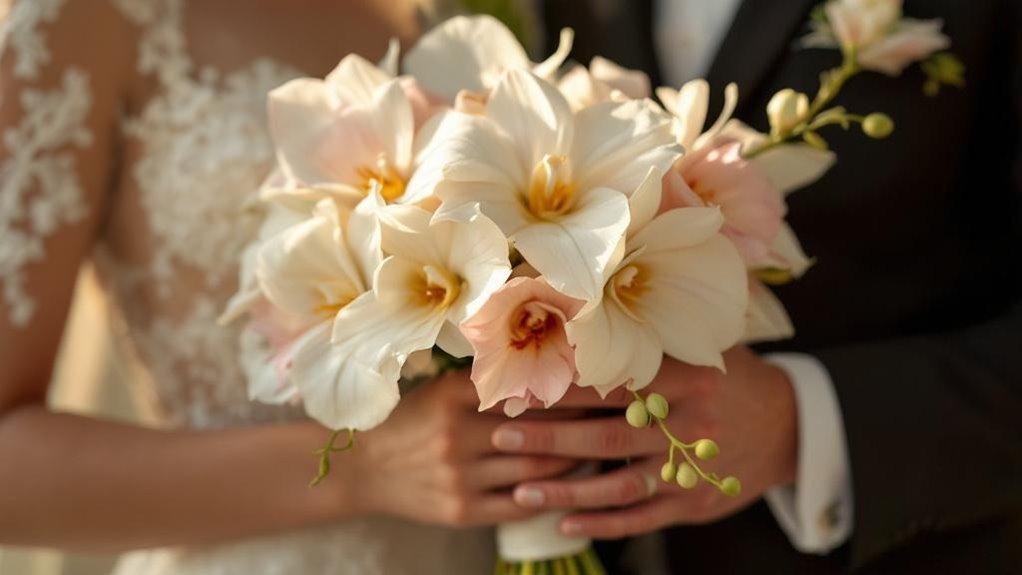
While wedding flowers often serve a decorative role, orchids carry a more deliberate meaning, symbolizing love, beauty, and strength in a form that feels both refined and enduring; their exotic presence and precise structure suggest elegance without excess, which is why they suit ceremonies built around devotion rather than display.
When you choose orchid flowers, you give your celebration romantic meaning that feels cultivated rather than stagnant, because these blooms connect visual beauty with enduring qualities. Their wide range of forms lets you reflect a love story with observational precision, while distinct associations deepen that message; some suggest refinement, others imply strength and prosperity.
This balance of delicacy and resilience mirrors what marriage asks of you, and it explains why orchids align so naturally with weddings, where sentiment should feel personal, composed, and quietly lasting.
Most Popular Orchid Flowers for Weddings
When you consider the most popular orchid flowers for weddings, you’ll usually find Phalaenopsis at the forefront, because its cultivated elegance and notable longevity suit bouquets and centerpieces with an observational sense of balance.
You’ll also see Dendrobium used often in bouquets, since its lighter form and broad color range adapt well to both traditional and modern designs without making the arrangement feel stagnant.
Cymbidium and Mokara merit attention as well; they offer stronger structure, clear color presence, and a refined tropical character that helps you shape wedding flowers with lasting visual order.
Phalaenopsis Wedding Favorite
Although wedding flower trends shift with season and setting, Phalaenopsis orchids remain a cultivated favorite, valued for their elegant form, broad 3- to 5.5-inch blooms, and quiet visual authority in bouquets and centerpieces; their color range, from pure white to deep magenta, lets you align them with nearly any palette without forcing contrast or leaving the design stagnant.
When you choose phalaenopsis orchids, you gain longevity as well as presence, which matters in bridal bouquets and reception designs that must hold their structure and finish through hours of handling, photography, and ceremony. Their symbolism of grace and refinement supports a composed, observational atmosphere, while their smooth petals blend cleanly with calla lilies or tulips, giving you arrangements that feel resolved, balanced, and visually substantial without appearing heavy or overly formal.
Dendrobium For Bouquets
Dendrobium orchids bring a lighter, more linear character to wedding bouquets, and their slender petals, set on long stems with blooms that usually span about 1.5 to 3 inches, give you a cultivated way to build movement, texture, and a more dynamic silhouette without letting the arrangement feel crowded or visually stagnant.
When you choose dendrobium orchids for bridal bouquets, you gain classic beauty with an observational sense of structure; their smaller blooms create rhythm. Their stems adapt easily to cascading or hand-tied forms, and their color range, from restrained pastels to saturated tones, lets you align the bouquet with traditional or contemporary styling.
You also benefit from reliable freshness, which supports a composed appearance through the ceremony and photographs, making these orchids a practical, refined choice for well-balanced wedding flowers throughout the day.
Cymbidium And Mokara
Two orchid types, Cymbidium and Mokara, tend to anchor wedding florals with the clearest combination of durability, color presence, and design flexibility; Cymbidium offers robust, long-lasting blooms that usually measure 2 to 4 inches across, so you can use them to establish focal weight in bouquets or more elaborate arrangements.
Meanwhile, Mokara contributes smaller 1 to 2 inch blooms, vivid tones, and a distinctive lip that introduces cultivated detail without making the composition feel crowded or stagnant.
With cymbidium orchids, you gain boat-shaped petals and a broad color range that supports tropical or bolder themes; with mokara orchids, you add observational nuance, elegant movement, and adaptable color that integrates easily with changing palettes, ceremony settings, and centerpiece scales, giving your wedding flowers structure, contrast, and dependable visual continuity throughout the day.
Why Phalaenopsis Orchids Are a Favorite
Because they offer a cultivated balance of beauty and practicality, Phalaenopsis orchids remain a consistent favorite for wedding flowers; their broad, graceful blooms, typically measuring about 3 to 5.5 inches across, create clear visual impact in bouquets and arrangements without making the overall design feel crowded or stagnant. You can rely on their symbolism of grace and refinement in bridal bouquets, and their colors, from white to deep magenta, pair easily with soft pastels or stronger palettes.
| Feature | Benefit |
|---|---|
| Large blooms | Clear presence |
| Graceful form | Refined look |
| Wide colors | Theme flexibility |
| Long-lasting freshness | Reliable beauty |
| Blends well | Design versatility |
You also gain longevity; they stay fresh through ceremonies and receptions, and they integrate smoothly with traditional or modern flowers, giving your arrangements observational coherence.
Why Dendrobium Orchids Suit Many Weddings

Across many wedding styles, you’ll find that Dendrobium orchids offer a cultivated balance of delicacy and structure. Their slender petals and classic form complement traditional ceremonies as easily as modern, more observational designs, while their smaller blooms, usually about 1.5 to 3 inches wide, give you flexibility in bouquets, centerpieces, and supporting arrangements without making the composition feel crowded or stagnant.
Because Dendrobium orchids appear in a broad spectrum of colors, you can integrate them into varied palettes with little adjustment, allowing the floral theme to remain coherent and intentional.
Their long stems carry multiple blossoms, so your arrangements gain depth, movement, and layered texture; in wedding décor, that abundance helps you create lush forms that still read as refined. You also benefit from their playful structure, which introduces measured liveliness without disturbing the ceremony’s visual discipline.
When to Choose Cymbidium or Mokara Orchids
When you want orchid arrangements to shape the visual character of the wedding more decisively, Cymbidium and Mokara become especially useful choices, since each brings a distinct form, scale, and color presence that can guide the design without making it feel forced or stagnant.
Choose cymbidium orchids when you need stronger visual weight; their robust, long-lasting blooms, usually two to four inches wide, create cultivated drama, and their boat-like form gives arrangements an observational clarity suited to tropical, bold, or more formal styling.
Choose mokara orchids when you want lighter movement and brighter accents; their one- to two-inch blooms, vivid colors, and distinctive lip introduce an exotic, playful quality that still reads refined.
Because both varieties span broad seasonal palettes, you can use them confidently across contemporary and traditional wedding aesthetics alike.
Why Orchids Work in Bouquets
Although bouquets often rely on familiar garden flowers for softness and fullness, orchids give them a more cultivated structure and a cleaner observational focus, which is why they work so reliably in wedding design. Phalaenopsis, in particular, holds its bloom well through a long ceremony and reception, so your bouquet doesn’t lose definition as the day moves on.
The broader orchid family adapts easily to mixed arrangements with roses, tulips, and other staples without making the composition feel stagnant or overly formal.
You can also use Dendrobium orchids when you want more texture, since their multiple blossoms create movement and measured dimension in bridal bouquets. Their color range, from restrained pastels to saturated tones, helps you align flowers with your palette, while their symbolism of beauty and refinement gives the bouquet a clear, composed meaning.
Why Orchids Shine in Centerpieces
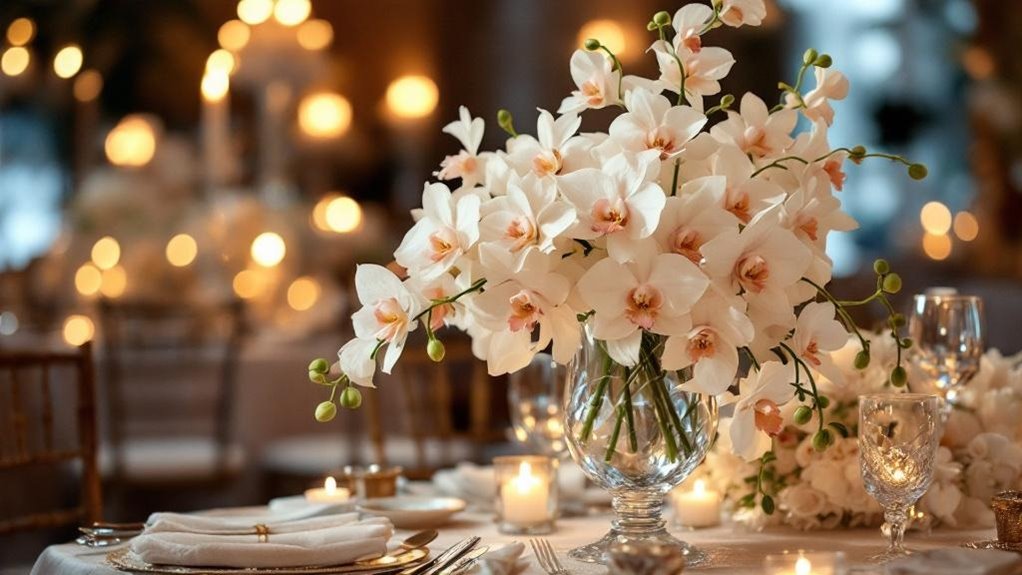
Orchids bring the same cultivated focus to centerpieces that they bring to bouquets, but at the table they also shape the room’s observational rhythm. A few large Phalaenopsis blooms can establish clear visual impact without crowding the arrangement or making it feel stagnant.
A few Phalaenopsis blooms create crisp visual rhythm, giving centerpieces presence, balance, and cultivated restraint without unnecessary fullness.
Their exotic form and broad color range let you direct mood with precision, whether your setting leans formal, modern, or softly romantic. Their arching stems can produce a measured cascading line that adds height, movement, and restraint at once.
You also benefit from their durability; orchids hold their structure and color through long ceremonies, dinners, and late receptions, so your centerpieces remain composed rather than tired.
That reliability matters, because consistent freshness supports the atmosphere you’ve planned and keeps each table visually coherent throughout.
Why Orchids Pair Well With Other Flowers
Balance makes mixed wedding florals feel intentional, and orchids support that balance with unusual silhouettes, cultivated structure, and a visual presence that strengthens surrounding blooms rather than competing with them. When you combine Phalaenopsis or Dendrobium with calla lilies, tulips, or garden roses, you create contrast without making the design feel stagnant, because orchids come in broad color ranges and distinct forms that sharpen the observational rhythm of an arrangement.
You also gain practical flexibility; white orchids add volume and texture, soften connections between flower types, and blend well across classic, modern, or minimalist themes.
Because they remain durable through handling and display, you can place them confidently in bouquets or centerpieces, and your florist can customize pairings with precision, maintaining cohesion while preserving each bloom’s individual character and refined clarity throughout.
Why Orchids Create Dramatic Installations
When you need a floral installation to command attention without feeling excessive, orchids give designers a rare combination of sculptural form, scale, and adaptability; their arching stems, refined petals, and cultivated structure lend themselves naturally to cascading arrangements, floral bridges, and overhead canopies, where each bloom contributes visible movement and shape rather than filling space in a stagnant way.
| Feature | Design value | Result |
|---|---|---|
| Scale | Fewer blooms needed | Strong focal point |
| Color | Broad palette | dramatic effects |
You get observational clarity from large varieties like Phalaenopsis, whose size creates impact with restraint, while their exotic character strengthens floral installations and lets designers blend orchids with supporting elements, producing ceiling pieces and suspended forms that feel dynamic, cohesive, and visually elevated for guests.
Where to Use Orchids Beyond Bouquets
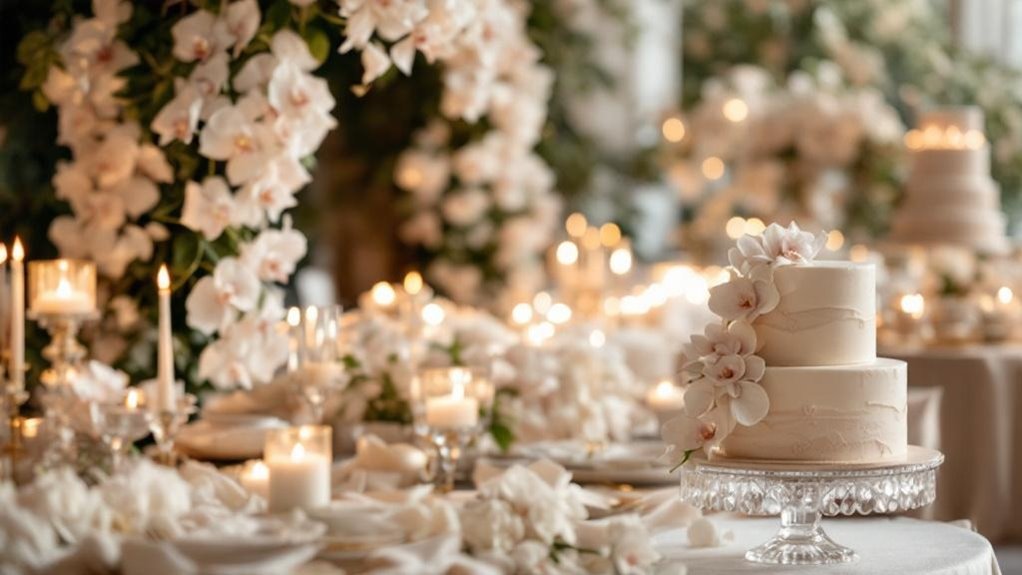
You can carry orchids beyond the bouquet, using them as cultivated wearable accents in head wreaths for the bridal party, where they complement formal attire and extend your floral theme with quiet consistency.
You can also place them throughout your ceremony and reception decor, tying orchid stems to chairs with silk ribbons, scattering petals along the aisle in place of roses, and setting blossoms in tall vases with floating candles so the atmosphere never feels visually stagnant.
Even your favors can reflect this observational approach, since individual orchid blooms add a refined finishing note and leave guests with a lasting reminder of the day.
Ceremony And Reception Decor
Although bouquets often receive most of the attention, orchids shape the larger visual language of a wedding most effectively in the ceremony and reception decor, where their sculptural form and cultivated elegance support everything from floral bridges and canopies to restrained tabletop arrangements.
You can extend that effect across the venue with observational precision:
- Frame the ceremony with floral bridges or canopies.
- Line aisles with orchid petals for a measured path.
- Suspend ceiling installations to prevent stagnant sightlines.
- Repeat orchids on tables, chairs, and floating centerpieces.
Because orchids carry strong visual weight, you don’t need excess material; a few stems can steady a room, unify decor decisions, and give both ceremony and reception a coherent, cultivated atmosphere that guests register immediately and remember afterward.
Wearable Floral Accents
Because orchids adapt so well to scale and placement, they work with unusual precision as wearable floral accents, extending the wedding’s visual language beyond bouquets into hair pieces, boutonnieres, corsages, and even favor details. A single bloom placed in a bride’s or bridesmaid’s hair adds cultivated structure without crowding the face. Orchid petals in boutonnieres give the groom and groomsmen a cleaner, more observational link to the larger floral scheme. Corsages for mothers or honored guests carry that same restraint into forms that feel formal rather than stagnant.
You also can place each orchid on favors, where it shifts from decoration to keepsake, reinforcing continuity across the day. By using the flower in attire, accessories, and small guest details, you create a cohesive design that remains elegant, practical, and quietly memorable for everyone present.
How Orchids Match Any Wedding Palette

Whether the wedding palette leans toward soft spring pastels, saturated autumn tones, or a cultivated monochrome scheme, orchids adapt with unusual ease, since their range of colors and forms keeps arrangements from feeling stagnant while supporting the larger visual direction of the day.
- Pastel varieties echo spring’s restrained color shifts.
- Deeper blooms suit autumn tablescapes and bouquets.
- White orchids offer a neutral, observational anchor.
- Mixed with calla lilies or tulips, they sharpen contrast.
You can match orchids to nearly any season, then use their sculptural petals and varied sizes to reinforce surrounding floral choices without crowding them.
If you prefer a restrained palette, Phalaenopsis lends polish; if you want stronger contrast, orchids create it cleanly, especially beside simpler blooms, so your arrangements feel cohesive, deliberate, and visually active rather than overly busy.
Why Orchids Feel Both Classic and Modern
That adaptability in color naturally extends to style, which is one reason orchids feel at home in weddings that lean classic as well as those shaped by a more modern eye; they carry a long-standing association with love, beauty, and strength, yet their sculptural forms, clean lines, and observational elegance keep arrangements from appearing stagnant or overly familiar.
In your wedding, that balance lets you honor tradition without sacrificing a cultivated, current sensibility; all-white Phalaenopsis designs read as refined and glamorous, while more vivid varieties introduce movement, contrast, and contemporary character.
Because orchids carry rich symbolism and adapt easily to shifting themes, they support formal ceremonies, minimalist settings, and layered floral compositions alike, giving you flowers that feel established rather than dated, and distinctive rather than experimental.
Orchids move gracefully between formal, minimalist, and richly layered weddings, offering symbolism, distinction, and a sense of timeless relevance.
Their presence remains quietly persuasive across trends and generations alike.
How to Choose Wedding Orchids
How you choose wedding orchids should begin with the role the flowers need to play in your design, then move to the varieties that best support that purpose; Phalaenopsis orchids are often the most reliable starting point, since their long-lasting blooms and elegant form suit bouquets and centerpieces equally well.
Meanwhile, Dendrobium orchids introduce a lighter, more playful structure that works especially well in beach-themed or more whimsical settings. Cymbidium orchids bring robust blooms and a distinctive boat-like shape that lends tropical arrangements greater boldness and visual definition.
- Match orchids to your palette; cultivated pastels suit spring.
- Choose vibrant tones for autumn, avoiding stagnant color stories.
- Ask florists for observational guidance on style cohesion.
- Consider Phalaenopsis a popular choice, the best choice for bridal bouquets.
Frequently Asked Questions
What Do Orchids Symbolize in a Wedding?
Orchids symbolize your love, beauty, strength, and devotion in a wedding. You can also express refinement, prosperity, and thoughtfulness through specific varieties. Their striking blooms reflect your unique love story and lasting commitment beautifully.
What Is the 3 5 8 Rule for Weddings?
You can gently tame floral chaos with the 3-5-8 wedding rule: choose three flower types for bouquets, five for centerpieces, and eight for décor. You’ll keep arrangements cohesive, elegant, and budget-friendly without overwhelming your guests.
Are Orchids a Good Wedding Flower?
Yes, orchids make excellent wedding flowers because you get beauty, meaning, and versatility in one bloom. They last through the day, match nearly any palette, and elevate bouquets, centerpieces, and décor with an elegant, exotic look.
What Does the Bible Say About Orchids?
The Bible doesn’t mention orchids specifically, but you can see them reflected in verses celebrating flowers’ beauty and God’s creation, like Matthew 6:28-29. You might also connect orchids’ elegance with love, seasons, and poetic beauty.
Conclusion
When you choose orchids for your wedding, you rely on flowers that look cultivated and refined, adapt across styles and palettes, and remain composed through a long day without turning stagnant in photographs or arrangements; that balance explains their steady appeal. Nearly 10 percent of all flowering plants on Earth are orchids, an observational statistic that underscores their remarkable diversity, and it helps you see why they can support a wedding design that feels personal, enduring, and quietly complete.