
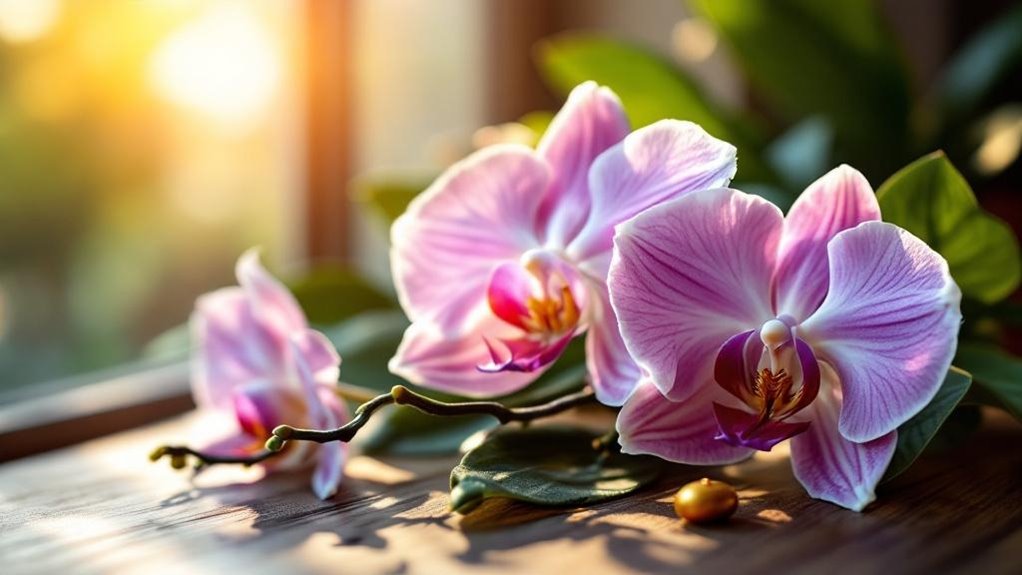
Yes, you can regard orchids as bringers of luck and quiet protection, because many traditions link them to prosperity, refined conduct, balanced energy, and the prevention of stagnant influences within a cultivated space. Their colors sharpen that meaning; yellow suggests good fortune, purple signals wealth, pink supports affection, and white favors new beginnings. You strengthen those associations through careful placement, steady care, and healthy plant selection, and the distinctions become clearer with a closer look.
- Key Takeaways
- Do Orchids Bring Luck and Protection?
- Why Orchids Are Considered Lucky
- What Orchids Mean in Different Cultures
- Which Orchid Colors Mean Good Luck?
- How Orchids Symbolize Love and Prosperity
- Where to Place Orchids for Good Luck
- How to Choose the Right Orchid
- When Orchid Colors Send the Wrong Message
- Frequently Asked Questions
- Conclusion
Key Takeaways
- Orchids are widely considered symbols of luck, prosperity, refinement, and harmony in many cultures, especially in Chinese tradition and feng shui.
- In feng shui, healthy orchids are believed to attract positive energy, support balance, and help protect spaces from stagnant or disruptive influences.
- Orchid color affects meaning: yellow suggests good fortune, purple wealth, pink affection, and white purity and fortunate new beginnings.
- Placement matters; orchids in offices, studies, or the east sector are thought to support focus, health, family harmony, and success.
- Their protective symbolism depends on proper care, since thriving orchids with healthy leaves and roots represent stable growth and beneficial energy.
Do Orchids Bring Luck and Protection?

How, then, do orchids come to be linked with luck and protection? Across cultivated traditions in China and Japan, you see orchids associated with prosperity, royal beauty, and an ordered environment, so they’re often regarded as flowers that bring good luck while also softening stagnant emotional currents.
In Chinese and Japanese traditions, orchids symbolize prosperity, grace, and the gentle protection of harmonious surroundings.
In feng shui, you place them in a study or home office to support personal growth, steady focus, and a more balanced atmosphere; this observational practice connects their presence with good health, harmony, and subtle protection.
Color deepens that impression, because purple and white orchids are believed to refine positive vibrations, yellow ones suggest fortune and happiness, and pink varieties reinforce admiration and fertility.
In your living space, that combination can encourage tranquility, emotional balance, and a quietly protective tone.
Why Orchids Are Considered Lucky
Because orchids have long been treated as cultivated emblems of refinement, prosperity, and esteem, people often regard them as lucky flowers, not simply for their appearance but for the values they’ve come to represent across different settings. You see orchids as rich in symbolism; in various cultures, they signal beauty, admiration, and good fortune, while green leaves suggest dynamism and steady growth.
| Feature | Association | Effect |
|---|---|---|
| Yellow blooms | Happiness | Success |
| Purple blooms | Wealth | Status |
Placed in a study or office, they’re thought to invite positive energy and reduce stagnant conditions, supporting observational focus and career progress. Their rarity also shaped this belief; Victorian collectors treated orchids as markers of fortune, so you still read them as signs of prosperity and harmony today.
What Orchids Mean in Different Cultures
As you look at orchids across cultures, you can see that their meaning rarely stays stagnant; in Asia, especially in China, they reflect beauty, cultivated taste, wealth, and admiration, and this observational tradition also links them to noble character through Confucian thought.
You can also trace older beliefs and lore in the ancient world, where Greeks treated orchids as signs of fertility and virility, connecting them to hopes for offspring and reproductive strength.
When you place these meanings side by side, you begin to see why orchids carry more than ornamental value, because their symbolism has long been shaped by what different societies most respected and wished to preserve.
Asian Orchid Symbolism
Across much of Asia, orchids have long carried meanings that extend beyond ornament, standing for beauty, cultivated taste, and material prosperity; in Chinese thought, Confucius compared orchids to noblemen and faithful friends, an observational link that frames the flower as a marker of inner character rather than stagnant display.
- In China, orchids are associated with good fortune, refined conduct, and wealth.
- Yellow blooms suggest happiness and luck; Purple Orchids signal respect and prosperity.
- In Japan, you see the Samurai orchid as a sign of purity, elegance, bravery, peace, and measured respect.
- Across these traditions, each flower symbolizes values you can recognize in social life, where beauty carries moral weight.
When you consider Asian orchid symbolism, you encounter a plant that joins status with discipline, and appearance with character.
Ancient Beliefs And Lore
Orchid meanings don’t stop with Asian ideals of cultivated character and prosperity; older beliefs in other cultures show that people also treated these flowers as signs of fertility, power, and social distinction, attaching observational meaning to their unusual forms rather than regarding them as stagnant ornaments.
Among ancient Greeks, you find orchids tied to fertility and virility, even to the belief that eating them could shape a child’s sex; in Aztec practice, they signaled strength and fed potent elixirs.
In China and Japan, orchids symbolize beauty, refinement, wealth, bravery, peace, and good fortune, so you read them as morally cultivated as well as materially fortunate.
Which Orchid Colors Mean Good Luck?
When you’re choosing an orchid for luck, color carries most of the symbolic weight, and cultivated traditions tend to favor yellow, purple, pink, and white because each shade points to a different form of positive energy rather than a vague promise of fortune.
- yellow orchids signal happiness, joy, and good luck; in Chinese observational practice, you’d choose them to keep energy bright rather than stagnant.
- purple orchids suggest wealth, royal beauty, admiration, and favorable regard across Asian and Western settings.
- pink orchids convey grace, femininity, and appreciation, so you use them when you want goodwill to gather quietly around a space.
- White Orchids mark purity and new beginnings, which supports fresh starts with calm optimism.
Red Orchids appear striking, yet cultivated luck traditions usually emphasize these four colors instead.
How Orchids Symbolize Love and Prosperity

You can see love in orchid colors, because pink suggests cultivated grace and affection, while purple conveys admiration, respect, and a quiet sense of dignity.
You can also connect orchids with prosperity and good fortune, since many cultures, especially in Chinese tradition, link them to wealth, success, and a life that resists anything stagnant.
When you place orchids in your home, you invite positive energy and harmony; in Feng Shui, that placement supports both loving relationships and the steady growth of abundance.
Love In Orchid Colors
Because color carries its own cultivated language, orchids have long symbolized love and prosperity in ways that feel both observational and enduring, with each hue shaping the message you send; pink orchids suggest grace, femininity, and affectionate regard, which is why they appear so often in romantic gestures and celebrations that honor tender bonds.
Meanwhile, purple orchids evoke wealth, royalty, admiration, and respect, giving them a distinct place in gifts meant to express both devotion and a wish for flourishing relationships.
- Pink lets you show appreciation.
- Purple deepens flower meaning.
- Yellow orchids are often chosen for joy, friendship, and bonds that don’t grow stagnant.
- White supports new beginnings in weddings; some believe they bring good fortune through lasting commitment.
Through color, you choose how love is seen, remembered, and quietly affirmed.
Prosperity And Good Fortune
Beyond color’s cultivated language of affection, orchids also carry a long-standing association with prosperity and good fortune, especially in many Asian traditions, where they’ve come to represent wealth, refinement, and the visible signs of a successful life; that meaning grows from both observational habit and social history, since orchids have long been admired as elegant, exotic blooms whose rarity and poise suggested affluence rather than anything ordinary or stagnant.
| Meaning | Effect |
|---|---|
| Purple | wealth |
| Green placement | good fortune |
| Gifted orchids | thoughtful love |
You see why orchids are among the flowers believed to bring prosperity: in Feng Shui, placing them well supports chi and financial flow, while gifting them joins affection with status. Their polished beauty still implies success, and purple varieties especially reinforce admiration, rank, and a quietly affluent life.
Where to Place Orchids for Good Luck
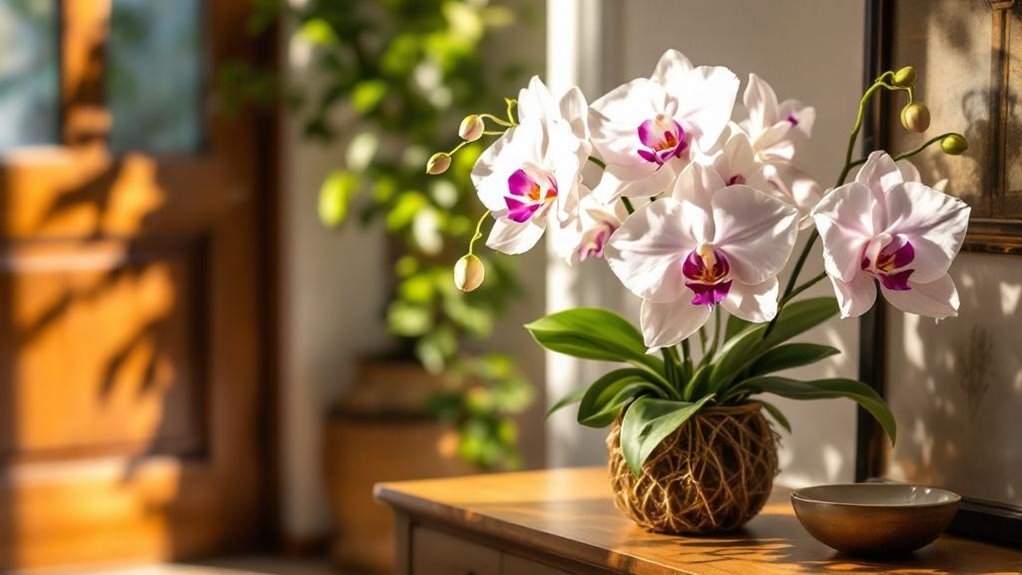
Three placements tend to stand out when orchids are used for good luck: the study or office area supports career progress and professional fortune, the Yan Nian area is cultivated for harmony and stronger relationships, and the East sector aligns with the wood element, encouraging health, family cohesion, and a more revitalized atmosphere.
- Place your orchid plant in a study to enhance career success and steady focus.
- Set it in the Yan Nian area to support cultivated harmony and relational balance.
- Use the East sector to reduce stagnant energy and reinforce health, family ties, and renewal.
- Keep it in bright indirect sunlight, observe leaves and roots regularly, and adjust conditions carefully, since sound placement and observational care help it attract luck and protective energy consistently.
How to Choose the Right Orchid
When you choose an orchid, start with the conditions you can actually provide, then narrow your selection by meaning, resilience, and overall plant health; if you want a flower that aligns with a particular intention, color matters, since pink is often associated with grace, yellow with joy, and other shades carry their own cultivated sentiments.
If you’re new to Orchid care, choose an easy to care variety, such as Phalaenopsis or Oncidium, because each adapts well and still offers a stunning orchid display.
Assess healthy orchids with an observational eye: leaves should look smooth, never yellowing, wilted, or stagnant. Inspect the roots as well; they should be firm and green, not mushy or brown.
Finally, match the plant to your home environment, since most orchids perform best in bright, indirect light and steady conditions.
When Orchid Colors Send the Wrong Message
Color doesn’t just shape an orchid’s visual effect; it also frames the message other people may read into the gift, and that cultivated symbolism can work against your intentions if you don’t account for context.
Even with pure intentions, you can trigger misinterpretations, because colors carry observational associations, local customs, and stagnant assumptions that alter sentiments.
- White orchids may suggest innocence, yet they can also evoke funerals, which undermines celebratory giving.
- Yellow orchids usually convey friendship and joy, but some readers attach negative meanings like jealousy or deceit.
- Pink orchids express grace, though they may appear overly romantic in platonic situations.
- Red orchids signal passion and desire; in professional settings, they can imply interest and complicate boundaries.
You protect your message by matching color to occasion, relationship, and culture carefully.
Frequently Asked Questions
Which Color Orchid Is Lucky?
Yellow orchids are your luckiest choice, since they symbolize happiness, joy, and good fortune. You can also choose purple orchids for prosperity, white for fresh starts, or pink to encourage harmony, affection, and positive energy.
Where Should Orchids Be Placed in the House?
Place your orchids in the East for health and family, or in your office for career growth; not dark corners, but bright, indirect light. You’ll also boost harmony by setting them in the Yan Nian area.
What Does the Bible Say About Orchids?
You won’t find orchids named specifically in the Bible, but you’ll see flowers praised as signs of God’s beauty, care, and provision. You can view orchids as reflecting His creation’s grace, abundance, and comforting splendor.
What Is the Luckiest Plant to Have?
You’ll find lucky bamboo the luckiest plant to have; it’s a green magnet for prosperity. You can also choose orchids, especially purple or yellow ones, if you want beauty, success, joy, and uplifting energy at home.
Conclusion
If you choose orchids with care, place them where energy can circulate, and match their color to your intent, you cultivate more than decoration; you create an observational symbol of luck, protection, love, and prosperity that supports a balanced home. Like a quiet lantern in a still room, an orchid suggests steady blessing rather than spectacle, and its presence, when thoughtfully maintained, can soften stagnant spaces, reinforce harmony, and reflect the meaning you want your surroundings to hold.