
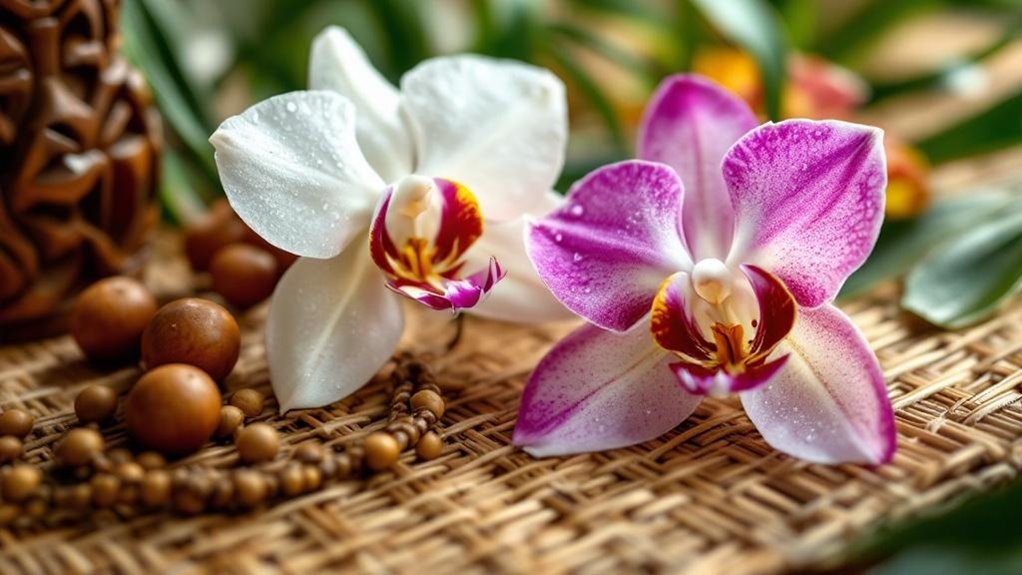
In Polynesian floral tradition, you’ll see orchids symbolize cultivated beauty, honor, and refined social regard; they appear in leis, weddings, and public ceremonies because their colors and fragrance communicate affection, marital unity, admiration, and continuity with observational precision. White orchids suggest purity, pink conveys joy, purple carries dignity, and yellow marks friendship or new beginnings. In Hawai‘i, introduced and native orchids remain significant because they join ceremonial beauty to living cultural identity, with further distinctions ahead.
- Key Takeaways
- What Orchids Symbolize in Polynesian Culture
- Why Orchids Matter in Polynesian Floral Traditions
- How Orchids Are Used in Lei Making
- What Orchid Colors and Scents Represent
- Orchid Lei in Weddings and Ceremonies
- How Orchid Lei Express Love and Respect
- Native and Introduced Orchids in Hawai‘i
- How Orchids Compare With Pikake, Maile, and Plumeria
- Why Orchid Lei Remain Popular Today
- Frequently Asked Questions
- Conclusion
Key Takeaways
- In Polynesian floral tradition, orchids symbolize elegance, refinement, beauty, and cultivated luxury in ceremonial and social settings.
- Orchid leis express love, honor, and admiration at weddings, graduations, and public celebrations, marking important relationships and milestones.
- White orchids represent purity and marital unity, pink suggests joy and admiration, purple signals dignity, and yellow conveys friendship and new beginnings.
- In weddings, orchid leis visibly affirm affection, respect, and esteem, enhancing attire while honoring the bond between giver and recipient.
- Orchids in Hawai‘i blend indigenous and introduced influences, preserving cultural meaning while complementing flowers like maile, pikake, and plumeria.
What Orchids Symbolize in Polynesian Culture

Elegance sits at the center of orchid symbolism in Polynesian culture, where these flowers have long signaled beauty, refinement, and cultivated luxury, and where their presence in ceremonial settings has often marked social standing as clearly as dress, gesture, or rank.
In Hawaiian culture, you see orchids express love and honor through the orchid lei, especially at weddings and graduations, where giving and wearing them affirms respect, affection, and observant social ties.
You also encounter orchids as gifts that carry deep feeling without stagnant sentimentality; they communicate esteem, attachment, and quiet devotion with cultivated restraint.
Across Polynesian practice, including Maori and Hawaiian settings, orchids show how introduced flowers become embedded in local ritual language, while varieties linked to romance and notable occasions sharpen their symbolism, guiding how you read beauty, status, memory, and relational regard.
Why Orchids Matter in Polynesian Floral Traditions
You can see why orchids matter in Polynesian floral traditions when leis carry their cultivated beauty into ceremonies, gift-giving, and public celebrations, where refinement and luxury become visible signs of respect and connection.
You also recognize their ceremonial and cultural value in the observational care given to delicate blossoms, since their presence reflects personal bonds, marks milestones such as weddings, and keeps communal meaning from becoming stagnant.
When you follow orchids through these traditions, you see elegance serving a larger purpose; it honors nature, strengthens social ties, and gives cultural expression a more enduring form.
Orchid Symbolism In Lei
Because leis carry social meaning as well as visual appeal, orchids hold a distinct place in Polynesian floral traditions; they symbolize refinement, beauty, and luxury, and those associations make them especially suited to ceremonies where cultivated grace matters. In a Hawaiian lei, each flower represents esteem, and orchids support that observational language through form, rarity, and cultivated elegance.
| Orchid use | Meaning | Effect |
|---|---|---|
| White bridal lei | Beauty | Soft distinction |
| Wedding adornment | Love | Elevated presence |
| Gifted strand | Honor | Respect conveyed |
| Indigenous varieties | Adaptability | Cultural continuity |
You see why orchids remain favored: white blossoms frame brides with quiet luminosity, varied species prevent symbolism from becoming stagnant, and their exotic appearance gives the wearer a composed, luxurious finish that aligns naturally with marriage and other formal moments.
Ceremonial And Cultural Value
Within Polynesian floral traditions, orchids matter not simply as decorative blooms but as ceremonial signs of relationship, status, and continuity; their cultivated beauty gives public form to private feeling, and their presence in leis, weddings, and other rites marks moments when refinement, love, and social regard must be made visible.
In Hawaiian practice, you see how orchid lei symbolize attachment, respect, and social recognition, especially during marriages and other threshold events, where selected varieties carry observational meaning through color, form, and rarity.
You also find orchids linked with fertility and virility, so they don’t sit as stagnant ornaments; they affirm ancestry, life, and continuance.
Their lasting place in Polynesian custom shows why communities still choose them: orchids unite elegance with symbolic precision, allowing you to witness beauty serving cultural memory with disciplined grace.
How Orchids Are Used in Lei Making
Across Hawaiian lei making, orchids hold a cultivated place, valued for beauty, elegance, and cultural significance; their refined form and often lingering fragrance give a lei visual balance and emotional weight, so makers use them when the occasion calls for grace rather than anything stagnant or purely ornamental. You see each flower used with observational care, because a lei worn at weddings, hula, or formal gatherings should appear composed and feel meaningful.
| Use | Orchid | Purpose |
|---|---|---|
| Weddings | Indigenous varieties | Marriage bond |
| Hula | Pīkake | Graceful adornment |
| Brides | Pīkake | Love token |
| Celebrations | Four native types | Emotional resonance |
When you thread delicate blossoms, craftsmanship matters; orchids bruise easily, yet skilled hands preserve structure, fragrance, and symmetry, ensuring the finished lei carries refinement, luxury, and enduring ceremonial presence.
What Orchid Colors and Scents Represent
Although orchids are often admired first for their cultivated beauty, their colors and scents carry a more precise symbolic language in Polynesian and especially Hawaiian practice, shaping how a lei or floral arrangement is read by those who wear it and those who receive it.
White orchids suggest purity, beauty, and marital unity, which is why they suit bridal leis so naturally, while pink orchids convey admiration and joy, making them fitting for celebrations and personal milestones.
White orchids speak to purity and marital unity, while pink orchids carry admiration and joy into life’s celebrations.
Purple orchids introduce dignity and elegance without turning the gesture stagnant or merely decorative. You also find yellow tones used to express friendship and new beginnings, giving each orchid an observational clarity.
Fragrance deepens meaning; when you encounter sweet, lingering notes, especially in pīkake, you read romance, affection, refinement, and quiet luxury.
Orchid Lei in Weddings and Ceremonies

That symbolic language becomes most visible in weddings and formal ceremonies, where orchid lei move from cultivated adornment to public statement, expressing love, honor, and respect between the couple while also marking the observance itself with dignity.
In Hawaiian practice, you see wedding lei shape the visual order of the day; white orchids remain the customary choice for brides, while pink orchids offer a similarly refined alternative, their cultivated surfaces preventing the attire from seeming ornate or stagnant.
Across ceremonies, orchid lei carry clear cultural significance, because they place marriage within a recognizable Hawaiian framework and give the couple an observational link to tradition.
You notice their elegance immediately: they soften formal clothing, heighten the ceremony’s composure, and present commitment through a visible token suited to solemn public occasions and rituals alike.
How Orchid Lei Express Love and Respect
When you receive or offer an orchid lei, you recognize a cultivated symbol of affection, one that makes love, honor, and respect visible rather than stagnant or merely observational.
In Hawaiian wedding traditions, you see this meaning become more exact, because the bride’s orchid lei signifies marriage, affirms an intimate bond, and lends formal elegance to the ceremony through the orchid’s refined beauty.
You also notice honor through orchids in the choices themselves, as white and pink lei express personal style while sustaining cultural significance, and they strengthen the emotional and spiritual connections shared during important occasions.
Symbols Of Affection
In Polynesian culture, an orchid lei expresses affection with cultivated clarity, serving as both a gift of beauty and a public sign of love and respect during weddings, graduations, and other significant passages. Each lei carries meaning through its form and flower choice, so pīkake can signal romantic devotion while ʻilima suggests grace.
The act of giving or wearing one confirms that the relationship itself matters, that the recipient isn’t incidental or stagnant in the giver’s life, but honored, remembered, and held within an observational tradition of commitment.
When you place this flower lei on someone, you recognize importance rather than ornament alone; orchids refine the message through elegance, and the exchange marks affection, admiration, and enduring regard with visible dignity.
Wedding Lei Meaning
Orchid lei carry the language of affection into marriage with cultivated clarity, and in Hawaiian weddings they stand not merely as decoration but as visible signs of love, honor, and respect, reflecting the bond the couple publicly affirms before family and community.
As you consider wedding lei meaning, you see how orchids are used to symbolize commitment through form and color; white orchids remain the most recognizable bridal choice, while pink orchids offer a more vibrant, observational counterpoint.
When you wear them, you don’t simply add beauty; you present an elegant, sophisticated image that keeps ceremony from feeling stagnant, and you mark the day with tokens of feeling that speak quietly yet clearly.
In this tradition, the lei reinforces continuity, showing how floral customs remain central to Hawaiian wedding practice today still.
Honor Through Orchids
Because an orchid lei does more than adorn the body, it marks the recipient with visible esteem, expressing love, honor, and respect through a cultivated form that Hawaiian culture has long reserved for moments of real personal significance, especially weddings and other passages that ask for public acknowledgment of relationship.
When you give or receive one, you recognize refinement, beauty, and relational duty; the gesture refuses stagnant sentiment and makes feeling observational, formal, and enduring.
- White orchids signal purity and elegant commitment, especially in marriage rites.
- Their fragrance and exotic form deepen memory during special occasions.
- Each lei affirms the recipient’s place in your life with unmistakable honor.
In Polynesian tradition, that visible exchange matters because beauty alone isn’t the message; respect, attachment, and social recognition travel together through the flowers.
Native and Introduced Orchids in Hawai‘i
Although Hawai‘i’s floral identity is often discussed through broad images of abundance, its orchid traditions rest on a more precise balance between four indigenous varieties and a cultivated range of introduced blossoms, each carrying distinct symbolic weight within the islands’ ceremonial life.
In native practice and Hawaiian tradition, you see these orchids as markers of refinement, beauty, and quiet luxury, especially in lei-making for weddings, honors, and observances. Their adaptability keeps them from becoming stagnant symbols; instead, they thrive across varied island climates, and that resilience supports their continued cultural presence.
You also encounter introduced blossoms within this observational framework, where cultivated forms join older floral lineages and show how Hawai‘i absorbs outside influences without erasing inherited meanings.
In ceremonious settings, orchids remain culturally important, linking ancient practice with contemporary expression across the islands today.
How Orchids Compare With Pikake, Maile, and Plumeria

When you compare orchids with pikake, maile, and plumeria in Hawaiian floral tradition, you notice that each flower carries a distinct ceremonial register; orchids project refinement, beauty, and cultivated luxury, while pikake is valued for its sweet fragrance and close association with love. Maile conveys respect, unity, and regal gravity, and plumeria represents affection and new beginnings through its vivid color and stronger scent.
- You read orchids as observational, ornate, and suited to elevated occasions.
- You encounter pikake in bridal contexts, where scent carries intimate meaning.
- You regard maile as steadier than stagnant display, because it marks unity and honor.
Plumeria, by contrast, speaks through brightness and perfume, and you can see why it parallels orchids in leis that express affection, while still preserving a separate visual and symbolic identity within ceremony.
Why Orchid Lei Remain Popular Today
Even now, orchid lei remain popular because they unite visual elegance with ceremonial meaning, and in Hawaiian weddings that combination still matters; they signify love, honor, and respect without seeming stagnant or overly ornate, and their cultivated beauty allows them to mark the marriage bond with a formality that feels both observational and enduring.
| Feature | Why it matters |
|---|---|
| White orchids | You recognize their refined beauty |
| Color variety | You can personalize wedding themes |
Because orchid lei are often worn in ceremonies, you see how white bridal strands project calm distinction, while other colors adapt to personal preferences; local florists also keep them accessible, fresh, and consistent. Their exotic appearance and luxurious associations sustain appeal for residents and visitors, giving wedding attire a measured, lasting grace.
Frequently Asked Questions
What Is the National Flower of Polynesia?
Polynesia’s national flower is the Tiare, or Tahitian gardenia. You’ll recognize its white petals and sweet scent. It represents purity, beauty, love, and hospitality, and you can see it in leis, ceremonies, and traditional adornment.
What Do Orchids Mean in Floriography?
In floriography, orchids mean refinement, beauty, luxury, and deep affection. You’d give them to express admiration, love, or desire. Their exotic elegance lets you convey respect and emotional intensity without saying everything outright to someone.
What Birth Month Is a Forget Me Not?
Forget-me-nots belong to April, a tiny blue whisper of remembrance. You’ll often see them linked to true love and lasting memory, so if you’re born in April, you’ve got a flower that quietly says devotion endures.
Are Orchids a Hawaiian Flower?
Yes, you can call orchids a Hawaiian flower culturally, though they aren’t originally native there. You’ll find four native orchid species in Hawaii, and people widely use many introduced orchids in leis, weddings, and celebrations.
Conclusion
When you consider orchids in Polynesian symbolism and floral tradition, you see more than ornament; you see a cultivated language of honor, affection, and continuity, carried in color, scent, and touch. In lei, in weddings, in quiet acts of welcome, orchids resist anything stagnant, joining people to place and memory. Their observational beauty endures because it serves a purpose, and that purpose remains clear: to express respect, preserve connection, and give form to what words often can’t.