
In Hawaiian tradition, you shouldn’t treat orchids as inherently sacred or kapu; you should understand them as culturally cherished flowers whose meaning is cultivated through beauty, ceremony, and exchange. When you see orchids in leis, especially dendrobiums, you’re seeing symbols of love, respect, refinement, and achievement, not a stagnant divine status. Their importance comes from social and ceremonial use, while truly sacred meaning attaches elsewhere; with that distinction, the fuller context becomes clearer.
- Key Takeaways
- What Does Sacred Mean in Hawaiian Tradition?
- Are Orchids Sacred in Hawaiian Tradition?
- Why Orchids Matter in Hawaiian Leis
- Are Orchids Native to Hawaii?
- Which Orchids Are Used in Hawaiian Leis?
- What Orchid Lei Colors Mean
- How Orchids Express the Spirit of Aloha
- When Are Orchid Leis Given in Hawaii?
- How Orchid Leis Honor Guests and Elders
- Orchid Leis at Weddings and Graduations
- Are Orchid Leis Used at Funerals?
- Orchid Leis vs. Maile and Pikake
- How to Make Orchid Leis Respectfully
- Is It Respectful for Visitors to Wear Orchid Leis?
- How to Gift and Wear Orchid Leis
- Frequently Asked Questions
- Conclusion
Key Takeaways
- Orchids are culturally valued in Hawaii, but they are not generally considered sacred or kapu in Hawaiian tradition.
- Sacredness in Hawaiian culture usually applies to people, places, objects, or practices set apart through spiritual discipline and ancestral significance.
- Orchids are especially important in leis, where they symbolize love, respect, refinement, beauty, and celebration.
- Dendrobium orchids are widely used in Hawaiian leis because of their durability, vivid colors, and elegant appearance.
- Many orchids in Hawaii were introduced species, though they still hold strong cultural meaning in ceremony, gifting, and social exchange.
What Does Sacred Mean in Hawaiian Tradition?
Although the word sacred may seem abstract at first, in Hawaiian tradition it’s grounded in the idea of kapu, which marks a person, place, object, or practice as holy, restricted, and set apart because of its spiritual and cultural weight.
When you understand kapu, you see sacred meaning as cultivated through lived practice, not stagnant belief; it carries spiritual significance because it orders how you approach land, sea, life, and ceremony with disciplined respect.
In Hawaiian tradition, sacred things often include natural forms and sites, protected not merely for beauty but for their cultural roots and their link to religious ceremonies.
Through an observational lens, you can recognize that sacred use also connects communities to ancestors, reinforcing responsibility, reverence, and continuity between the human world and the spiritual domain.
Are Orchids Sacred in Hawaiian Tradition?
How, then, should you understand orchids in Hawaiian tradition: not as sacred in the strict sense of kapu, but as culturally valued flowers whose meaning has been cultivated through beauty, ceremony, and social exchange; they appear often in leis and formal occasions, especially in Dendrobium varieties, where they signify refinement, love, respect, and achievement rather than holiness.
If you ask whether the orchid carries spiritual meanings, you should answer carefully: in Hawaiian tradition, it isn’t sacred, yet its cultural significance remains clear, because you see it marking affection, appreciation, and status, while also reflecting an observational bond with nature and native flora.
Through cultivation and use in leis, you recognize a community resisting stagnant custom, sustaining beauty and practice together, and affirming heritage without assigning the flower divine rank or kapu status.
Why Orchids Matter in Hawaiian Leis
The orchid matters in Hawaiian leis because it joins visual beauty with practical endurance; especially in Dendrobium forms, it holds color well, withstands handling and wear, and gives lei makers a flower that can serve both ceremonial and social purposes without losing its cultivated elegance.
When you receive orchids in Hawaiian leis, you encounter more than an observational display of beauty; you receive forms that symbolize love, respect, refinement, and quiet luxury across weddings, graduations, and other celebrations.
More than beauty alone, orchids in Hawaiian leis convey love, respect, refinement, and quiet luxury across life’s celebrations.
Their cultural significance rests in this dual role, since the lei remains visually composed rather than stagnant while carrying personal meaning, and pink blossoms can deepen that message toward romantic love.
In this way, orchids strengthen Hawaiian leis by uniting durable presentation, emotional expression, and a clear connection to heritage and place.
Are Orchids Native to Hawaii?

You should begin with a clear distinction: orchids aren’t native to Hawaii in the broad sense, because plant collectors and botanists introduced most species in the 1800s, though you can still observe four indigenous orchid groups on the islands—Dendrobium, Cirrhopetalum, Maxillaria, and Platanthera—as part of Hawaii’s singular biodiversity.
You can then note how introduced orchid species adapted to Hawaii’s lush conditions, where cultivated varieties thrive without appearing stagnant, and where their widespread use in leis and ceremonial decorations reflects cultural value rather than native origin.
As you consider orchids in Hawaiian ecosystems, you’ll see an observational balance between indigenous varieties and imported plants, a balance that helps explain both Hawaii’s global orchid industry and the refined status orchids came to hold in tradition.
Native Orchid Varieties
Contrary to a common assumption, orchids are native to Hawaii, though only four species are considered truly native, and their presence offers an observational view of the islands’ biodiversity rather than the cultivated abundance most visitors associate with tropical gardens.
Among these native orchid species, you encounter forms associated with Sobralia and the rare Hawaiian Dendrobium, plants that reveal how island flora adapts across forests and other habitats without becoming stagnant. Their vibrant colors support their quiet importance within Hawaiian culture, where lei-making links orchids with beauty and refinement, and where seasonal blooming shapes floral observance.
Because these orchids occupy limited ranges and specialized ecosystems, you should understand them as part of Hawaii’s natural heritage; accordingly, conservation efforts protect them, not as decorative curiosities, but as living evidence of ecological continuity.
Introduced Orchid Species
Introduction to orchids in Hawaii requires a careful distinction: most of the orchids people associate with the islands aren’t native at all, but introduced species brought during the 19th century, largely by European botanists who cultivated them for display, study, and hybridization, and whose efforts reshaped the floral landscape in ways that now seem longstanding rather than recent.
You see Dendrobium orchids most often; cultivation made them central to leis and ornament.
| View | Meaning | Feeling |
|---|---|---|
| Introduced blooms | history | quiet wonder |
| Native Hawaiian species | heritage | respect |
| Conservation of habitats | continuity | care |
The climate supports many species, so introduced orchids flourish beside Native Hawaiian forms, yet you shouldn’t mistake familiarity for origin; observational care shows four native orchids remain distinct, tied to particular habitats, and conservation keeps that record from growing stagnant.
Orchids In Hawaiian Ecosystems
Although orchids now seem inseparable from Hawaii’s floral identity, they aren’t native to the islands in the broad sense; most were introduced during the 19th century, with organized cultivation expanding after a German botanist brought orchids there in 1860. The tropical climate then allowed many species to naturalize, flourish, and become visually familiar in gardens, lei making, and commercial production.
Still, if you look closely, you’ll find four indigenous orchid varieties in Hawaiian rainforests, each adapted to a distinct ecosystem rather than a stagnant ornamental role. You can see how cultivated species now shape leis, floral arrangements, and cultural practices, while the broader orchid industry supports local economies.
This observational contrast matters: Hawaii’s orchid story combines introduced abundance with indigenous persistence, both sustained by climate and care.
Which Orchids Are Used in Hawaiian Leis?
When you look at which orchids appear most often in Hawaiian leis, Dendrobium orchids stand out first, because growers and lei makers value their resilience, cultivated range of vibrant colors, and ability to hold their form without becoming stagnant or fragile in warm conditions.
| Orchid | Use | Significance |
|---|---|---|
| Dendrobium orchids | Common lei base | Beauty, luxury |
| Mokara orchid | Accent in floral arrangements | Lively refinement |
| Orchids with plumeria or pikake | Mixed-design Hawaiian leis | Layered symbolism |
You also see the Mokara orchid, whose unusual shape and bright presence strengthen observational contrast in floral arrangements. In Hawaiian leis, orchids carry cultural significance through symbolism tied to refinement, elegance, respect, and honor, and you’ll often notice more ornate selections reserved for weddings, graduations, and other formal celebrations where presentation matters deeply.
What Orchid Lei Colors Mean
Color gives an orchid lei much of its message, because in Hawaiian tradition orchids already signal refinement and beauty, and their cultivated hues sharpen that meaning into something more specific, guiding how a lei is read within ceremonies, greetings, and formal celebrations.
When you choose colors, you shape the lei’s observational force: white can symbolize purity and elegance; purple can suggest royalty and admiration. Pink orchid blossoms carry meanings of grace and romantic love, while yellow tends to symbolize friendship and joy, avoiding any stagnant formality.
Red orchids mark passion and strength, so they suit major milestones and ceremonial honors. Blue orchids, though uncommon, introduce calmness and tranquility, balancing the lei’s emotional register.
In practice, these cultivated colors don’t replace the orchid’s beauty; they refine what you want the gesture to communicate clearly.
How Orchids Express the Spirit of Aloha
Aloha takes visible form in orchids, because their cultivated beauty and observational grace allow a lei to communicate more than decoration; it conveys affection, respect, and goodwill in a way that feels formal yet never stagnant.
- You notice orchids carry the aloha spirit through leis.
- You see floral beauty joined with cultural richness.
- You recognize spiritual significance in careful craftsmanship.
- You understand orchids as a meaningful gift of respect.
- You witness community bonds strengthened through shared adornment.
When you wear or offer orchids, you affirm a relationship with nature and people alike, and that gesture reflects Hawaiian values with unusual clarity; artisans shape leis that honor place, deepen belonging, and preserve cultural richness.
Their floral beauty doesn’t merely please the eye, it quietly reinforces love, unity, and spiritual significance within the community.
When Are Orchid Leis Given in Hawaii?
Across Hawaii, orchid leis are given at moments that ask for visible honor, cultivated beauty, and a gesture that won’t feel stagnant or merely ceremonial; you see them presented at graduations, weddings, luaus, and milestone birthdays, where they express love, respect, and admiration with a refinement that suits public celebration.
When you look across Hawaiian traditions, you notice orchid leis appear at significant celebrations because orchids convey elegance without excess; at weddings, they symbolize love through form as well as fragrance, and at milestone birthdays, they mark esteem with an observational sense of occasion.
You’ll also see the Purple Single Orchid Lei, often made from durable Dendrobium orchids, used because its classic appearance fits formal events. In memorial services, orchid leis carry respect and deep feeling, linking remembrance with shared affection and public dignity.
How Orchid Leis Honor Guests and Elders
Beyond the occasions themselves, orchid leis also show whom a community chooses to honor. In Hawaiian tradition, they’re often placed on guests and elders as a cultivated sign of respect, appreciation, and relational standing. The gesture acknowledges not only a person’s presence at the gathering but also the contributions, memory, and steadiness that person brings to family and community life.
- You see orchid leis honor guests with aloha.
- You recognize elders through fragrance and refinement.
- You read their significance in Hawaiian tradition.
- You notice cultural emblems affirming valued relationships.
- You understand appreciation remains active, never stagnant.
When you present orchid leis, you express gratitude and observational regard. Their elegance suits dignitaries and cherished elders, while their exchange strengthens family bonds, affirms heritage, and marks enduring community respect.
Orchid Leis at Weddings and Graduations
At weddings, you see orchid leis chosen for their cultivated beauty and elegance, and you recognize how they symbolize love, commitment, and the shared unity of the couple within Hawaiian custom.
At graduations, you receive or observe orchid leis as markers of success and new beginnings, and their vibrant colors keep the ceremony from feeling stagnant while reinforcing respect and affection through floral gifting.
In both settings, you can make an observational connection between the lei and the occasion; orchids don’t merely decorate the event, they affirm shared joy among family and friends.
Wedding Lei Symbolism
Because Hawaiian ceremonies place visible meaning in floral adornment, orchid leis, especially those woven from Dendrobium blossoms, carry a cultivated symbolism at weddings and graduations, where they mark beauty, refinement, and love while also giving form to commitment, partnership, and personal transformation.
- In a wedding, your lei presents beauty and disciplined grace.
- Dendrobium orchids support symbolism tied to love and partnership.
- You can read their elegance through Hawaiian cultural meanings.
- Their lasting form resists a stagnant, purely decorative role.
- The lei becomes a keepsake of vows, memory, and union.
When you wear orchids at a wedding, you don’t merely add adornment; you enter an observational tradition in which floral artistry confirms devotion, honors partnership, and lends visible dignity to the ceremony, reinforcing the union’s cultivated elegance.
Graduation Orchid Traditions
Two ceremonial moments often bring orchid leis into especially clear view in Hawaiian life, and graduation stands beside marriage as a cultivated occasion in which floral adornment does more than decorate; it marks achievement, confers recognition, and places personal effort within a visible network of family, school, and community.
When you receive orchids in leis at graduation, often in school colors and frequently using Dendrobium blooms, you wear both accomplishment and heritage, and the observational message is clear: your work isn’t stagnant or isolated, but held within Hawaiian tradition.
At weddings, you see the same flowers carry related meaning, though directed toward love, commitment, and refined beauty; in each celebration, family, friends, and community offer orchid leis as visible honor, respect, and support, binding private milestones to shared cultural acknowledgment and continuity.
Are Orchid Leis Used at Funerals?

Why do orchid leis appear so often in Hawaiian funerals; they carry a cultivated beauty that expresses love, respect, and remembrance without becoming stagnant or overstated.
Families often choose Dendrobium orchids in particular because their color and form honor the deceased while also reflecting an observational understanding of how beauty can steady grief.
- You see orchid leis express love and respect.
- You notice funerals honor the deceased through color.
- You recognize Hawaiian culture values refined offerings.
- You may place leis on caskets or graves.
- You witness shared grief become communal remembrance.
At memorial services, you encounter orchid offerings as cherished signs of connection.
When families lay them on burial sites or caskets, they affirm spiritual closeness to the departed while honoring life, spirit, and community.
Orchid Leis vs. Maile and Pikake
When you compare orchid leis with maile and pikake, you see that orchids usually mark joy, achievement, and cultivated elegance, which is why they appear so often at graduations and weddings.
You also notice that maile carries a more ceremonial weight, signaling respect and honor in sacred observances and funerals, while pikake, with its fragrance and bridal associations, points you toward love, beauty, and relational closeness.
As you consider these traditions together, you can see that Hawaiian lei choices aren’t stagnant decoration but observational expressions of occasion, feeling, and cultural meaning.
Orchid Lei Symbolism
Although Hawaiian leis share a common role as markers of welcome and remembrance, orchid leis carry a distinct symbolism centered on beauty, refinement, and cultivated luxury, which is why people often choose them for graduations, weddings, and other social celebrations where personal connection matters more than rigid formality.
In Hawaiian culture, an orchid lei suggests cultivated elegance.
Its symbolism fits celebrations shaped by personal ties.
Pink blooms imply romantic admiration; purple suggests respectful beauty.
Unlike pikake, the orchid isn’t limited by romantic expectation.
Its fragrance and longevity keep memory from turning stagnant.
When you choose one, you signal observational care, because color, scent, and endurance shape meaning with quiet precision.
You honor beauty without excessive formality, and you keep the gesture versatile, memorable, and socially resonant.
Maile Lei Significance
A maile lei changes the meaning of the gesture, because where orchid leis usually emphasize cultivated beauty, refinement, and social celebration, maile carries respect, honor, and a recognized connection to the spiritual world; in Hawaiian tradition, that difference matters, since maile appears in ceremonies and moments of high regard where reverence must remain clear and unstagnant by mere ornament.
When you compare leis across Hawaiian traditions, you can see an observational distinction: orchids suit celebrations and personal display, while a maile lei signals sacred regard, spiritual alignment, and formal respect.
At cultural events, that symbolism isn’t decorative alone; it marks honor, acknowledges ceremonial purpose, and preserves reverence within the occasion. Orchids remain valued, elegant, and meaningful, yet maile speaks with greater ceremonial weight, especially when your gesture must convey esteem rather than cultivated beauty alone.
Pikake Lei Traditions
Within Hawaiian lei traditions, the pikake lei holds a distinct place, because it centers love and intimate affection, often appearing at weddings and other romantic occasions, while orchid leis more broadly emphasize cultivated beauty, refinement, and social elegance. Maile continues to mark honor, respect, and ceremonial regard.
- You see romantic symbolism in every floral lei exchange.
- Orchids signal cultivated beauty, luxury, and observational grace.
- The pikake lei expresses love within Hawaiian tradition.
- Maile conveys honor, ancestry, and formal cultural relevance.
- Together, they prevent meaning from becoming stagnant.
When you compare them, you notice how Hawaiian tradition assigns purpose carefully; orchids elevate celebration, the pikake lei deepens affection, and maile affirms respect.
This contrast gives each floral lei cultural relevance, sustaining aloha through shared ritual, memory, and visible intention across communities.
How to Make Orchid Leis Respectfully
When you make an orchid lei respectfully, begin by choosing locally sourced blooms, especially cultivated varieties such as Dendrobium, because that decision honors Hawaiian practice, supports local growers rather than stagnant supply chains, and keeps the work tied to the land from which the tradition lives. Use natural twine or grass for respect for the environment, and follow traditional lei-making methods that secure each flower cleanly, preserving balance and durability.
| Practice | Purpose |
|---|---|
| Local orchids | Honor place |
| Biodegradable base | Reduce waste |
| Native elements | Deepen meaning |
You may add native elements, such as shells or feathers, when they fit the design and remain observational rather than excessive, allowing orchid leis to carry Aloha spirit. Finish by giving with intention, whether you express love, gratitude, or respect.
Is It Respectful for Visitors to Wear Orchid Leis?
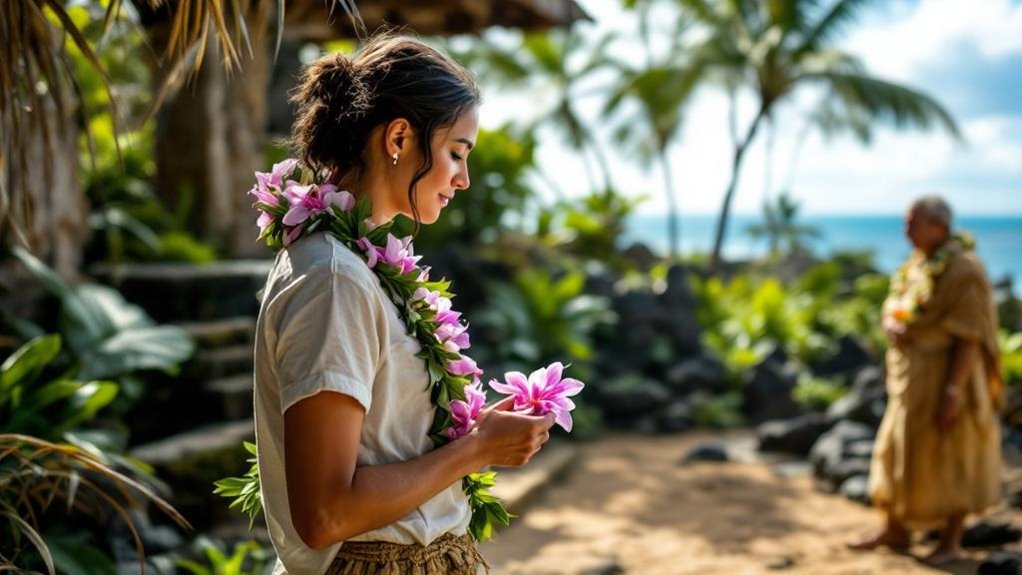
Respectful lei-making naturally leads to the question of wearing one, and in most cases, visitors may wear orchid leis without offense; orchids hold an honored place in Hawaiian tradition, where they convey refinement, beauty, and a sense of cultivated care, so receiving or choosing one can align with local custom rather than oppose it.
- You honor Hawaiian culture by recognizing the lei’s significance.
- You show respectful awareness, not stagnant tourism.
- You acknowledge each orchid’s cultural value and origin.
- You support aloha, connection, and observational learning.
- You participate in tradition with measured appreciation.
When you wear orchid leis thoughtfully, you reflect hospitality rather than disregard, and your awareness matters; indigenous varieties add layered significance, so learning where your lei comes from deepens respect and keeps your participation grounded in Hawaiian culture.
How to Gift and Wear Orchid Leis
Most orchid leis are given to mark occasions of genuine importance—weddings, graduations, and major holidays—and the manner of giving matters as much as the flowers themselves; you should offer the lei with both hands, a cultivated gesture of aloha that conveys love and respect, and it is often paired with a brief personal message or wish, because the exchange is not stagnant display but an observational act of relationship, acknowledgment, and celebration.
| Gesture | Feeling |
|---|---|
| gifted gently | respect |
| worn near heart | devotion |
In Hawaiian culture, orchid leis suit special occasions, and your wearing can extend beyond the neck to hair or lei po’o, depending on ceremony. Placement may suggest romantic status, left for taken, right for available, adding emotional significance without speech. Such customs keep beauty relational and meaningful.
Frequently Asked Questions
Are Orchids Associated With Hawaii?
Yes, you’ll strongly associate orchids with Hawaii because you’ll see them in leis, celebrations, and gifts. You can recognize their beauty, elegance, love, and friendship symbolism, while native species also enrich the islands’ biodiversity.
What Does the Bible Say About Orchids?
The Bible doesn’t mention orchids specifically. You can connect orchids to verses about flowers, beauty, and God’s care for creation, like Matthew 6:28–30, which reminds you that even beautiful blooms reflect divine provision.
Which Color Orchid Is Lucky?
Right off the bat, you’ll find yellow orchids especially lucky, symbolizing joy, optimism, and good fortune. You can also choose white for fresh beginnings, while purple brings respect, honor, and a royal touch.
Can I Bring an Orchid Home From Hawaii?
Yes, you can sometimes bring an orchid home from Hawaii, but you’ll need to follow agricultural rules, inspection requirements, and permit laws. You should buy from approved sellers and check your destination’s import restrictions carefully.
Conclusion
When you consider orchids in Hawaiʻi, you should see them clearly: not generally sacred in the deepest Hawaiian sense, yet still culturally meaningful, carefully cultivated, and worthy of respect; their colors rest in leis like small pools of light against the body, graceful but distinct from maile or other traditions carrying older sacred weight. If you wear or give an orchid lei with observational care, avoiding stagnant assumptions, you honor both the flower’s beauty and the culture surrounding it.