
Yes, you can find orchids in traditional medicine across China, Anatolia, and southeastern Europe, where species such as Dendrobium, Gastrodia alata, and Bletilla striata were used for observational support of wounds, respiratory complaints, digestion, memory, and energy; their value comes from phytochemicals including alkaloids, flavonoids, and bibenzyl derivatives, although safety, dosage, and cultivated sourcing matter because stagnant assumptions about old remedies can mislead, and the fuller context becomes clearer just ahead.
- Key Takeaways
- Are Orchids Used in Traditional Medicine?
- How Old Is Orchid Medicine?
- Where Were Orchids Used Medicinally?
- Which Medicinal Orchids Are Used in China?
- Why Is Dendrobium Valued in Herbal Medicine?
- How Is Gastrodia Alata Used Traditionally?
- What Is Bletilla Striata Used For?
- How Was Salep Used as Medicine in Turkey?
- Which Orchids Are Medicinal Worldwide?
- What Compounds Make Orchids Medicinal?
- Which Medicinal Effects Are Most Studied?
- What Does Research Say About Medicinal Orchids?
- Are Medicinal Orchids Safe and Sustainable?
- Frequently Asked Questions
- Conclusion
Key Takeaways
- Yes, many orchid species have long been used in traditional medicine, especially in Chinese herbal practices and Middle Eastern or southeastern European remedies.
- Around 300 orchid species are recorded in Chinese medicine, including Dendrobium, Gastrodia alata, and Bletilla striata.
- Traditional uses include supporting respiration, wound healing, memory, immunity, digestion, and sore throat relief.
- Modern research studies orchid compounds like alkaloids, flavonoids, and bibenzyls for anti-inflammatory, antimicrobial, and possible anticancer effects.
- Medicinal orchid use requires caution, because safety, proper dosage, and sustainable cultivated sourcing are important.
Are Orchids Used in Traditional Medicine?
You can also trace medicinal use through orchids like *Bletilla striata*, which practitioners in Chinese Medicine and other traditional medicine systems associated with respiratory support, memory, and even cancer-related treatment.
Modern research now tests these claims seriously today.
How Old Is Orchid Medicine?
| Marker | Significance |
|---|---|
| *Shijing* | Early observational record |
| Shen Nung | Foundational medicinal uses |
| *Dendrobium* | Long-valued traditional species |
| Modern products | Legacy hasn’t grown stagnant |
From that timeline, you can see Orchids weren’t a brief remedy; they remained embedded in traditional practice for centuries, with roughly 300 species entering Chinese herbal medicine, showing continuity, cultivated knowledge, and enduring medicinal uses that still inform functional preparations today.
Where Were Orchids Used Medicinally?
Across several medical traditions, orchids were used medicinally in East Asia, especially China, and in parts of the Middle East and southeastern Europe; that distribution reflects not a scattered curiosity but a cultivated body of practice shaped by local species, trade, and observational habits.
You can trace traditional medicine through three regional patterns:
- In China, records place medicinal orchids in early medical writing, showing sustained, non-stagnant use.
- In Anatolia and nearby southeastern Europe, orchid tubers entered Salep, a remedy used for sore throats and digestive complaints.
- Across broader herbal traditions, orchids were used for respiratory support and cognitive purposes, then carried into modern research.
When you map medicinal orchids this way, you see continuity rather than accident; geography, exchange, and local flora guided where orchids were valued medicinally.
Which Medicinal Orchids Are Used in China?
In China, you find roughly 300 orchid species in traditional medicine, a cultivated record that shows how firmly these plants remain tied to observational healing practice rather than stagnant custom.
You can see Dendrobium at the center of this tradition, valued as a lucky herb and used in anti-toxic remedies, teas, and powders, while Gastrodia elata is taken for memory support and also appears as herbal food.
You also encounter Bletilla striata and Bulbophyllum in treatments for coughs and lung complaints, and you can trace how these established uses now extend into functional foods that join older knowledge with contemporary health aims.
Dendrobium In Chinese Medicine
Among China’s medicinal orchids, Dendrobium holds a cultivated place, especially Dendrobium nobile, whose stems practitioners have long valued for anti-toxic effects, support for immune function, and the preservation of eyesight. This use doesn’t stand apart from tradition but grows out of more than 3,000 years of observational practice, with references to orchids appearing as early as the *Shijing*.
You can see why dendrobium remains central among medicinal plants and uses in traditional Chinese medicine:
- Its stems become tea or powder, so treatment stays practical.
- Practitioners prize it for clearing toxic heat and easing stagnant weakness.
- It belongs to roughly 300 orchid species recognized medicinally in China.
When you examine Chinese herbal practice, you find Dendrobium treated not as a curiosity, but as a stable, repeatedly prepared remedy with enduring clinical prestige.
Bletilla And Gastrodia Uses
While Dendrobium often anchors discussion of Chinese medicinal orchids, Bletilla striata and Gastrodia alata deserve equal notice, because Chinese herbal practice has long treated them as reliable remedies with distinct functions: Bletilla, usually prepared as a decoction or powder, has traditionally addressed cough and other lung complaints, while Gastrodia has been valued for cognitive support, especially the preservation of memory, and is regularly consumed not only as medicine but also as a herbal food.
If you examine their uses, you see why they’re important plants in Chinese pharmacopoeia; both are commonly used because observational practice, cultivated over thousands of years, linked them to consistent benefits across ailments.
Today, you also find renewed interest in wellness circles, where neither tradition nor evidence has remained stagnant.
Why Is Dendrobium Valued in Herbal Medicine?
Because it has occupied a respected place in traditional Chinese medicine for more than 3,000 years, Dendrobium remains valued in herbal practice as both a nourishing tonic and an anti-toxic remedy. Practitioners have long used it to restore energy, support eyesight, and strengthen the body when health seems depleted or stagnant.
You’ll find its reputation supported by observational use and modern study:
- Its chemical compounds and phytochemicals suggest benefits for immunity, cognition, and blood-sugar balance.
- These orchids are used in teas, stem powders, supplements, and cultivated functional foods.
- Ongoing demand makes sustainable use essential, especially as research examines possible roles in diabetes care and cancer support.
This combination of historical authority, modern validation, and practical versatility helps explain Dendrobium’s enduring medicinal value today.
How Is Gastrodia Alata Used Traditionally?
Although Gastrodia alata is an orchid rather than a more familiar medicinal root, traditional Chinese medicine has treated it for thousands of years as a steady remedy for the mind and nerves, using its tubers both as herbal food and as medicine to support memory, sharpen cognitive function, and restore balance when headaches, dizziness, or neuromuscular symptoms suggest weakness or stagnant internal regulation.
| Traditional use | What you notice |
|---|---|
| Herbal food | You eat it in soups or congee |
| Brain support | You cultivate steadier memory and focus |
| Headache care | You seek relief from dizziness and pain |
| Nerve balance | You address observational signs of neuromuscular strain |
You’ll find its tubers used for making restorative meals, and classical texts present it as a cultivated, enduring remedy within holistic Chinese practice.
What Is Bletilla Striata Used For?
You can trace Bletilla striata, the Chinese ground orchid, through traditional Chinese medicine, where it’s cultivated for coughs, lung complaints, and certain digestive disturbances; its observational record also supports its use for calming inflammation, checking microbial activity, and helping stagnant wounds and skin conditions heal more cleanly.
In modern herbal applications, you’ll often find it prepared as a decoction, powder, or tea, mixed into broader formulations because its bioactive compounds appear to reinforce the plant’s medicinal effects with practical consistency.
As you consider its place in holistic practice, you can see how traditional healing uses and current herbal preparations remain closely aligned, with each approach relying on the same core properties and measured therapeutic aims.
Traditional Healing Uses
Across traditional Chinese medicine, Bletilla striata, or the Chinese ground orchid, has been cultivated as a steady remedy for cough, lung discomfort, and excess phlegm. Practitioners rely on its tuber in powder or decoction form to soothe irritated tissues, support wound healing, and address respiratory conditions marked by inflammation or stagnant secretions.
You also find it in older formulas when healers sought to cool the blood and stop bleeding, a use preserved in observational records from ancient China.
- You use the tuber to calm coughs and ease irritated lungs.
- You prepare it as powder or decoction for wounds and internal discomfort.
- You value its antimicrobial action for inflamed respiratory passages and skin repair.
Its cosmetic use reflects the same restorative logic; traditional practice treats tissue damage, infection, and recovery as related processes.
Modern Herbal Applications
In modern herbal practice, Bletilla striata remains valued for many of the same reasons that sustained its older medicinal use, yet its applications now extend into more targeted formulations for skin repair, respiratory comfort, and digestive support.
Herbalists use its extracts in topical preparations for cuts and burns because the plant’s wound-healing, antibacterial, and anti-inflammatory constituents help protect damaged tissue, limit irritation, and support orderly recovery.
You’ll also find this cultivated Chinese ground orchid in herbal teas and blended remedies for coughs, lung discomfort, and stagnant digestive upset; when you use it in these forms, you’re relying on a long observational record suggesting that it soothes irritated passages, supports skin integrity, and contributes to overall balance without demanding aggressive intervention.
Its modern role remains practical, focused, and clinically attentive today.
How Was Salep Used as Medicine in Turkey?
You’d find its medicinal role in several observational uses:
- It was taken for sore throats, because its dense texture seemed to calm raw, stagnant irritation.
- It was consumed for digestive upset and diarrhea, since the thick drink was thought to steady the stomach and support recovery.
- It was applied for gum disease, with its soft consistency offering gentle contact.
Often mixed with milk, sugar, or flavorings, Salep showed how Turkish practice joined nourishment with herbal care.
Which Orchids Are Medicinal Worldwide?
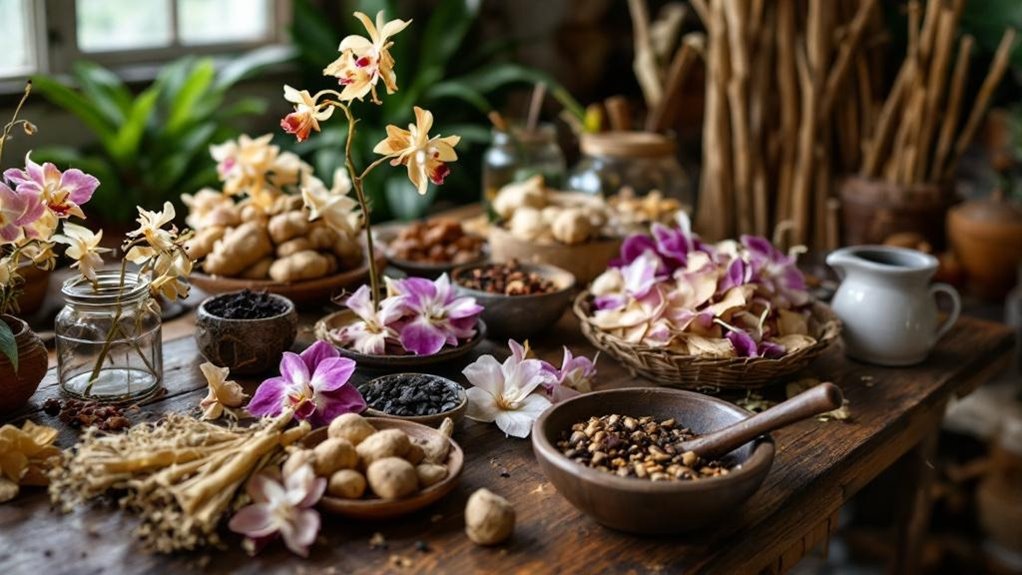
When you look at medicinal orchid species worldwide, you find cultivated names such as Dendrobium, Bletilla striata, and Gastrodia alata in Chinese medicine, where practitioners have used them for cancer care, cough relief, and memory support.
Meanwhile, Orchis militaris and Orchis mascula remain tied to Salep in Turkey for sore throat and digestive complaints.
You also see regional healing traditions extend beyond these better-known examples, because Vanda and other less familiar orchids show antibacterial activity and notable phytochemicals.
This observational record helps explain why many cultures haven’t let their medicinal use become stagnant.
As you consider notable global uses, you can trace a clear line from traditional practice to modern herbal medicine, where ongoing research on anti-inflammatory and anti-carcinogenic effects supports functional foods and remedies shaped by older knowledge.
Medicinal Orchid Species
Across traditional medical systems, several orchid genera stand out as cultivated remedies rather than ornamental curiosities, and the most widely cited include Dendrobium, Bletilla, Gastrodia, Vanilla, Cypripedium, and Vanda, each associated with a distinct set of therapeutic uses shaped by regional practice and long observational use.
You can trace their medicinal value through recurring applications:
- Dendrobium supports memory, immune health, and recovery from weakness; some traditions also apply it to serious chronic illness.
- Bletilla striata addresses coughs and lung complaints, especially where stagnant respiratory conditions require soothing, stabilizing treatment.
- Gastrodia alata and Vanilla contribute differently, with Gastrodia tied to cognitive support in herbal foods, while Vanilla offers bioactive compounds valued beyond flavor.
Cypripedium and Vanda remain recognized medicinal orchids in broader traditional use globally.
Regional Healing Traditions
Although orchid medicine is often associated most strongly with East Asia, medicinal species appear in regional healing traditions from China to Turkey and beyond, where cultivated and wild orchids have been used not as curiosities but as observational remedies for persistent human complaints.
Traditional Chinese medicine alone records more than 300 medicinal orchids, especially Dendrobium and Gastrodia alata, while Turkish practice preserves salep, prepared from tubers of orchids such as *Orchis militaris*, as a treatment for sore throat and digestive weakness.
Across other traditions, you also find Bletilla and Bulbophyllum in herbal preparations directed toward respiratory strain and stagnant immune response.
Current herbal research on Vanda and Eulophia suggests antibacterial and anti-inflammatory potential, reinforcing why the Dendrobium species project documents more than 100 orchids in indigenous and traditional medicine.
Notable Global Uses
Several orchid lineages stand out in medicinal practice worldwide, not because they were treated as exotic rarities, but because communities returned to them as cultivated and observational remedies for recurring complaints; in China, Dendrobium and Gastrodia alata remain among the clearest examples, valued for supporting memory and easing coughs and lung-related weakness.
Meanwhile, in Turkey the tubers of Orchis militaris and Orchis mascula are prepared as salep, a thick restorative drink used for sore throat and digestive strain.
- In South America, you find indigenous uses emphasizing anti-inflammatory and analgesic effects.
- In Madagascar, Vanilla planifolia supports general health beyond culinary value.
- In research, Vanda and Bulbophyllum show compounds with antibacterial and anti-carcinogenic promise, so stagnant assumptions about orchids seem incomplete.
What Compounds Make Orchids Medicinal?
Chemistry gives orchids their medicinal value, because these plants produce a cultivated range of phytochemicals—alkaloids, flavonoids, bibenzyl derivatives, phenanthrenes, and terpenoids—that interact with biological systems in ways traditional healers observed long before laboratory study could verify them.
| Compound group | Common orchid source | Why it matters |
|---|---|---|
| Alkaloids | Flowers, leaves | Bioactive, pharmacologically relevant |
| Flavonoids | Flowers | Chemically diverse, observational support |
| Bibenzyl derivatives | Dendrobium | Notable research interest |
| Phenanthrenes | Leaves, stems | Distinct medicinal chemistry |
| Terpenoids | Multiple tissues | Broad pharmaceutical promise |
When you examine orchid extracts, you find chemically rich mixtures rather than stagnant remedies; flowers and leaves supply diverse constituents, and ongoing studies, especially in Dendrobium, continue validating traditional use while identifying new pharmaceutical applications.
Which Medicinal Effects Are Most Studied?
Across the medicinal orchid literature, researchers most often focus on effects that align with long-standing traditional use and that can be tested with modern pharmacology; anti-carcinogenic and immune-strengthening activity stands near the center of that work, especially in traditional Chinese medicine and especially in Dendrobium, where cultivated study has examined how orchid compounds may influence tumor-related pathways while also supporting broader immune response.
Medicinal orchid research often centers on traditional anti-carcinogenic and immune-supporting uses, especially in Dendrobium and Chinese medicine.
You also see repeated attention to several other effects:
- Neurological support; *Gastrodia alata* is studied for memory, cognition, and neuroprotective action.
- Respiratory relief; *Bletilla striata* and *Bulbophyllum* have a persistent role in cough-related treatment.
- Anti-inflammatory and antimicrobial action; alkaloids and flavonoids help explain why these uses don’t appear pharmacologically stagnant.
Diuretic effects also receive steady observational interest.
What Does Research Say About Medicinal Orchids?
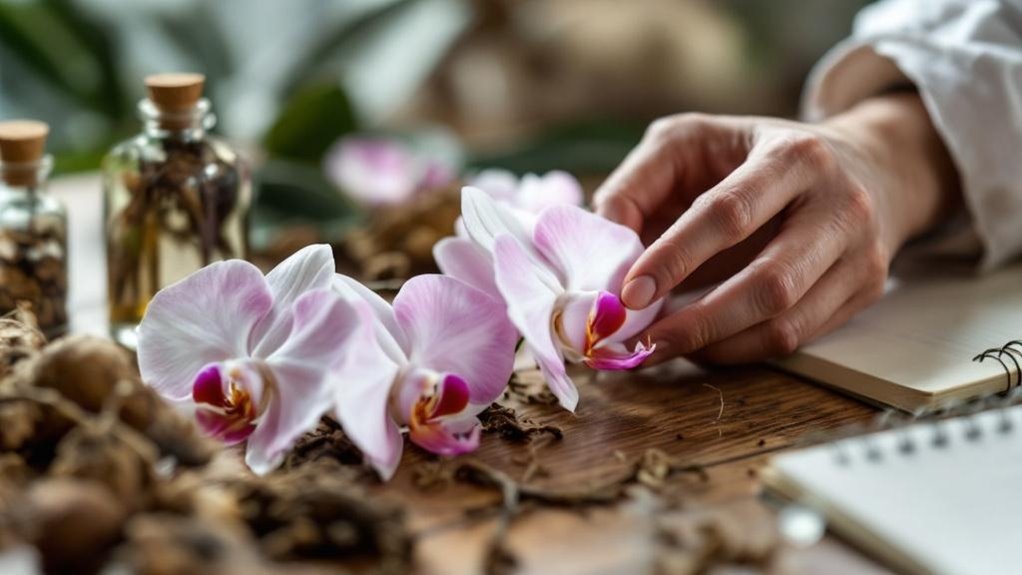
How, then, does modern research frame medicinal orchids? You find that studies generally neither dismiss traditional use nor accept it uncritically; instead, they test longstanding claims around species such as Dendrobium and Gastrodia elata, examining reported anti-toxic effects and memory support through observational, chemical, and pharmacological methods.
When you look closer, phytochemical research shows that orchids contain alkaloids, flavonoids, and terpenoids, compounds often linked with biological activity; this helps explain why cultivated and wild species have attracted medical interest rather than remaining stagnant in folklore alone.
Recent experiments also report anti-inflammatory, anti-carcinogenic, and antimicrobial effects in some extracts, which lends measured support to traditional practice. At the same time, ethnopharmacological work keeps refining which uses appear credible, which mechanisms seem plausible, and how orchids fit within broader holistic medicine today.
Are Medicinal Orchids Safe and Sustainable?
Evidence for therapeutic activity only settles part of the question, because safety and sustainability determine whether medicinal orchids can remain part of responsible practice; even long-used plants such as Dendrobium and Gastrodia elata don’t become automatically harmless or inexhaustible simply through age or reputation.
You should weigh use against evidence, dosage, and sourcing, because phytochemicals like alkaloids and flavonoids may support benefit, yet observational traditions don’t replace careful evaluation.
- Choose cultivated sources, since habitat loss and environmental change make wild harvesting ecologically damaging and eventually stagnant.
- Treat commercialization cautiously; foods and cosmetics can expand demand faster than conservation can respond.
- Respect indigenous knowledge, because documented community practices often guide safer preparation, ethical harvesting, and long-term stewardship.
When you apply those standards, orchid medicine remains more responsible, credible, and conservationally grounded overall.
Frequently Asked Questions
What Medicine Comes From Orchids?
You’ll find medicines from orchids like Dendrobium tea for anti-toxic uses, Gastrodia for memory support, Bletilla for coughs, and Salep for sore throats and digestion. These orchids also provide helpful compounds like alkaloids and flavonoids.
What Does the Bible Say About Orchids?
You won’t find orchids named in the Bible, but you can see flower imagery that may include orchid-like blooms. You’d notice beauty, fragrance, and life’s brevity celebrated in passages like Song of Solomon often.
Which Is the Most Medicinal Flower in the World?
You can’t name one definitive “most medicinal” flower worldwide, because traditions differ. You’ll often see chamomile, calendula, and orchid species cited most often, depending on whether you value digestion, skin healing, immunity, or cognitive support.
What Did Confucius Say About Orchids?
Like lanterns for your soul, Confucius said orchids embody virtue, elegance, and moral integrity. He believed they harmonize your mind, inspire reflection, and symbolize the noble purity you should cultivate within yourself every day.
Conclusion
You can conclude that orchids have a long, observational history in traditional medicine, especially in Asia, where cultivated species such as Dendrobium were valued for specific restorative uses; modern research supports some bioactive potential, though evidence remains uneven and never limitless. Their medicinal reputation isn’t a miracle that moves mountains, yet it isn’t stagnant folklore either, because careful study, safe use, and conservation all matter if you’re going to judge these plants with precision.