
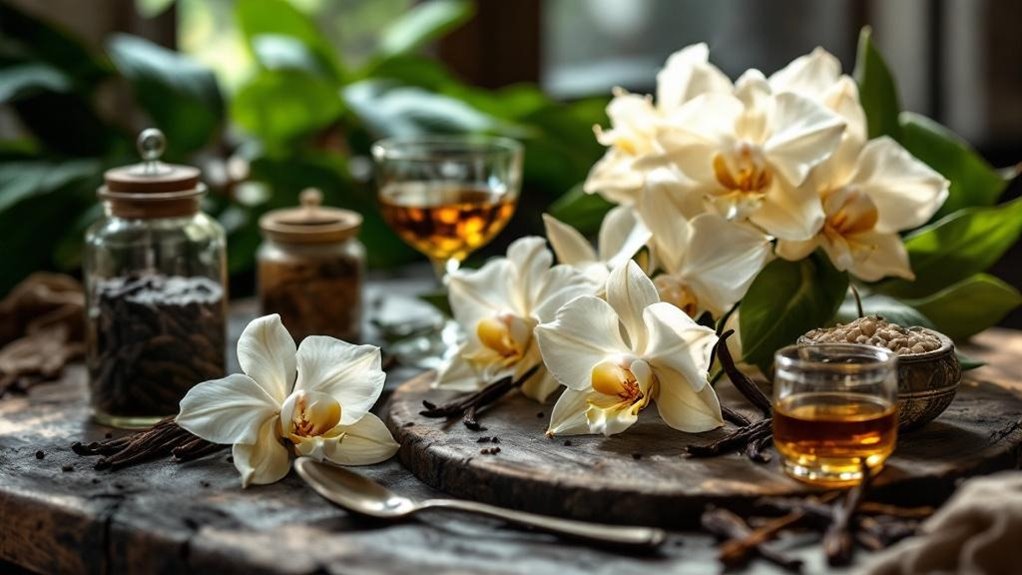
You can trace orchids in food and drink history through vanilla, cultivated from *Vanilla planifolia*, and salep, a thick flour ground from orchid tubers that shaped winter drinks and desserts across Greece, Rome, Turkey, and the Ottoman world. You also find orchids in regional foods like chikanda and Bhutanese cymbidium dishes, where texture and mild flavor matter as much as taste. That history now carries an observational lesson about cultivation, scarcity, and what sustained traditions require.
- Key Takeaways
- Why Some Orchids Became Food
- Which Orchids Are Edible Today?
- How Vanilla Started the Orchid Flavor Boom
- How Salep Is Made From Wild Orchid Tubers
- Why Salep Became a Winter Drink
- How Orchid Salep Became England’s Saloop
- Why Salep Mattered in Ottoman Food Culture
- Other Orchid Foods Around the World
- How Vanilla and Salep Shaped Desserts
- Why Wild Salep Orchids Are at Risk
- Can Orchid Food Traditions Be Sustainable?
- Frequently Asked Questions
- Conclusion
Key Takeaways
- Orchids have a long culinary history, most famously through vanilla and salep, used in food and drink across Europe, Asia, and the Middle East.
- Salep, made from dried Orchis tubers, was prized in Greek, Roman, and Ottoman traditions as a thick, warming, restorative drink.
- In Turkey and the Ottoman world, salep also thickened desserts and gave dondurma its distinctive stretchy texture.
- Other edible orchids include Dendrobium flowers in Asian dishes, Cymbidium in Bhutanese cooking, and chikanda made from orchid tubers in Africa.
- Heavy harvesting of wild orchids for salep threatens native species, making cultivated sources and substitutes important for sustainable culinary use.
Why Some Orchids Became Food
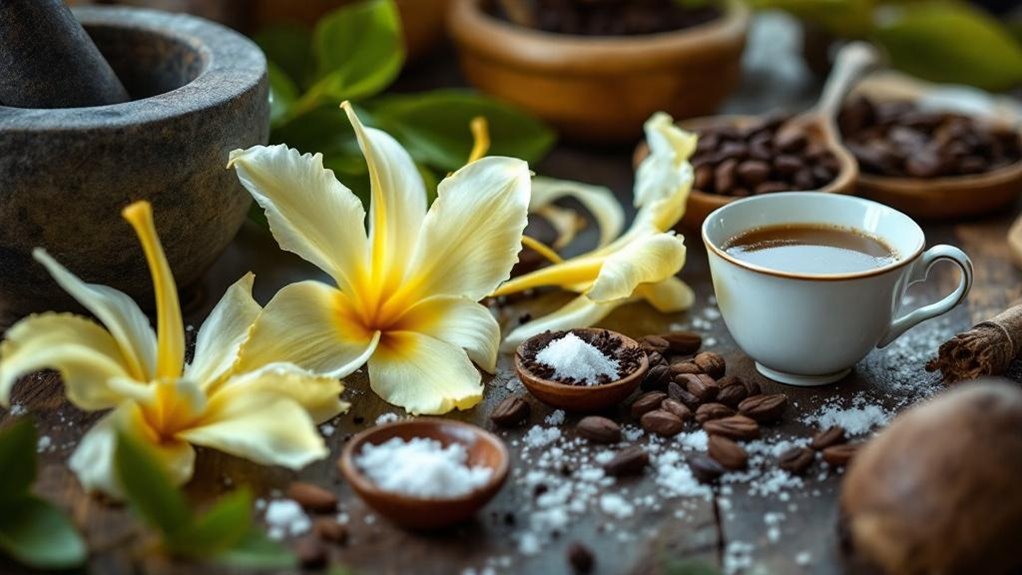
Because certain orchids offered both texture and meaning, people cultivated them not merely as curiosities but as food, especially when the tubers of Orchis could be dried, ground, and turned into salep, a substance valued for its dense, mucilaginous body and its ability to thicken winter drinks and desserts without becoming stagnant or coarse.
Orchid tubers became salep: a dense, mucilaginous foodstuff prized for texture, nourishment, and winter thickening.
You can see why orchid tubers entered kitchens: they supplied useful texture, traveled well once dried, and carried cultural weight.
In ancient Greece and Rome, salep appeared in observational writing under names like satyrion and priapiscus, and people linked it with virility, love, and bodily strength.
Later, when coffee and tea didn’t dominate every table, you find salep serving as a dependable hot drink; its mucilage gave body, comfort, and consistency, which made orchids cultivated ingredients, not merely ornamental plants.
Which Orchids Are Edible Today?
When you consider edible orchid species today, you’ll find that vanilla remains the most familiar example, while salep from Orchis tubers, chikanda from Disa, Cymbidium in Bhutanese cooking, and Dendrobium flowers in Asian dishes show that cultivated orchids still hold practical culinary value across distinct food traditions.
You can observe that their uses vary with texture and flavor, from vanilla’s aromatic pods in foods and drinks to salep’s thickening role in beverages and desserts. This observational range explains why some orchid foods have endured while others remain regionally specific or commercially stagnant.
As you assess these orchids, you should also weigh safety and sustainability, because correct identification, lawful sourcing, and careful cultivation matter when wild populations face pressure and edible use depends on responsible harvest.
Edible Orchid Species
Although orchids are often treated as purely ornamental plants, a small but important group remains edible today, and these species matter less for novelty than for the distinct culinary roles they’ve cultivated across regions and traditions.
If you survey edible orchid species, you find vanilla from Vanilla planifolia most familiar, valued for pods rather than flowers; you also encounter Orchis tubers, dried and ground into salep powder, an observational reminder that orchid use never became entirely stagnant.
Beyond those better known examples, you can identify orchid tubers behind Zambia’s chikanda, which shows how several species entered local foodways through cultivated practice rather than fashion.
You’ll also find Cymbidium flowers and Dendrobium blossoms recognized as edible, especially across parts of Asia, where their textures, mild flavors, and reliable availability support their continued place in regional cuisines.
Culinary Uses Today
Today, the orchids that remain edible do so through specific culinary uses rather than broad novelty, and that distinction keeps the category observational rather than romantic; vanilla still dominates as the most familiar example, used in flavoring across drinks, desserts, and baked goods, while Dendrobium flowers continue to appear in Asian dishes where cooks value their mild taste, delicate texture, and cultivated reliability more than spectacle.
You also find orchid use in regional foods that haven’t become stagnant traditions; in Zambia, chikanda turns pounded tubers into a dense, savory preparation, while in Bhutan, Cymbidium flowers enter olatshe as part of ordinary meals rather than ceremonial display.
Across Turkish and Middle Eastern contexts, salep flour shapes hot drinks and desserts, and in dondurma, it gives ice cream its significantly elastic body and restrained flavor.
Safety And Sustainability
- You should prefer cultivated sources, because wild collection weakens sustainability and leaves populations stagnant.
- You should treat traditional uses, including chikanda and salep, as observational evidence, not blanket safety.
- You should note that some orchids carry medicinal properties in local practice, yet culinary use still depends on correct species and careful harvest.
If you choose edible orchids today, you should choose traceable, cultivated plants whenever possible.
How Vanilla Started the Orchid Flavor Boom
When you trace vanilla’s early culinary rise, you see how *Vanilla planifolia*, cultivated first in Mexico and later across Madagascar and Tahiti, moved from a rare orchid product into the world’s most used flavoring, because its sweet, stable aroma suited the 19th-century expansion of desserts and confections.
You also notice that this influence never rested on ease, since each flower demands hand pollination and manual harvesting, yields remain low, and market prices can turn stagnant or volatile under disease and climate pressure; that difficulty helped preserve natural vanilla’s prestige even after synthetic vanillin spread widely.
From that observational starting point, you can begin to assess orchid flavors beyond vanilla, asking why one species defined global taste so thoroughly and how other edible orchids remained far less visible in food and drink.
Vanilla’s Early Culinary Rise
You can trace vanilla’s rise through three shifts:
- Spanish conquerors carried it to Europe in the 1500s, where wealthy drinkers adopted it with chocolate.
- Réunion’s early nineteenth-century cultivation methods ended stagnant supply and broadened culinary use.
- By the late 1800s, Madagascar anchored a global trade, and vanilla entered desserts, liqueurs, coffee, and ice cream.
From that point, you can see why this orchid flavor became foundational rather than decorative within world food history.
Orchid Flavors Beyond Vanilla
Vanilla’s global success did more than secure one orchid’s place in the pantry; it established, in practical and cultural terms, that orchids could serve as cultivated sources of flavor rather than remain botanical curiosities.
Once you see how *Vanilla planifolia* reshaped desserts and confections in the 19th century, you can trace a wider observational shift, because vanilla proved orchids weren’t stagnant ornaments but viable ingredients.
As global demand normalized orchid flavors, cooks and manufacturers began testing other edible orchids, including those behind salep and chikanda, and later Cymbidium and Dendrobium in regional cuisines.
You encounter a broader palate this way, one that values texture as well as aroma, and one that encouraged chefs to treat orchids as cultivated flavor sources, extending vanilla’s model into modern food and drink without reducing orchids to novelty alone.
How Salep Is Made From Wild Orchid Tubers
Salep begins in the field with the tubers of particular wild orchids, chiefly species in the genera *Orchis*, *Ophyrus*, *Serapias*, *Platanthera*, and *Dactylorhiza*, which gatherers dig up, wash, boil, air dry, and grind into a fine flour.
The method appears simple in observational terms, yet it depends on slow biological timing, because each usable tuber may require seven to eight years of growth before harvest, and more than 1,000 tubers are needed to produce a single kilogram of salep.
- You begin with orchid roots, then boil them in milk or ayran to preserve them.
- You dry them until they lose about 90 percent of their weight and remain stable for years.
- You grind true salep powder, rich in glucomannan mucilage, which gives valued thickness and texture; harvesting usually kills each plant, complicating conservation.
Why Salep Became a Winter Drink
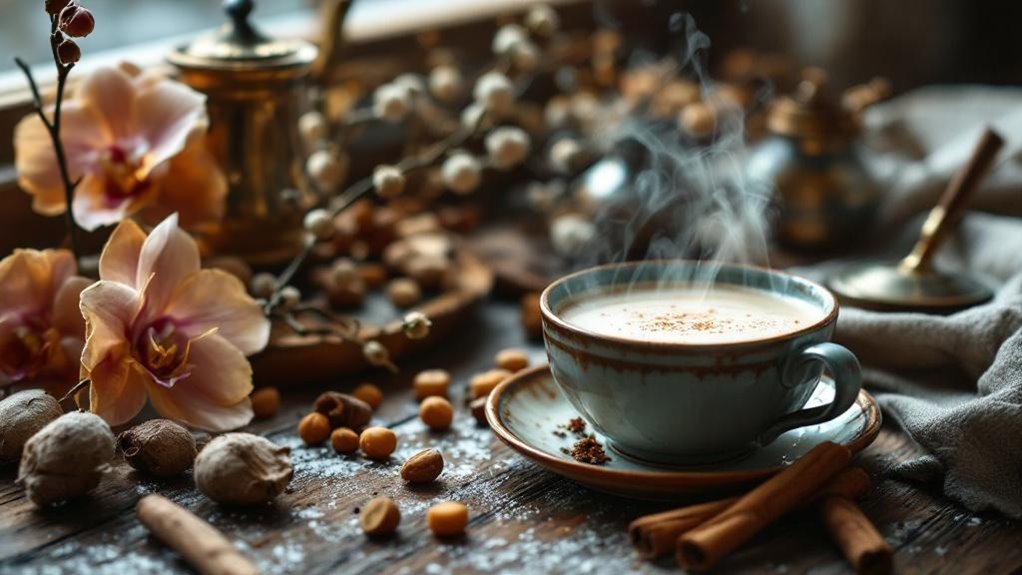
From that laborious preparation emerged a drink that fit winter especially well, because when true salep powder met hot milk it thickened into something warming, creamy, and quietly sustaining; in Turkey and across the Ottoman world, people cultivated the habit of drinking it in colder months not only for comfort, but also for the sense that it restored energy, settled digestion, and guarded the body against the stagnant discomforts of winter illness.
| Element | Winter role | Effect |
|---|---|---|
| salep flour | thickened milk | sustained you |
| cinnamon | sharpened taste | marked season |
| cafe service | gathered households | reinforced custom |
You encountered it as a traditional winter drink, tied to marriage preparations, medicinal observation, and modern sahlab, still shared at winter festivities today.
How Orchid Salep Became England’s Saloop
As Ottoman trade widened and English tastes for hot stimulants were still being cultivated, a drink made from powdered orchid tubers entered England in the 17th and 18th centuries under the name saloop.
There, it served as a practical alternative to coffee and tea and carried with it an observational memory of eastern café habits.
You can trace its English career through three developments:
Its English career can be followed through three linked developments in trade, use, and reputation.
- Merchants imported salep flour from Smyrna; vendors seasoned it with spices.
- Drinkers valued saloop, sometimes written sloop, as warming sustenance and as a remedy for scurvy and chronic alcoholism.
- Its reputation later stagnated, as associations with venereal disease darkened public opinion and city stalls disappeared.
You see, then, how orchid salep became England’s saloop, not merely as a beverage, but as a social practice shaped by trade, habit, and shifting medical belief.
Why Salep Mattered in Ottoman Food Culture
Although it appears at first to be only a winter beverage, salep mattered deeply in Ottoman food culture because it joined nourishment, medicine, religion, and sociability in a single cultivated practice; made from ground orchid bulbs and valued for its warming qualities, it was consumed in homes and cafés during the colder months.
It offered a respectable non-alcoholic drink when religious restrictions shaped public behavior, and it carried a persistent medicinal reputation, especially in relation to women’s health before marriage and to aphrodisiac beliefs that had circulated since antiquity.
When you trace its role, you see how salep flour thickened a hot drink that fit observational habits of café life, resisted stagnant routine, and linked Ottoman tastes to wider regions, even as nineteenth-century disease associations gradually diminished its standing.
Other Orchid Foods Around the World
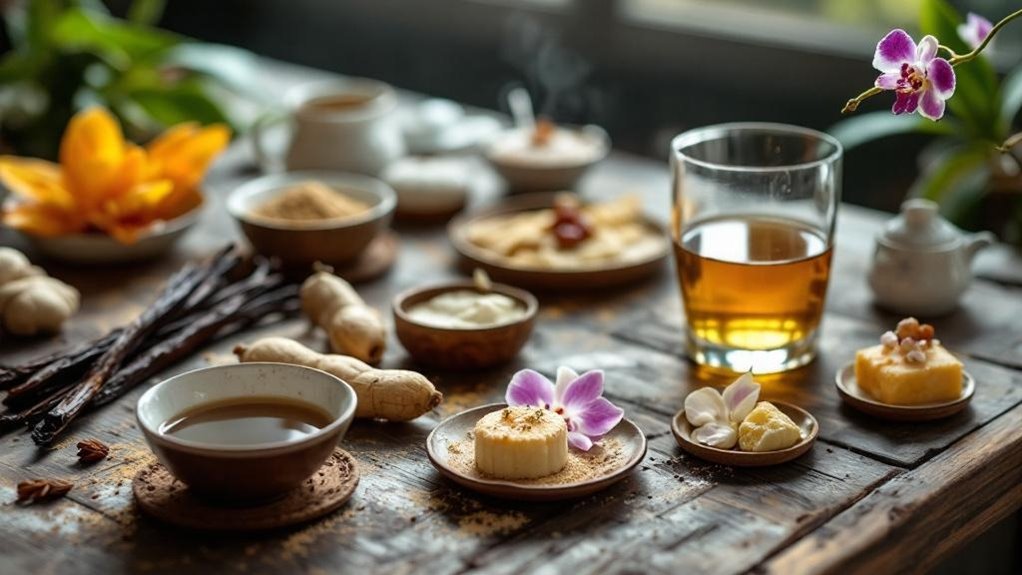
As you look beyond salep, you find that orchid cuisine remains broader than a single flavoring tradition; vanilla still stands as the most cultivated and globally recognized example, yet its extracts also carry health associations, and edible Dendrobium flowers appear in Asian dishes where they contribute both taste and ornamental value.
You can also observe a strong regional tuber tradition, since Zambia’s chikanda relies on pounded orchid tubers, often from Dendrobium and related local species, to provide a protein-rich food source, while Bhutanese olatshe uses edible Cymbidium orchids in a daily preparation that’s commonly steamed or stir-fried.
Together, these foods keep orchid use from becoming stagnant in the observational record of world cuisine; they show you how local practice, necessity, and taste have shaped distinct culinary roles for the plant across regions.
Vanilla And Orchid Cuisine
Few orchid foods are as globally familiar as vanilla, drawn from the cured pods of the Vanilla orchid and cultivated for a flavor that moves easily through sweets, beverages, and even perfume; yet orchid cuisine extends well beyond this singular example, appearing in regional dishes that reflect observational knowledge of local plants, established foodways, and practical nutrition.
- You encounter vanilla as the dominant orchid in culinary history.
- You find Bhutan’s daily *olatshe*, built around Cymbidium orchids, practical and non-stagnant.
- You also see edible Dendrobium in Asian dishes, where cooks add flavor and visual structure.
You can trace older uses through Orchis roots, valued for nutrition and medicine; together, these examples show orchid cuisine as adaptive, cultivated, and closely tied to place, memory, and careful local judgment over time.
Regional Tuber Traditions
Beyond vanilla’s familiar reach, orchid food traditions often center on underground tubers, and these uses show how cultivated taste grows from observational knowledge of local landscapes rather than from any stagnant idea of rarity alone.
Across regional tuber traditions, you can trace how people turned native orchids into dependable foods: in Zambia, chikanda uses pounded orchid tubers for starch and nutrients; in Turkey, salep and dondurma rely on wild orchid tubers for thickening, elasticity, and slow melting.
You also see Bhutan’s olatshe, which uses Cymbidium orchids in everyday cooking, and many Asian dishes that use Dendrobium flowers for texture and flavor.
Yet these practices carry limits, because harvesting tubers for salep or chikanda can overexploit threatened species, requiring restraint if these foodways are to persist responsibly over time.
How Vanilla and Salep Shaped Desserts
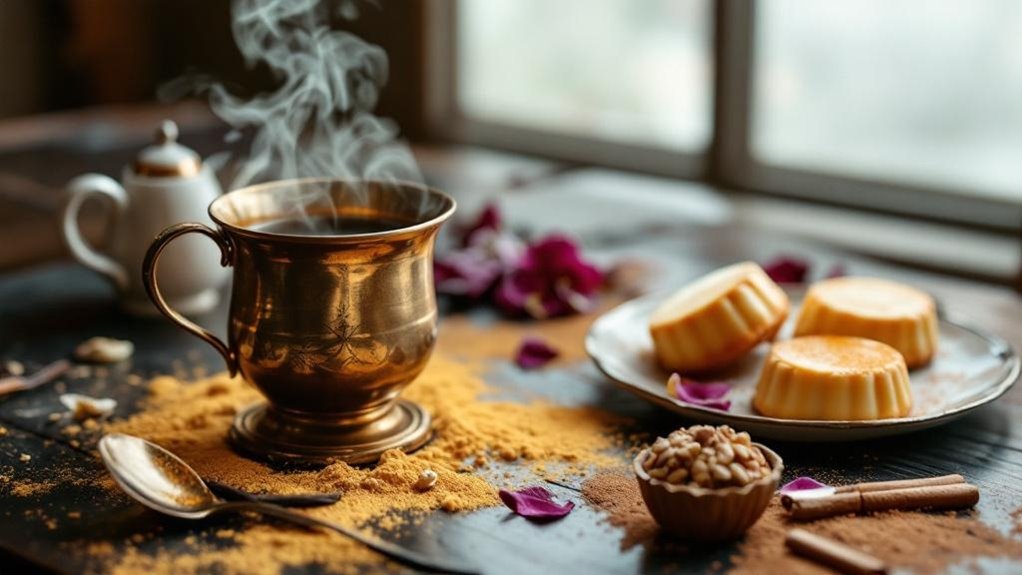
Although orchids often seem ornamental rather than culinary, two of their products, vanilla and salep, have shaped dessert traditions in ways that are both practical and deeply cultural.
Vanilla, drawn from the fragrant pods of the vanilla orchid, became the most widely used edible orchid because its cultivated aroma broadens and stabilizes flavor in ice creams, custards, cakes, and pastries.
Salep, produced from the tubers of certain orchid species, gives Turkish desserts such as dondurma and puddings their notable thickness, subtle perfume, and resistance to a stagnant texture.
Salep lends Turkish desserts their elastic thickness, faint floral perfume, and a texture that stays lively rather than still.
- You taste vanilla’s broadening effect.
- You notice salep’s dense, nourishing body.
- You see orchid aromas carry cultural memory.
You also encounter older beliefs, since both ingredients’ perfume linked orchids with aphrodisiac qualities.
Salep, especially in Ottoman desserts and drinks, offered valued calories and quiet medicinal association.
Why Wild Salep Orchids Are at Risk
Because salep comes largely from wild orchids rather than fully cultivated crops, its continued use places unusual pressure on plants that regenerate slowly; each harvest removes the tuber itself, which usually kills the orchid, and a replacement tuber may need seven to eight years to reach a usable size.
| Pressure | Effect |
|---|---|
| 1,000+ tubers | 1 kg salep flour |
| Slow regrowth | stagnant recovery |
| Export ban, 1989 | illegal harvest persists |
When you trace demand through this observational pattern, you see why local populations decline, why biodiversity thins, and why ecosystems lose cultivated balance. Turkey’s export ban acknowledged endangered status, yet illegal collecting continues; the arithmetic remains severe. Conservation efforts, including the Indigenous Propagation Project, respond by reducing dependence on wild plants and preserving both tradition and orchids.
Can Orchid Food Traditions Be Sustainable?
How, then, can orchid food traditions remain sustainable when demand still centers on a flour that requires roughly 1,000 tubers for a single kilogram; they can endure only if production shifts away from wild collection and toward cultivated orchids, regulated propagation, and credible substitutes made from non-endangered ingredients such as rice powder and guar gum.
- You support domestic cultivation, which reduces pressure on wild orchid bulbs and keeps salep flour linked to living traditions.
- You recognize conservation policy, including Turkey’s 1989 export ban, as an observational response to stagnant depletion.
- You look to projects such as the Indigenous Propagation Project, which develop cultivated stocks and lessen destructive harvesting.
If you value continuity, you accept that tradition survives through adaptation, careful regulation, and substitutes that preserve use without exhausting vulnerable species.
Frequently Asked Questions
Can You Eat an Orchid in a Drink?
Yes, you can consume some orchids in drinks, especially as salep from orchid tubers. You shouldn’t use random orchids, though, because many aren’t edible, and overharvesting threatens wild species, so choose regulated, safe sources.
What Does the Bible Say About Orchids?
Directly yet delicately, you should know the Bible doesn’t mention orchids by name. Still, you’ll find flowers symbolizing beauty, love, and fertility, so you can reasonably connect orchids to biblical themes of divine creation and elegance.
Where Did the Drink Sahlab Come From?
You can trace sahlab to the eastern Mediterranean and Middle East, especially ancient Greek, Roman, and later Ottoman traditions. People made it from ground orchid tubers, then mixed it with hot milk and sugar.
What Foods Come From Orchids?
You’ll find several foods come from orchids: vanilla flavoring, salep flour for desserts and drinks, edible Dendrobium flowers, chikanda made from orchid tubers, and Bhutanese olatshe. You can see orchids shape sweet and savory dishes.
Conclusion
When you trace orchids through food history, you see how cultivated desire turned a remarkable plant family into flavor, medicine, and ritual; vanilla prospered because it could be grown and traded, while salep remained tied to fragile wild landscapes. You also see that these traditions needn’t become stagnant if protection guides use, because one careless market can erase centuries in a heartbeat. Your observational view should settle on balance, where appreciation endures, and extraction does not.