
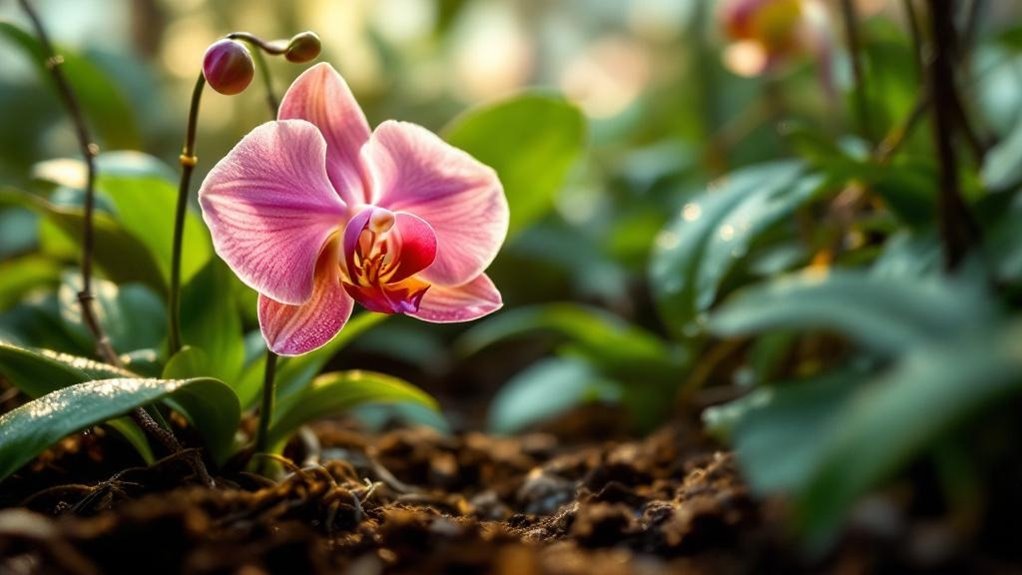
Yes, you can regard orchids as symbols of fertility, because cultivated traditions in Greece, China, and Mesoamerica tied them to conception, virility, healthy offspring, and renewal; observational beliefs about orchid form, color, and liveliness shaped those meanings, even as Victorian taste redirected orchids toward luxury and status rather than letting older associations grow stagnant. Today, pink, white, and yellow orchids still suit fertility wishes, new beginnings, and supportive family milestones, and the distinctions become clearer just ahead.
- Key Takeaways
- Are Orchids Symbols of Fertility?
- Why Orchids Are Linked to Fertility
- Orchid Meaning in Ancient Greece
- Orchid Symbolism in China and Japan
- How the Victorians Changed Orchid Meaning
- What Orchids Mean Today
- Which Orchid Colors Suit Fertility Gifts?
- White Orchids for New Beginnings
- Pink Orchids and Feminine Energy
- Purple Orchids and Prosperity
- Red Orchids and Passion
- Yellow Orchids and Joyful Growth
- When to Gift Orchids for Fertility
- Best Orchid Types for New Beginnings
- How to Choose a Meaningful Orchid Gift
- Frequently Asked Questions
- Conclusion
Key Takeaways
- Yes, orchids have long symbolized fertility in many cultures, especially in ancient Greek, Chinese, and Aztec traditions.
- Ancient Greeks linked orchids to reproduction; even the name “Orchis” reflects associations with male fertility and childbearing.
- In Chinese symbolism, orchids represented healthy offspring, purity, honor, and family prosperity.
- Today, orchids more commonly symbolize beauty and love, though fertility meanings still appear in gifting and personal symbolism.
- White, pink, and yellow orchids are often chosen to express renewal, joy, and hopeful wishes for parenthood.
Are Orchids Symbols of Fertility?

Across cultures and centuries, orchids have served as cultivated symbols of fertility, not through any stagnant superstition alone, but through a persistent observational pattern in which beauty, rarity, bodily liveliness, and family continuity were closely linked.
You can trace that symbolism across societies: Ancient Greeks read meaning into orchid tubers, Chinese traditions present orchids as blessings for healthy offspring and abundance, and Aztec beliefs tied certain orchids to virility, strength, and generative power.
You also see the association reinforced through traditional medicine in Asia, where orchids supported reproductive health and vigor.
Even in the Victorian era, orchids signaled luxury, inheritance, and lineage, so when people exchanged them, they often affirmed continuity as much as status.
Taken together, the record shows that orchids have long functioned as symbols of fertility.
Why Orchids Are Linked to Fertility
You can trace orchids’ link to fertility through ancient beliefs, where Greeks read meaning in orchid tubers.
Chinese tradition treated the flower as a cultivated sign of procreation, and Aztec ritual tied it to strength, energy, and reproductive power.
As you move across cultures, this symbolism remains observational rather than stagnant; in Japan and other parts of Asia, orchids mark new beginnings and family growth, while in Victorian England, they signaled fertility joined with prosperity and status.
These patterns show why orchids became enduring fertility symbols, because you see the same idea repeated in different societies, shaped by local customs yet anchored in hopes for abundance, continuity, and children.
Ancient Fertility Beliefs
Because orchids have long carried an observational weight beyond their cultivated beauty, many early societies treated them as signs of fertility, virility, and the promise of a continuing family line; in Ancient Greece, people believed the size of an orchid’s tubers could shape the gender of offspring, a stagnant-seeming idea now, yet one that shows how closely the plant was tied to reproduction and bodily power.
When you look beyond Greece, you see similar ancient beliefs emerge with steady logic; Chinese traditions treated orchids as signs of health and fertility, and families gave them as blessings for many children.
Among the Aztecs, the vanilla orchid suggested strength and significance, so you can trace a direct connection between physical vigor, reproductive hope, and the enduring prestige attached to this flower.
Cultural Fertility Symbolism
These older fertility beliefs point to a broader cultural pattern: orchids came to symbolize fertility not only through myth, but through what people thought they observed in the plant’s form, rarity, and cultivated value.
As you trace that pattern across societies, you find a persistent symbol of fertility: in Greece, tuber size suggested a child’s sex; in China, orchid gifts carried wishes for many children; among the Aztecs, vigor, strength, and reproductive power merged.
In Victorian England, orchids are often tied to luxury, prestige, and household aspiration, so giving them to couples implied abundance rather than stagnant fortune.
When you view these traditions together, you see how observational beliefs, social customs, and cultivated rarity reinforced one another, making orchids fitting emblems for family growth, blessing, and life’s generative continuity.
Orchid Meaning in Ancient Greece
When you look at orchids in Ancient Greece, you find a cultivated fertility symbol, one tied to virility, family growth, and an observational reading of nature that never became stagnant in social belief.
You can trace that meaning to the name itself, since the Greek word *Orchis*, from which “orchid” comes, means testicle and makes the flower’s connection to male reproduction unmistakable.
You also see how tuber shape and size shaped belief, because Greeks thought these traits could influence or predict a child’s sex, reinforcing the orchid’s prized place in ideas about heirs and potency.
Greek Fertility Symbolism
In Ancient Greece, the orchid carried a cultivated symbolism of fertility and virility, and its meaning began with its very name; derived from the Greek *orkhis*, meaning “testicle,” the flower was tied directly to reproduction, male potency, and the observational belief that nature revealed human destiny through form.
You can trace Greek fertility symbolism through practices and beliefs like these:
- tubers suggested an unborn child’s sex
- the Greek word reinforced virility and reproduction
- Dionysian associations supported vigor and sensuality
- rituals sought harvests, family growth, and stable bonds
When you view orchids through this lens, you see more than beauty; you see a disciplined cultural reading of nature, one that connected blossom and tuber to household prosperity, resisted stagnant disorder, and treated the flower as a sign of balanced, flourishing human life.
Orchis Name Origins
Language itself anchors the orchid’s meaning in Ancient Greece, because the word derives from the Greek *orkhis*, “testicle,” a name drawn from the paired tubers of certain species and treated not as a casual resemblance but as an observational sign of virility, reproduction, and embodied generative force;
through that cultivated naming, Greeks connected the plant’s form to human fertility, and writers such as Theophrastus helped stabilize the association by classifying orchids within a framework that linked physical structure, reproductive vigor, and the broader hope for household prosperity rather than stagnant decline.
When you trace that origin, you see why orchid tubers became associated with fertility, why the flower’s beauty suggested desire under divine notice, and why later cultures inherited not merely a plant name, but a durable symbolic language of prosperity, continuity, abundance, and generative promise.
Tuber Gender Beliefs
That bodily naming didn’t remain a matter of etymology; it shaped a cultivated belief that orchid tubers carried practical power over conception itself, and Ancient Greeks treated their size and form as observational signs that could influence whether a child would be male or female.
- You’d see orkhis link shape to male strength.
- You’d find each orchid tuber tied to lineage.
- You’d note fertility and virility in ritual use.
- You’d recognize no stagnant symbolism, but applied purpose.
If you followed Greek custom, you’d understand why larger tubers were thought to favor sons, while smaller ones suggested daughters; by consuming them, families hoped to guide reproduction, expand the household, and align human intention with natural vigor, making orchids enduring signs of procreative power in Greek culture.
Orchid Symbolism in China and Japan
Across China and Japan, orchids carry a cultivated symbolism that reaches well beyond ornament, joining ideals of purity, honor, and family prosperity with observational beliefs about health, fertility, and the steady continuation of life; ancient Chinese tradition revered orchids as emblems of nobility and refinement, and because they were thought to invite blessings for many children, they became auspicious gifts for pregnancy and new parenthood, signs not of stagnant hope but of active well-being and generative promise.
You see this union of Love and Fertility in Chinese poetry, where orchids signify grace, lineage, and domestic flourishing, while in Japan, samurai prized Neofinetia falcata, whose exotic beauty suggested bravery, honor, and prosperity.
In both cultures, orchids project positive energy, and you read in them a disciplined image of life balanced, expanding, and sustaining familial bonds.
How the Victorians Changed Orchid Meaning

When the Victorian era recast the orchid within a new social order, it shifted the flower’s meaning away from observational ties to fertility and virility and toward a cultivated language of luxury, status, and aristocratic display; as rare specimens traveled with difficulty and cost from distant regions into elite greenhouses and drawing rooms, their value came to rest less in any older promise of generative life than in their power to signal wealth, refinement, and possession of the exotic.
In the Victorian Age, you see that shift clearly:
- collectors pursued rarity through Orchidelirium
- orchids served as a sign of luxury
- arrangements displayed sophistication and rank
- exotic scarcity displaced stagnant fertility meanings
You can trace a broader cultural turn, because aesthetics, possession, and elite display gradually outweighed older associations with bodily vigor and reproductive symbolism.
What Orchids Mean Today
Today, you see orchids as cultivated symbols of beauty and love, and their colors shape that meaning with quiet precision; pink suggests femininity and grace, while white signals innocence and new beginnings.
When you give an orchid now, you aren’t offering only something ornamental, because it can mark admiration, romance, friendship, or joy, and it suits major life events where growth and renewal matter more than stagnant custom.
You can also use orchids for personal expression, since modern meaning still carries observational traces of fertility, refinement, and prosperity, even as the flower has become more accessible and widely understood.
Color Meanings Today
Consider how orchid colors shape their meaning now: white orchids still suggest purity and new beginnings, so they’re often read as quiet emblems of fertility, especially in contexts that honor childbirth, partnership, and the start of family life; pink orchids, by contrast, carry a more relational meaning, linking femininity, joy, and affectionate devotion with the desire for growth rather than anything stagnant or merely ornamental.
You can read the orchid color and meaning behind it through this observational lens:
- White signals cultivated renewal.
- Pink suggests affectionate, expanding bonds.
- Varied hues broaden fertility associations.
- Color now frames new life symbolically.
When you place these meanings beside older Greek and Chinese fertility beliefs, you see continuity rather than contradiction; color refines the symbol, and modern interpretation keeps orchids tied to reproduction, nurturing hope, and family milestones.
Modern Gift Symbolism
That same observational lens carries easily into modern gift symbolism, because orchids now communicate feeling through occasion as much as through color; they’re given not as stagnant decoration, but as cultivated signs of esteem, renewal, sympathy, and familial hope.
| Occasion | Meaning |
|---|---|
| Love | Pink grace |
| Milestone | White elegance |
| Condolence | White purity |
| New parents | Yellow joy |
| Achievement | Friendship |
When you give them today, orchids symbolize intention with precision, because color directs sentiment while occasion stabilizes meaning. Pink orchids suit appreciation and affectionate celebration; white orchids mark milestones and condolences with purity, restraint, and elegance. Yellow orchids fit congratulations, especially when you honor new parents or recognize achievement. Their older tie to fertility still persists, quietly, in gifts that acknowledge family growth and new beginnings.
Personal Expression Through Orchids
Choice now sits at the center of orchid meaning, because these flowers let you express admiration, grace, affection, and even more layered feelings through a form that feels cultivated rather than stagnant; orchids are often read as signs of beauty, femininity, and quiet esteem, yet their modern force comes from how precisely color and occasion can refine that message.
- Red suggests love and passion.
- White signals purity and innocence.
- Milestones favor orchids as new beginnings.
- Accessibility supports personal expression through orchids.
When you choose a beautiful orchid, you shape an observational message that suits the relationship; for housewarmings, weddings, or births, orchids acknowledge change with restraint. Because they’re widely available, you can use them as personal tokens that carry complex feeling without becoming vague or overstated for others.
Which Orchid Colors Suit Fertility Gifts?
Which orchid colors suit a fertility gift most clearly depends on the message you want the plant to carry, because color shapes the symbolism with unusual precision, and in traditions that link orchids to fertility—from Ancient Greek beliefs about reproduction to Chinese associations with many children and family harmony—certain hues feel especially cultivated rather than merely decorative.
You should choose a pink orchid when you want the gift to suggest joy, femininity, and a poised sense of renewal; its symbolism feels observational rather than stagnant, making it appropriate for gentle wishes around conception and family growth.
A yellow orchid serves you differently, yet just as effectively, because it conveys happiness and new beginnings with a steadier brightness, and in that cultivated tone, it suggests prosperous parenthood, echoing Victorian associations between orchids, flourishing households, and abundance.
White Orchids for New Beginnings

When you choose white orchids, you align your gift with purity and renewal, and you signal a cultivated regard for fresh starts, whether you’re marking a hoped-for pregnancy, a new home, or a relationship emerging from stagnant uncertainty.
You also draw on a long observational tradition in which white orchids suggest hope, blessings, and fertile growth, their quiet fragrance and restrained elegance reinforcing that meaning without excess.
As gifts for beginnings, they let you express a clear wish for prosperity, happiness, and new life, and they remain especially fitting in ceremonies and gatherings that honor fertility and new parenthood.
Purity And Renewal
Because white orchids carry a long-cultivated association with purity, innocence, and beauty, theyve come to represent new beginnings with unusual clarity; their pale petals suggest renewal not as an abstract ideal, but as a visible release from what’s become stagnant, troubled, or outgrown.
For you, a white orchid embodies purity and renewal through observational calm and cultivated elegance:
- It marks milestones, including weddings and births, with a clean, composed symbolism.
- It suggests purification, inviting you to leave behind what no longer fits.
- Its tranquil form supports personal growth by reflecting order, peace, and restraint.
- Its older links to fertility and abundance deepen its meaning as a fresh start.
When you give or receive one, you acknowledge beauty disciplined by innocence, and a life chapter consciously opened, with steadiness.
White Orchids And Hope
Although white orchids are often admired first for their cultivated elegance, they also serve as steady emblems of hope, carrying the idea of new beginnings into moments of visible change, whether you’re marking a birth, a wedding, or the deliberate close of a stagnant chapter.
In that observational sense, white orchids do more than suggest purity and innocence; they also reflect your expectation that life can renew itself with grace, order, and quiet forward motion.
In several traditions, including Chinese cultural practice, they’ve also been read as symbols of fertility, expressing hope for children, prosperity, and continuity.
When you place white orchids near new parents or in spaces shaped by transformation, you reinforce an atmosphere of optimism, one that links beginnings with growth, blessing, and a clear, bright future ahead.
Ideal Gifts For Beginnings
White orchids carry that same language of hope into the practical act of giving, which is why they suit beginnings so well, whether you’re honoring a marriage, welcoming a child, or marking the start of a new venture; their cultivated elegance, joined with long-standing associations of purity, innocence, and blessing, lets you offer more than decoration, since the gift quietly affirms health, prosperity, and the promise of orderly growth.
- You recognize natural elegance.
- You mark weddings and births.
- You bless ventures.
- You affirm fertility.
In Chinese observational tradition, they endorse health and prosperity; across cultures, they also echo fertility, virility, and new generations.
When you choose white orchids as ideal gifts for beginnings, you acknowledge commitment, resist stagnant symbolism, and support transformation with a measured, enduring sign.
Pink Orchids and Feminine Energy
How pink orchids came to embody feminine energy is partly a matter of appearance and partly a matter of cultural use; their soft yet cultivated color, balanced form, and refined presence have long suggested femininity, grace, joy, and happiness, which is why they’re so often chosen to mark women’s achievements and personal milestones.
When you give pink orchids, you signal admiration and gratitude without resorting to stagnant symbolism; across cultures, they’ve become an observational shorthand for honoring women’s strength, beauty, and emotional depth in relationships.
Their lush blooms and warm hues also support associations with fertility and new beginnings, so you often see them at births, engagements, and intimate celebrations where affection, appreciation, and romantic regard matter, and where feminine energy is understood as steady, generative, and quietly radiant.
Purple Orchids and Prosperity
Prosperity shadows the meaning of purple orchids because their color has long signaled royalty, dignity, and cultivated status. Those associations naturally extend to the idea of material and social flourishing. In periods such as the Victorian era, when orchids were coveted luxuries rather than stagnant decorative objects, purple varieties came to represent wealth not only through rarity but through the refined taste required to possess and display them.
Purple orchids suggest prosperity through royal color, rare beauty, and the cultivated elegance long associated with luxury.
- You recognize respect, status, and prosperity.
- You see Chinese ideals of beauty and taste.
- You note Japanese honor and life’s richness.
- You choose them to wish abundance.
When you give purple orchids, you present an observational symbol of success. Their exotic form, cultural prestige, and long luxury lineage suggest growth, abundance, and social esteem in both business and personal exchanges today.
Red Orchids and Passion

Few orchid colors state desire as directly as red, because its saturated tone carries an immediate association with romantic attachment, strong feeling, and physical attraction.
When that color appears in an orchid’s cultivated form, you see passion presented not as something chaotic or stagnant but as something deliberate, intimate, and enduring.
When you give a red orchid, you signal romantic desire, admiration, and passionate love with unusual clarity; its observational symbolism also extends to fertility and virility, especially in traditions shaped by ancient Greek belief.
You can read its vivid presence as more than affection alone, because it also suggests courage, strength, and readiness for deeper bonds, which is why people choose red orchids for anniversaries, Valentine’s Day, and consequential declarations, where love seeks a lasting, embodied, familial expression.
Yellow Orchids and Joyful Growth
While red orchids speak in the language of desire, yellow orchids turn the symbolism toward joy, renewal, and the steady growth that surrounds fertility, because their cultivated brightness suggests not only happiness in the abstract but the practical, nurturing conditions under which new life can emerge and flourish.
You can read yellow orchids as symbols of fertility through their observational links to:
Yellow orchids suggest fertility through their quiet associations with renewal, friendship, prosperity, and the conditions that allow life to grow.
- new beginnings and friendship
- personal growth and prosperity
- family happiness and milestones
- positivity that resists stagnant feeling
Across cultures, you see yellow orchids marking pregnancy, parenthood, and new ventures, because their color carries a calm assurance rather than restless intensity; they imply that fertility depends on supportive bonds, emotional steadiness, and conditions that help life develop well.
In rituals or celebrations, they communicate confidence in growth.
When to Gift Orchids for Fertility
That symbolism becomes most meaningful when you consider the moments in which orchids are given, because timing shapes how the flower’s cultivated beauty is read.
In fertility contexts you’ll often see orchids offered at the start of conception efforts, during pregnancy announcements, at baby showers, or in other family milestones that mark expected growth rather than stagnant uncertainty.
If you choose an orchid as a gift for someone hoping to conceive, you place it within a long observational tradition; Ancient Greek and Chinese beliefs both tied orchids to fertility, health, and the hope for children.
Later, orchids became favored in Victorian courtship and domestic display, so giving them during fertility celebrations or early pregnancy carries a quiet logic, affirming anticipated family growth without overstating certainty or crossing into intrusive sentiment or stagnant doubt.
Best Orchid Types for New Beginnings

Because orchids already carry a cultivated history of fertility and renewal, certain varieties and colors suit new beginnings more precisely than others. You can choose among them according to the kind of change being marked, whether it’s an expected child, a housewarming, or another shift away from the stagnant and familiar.
- Dendrobium; these blooms symbolize growth and resilience, making them a good idea when you want an observational emblem of life unfolding steadily.
- Phalaenopsis; its long-lasting flowers represent love and fertility, so you mark family expansion with quiet clarity.
- Yellow orchids; they signal joy and new beginnings, and they suit homes entering a fresh chapter.
- White orchids; they suggest purity and innocence, aligning well with new life and untested experiences.
Each choice carries cultivated symbolism without excess, and each fits change gracefully.
How to Choose a Meaningful Orchid Gift
When you choose a meaningful orchid gift, start with the sentiment you want the plant to carry, then refine that intention through color, variety, and occasion. Pink orchids convey grace and femininity, red orchids suggest love and passion, and purple orchids express admiration and respect, which makes them especially fitting for a mentor or a loved one whose influence has shaped a new chapter.
You should also consider history, because the orchid’s fertility symbol lends depth to gifts for expectant parents or anyone entering cultivated, observational new beginnings.
Match variety to practicality; a Phalaenopsis offers love, beauty, and manageable orchid care, so your gesture won’t become stagnant or burdensome.
Let the occasion guide the final choice: yellow supports friendship and joy, while white signals purity and elegance for deeply personal milestones and transformations.
Frequently Asked Questions
Do Orchids Represent Fertility?
Yes, orchids do represent fertility. You’ll find many cultures connect them with growth, abundance, healthy children, and new beginnings. When you give orchids, you often express wishes for vigor, prosperity, and family blessings too.
What Flower Symbolizes Fertility?
You’ll often find orchids symbolize fertility most strongly. Across cultures, you see them represent abundance, growth, virility, and many children. If you want a flower tied to fertility, you can’t go wrong with orchids.
What Does the Orchid Symbolize for a Woman?
For you, the orchid symbolizes femininity, beauty, grace, and sensual strength. It can also represent fertility, motherhood, and nurturing energy. When you give or receive one, you’re celebrating love, elegance, and a woman’s inner power.
What Is the Best Flower for Fertility?
You’ll find orchids are often considered the best flower for fertility because they symbolize abundance, healthy children, and new beginnings. You can also choose peonies or pomegranates in floral designs to reinforce fertility symbolism beautifully.
Conclusion
If you’re considering orchids as symbols of fertility, you can do so with confidence; their meaning has been cultivated across cultures, shaped by observational links to abundance, renewal, and intimate devotion rather than stagnant superstition. A white phalaenopsis, for example, would suit a couple beginning fertility treatment or adoption, because it conveys hope, care, and quiet endurance without imposing certainty. In that sense, an orchid gift doesn’t promise outcomes; it honors possibility, growth, and the patient work of new beginnings.