
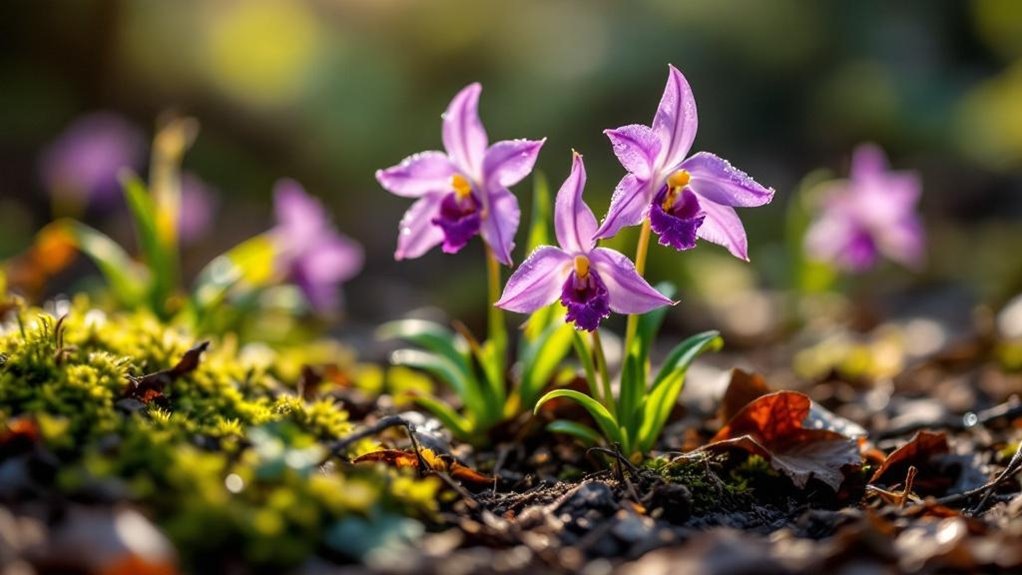
You can trace the name orchid to the ancient Greek *orchis*, meaning testicle, because early botanists observed paired underground tubers that resembled male anatomy; Theophrastus used *Orchis* around 300 BCE, and John Lindley later established orchid as the standard English term in 1845. The name came from an observational feature, not the flower’s delicate form, which helps explain why orchids carry both anatomical origins and cultivated symbolism. Continue, and that layered history becomes clearer.
- Key Takeaways
- What Does Orchid Mean?
- Why Were Orchids Named After Testicles?
- Who First Used the Name Orchid?
- How Theophrastus Named Orchids
- Which Orchids Inspired the Original Name?
- How Greek “Orchis” Became “Orchid
- How Lindley Popularized “Orchid
- Why Orchid Flowers Don’t Fit the Name
- What “Orchis” Meant to Early Botanists
- How Orchid Symbolism Grew Beyond the Name
- Why the Orchid Name Still Fascinates Us
- Frequently Asked Questions
- Conclusion
Key Takeaways
- “Orchid” comes from the Ancient Greek orchis, meaning “testicle,” named for the plant’s paired underground tubers.
- Around 300 BCE, Theophrastus used *Orchis* for these plants because of their distinctive twin tubers.
- The name was based on observable anatomy, especially the tubers, not the flower’s shape or appearance.
- Before “orchid” became standard, English speakers used older names like “bollockwort,” reflecting the same anatomical reference.
- In 1845, John Lindley popularized “orchid” in English, helping unify botanical and horticultural usage.
What Does Orchid Mean?
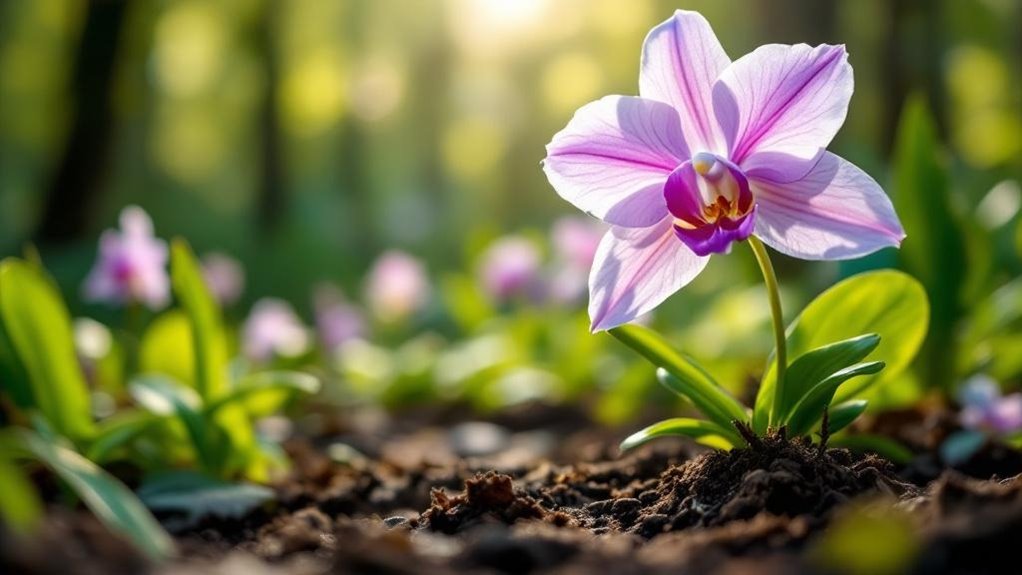
When you ask what orchid means, you’re tracing a cultivated botanical label back through the Orchid family to an observational Greek noun, one shaped by how people classified living forms before modern taxonomy stabilized; although the flowers themselves often appear more labial than anything else, the name remained, carrying symbolic links to fertility, resisting stagnant interpretation, and preserving a concise record of how language, structure, and classification once moved together.
Why Were Orchids Named After Testicles?
When you trace the word orchid to the Greek ὄρχις, meaning “testicle,” you can see that the name arose from an observational link between language and form rather than from anything cultivated or arbitrary. You notice the reason in the plant itself, because many early orchids bear paired tubers whose rounded shape suggested testicles to botanists, and that visible resemblance gave the term its stagnant durability in botanical naming.
You also find that these forms carried older associations with fertility and virility, so the name reflects both physical likeness and the cultural meanings people attached to plant structures.
Greek Meaning Of Orchis
Etymology provides the clearest starting point here, because the name orchid traces back to the Ancient Greek word ὄρχις, or *órkhis*, meaning testicle; early observers chose that term because the paired, tuberous roots of some orchid species presented an unmistakable resemblance, and that observational link shaped the plant’s identity long before modern botany cultivated a more systematic vocabulary.
When you follow that Greek root forward, you see how Orchid naming stayed remarkably consistent across languages; Middle English even preserved the same idea in “bollockwort,” combining a bodily reference with “wort,” or plant.
John Lindley formally introduced “orchid” in 1845, in the third edition of *School Botany*, giving the older classical association a stable scientific place. That continuity kept the term from becoming stagnant, and it quietly sustained attention among students and botanists alike.
Paired Tuber Resemblance
Observation anchored the name: ancient botanists saw in certain orchid species a pair of rounded underground tubers, positioned side by side and close enough in form to suggest testicles, and they named the plant accordingly rather than abstracting it into a more cultivated or stagnant label.
When you examine the etymology, you see how paired tuber resemblance directed classification with unusual directness, because the Greek orkhis named what observers actually noticed below the flower. That observational logic later carried into formal taxonomy, where Orchideæ and Orchidaceæ identified the broader family, yet the original visual comparison still explains why the genus Orchis took shape around those roots.
You also notice a restrained contrast: the flowers often appear delicate and refined, while the naming source remained underground, anatomical, concrete, and stubbornly descriptive to early classifiers.
Fertility And Virility Associations
You can also see the association persist beyond Greece, because orchids entered symbolic systems that tied them to love, beauty, fertility, and sexual potency; in observational terms, the name itself helped stabilize those meanings.
As a result, you don’t encounter orchids only as admired flowers, you encounter them as plants historically revered for what they were believed to promise.
Who First Used the Name Orchid?
If you ask who first used the modern English name, you arrive at John Lindley, whose choice gave you a concise alternative to older, more stagnant family labels, and whose observational precision helped standardize cultivated botanical language for students and specialists; through *School Botany*, he moved the term into wider circulation, where its classical root and practical clarity secured lasting acceptance.
How Theophrastus Named Orchids
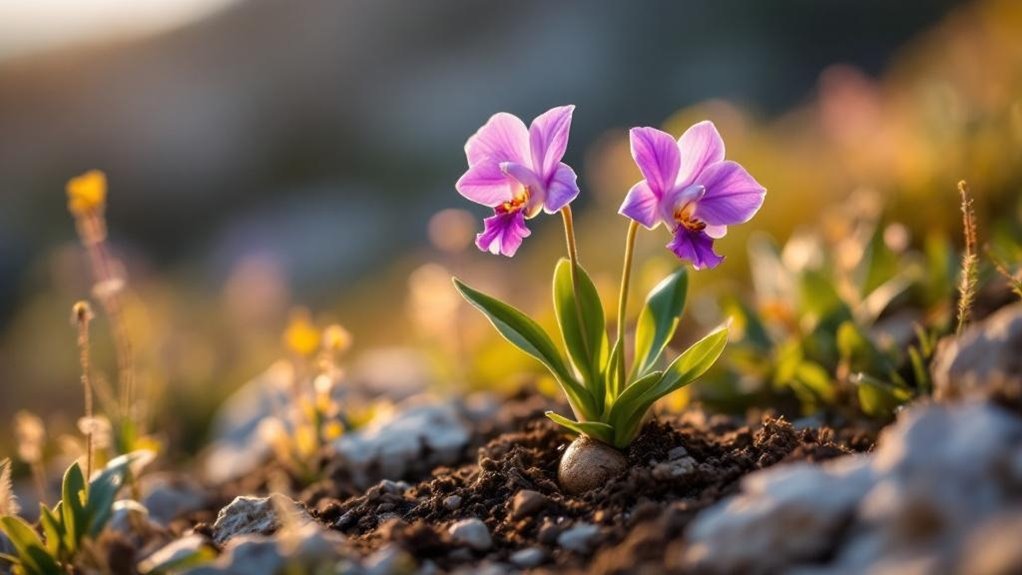
When you trace the name back to Theophrastus, you find an observational method at work, because around 300 BCE he labeled the plant *Orchis* after its paired tubers, whose form he judged striking enough to guide classification.
You can see that the word came from the Ancient Greek *órkhis*, meaning “testicle,” and that this choice reflected not stagnant fancy but a cultivated habit of naming plants by visible reproductive structures.
From that decision, you can begin to see how his terminology established an early framework for orchid study, one that later botanists would inherit and refine.
Theophrastus And Orkhis
Observation guided Theophrastus, the Greek philosopher and botanist often called the father of botany, as he applied the name órkhis to certain orchids whose paired underground tubers resembled testicles; the term came directly from the Greek word for that body part, and it carried more than a descriptive function, because in Greek thought the plant’s form suggested virility and fertility, themes that remained cultivated rather than stagnant in medical and cultural traditions.
Through Theophrastus, you can trace how an observational label entered botanical language, shaped perception, and endured; Greek órkhis passed into Latin, then into the modern word orchid, preserving both the original naming act and its cultural frame.
When you consider orchid etymology, you’re really seeing how Theophrastus fixed a durable connection between language, plant study, and inherited meaning across centuries.
Name Inspired By Tubers
Because Theophrastus worked from visible structure rather than inherited myth, he named these plants from the paired underground tubers that struck him as unmistakably anatomical, drawing on the Greek word órkhis, or “testicle,” to mark a feature he considered both distinctive and taxonomically useful.
When you trace that choice, you see an observational method guiding early botany; he examined roots, noted the cultivated pattern of twin tubers, and treated morphology as stronger evidence than stagnant legend.
From that reasoning came Orchis, a genus defined by those unusual underground forms, and from Orchis came the broader word orchid. The name thus preserves more than an image, because it records how classification began with what a botanist could actually see, compare, and describe, and how physical structure shaped botanical language for centuries afterward.
Which Orchids Inspired the Original Name?
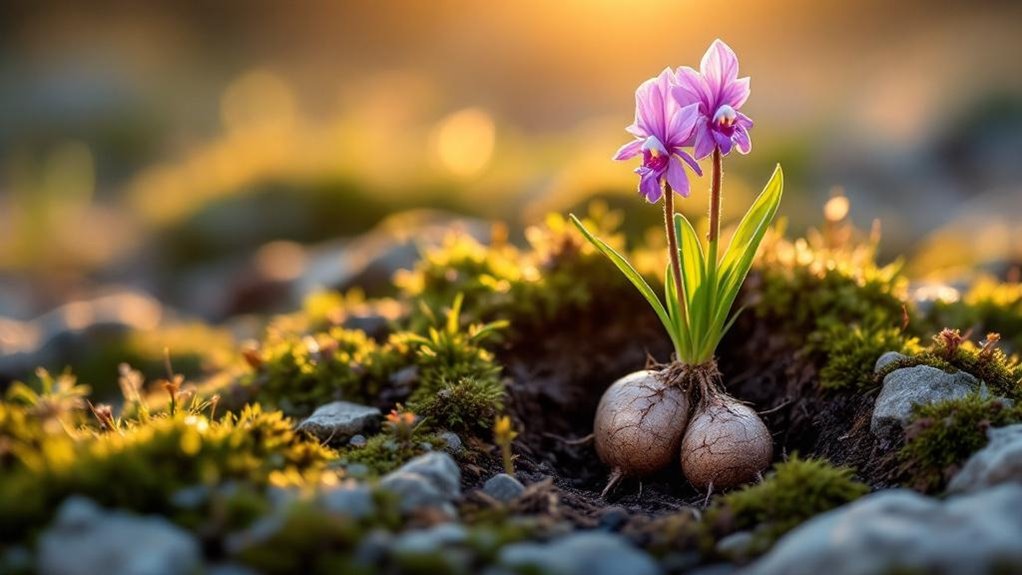
Why did the earliest orchids to shape the name stand out so clearly to ancient botanists? You can trace the answer to Orchis, an ancient Greek genus whose species showed paired underground tubers so distinctly that observational writers treated them as defining features rather than stagnant curiosities; these cultivated associations linked the plants to virility, fertility, and bodily transformation, which gave the name unusual cultural force.
When you ask which orchids inspired the original name, you should picture those early Orchis species, not the enormous orchid family as a whole, because their root form made the strongest impression on Theophrastus and later botanists.
Long before John Lindley introduced Orchid in 1845, these plants had already gathered medicinal and aesthetic value in several traditions, including China and Japan, reinforcing their prominence and lasting designation.
How Greek “Orchis” Became “Orchid
Those early Orchis species did more than supply the image behind the name; they also supplied the word itself, since Greek writers used ὄρχις, or órkhis, meaning “testicle,” for plants whose paired underground tubers seemed so plainly to mirror human anatomy that the comparison became fixed in observational botany rather than remaining a stagnant curiosity.
As you follow the word into botanical Latin, you see Orchideæ and Orchidaceæ appear as family names, cultivated within formal classification and eventually standardized as Orchidaceae; from that lineage, English adopted orchid as a practical singular form.
When the term entered English botanical writing in 1845, it carried both precision and cultural memory, preserving the old morphological reference while giving you a concise modern label for a plant family whose unusual structure had long invited notice, especially among children and students alike.
How Lindley Popularized “Orchid
- Lindley supplied a unified English term.
- The name linked science and cultivation.
- Victorian interest accelerated common usage.
- Orchid Society circles later reinforced it.
As you trace the word’s spread, you find that Lindley’s usage mattered because it was practical, memorable, and authoritative; once printed in a trusted textbook, orchid moved steadily from specialist language into wider botanical and cultivated discourse.
Why Orchid Flowers Don’t Fit the Name
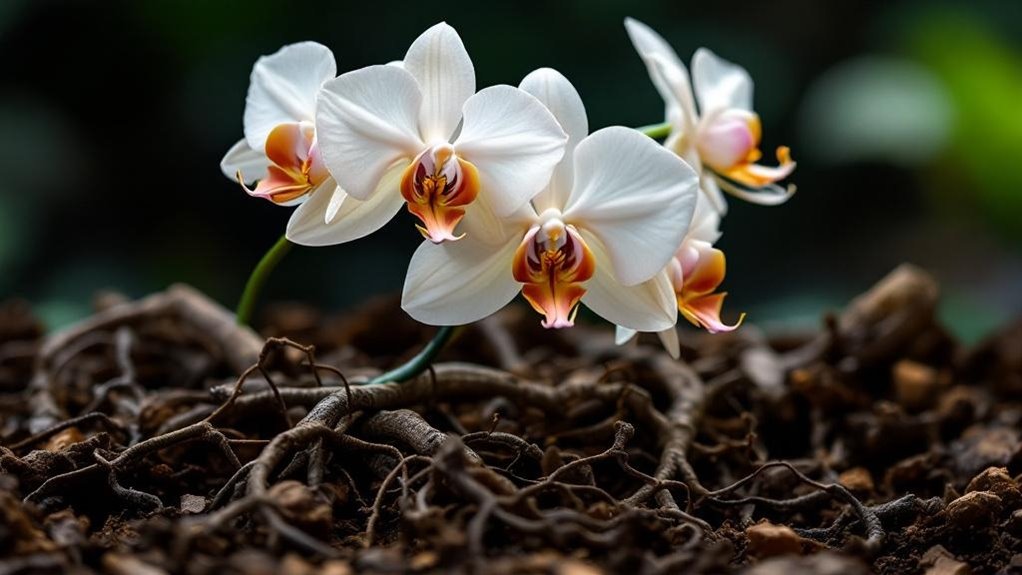
Curiously, the name orchid doesn’t describe the flower at all, because it comes from the Greek *órkhis*, “testicle,” a reference to the paired underground tubers that early observers found more striking than the blossom itself; once you notice that root-based origin, the mismatch becomes hard to ignore, since orchid flowers are cultivated and commonly read in very different terms, with forms that appear labial, receptive, and closely tied to the reproductive imagery of the bloom rather than the anatomy beneath the soil.
As you examine the flower, you see a nomenclature detached from visible structure; the roots supply the name, while the blossom suggests fertility through another visual language.
Even associations with Aphrodite reinforce that divide, and the old emphasis on virility can seem observational rather than descriptive, fixed below ground, almost stagnant, while the cultivated flower presents something else.
What “Orchis” Meant to Early Botanists
- You see morphology directing nomenclature.
- Orchis foregrounds tubers, not flowers.
- Theophrastus tied form to fertility.
- “Bollockwort” preserves the older idea.
When you read early botanical language, you encounter a method, not stagnant fancy; names followed visible structures, and Orchis signaled relationship within Orchidaceae.
Only later, in 1845, did John Lindley widen that legacy through “orchid,” preserving the original physical basis.
How Orchid Symbolism Grew Beyond the Name
You can trace that expansion across cultures: in China and Japan, orchids signaled elegance, integrity, friendship, and loyalty, because learned elites linked them to medicine and refined character; in Victorian society, collectors turned them into markers of wealth and rank.
Myths of Adonis and Narcissus added beauty, mystery, and transformation, while floral language made orchids emblems of fertility and romance, shaping even modern institutions such as the American Orchid Society.
Why the Orchid Name Still Fascinates Us
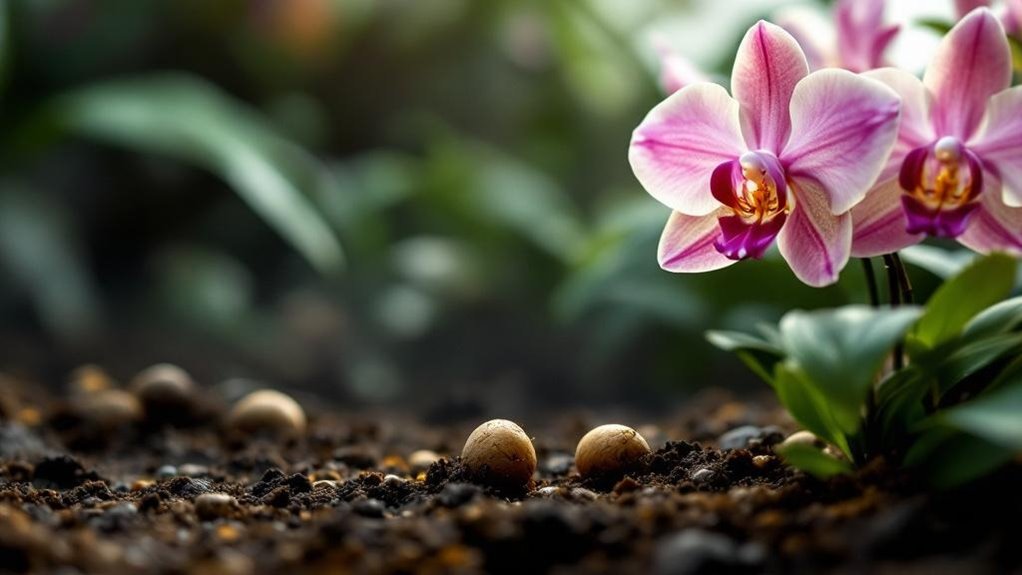
The orchid name still holds attention because it joins an arresting origin to a cultivated beauty that never became stagnant in meaning; when John Lindley introduced “orchid” in 1845 from the Greek órkhis, referring to the testicle-like form of certain roots, he preserved a blunt botanical observation that also carried older associations with fertility and generation.
You still encounter that layered meaning whenever orchids appear in homes, markets, and collections, because the name carries ancient medicinal history in Asia, Victorian luxury, and biological endurance across million years.
- You hear a precise observational origin.
- You inherit fertility symbolism across cultures.
- You see cultivated beauty tied to status.
- You keep the name current through houseplants.
That combination keeps “orchid” memorable; it sounds elegant, yet it retains the weight of roots, history, and desire.
Frequently Asked Questions
What Does the Bible Say About Orchids?
The Bible doesn’t mention orchids specifically, but you can see them reflected in verses about flowers, beauty, and God’s creation. You’re reminded that earthly beauty fades, while spiritual richness, love, and divine grace endure forever.
What Should You Not Do With an Orchid?
You shouldn’t overwater your orchid, use regular potting soil, leave water on its leaves, place it in prolonged direct sunlight, or expose it to cold drafts. You’ll keep it healthier with airy mix, indirect light.
What Is the Smartest Flower?
You’d likely call orchids the smartest flower, because they use mimicry, specialized pollination, and fungal partnerships to survive. You can see their clever adaptations in how they trick insects and thrive across remarkably diverse habitats.
What Is the Rarest Color of Orchids?
Blue—nature’s unicorn, isn’t it? You’ll find blue orchids rank as the rarest color, since true blue doesn’t naturally occur. Most are dyed or carefully hybridized, while only extremely limited mutations appear in species like Vanda.
Conclusion
When you trace the orchid’s name to *orchis*, you see how observation, language, and cultivated symbolism rarely remain stagnant; what began in the root, as Theophrastus fixed a practical label to paired tubers, rose over centuries into a flower associated with rarity, refinement, and desire. Like Daphne altered yet enduring, the orchid keeps its oldest name while shedding its earliest meaning, and that tension still holds your attention, because names preserve history even as beauty revises it.