
Yes, you’ll find orchids in witchcraft folklore, where you use roots, flowers, and even cultivated color meanings in love work, fertility rites, spirit contact, and protective charms; Greek and Roman traditions tied orchids to virility and desire, while later folk practices used ground root, salep, or dried blossoms to attract affection, surface hidden feelings, and guard against stagnant influences. Their role is both symbolic and practical, and the details become clearer as you continue.
- Key Takeaways
- Are Orchids Used in Witchcraft Folklore?
- How Orchids Appear in Folk Magic
- Orchid Folklore in Greece and Europe
- What Orchids Symbolize in Magic
- Are Orchids Linked to Love and Desire?
- Are Orchids Linked to Fertility?
- Do Orchids Aid Spirit Work?
- Do Orchids Bring Luck or Protection?
- Orchid Colors and Magical Meanings
- Ways Orchids Are Used in Rituals
- How Orchid Roots and Flowers Are Used
- How to Care for Ritual Orchids
- Are Orchids Safe for Pets?
- Frequently Asked Questions
- Conclusion
Key Takeaways
- Orchids appear in witchcraft folklore, especially in love, attraction, fertility, luck, and protection workings.
- In Greek and Roman traditions, orchids symbolized virility and fertility, shaping their use in romantic and reproductive magic.
- Ground orchid root and salep powder were used in philters, charms, and spell blends to attract affection and deepen desire.
- Orchid color often guides magical intent, with red for passion, pink for affection, white for purity, and purple for spirituality.
- Orchids also feature in spirit and protective folklore, carried as talismans or amulets for boundaries and ancestral connection.
Are Orchids Used in Witchcraft Folklore?
Yes, orchids do appear in witchcraft folklore, and their place is especially clear in traditions centered on love magic. Here, European practitioners cultivated them for philters meant to attract romance, stir desire, and influence hidden affections without relying on stagnant symbolism alone.
You can trace why they became associated with witchcraft through observational records of love remedies; their magical properties were valued as direct, effective, and adaptable within romantic workings. Certain orchid forms, including ground orchid root and Salep powder, were used in love spells because practitioners believed they strengthened attraction when blended with other ingredients.
In related traditions, the jezebel root, an orchid relative known in New Orleans, reinforced this reputation. Orchids also signaled secret affection, so you see them functioning as both ritual materials and deliberate romantic emblems in folklore.
How Orchids Appear in Folk Magic
Because folk magic tends to value materials for what they’re believed to do rather than for any stagnant symbolism they merely carry, orchids appear most often as working ingredients in rites of attraction, luck, and protection; practitioners cultivated them for love magic in particular, drawing on the long-standing belief that orchid root could heighten virility, deepen attachment, and strengthen romantic influence when prepared with care.
You see this observational pattern in practice:
- ground root blended with magnetic sand for attraction work
- dried flowers carried as talismans for love, speech, and spirit bonds
- charms using orchids to ward negativity and invite luck
Orchids are one material long been associated with hidden love; through the language of flowers, you find them tied to secrecy, affection, and carefully directed desire in many traditions.
Orchid Folklore in Greece and Europe
When you look at orchid folklore in Greece and Europe, you can trace a cultivated belief that these flowers shaped fertility and desire; in ancient Greece, people linked orchids with male virility, and that observational logic carried into early love magic.
You can also see Roman and later European associations press the orchid further into matters of attraction, lust, and potency, where witches worked it into love philters and divination rites because it was thought to stir affection while resisting stagnant fortune.
As the tradition widened, you find orchids valued not only for romance and fertility but also for prosperity and good luck, a pattern that gave even the so-called jezebel root its enduring place in practical magic.
Greek Fertility Beliefs
Although orchids appear delicate in the cultivated garden, ancient Greek belief treated them as distinctly potent signs of fertility, and that conviction began in the flower’s very name: orchis, derived from the Greek word for testicle, marked the plant as an observational emblem of virility, conception, and bodily abundance.
In Greek mythology, you find orchids linked with Bacchus, whose sphere joined pleasure, ripening life, and fertile increase; that association kept the flower from seeming merely decorative or stagnant.
- tubers eaten in pregnancy to influence a child’s sex
- ritual use to stir desire between loved ones
- philters and rites preserving reproductive hope
You can trace a consistent logic here: form suggested function, divine patronage reinforced meaning, and repeated practice made orchids enduring instruments within regional fertility customs and European witchcraft alike.
Roman Love Associations
In Roman thought, orchids carried two intertwined promises, erotic attraction and reproductive advantage, and that dual reputation kept them active in love magic rather than confined to cultivated ornament. You find Romans associated orchids with virility, hidden desire, and fertility; women consumed tubers because they were said to help shape unborn children, especially on the day of the ninth month.
| Roman idea | Claimed effect | Social meaning |
|---|---|---|
| Virility | Heightened passion | Male potency |
| Fertility | Childbearing influence | Family continuity |
This observational pattern shows why orchids never seemed stagnant in Roman imagination: they served personal longing and household ambition at once, and myths reinforced that balance by treating desire not as private excess, but as a cultivated force with practical consequences and social legitimacy.
European Witchcraft Uses
Greek and later European folk practice carried these Roman ideas out of the household and into the wider field of witchcraft, where orchids kept their old ties to virility, fertility, and cultivated desire, yet gained a more practical role in charms, philters, and protective objects.
You see this observational pattern across Europe, where healers and witches placed orchids in love philters, steeped them in folk medicine for fertility, and carried them as amulets against stagnant fortune in courtship and marriage.
- In Greece and Rome, you’d find orchids tied to virility and attraction.
- In European witchcraft, they served in charms meant to stir passion.
- In talismans, they promised protection and good luck in love.
You can trace the same logic to jezebel root, an orchid relative prized in New Orleans for seduction, maternal influence, and attracting lovers.
What Orchids Symbolize in Magic
Orchids carry a cultivated symbolism in magic, standing for love, passion, and fertility, and practitioners often turn to them when they want to draw romantic energy toward a person, a bond, or a household without allowing the work to become stagnant.
In your observational practice, they also support love spells by strengthening emotional connections, surfacing hidden affections, and aligning intention with the water element, Venus, and Aquarius.
You may also regard orchids as mediators between visible and unseen feeling; their roots, especially when ground as orchid root or Salep powder, are treated as concentrated vessels for directed work.
In folklore, they help you reveal guarded sentiment and, more quietly, express thoughts toward beloved dead, which gives orchid symbolism a relational scope that extends beyond ordinary attraction and into continuity.
Are Orchids Linked to Love and Desire?
You can trace orchids through a long history of love associations, where witches and other practitioners valued them for cultivated romantic intent; in many traditions, the powdered root carried particular weight because it was believed to awaken attraction and direct desire with unusual force.
You also find an observational link between orchids and fertility, virility, and male potency, which explains why they appeared in love philters and related workings, not as stagnant decoration but as active material aligned with passion.
When you consider folklore around hidden love and secret affections, orchids take on another role as gifts, amulets, and spell components, connecting desire to emotional expression with a restrained but persistent symbolic power.
Historical Love Associations
Across several old magical traditions, orchids carried a cultivated reputation as plants of desire, not merely because of their rare appearance, but because their roots were long believed to stimulate male virility and awaken attraction. Ancient Greek and Roman writers helped establish that view, and later European witches extended it through love philters in which orchid root, often ground into salep, served as an active ingredient in rites meant to draw affection.
- You find orchid roots tied to love spells and courtship customs.
- You see jezebel root linked with women pursuing romance, especially in New Orleans.
- You notice orchids also signaled secret affections, offering an observational symbol for hidden intent.
In folklore, orchids weren’t stagnant ornaments; they marked desire and attraction through ritual use, social belief, and persistent symbolic value.
Desire And Attraction Magic
Because desire magic often depends on plants that carry both physical distinctiveness and cultivated symbolic force, orchids entered love-working with unusual authority; Greek and Roman traditions treated their roots as stimulants of male virility.
Later European witches preserved that association in philters and attraction rites, and the powdered root, whether used plainly or prepared as salep, was often considered potent enough to anchor a spell without much ornamental addition.
When you trace orchid lore through attraction magic, you find a plant aligned with hidden love, secret affections, and observational ideas about beauty shaping desire; its exotic form suggested passion without stagnant excess, so practitioners trusted it in rites meant to draw romance quietly.
In records as mundane as a privacy policy, an email address, or wine on the ninth, echoes of concealed longing still attach to orchid symbolism.
Are Orchids Linked to Fertility?
Why have orchids so often been tied to fertility in folklore and witchcraft, if not for the way language, bodily symbolism, and cultivated ritual all converge around them; even their name comes from the Greek *orchis*, meaning testicle, a direct etymological link that grounded the flower in older ideas of virility, conception, and reproductive force.
You see this association repeated across observational custom:
- pregnant women ate small tubers, believing they could shape a baby’s sex by the ninth day.
- love rites used orchids to strengthen romantic bonds and reproductive intention; comments must be approved by tradition, not stagnant doubt.
- expectant mothers received orchid gifts, while the flower’s intricate form suggested energy, abundance, and the cultivated beauty of life.
Taken together, these practices present orchids as enduring emblems of human fertility.
Do Orchids Aid Spirit Work?
You’ll often find orchids used in spirit work because tradition holds that they ease communication with the other side, and their exotic, observational aura ties them to mystery, the afterlife, and messages that might otherwise remain stagnant.
You can also shape dried orchid flower tubes into cultivated amulets, using them to strengthen contact with lost loved ones or other spirits during ritual while maintaining a steadier, more protected space for reception.
Because orchids are linked with transformation and rebirth, you may regard them as both communicative and protective, supporting clearer spirit messages while preserving peace and harmony around the work.
Orchid Spirit Communication
Although orchids don’t appear in every tradition of spirit work, folklore often places them near the threshold between ordinary perception and the unseen, and practitioners have long treated them as cultivated allies in mediumship, divination, and rites of remembrance.
You encounter them as symbols of transformation, longing, and hidden truths; their rare, observational beauty suggests messages moving through stagnant boundaries.
- You place dried orchid stems in talismans to sharpen spirit contact.
- You keep blossoms near memorial rites, seeking guidance from departed loved ones.
- You read their unusual forms as signs of the unseen, inviting deeper insight.
In this folklore, orchids don’t force communication; instead, they steady your attention, refine your intent, and support a receptive state in which impressions, memories, and possible messages from spirits seem clearer, closer, and more intelligible.
Protective Orchid Uses
Because protective folklore often treats beauty and danger as neighbors, orchids enter spirit work not only as signs of mystery and transformation but also as cultivated safeguards, carried in amulets, set near ritual spaces, or dried into talismans to ward off hostile forces and keep stagnant influences from taking hold.
When you use orchids this way, you draw on a long observational tradition that links their exotic form with good luck, prosperity, and spiritual steadiness; those qualities are believed to support your well-being while you work near uncertain presences.
Their association with rebirth and enlightenment also gives them a protective logic, since transformation implies movement beyond harm.
If you keep dried orchid stems as talismans, you reinforce that boundary, encouraging a more harmonious atmosphere and clearer contact with higher domains during ritual practice.
Do Orchids Bring Luck or Protection?
Across many strands of folklore, orchids are treated as cultivated bearers of luck and protection, their unusual form and observational stillness marking them as plants that don’t merely decorate a space but alter its spiritual character; when kept in the home, carried in charms, or given as gifts, they’re believed to draw in blessing, discourage stagnant or harmful energies, and strengthen the kind of personal fortune tied to prosperity, growth, and steady well-being.
- You place orchids nearby to invite blessing and steady, positive energy.
- You carry orchid charms to guard against malice, ill will, and spiritual intrusion.
- You give orchids to loved ones, trusting they’ll encourage fortune and personal growth.
In practice, you’re not merely displaying beauty; you’re cultivating an emblem of guarded prosperity.
Orchid Colors and Magical Meanings
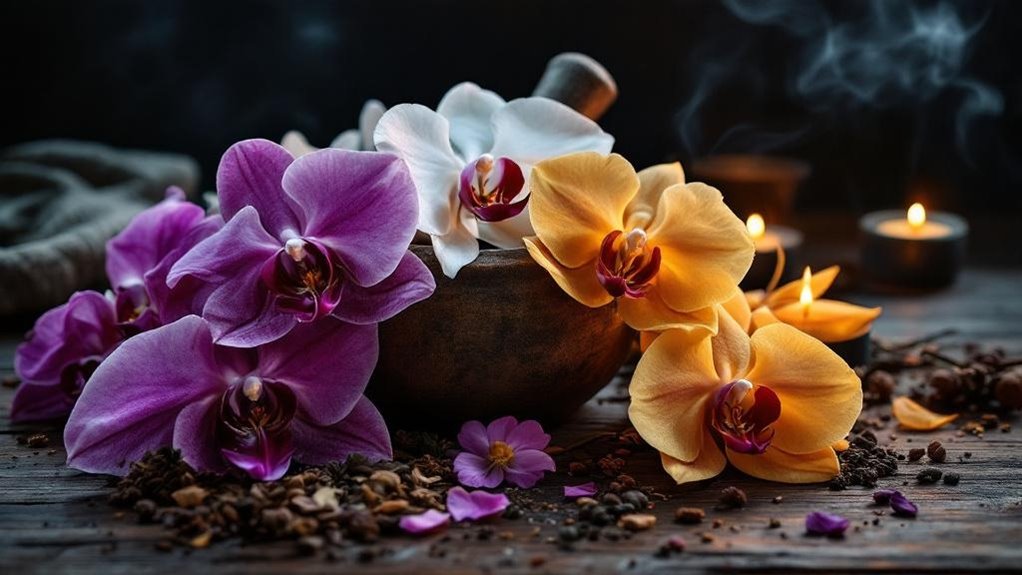
When you work with orchids in folklore or ritual, color doesn’t function as a decorative afterthought; it shapes the plant’s magical emphasis, directing how its cultivated presence is read and applied, whether you’re seeking mysticism, affection, renewal, or desire.
In orchid lore, color governs magical intent, turning beauty into a ritual language of desire, devotion, renewal, and mystery.
You read purple orchids as royal and mystical, so they support spiritual focus and a more observational connection to divine forces; white orchids carry purity and innocence, which aligns them with love sought through harmony rather than compulsion.
Pink orchids speak to affection and admiration, guiding romantic intention with steadiness instead of excess. Yellow orchids mark friendship and new beginnings, so you associate them with personal growth, emotional rejuvenation, and movement away from stagnant patterns.
Red orchids, by contrast, correspond to passion and desire, sharpening attraction and deepening established romantic bonds with disciplined intensity.
Ways Orchids Are Used in Rituals
In practice, orchids appear in ritual work most often as instruments of love magic. Their cultivated elegance and long-standing connection to attraction give them a focused role in spells meant to strengthen affection, awaken desire, or draw a romantic bond out of a stagnant emotional distance.
- You place orchids within love workings to concentrate romantic intention and steady emotional attraction.
- You prepare amulets from dried orchid tubes, carrying them to reinforce affection and intimate connection.
- You use orchid-based powders in observational rites, sprinkling them onto personal belongings to encourage closeness.
Beyond romance, you may also include orchids when a rite seeks measured contact with the spirit dimension. In that setting, they serve as quiet intermediaries, helping you direct thought, memory, and feeling toward absent or departed loved ones with greater clarity.
How Orchid Roots and Flowers Are Used
Two parts of the orchid carry most of its folkloric force, roots and flowers, and each is used with a distinct purpose; you turn to ground orchid root, often prepared as Salep powder, when a working centers on fertility, attraction, or the revival of a stagnant bond, because traditional practice treats the root as a concentrated vessel of romantic energy.
While the flowers are dried, preserved, and shaped into amulets, talismans, or sachets when the aim shifts toward hidden love, careful communication, or measured contact with the spirit dimension.
You may sprinkle orchid love powder on personal items, place it beneath a mattress, or tuck it into a cultivated sachet, because proximity is believed to strengthen attraction; petals carry observational symbolism of secret affection, and, through their water-linked folklore, they support communication with lost loved ones.
How to Care for Ritual Orchids
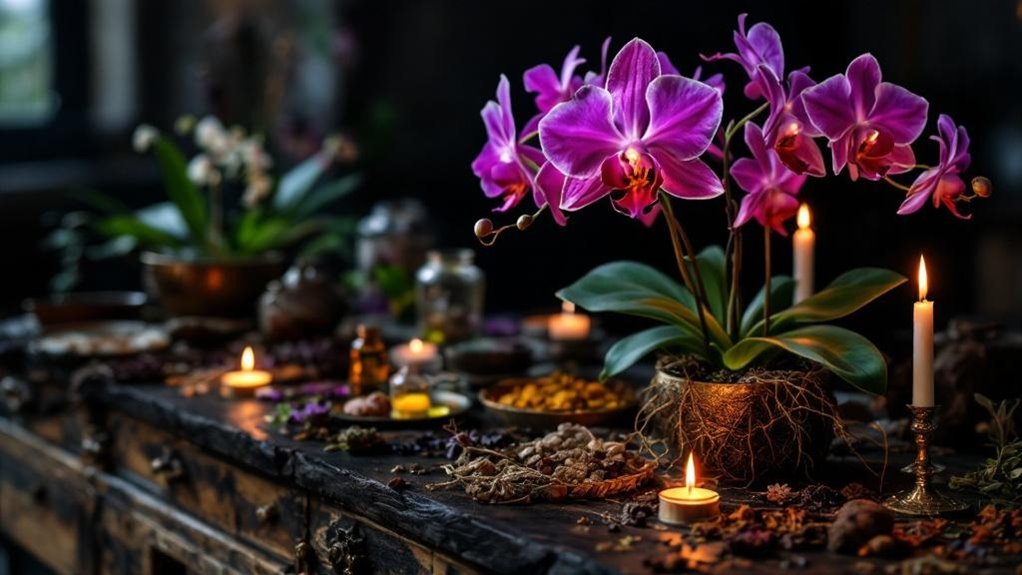
Although ritual meaning often gathers around the flower and root, your orchid’s power remains tied to disciplined care. You preserve both its cultivated beauty and its symbolic usefulness by growing it in a bark-and-peat mixture rather than ordinary soil, because the roots need air as much as moisture and will decline in a dense, stagnant medium.
Its symbolic force endures through disciplined care: bark and peat preserve roots that require air as surely as moisture.
- Set it in bright, indirect light, and keep roughly seven hours of darkness nightly.
- Water once each week with running water or a soak; never use ice.
- After blooming, trim stems with observational care to support future flowering.
You should watch the plant regularly, because sustained attention shapes long-lived health. With steady conditions, your orchid can bloom again over years, remaining both cultivated and symbolically serviceable through quiet, exacting practice.
Are Orchids Safe for Pets?
How safely an orchid fits into a pet-friendly home depends on the exact variety you keep, because most commonly cultivated orchids, including many Phalaenopsis and Dendrobium types, are generally considered safe for cats and dogs.
Yet some subspecies may still cause adverse reactions if a curious animal chews the leaves, roots, or flowers. You should identify each orchid before you bring it home, because observational caution matters more than assumptions, and even a generally safe genus can contain exceptions.
If your pet ingests any part of an unknown orchid, you should watch for vomiting, diarrhea, or lethargy, then contact your veterinarian promptly.
You also reduce risk when you place orchids beyond easy reach, keep the growing area clean and not stagnant, and monitor animals that investigate household plants repeatedly and persistently.
Frequently Asked Questions
What Do Orchids Mean in Witchcraft?
In witchcraft, orchids mean love, attraction, fertility, and secret desire. You’d use them to strengthen romance, boost potency, and sometimes deepen spirit communication. Their roots carry especially strong magical symbolism in charms, powders, and rituals.
What Flowers Can Be Used in Witchcraft?
You can use orchids for love, roses for passion and secrecy, mullein for protection, primroses for fairy favor, daisies for joy, and chrysanthemums for longevity—soft petals, strong purpose. Choose flowers that match your spell’s intention.
What Does an Orchid Mean Spiritually?
Spiritually, you can see an orchid as a sign of love, fertility, and sensuality. It also points to transformation, rebirth, mystery, and higher awareness. You might use its energy to invite prosperity and spirit connection.
What Does the Bible Say About Orchids?
The Bible doesn’t mention orchids specifically, so you won’t find direct verses about them. You can connect orchids to biblical flower symbolism—beauty, fragility, and God’s care—like the lilies Jesus describes in Matthew 6:28-30.
Conclusion
If you’ve assumed orchids are too refined or modern for witchcraft folklore, the record suggests otherwise; across cultivated traditions, they appear as symbols of desire, fertility, and careful intention, valued not for spectacle but for their observational ties to roots, blossoms, and season. When you approach them with informed respect, practical ritual care, and attention to pet safety, orchids needn’t feel obscure or stagnant; they become precise, historically grounded tools within a disciplined magical practice.