
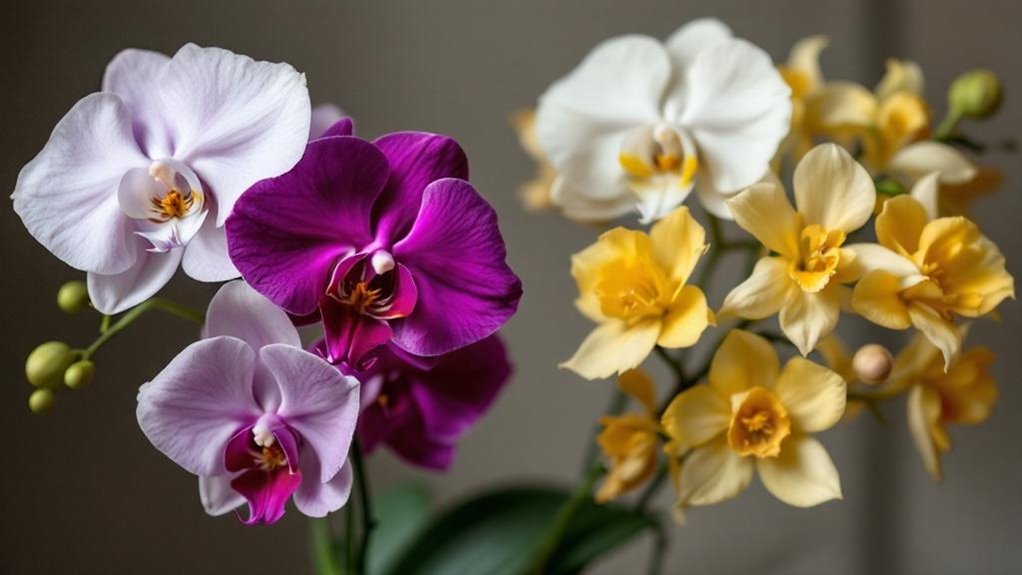
A common myth says orchids always symbolize romantic love, yet you should treat that as too stagnant and simplistic; meanings change with color, species, and culture. Greek traditions tied orchids to fertility and virility, Victorian society turned them into signs of rarity and cultivated status, and Chinese symbolism emphasized friendship, virtue, and good fortune. You’ll also find that white, pink, purple, and green orchids carry distinct meanings, and the patterns behind those meanings become clearer ahead.
- Key Takeaways
- Why Orchid Symbolism Doesn’t Always Mean Love
- How to Interpret Orchid Symbolism
- How Orchid Colors Change Symbolism
- How Orchid Species Shape Symbolism
- The Greek Myth Behind Orchid Symbolism
- Where Orchid Fertility Myths Came From
- How Chinese Culture Shaped Orchid Symbolism
- Why Orchid Symbolism Goes Beyond Luxury
- Why Victorian Orchid Myths Still Persist
- Frequently Asked Questions
- Conclusion
Key Takeaways
- Orchids do not universally symbolize romance; many cultures associate them with virtue, friendship, protection, or status instead.
- Not all orchids mean the same thing; symbolism changes by color, species, and cultural context.
- The myth that orchids always represent luxury comes from Victorian trends, though modern meanings are broader and more accessible.
- Orchids are not inherently aphrodisiacs, despite ancient Greek fertility associations and later myths about desire.
- White orchids do not exclusively mean weddings or purity; they can also signify elegance, reverence, and spiritual refinement.
Why Orchid Symbolism Doesn’t Always Mean Love
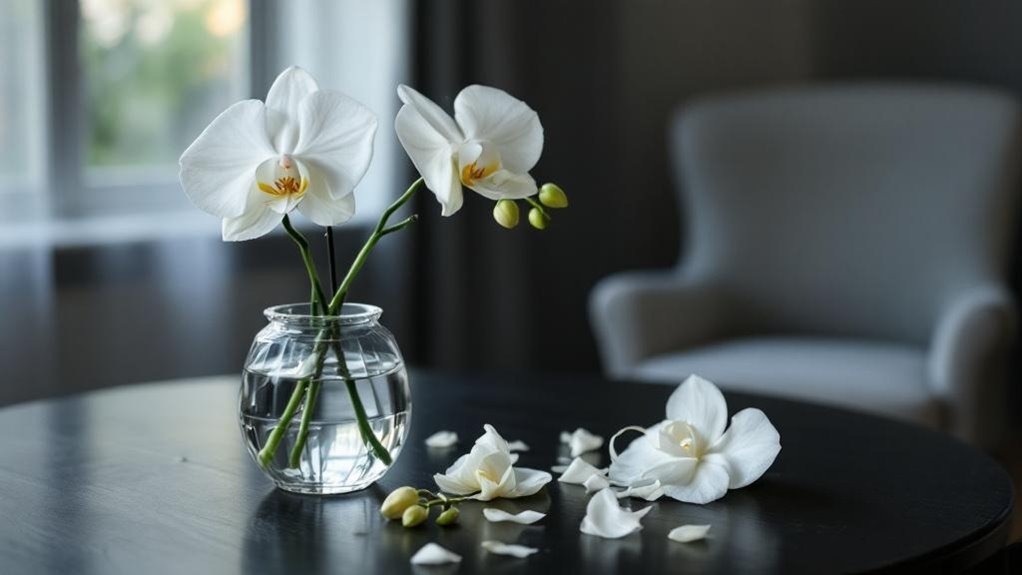
Although orchids are often presented as emblems of love, that reading is too narrow; across cultures and periods, these flowers have carried a more observational range of meanings, including strength, refinement, beauty, integrity, and even protection.
When you examine orchid symbolism, you find a cultivated language that doesn’t remain stagnant in romance alone; in the Victorian Era, orchids signaled luxury, rarity, and exclusivity, and the Lady’s Slipper Orchid could suggest capricious beauty rather than devotion.
In the Victorian imagination, orchids conveyed rarity, luxury, and a beauty admired more for allure than devotion.
In Chinese culture, orchids point you toward integrity and virtue, emphasizing disciplined character over attachment. Color deepens that range: white orchids suggest purity, purple ones royalty.
Beyond aesthetics, orchids also appeared in rituals and folklore tied to luck, healing, and protection, which shows you that their meanings have long exceeded the boundaries of love.
How to Interpret Orchid Symbolism
To interpret orchid symbolism well, you should begin with context rather than assumption, because orchids don’t carry a stagnant meaning across every culture, era, or exchange; instead, their significance shifts according to history, color, social setting, and the intention behind the flower itself.
When you read the symbolism of orchids, notice whether the reference is ancient, Victorian, or East Asian, because orchids symbolize fertility and virility in ancient Greece, cultivated luxury and exclusivity in the Victorian era, and friendship, virtue, and good fortune in Chinese tradition.
You should also ask who’s giving the flower, and why, since these flowering plants often signal admiration, refined taste, or moral esteem rather than romance alone.
This observational method lets you interpret orchids accurately, without flattening their meaning into a single modern idea.
How Orchid Colors Change Symbolism
When you look at orchid symbolism through color, the meaning becomes more precise, because each hue directs your observational reading away from any stagnant, one-size-fits-all interpretation and toward a more cultivated understanding of intent, setting, and emotional register.
- Pink Orchids suggest femininity, grace, and admiration; you choose them when affection should appear refined rather than excessive.
- White orchid colors convey purity and elegance; you see them in weddings because they support serenity and new beginnings.
- Purple Orchids carry symbolism tied to royalty, dignity, and luxury; you read them as respectful, formal, and historically elevated.
- Yellow and green shift meaning toward joy, friendship, growth, and renewal; together, they remind you that symbolism can celebrate connection, nature, and future possibility without abandoning composure or depth.
How Orchid Species Shape Symbolism
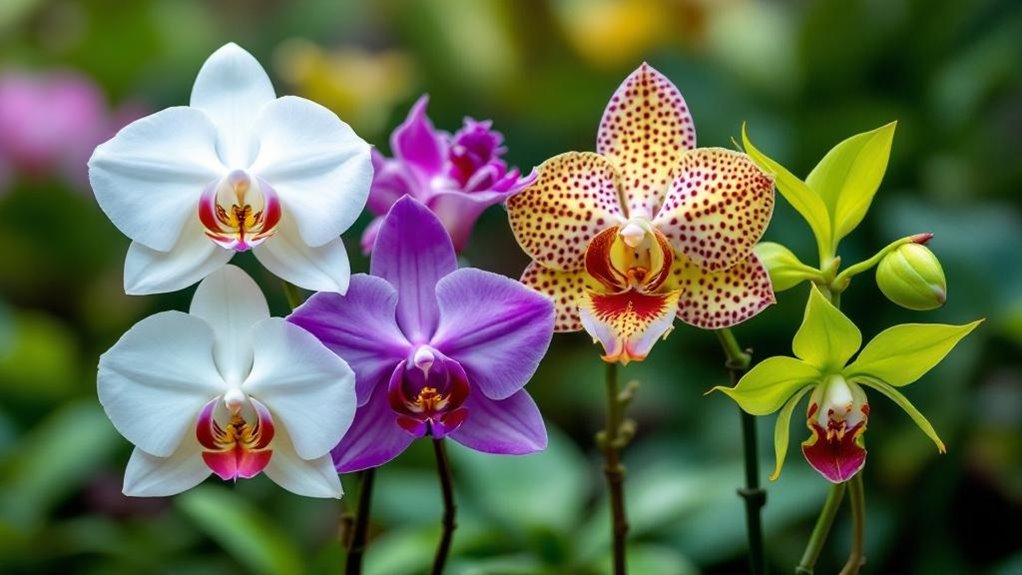
As you move from color to species, you see that each orchid carries its own cultivated meaning; Phalaenopsis suggests grace and refinement, Cymbidium conveys strength and nobility, and Lady’s Slipper presents a more capricious beauty.
You also notice that form shapes symbolism, because unusual structures and ghostly white blooms can shift an observational reading toward enchantment, purity, or even stagnant associations with death and the supernatural.
When you choose a specific orchid, you don’t simply offer a flower; you signal character, care, and the message you want its species to carry.
Species-Specific Meanings
Although orchids often stand for beauty in a general sense, individual species shape that symbolism in more precise ways, because form, cultural history, and visual character all guide how people read them.
When you consider Orchid species, you see orchid symbolism becomes more observational than stagnant, and more cultivated in meaning than myth suggests.
- Phalaenopsis suggests grace and refinement; you read modern elegance in its presence.
- Cymbidium conveys strength and nobility; you often choose it for formal settings.
- Lady’s Slipper, especially in Victorian readings, signals capricious beauty rather than simple romance.
- Ghost orchids carry mystery, death, and the supernatural; their associations shift your interpretation.
If you ignore species, you flatten meaning; if you attend to species, gifts and displays communicate with greater precision and cultural awareness.
Form Shapes Symbolism
Form directs symbolism in orchids, because you don’t read these flowers only by color or rarity; you read them by silhouette, proportion, and visual texture, and those formal traits make meaning feel observational rather than stagnant.
When you compare different types, you see how shape governs interpretation: Phalaenopsis, with rounded, cultivated petals, suggests grace and refinement; Cymbidium, more architectural and upright, signals strength and nobility, which suits formal occasions.
Lady’s Slipper orchids complicate the picture, because their pouchlike form conveys capricious beauty, delicate yet unpredictable.
Ghostly white orchids, defined by an ethereal outline rather than simple whiteness, draw associations with death and spirituality in art and ritual.
Orchids represent messages through form, so your choices in gift-giving and floral arrangements should follow shape as much as color.
The Greek Myth Behind Orchid Symbolism
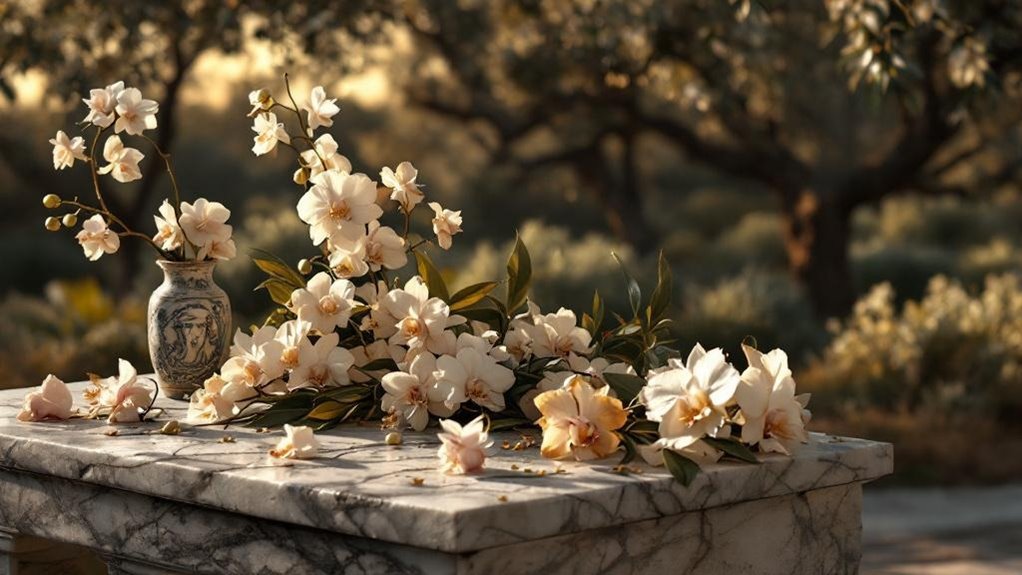
When you trace orchid symbolism back to ancient Greece, you find that its meaning begins with the very name of the plant, since orchid comes from the Greek orchis, meaning testicle, a direct reference to the paired, bulbous tubers that early observers found striking rather than ornamental.
You can see this Greek frame clearly:
- Orchis, in myth, became an Orchid after divine punishment.
- Apollo linked the flower with beauty and desire.
- In Ancient Greece, its roots carried observational weight.
- Later prestige helped the Orchid become associated with royalty.
That background matters because you’re not looking at a stagnant decorative symbol; you’re seeing a cultivated emblem shaped by language, myth, and divine association, one that carried virility, beauty, and desire long before later cultures reframed it as merely elegant or exotic.
Where Orchid Fertility Myths Came From
Those Greek origins also explain why orchid fertility myths persisted so widely, because the flower’s earliest symbolism didn’t rest on a stagnant idea of beauty alone; it grew from observational beliefs about the plant’s tubers, from mythic stories about sexual misdeeds and transformation, and from cultivated cultural habits that treated resemblance, rarity, and liveliness as meaningful signs.
If you trace the pattern forward, you see why orchids are associated with fertility across cultures: Greeks believed tubers could influence unborn children, Victorian collectors linked exotic blooms with desire and abundance, and even Vanilla planifolia carried ritual meanings tied to vitality, strength, and reproduction.
You can see these myths forming through analogy, luxury, and ritual use, rather than through any single universal doctrine or stable symbolic source.
How Chinese Culture Shaped Orchid Symbolism
Although Greek and Victorian ideas often tied orchids to desire and fertility through analogy and rarity, Chinese culture gave the flower a more disciplined symbolic life, treating it not as a stagnant emblem of sensual abundance but as a cultivated sign of beauty, refinement, and moral character; Confucius helped fix that meaning by praising orchids for their quiet excellence and comparing their presence to that of virtuous men, which placed the plant within an ethical vocabulary rather than a merely decorative one.
- You see orchids remain tied to spring, renewal, and joy.
- You notice these remarkable plants among the four noble plants.
- You read pink and white varieties as signals for relationships, purity, and elegance.
- You find orchids used in feng shui, where they support family, fertility, and auspicious living.
Why Orchid Symbolism Goes Beyond Luxury
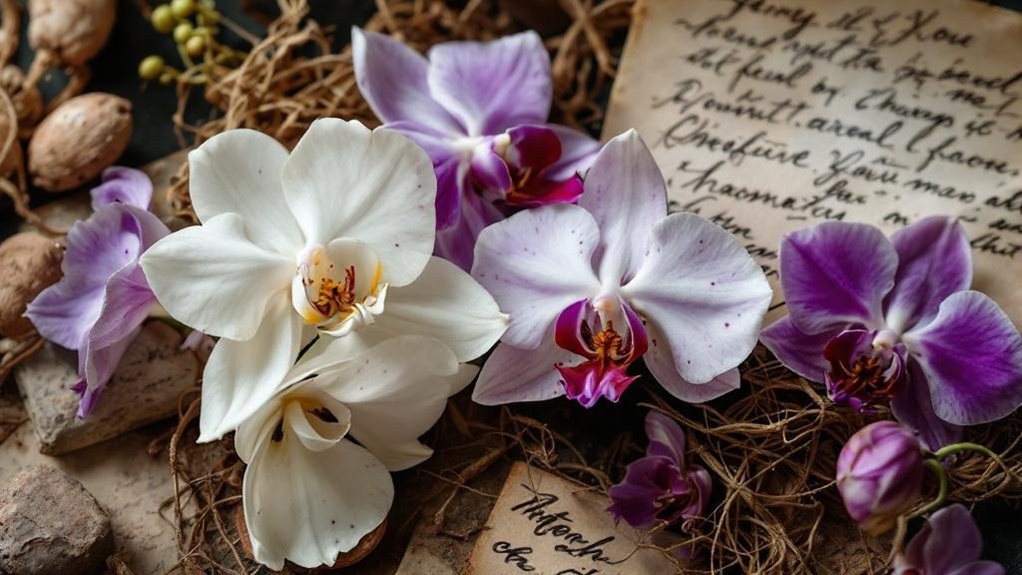
While orchids are often presented as shorthand for wealth and cultivated taste, their symbolism has never remained stagnant at the level of luxury alone; across traditions, you see them carrying meanings that reach into fertility, virility, integrity, friendship, spiritual energy, and even resilience, which gives the flower a broader observational weight than its polished appearance first suggests.
| Tradition | Meaning |
|---|---|
| Greek | Fertility, virility |
| Aztec and Chinese | vanilla, spiritual significance; integrity, friendship |
When you look closely, orchids also suggest enduring love, longevity, and ethical stewardship, because cultivated care can support biodiversity rather than vanity alone. You can read them not simply as emblems of status, but as signs that beauty, strength, and moral attention often coexist in the same living form today.
Why Victorian Orchid Myths Still Persist
Because Victorian culture attached orchids to rarity, display, and cultivated taste, the old myths still persist in the modern imagination; you still see the flower framed as an emblem of wealth, exclusivity, and refined desire, not simply because the plant is visually striking, but because nineteenth-century collecting practices turned it into a social signal that never fully lost its force.
Victorian orchidelirium made orchids lasting symbols of wealth, exclusivity, and refined desire in the modern imagination.
- You inherit orchidelirium’s prestige narrative.
- Stunning flowers still suggest cultivated status.
- Romantic gifting repeats old desire myths.
- Frequent use in décor keeps meanings visible.
You can trace this persistence to observational habits shaped by elite collecting, to older claims about orchid tubers and aphrodisiac power, and to a market that rarely lets those associations grow stagnant, even when modern growers make orchids more accessible to ordinary homes today.
Frequently Asked Questions
What Is the Myth of the Orchid Flower?
The orchid flower’s myth traces to ancient Greece, where you’d link “orchis” to virility and fertility. You also find Aztec beliefs that vanilla orchids were divine gifts, sacredly boosting strength, love, and spiritual connection.
What Symbolism Do Orchids Have?
Orchids symbolize luxury, beauty, fertility, refinement, and admiration, and you can also read them as signs of purity, royalty, integrity, or good fortune. Their meaning shifts with culture, history, and even color, so you’ll find nuance.
Why Does Orchid Mean Testicle?
Because ancient Greeks looked at orchid tubers and thought, “Yep, those resemble testicles,” you get the name from orchis. You can thank botany’s least subtle naming committee for linking orchids with fertility and virility.
What Is the Greek Mythology of Orchids?
In Greek mythology, you’d find orchids linked to Orchis, a youth the gods transformed into the flower after he offended them. You can also trace orchids to fertility, desire, and beauty in ancient Greek beliefs.
Conclusion
When you look past the stagnant myths, orchid symbolism becomes far larger than a single borrowed idea of love; it stretches across color, species, history, and cultivated belief, carrying meanings so layered they seem to fill entire civilizations. You can read orchids with more observational precision when you notice context, because each bloom reflects culture as much as beauty, and once you do, the old Victorian simplifications shrink into something small, brittle, and finally unconvincing.