
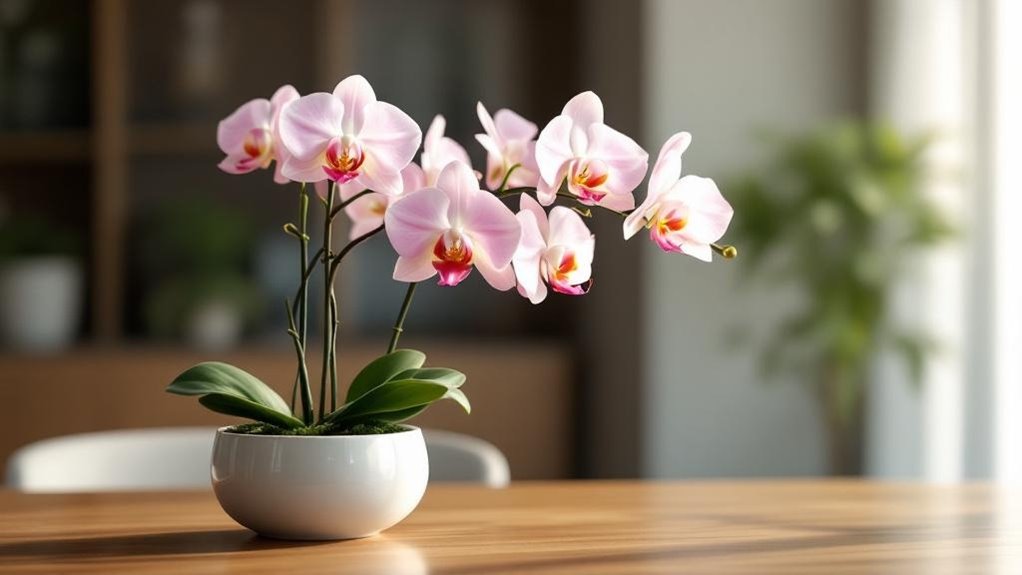
Yes, orchids have clear feng shui meaning; when you place them intentionally, you support harmony, beauty, love, prosperity, and cultivated personal growth, while their balanced form helps keep qi refined rather than stagnant. You can also shape a room’s atmosphere through color, since white suggests purity, pink strengthens relationship energy, and purple encourages creativity and quiet luxury. Healthy orchids matter most, especially in entryways, bedrooms, and offices, where placement changes the energy you reinforce.
- Key Takeaways
- Do Orchids Have Feng Shui Meaning?
- What Do Orchids Symbolize in Feng Shui?
- Which Orchid Colors Mean Different Things?
- Why Are Phalaenopsis Orchids Most Popular?
- Where Should Orchids Go for Best Feng Shui?
- Entryway Orchids for Welcome Qi
- Living Room Orchids for Harmony
- Bedroom Orchids for Love and Partnership
- Home Office Orchids for Focus
- Bathroom Orchids for Beauty Energy
- Where Orchids Fit on the Bagua Map
- How Healthy Orchids Affect Feng Shui
- How to Care for Orchids Properly
- What Orchid Placement Mistakes Should You Avoid?
- Do Artificial Orchids Count in Feng Shui?
- Pairing Orchids With Lotus and Peony Decor
- What Is the Best Orchid Placement for Your Goal?
- Frequently Asked Questions
- Conclusion
Key Takeaways
- Yes, orchids have Feng Shui meaning, symbolizing harmony, beauty, love, prosperity, longevity, and refined positive energy.
- Orchid colors shape energy differently: white supports purity, pink enhances romance, and purple encourages creativity, luxury, and mystery.
- Healthy orchids represent active Qi and abundance, while neglected plants can weaken energy flow and the room’s overall atmosphere.
- In Feng Shui, orchids work well in entryways, living rooms, bedrooms, offices, and bathrooms when given proper light and care.
- Phalaenopsis orchids are especially popular because their long-lasting, symmetrical blooms suggest balance, enduring beauty, and personal growth.
Do Orchids Have Feng Shui Meaning?

Balance often begins with what you cultivate and where you place it, and in Feng Shui, orchids do carry clear symbolic meaning because they’re associated with harmony, beauty, and positive energy rather than stagnant or disruptive influence.
When you bring them into your home, you reinforce an observational sense of order and care; orchids symbolize a cultivated environment where love, prosperity, and personal growth can steadily develop. Their effect depends not only on symbolism, but also on intentional placement, since the bagua map links specific areas of your space with different life concerns, including relationships and career.
You’ll often see Phalaenopsis orchids favored because their lasting blooms suggest liveliness over time, and when you keep orchids healthy, you support smoother energy flow while reflecting patience, steadiness, and attentive effort within daily life itself.
What Do Orchids Symbolize in Feng Shui?
In Feng Shui, you can view orchids as cultivated symbols of love and beauty, qualities that steady relationships and refine the atmosphere of your home without allowing the energy to become stagnant.
You can also read them as signs of prosperity and fertility, since their presence is traditionally linked with abundance, good fortune, and the quiet support of growth in family life.
Because their blooms endure and their form carries an observational sense of order, orchids also suggest longevity, clarity, and strong Qi, which is why careful placement can shape how these meanings work in your space.
Love, Beauty, Prosperity
The orchid carries a refined Feng Shui meaning, symbolizing love, beauty, and prosperity at once; its cultivated form and measured blooming habit reflect the patience, care, and steady attention that enduring relationships require, while its graceful structure reinforces elegance and aesthetic harmony throughout a room.
In your home, orchids represent an observational balance between affection and refinement, helping you support close bonds without allowing energy to become stagnant; their poised presence elevates décor, and their association with abundance makes them a practical symbol for inviting prosperous, steady Qi.
You can also use color intentionally, since pink or purple blooms strengthen romantic energy and deepen connection, while the plant’s disciplined growth pattern quietly reminds you that beauty, wealth, and meaningful relationships develop through consistent care rather than force or haste.
Fertility And Longevity
Because orchids develop through careful, cultivated attention and hold their blooms with unusual endurance, they symbolize fertility and longevity in Feng Shui, expressing both the potential for new life and the steady energy that keeps a home, a relationship, or a personal intention from becoming stagnant.
When you place Orchids in your space, you invite observational calm, positive Qi, and a pattern of growth that supports abundance rather than depletion; their fertility symbolism extends beyond childbirth, pointing to ideas, bonds, and opportunities that can mature with patience.
Their longevity reflects resilience, sustained affection, and health within your surroundings, while their need for attentive care reminds you that lasting harmony doesn’t appear accidentally.
You can also use color intentionally, choosing pink for relational growth or purple for wisdom, depth, and continuity.
Which Orchid Colors Mean Different Things?
When you choose a white orchid, you invite purity, elegance, and innocence into your space; it supports new beginnings and spiritual growth, and it helps a stagnant room feel more cultivated and clear.
When you place a pink orchid in your home, you strengthen themes of love, beauty, and grace, while a purple orchid adds luxury, creativity, and a quiet sense of mystery.
As you consider color through an observational lens, you can see that each orchid shapes the atmosphere differently, guiding romance, refinement, or artistic inspiration with steady effect.
White Orchid Symbolism
White orchids carry a cultivated stillness, symbolizing purity, innocence, and beauty. In Feng Shui, they’re valued for the serene influence they bring to a room, especially where you want the atmosphere to remain clear rather than emotionally crowded or stagnant.
When you place a white orchid in your home, you reinforce peace, sharpen clarity of thought, and support harmonious relationships through a quieter, more orderly energetic field.
Because white aligns with the metal element, this bloom also suggests precision, discipline, and observational calm, making it useful in spaces where you need focus without severity.
In bedrooms, white orchids are especially appropriate, since they temper visual noise and invite restfulness. Their presence also carries a protective quality, helping positive energy move more cleanly through the home and settle without resistance or disruption.
Pink And Purple Meanings
Color shifts the message of an orchid in Feng Shui, and pink and purple each direct a room’s energy along a distinct but compatible line; pink orchids symbolize love, harmony, and beauty, so they’re especially useful where you want to strengthen romance, soften interpersonal tension, and support a warmer, more intimate emotional field.
Purple orchids carry elegance, dignity, and a measured sense of mystery, which introduces refinement, inspires creativity, and helps a space feel balanced rather than flat or stagnant.
In practice, you’d place a pink or purple orchid in a bedroom when you want cultivated calm, graceful partnership, and an observational sense of order.
Pink supports affection and closeness; purple steadies the atmosphere, adds depth, and keeps beauty from feeling merely decorative. Together, they elevate both decor and emotional harmony.
Why Are Phalaenopsis Orchids Most Popular?
Why do Phalaenopsis orchids remain the most popular choice in Feng Shui? You value them because their blooms last for months, and that longevity suggests enduring beauty, steady personal growth, and cultivated abundance rather than fleeting luck.
Their symmetrical flowers and graceful arching stems support a balanced, observational sense of order, which helps you avoid rooms that feel visually or energetically stagnant.
Phalaenopsis orchids also fit easily into your home because they look refined in many colors and decorating styles, so you can strengthen a space’s atmosphere without forcing a dramatic design change.
Just as important, they’re accessible; you don’t need advanced horticultural skill to keep them healthy, and that practicality makes Feng Shui feel sustainable, consistent, and easier to maintain as part of your daily environment over time.
Where Should Orchids Go for Best Feng Shui?
Where you place an orchid matters as much as the plant itself, because Feng Shui relies on directional emphasis, visual balance, and the way a living form shapes the mood of a room over time; if your goal is love and partnership, place orchids in the southwest gua, especially in a bedroom or another intimate space, where their refined symmetry supports steadier relational energy.
- Place an Orchid near your desk to encourage cultivated focus, creativity, and cleaner energy flow.
- Set one on a living room shelf or coffee table; it softens gatherings and prevents stagnant visual weight.
- Use an orchid in the bathroom to support beauty, self-care, and a more tranquil atmosphere.
- Keep placement observational and balanced; avoid crowding corners, and let each orchid shape the room quietly.
Entryway Orchids for Welcome Qi

Threshold energy sets the tone of a home, and an orchid placed near the entry helps shape that tone from the moment the door opens, inviting welcome qi inward while giving the space a cultivated, orderly presence.
When you use entryway orchids for welcome qi, you support positive energy at the exact point where it enters, and you signal care, health, and steadiness before anyone moves farther inside.
Choose a healthy, vibrant plant, because faded blooms or stagnant leaves weaken the observational effect and diminish the impression of good fortune.
A beautiful orchid near the front door also refines the atmosphere, lifts the visual field, and encourages a smoother energetic flow.
In Feng Shui terms, this placement aligns your entrance with luck, energy, and a more receptive household environment overall.
Living Room Orchids for Harmony
Because the living room gathers conversation, rest, and shared attention in one place, an orchid positioned here helps stabilize the room’s energy, soften social exchanges, and create a more harmonious atmosphere for both family and guests.
In Orchids in Feng Shui, you use cultivated elegance to reduce stagnant visual weight, support observational calm, and make the space feel more inviting without altering its function.
- Place orchids on coffee tables or shelves with natural light.
- Match bloom colors to your decor to improve energy flow.
- Use their refined form to add beauty and quiet sophistication.
- Assess plant health regularly, since fading leaves or stressed roots weaken the positive effect.
When you maintain a healthy orchid, you sustain balance, reinforce well-being, and give family and visitors a room that feels composed, orderly, and receptive.
Bedroom Orchids for Love and Partnership
Although the bedroom is primarily a place of rest, it also holds the quiet patterns of attachment and intimacy. An orchid placed here, especially in pink or purple, supports that emotional field by symbolizing love, beauty, and a cultivated form of partnership that feels steady rather than stagnant.
You can place one on a bedside table to invite a kind, graceful partner, while also softening the room’s atmosphere so connection feels calm rather than strained. If you prefer a more observational approach, position the orchid in the southwest gua of your bedroom, where Feng Shui associates placement with relationship energy and mutual support.
Its long-lasting blooms reinforce ideas of patience, longevity, and care, and that steady symbolism helps you shape a space that encourages restful sleep and balanced partnership over time.
Home Office Orchids for Focus

When you bring an orchid into your home office, you give the space a cultivated source of beauty that supports focus, creativity, and steady productivity.
Placed on your desk or on a nearby shelf, it subtly improves the room’s energy flow, reduces visual and emotional strain, and helps the work environment feel serene rather than stagnant.
Set on a desk or nearby shelf, an orchid softens strain and keeps the workspace calm, balanced, and gently productive.
- Use home office orchids for focus to strengthen observational clarity during complex tasks.
- Choose butterfly orchids; their vibrant presence supports harmonious decisions and career luck.
- Add yellow or golden blooms to invite wealth, opportunity, and disciplined momentum.
- Inspect leaves, roots, and flowers regularly; a healthy plant reflects sustained positive energy.
With thoughtful placement and consistent care, you create a workspace that feels balanced, mentally restorative, and quietly productive each day, through every session.
Bathroom Orchids for Beauty Energy
In your master bathroom, place an orchid near the sink or tub, where water and reflection support beauty energy and create a cultivated, tranquil setting for daily self-care.
You strengthen this effect when you choose pink or white blooms, because their soothing presence softens the room, reduces stagnant energy, and turns the space into a more restorative personal sanctuary.
You should also give orchid health careful attention, since healthy plants carry the strongest Feng Shui influence, and bathroom humidity often supports steady growth when light and airflow remain balanced.
Master Bathroom Placement
A well-placed orchid in the master bathroom supports beauty energy with quiet precision, reinforcing the room’s function as a cultivated space for self-care, restoration, and visual balance; set near a sink, tub, or other water feature, it reflects Feng Shui principles that connect beauty and harmony to flowing elements rather than stagnant ones.
- Place your Orchid where humidity remains steady and natural light stays gentle.
- Choose vibrant blooms to lift the bathroom’s aesthetic and positive observational tone.
- Favor long-lasting varieties, because sustained flowering suggests stability, continuity, and calm.
- Keep placement orderly, since visual balance matters as much as botanical health.
When you position an orchid thoughtfully, you strengthen tranquility, support a refined atmosphere, and give the master bathroom a composed focal point that feels harmonious, stable, and visually intentional.
Beauty And Self-Care
Place orchids in the bathroom to reinforce beauty energy with cultivated restraint, because their refined form softens the room’s practical function, supports a more tranquil observational experience, and turns ordinary self-care into something calmer, more deliberate, and less stagnant.
You strengthen that effect when you choose pink or white blooms, since they suggest purity, elegance, and a quieter standard of beauty that steadies the room rather than overstating it. Set them near the sink or in bright, indirect light, where you’ll notice them during daily rituals, and where their presence can frame washing, grooming, and reflection as restorative acts.
In a humid bathroom, an orchid that suits those conditions helps the space feel coherent and serene, so your routine carries less visual strain and more composure, renewal, and inward attention.
Orchid Health Matters
Most bathroom orchids support beauty energy only when they remain visibly healthy, because Feng Shui reads living plants as active carriers of well-being, and an orchid with firm leaves, steady blooms, and clean roots reinforces the idea that self-care is being sustained rather than neglected.
- You strengthen serenity by choosing humidity-loving varieties that remain cultivated in moist air.
- You prevent stagnant energy through regular observational care; give filtered light, monitor roots, and remove decline promptly.
- You deepen the room’s beauty symbolism when vibrant orchid colors stay clear, fresh, and visually balanced.
- You confirm that orchid health matters, because a thriving plant supports well-being, while a failing one weakens positive flow.
In this private space, healthy orchids quietly affirm beauty, order, and sustained personal care daily.
Where Orchids Fit on the Bagua Map
Within the bagua map, orchids serve as a cultivated tool for directing Qi with greater precision, because their refined form and steady growth align well with areas tied to relationships, reputation, focus, and emotional balance.
In Feng Shui, you can place an orchid in the southwest to support love, or in the south to strengthen recognition and beauty. Placing an orchid with timeless elegance in your living room creates a composed first impression, improves energy flow, and helps bring balance where energy feels stagnant.
Because orchids represent abundance, good fortune, and uplifting energy, they’re used in Feng Shui as a perfect addition near the front door when you want observational clarity and emotional steadiness.
Across types of orchids, their long-lasting blooms make them a perfect, beautiful orchid for cultivated placement.
How Healthy Orchids Affect Feng Shui

Because Feng Shui reads living plants as expressions of active Qi, a healthy orchid does more than decorate a room; it signals cultivated vigor, supports positive energy, and quietly reinforces themes of abundance and good fortune through its lush leaves, clear color, and sustained bloom.
- Place one near your entryway to invite beneficial Qi and reduce stagnant impressions.
- Set one in the bedroom to encourage harmony, tenderness, and steadier relationship energy.
- Notice that vibrant leaves and robust flowers suggest prosperity; their observational value is central.
- Choose colors and varieties with intention, since placement and tone can emphasize love, creativity, or balance.
When you keep only healthy orchids in view, you strengthen the room’s energetic message; neglected specimens can undermine harmony and subtly disturb the surrounding field.
How to Care for Orchids Properly
You support healthy orchid growth when you place the plant in bright, indirect light, where its leaves can absorb steady illumination without scorching, and where gentle air movement prevents stale, stagnant conditions.
You also need a disciplined watering routine, using a cultivated orchid mix that drains well and holds only measured moisture, because saturated roots decline quickly and often lose their capacity to support blooming.
If you maintain moderate humidity and consistent airflow, you create a balanced environment that reflects careful, observational care and allows the orchid to remain vigorous over time.
Bright Indirect Light
One of the most important conditions for a cultivated orchid is bright, indirect light, which gives the plant enough energy for steady photosynthesis while shielding its leaves from the scorching damage that direct afternoon sun can cause.
- Place your orchid near an east-facing window, where it receives gentle morning sun and avoids harsher afternoon exposure.
- If your home is dim or stagnant with limited daylight, use grow lights to maintain consistent illumination and support cultivated growth.
- Rotate the plant regularly, because even light distribution encourages balanced leaf development and prevents one-sided stretching over time.
- Watch for observational signs of poor lighting, such as leggy growth or yellowing leaves, then adjust placement with measured care, preserving vigor, symmetry, and long-term flowering potential in indoor settings.
Proper Watering Routine
Although orchids don’t need constant moisture, they do require a precise watering routine, and the most reliable approach is to water every one to two weeks, then allow the potting medium to dry slightly between waterings so the roots can breathe and the cultivated plant remains protected from the stagnant conditions that so often lead to rot.
Use room temperature distilled water or rainwater, since tap water may carry chemicals that stress roots over time; water thoroughly until it runs through the drainage holes, then discard excess so the pot never sits in standing water.
In winter, reduce frequency because lower light and cooler conditions slow moisture use. Your observational guide is simple: roots should look silvery-green when dry, bright green when wet, and leaves should remain firm, never drooping or yellowing overall.
Humidity And Airflow
Two environmental conditions shape orchid health as much as light and water: steady humidity, ideally between 40% and 70%, and consistent airflow.
These cultivated plants absorb moisture from the air while still needing roots and leaves to remain free from stagnant conditions that invite fungal stress and decline.
- Keep humidity within range by misting lightly or setting pots on humidity trays, which supports leaves and aerial roots.
- Maintain gentle ventilation; a nearby fan works well, yet direct drafts can stress blooms and dehydrate tissues.
- In lower humidity, water less often, because excess moisture around roots encourages rot rather than balanced uptake.
- Use bark or sphagnum moss, since these orchid media drain efficiently while holding enough moisture for observational, steady growth and resilience.
What Orchid Placement Mistakes Should You Avoid?
Placement errors can quietly weaken an orchid’s Feng Shui influence, because a healthy plant does more than decorate a room; it shapes how Qi moves, settles, and feels within the home. You should avoid setting orchids directly in front of televisions, where electronic activity can scatter attention and encourage stagnant, observational energy instead of calm circulation.
You also shouldn’t place them in dim corners, because without steady natural light, an orchid loses vitality and the cultivated atmosphere you want it to support.
Consult the Bagua map before choosing a location, since an orchid placed without purpose may fail to reinforce love, prosperity, or another intention. Remove unhealthy blooms promptly, because decline introduces imbalance.
Finally, don’t crowd several orchids together; excessive grouping creates visual disorder, weakens energetic clarity, and reduces the quiet beauty each plant can provide.
Do Artificial Orchids Count in Feng Shui?
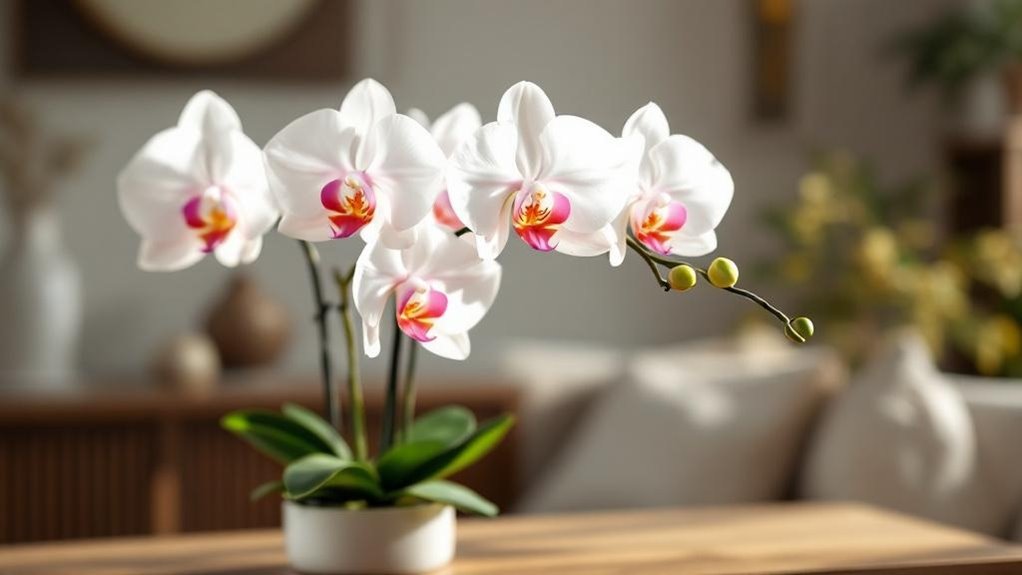
Yes, artificial orchids can count in Feng Shui when you use them with intention, because they still contribute beauty, order, and a cultivated visual rhythm that supports harmonious Qi rather than stagnant or neglected energy.
- Place them in entryways or living areas, where you encourage smoother energy flow and a welcoming first impression.
- Choose high-quality stems, since realism supports balance, while dusty, faded imitations weaken the observational effect.
- Match color to purpose; red supports joy, purple suggests mystery, and each choice quietly directs attention.
- Use them if you want symbolic benefits without upkeep, because neglected live plants can create stagnant energy.
Traditional practice usually prefers natural blooms, yet well-chosen artificial orchids still represent beauty, wealth, and positive energy when your placement remains deliberate and your decor feels orderly.
Pairing Orchids With Lotus and Peony Decor
When you pair orchids with lotus and peony decor, you create a cultivated symbolic arrangement that feels balanced rather than crowded, because each flower carries a distinct Feng Shui meaning that complements the others; orchids support beauty, affection, and refined connection, lotus imagery introduces purity and inner development, and peonies add prosperity, romance, and a fuller expression of abundance.
| Flower | Symbolism |
|---|---|
| Orchid | Beauty, love |
| Lotus/Peony | Purity, prosperity |
You strengthen a room’s observational harmony by coordinating pink or purple orchids with soft lotus tones and richer peony shades, which prevents the display from feeling visually stagnant while reinforcing emotional balance, good fortune, and relational warmth. Used together in welcoming shared spaces, these motifs support a composed atmosphere, steady energy flow, and a more integrated sense of abundance and personal growth.
What Is the Best Orchid Placement for Your Goal?
Although orchids carry broadly positive symbolism, their strongest Feng Shui effect comes from deliberate positioning, because each area of the home directs the plant’s refined energy toward a different goal; your placement should follow the outcome you want to cultivate, while avoiding stagnant corners and poor light.
Orchids work best in Feng Shui when placed with intention, since each location channels their energy toward a distinct purpose.
- Place orchids in the southwest area if you want to strengthen love, commitment, and relational balance.
- Set them in the south gua when your aim is visibility, reputation, beauty, and public recognition.
- Position one near the front door to invite beneficial energy, good fortune, and a quietly welcoming first impression.
- Keep orchids in the bedroom, especially pink or purple ones, for harmony and kind partners, or in a naturally lit office for observational focus, creativity, and steady productivity.
Frequently Asked Questions
Where to Put Orchids in Feng Shui?
Put orchids by your entryway for welcoming energy, in your bedroom for love, on your desk for creativity, in the living room for harmony, and in southwest or south areas to strengthen relationships, beauty, and reputation.
What Is the Luckiest Plant in Feng Shui?
You’ll often find the orchid tops the lucky-plant list in feng shui. It invites love, beauty, abundance, and harmony into your space. Place it by your entryway or bedroom, and you’ll encourage brighter, smoother energy.
What Plants Should Be Avoided in Feng Shui?
You should avoid cacti, thorny plants, weeping figs, dieffenbachia, artificial plants, and overly fast-growing varieties in feng shui. They can invite conflict, stagnant energy, danger, lifelessness, or chaos, which can disrupt your home’s harmony.
What Should You Not Do With an Orchid?
You shouldn’t place an orchid in direct sun, overwater it, leave roots sitting in water, expose it to drafts, use regular potting soil, or ignore humidity. Keep conditions stable, airy, and moderately humid instead.
Conclusion
In feng shui, orchids do carry meaning, and you’ll get the best results when you treat them as cultivated symbols rather than casual decor; color, placement, and condition shape whether their energy supports love, prosperity, or calm. Phalaenopsis remains the most reliable choice because its form feels balanced and observational, while poor placement, clutter, or stagnant surroundings weaken its effect. Used with intention, an orchid becomes a compass, quietly orienting your space toward the quality you want most.