
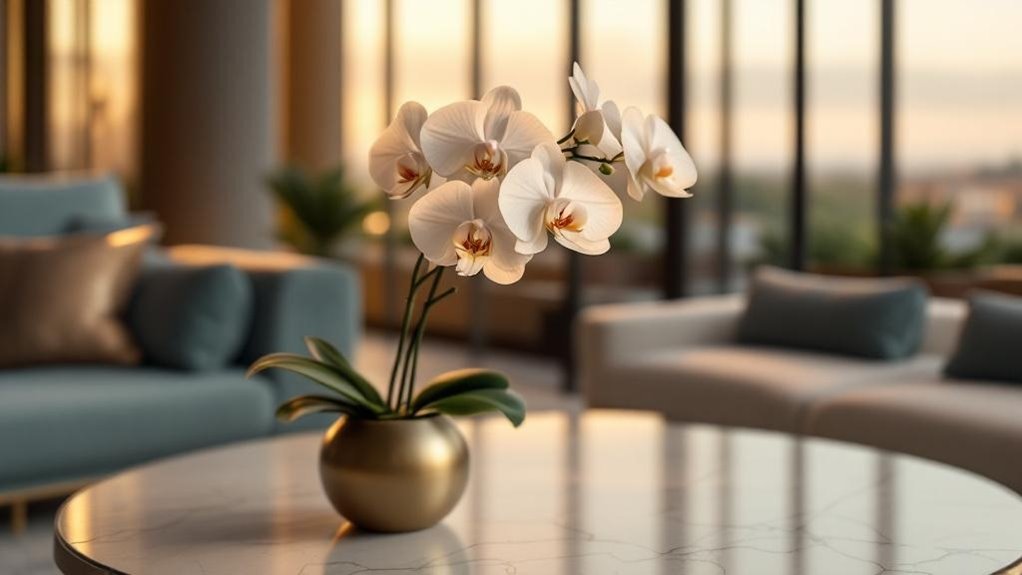
You still read orchids as luxurious because they present controlled form, architectural symmetry, and cultivated restraint; they reference a history of rarity and private collecting, yet remain clean and observational in modern rooms, never visually stagnant. Their blooms last 8 to 12 weeks, so they suggest value that endures rather than fades quickly, and their quiet presence suits minimalist, formal, and layered interiors alike. Their colors and placement also reveal more about refinement and intent.
- Key Takeaways
- Why Orchids Still Signal Luxury
- Why Orchids Became Luxury Symbols
- Why Orchids Look So Expensive
- Why Phalaenopsis Orchids Feel Luxurious
- How Orchids Elevate Modern Interiors
- Why Designers Repeatedly Choose Orchids
- Why Luxury Spaces Use Orchids
- Why Los Angeles Loves Orchids
- Orchids vs Roses, Peonies, and Lilies
- Why Orchid Gifts Feel More Refined
- How Long Orchids Last in Design
- What Orchid Colors Communicate
- Frequently Asked Questions
- Conclusion
Key Takeaways
- Orchids signal luxury through clean, architectural blooms that add elegance, structure, and visual impact without cluttering modern interiors.
- Their historical association with rarity, private collecting, and refinement still shapes their reputation as symbols of understated wealth and taste.
- Long-lasting blooms, often lasting 8 to 12 weeks, make orchids feel like durable, high-value design objects rather than temporary decorations.
- Their minimal fragrance and restrained form suit minimalist, formal, and layered spaces, making them versatile in upscale residential and commercial design.
- Orchids regularly appear in hotels, showrooms, and luxury listings, reinforcing their role as visual shorthand for sophistication and cultivated style.
Why Orchids Still Signal Luxury

Luxury, in modern interiors, still gathers around orchids because their appeal is both visual and cultural; phalaenopsis in particular presents a cultivated kind of refinement, with architectural blooms, clean lines, and a restrained silhouette that suits contemporary rooms without making them feel stagnant or overworked.
When you place them in a room, you signal discernment, because orchids symbolize beauty and sophistication through form rather than excess, and their fragrance-free presence keeps the atmosphere composed.
Placed in a room, orchids signal discernment, expressing beauty and sophistication through form, while their fragrance-free presence preserves a composed atmosphere.
You also gain durability; blooms can hold for six to twelve weeks, so the arrangement reads as considered, not fleeting. Their adaptability strengthens that impression, since you can use them in minimalist apartments, formal offices, or layered event settings without visual conflict.
That observational versatility, paired with their lasting finish, keeps them aligned with luxury today.
Why Orchids Became Luxury Symbols
Prestige gathered around orchids long before they entered contemporary interiors, because their rarity once depended on difficult travel, private collecting, and the willingness of Victorian hunters to risk illness, injury, and financial loss for unusual specimens; that history fixed the flower in the cultural imagination as something exclusive, cultivated, and not easily obtained.
You still inherit that legacy when you place orchids in a room, because Meaning and Symbolism cling to forms shaped by scarcity, endurance, and disciplined taste rather than stagnant display.
- You see collectors crossing humid forests, pursuing specimens for private glasshouses.
- You see a single stem holding its poise for weeks, calm and observational.
- You see refined gifting, personal or corporate, where elegance matters more than romance.
That continuity made orchids shorthand for grace, refinement, and understated luxury in design culture.
Why Orchids Look So Expensive
When you look at an orchid, you notice an architectural bloom structure that feels intentional and cultivated, its clean lines and balanced spacing signaling refinement without excess.
You also read familiar luxury perception cues in its presentation, because a single phalaenopsis stem often carries the visual weight of a far larger arrangement, appears in high-end hotels and staged interiors, and never looks stagnant or ordinary.
As you live with it over eight to twelve weeks, and as you see it available year-round rather than briefly passing through a season, its lasting presence supports the quiet impression that it’s worth far more than its actual cost.
Architectural Bloom Structure
Because phalaenopsis orchids present each bloom with smooth lines, measured symmetry, and a distinctly sculptural profile, they read less like ordinary flowers and more like cultivated design objects, which is a central reason they look so expensive in modern interiors.
You notice how their architectural bloom structure directs the eye, steadies a room, and heightens visual appeal without appearing crowded or stagnant.
- A curved stem lifting flat, rounded petals like porcelain forms in suspension.
- A centered lip that creates observational balance and quiet tension.
- Repeating blooms spaced with intention, sustaining order for 8–12 weeks.
When you place orchids in a refined setting, their symmetry and duration support the composition; they don’t merely decorate it, they complete it with a cultivated presence that remains precise, composed, and visually authoritative over time.
Luxury Perception Cues
An orchid looks expensive not simply for what it is, but for what it signals at a glance: controlled form, restraint, and cultivated taste, all of which modern interiors consistently associate with luxury. You read these luxury perception cues immediately; phalaenopsis often costs $60 to $90 for a single stem, yet that modest price still feels elevated because the bloom’s architectural line appears curated, never stagnant.
You also respond to context. Hotels, showrooms, and upscale gifts use orchids because they project sophistication without visible effort, and that effortless effect matters.
Even with mass production, their history of rarity still informs your observational judgment, especially when expert guidance reinforces their legacy. Add a bloom life of six to twelve weeks, and you see not excess, but durable refinement, measured value, and quiet authority in contemporary spaces.
Why Phalaenopsis Orchids Feel Luxurious
You recognize phalaenopsis orchids as luxurious because their rounded, architectural blooms bring cultivated sophistication into a room, and their observational restraint keeps modern interiors from feeling stagnant or overstated.
You also get lasting visual impact from them, since their flowers remain poised for 8 to 12 weeks, they’re available year-round, and at roughly $60 to $90 for a quality single stem, they offer a measured form of luxury that exceeds the brief effect of many bouquets.
When you give phalaenopsis orchids, you present refinement without effort; their fragrance-free presence, broad appeal, and quiet association with quality make them feel precise, modern, and unmistakably elevated.
Architectural Bloom Elegance
While many flowers read as decorative accents, phalaenopsis orchids present themselves with a more architectural authority. Their broad, flat blooms and clean, cultivated silhouette give a room the kind of observational order that modern luxury depends on. They don’t crowd a space or make it feel ornate, but instead introduce a refined focal point that feels deliberate, composed, and quietly expensive.
- You see Orchids rising from a simple vessel, each stem measured, never stagnant.
- You notice phalaenopsis orchids holding broad faces outward, like panels arranged with cultivated restraint.
- You place them near stone, glass, or pale wood, and the room appears more exact.
Their minimal form suits contemporary interiors because it clarifies rather than competes. That disciplined clarity explains why designers repeatedly choose them for spaces meant to feel elevated and controlled.
Lasting Visual Impact
That composed, architectural presence matters even more because it endures; phalaenopsis orchids don’t merely make a refined first impression, they hold it for six to twelve weeks, preserving a room’s cultivated order and sparing you the visual decline that makes many fresh arrangements feel stagnant after only a few days. Their lasting visual impact supports an observational sense of discipline, while their soft, rounded structure keeps the effect modern rather than severe.
| Quality | Effect | Value |
|---|---|---|
| Duration | Steady elegance | Lasting |
| Form | Calm structure | Modern |
| Upkeep | Minimal intervention | Ease |
| Price | $60–$90 | Accessible |
| Presence | Cultivated polish | High perceived value |
You get continuity, restraint, and polish; across contemporary and traditional interiors, that consistency reads as sophistication, and the orchid’s measured longevity quietly justifies its luxury status.
Effortless Refined Gifting
Because gifting often serves as a form of social language, phalaenopsis orchids work with unusual precision; their clean, sculptural lines and restrained palette signal cultivated taste, modern luxury, and discernment without drifting into anything overly romantic or ceremonious.
You give elegant flowers that look costly, yet a single stem often sits around $60 to $90, which keeps value observational rather than stagnant. With orchid delivery, you also send duration; blooms hold for 8 to 12 weeks, extending your gesture in a way bouquets rarely can.
- A white stem on a walnut desk, composed and architectural.
- Soft petals catching bright, indirect office light all morning.
- A quiet entry table, refined by one lasting vessel.
You choose beauty, longevity, and ease; the plant asks little, yet communicates considerable polish.
How Orchids Elevate Modern Interiors
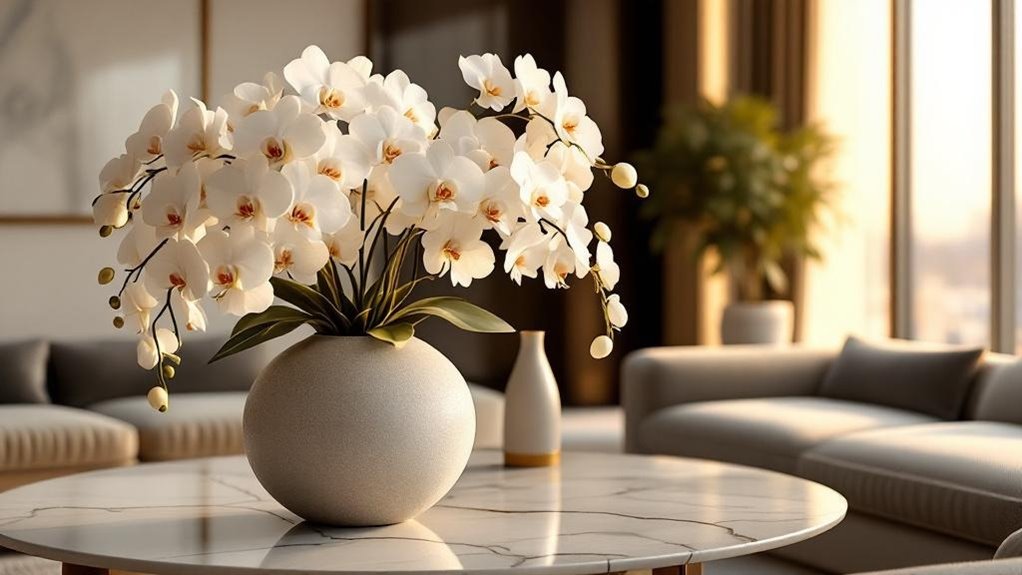
Whether placed in a sparse entryway or layered into a more cultivated room, orchids elevate modern interiors through their architectural form, extended bloom cycle, and quiet symbolic weight; they introduce a focal point that feels deliberate rather than decorative, which is why they remain effective across minimalist and maximalist schemes alike.
You gain elegance without clutter; orchids remain observational yet commanding, and interior designers value how phalaenopsis varieties bloom for weeks, avoid stagnant visual cycles, and suit homes, showrooms, and hotels.
| Setting | Benefit | Effect |
|---|---|---|
| Entryway | Sculptural line | Calm arrival |
| Living room | Long bloom | Lasting polish |
Their year-round availability and light maintenance support effortless sophistication, while their association with refined taste and enduring quality raises perceived value, giving your rooms a composed, quietly luxurious finish.
Why Designers Repeatedly Choose Orchids
You choose orchids because their architectural elegance gives modern spaces a cultivated structure, and their poised lines support both restrained and expressive compositions without letting the design feel stagnant.
You rely on their lasting visual impact because the blooms hold for weeks, sustaining an observational sense of order and beauty that keeps arrangements relevant over time.
You return to them for effortless luxury styling, since they convey refinement without excess and adapt to varied palettes and forms while preserving a quiet, unmistakable sophistication.
Architectural Elegance
In modern interiors, orchids hold their place through architectural elegance, presenting clean, cultivated lines and structured blooms that read as refined rather than decorative. This is why designers return to them across minimalist apartments, corporate lobbies, and carefully staged retail environments. You notice how their disciplined form supports visual order, never turning stagnant or excessive, and with proper care they remain poised through shifting displays.
- A white orchid rising from matte stone beside glass and steel.
- Curved petals echoing a staircase, restrained yet observational.
- A reception desk softened by one precise stem.
Because orchids suit sparse rooms and layered luxury alike, you can place them in homes, hotels, and showrooms without visual conflict. Year-round cultivation in places like Southern California also keeps these cultivated symbols available when designers need continuity.
Lasting Visual Impact
Endurance gives orchids much of their lasting visual impact, because their cultivated blooms hold a poised, architectural presence for six to twelve weeks or longer. This allows designers to preserve a room’s intended rhythm without constant replacement; that longevity matters in hotels, showrooms, offices, and residences alike, where visual continuity supports a refined atmosphere and prevents arrangements from appearing neglected or stagnant.
When you choose orchids, you secure sustained elegance rather than a brief flourish. Their observational clarity reads as sophisticated in corporate interiors and private homes, and their year-round availability keeps Floral Arrangements consistent across projects.
You also signal a modern sensibility, since orchids convey refined luxury without the softer, more sentimental associations attached to roses or peonies. This makes them a dependable instrument when you need beauty that remains composed, relevant, and visually authoritative over time.
Effortless Luxury Styling
Because orchids present structure and restraint at once, designers return to them when they need luxury to appear assured rather than overstated. Their cultivated lines, spare silhouettes, and observational clarity align naturally with modern interiors that favor precision, confidence, and visual discipline.
You can place orchids almost anywhere, and they won’t feel stagnant; they support minimalist rooms, sharpen lavish settings, and signal understated luxury without visible effort.
- A single white stem on stone, composed and exact.
- Several blooms near bronze and velvet, quietly elevating texture.
- An entry console where lasting color holds attention for weeks.
When you choose orchids, you gain a focal point that reads expensive yet measured. Blooms lasting 6–12 weeks reduce replacement, maintain polish, and show clients that refinement can be deliberate, practical, and enduring in daily spaces.
Why Luxury Spaces Use Orchids
Although luxury interiors often rely on restraint, they use orchids with striking consistency, since the flower’s cultivated elegance, sculptural form, and observational clarity signal sophistication without making a space feel crowded or stagnant. In luxury spaces, you see orchids because they present refinement with confidence, support staged real estate narratives, and hold value through blooms lasting 8–12 weeks.
| Use | Effect |
|---|---|
| Hotels | Signals refinement |
| Showrooms | Sharpens aesthetics |
| Listings | Stages exclusivity |
You also encounter orchids as standard gifts in entertainment settings, where they express taste and consideration without romantic suggestion, which protects professional boundaries while preserving prestige. Their minimal yet architectural presence lets you reinforce elegance, exclusivity, and calm visual order at once, even in highly edited rooms.
Why Los Angeles Loves Orchids
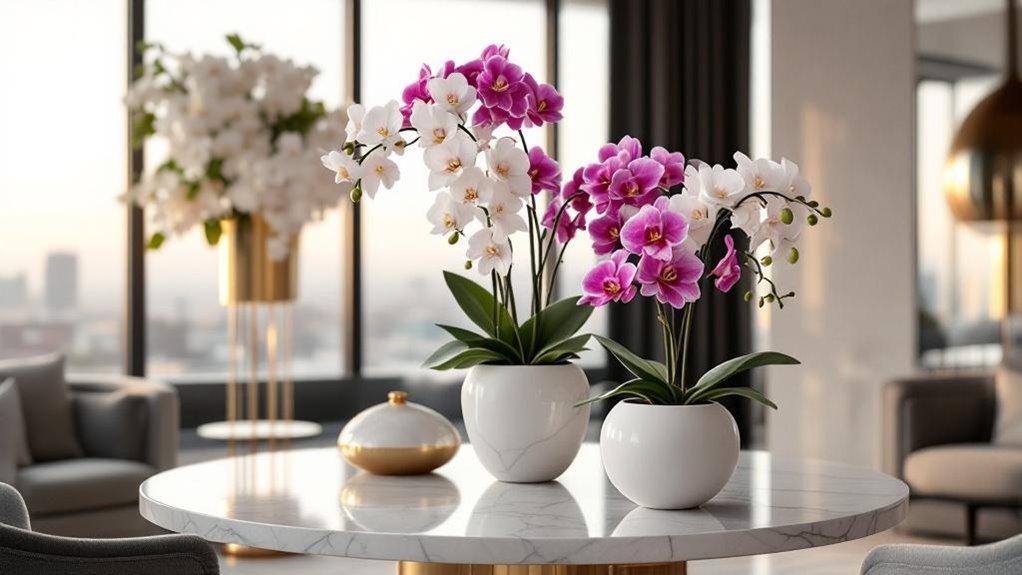
Why does Los Angeles return to orchids so reliably; the answer sits at the intersection of image, climate, and social code, where cultivated taste matters, visual standards stay unusually high, and gifts must often communicate regard without inviting misreading.
You see orchids in entertainment circles because they read as generous, polished, and observational, never stagnant or overly intimate, while White orchids, especially, fit interiors that prize architectural line and restraint.
- A sunlit entry, stone floors, and a single stem holding attention.
- A production office desk, refined without romantic suggestion.
- A hillside room where blooms echo clean horizons.
Southern California also makes ownership easier; conditions support healthy growth, and local access stays strong.
In Southern California, orchids feel almost inevitable: easy to keep, easy to find, and consistently beautiful.
Since single-stem phalaenopsis orchids often cost only $60–$90, you give visible luxury without excess or social confusion.
Orchids vs Roses, Peonies, and Lilies
Where roses signal romance, peonies depend on a brief seasonal window, and lilies carry a fragrance that can dominate a room, orchids, especially phalaenopsis, hold a steadier position in modern design; they project cultivated taste without becoming emotionally loaded.
They remain available year-round rather than only from April to June, and they offer a clean, architectural presence that suits spaces where observational restraint matters more than abundance.
When you compare price, orchids often sit between $60 and $90 for a single stem, which places them near modest rose bouquets, yet their structure prevents that value from feeling stagnant.
You also read them differently in space; roses and lilies feel more common, while orchids suggest the visual codes of hotels and showrooms, where luxury depends on precision, calm surfaces, and controlled atmosphere.
Why Orchid Gifts Feel More Refined
Three qualities make orchid gifts feel more refined: they present a clear architectural form, they remain composed for far longer than most flowers, and they ask very little of the recipient; together, those traits shift the gesture away from fleeting display and toward cultivated consideration.
- You give orchids as flowering plants, not a stagnant bundle, so the gift arrives complete, observational, and self-possessed.
- You signal discernment; a high-quality single stem often costs $60 to $90, matching mid-range arrangements while reading as more deliberate.
- You avoid mixed messages, because orchids suit personal and corporate settings alike, feel gender-neutral, and carry sophistication without romantic pressure.
Phalaenopsis varieties especially reinforce this effect, since their sculptural lines and orderly presentation let you offer beauty that feels measured, useful, and unmistakably elevated to almost anyone.
How Long Orchids Last in Design

For modern interiors, orchids hold their value over time in a way few floral elements can, because their blooms commonly remain present for 8 to 12 weeks. Their plants continue as living design objects after the first display cycle ends, and, with weekly watering and appropriate light, they keep a space from feeling decorative in the stagnant sense and instead make it feel maintained, observational, and cultivated.
Compared with cut flowers that fade within days, you gain months of structured presence, and each spike can bloom again every 3 to 6 months, which reinforces continuity rather than replacement. That endurance explains why orchids have become standard markers of sustained refinement in residences and commercial settings alike.
Bright, indirect light is ideal for orchids, and stable care keeps them relevant for years.
What Orchid Colors Communicate
Color functions as the orchid’s most immediate language in design, shaping how a room is read and how a gesture is received; pink orchids communicate femininity, grace, and admiration, so they suit spaces or gifts meant to register appreciation without becoming sentimental, while white orchids signal purity and elegance, which is why they remain so effective in weddings and formal interiors that depend on restraint, clarity, and refined taste.
Orchid color directs emotional tone in design: pink offers graceful admiration, while white brings purity, elegance, and composed refinement.
- You place purple orchids near dark wood, and the arrangement projects royalty, dignity, and cultivated respect.
- You send pink blooms across a quiet table, and admiration registers without becoming stagnant or excessive.
- You notice, in Chinese culture, orchids carry integrity, friendship, and fertility; that observational layer deepens the symbolism of orchids, making every color feel luxurious, deliberate, and thoughtfully chosen in design.
Frequently Asked Questions
Are Orchids Luxury?
Yes, you can consider orchids luxury because they signal refinement, last 8 to 12 weeks, and need little care. You’ll also find their elegant form and higher perceived value make gifts feel especially sophisticated.
Are Orchids Still in Style?
Yes, orchids are still in style. You see them everywhere because they fit modern spaces, last for weeks, and look effortlessly refined. You can use them to add elegance without making your home feel fussy.
What Flowers Represent Luxury?
You’ll find orchids, calla lilies, peonies, gardenias, and roses often represent luxury. They project elegance, rarity, and polish. You can use them to create upscale gifts or interiors that feel refined, modern, and unmistakably expensive.
Why Are Lady Slipper Orchids Illegal in the US?
Lady slipper orchids are illegal in the U.S. because you’re dealing with protected, often endangered native plants threatened by habitat loss and over-collection. If you remove or sell them, you can face fines, prison, and ecological harm.
Conclusion
When you choose orchids, you signal cultivated taste, observational restraint, and a refusal of stagnant convention; their symmetry, longevity, and quiet rarity continue to align with modern ideas of luxury, where refinement depends less on excess than on disciplined beauty. In a hotel lobby, for example, a single white Phalaenopsis can steady an entire room, softening glass and stone, guiding attention without noise, and leaving guests with the sense that every detail has been considered, and nothing has been wasted.