
Orchids don’t literally ward off evil, yet you’ll find that many traditions treat them as protective plants because their cultivated beauty, balanced form, and steady presence are believed to discourage stagnant energy and support a calmer home atmosphere. If you keep an orchid healthy, place it in bright, indirect light, and choose colors such as white or purple, you reinforce its symbolism of peace, renewal, and emotional steadiness; the broader meanings, placements, and care matter as well.
- Key Takeaways
- Do Orchids Ward Off Evil Spirits?
- Why Do Orchids Symbolize Protection and Peace?
- What Do Orchids Mean in Different Cultures?
- Which Orchid Colors Are Linked to Protection?
- Where Should You Place Orchids for Positive Energy?
- Orchids vs Other Lucky Plants for Home Energy
- How Do You Care for Orchids to Keep Good Energy?
- Frequently Asked Questions
- Conclusion
Key Takeaways
- Orchids are traditionally believed to ward off evil by promoting positive energy and creating a calm, protective atmosphere at home.
- In Feng Shui, orchids symbolize harmony and are placed to discourage negative energy and support balanced Chi.
- White and red orchids are especially linked with protection, purity, renewal, and shielding against harmful influences.
- Cultural traditions, especially in Asia and China, associate orchids with peace, stability, and emotional balance rather than literal supernatural defense.
- Keeping orchids healthy with proper light, watering, and humidity supports their symbolism of resilience, luck, and protective energy.
Do Orchids Ward Off Evil Spirits?

Why do orchids so often appear in discussions of spiritual protection; across several traditions, people regard them as plants that cultivate positive energy, steady the atmosphere of a room, and make a home feel less hospitable to stagnant or malevolent influences.
If you ask whether Orchids ward off evil spirits, the observational answer is that many people believe they can, not through force, but through a cultivated effect on mood, balance, and symbolic presence.
Their resilient form and refined beauty suggest strength under pressure, which supports a protective aura within the home. In Feng Shui, careful placement encourages harmony, and that order is thought to discourage negative energy.
Their poised resilience and elegant form imply quiet strength, while harmonious placement is believed to soften disorder and deter negative energy.
Their colors also calm the mind, reducing tension that some traditions link with spiritual vulnerability, while inviting good luck and a more settled domestic atmosphere.
Why Do Orchids Symbolize Protection and Peace?
You can see why orchids symbolize protection and peace when you consider their long cultural role as signs of safety, their cultivated beauty, and their quiet resistance to stagnant, negative energy.
When you place orchids in your home, you often create a more peaceful atmosphere, because their balanced form and gentle presence support steady energy flow and encourage a calm, observational sense of order.
You can also read meaning in orchid colors and varieties, since certain blooms, especially Phalaenopsis, are widely associated with hope, renewal, and the protection that turns a room into a more settled refuge.
Cultural Symbols Of Safety
Across many traditions, orchids have come to symbolize protection and peace because their beauty isn’t treated as merely decorative; it’s understood as a sign of harmony, balance, and cultivated strength that helps keep negative forces at a distance. You see Orchids as observational symbols: delicate, resilient, and widely believed to counter bad energy through poise and spiritual steadiness.
| Culture | Meaning | Effect |
|---|---|---|
| Chinese | Harmony | Stability |
| Aztec | Strength | Protection |
| Asian traditions | Auspiciousness | Peace |
| Shared symbolism | Elegance | Balance |
When you consider their role across cultures, you find a consistent pattern; orchids represent refined endurance, they suggest that beauty and resilience can coexist, and they affirm that safety comes not from aggression, but from calm order, emotional balance, and resistance to stagnant discord around people.
Peaceful Energy In Homes
Because orchids are linked with tranquility, cultivated beauty, and emotional steadiness, they often symbolize protection and peace within the home; their presence suggests more than decoration, it implies a nurturing order that softens stagnant tension, supports balance, and encourages a calmer observational relationship with the space around you.
When you place orchids indoors, you reinforce an atmosphere shaped by admiration, restraint, and quiet resilience; many traditions regard them as guardians that bring positive energy, while Feng Shui associates their living form with smoother movement of Chi and more peaceful energy in homes.
Their graceful blooms suggest hope without excess, and their longstanding ties to healing and purity strengthen the idea that they buffer negative influences; as you care for them, you also cultivate steadiness, and your rooms often feel more harmonious, protected, and inwardly composed each day.
Orchid Colors And Meaning
Although orchids are often admired first for their cultivated beauty, their colors deepen the meanings people attach to them, and this is one reason they’ve come to symbolize protection and peace rather than mere ornament.
When you choose white blooms, you invoke purity, renewal, and a quiet barrier against stagnant energy; when you place purple orchids nearby, you emphasize dignity, admiration, and emotional steadiness.
In several Asian traditions, orchids are among the clearest signs of refinement and respect, so their presence suggests order, stability, and observational care rather than disorder.
You’ll also find that these associations help explain why many people believe orchids bring good balance into a home, encourage good vibes, and support harmony.
What Do Orchids Mean in Different Cultures?
When you look at orchids across cultures, you find that their meaning shifts with each cultivated tradition; in China and Japan, they reflect beauty, nobility, friendship, bravery, and peace, which gives them a steady place in Asian symbolism rather than a stagnant one.
You also see older societies assign more forceful meanings to them, as Ancient Greece connected orchids with fertility and virility, while the Aztecs treated them as signs of strength and power within ritual and observational views of nature.
As you continue, you’ll notice that meaning also changes by orchid color, while the Victorian age shows how rarity, wealth, and status shaped orchid symbolism in ways that still influence modern interpretation.
Orchids In Asian Traditions
Across Asia, orchids carry a cultivated symbolism that goes well beyond ornament, reflecting how different societies have used the flower to express beauty, rank, virtue, and auspicious fortune. In Asian traditions, you see orchids linked to refinement and high standing; in China, they suggest good luck, wealth, good taste, and admired character, while Confucius treated them as observational emblems of noble friendship. In Japan, you encounter the Samurai orchid, revered for beauty, bravery, and peace.
| Tradition | Meaning |
|---|---|
| China | Good luck, wealth |
| Japan | Bravery, peace |
| White orchids | Purity, innocence |
| Purple orchids | Royalty, dignity |
You also notice color shaping interpretation, since white resists stagnant associations through purity, and purple signals dignity and cultivated rank. Across the region, orchids remain markers of esteem.
Ancient Cultural Symbolism
If you trace orchid symbolism through older civilizations, you find that the flower rarely meant only beauty; in Ancient Greece it stood for fertility and virility, in China it came to express cultivated taste, wealth, admiration, and the noble character Confucius observed in exemplary men, and in Aztec culture it signaled strength and power.
This shows that orchids were repeatedly used to mark qualities societies considered generative, elevated, and socially valuable.
When you view this ancient cultural symbolism comparatively, you see orchids functioning as social signals rather than stagnant ornament; later, Victorians treated them as proof of luxury during Orchidelirium, while in Japan the Samurai orchid joined bravery with peace.
Across cultures, you can read orchids as emblems of status, discipline, and good fortune, shaped by observational values and inherited ideals.
Meanings By Orchid Color
Orchid symbolism becomes more precise once you look at color, because cultures often keep the flower’s broader associations with beauty, status, and cultivated character while assigning different emotional and social meanings to each hue; white orchids commonly signify purity and innocence, purple orchids suggest royalty and admiration, yellow orchids point to happiness and good luck, and pink orchids carry meanings of femininity and gratitude.
When you read these colors through culture, you see added layers: in China, Orchids reflect beauty, good taste, and wealth, echoing Confucius’s observational praise of noble friends; in Japan, the Samurai orchid joins bravery with peace.
Which Orchid Colors Are Linked to Protection?

Which colors carry the strongest protective meaning in orchid symbolism depends on the tradition you’re observing, yet several cultivated shades appear again and again in observational accounts of warding and defense; white orchids are linked to purity and innocence, so they’re often chosen to clear stagnant energy and stand against negative influences,
while purple orchids suggest royalty and dignity, giving them a protective association grounded in strength, composure, and resistance to harm.
Beyond those leading orchid colors, you’ll also find yellow tied to happiness and good luck, a quieter form of protection that helps deflect misfortune and negative energy;
pink supports emotional resilience through grace and steadiness, while red, associated with passion, is said to form a more forceful shield, reinforcing defense in traditions that emphasize ritual and symbolic intention.
Where Should You Place Orchids for Positive Energy?
Protective symbolism gains more practical force when you place orchids where their cultivated beauty and steady growth can shape the atmosphere of a room. For positive energy, set them in bright, indirect sunlight, ideally near a window, entryway, or shared living area, where they can receive light and warmth without the stress of direct sun or cold drafts.
- Place Orchids near entryways or living rooms, where indoor plants establish a welcoming, observational calm.
- Use windowsills or sheltered balconies, since filtered light supports positive energy without scorching leaves.
- Keep them in quality orchid mix, mist regularly, and watch for stagnant moisture, because healthy roots sustain importance.
You strengthen their effect through placement and care together. When you monitor humidity, avoid drafts, and maintain steady conditions, your orchids remain balanced, resilient, and quietly restorative.
Orchids vs Other Lucky Plants for Home Energy
Although many lucky plants are valued for one narrow promise, orchids offer a more layered influence on home energy, because they don’t just signal fortune or protection; they also project luxury, beauty, strength, respect, and admiration, which gives them a broader symbolic presence than Lucky Bamboo, Money Plants, or Basil.
When you compare Orchids with other lucky plants, you notice a cultivated balance: Peace Lilies and Snake Plants address negative energy through purification, Aloe Vera is praised for steady resilience, and Basil or Echinacea carry more traditional cleansing associations; Orchids, by contrast, shape the room’s tone through elegance and emotional steadiness, especially near an entryway, where they create an observational sense of welcome.
Yet their symbolism depends on liveliness, since drooping blooms can suggest stagnant conditions rather than protection or abundance.
How Do You Care for Orchids to Keep Good Energy?
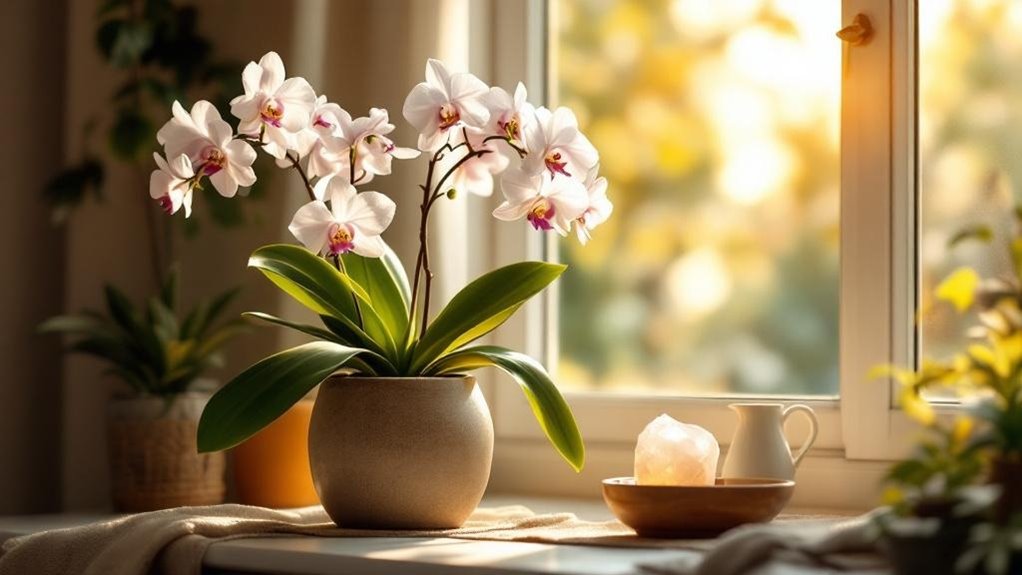
Care, more than symbolism alone, determines whether an orchid continues to support a cultivated sense of good energy in the home, because the plant’s visual poise depends on stable conditions: bright, indirect sunlight that sustains blooming without scorching the leaves, thorough watering that fully soaks the roots followed by enough drying time to prevent stagnant moisture and root rot, and consistent humidity from misting or a tray that keeps growth steady rather than stressed.
An orchid sustains a sense of good energy when steady light, careful watering, and balanced humidity keep it visibly healthy.
- Place it where filtered light remains steady.
- Water deeply, then let the mix partially dry.
- Feed biweekly, repot every one to two years.
When you care for orchids with this observational consistency, you encourage healthy growth, preserve orderly blooms, and maintain the quiet associations people make between luck and negative energy in a balanced interior atmosphere.
Frequently Asked Questions
What Does the Bible Say About Orchids?
The Bible doesn’t mention orchids specifically. You can understand orchids through biblical flower imagery, which celebrates God’s beauty, provision, and care. Verses like Song of Solomon 2:12 and Matthew 6:28-29 help you see flowers positively.
What Plants Repel Evil Spirits?
Around 80% of households keep plants, and you can choose sage, rosemary, basil, lavender, marigolds, or snake plants to symbolically repel evil spirits. You’ll also invite calming scents, cleaner air, and a more uplifting atmosphere.
Is Orchid Negative Energy?
No, you shouldn’t see orchids as negative energy. You invite beauty, uplifting color, and positive chi with them. If your orchid droops or declines, you might read it as stagnation, not harmful energy itself.
What Are Orchids Used for in Witchcraft?
You use orchids in witchcraft for love, fertility, protection, purification, and healing—because apparently ordinary flowers weren’t dramatic enough. You add roots, leaves, or essences to spells, potions, and rituals to boost energy and invite balance.
Conclusion
Whether you believe orchids ward off evil spirits, you can still see why they remain cultivated as protective symbols; in one U.S. floral industry survey, orchids ranked among the top five potted plants purchased as gifts, which suggests their lasting association with peace, care, and intentional presence. If you place them where light moves gently and energy doesn’t turn stagnant, you reinforce their observational role in your home, shaping an atmosphere that feels orderly, protected, and quietly balanced.