
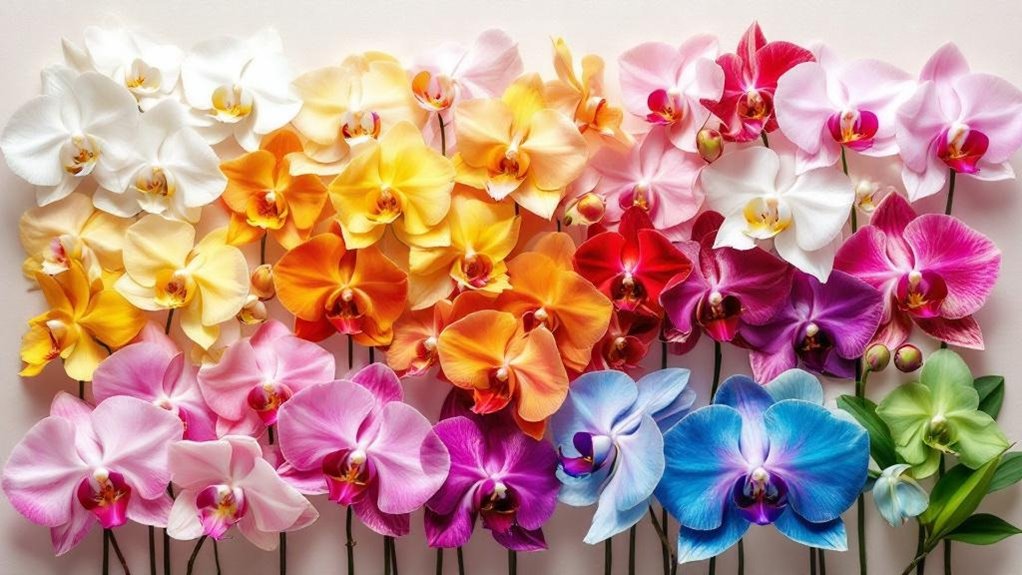
You can judge orchid meaning most reliably by color: white signals purity, elegance, and reverence, so you’ll see it in weddings and sympathy pieces; pink conveys grace, admiration, and gentle affection for birthdays or restrained romance; purple denotes dignity, respect, and cultivated luxury for formal gifts; yellow expresses friendship, joy, encouragement, and good fortune for promotions or housewarmings; red suggests desire and bold feeling. Context and culture refine those meanings further in practice.
- Key Takeaways
- What Do Orchid Colors Mean?
- Orchid Color Meaning Chart
- White Orchid Meaning
- Yellow Orchid Meaning
- Pink Orchid Meaning
- Purple Orchid Meaning
- Red Orchid Meaning
- Blue Orchid Meaning
- Orange Orchid Meaning
- Green Orchid Meaning
- White Orchids for Weddings
- White Orchids for Sympathy
- Yellow Orchids for Friendship
- Yellow Orchids for Good Luck
- Pink Orchids for Grace and Love
- Pink Orchids for Gratitude
- Purple Orchids for Royalty
- Purple Orchids for Respect
- Red Orchids for Passion
- Red Orchids for Courage
- Blue Orchids for Rarity
- Blue Orchids and Tinted Blooms
- Orange Orchids for Energy
- Orange Orchids for New Beginnings
- Green Orchids for Renewal
- Green Orchids for Balance
- Best Orchid Colors for Romance
- Best Orchid Colors for Friends
- Best Orchid Colors for Birthdays
- Best Orchid Colors for Anniversaries
- Best Orchid Colors for New Babies
- Best Orchid Colors for Sympathy
- Orchid Colors for Home Decor
- How to Combine Orchid Colors
- How Culture Shapes Orchid Meaning
- Frequently Asked Questions
- Conclusion
Key Takeaways
- White orchids symbolize purity, elegance, innocence, and reverence, making them common for weddings, memorials, and ceremonial gifts.
- Pink orchids represent grace, femininity, admiration, and gentle affection, fitting birthdays, baby showers, and restrained romantic gestures.
- Purple orchids convey royalty, dignity, respect, and luxury, ideal for milestone anniversaries, formal gifts, and distinguished celebrations.
- Yellow orchids express friendship, joy, encouragement, and good fortune, making them suitable for promotions, housewarmings, and welcoming new babies.
- Red or deep red orchids signify love, desire, courage, and bold emotion, often chosen for romance or powerful personal statements.
What Do Orchid Colors Mean?

Although orchid symbolism varies across settings, color remains the most reliable guide to meaning, and each shade carries a cultivated message that shapes how the flower is received.
When you choose an orchid color, you direct the arrangement’s social meaning with unusual precision; white suggests purity, innocence, and new beginnings, which explains its steady use in weddings and sympathy pieces without feeling stagnant.
Pink communicates grace, femininity, affection, and admiration, so you’ll often see it marking birthdays, baby showers, or measured appreciation.
Purple carries royalty, dignity, respect, and luxury, making it appropriate for milestone anniversaries.
Yellow turns observational and outward, expressing friendship, joy, positivity, and good fortune, while red and deep red declare love, desire, courage, and strength, often in romantic gestures or bold personal statements for recipients.
Studies show 73% of recipients accurately interpret orchid colors without prior knowledge, underscoring how reliably these meanings are understood.
Orchid Color Meaning Chart
When you need a quick reference, an orchid color meaning chart lets you compare each shade at a glance and choose with more precision, because orchid symbolism can shift by context while color usually remains the most stable, cultivated signal in the arrangement.
| Orchid Colors | Meaning |
|---|---|
| Yellow | Friendship, joy, good fortune |
| Pink | Grace, femininity, admiration, affection |
| Purple | Royalty, respect, dignity, admiration |
Use the chart observationally: yellow suits promotions or encouragement, because its message stays buoyant rather than stagnant; pink fits birthdays, baby showers, or restrained romance, where admiration matters; purple serves milestone anniversaries and formal gifts, where dignity and luxury carry more weight. If you need stronger intensity, red communicates love, passion, courage, and recovery, so your selection aligns more closely with occasion and recipient. White orchids are often chosen for weddings and memorials, where purity, elegance, reverence, and measured sympathy matter most.
White Orchid Meaning
Purity gives white orchids their most widely recognized meaning, yet the flower’s message extends beyond innocence into elegance, restraint, and ceremonial respect, which is why you’ll often see white orchids chosen for weddings, formal observances, and other new-beginning rituals where a cultivated sense of calm matters more than a vivid display.
When you give White Orchids, you signal refinement as much as feeling; in many Asian traditions, they also express reverence and humility, which makes them appropriate for offerings and formal arrangements. You should also read the setting carefully, since some regions connect white blooms with sympathy and funerals.
If you prefer enduring beauty, Phalaenopsis and Cattleya offer pristine petals and graceful form, and you’ll keep them observationally flawless with bright, indirect light, moderate humidity, and water only before the mix turns stagnant.
Yellow Orchid Meaning

Yellow orchids shift the message from ceremonial restraint toward warmth and encouragement, carrying meanings of friendship, joy, and new beginnings, which is why people often choose them for promotions, new babies, housewarmings, and other moments that call for recognition without romantic implication.
When you give Yellow Orchids, you signal appreciation in a cultivated, observational way; Yellow Orchids acknowledge closeness, yet they keep sentiment platonic and clear. In Chinese cultural contexts, they also suggest good fortune and happiness, so you may place them at home to counter a stagnant atmosphere and invite steadier positivity.
Their sunny coloration brightens interiors with little effort, and commonly available Yellow Phalaenopsis or Oncidium varieties make that message easy to send. Even so, you should consider regional interpretation, because symbolism remains shaped by local custom as much as by color alone. In many Asian gifting traditions, yellow orchids also stand for prosperity, encouragement, and a hopeful outlook during milestones.
Pink Orchid Meaning
When you choose a pink orchid, you signal grace and femininity with clear observational force, and you also suggest gentle affection, since these cultivated blooms are widely read as soft, elegant, and quietly joyful rather than stagnant or severe.
You can also use pink orchids to express admiration and appreciation, whether you’re thanking a friend, honoring a mother, or marking a bond that rests on warmth rather than intensity; lighter pinks suggest innocence and sweetness, while deeper pinks carry stronger affection.
For gifting, you’ll find them especially fitting for baby showers, Mother’s Day, birthdays, anniversaries, and simple thinking-of-you gestures, because their symbolism remains refined, readable, and broadly welcomed across settings.
Pink orchids also fit breast cancer awareness events, where they communicate comfort, encouragement, and steady support with calm elegance.
Grace And Femininity
Because their soft blush and rose tones read as gentle rather than stagnant or severe, pink orchids have long carried meanings of grace, femininity, and affection, and they’re often chosen for baby showers, women’s celebrations, and other occasions that call for a cultivated, observational expression of care.
When you select Pink Orchids, you signal tenderness without excess; their pale blush to deeper rose hues suggest purity, happiness, and quiet joy, which makes them suitable for get-well gifts, thinking-of-you arrangements, and breast cancer awareness displays.
You also choose a flower linked to nurturing sentiment and refined poise, so it fits milestones such as a 14th wedding anniversary, where grace matters more than spectacle.
Their visual softness supports gentle emotional reassurance, helping you communicate steadiness, dignity, and attentive presence with restraint.
In orchid symbolism, color often shapes meaning, and white orchids are especially associated with purity, innocence, and new beginnings.
Affection And Admiration
Affection gives pink orchids their clearest social meaning; they express admiration that feels cultivated rather than intense, so you can use them to signal gentle romantic interest, heartfelt gratitude, or steady appreciation without letting the gesture turn stagnant or overdrawn.
- Lighter tones suggest innocence, sympathy, and quiet purity.
- Deeper pinks communicate stronger affection and settled admiration.
- Phalaenopsis and Cattleya sustain that message through lasting blooms.
- Pink orchids pair joy with an observational sense of tenderness.
When you choose pink orchids, you present grace through affection, not display; their femininity reads as composed, and their color range lets you calibrate meaning with precision. Pale blush supports restrained appreciation, while magenta carries firmer regard. Their long-lasting flowers reinforce sincerity, which is why pink orchids often stand for enduring gratitude, maternal love, and thoughtful remembrance. Pink orchids also suit anniversaries when you want to mark enduring tenderness with a gentle, steady expression.
Best Gifting Occasions
Several occasions suit pink orchids especially well, since their cultivated balance of grace, femininity, and joy lets you mark personal milestones with warmth that remains measured rather than stagnant; they work for baby showers and the arrival of a baby girl, for birthdays and anniversaries—especially a fourteenth anniversary in some traditions—and for Mother’s Day, where the color’s observational softness conveys appreciation without excess.
| Occasion | Meaning | Best Tone |
|---|---|---|
| Baby shower | Sweetness, innocence | Light pink |
| Anniversary | Admiration, affection | Deeper pink |
You can also give pink orchids at breast cancer awareness events, or send them to mentors, teachers, and close friends when gratitude should feel composed, compassionate, and quietly encouraging, with light shades suiting new beginnings and deeper tones expressing steadier admiration.
Purple Orchid Meaning
When you choose a purple orchid, you signal royalty and admiration, since its cultivated violet tones have long been tied to dignity, regal elegance, and an observational sense of esteem rather than anything stagnant or ordinary.
You also make a measured anniversary statement, because purple orchids are often given for milestone occasions, including a 28th anniversary, when you want your respect to feel formal, lasting, and clear.
Across cultures, you’ll find some variation in meaning; in many Asian contexts, for example, purple orchids suggest wealth, luxury, and high social status, while their deeper hues can also support spiritual reflection and quiet meditation.
Royalty And Admiration
Because purple has long signaled status, a purple orchid carries a cultivated sense of royalty and admiration, one shaped by traditions that linked the color to dignity, luxury, and visible social standing; in Victorian England, purple flowers often marked wealth and high rank, and that association hasn’t grown stagnant in modern floral symbolism.
- Purple Orchids suggest royalty, esteem, and cultivated taste.
- You can give them to mentors, leaders, or honorees.
- Lavender tones express grace; deep violet conveys stronger respect.
- Phalaenopsis and Cattleya varieties suit formal recognition.
When you choose Purple Orchids, you present admiration with observational precision, because the color implies dignity rather than sentimentality; lighter shades read as refined and gracious, while saturated tones project authority, depth, and visible regard for achievement, especially in academic or professional settings today.
Anniversary Gift Symbolism
For a milestone anniversary, a purple orchid offers more than decorative beauty; it frames your regard with respect, dignity, and cultivated admiration, which is why it suits occasions such as a 28th anniversary, where the gesture should acknowledge endurance without slipping into stagnant romantic cliché.
When you give Purple Orchids, you emphasize esteem over overt passion, and that distinction matters; you recognize your partner’s elegance, maturity, and steady presence through a flower long associated with royalty, luxury, and celebratory status. This makes the gift observational rather than performative, especially when you choose a single-stem purple Phalaenopsis or a small purple Cattleya corsage, since their lasting blooms reinforce the message you intend: your appreciation has deepened with time, and your admiration remains composed, visible, and enduring through years together.
Cultural Meaning Variations
Although purple orchids carry a broadly recognizable message of admiration, their meaning shifts with cultural context, and that variation affects how your gesture is likely to be read; in Western floral symbolism, they often signal royalty, dignity, and cultivated respect, which explains their steady place in milestone anniversary giving, while in China and parts of East Asia they lean more distinctly toward nobility, scholarly refinement, and spiritual composure, reflecting older associations between orchids and moral character in Confucian thought.
- Victorian collecting made Purple Orchids status symbols.
- Deep tones suggest mystery and spirituality.
- Lavender tones convey grace and gentle admiration.
- You can give them for promotions or achievements.
That observational range keeps their symbolism from becoming stagnant, and helps you choose a shade and setting that communicates respect with greater precision today.
Red Orchid Meaning

Consider the red orchid as one of the clearest emblems of cultivated passion; its saturated color has long signaled deep love, desire, and romantic devotion, which is why you’ll often see it chosen for anniversaries and intimate gifts, yet its meaning doesn’t remain stagnant within romance alone. In observational use, Red Orchids also honor courage, strength, and respect, so you can present them after hardship, achievement, or recovery, especially when you want energy and importance to feel quietly present.
| Meaning | Why you’d choose it |
|---|---|
| Love and desire | Marks romance, anniversaries, devotion |
| Strength and vitality | Honors resilience, recovery, achievement |
Botanically, vivid Cattleya and Phalaenopsis hybrids anchor bold arrangements, and historically their aphrodisiac associations have reinforced, rather than altered, this cultivated message across generations and traditions.
Blue Orchid Meaning
Where red orchids speak in cultivated tones of passion and strength, blue orchids shift the message toward rarity, composure, and the extraordinary; they’re typically chosen when you want the gift to feel distinctive rather than overtly romantic, because blue remains one of the least natural orchid colors and therefore carries an immediate sense of uniqueness.
- You signal rarity and individuality.
- You reinforce calm, meditative decor.
- True blue orchids remain exceptionally uncommon.
- Dyed blooms may not rebloom blue.
When you choose blue orchids, you emphasize observational restraint, serenity, and a one-of-a-kind presence; they suit reflective rooms, quiet milestones, and recipients who resist stagnant symbolism. True blue orchids are rare in nature, and most commercial blue Phalaenopsis are tinted or modified, so new flowers often return white or purple.
If a seller claims a naturally vivid sapphire bloom, you should verify it carefully.
Orange Orchid Meaning
When you choose an orange orchid, you signal energy and enthusiasm with a cultivated sense of purpose, and you present admiration and confidence in a form that feels warm, observational, and free of the heavier romantic meaning carried by red blooms.
You’ll often find this color suited to milestones and new beginnings, because it acknowledges achievement, encourages optimism, and marks progress without becoming stagnant or overly ceremonial.
If you keep orange Phalaenopsis or Oncidium orchids in bright, indirect light and moderate humidity, you preserve their vivid color and reinforce the composed message they carry for promotions, graduations, and other significant turning points.
Energy And Enthusiasm
Radiating warmth without becoming overstated, orange orchids symbolize energy, enthusiasm, and pride, which is why you’ll often see them chosen for achievements and new beginnings; their cultivated hue carries an observational balance between red’s passion and yellow’s cheerfulness, so the message feels confident rather than reckless, optimistic rather than stagnant.
- Orange Orchids project warmth and visible confidence.
- You signal encouragement without seeming excessive.
- Bright blooms lift a room’s atmosphere quickly.
- Popular hybrids draw attention with cultivated clarity.
When you give Orange Orchids, you communicate recognition and steady encouragement, especially for someone meeting a demanding challenge or pursuing creative work; the color’s blended symbolism suggests motion, assurance, and healthy pride, which makes these flowers useful when you want your message to feel supportive, focused, and quietly uplifting rather than merely decorative.
Milestones And New Beginnings
Because orange orchids combine visible energy with a cultivated sense of control, they suit milestones and new beginnings with unusual precision; you can give them for promotions, graduations, launches, or the start of a new role, and the message remains clear, observational, and free of stagnant sentimentality.
Orange Orchids let you acknowledge achievement while signaling confidence for what follows; in floral language, they convey encouragement, pride, and recognition without romantic implication, which makes them appropriate for colleagues, mentors, and professional peers.
You can also use them for openings, creative ventures, and entrepreneurial events, since their warm hue suggests motivation, momentum, and practical ambition.
If you want the symbolism to last, choose potted orange Phalaenopsis or Oncidium varieties; they bloom for weeks to months, require modest care, and sustain the occasion’s meaning.
Green Orchid Meaning
Renewal sits at the center of green orchid meaning, and the flower’s cultivated hue has long been tied to growth, good health, and the steady movement from stagnant conditions toward recovery or a prosperous new beginning.
When you choose Green Orchids, you signal balance, harmony, and an observational respect for nature; their uncommon coloring feels distinctive, yet calming, especially in wellness gifts or eco-minded arrangements.
In some traditions, they also suggest fertility and youth, which reinforces their fresh, essential character.
- You express recovery, resilience, and forward movement.
- You introduce balance into offices, bedrooms, and quiet shared spaces.
- You choose a rarer orchid presence, often seen in select hybrids.
- You support relaxation and stress relief through soothing cultivated color.
Their steady visual effect can help you create a composed atmosphere daily.
White Orchids for Weddings
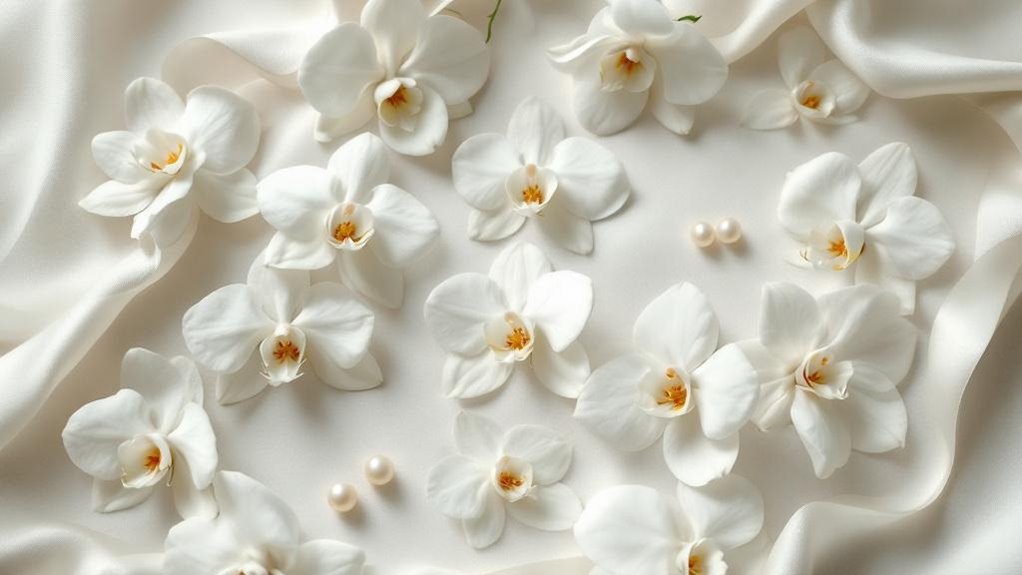
When you choose white orchids for a wedding, you present purity, innocence, and new beginnings with cultivated clarity; that bridal symbolism explains why white Phalaenopsis and Cattleya blooms appear so often in bouquets and centerpieces.
You can shape a ceremony palette that remains classic rather than stagnant by pairing them with green foliage and pastel flowers, and you can rely on white dendrobium and cymbidium varieties for boutonnieres and corsages because their sturdy stems and multiple blooms hold their form through a long day.
You should also confirm the couple’s cultural background before using exclusively white arrangements, and for venue styling, you’ll get the most refined, observational effect when white orchids sit in soft, indirect light, where their pristine texture photographs well and their petals face less risk of burn.
Bridal Symbolism
Although wedding flowers often carry layered meanings, white orchids remain a cultivated bridal choice because they align purity, innocence, and new beginnings in a single form, and that symbolism fits the ceremonial tone without becoming stagnant or overly ornamental.
- You signal purity, innocence, and renewal clearly.
- Phalaenopsis and Cattleya varieties sustain a composed presence.
- In Western and Asian contexts, meanings deepen.
- White orchids endure well and read clearly in photographs.
When you choose White orchids, you also express reverence and refined elegance; in some Asian traditions, you additionally signal humility and respect for family, which broadens their observational value.
Phalaenopsis and Cattleya varieties support that message because their petals appear polished, balanced, and photogenic, while their longevity reinforces steadiness, especially when blooms are expected to remain present after the wedding.
Ceremony Styling
That symbolism carries cleanly into ceremony styling, where white orchids give you a cultivated way to shape the visual field of the wedding; in Western ceremonies, they reinforce purity and new beginnings in bridal bouquets and altar arrangements, and Phalaenopsis or Cattleya blooms remain especially useful because their broad forms photograph with clarity, hold their structure through handling, and often last for weeks without looking stagnant.
You can place White orchids in mixed bouquets with greenery or blush accents when you want elegance without visual excess, or choose single-color groupings for a more minimalist, observational effect. For logistics, you should decide between reusable potted plants and wired sprays, since boutonnieres and corsages demand skilled floristry. You should also confirm cultural sensitivities, because white flowers can signal mourning in some traditions, among guests.
White Orchids for Sympathy

Often, white orchids carry a clear message of purity, reverence, and sympathy, which is why you’ll see them chosen for funerals and memorial services, where their restrained beauty supports an observational, cultivated atmosphere rather than a stagnant display of grief.
In Western settings, you can send white orchids in condolence bouquets to express respect and offer steady comfort; in some Asian mourning rituals, they serve a similar purpose, though local funeral meanings still require attention.
- Purity, reverence, sympathy
- Common in condolence arrangements
- Blooms last two to three weeks
- Living tribute after the service
If you choose a single-stem white orchid plant, you give enduring remembrance, not a fleeting gesture, and because Phalaenopsis stems remain fresh for weeks, your arrangement continues to honor the occasion with measured grace.
Yellow Orchids for Friendship
When you choose yellow orchids, you signal friendship and joy with cultivated clarity, making them a fitting gift for promotions, new homes, or births where your message should remain warm but not romantic. In Chinese culture, you also invoke good fortune and happiness, so the flowers carry an observational meaning that extends beyond appearance and quietly wishes prosperity and well-being. You can use their bright, unstagnant color to lift a room and strengthen your note of appreciation or congratulations, because their meaning stays centered on platonic affection and positive regard.
Joyful Friendship Symbolism
Yellow orchids usually carry a clear message of friendship and joy, which makes them a cultivated choice when you want to recognize a new bond, express thanks, or mark a shared success without introducing romantic meaning; unlike red or pink orchids, which can shift the tone toward affection, yellow varieties keep the gesture observational and socially balanced, so they fit comfortably in workplace exchanges, graduation gifts, and other contexts where appreciation should feel warm but never intimate.
- You acknowledge friendship clearly.
- You keep the gesture nonromantic.
- You brighten stagnant indoor settings.
- You clarify intent with a note.
Yellow Orchids, especially Phalaenopsis or Oncidium, help you reinforce gratitude and steady encouragement, and if you include a brief note, you reduce ambiguity while keeping your message precise, respectful, and socially appropriate.
Good Fortune Meaning
Prosperity sits near the center of yellow orchid symbolism, especially in friendship-focused gifting, because the flower’s bright tone suggests joy, renewal, and forward movement while its cultivated form keeps the message measured rather than intimate. When you give yellow orchids, you communicate good fortune without implying romance; the gesture stays observational, respectful, and suited to friendships, colleagues, or families entering a new phase.
In Chinese cultural practice, yellow orchids carry wishes for happiness, prosperity, and success, so you can offer them after a promotion, to new parents, or when someone needs encouragement against a stagnant season. Their color is thought to radiate positive energy, which is why they’re placed in homes and workplaces; you mark appreciation, reinforce optimism, and express confidence in continued stability and good luck ahead.
Yellow Orchids for Good Luck
Many people choose yellow orchids as emblems of good luck because the color carries a cultivated association with friendship, joy, and new beginnings; as a result, these blooms appear often at promotions, births, and other milestones, where they acknowledge success without suggesting romance.
- You signal friendship and appreciation clearly.
- You brighten rooms and reduce stagnant energy.
- You honor milestones with observational cultural awareness.
- You suit celebratory gifts, not formal mourning.
In Chinese tradition, yellow orchids also suggest good fortune and happiness, so you’ll often see them during Lunar New Year and similar observances.
Their bright hue radiates positivity, lifts perceived household energy, and makes indoor spaces feel less stagnant.
If you’re choosing a congratulatory bouquet, some Oncidium and Cattleya hybrids work especially well, since yellow orchids communicate esteem while remaining nonromantic.
Still, you should consider context carefully.
Pink Orchids for Grace and Love
When you choose pink orchids, you signal grace, femininity, and affection; their cultivated beauty suits baby showers, motherhood celebrations, and other moments where quiet appreciation matters more than anything stagnant or overstated.
You can also use them for romantic and celebratory gifts, because they express admiration and gentle love without the intensity of red orchids; this observational balance makes them especially fitting for anniversaries, including the 14th, where joy and enduring appreciation should remain clear.
If you want a gift that feels refined and lasting, you’ll often find pink Phalaenopsis and Cattleya especially appropriate; they pair long-lasting blooms with a delicate aesthetic, and they also carry support, compassion, and hope in sympathy settings and breast cancer awareness events.
Grace And Affection
Choose a pink orchid when you want your message to rest on grace rather than spectacle, because this color has long signaled femininity, affection, happiness, and purity, and it carries that meaning with a cultivated steadiness that never feels stagnant or overstated.
- Pink orchids express gentle admiration.
- Pale tones suggest tenderness and sympathy.
- Deep tones convey gratitude, clearly.
- Phalaenopsis and Cattleya last well.
You choose pink orchids when you want observational subtlety, whether you’re acknowledging a mother, welcoming a child, or thanking a mentor; in many Asian traditions, they honor refined beauty and gratitude without excess.
Their long-lasting blooms, especially in Phalaenopsis and Cattleya, support quiet messages such as “thinking of you” or “get well,” while their traditional place in 14th anniversaries reinforces an enduring, composed sincerity today.
Romantic And Celebratory Gifts
Because pink orchids join grace to affection without tipping into spectacle, they work especially well as romantic and celebratory gifts, whether you’re marking an anniversary, honoring a woman at a baby shower, or offering a cultivated sign of admiration that stays clear rather than stagnant in its meaning.
When you choose Pink Orchids, you send an observational message of admiration, gratitude, femininity, and steady love; that balance makes them suitable for anniversaries, including the 14th wedding anniversary in some traditions, and for gentler romantic gestures.
If you want the sentiment to last, pink Phalaenopsis and Cattleya remain practical choices, since their blooms hold for weeks or even months, extending what your gift communicates.
You should also consider shade and presentation, because a single stem may read romantic, while a mixed bouquet can suggest platonic appreciation instead.
Pink Orchids for Gratitude
Few flowers convey gratitude with the cultivated restraint of pink orchids; they carry associations of grace, femininity, and affection, which makes them a traditional and observational choice for expressing appreciation without letting the message drift into anything overly intimate or stagnant.
When you choose them, pink orchids symbolize admiration and gentle thanks, especially in thank-you bouquets, host gifts, or arrangements for teachers and caregivers.
- Pale pink Phalaenopsis offers elegant, long-lasting blooms.
- You can use them for hosts, teachers, or caregivers.
- They suit baby showers and recovery gifts well.
- They last longer than many cut flowers.
Because they can bloom for several weeks with proper care, you give a lasting token of gratitude, one that remains visibly supportive and composed, rather than fading quickly and leaving your message abbreviated.
Purple Orchids for Royalty
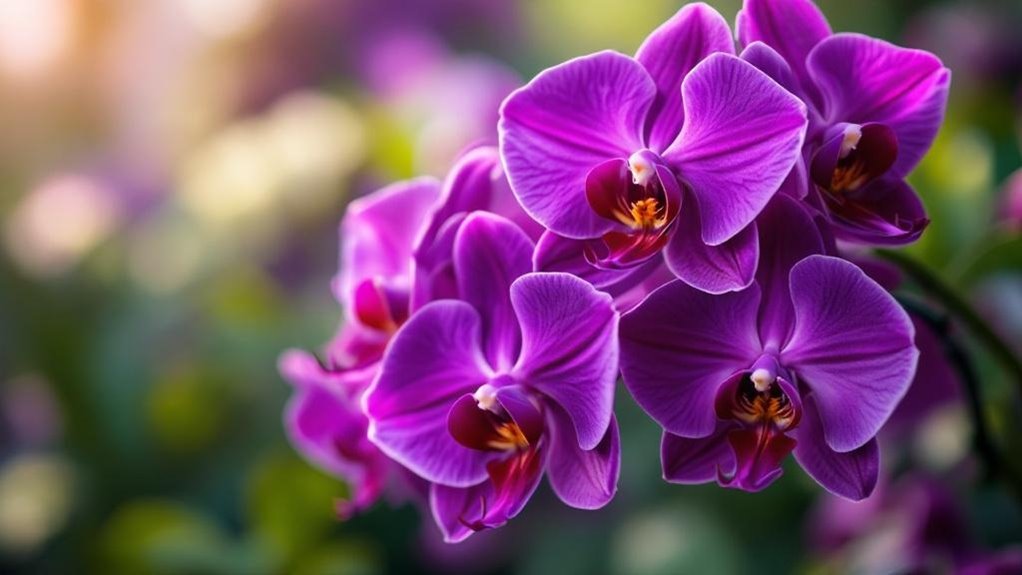
Dignity sits at the center of purple orchids, whose saturated tones have long signaled royalty, luxury, and cultivated power; that association didn’t arise by accident, since purple dye was rare and expensive in the ancient world, and the color became materially tied to wealth, rank, and ceremonial display.
When you choose Purple Orchids: Royalty becomes the clearest reading, reinforced by Victorian orchidelirium, when rare specimens functioned as visible status symbols rather than stagnant decoration. You see that legacy today in deep-toned Phalaenopsis and Vanda hybrids, whose long-lasting, showy blooms hold an observational authority in formal rooms, on ceremonial tables, and at milestone celebrations such as a 28th anniversary.
If you want a flower that projects luxury without excess, purple orchids do it precisely; they anchor a setting, suggest cultivated discernment, and present esteem through visual grandeur alone.
Purple Orchids for Respect
Purple orchids extend the language of royalty into a more personal register, where honor matters less as display and more as a measured expression of respect, admiration, and lasting regard. When you choose them, purple orchids convey esteem with cultivated restraint; they suit mentors, leaders, and elders because their history links dignity with observational care rather than stagnant formality.
Purple orchids express respect with quiet refinement, honoring mentors and elders through admiration shaped by dignity, care, and lasting regard.
- Honor mentors and leaders with quiet dignity
- Mark anniversaries with enduring admiration
- Use Phalaenopsis or Cattleya for formal occasions
- Draw on a long tradition of exclusivity
In Western floral language, you give purple orchids to show admiration; in many Asian traditions, they also signal status and wealth, which strengthens their appropriateness at ceremonies. Their deep violet pigments, once prized during Victorian orchidelirium, continue to suggest exclusivity, reverence, and lasting regard, especially on a 28th anniversary.
Red Orchids for Passion
When you choose red orchids, you present a cultivated symbol of passion and desire, one that suits anniversaries and Valentine’s Day because its rich color signals romantic intent without becoming stagnant or overstated.
You also communicate courage and strength, especially with deeper red varieties, which carry an observational sense of resolve and help you express bold feeling with restraint and clarity.
In practice, you can give red orchids when you want a romantic gift that also suggests energy, respect, and enduring steadiness, making them a measured choice for meaningful occasions.
Passion And Desire
Because red orchids carry a cultivated intensity rather than a stagnant sentimentality, they’ve long been used to signify passion and desire, especially in romantic settings where you want to express deep feeling with restraint and precision. You choose them when passionate love should feel refined, not obvious; deep red Phalaenopsis and Cattleya varieties suggest attraction, sensuality, and deliberate romantic intent, which is why they appear so often on anniversaries and Valentine’s Day.
- You signal desire without relying on roses.
- You present a long-lasting, observational statement.
- You draw on historical links to virility and potency.
- You keep the message polished and cultivated.
In Ancient Greece and Aztec cultures, orchids carried associations with virility and potency, and that historical symbolism still informs how red orchids communicate desire with a composed, enduring seriousness today.
Courage And Strength
Although red orchids are usually read through the lens of romance, their deeper red tones also carry a clear symbolism of courage and strength, which is why you can place them in encouragement or recovery arrangements without weakening their cultivated intensity; varieties such as Cattleya and Vanda hybrids hold that message especially well, since their saturated color and long-lasting form suggest resilience rather than stagnant sentiment.
When you choose red orchids for someone facing strain, you acknowledge more than feeling; you recognize endurance, resolve, and the capacity to recover with dignity. Their historical tie to virility reinforces that observational reading, because the color has long signaled force, vigor, and disciplined power.
In practice, you present courage and strength together, pairing admiration with respect, and the result feels vivid, steady, and quietly persuasive.
Romantic Gift Occasions
That same intensity moves naturally into romantic gift occasions, where red orchids stand for passionate love and desire, and their cultivated form keeps the message from feeling careless or stagnant; for anniversaries, Valentine’s Day, and other marked moments between partners, they present attraction as something deliberate, observed, and enduring rather than merely impulsive.
- You signal passion without neglecting steadiness.
- Deep red varieties mark courage and commitment.
- Single stems suggest intimacy; grouped stems amplify declaration.
- Supportive gifts can still carry desire and strength.
You can choose Red orchids for a new confession or a long partnership, because they hold erotic attraction beside stable devotion; deep red Cattleya or Phalaenopsis forms suit milestones especially well, and when recovery or strain enters the relationship, they also communicate encouragement, resolve, and continued attachment with precision.
Red Orchids for Courage

Choose red orchids when you want courage to be visible rather than merely implied, since their cultivated crimson and scarlet tones carry the weight of bold love, desire, and passion, while also signaling strength and bravery in a way that doesn’t feel stagnant or purely ceremonial.
For anniversaries, Valentine’s Day, or moments when resilience deserves observational respect, red orchids convey admiration with unusual steadiness; hybrid Cattleya and Vanda breeding deepens those tones, giving the color a more deliberate, cultivated authority.
You can also use them in get-well arrangements, where bravery matters as much as tenderness, because the orchid’s refinement tempers red’s intensity and keeps the message stable rather than overwhelming.
If you want that assurance to endure, choose long-blooming red Phalaenopsis or Cattleya varieties, which sustain passionate support and visible courage across several weeks gracefully.
Blue Orchids for Rarity
Where red orchids make courage visible, blue orchids mark rarity with a more observational kind of authority, because naturally blue pigment is exceptionally uncommon in the Orchidaceae family and the color consequently signals uniqueness rather than a stagnant variation on familiar floral symbolism.
- You read blue orchids as cultivated distinction.
- You associate them with calm and meditation.
- You notice their novelty raises market value.
- You recognize rarity, not ordinary abundance.
When you choose blue orchids, you emphasize singular presence; their unusual color suggests something set apart, and that perception shapes both meaning and price.
When you choose blue orchids, you foreground rarity, allowing their singular color to shape both symbolic distinction and perceived value.
In floral symbolism, they also support calmness, which lets you pair rarity with composure rather than display. Because authentic blue appearance remains uncommon, blue orchids often enter arrangements as specialty plants, carrying premium value and a restrained, unmistakable sense of distinction.
Blue Orchids and Tinted Blooms
When you choose a blue orchid, you’re often choosing a symbol of rarity and individuality, since truly blue orchids are exceptionally uncommon in nature and are widely valued for their one-of-a-kind, cultivated appearance.
In most cases, the blue tone you see comes from tinting rather than natural pigmentation, an observational fact that reflects how breeders and florists inject or spray dye to produce a vivid color that Orchidaceae genetics rarely sustain on their own.
If you buy one, you should ask whether the bloom is naturally colored or artificially tinted, because the shade can fade unevenly, appear less stable after watering, and even leach into stagnant drainage water as the flowers age.
Blue Orchid Symbolism
Although blue orchids carry an immediate sense of mystery, their symbolism rests less on natural origin than on cultivated rarity, since true blue orchids don’t occur in the wild and most vivid blue blooms sold today are white or purple orchids that have been dyed or, less often, genetically modified.
In meaning, blue orchids symbolize rarity, individuality, and the extraordinary, so you’d choose them when honoring someone singular or marking a milestone with observational restraint. They also suggest calm, meditation, and introspection; in décor, they support serene, modern spaces without feeling stagnant.
- Rarity made visible through cultivated color
- A one-of-a-kind gift for singular people
- Calm, introspective energy for quiet settings
- Modern symbolism with statement-plant presence
Tinted Bloom Facts
Look a little closer at blue orchids, and the key fact comes into focus: in most cases, the saturated blue you see isn’t a naturally occurring trait but a cultivated effect, created by dye injection into the flower spike, by colored water absorbed through cut stems, or, far less often, by genetic modification intended to alter pigment expression.
When you buy blue orchids, take an observational approach; many will fade as fresh blooms emerge, because the plant’s underlying white or purple pigments reassert themselves, and the stagnant idea of a naturally blue lineage often proves inaccurate. Some hybrids show muted blue tones through breeding, yet stable, intensely blue flowers remain rare.
Dyed blooms may carry the same care needs, but they won’t produce blue offspring, and the treatment can obscure health cues or slightly reduce bloom longevity.
Orange Orchids for Energy
Among orchid colors, orange carries a distinctly cultivated sense of motion, symbolizing enthusiasm, energy, and pride; for that reason, orange orchids are often chosen to mark promotions, graduations, and new ventures, where their presence feels affirming rather than ornamental.
- Orange orchids symbolize enthusiasm,energy and pride.
- You use them to encourage confidence without romantic implication.
- Their warmth and creativity keep professional rooms from feeling stagnant.
- Green foliage or white accents sharpen their observational, polished impact.
You choose orange orchids when you want décor to energize a space without excess sentiment, because their bright petals, seen in certain Oncidium and Cattleya hybrids, draw attention, lift the atmosphere, and support a composed celebratory tone.
In arrangements, they read as confident and encouraging, which makes them suitable for achievements, team events, and formal gatherings alike.
Orange Orchids for New Beginnings
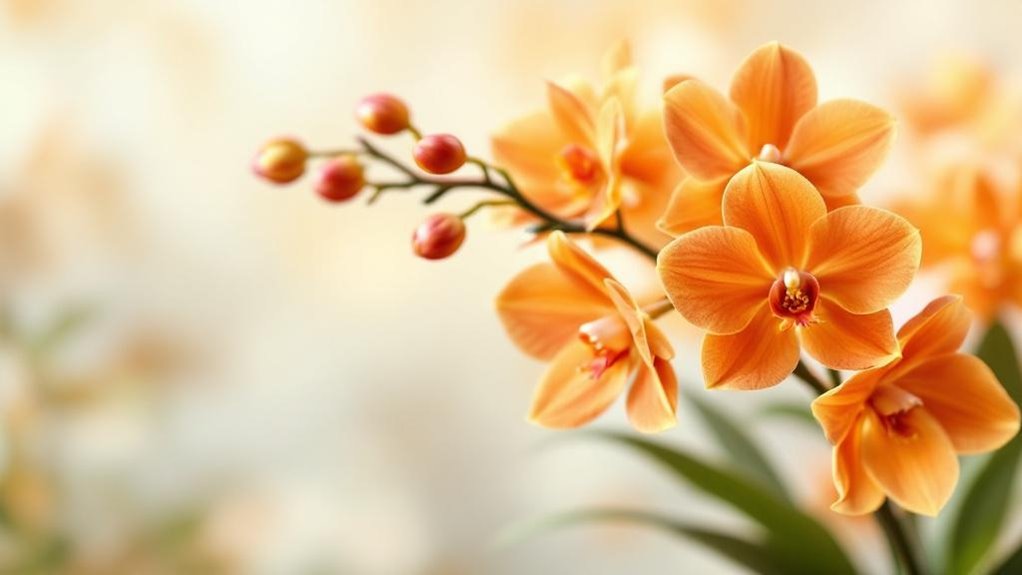
When you choose orange orchids for a new beginning, you present a cultivated symbol of enthusiasm, pride, and forward energy, one that suits a job start, a move, or any passage away from the stagnant familiar. Their sunset-like color carries an observational sense of encouragement and optimism, so you mark life changes with a gift that recognizes achievement while quietly affirming confidence in what comes next. You also give something practical and lasting, since orange orchids do well in bright, indirect light and moderate humidity, and when you pair them with white or yellow blooms, you sharpen their message of warm renewal.
Fresh Starts Symbolism
For moments of changeover, orange orchids carry a clear symbolism of fresh starts, pairing their cultivated brightness with meanings of enthusiasm, energy, and renewal; they’re often chosen to mark new jobs, moves, and emerging projects because their color suggests confidence without becoming sentimental, and that observational balance makes them especially useful when you want to acknowledge progress while avoiding romantic implication.
- You signal steady encouragement.
- You avoid romantic misunderstanding.
- You brighten spaces without excess.
- You counter stagnant atmospheres.
When you give orange orchids, you express pride in someone’s direction and confidence in what follows; that makes them fitting for colleagues, acquaintances, and professional settings.
Their warm hue supports renewal in Western floral language, and orange Cattleya or Oncidium hybrids suit housewarmings especially well, because they mark beginnings while visibly improving a room.
Celebrating Life Changes
Orange orchids also suit life changes that carry public meaning as well as private hope, because their cultivated brightness conveys enthusiasm, pride, and steady energy; you can give them to mark a new job, a move, a graduation, or a promotion, and the message remains clear, observational, and supportive rather than overly intimate.
Because orange blends red’s passion with yellow’s joy, Orange orchids suggest motivation tempered by friendship, so you can acknowledge progress without making the moment feel sentimental or stagnant.
Their warmth and optimism help lift adjustment periods, especially when someone needs confidence and encouragement while adjusting to unfamiliar routines.
If you choose an orange Phalaenopsis or Oncidium, bright indirect light and weekly watering support longer bloom life and encourage re-blooming after the milestone has passed, reinforcing continuity.
Green Orchids for Renewal
Choose green orchids to mark renewal, and the meaning feels cultivated rather than ornamental alone; their chlorophyll-rich petals, which can range from lime to deep jade in varieties such as certain Oncidium, Dendrobium, and Cymbidium cultivars, keep them visually tied to nature, growth, and rebirth.
- Green orchids symbolize fresh starts after stagnant seasons.
- You can give them for housewarmings, recovery, or continued well-being.
- Their uncommon color suggests uniqueness and quiet tranquility.
- Give bright indirect light, airflow, weekly watering, and draining mix.
When you choose them, you signal observational care rather than display, because green carries longstanding associations with health and prosperity across many cultures.
You place them where calm matters, and they reinforce renewal through living growth, not sentiment alone.
Green Orchids for Balance
Because green orchids hold the eye without demanding it, they suit moments when you want a gift or interior accent to suggest balance rather than display; their color draws on longstanding associations with health, renewal, and nature-inspired tranquility, and that cultivated restraint makes them especially fitting for spaces or occasions shaped by recovery, changeover, or the need to steady a stagnant routine.
You’ll find that green orchids symbolize steadiness as much as growth; in observational terms, they work well in wellness rooms, offices, and entryways because green tones can lower stress and support concentration. In some Asian traditions, they also mark good fortune and new beginnings, so you can choose them for housewarmings, recoveries, or career milestones. Their rarity, seen in chlorophyll-rich hybrids and species such as Coelogyne and some Cattleya, reinforces their composed presence.
Best Orchid Colors for Romance
For romantic occasions, orchid color matters less as ornament than as signal, since each hue carries a distinct emotional register, and you can match that register to the stage, tone, or seriousness of the relationship without forcing the gesture into something louder than it should be.
- Choose red orchids for deep love, desire, and anniversaries.
- Use pink for cultivated affection and early romantic intent.
- Select purple to express admiration and milestone devotion.
- Prefer white or orange when commitment or passion shouldn’t feel stagnant.
You signal strongest intensity with red orchids; they suit Valentine’s Day, anniversaries, and established passion.
Pink orchids keep your message observational and restrained, appropriate when affection is growing or turning toward romance.
Purple carries dignity, admiration, and regal love, so you can honor a partner without excess.
White orchids communicate pure devotion, often fitting weddings and lasting commitment, while orange tones restore energy.
Best Orchid Colors for Friends

Friendship asks for a different register than romance, and orchid color helps you keep the message clear; yellow orchids remain the most direct choice when you want to mark a friend’s success, wish them good luck, or acknowledge a milestone with an observational, generous tone that doesn’t drift into sentimentality.
For friendship, yellow orchids speak most clearly: generous, bright, and celebratory without tipping into romance.
Beyond yellow, pink suits cultivated closeness, letting you express gratitude or quiet affection without making the gesture feel stagnant or romantically coded.
Orange works when you want your congratulations to carry enthusiasm and pride, especially after a promotion, graduation, or new venture.
White can fit major changes, including a new home or baby, if cultural context supports that choice.
Purple offers a steadier register; orchids symbolize respect and admiration there, making it appropriate for mentor-like friends and durable, long-standing bonds.
Best Orchid Colors for Birthdays
Often, the best orchid color for a birthday depends less on the date itself than on the relationship, the tone you want to set, and whether the occasion calls for cheerful acknowledgment, cultivated admiration, or a more intimate message; yellow orchids suit friends and lighthearted celebrations because they carry joy and sociability without becoming stagnant or overly sentimental, while pink orchids express grace, affection, and happiness in a way that feels warm yet measured, which is why they’re commonly chosen when you want your gift to register as thoughtful rather than formal.
- Choose yellow for cheerful milestones.
- Pink orchids convey grace,affection,and happiness,commonly chosen for birthday gifts to express warm admiration or for women and girls.
- Purple signals respect for achievements.
- White offers understated congratulations.
For romantic partners, red conveys deep attachment; for elegant restraint, white marks new beginnings gracefully.
Best Orchid Colors for Anniversaries
Anniversary orchid choices usually carry more weight than birthday selections, because the color doesn’t just acknowledge the occasion; it interprets the history of the relationship, the character of the milestone, and the kind of sentiment you want to place in view without letting the gesture feel stagnant or overly theatrical.
You should match color to meaning with observational care.
| Color | Anniversary meaning |
|---|---|
| Purple | Regality, admiration, dignity; cultivated for 28th anniversaries. |
| Pink | Grace, affection, joy; often chosen for 14th anniversaries. |
White orchids suit anniversaries that mark renewal, reverence, or a fresh chapter; red orchids keep the anniversary message intimate, centered on desire and enduring love. Yellow or orange orchids work when you want the anniversary gift to recognize shared achievements, partnership pride, and joy without overstating sentiment.
Best Orchid Colors for New Babies

Choose newborn orchid colors with the same observational care you’d give any symbolic gift, because the arrangement will be read not only as a celebration of birth but also as a statement about innocence, family feeling, and the atmosphere you want to place around a new household without letting the gesture turn stagnant or culturally tone-deaf.
- White suggests purity, innocence, and cultivated new beginnings.
- Pink conveys grace and affection, often for baby girls.
- Yellow signals joy; Orchids: Friendship and good fortune.
- Lavender expresses admiration and delicate elegance.
You’ll usually choose white for classic newborn arrangements, yet you should note family traditions, since white carries different associations in some cultures; pink feels gentle and familiar, yellow stays cheerful and gender-neutral, and lavender lets you congratulate new parents with refinement.
Best Orchid Colors for Sympathy
When the occasion shifts from welcoming new life to marking a loss, orchid color should become more restrained and observational, because sympathy arrangements carry a cultivated symbolism that speaks to reverence, memory, and the emotional register of the service without letting the gesture feel stagnant or misread.
You’ll usually choose white first; orchids are often selected in white because they signal purity, reverence, and new beginnings across many Western and Asian funeral traditions. If you want a gentler note, pale pink conveys grace, compassion, and remembrance, especially for close family or friends.
Purple adds dignity, respect, and mourning, fitting memorials for someone widely esteemed. Green and muted yellow can suggest hope or supportive warmth when culture allows.
Avoid bright red; if you use it at all, choose deep burgundy sparingly for strength.
Orchid Colors for Home Decor
A few orchid colors shape a room almost as decisively as furniture or light, because each one carries a cultivated visual meaning that can reinforce the mood you want without making the decor feel forced or stagnant.
Orchids come in tones that guide an observational decorating approach, letting you choose atmosphere with precision and restraint.
- White orchids support minimalist rooms, pairing with neutrals to project purity and calm.
- Yellow orchids introduce warmth and sociable energy, so they suit entryways and living rooms.
- Pink orchids soften bedrooms or nurseries, where grace and affection matter more than display.
- Purple orchids lend dining rooms or studies a regal, sophisticated note; blue tinted orchids work best as rare, sparing focal points.
Used thoughtfully, these colors help you shape interiors that feel intentional, balanced, and quietly expressive overall.
How to Combine Orchid Colors

Because orchid colors carry distinct symbolic weight, combining them works best when you treat the arrangement as a cultivated statement rather than a decorative afterthought, pairing tones that reinforce one another so the message feels clear, observational, and never stagnant.
You can pair white and pink orchids when you want purity tempered by affection, which suits weddings and other new beginnings; for milestones, combine purple with yellow or gold to suggest admiration joined to good fortune.
If you need stronger emphasis, mix red and orange orchids, since together they project passionate love and enthusiasm without becoming visually confused.
Use blue, usually tinted, with white or green accents so rarity reads as deliberate rather than excessive.
For sympathy pieces, blend white orchids with soft pink or purple, creating reverence, comfort, and restrained admiration altogether.
How Culture Shapes Orchid Meaning
Although orchid colors seem universal at first glance, their meanings don’t stay fixed across cultures; they shift with local ideals about virtue, status, fertility, and power, which means the same bloom can read as refined in one setting, prestigious in another, and medicinal or lineage-centered elsewhere.
- In China, white and yellow orchids suggest nobility, respect, Friendship, and good luck.
- In Victorian Britain, rare purple orchids became highly sought markers of wealth and cultivated status.
- In ancient Greece, orchid forms shaped fertility beliefs and lineage expectations.
- In Japan and Mesoamerica, white signaled purity, while darker blooms implied strength and remedy.
When you choose an Orchid color, you convey more than taste; in various cultures, you convey history. White may show appreciation, yellow may honor friendship and joy, purple may suggest prestige, and dark tones may imply potency, not romance.
Frequently Asked Questions
What Does Each Orchid Color Represent?
You can read orchid colors this way: white means purity and new beginnings; pink shows grace and affection; yellow signals joy and friendship; purple conveys respect and dignity; red expresses love, passion, and courage.
What Is the Lucky Color of Orchids?
You’ll usually find yellow and pink orchids considered the luckiest. You can also choose purple for wealth and long-term fortune, or blue for exceptional success. Since traditions vary, you should match the color to cultural context.
What Is the Rarest Orchid Color?
The rarest orchid color you’ll find is true blue, because orchids don’t naturally produce the pigments for vivid blue blooms. Most “blue” orchids you’ve seen were dyed, while genuine blue-tinged specimens remain exceptionally scarce.
Do Orchids Like Coffee?
No, your orchids don’t like coffee; funny enough, many growers wonder that too. You can mix a little dried, used grounds into bark, but don’t pour brewed coffee on roots. You’ll get safer results with orchid fertilizer.
Conclusion
When you choose an orchid color with intention, you shape the message as clearly as the flower itself; white steadies a quiet room, yellow lifts a cultivated space, and pink softens a formal gesture without becoming stagnant. You can rely on these meanings as a useful observational guide rather than a rigid rule, because context still matters; importantly, orchids belong to one of the largest plant families on Earth, with more than 25,000 species, which helps explain their layered symbolism.