
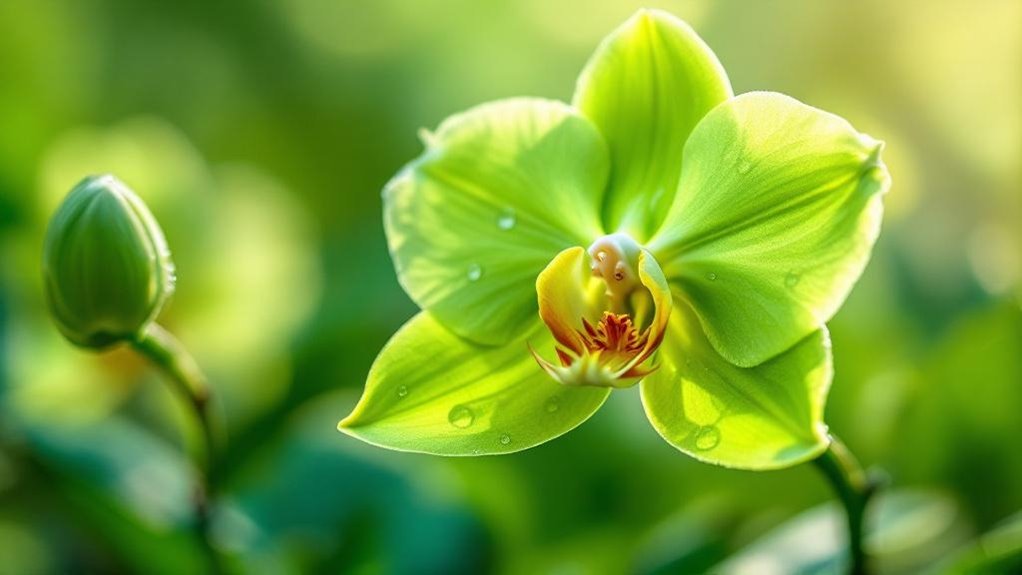
A green orchid tells you that health, growth, and renewal are taking root in a steady, cultivated way; it joins the orchid’s refined endurance with green’s association with balance, fertility, and prosperous change rather than stagnant excess. You can give one for birthdays, graduations, anniversaries, or a new home, where it suggests luck, stability, and observational calm. Across traditions, it also reflects harmony, resilience, and healing, with care and gifting nuances worth noting ahead.
- Key Takeaways
- What Does a Green Orchid Mean?
- What the Color Green Means
- Health, Growth, and Renewal Symbolism
- Green Orchid Meaning Across Cultures
- When to Gift a Green Orchid
- Why Green Orchids Fit Life Milestones
- How Green Orchids Elevate Home Decor
- Where to Place Green Orchids for Positive Energy
- How to Choose a Healthy Green Orchid
- Popular Types of Green Orchids
- How to Care for a Green Orchid
- Green Orchid Problems and Fixes
- What a Green Orchid Says as a Gift
- Frequently Asked Questions
- Conclusion
Key Takeaways
- Green orchids symbolize health, personal growth, and renewal, making them meaningful flowers for fresh starts and life transitions.
- Their green color represents nature, balance, calm, and fertile potential, often associated with harmony and positive energy.
- In many traditions, green orchids also convey luck, stability, resilience, and prosperity without excess.
- They are popular gifts for birthdays, graduations, anniversaries, and new homes because they celebrate progress, continuity, and abundance.
- As living decor, green orchids add beauty and serenity, while healthy care requires bright indirect light, moderate watering, and 50–70% humidity.
What Does a Green Orchid Mean?

Because green carries long-standing associations with life and steadiness, a green orchid generally signifies health, growth, and renewal; it suggests prosperity without excess, energy without disorder, and a cultivated form of balance that resists anything stagnant.
When you give or receive green orchids, you acknowledge more than beauty; you recognize vibrancy, observational calm, and a disciplined sense of progress. Their rarity strengthens their meaning, so they often stand for prosperity and luck, not as spectacle, but as steady fortune shaped by patience and care.
In Chinese tradition, they also reflect harmony and balance, qualities you pursue when life changes course. For that reason, a green orchid suits graduations, anniversaries, and other turning points, because it marks personal renewal while affirming stability, health, and measured growth that can continue without losing coherence over time.
What the Color Green Means
When you consider what the color green means, you see nature and renewal first; it reflects cultivated growth, living energy, and the steady return of life after anything stagnant has passed.
You also recognize its effect on your inner state, because green supports balance and calm, encourages an observational mindset, and helps ease anxiety by suggesting harmony, stability, and grounded well-being.
At the same time, green carries the quiet promise of luck and prosperity, so you connect it with new beginnings, fertile potential, and the measured confidence that abundance can follow.
Nature And Renewal
As green appears throughout the natural world, it comes to represent fertility, energy, and the steady processes through which life restores itself; in this sense, a green orchid doesn’t merely suggest beauty, it reflects growth in its most observational form, shaped by cycles of emergence, decline, and return. You read green as nature cultivated into symbol, where health, renewal, and good fortune rise together, resisting anything stagnant and affirming life’s continuance.
| Aspect | Meaning | Effect |
|---|---|---|
| Spring | renewal | growth |
| Leaf vitality | health | tranquility |
| Prosperity | good fortune | abundance |
Through this lens, you see the orchid as more than decorative, because its color recalls seasonal return, communal flourishing, and the durable promise that life can reappear, strengthen, and begin again.
Balance And Calm
Equilibrium defines much of what green conveys, and in a green orchid you can read that message with unusual clarity; the color steadies the eye, quiets mental strain, and suggests a cultivated form of calm that resists anything harsh or stagnant.
Green is often linked with nature, symbolizing growth, renewal and life, so when you encounter this hue, you register balance not as passivity but as healthy continuity. Its observational effect supports tranquility and calmness, lowers stress, and helps you feel secure, which in turn strengthens mental clarity and focus.
It also encourages motivation without pressure, guiding personal growth and development through steadiness rather than force. Even where cultures connect green with prosperity and abundance, the deeper message here remains composure, grounding, and measured emotional renewal in daily life.
Luck And Prosperity
Fortune is one of green’s most enduring associations, and in a green orchid that meaning feels cultivated rather than extravagant; the color suggests prosperity that grows from renewal, steady health, and conditions that allow life to advance without becoming stagnant.
| Aspect | Meaning |
|---|---|
| Luck | Positive energy |
| Prosperity | Abundance |
| Growth | New beginnings |
| Health | Balanced well-being |
When you give green orchids, you recognize luck as something observational and earned, not merely wished for; across cultures, including Chinese tradition, green supports harmony, balance, and prosperity, while also signaling vibrancy, health, growth, and renewal. Because green orchids embody nature’s steady momentum, they suit milestones, recoveries, and changes, marking a life that’s moving forward with measured abundance and without strain.
Health, Growth, and Renewal Symbolism
When you see a green orchid, you recognize a cultivated symbol of strength, one that reflects physical and emotional well-being while reinforcing a calm, observational sense of balance.
As its green tones suggest steady growth rather than stagnant permanence, you can read the flower as a sign of renewal, especially during life changes that ask for patience, adjustment, and quiet confidence.
You also encounter a longstanding emblem of abundance and harmony, and in traditions such as Chinese culture, you can understand why it marks new beginnings with such clear and lasting meaning.
Green As Vitality
Because green orchids draw so directly from the visual language of nature, they’ve long been read as symbols of liveliness, linking health, growth, and renewal in a way that feels both immediate and cultivated; the color green suggests energy without agitation, steady development rather than stagnant decline, and across many cultural contexts it carries an observational sense of life continuing, restoring itself, and holding its balance.
When you encounter green orchids, their essence-centered symbolism can register as calm strength rather than display; you see health joined to composure, and in Chinese tradition, harmony and balance deepen that reading.
Their rarity further sharpens the message, since uncommon beauty often signals prosperity, good fortune, and readiness for new chapters. As gifts, they support personal growth by acknowledging milestones without excess, affirming well-being, direction, and quietly sustained promise.
Renewal Through Growth
Green orchids carry significance a step further and frame it as renewal, not merely the steady presence of life, but life moving out of the stagnant and into visible growth; their rare green hue suggests transformation that remains grounded, cultivated, and observational, so the flower comes to represent health, personal development, and the quiet restoration of balance in both mind and body.
| Aspect | Meaning | Reflection |
|---|---|---|
| Hue | renewal | you evolve |
| Bloom | growth | you begin |
| Balance | health | you steady |
| Care | vigor | you nurture |
| Abundance | prosperity | you flourish |
When you tend green orchids with light, water, and humidity, you mirror transformation itself; each bloom marks renewal, each season confirms growth, and each rooted cycle suggests prosperity through health.
Green Orchid Meaning Across Cultures
Across cultures, the green orchid carries a cultivated symbolism that reflects how people understand renewal, resilience, and the living world; in Chinese tradition, it represents harmony and balance, expressing an observational view of life as an interconnected whole rather than a set of stagnant parts.
- In Native American perspectives, green orchids connect you to healing, earth-centered health, and seasonal renewal.
- In Japanese culture, you see strength and endurance in them, especially during milestones, changes, and disciplined personal growth.
- Elsewhere, their rarity deepens cultural significance, linking green orchids with luck and prosperity, liveliness, and meaningful new beginnings.
When you compare these traditions, you notice a shared pattern: green orchids signify growth without haste, renewal without rupture, and a durable relationship between inner life, nature, and achievement.
When to Gift a Green Orchid
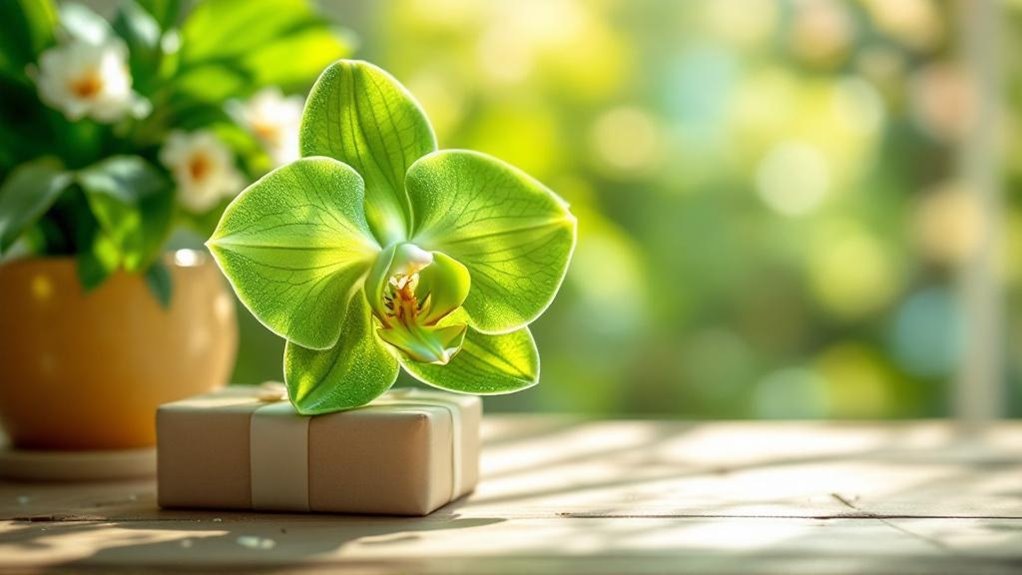
You can give a green orchid at a housewarming, where its cultivated beauty helps a new space feel less stagnant and more settled, while its meaning of prosperity and renewal supports the quiet promise of a fresh start.
You can also choose it for milestones and celebrations, including birthdays and graduations, because it marks growth, recognizes achievement, and reflects an observational respect for what’s been completed and what now begins.
For anniversaries as well, a green orchid remains appropriate; it acknowledges continuity, fertility, and new beginnings in a relationship with calm precision.
Housewarming And New Beginnings
When someone settles into a new home, a green orchid makes an especially fitting housewarming gift, because it carries the cultivated symbolism of growth, renewal, and prosperity while also giving the space a composed, observational sense of life that keeps it from feeling temporary or stagnant.
By gifting green orchids, you honor new beginnings with a living presence that can symbolize growth, promote positive energy, and suggest harmony throughout the home.
- Its green tones reflect health and abundance, offering a quiet blessing for the household.
- Its unique beauty creates a refined focal point, improving the room without overwhelming it.
- Its association with luck and prosperity makes your housewarming gesture feel deliberate, supportive, and enduring.
You give both meaning and atmosphere, helping a new residence feel settled, welcoming, and genuinely inhabited.
Milestones And Celebrations
Because green orchids carry a cultivated symbolism of growth, renewal, and steady prosperity, they suit milestones and celebrations with unusual precision, marking birthdays as reflections on personal development, anniversaries as acknowledgments of shared beginnings and relational continuity, and graduations as quiet recognitions of completed effort and the opportunities now taking form.
You can give green orchids when you want your gesture to feel observational rather than ornate; they honor birthdays by recognizing growth without sentimentality, anniversaries by suggesting fertility and continuity, and graduations by affirming progress beyond stagnant effort.
They also remain appropriate for housewarmings, where they introduce positive energy and good fortune, helping a new residence feel settled. Across milestones and celebrations, green orchids function as thoughtful gifts because they connect achievement, renewal, and future promise without excess.
Why Green Orchids Fit Life Milestones

Few flowers align with life milestones as precisely as green orchids, since they carry a cultivated symbolism of growth, renewal, health, and prosperity, making them especially fitting for graduations, new jobs, anniversaries, and housewarmings that mark movement away from the stagnant and toward a more expansive stage of life.
- You mark personal milestones with Green orchids because their observational symbolism reflects progress, stability, and luck.
- You give them for anniversaries because they suggest renewal in commitment, sustained health, and future prosperity.
- You choose them as unique tokens because their rarity underscores change, achievement, and the disciplined embrace of growth.
When you offer green orchids, you acknowledge change without exaggeration, and you affirm that meaningful advancement often depends on patience, steadiness, and continued receptivity to renewal.
How Green Orchids Elevate Home Decor
That same symbolism of renewal and steady growth carries naturally into the home, where green orchids do more than occupy space; they refine it, introducing a cultivated sense of health, balance, and visual calm that softens stagnant corners and gives a room a more intentional character.
Their exotic form strengthens your home decor with quiet distinction, heightens aesthetic appeal, and creates an observational focal point that feels composed rather than ornamental. You also benefit from symbolism; green orchids suggest renewal, positive energy, and good fortune, reinforcing a setting that supports rest and steady thought.
When you pair them with decorative pots that echo their natural tones, you reveal a measured appreciation for nature and design.
Because they’re relatively easy to care for, requiring moderate watering and indirect light, they offer lasting beauty without constant intervention.
Where to Place Green Orchids for Positive Energy
Within the home, placement determines whether a green orchid simply decorates a surface or quietly shapes the atmosphere. You’ll cultivate positive energy most effectively by placing green orchids in entryways and the living space, where their observational presence softens stagnant corners and establishes a welcoming rhythm; near windows with indirect sunlight, they receive steady illumination that supports growth and preserves their vibrant colors.
- Place them in entryways or living rooms to encourage balance and ease.
- Use kitchens or bathrooms when you want ideal humidity without artificial measures.
- Group them with other plants, or set one in a workspace to support creativity and calm.
This cultivated arrangement strengthens visual harmony. In home offices, green orchids can steady attention while contributing to a more tranquil, energetically balanced environment overall.
How to Choose a Healthy Green Orchid

When you choose a healthy green orchid, start with the foliage and overall structure, because a vigorous plant presents itself through vibrant green leaves, steady form, and an absence of discoloration, spotting, or other visual irregularities that may signal stress.
Continue your observational check below the pot line, where healthy root development appears white or green rather than brown, mushy, or stagnant, and where strong roots support lasting orchid care.
Examine for firm intact leaves, since wilting, tears, or pest traces often reveal cultivated weakness before other symptoms appear.
Select any green orchid variety only if it also carries healthy flower buds, which suggest proper maturity and balanced care.
Finally, buy from reputable nurseries or orchid-focused florists, because consistent handling, sanitation, and informed guidance improve your chances of bringing home a durable specimen.
Popular Types of Green Orchids
Among the most popular green orchids, you’ll encounter several cultivated types that differ not only in form and fragrance, but also in the visual character they bring to a space; Phalaenopsis green orchids, often called moth orchids, remain especially common because their broad, flat blossoms last well and their care needs stay relatively manageable, while Dendrobium varieties present upright canes lined with clustered flowers that suggest structure and endurance.
- Phalaenopsis orchids support décor with calm continuity, often reinforcing themes of health and renewal indoors.
- Cattleya Green Orchids and Oncidium Green Orchids contribute fragrance, movement, and refined contrast without appearing stagnant.
- Zygopetalum Green Orchids add burgundy depth, while Dendrobium Green Orchids create an observational sense of resilience and balance.
How to Care for a Green Orchid
A green orchid stays healthiest under steady, moderated conditions, so you should place it in bright, indirect sunlight near a window, keep it in a well-draining bark or moss mix, and maintain daytime temperatures between 65 and 85 degrees Fahrenheit. This cultivated balance supports root function, preserves leaf color, and prevents the stagnant moisture and heat stress that often weaken orchid growth.
For consistent care, water green orchids every 7 to 10 days, and wait until the top inch dries before watering again, because measured moisture encourages stability without oversaturation.
Maintain humidity between 50 and 70 percent with a humidifier or nearby water tray, and use well-draining potting media to sustain observational vigor, reduce root rot risk, and support durable growth over time indoors.
Green Orchid Problems and Fixes

Even with cultivated care, green orchids can still show strain, and the first signs usually appear in the leaves, flowers, or roots; yellowing leaves often point to improper watering or insufficient light, while dropped flowers usually reflect stress from temperature swings or air that has become too dry.
Even well-tended green orchids reveal stress early through yellowing leaves, dropping flowers, or subtle changes in roots.
- Adjust light and watering when yellowing leaves persist; your observational changes should be gradual.
- Keep humidity levels near 50–70%; in stagnant rooms, use misting or a humidifier.
- Repot in well-draining potting media, and inspect roots often to prevent root rot.
You should also examine green orchids regularly for pests and diseases, because early detection limits damage and preserves steady growth.
When roots darken, soften, or smell sour, reduce watering and replace compacted media promptly to restore healthy airflow.
What a Green Orchid Says as a Gift
Because a green orchid carries meanings of health, growth, and renewal, it says that you wish the recipient steady progress and restored energy; that message suits new beginnings, personal milestones, and periods of change, when a gift should feel both observant and cultivated rather than merely decorative.
You signal care that isn’t stagnant, and you acknowledge both effort and possibility through green orchids’ unique symbolism and rarity.
You also communicate balance, especially if you want to strengthen a relationship, since green orchids suggest harmony as well as health, growth, and renewal.
When you give one for a housewarming or a new venture, you extend wishes for luck and prosperity, while its exotic presence affirms the recipient’s distinct place in your life and quietly frames abundance as something living, sustained, and earned.
Frequently Asked Questions
What Color Orchid Means Healing?
Green orchids mean healing. You’ll often see them linked with renewal, balance, and restored energy. They can support a calming atmosphere, and in some traditions, they also represent health, prosperity, and positive growth during recovery.
What Flower Has the Most Health Benefits?
You’ll find calendula offers the most broad health benefits, thanks to its anti-inflammatory and antiseptic properties. You can use it to support wound healing and soothe skin irritations, while other flowers target more specific wellness needs.
Is an Orchid a Healing Plant?
Yes, you can view an orchid as a healing plant symbolically, because it promotes calm, beauty, and renewal in your space. Some species also appear in traditional remedies, though you shouldn’t treat orchids as medical cures.
What Do Orchids Signify Spiritually?
Orchids spiritually signify your inner strength, harmony, and transformation. With over 25,000 orchid species worldwide, they remind you that growth takes many forms. You can see them as symbols of balance, abundance, resilience, and deep connection.
Conclusion
A green orchid leaves you with a clear message: you value health, cultivated progress, and renewal that resists anything stagnant; whether you give one to mark recovery, support a new chapter, or steady a room with quiet balance, its meaning remains observational and precise. What better flower to express growth that is patient, grounded, and enduring? If you choose a green orchid with intention, you communicate care, resilience, and confidence without excess, and that restraint strengthens its effect.