
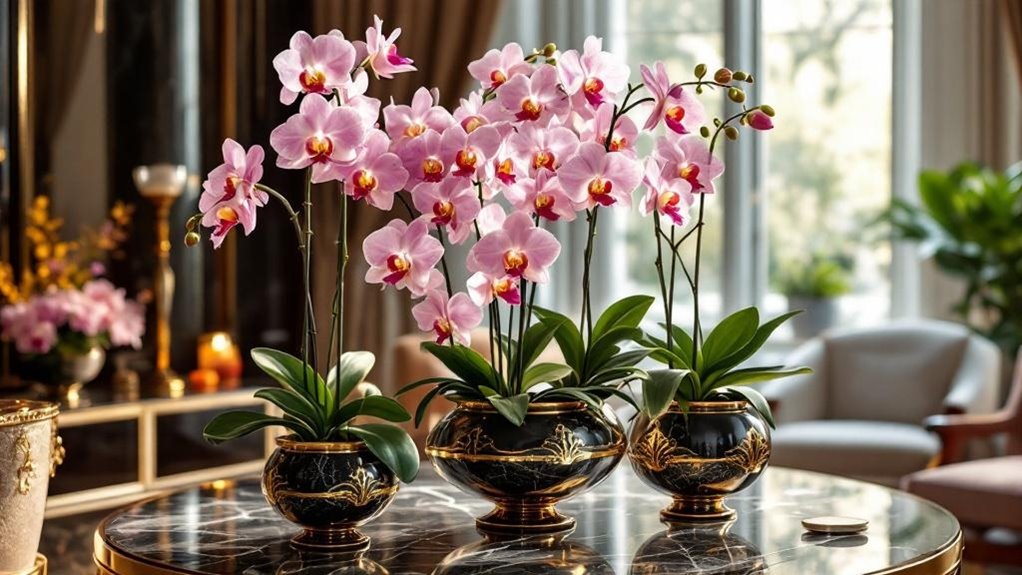
You can trace orchids’ luxury status to rarity, difficult cultivation, and centuries of cultivated symbolism; elites prized them in Greece, China, and Japan for fertility, integrity, health, and good fortune, then Victorian collectors turned exotic species into public markers of wealth and judgment. Even after Darwin, tissue culture, and global trade made orchids less scarce, their observational beauty, architectural restraint, and now ethical sourcing kept them from seeming stagnant, and there’s more behind that prestige.
- Key Takeaways
- Why Orchids Became Luxury Symbols
- What Orchids Meant in Ancient Civilizations
- How Greece Linked Orchids to Virility
- How China and Japan Valued Orchids
- How Exploration Made Orchids More Exotic
- Why Rare Orchids Attracted Elite Collectors
- How Victorian Orchid Mania Took Hold
- How Orchids Became a Status Symbol
- How Darwin Helped Explain Orchids
- How Orchid Science Changed Cultivation
- How Orchids Became More Accessible
- Why Orchids Still Feel Luxurious Today
- What Orchid Colors Symbolize Socially
- How Orchids Became a Luxury Gift
- How Orchids Shape Modern Luxury Spaces
- How Ethical Sourcing Affects Luxury Orchids
- Why Orchids Still Represent Prestige
- Frequently Asked Questions
- Conclusion
Key Takeaways
- Orchids became luxury symbols because rare wild species were difficult to find, transport, and cultivate, making ownership expensive and exclusive.
- Victorian orchid mania turned rare orchids into elite status objects, with wealthy collectors competing for exotic specimens during “orchidelirium.”
- Nurseries and scientific interest, including Darwin’s orchid research, increased prestige by linking orchids to knowledge, refinement, and cultivated taste.
- Across cultures, orchids symbolized fertility, integrity, nobility, and good fortune, reinforcing their association with virtue, power, and high social standing.
- Mass cultivation made orchids more accessible, yet their elegant form, long-lasting blooms, and upscale use preserved their luxury image.
Why Orchids Became Luxury Symbols

Although orchids are far more available today than they were in the past, they became luxury symbols because rarity, difficulty, and cultivated taste converged around them, especially in the Victorian era, when wealthy collectors pursued exotic specimens as visible markers of status and discernment.
You can trace that prestige to orchidelirium, when dangerous expeditions, scarce specimens, and high prices made ownership feel like conducting an orchestra of wealth, science, and observational refinement; Darwin’s research intensified attention, and elite buyers treated orchids as proof that their taste wasn’t stagnant but cultivated through knowledge and access.
Even now, mass production hasn’t erased that meaning, because orchids still project architectural elegance, unusual longevity, and disciplined beauty.
Mass production softened rarity, but orchids still embody architectural grace, lasting presence, and a beauty that feels both exacting and serene.
In places such as Southern California, you see them staged in luxury homes and offered as gifts that quietly signal sophistication.
What Orchids Meant in Ancient Civilizations
That later aura of cultivated luxury rested on meanings that were far older, because long before orchids appeared in Victorian glasshouses or modern interiors, ancient civilizations treated them as plants with symbolic and practical force; in Greece, their very name, derived from órkhis, tied them to fertility and virility through the shape of their tubers.
While in ancient China they carried medicinal value and came to represent integrity and friendship among scholars and emperors, which gave them a moral as well as observational appeal.
- You see medicine and ethics joined in China.
- You find imperial power in Aztec vanilla elixirs.
- You understand why orchids are no longer merely decorative, but historical emblems.
You also see Japan value orchids for good fortune and resilience, keeping them near daily life rather than in stagnant ritual alone.
How Greece Linked Orchids to Virility
As you move into Greece, you find Theophrastus and the word órkhis at the center of an observational tradition, because the orchid’s paired tubers resembled male anatomy and gave the flower a cultivated association with virility.
You also see how Greek ideas of fertility and masculinity reinforced that meaning, since people believed the roots could shape childbirth outcomes, with larger tubers favoring sons and smaller ones favoring daughters.
From there, you can trace how these beliefs kept orchids from becoming stagnant symbols of mere beauty, linking them instead to Apollo, masculine strength, and the prestige that later cultures would inherit.
Theophrastus And Órkhis
Stone tablets and cultivated gardens frame the earliest story of the orchid in Greek thought, where Theophrastus gave the plant its name from the word órkhis, or “testicle,” after observing the shape of its paired tuberous roots. In doing so, he fixed the flower to ideas of virility and fertility that wouldn’t remain merely botanical.
You can trace that observational naming into Greek custom and status:
- roots shaped belief about unborn children
- Apollo tied orchids to beauty and procreation
- rarity lifted the flower above stagnant ornament
When you follow this orchid through Greek society, you see more than plant lore; you see a cultivated emblem whose unusual form invited interpretation, whose ties to Apollo lent authority, and whose scarcity began separating it from ordinary flowers, preparing later elites to prize it as a marker of distinction and refined possession.
Fertility And Masculinity
Because the orchid’s very name came from órkhis, the Greek word for “testicle,” Greek thought didn’t treat the flower as a neutral ornament; it read the plant’s paired tubers as observational proof that nature disclosed masculine potency through form, and from that reading grew a cultivated belief that orchids could influence conception itself.
In that framework, you see fertility and masculinity joined, not as stagnant abstractions, but as visible qualities encoded in roots, beauty, and rarity; Greek art and social values used orchids to signify virility, reproductive force, and disciplined male strength.
Because elites prized unusual elegance, the orchid also moved beyond botany into status, its admired form suggesting that power, refinement, and procreative capacity belonged together, and that luxury itself could quietly advertise a household’s alignment with nature’s generative order and prestige.
Tubers And Childbirth Beliefs
That link between orchid form and masculine force didn’t remain a stagnant symbol in Greek thought; it moved into childbirth beliefs, where the plant’s tubers served as observational signs that people treated as practical guides to conception. In Greece, you see why: orchid comes from órkhis, “testicle,” and the roots’ shape encouraged cultivated theories of virility, fertility, and reproductive influence among physicians and scholars.
- Larger tubers were taken to favor sons.
- Smaller tubers were thought to encourage daughters.
- Consuming roots entered fertility rituals and elite practice.
Through these childbirth beliefs, you can trace how bodily analogy became social practice; when elites prized orchids, they weren’t admiring rarity alone, they were affirming power, masculinity, and status through a plant believed to shape inheritance itself, within household lineage.
How China and Japan Valued Orchids

When you look at China and Japan, you see orchids serving as cultivated emblems of scholar and imperial symbolism, markers of integrity and friendship, and signs of refinement that kept social meaning from becoming stagnant.
In China, you can trace that value through observational records of orchids in traditional remedies, especially the Dendrobium, whose medicinal use for ailments such as lung disease tied the flower to health, moral integrity, and practical esteem.
In Japan, you find orchids representing fertility, power, and strength, displayed in homes and offices as quiet assertions of good fortune and prosperity, which shows how both cultures joined beauty to status, wealth, and enduring cultural belief.
Scholar And Imperial Symbolism
Across China and Japan, orchids came to signify far more than cultivated beauty, for each bloom carried an observational record of status, virtue, and refined taste; in ancient China, scholars linked orchids with integrity and friendship, emperors prized them for their rarity and poise, and the valued Dendrobium, often called the bamboo orchid, joined aesthetic esteem to medicinal use, which strengthened its place in courtly and literary culture alike.
- You see scholar prestige attached to cultivated discernment.
- You notice imperial symbolism shaping elite exchange.
- You recognize orchids as aristocratic gifts with practical value.
In Japan, you encounter a parallel logic: orchids signaled power, strength, and good fortune, and households or businesses displayed them to invite prosperity rather than stagnant decline; among aristocrats, their exchange confirmed rank, resilience, and disciplined refinement.
Integrity And Friendship
Because orchids joined delicate form to disciplined endurance, ancient China treated them as more than admired flowers: scholars and cultivated households read in them a visible model of integrity and friendship, one that suited intellectual life, ethical self-command, and the quiet obligations of refined companionship.
When you follow that observational tradition, orchids become signs of character, not stagnant decoration; their restraint, rarity, and elegance align with the cultivated conduct scholars prized, so giving them affirms trust and moral regard.
In Japan, you encounter a related valuation, though expressed through power, strength, and household prosperity; there, orchids mark refinement that supports social bonds, formal exchange, and enduring esteem.
Across both cultures, you see why orchids sustained prestige for centuries: they let you signal integrity and friendship while preserving luxury, status, and composure in every setting.
Medicinal And Cultural Uses
Although orchids first arrest attention through form and rarity, China and Japan also valued them for uses that reached into medicine, ritual, and domestic life. In ancient China, physicians and cultivated households especially prized Dendrobium for treating lung complaints, coughs, and related ailments. So the flower came to signify not only elegance but good health and well-being, while scholars and emperors sustained its cultural authority by linking it to integrity, friendship, nobility, and high station.
In Japan, you see orchids associated with fertility, power, and strength.
In homes and workplaces, they were thought to invite prosperity.
Across both cultures, orchids are still status markers, never stagnant botanical treasures.
These observational traditions made orchids luxury goods, because usefulness, ritual meaning, and elite endorsement increased their prestige.
How Exploration Made Orchids More Exotic
As European exploration widened from the 15th through the 17th centuries, orchids moved from distant habitats into the observational world of wealthy patrons and botanists. This shift made them seem more exotic, not simply because they were unfamiliar, but because obtaining them required dangerous travel, cultivated networks of trade, and access that remained stagnant for most people.
You can see how exotic orchid species gained a heightened aura as ships, collectors, and scientific reports carried them into Europe, where distance itself suggested value. Later, Darwin’s 1862 work on pollination deepened botanical attention by revealing structures that seemed precise, strange, and difficult to master.
As cultivation methods improved, including sterile propagation, growers introduced species once considered unreachable into elite gardens, reinforcing orchids as refined emblems of prestige.
Why Rare Orchids Attracted Elite Collectors
While orchids had already acquired an exotic reputation through exploration and scientific attention, rare specimens attracted elite collectors for a more focused reason: they concentrated beauty, scarcity, and cultivated difficulty into a single possession, and that combination translated easily into social distinction.
You saw in rare orchids a refined claim to taste; their fragile needs, observational prestige, and stagnant supply made ownership visibly costly.
- Prices excluded most buyers
- Cultivation proved discipline
- Unusual blooms signaled access
When figures like Frederick Sander introduced exceptional varieties to Europe, you could acquire not merely flowers but evidence of reach, judgment, and resources.
A Cattleya, for example, joined striking form with demanding care, so possession suggested wealth disciplined by knowledge.
Among aristocratic collectors, rare orchids became measured emblems of sophistication and rank.
How Victorian Orchid Mania Took Hold

You can trace Victorian orchid mania to an age of exploration, when newly discovered exotic species entered cultivated circles, stirred observational interest among the wealthy, and made rare blooms seem far removed from anything ordinary or stagnant.
You also see how elite collector rivalries hardened that fascination into competition, as fortunes funded dangerous expeditions, prices rose with scarcity, and ownership became a visible measure of rank and refinement.
Through figures such as Frederick Sander, whose nursery supplied high society, you can recognize how this market gained structure and influence, shaping trade, horticulture, and the expectation that exceptional orchids belonged with wealth.
Exotic Plant Fever
Because orchids seemed to unite rarity, scientific intrigue, and cultivated beauty in a single plant, they became objects of intense desire among the Victorian elite. By the mid-19th century, that desire had hardened into what contemporaries called orchidelirium.
You can trace orchid mania through hazardous jungle expeditions, rising prices, and observational interest in species that seemed to resist stagnant categories of taste and science.
- Darwin’s studies made orchid pollination intellectually fashionable.
- Frederick Sander expanded access through propagation and sale.
- Interiors used orchids to signal wealth and cultivated refinement.
As you follow this fever, you see discovery and display reinforcing each other; rare finds entered Britain, values climbed, and orchids moved from glasshouses into decor, where their exotic forms suggested sophistication, scientific literacy, and command over distant landscapes.
Elite Collector Rivalries
As orchid fever deepened, rivalry among elite collectors gave the craze its social force, since possession of a rare specimen didn’t simply display wealth but also advertised cultivated judgment, observational knowledge, and access to networks that reached far beyond Britain.
In these elite collector rivalries, you see why orchidelirium endured: men like Frederick Sander, the Orchid King, turned perilous expeditions and greenhouse mastery into public prestige, while scarce orchid species commanded thousands of pounds and excluded anyone without immense means.
You’d place orchids in lavish interiors not as stagnant decoration but as proof that you could command rarity, discern quality, and participate in a market shaped by nobility, commerce, and imperial reach; through competition, orchids shifted from wild curiosities into disciplined ornamental treasures, fixed in Victorian culture as unmistakable signs of luxury and social distinction.
How Orchids Became a Status Symbol
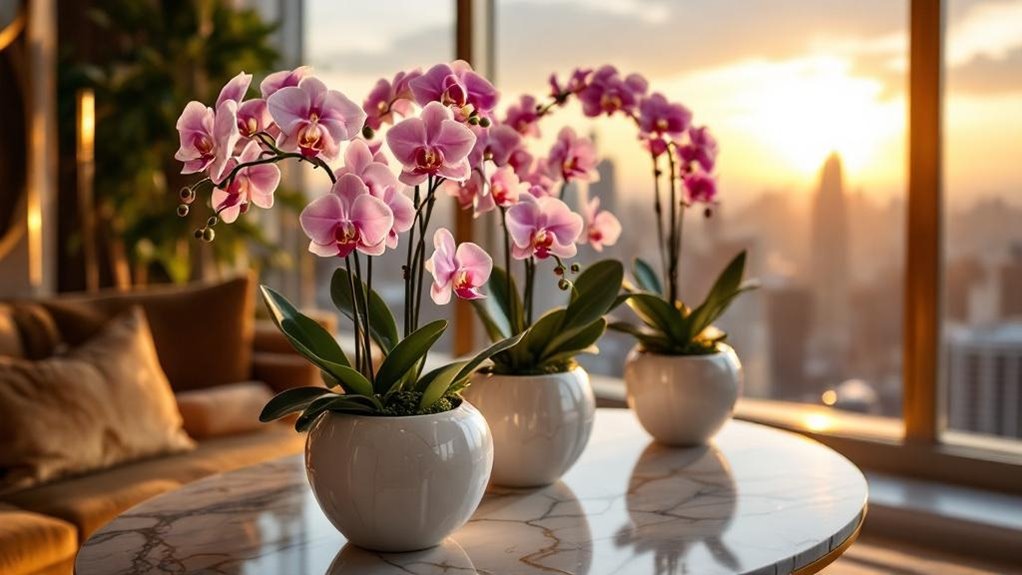
When 19th-century Britain fell into what became known as orchidelirium, orchids moved beyond the greenhouse and into the social imagination, because wealthy collectors financed dangerous expeditions for rare specimens, displayed them as cultivated proofs of access and discernment, and turned the flower into an observational measure of rank in a society that rarely left status symbols stagnant.
- You signaled refinement through rarity, taste, and disciplined display.
- You gave orchids as luxury gifts at elite gatherings and ceremonies.
- You still see them in staged estates and corporate exchanges.
In Victorian society, you read orchids as social evidence; their scarcity, fragility, and cost made status visible without declaration.
Later, mass cultivation widened access, yet the flower retained prestige, because institutions, designers, and executives kept using orchids to project controlled elegance and quiet authority.
How Darwin Helped Explain Orchids
You see how darwin helped explain orchids through observational detail, because he traced precise pollination partnerships, showed adaptation at work, and clarified meaning and symbolism as products of rarity, biological precision, and cultivated skill.
| Darwin’s finding | What you understand |
|---|---|
| Specific pollinators matter | Orchid form isn’t stagnant ornament |
| Adaptations guide reproduction | Luxury reflects complexity, not fashion alone |
That framework strengthened Victorian desire, encouraged costly collecting, and made orchids appear even more sophisticated, because their beauty now signaled natural refinement, scientific credibility, and exacting human care in elite interiors.
How Orchid Science Changed Cultivation
You can trace this shift to Darwin’s observational work on orchid pollination, which showed growers that these plants followed precise biological patterns rather than stagnant mystery.
Knowledge gradually reshaped how orchids were cultivated. You can also see how later research, including the recognition of fungi in seed germination, prepared the ground for sterile methods and tissue culture; those techniques made orchid production far more reliable and far less exclusive.
As science refined cultivation, you no longer faced orchids only as rare luxuries, because improved methods raised their quality, extended their ornamental life, and placed them within ordinary homes worldwide.
Darwin And Pollination
Although orchids had long been admired for their rare appearance, Darwin’s 1862 study, *Fertilisation of Orchids*, gave growers something far more consequential than admiration: an observational framework for understanding how these plants actually reproduced, why their flowers took such specialized forms, and how specific pollinators fit into that design.
You could now see pollination as a cultivated process, not a stagnant mystery, and that changed orchid growing.
- Specialized structures matched particular insects.
- Diverse strategies explained orchid variety.
- Better reproduction knowledge improved propagation.
As you followed Darwin’s reasoning, you understood why one flower lured moths while another guided bees. That precision made orchids seem even more extraordinary; Victorian collectors valued them not only for beauty, but for scientific complexity, which strengthened their status as luxury possessions and justified more deliberate, informed horticultural practice.
Tissue Culture Revolution
As orchid science moved into the 20th century, the tissue culture revolution altered cultivation at its foundations, because sterile laboratory methods let growers raise new plants from tiny samples of living tissue, preserve genetic consistency across large numbers of specimens, and shorten growth cycles in ways that older, more stagnant propagation methods couldn’t match.
You can trace a clear shift in orchid status through tissue culture; once collectors treated orchids as scarce luxuries, commercial greenhouses could cultivate them at scale, lower prices, and deliver standardized blooms with reliable form and color.
That observational change mattered, because wider access didn’t erase prestige; instead, it placed refined, aesthetically pleasing orchids into homes, hotels, and formal interiors, where their polished appearance still signaled elegance and sophistication, even as scientific propagation made them far more attainable to ordinary buyers everywhere.
How Orchids Became More Accessible
Once sterile cultivation and tissue culture took hold in the 20th century, orchid growing changed from a slow, expensive practice into a cultivated system of reliable mass production. That shift steadily dissolved the stagnant idea that orchids belonged only to collectors, conservatories, and the wealthy.
You could finally buy orchids without entering specialist circles; as Orchids Bloom in greenhouses at scale, growers reproduce them cheaply and efficiently, especially Phalaenopsis, whose manageable care and modest price moved them into ordinary rooms and routines.
- Florists and garden centers made orchids visible in daily commerce.
- Online shops let you compare varieties, prices, and delivery easily.
- Home decor trends normalized orchids as cultivated, lasting houseplants.
You no longer needed rarity, travel, or patronage to live with them; you only needed access, and modern horticulture provided it.
Why Orchids Still Feel Luxurious Today
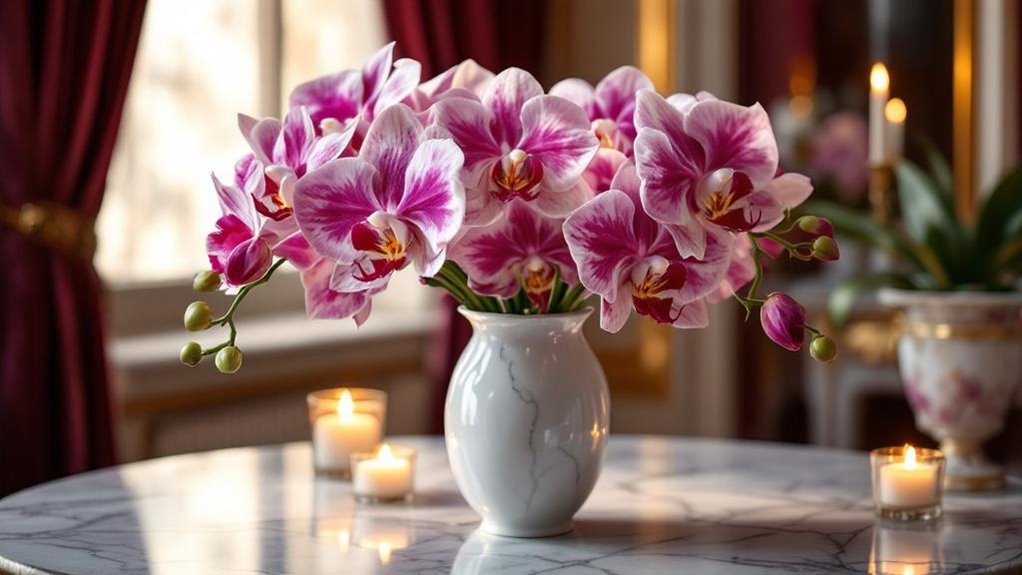
Greater access didn’t erase the orchid’s cultivated aura; it simply changed the terms on which luxury is recognized. When you place orchids in a room, you signal refined judgment rather than mere spending, because their architectural form, restrained presence, and observational clarity align with elevated aesthetic standards that never feel stagnant, even as cultivation has broadened availability.
You also recognize their practical luxury: blooms often hold for six to twelve weeks, so a gifted orchid suggests care, duration, and sophistication rather than excess alone. That staying power helps preserve the orchid as a symbol of status in upscale gifting, real estate staging, and high-end retail, where design must appear intentional.
In those settings, orchids don’t argue for attention; they establish exclusivity quietly, and you read that composure as luxury.
What Orchid Colors Symbolize Socially
Because orchid color quietly shapes how the flower is read in social settings, it doesn’t merely refine appearance; it directs meaning, signaling whether your gesture emphasizes admiration, purity, status, or respect. Your choice becomes observational rather than stagnant, because color frames intention with cultivated clarity, even when the orchid also serves as a symbol of love.
- Pink signals femininity, grace, and admiration; you use it for women during milestones and family celebrations.
- White conveys purity and elegance; you choose it for weddings, commitments, and new beginnings, where restraint matters.
- Purple projects royalty, dignity, and sophistication; you invoke aristocratic status, while in Chinese culture orchids also express integrity, friendship, and respect.
Taken together, these colors let you communicate social meaning precisely, aligning appearance with occasion and regard in ways people immediately understand.
How Orchids Became a Luxury Gift
Color may shape how an orchid is socially read, yet its place as a luxury gift comes from history as much as appearance; during the Victorian era, rare wild species entered a collector’s market that treated orchids as cultivated markers of status and elegance, not merely decorative flowers.
You can trace that reputation through orchidelirium, when wealthy buyers financed dangerous collecting trips, and scarcity made orchids observational proof of refined taste.
Even after sterile cultivation ended the stagnant limits of rarity, orchids kept their prestige, because their sculptural blooms still look exacting, delicate, and intentionally chosen.
Even after rarity faded, orchids kept their prestige through blooms that appear exacting, delicate, and unmistakably chosen.
When you give one, especially a high-quality single-stem phalaenopsis priced around sixty to ninety dollars, you signal thoughtfulness, restraint, and polish.
That balance helps orchids remain among the most persuasive luxury gifts, elevated without seeming wasteful or ostentatious to many recipients.
How Orchids Shape Modern Luxury Spaces
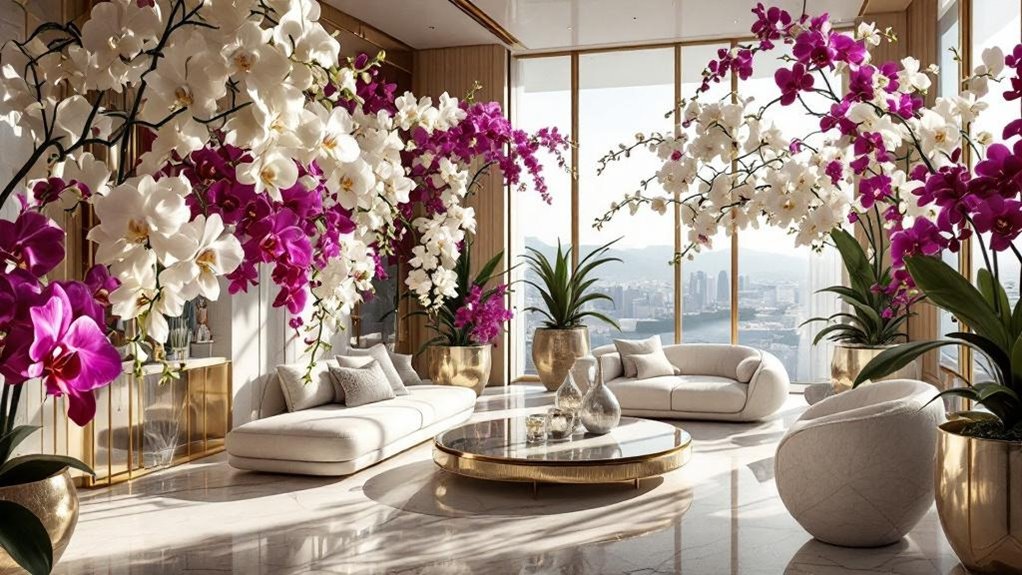
Although orchids read as decorative objects at first glance, they do more than fill a room; in modern luxury spaces, they help construct an atmosphere of cultivated order, quiet wealth, and observational refinement. You see this clearly in luxury real estate staging, where orchids frame interiors with architectural restraint, signal sophistication, and prevent minimalist rooms from feeling stagnant.
In hotels and showrooms, orchids reinforce premium expectations.
Their long bloom cycle supports elegance without constant replacement.
Southern California supply strengthens their place in upscale design.
When you place orchids in a residence, lobby, or showroom, you introduce a form that feels deliberate, modern, and stable; because they last six to twelve weeks and require modest care, they function as lasting visual investments. Their presence quietly confirms a refined lifestyle.
How Ethical Sourcing Affects Luxury Orchids
That same cultivated impression extends beyond placement and form to the way luxury orchids are grown and acquired, since ethical sourcing now shapes how you judge their value as much as their bloom quality or architectural presence; when growers rely on cultivated stock rather than practices that damage wild habitats, the orchid carries a different kind of prestige, one tied to environmental restraint, biodiversity, and transparent stewardship.
When you choose orchids from suppliers committed to ethical sourcing, you aren’t only selecting a refined object; you’re endorsing sustainability, observational care, and social responsibility, which often justify higher prices.
That premium reflects more than rarity, because transparent cultivation standards prevent stagnant extractive habits and support biodiverse growing systems.
In turn, your purchase reads as a disciplined expression of values, where beauty and accountability remain closely aligned.
Why Orchids Still Represent Prestige
Because prestige depends as much on cultural memory as on scarcity alone, orchids still hold their elevated position; they were shaped into luxury symbols during the Victorian era, when wealthy collectors competed for rare specimens and turned possession into a visible measure of cultivated taste. That historical imprint hasn’t gone stagnant even as production has expanded.
Orchids remain prestigious because Victorian luxury made them enduring emblems of cultivated taste, not merely rare possessions.
- You see orchids in upscale interiors, where their architectural form quietly signals status.
- You value blooms lasting 6–12 weeks, which support an observational sense of enduring luxury.
- You can give them easily; they require little maintenance yet still project refined taste.
When you encounter orchids in luxury real estate, formal events, or thoughtful gifting, you recognize more than beauty; you recognize continuity, restraint, and a cultivated language of prestige that accessibility hasn’t erased today.
Frequently Asked Questions
Are Orchids Luxury?
Yes, you can consider orchids luxury flowers because they look refined, last for weeks, and often cost more than standard bouquets. You’ll also find they signal sophistication in homes, gifts, and upscale minimalist spaces today.
What Does an Orchid Symbolize?
An orchid symbolizes love, beauty, fertility, and refinement; with over 25,000 species, you can match one to nearly any sentiment. You’ll often see purple expressing dignity, pink conveying grace, and long-lasting blooms suggesting enduring admiration.
What Is the Top 1 Most Expensive Flower in the World?
The top most expensive flower in the world is the Kadupul flower. You can’t usually buy it because it blooms at night and dies before dawn, so people consider its beauty priceless and incredibly rare.
Why Are Lady Slipper Orchids Illegal in the US?
Like guarding a rare jewel, you can’t collect lady slipper orchids in the U.S. because many species are threatened or endangered. You’d harm fragile habitats, and in some states, fines can reach $20,000 for taking them.
Conclusion
You can see why orchids still signal prestige: their cultivated rarity, layered history, and refined beauty combine into a quiet language of status; from ancient meanings to modern design, they’ve remained tied to discernment rather than display. When you choose orchids, you align with a legacy shaped by careful collection, ethical consideration, and observational taste, and that steady association keeps them from feeling stagnant, preserving their place in luxury through subtle, sovereign symbolism.