
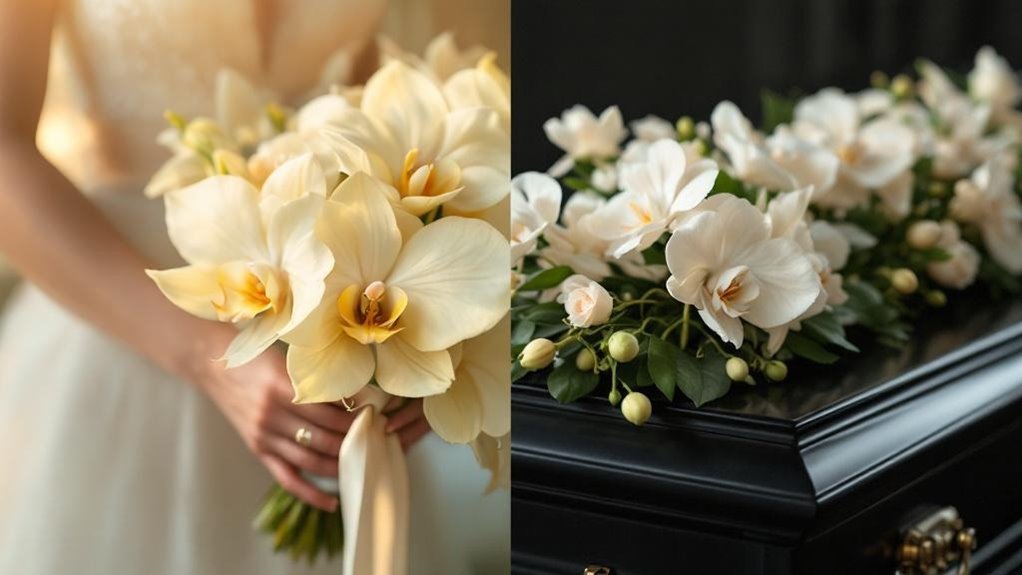
You can use orchids for both weddings and funerals, but their meaning shifts with ceremony, color, and local custom; at weddings, orchids usually signal affection, elegance, and cultivated purity, while at funerals they express remembrance, condolence, and composed respect. White orchids are the clearest example, since they can suggest vows in one setting and peaceful consolation in another. Arrangement, variety, and cultural practice keep the message from turning observational, inappropriate, or stagnant as occasion changes.
Key Takeaways
- Orchids suit both weddings and funerals, but meaning changes with ceremony, audience, color, and presentation.
- In weddings, orchids usually symbolize love, elegance, grace, blessing, and refined beauty.
- In funerals, orchids more often express remembrance, condolence, reverence, and peaceful consolation.
- White orchids signal purity at weddings and peaceful soul-remembrance at funerals, making them the most adaptable choice.
- Cultural and regional customs matter; when unsure, consult a florist or the family to avoid sending the wrong message.
How Orchid Meaning Changes by Occasion
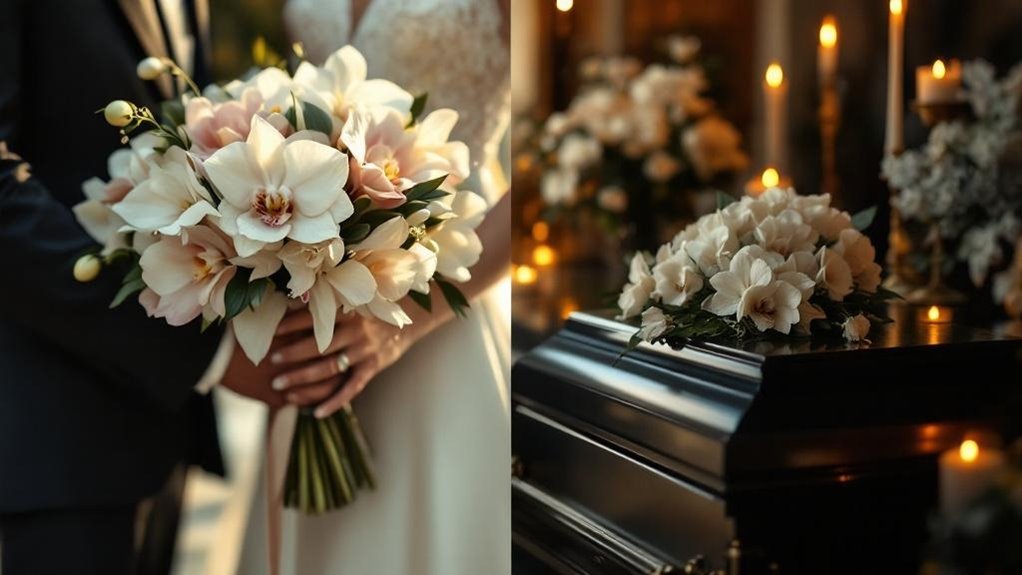
Although orchids retain their cultivated elegance across settings, their meaning shifts with the occasion, because people read the same bloom through different emotional and ceremonial needs; at weddings, white orchids usually signal purity, new beginnings, and a refined innocence, while at funerals that same white flower points toward purity of the soul and respectful remembrance.
You see Orchids change through context rather than appearance: pink orchids move from affectionate grace to everlasting love, yellow orchids shift from joy and friendship to blessings and memories, and purple orchids turn from distinction to reverence.
Wedding orchids emphasize beginnings and social optimism, while funeral orchids carry observational weight, marking honor without becoming stagnant. Potted orchids deepen this contrast, since you read them as continuing growth in one setting and as a living tribute in another, disciplined by ritual. White orchids are often chosen for memorial arrangements because their serene appearance conveys peace, purity, and enduring remembrance.
What Orchids Mean at Weddings
At weddings, orchids carry their most observational meaning through the language of beginnings, because you don’t read them as static ornaments but as cultivated signs of purity, affection, and poised intention; white orchids, especially, remain a standard choice for bridal bouquets and ceremony arrangements because they present innocence and fresh union without looking sentimental or stagnant.
If you choose pink orchids, you introduce grace, femininity, and durable tenderness, so they suit attendants’ flowers and restrained romantic accents.
Phalaenopsis supports weddings well because its blooms hold for weeks, which gives your designs continuity across rehearsals, ceremonies, and receptions.
You may also select rarer orchids to suggest luxury and dignified style without excess.
As gifts, potted orchids extend the symbolism beyond the day itself; their long bloom period makes lasting love visible, cultivated, and quietly memorable.
White orchids are especially valued for purity and new beginnings, which is why they fit wedding celebrations so naturally.
What Orchids Mean at Funerals
Remembrance shapes the funeral meaning of orchids through restraint rather than display, because these flowers don’t press emotion forward; they present purity, enduring affection, and composed respect in a form that feels cultivated instead of stagnant.
When you choose funeral orchids, you signal an observational kind of care: white orchids suggest purity of the soul and innocence after death, while pink forms imply enduring affection and gentle remembrance. Because phalaenopsis and Dendrobium hold their blooms, they serve as a lasting tribute, one that doesn’t fade quickly in memorial spaces or sympathy arrangements.
You’ll also see orchids and lilies paired deliberately, since the orchid carries eternal love and the lily adds restored innocence; together, they create a balanced language of grief that offers calm presence and steady comfort to mourning families.
Phalaenopsis orchids are especially valued for their elegant, poised presence in memorial arrangements.
What White Orchid Meaning Signals
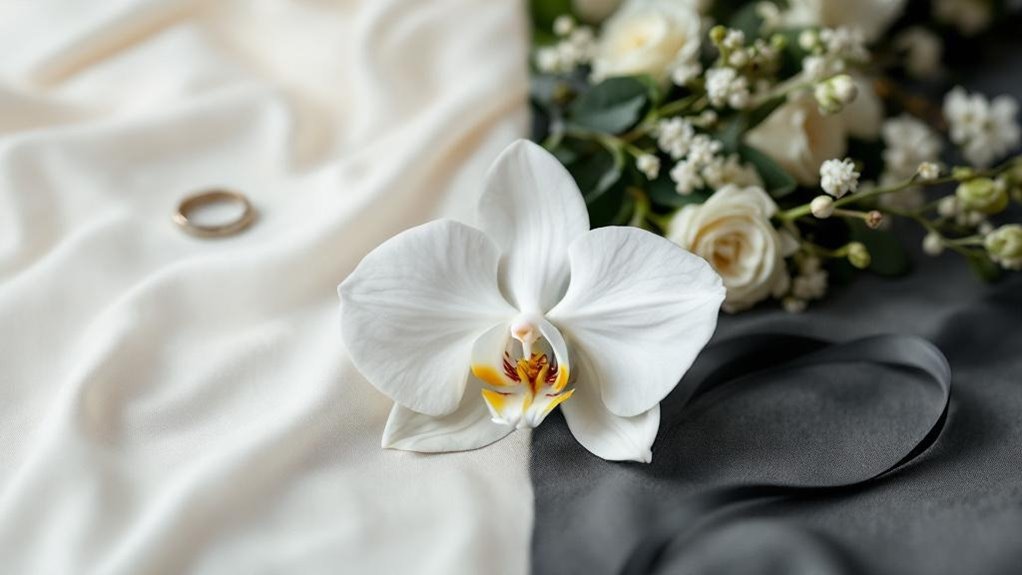
A white orchid signals purity first, yet its meaning doesn’t remain fixed, because the same cultivated restraint that suits a wedding’s promise of innocence and fresh beginnings also suits a funeral’s language of serene remembrance and spiritual peace.
When you choose white orchids, you invoke ceremonial symbolism that stays observational rather than stagnant; in bridal bouquets, they emphasize purity, innocence, and a refined beginning, while as a funeral tribute at a memorial service, they suggest consolation, respect, and the soul’s quiet clarity.
White phalaenopsis deepen that message, because their lasting blooms imply enduring love without forcing sentiment.
Your reading should also account for cultural context, since Western weddings often prize their elegance, whereas some Asian mourning traditions read the same restrained whiteness as reverence, decorum, and a visible sign of respect.
White orchids also carry new beginnings in Western wedding traditions, which helps explain why they can feel equally appropriate in ceremonies of farewell and renewal.
What Orchid Colors Mean at Each Ceremony
Color broadens the reading that white orchids begin, because each hue carries a cultivated meaning that shifts with ceremony without becoming stagnant; in weddings, orchid colors usually frame the couple’s public language of feeling and intention, while in funerals, those same colors turn observational and memorial, shaping how grief, respect, and continuity are expressed.
Orchid color extends white’s first meaning, letting ceremony recast feeling into vows, remembrance, and the public shape of love.
- White orchids in wedding orchids emphasize purity and new beginnings; in funeral orchids, they suggest innocence and peaceful reverence.
- Pink orchids signal grace and affection at weddings, then lasting love and remembrance at funerals.
- Yellow orchids express friendship, joy, and fortune in marriage rites; later, they imply blessings and durable memory.
- Purple orchids and red orchids mark dignity or passion in weddings; in funerals, they convey honor, resurrection, intense love, and departure.
- Purple orchids also carry royal dignity and quiet admiration, making them especially fitting when a ceremony calls for prestige, restraint, and lasting esteem.
When Are Orchids Appropriate or Inappropriate?
In practice, orchids are appropriate in both weddings and funerals because their cultivated meanings remain clear without becoming stagnant, yet their suitability depends on how closely the flower’s color, form, and presentation match the ceremony’s expectations; at weddings, white and pink orchids fit easily into bouquets and decor because they project purity, innocence, grace, and enduring love, while at funerals, especially in white, they support a more observational language of peaceful remembrance and purity of the soul, and potted orchids can extend that tribute beyond the service itself.
Still, you should treat color symbolism carefully; white orchids align with funeral etiquette and many funeral traditions, while purple, yellow, or red Orchids can seem discordant at conservative services. If uncertain, pair them with white lilies or roses, or consult the family.
How Culture Changes Orchid Meaning
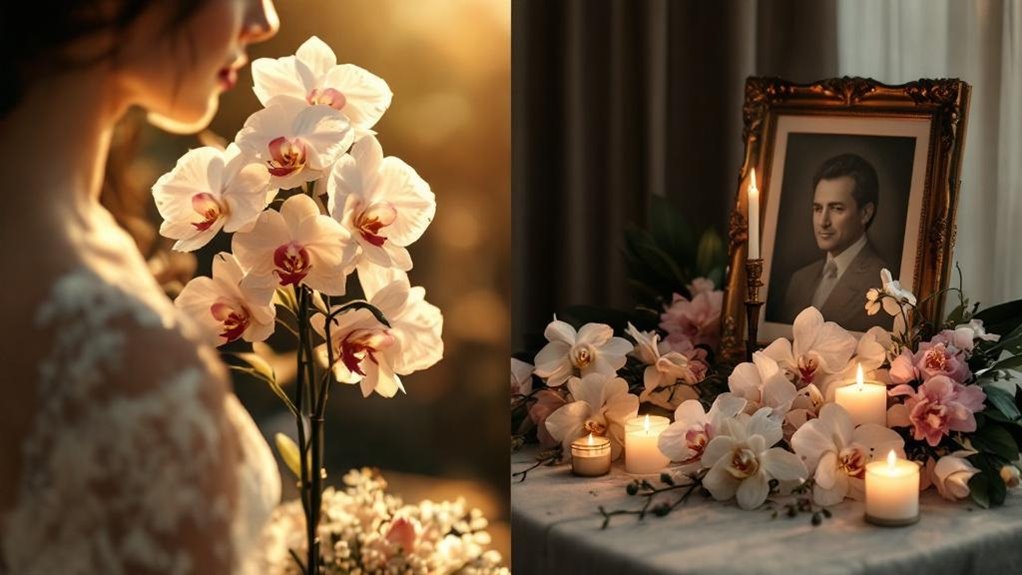
Because orchid symbolism never operates apart from custom, you can’t treat a bloom’s meaning as fixed across weddings and funerals; the same white orchid that signals purity and elegant new beginnings in many Western wedding settings may, in several Asian funerary traditions, mark innocence and the soul’s peaceful passage, which means context, ritual, and audience govern interpretation more than the flower itself.
- With white orchids, you should read cultural meanings first.
- Purple orchids may suggest dignity in wedding orchids, yet funeral orchids elsewhere.
- Yellow orchids can celebrate friendship, but color significance shifts under ritual traditions.
- Regional customs, religion, and history keep observational choices cultivated, not stagnant.
If you ignore local practice, you risk sending condolence rather than blessing, so florists consult regional customs before selecting funeral orchids or wedding orchids.
Frequently Asked Questions
What Does the Orchid Mean at a Funeral?
At a funeral, you’d use orchids to express purity, lasting love, remembrance, and a peaceful passage. You can also see their long-lasting blooms as symbols of immortality, enduring care, and a refined, elegant tribute.
What Do Orchids Symbolize in a Wedding?
Delicate yet enduring, orchids symbolize purity, love, elegance, and prosperity in a wedding. You can use white and pink blooms to express admiration and everlasting affection, while yellow orchids celebrate friendship, joy, and new beginnings together.
What Is the Number One Funeral Flower?
You’ll usually find lilies ranked as the number one funeral flower, especially white lilies, because they symbolize peace and restored innocence. Still, you should expect white roses or chrysanthemums to lead in some cultures.
What Flowers Not to Bring to a Funeral?
You shouldn’t bring bright celebratory flowers, strongly scented blooms, high-maintenance potted plants, culturally inappropriate flowers, or flashy novelty arrangements to a funeral. Instead, choose subdued, respectful options that won’t overwhelm mourners or conflict with customs.
Conclusion
When you choose orchids, you aren’t only selecting a flower; you’re signaling context, intention, and cultivated awareness, because the same bloom can bless a marriage with grace or mark a loss with restrained respect. White orchids, in particular, walk a fine line, carrying purity, remembrance, and dignity, while other colors shift meaning further. If you read occasion, culture, and tone carefully, you’ll avoid stagnant symbolism and guarantee your gesture lands exactly where the shoe fits.