
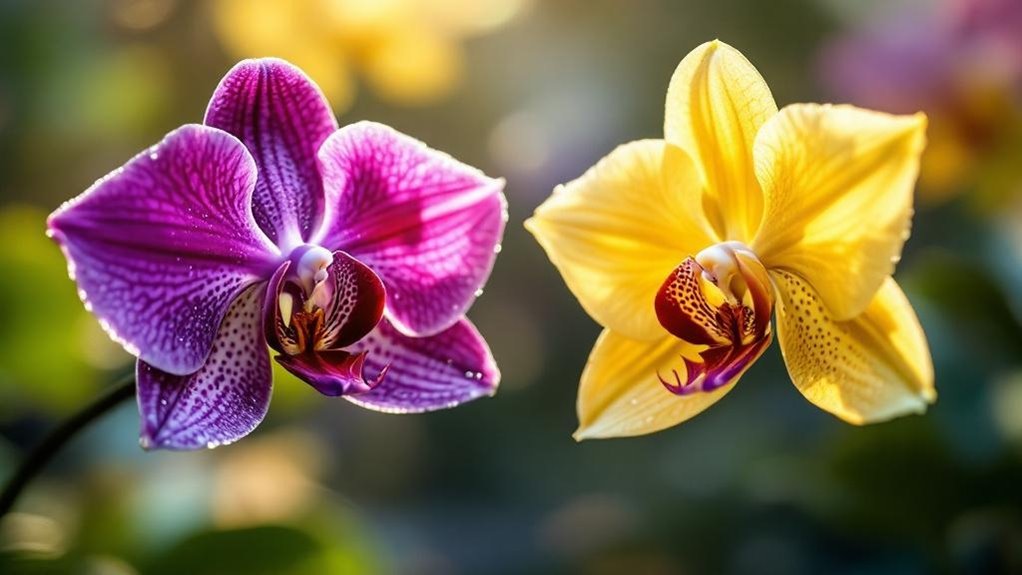
You choose purple orchids when you want cultivated admiration, dignity, and formal respect, because they carry deeper esteem and can read slightly romantic in some contexts; you choose yellow orchids when you want friendship, encouragement, and observational goodwill, since they signal joy and nonromantic support more clearly. If your message needs both warmth and respect, combine them, but check cultural symbolism first, because meanings can shift. The distinctions become clearer when you consider occasion, setting, and intent.
- Key Takeaways
- Purple vs Yellow Orchids at a Glance
- What Do Purple Orchids Mean?
- What Do Yellow Orchids Mean?
- Purple or Yellow Orchids for Each Occasion
- When to Give Purple Orchids
- When to Give Yellow Orchids
- Are Purple or Yellow Orchids More Romantic?
- When Purple Orchids Send the Wrong Message
- When Yellow Orchids Are the Better Fit
- Purple and Yellow Orchids Across Cultures
- How to Choose Between Purple and Yellow Orchids
- Can You Mix Purple and Yellow Orchids?
- Purple vs Yellow Orchids for Home Decor
- Frequently Asked Questions
- Conclusion
Key Takeaways
- Purple orchids signal admiration, dignity, and refined respect, sometimes reading more intimate or formal than yellow.
- Yellow orchids represent friendship, joy, encouragement, and clearly nonromantic support for everyday congratulations or comfort.
- Choose purple for mentors, milestones, promotions, retirements, and ceremonies where visible esteem matters.
- Choose yellow for friends, colleagues, housewarmings, new babies, recovery visits, and good-luck wishes.
- Combining purple and yellow expresses both admiration and friendship, but cultural meanings should be checked before gifting.
Purple vs Yellow Orchids at a Glance
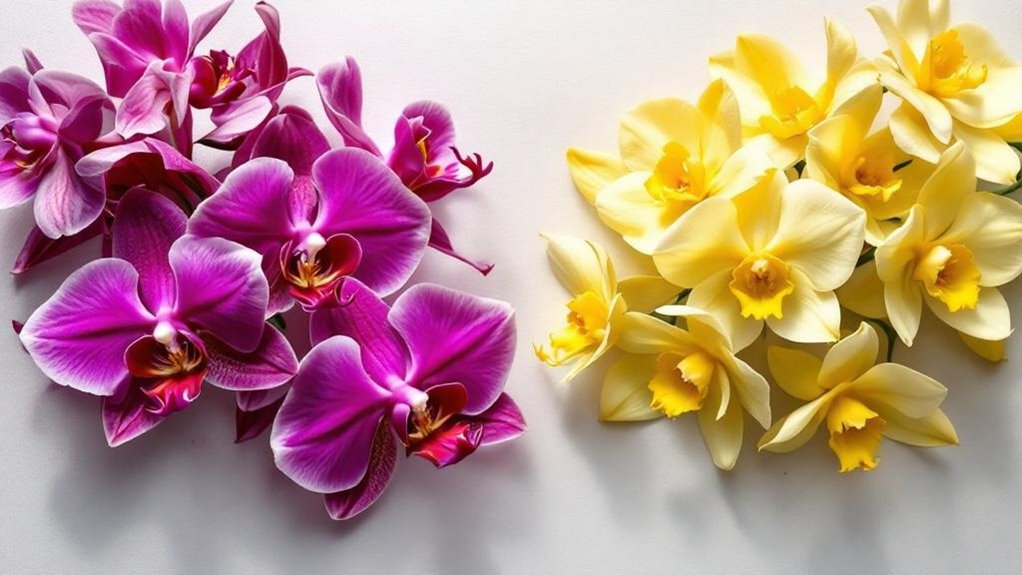
While both colors are beautiful, they don’t say the same thing; purple orchids traditionally signal royalty, admiration, respect, and dignity, so they suit moments when you want to honor a mentor, acknowledge an elder, or mark a cultivated achievement with clear esteem.
Purple orchids convey royalty, respect, and admiration, making them ideal for honoring mentors, elders, or meaningful achievement.
By contrast, Yellow Orchids communicate friendship and joy, along with new beginnings, so you choose them for promotions, supportive gestures, or observational acts of encouragement that keep relationships from feeling stagnant.
In practical terms, Purple Orchids send deeper esteem, while Yellow Orchids express warmth and casual affection; together, they create a balanced message that feels respectful yet approachable.
Because orchids symbolize different ideas across cultures, you should also consider the recipient’s background, since purple may read as regal in Western settings, while yellow can suggest good fortune elsewhere.
Pink orchids, for example, often convey hidden love and tender admiration without needing a direct declaration.
What Do Purple Orchids Mean?
When you choose purple orchids, you present a cultivated message of royalty and respect, signaling that your admiration rises above the ordinary and honors someone with clear dignity.
You also suggest long-lasting esteem rather than stagnant courtesy, which is why these blooms suit mentors, elders, and milestone anniversaries where reverence matters.
In both observational tradition and modern gifting, their rich hue carries sophistication, so your gesture feels formal, thoughtful, and quietly elevated.
Their royal symbolism also makes them a refined choice for honoring achievement, maturity, and enduring admiration.
Royalty And Respect
Dignity sits at the center of purple orchid meaning, because this cultivated color has long signaled royalty and regality, a symbolism shaped in part by the historical rarity of purple dye and its close association with imperial status; for that reason, purple orchids are often given to express respect, admiration, and esteem, especially in settings where ordinary gratitude would feel stagnant or insufficient.
When you choose Purple Orchids, you signal royalty without excess, and unlike true blue orchids, whose effect can feel more novelty-driven, these deeper tones carry observational weight in formal arrangements, promotions, ceremonial displays, and honorary milestones. You can present them to mentors, elders, or leaders when you want your respect to appear measured and enduring; they also mark a twenty-eighth anniversary, where long-term appreciation, spiritual wisdom, and cultivated luxury remain clearly implied.
Purple orchids are also valued for their refined admiration in milestone celebrations and formal occasions.
Admiration And Dignity
Because purple orchids carry a cultivated sense of rarity and order, they express admiration in a form that remains composed, formal, and distinctly respectful; you give them not to dramatize feeling, but to acknowledge achievement, wisdom, or leadership with a level of esteem that doesn’t turn sentimental or stagnant.
When you choose Purple Orchids, you signal royalty in the symbolic sense, not privilege alone but dignity, honor, and elevated regard; their deep hue lets you communicate admiration and respect without implying romance, which makes them fitting for mentors, elders, professional recognitions, and milestone occasions such as a 28th anniversary.
You also use them to raise an event’s tone, since their refined presence supports an observational message: you’ve noticed lasting excellence, and you intend to honor it with disciplined, visible esteem. Purple orchids are also tied to cultivated rarity, which is part of why they continue to feel distinguished and worthy of formal admiration.
What Do Yellow Orchids Mean?
When you choose yellow orchids, you signal friendship and joy with unusual clarity, and you present a cultivated gesture that suits celebrations, gratitude, and other nonromantic occasions without becoming stagnant or ambiguous.
You also invoke an observational tradition of good fortune symbolism, especially in Chinese cultural contexts, where yellow orchids convey happiness and well-wishes with a calm, affirmative meaning. Their bright color reinforces that message in practical terms, since it can lift a room’s mood and help you mark new beginnings with quiet confidence.
In many traditions, including Asian gifting traditions, yellow orchids are also chosen to express encouragement, prosperity, and lasting goodwill during milestones and life transitions.
Friendship And Joy
Often, yellow orchids symbolize friendship, joy, and new beginnings, so you’ll see them given for promotions, housewarmings, and the arrival of a new child; their cultivated color carries an observational sense of warmth and positivity, which makes them well suited to spaces that might otherwise feel visually stagnant, and their meaning stays comfortably non-romantic, emphasizing appreciation and goodwill rather than love.
When you give Yellow orchids, you signal Friendship without ambiguity, and you offer joy in a form that feels polished rather than sentimental; they suit friends, colleagues, and acquaintances because they acknowledge connection without implying romance.
You might also choose them to brighten a room or steady someone’s mood, since their bright hue is widely read as uplifting.
Because color meanings shift across cultures, you should still confirm local custom before gifting them.
Good Fortune Symbolism
Yellow orchids also carry a clear association with good fortune, and that meaning is especially strong in East Asian contexts, where ancient Chinese tradition links their cultivated golden hue with happiness, prosperity, and favorable outcomes; beyond expressing friendship and joy, they’re given to wish someone luck at the start of a business venture, a move, or another new phase, and their bright color is widely understood to attract positive energy while keeping a home or workplace from feeling visually stagnant.
When you choose Yellow orchids, you emphasize cheerful well-being rather than purity or royalty, because this orchid colour signals material and social promise in observational cultural symbolism; still, you should weigh regional custom, since good fortune meanings don’t translate uniformly, and your gift carries the strongest resonance where those traditions remain culturally active today.
Purple or Yellow Orchids for Each Occasion
A simple way to choose between purple and yellow orchids is to match the color’s cultivated meaning to the tone of the occasion, because purple carries regality, respect, and deep admiration, while yellow signals friendship, joy, and new beginnings without feeling stagnant or overly formal.
| Occasion | Best choice | Why |
|---|---|---|
| Anniversary, award | Purple Orchids | Signals admiration, esteem |
| Promotion, mentor thanks | Purple Orchids | Feels formal, respectful |
| Birthday, housewarming | Yellow orchids | Conveys friendship, warmth |
| New parents, small setback | Yellow orchids | Suggests joy, renewal |
If you want balance, combine mostly purple blooms with yellow accents; that arrangement preserves dignity while softening formality. You should also consider cultural context, since recipients may read purple as luxury and yellow as happiness or good fortune.
When to Give Purple Orchids
Purple orchids suit moments when you want your gift to register as cultivated respect rather than casual warmth, which is why they work especially well for mentors, professors, retirees, and anyone reaching a major professional milestone; their color has long been associated with royalty, admiration, and dignity, so the gesture feels measured and observant instead of stagnant or merely decorative.
You should choose Purple Orchids for formal anniversaries, especially a 28th, for graduations, retirements, and award ceremonies, or whenever you need to mark achievement with visible respect rather than sentimentality. Their saturated hue carries admiration that feels lasting, not casual, and that distinction matters in professional or ceremonial settings. Present them in a simple container with minimal foliage, so sophistication remains central; if you’re gifting across cultures, verify local symbolism first.
When to Give Yellow Orchids
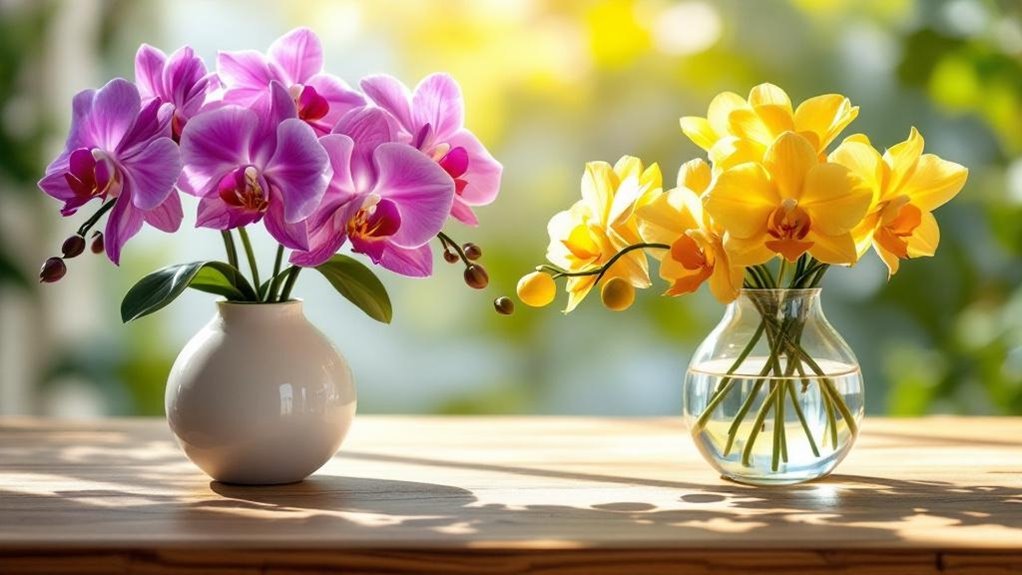
You give yellow orchids when you want to honor friendship and mark joyful life events, since their cultivated color traditionally conveys joy, new beginnings, and a quietly observational sense of goodwill.
You can choose them for promotions, housewarmings, or the birth of a baby, and you can also send them to brighten a hospital room or lift someone from a stagnant mood, especially when several stems create a fuller, more reassuring display.
You should still consider cultural context before gifting them, because while yellow orchids can express happiness and prosperity, in some settings the color may not suit solemn occasions.
Celebrating Friendships
Often, yellow orchids mark friendship with unusual precision, since their cultivated color conveys joy, appreciation, and new beginnings without drifting into romantic suggestion; they suit a friend’s promotion, graduation, or move to a new home, and they also work well in mixed-company settings, such as office celebrations or group congratulations, where a more observational choice avoids ambiguity and keeps the gesture clear.
Yellow orchids also symbolise friendship across distance; when you send them, orchids convey steady support, good fortune, and quiet happiness, including the Chinese association with prosperity and well-being.
You can also use them in celebrating friendships after a minor setback or during recovery, because their bright tone lifts stagnant spirits without overstating sentiment; with bright indirect light, weekly watering, and good drainage, they remain a durable reminder.
Joyful Life Events
Generally, yellow orchids fit joyful life events with unusual precision, because their cultivated color signals friendship, joy, appreciation, and new life at once, which makes them appropriate for births, graduations, promotions, new jobs, and other shifts where recognition should remain clear, generous, and free of romantic implication; they work especially well when the occasion calls for a gift that feels polished rather than intimate, whether you’re marking a baby shower, a colleague’s advancement, or a business opening.
- You send Yellow orchids for births, showers, and graduations.
- You place them on desks for promotions or openings.
- You choose them for housewarmings, Lunar New Year, and fortune.
- You ship blooming stems far away; care prevents stagnant decline.
Their bright presence stays observational, and your message remains supportive, never romantic.
Are Purple or Yellow Orchids More Romantic?
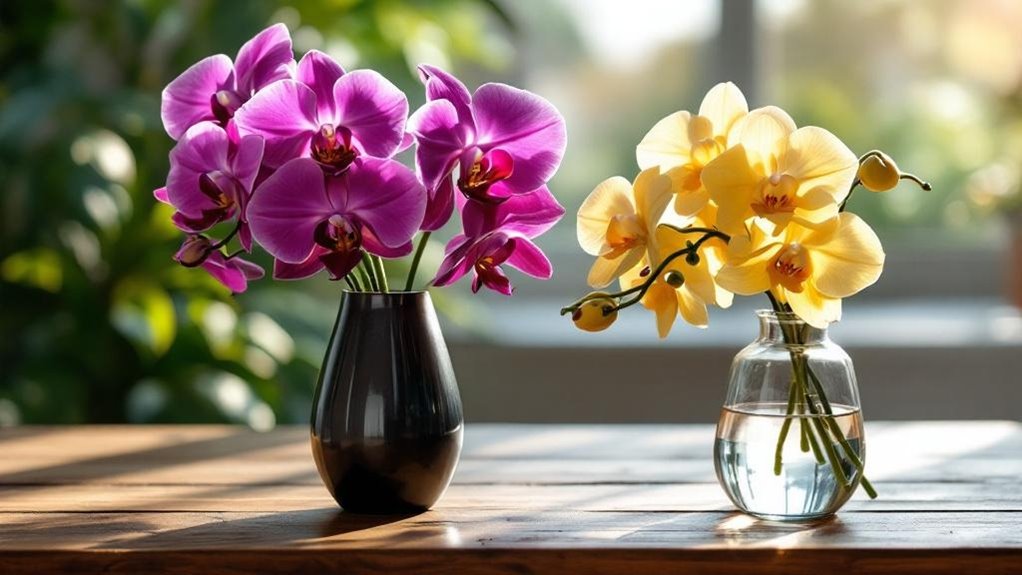
While both colors can carry positive feeling, purple orchids read as more romantic in most settings because they symbolize admiration, respect, and a cultivated kind of devotion, which aligns more closely with intimate love than yellow’s brighter, more observational message of friendship, joy, and new beginnings; for anniversaries, proposals, or gifts meant to suggest lasting commitment rather than stagnant affection or casual goodwill, purple usually communicates the stronger romantic intent.
If you want Purple Orchids to signal romantic love, you’ll usually be understood clearly; Yellow orchids, by contrast, tend to emphasize friendship, congratulations, or emotional support.
You should still consider cultural context, since purple can suggest dignity or mourning, and yellow can imply good fortune. If you want romance with brightness, combine purple with pink or red accents to preserve intimacy.
When Purple Orchids Send the Wrong Message
Because purple orchids carry longstanding associations with regality, respect, and cultivated admiration, they can send the wrong message when your intent is casual friendship, especially in a new relationship or a professional setting where emotional signals are already easy to overread; a recipient may read them not as a light, observational gesture of goodwill but as a sign of deep esteem, romantic interest, or formal recognition.
- You may appear overly reverent, not simply friendly.
- In workplaces, Purple Orchids can feel formal, stagnant, or ceremonial.
- Across cultures, purple may suggest status, mourning, or solemn admiration.
- Yellow Orchids clarify friendship, while purple can blur intent.
If you give Purple Orchids to someone new, you risk social awkwardness, especially when admiration isn’t your message and the occasion doesn’t call for visible honor or uncommon esteem.
When Yellow Orchids Are the Better Fit
In many everyday situations, yellow orchids are the better fit, since they signal friendship, joy, and new life with far less risk of being read as romantic, hierarchical, or ceremonial, and they let you mark a promotion, graduation, or housewarming in a way that feels generous yet socially clear.
You should choose Yellow orchids when you want appreciation to remain platonic, observational, and cultivated rather than intense; they brighten a room, lift a stagnant mood, and suit get-well wishes or a friend who needs reassurance.
They also work well for baby showers, friendship anniversaries, and informal gatherings, where warmth matters more than prestige. When you want to express hope, happiness, and good fortune, yellow carries that message cleanly, while purple can suggest admiration, status, or formality you don’t intend for recipients.
Purple and Yellow Orchids Across Cultures
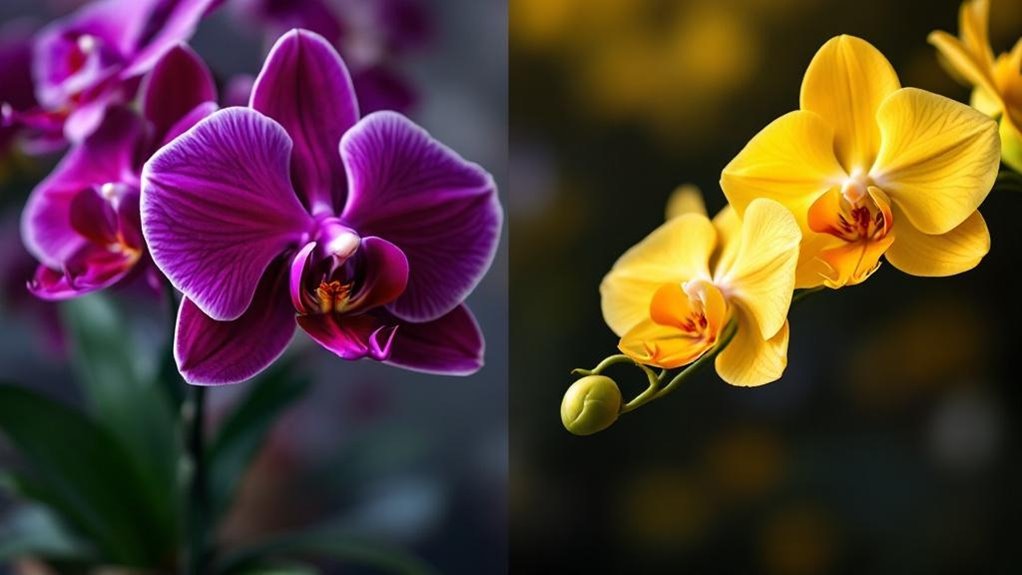
Those same distinctions become more precise when you place purple and yellow orchids in a cultural frame, since color meaning rarely stays purely personal and often carries inherited social signals; across many Western traditions, purple orchids stand for royalty, respect, and admiration, so people often give them to mentors, elders, or spouses on milestone anniversaries, whereas yellow orchids point more clearly to friendship, joy, and new life, which makes them a cultivated choice for friends, new parents, or informal celebrations where the message should remain bright rather than ceremonious.
In cultural symbolism, purple orchids honor esteem and ceremony, while yellow orchids carry joy, friendship, and bright beginnings.
- In Victorian parlors, Purple Orchids signaled luxury and observational esteem.
- Yellow Orchids brightened rooms, resisting stagnant formality through sociability.
- In East Asia, purple often marks dignity and ceremonial respect.
- In Chinese settings, yellow can suggest happiness, fortune, and gentle admiration.
How to Choose Between Purple and Yellow Orchids
When you narrow it down, the choice between purple and yellow orchids should follow the message you want the flowers to carry; purple suits admiration, respect, and a more regal form of appreciation, so it’s a cultivated choice for mentors, anniversaries, and milestone achievements, while yellow conveys friendship, joy, and steady positivity, which makes it better for promotions, new parents, get-well gestures, or simply lifting a friend’s home out of a stagnant mood.
Purple Orchids work best when you want to convey admiration in a formal, observational way, especially where dignity matters. Yellow orchids express friendship more naturally, so they suit casual celebrations and supportive visits.
You should also weigh cultural context; purple often suggests esteem, while yellow may imply good fortune in Chinese traditions, yet jealousy elsewhere, depending on setting and audience.
Can You Mix Purple and Yellow Orchids?
Pairing purple and yellow orchids can work exceptionally well, because the combination carries a balanced message of admiration, respect, and dignity alongside friendship, joy, and new beginnings; together, they let you express esteem without becoming overly formal, and warmth without drifting into something casual or observationally thin.
- You present Purple Orchids and Yellow Orchids when you want one cultivated gesture to say admiration and friendship at once.
- You gain strong contrast, since each orchid color sharpens the others preventing the arrangement from looking stagnant.
- You can use the mix for congratulations, mentorship, or honoring a friend you deeply respect.
- You should still assess context; some formal or mourning settings favor single-color symbolism, and matched care needs help both plants thrive together long-term.
Purple vs Yellow Orchids for Home Decor
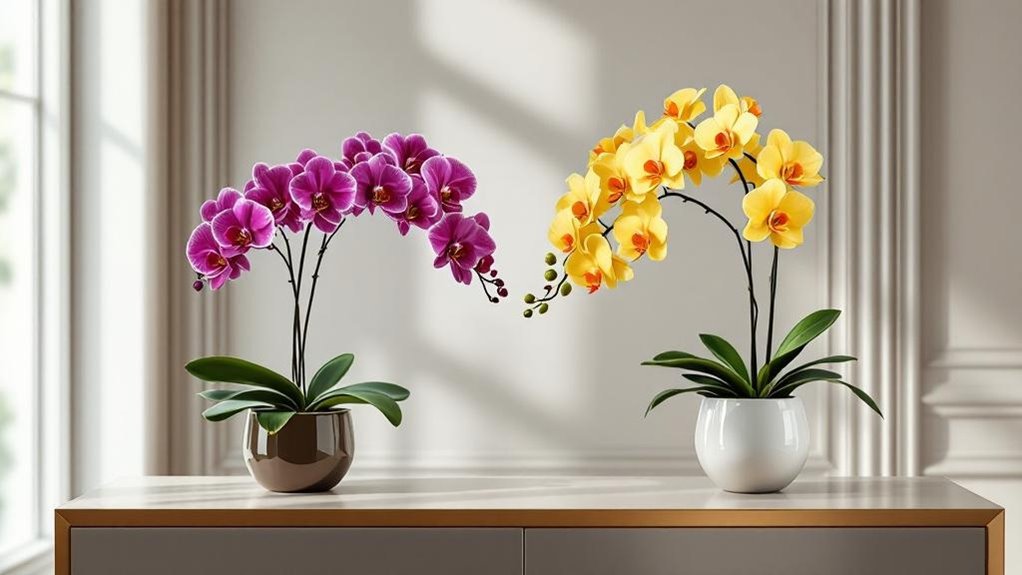
Balance matters most in home decor, and purple and yellow orchids shape a room in distinctly different ways; purple orchids carry regality, respect, and admiration, so they work best as cultivated focal accents in formal living rooms or home offices, where a single bloom on a white mantel, console, or desk can create strong visual contrast without making the space feel crowded or stagnant, while yellow orchids project friendship, joy, and positivity, which makes them better suited to kitchens, entryways, and sunrooms, where their brighter color softens the atmosphere and helps communal areas feel more open and inviting.
Purple Orchids convey a sense of poised elegance, while Yellow orchids add a touch of warmth in clustered displays; keep both in bright, indirect light, though yellow types accept slightly more sun, and use neutral pots.
Frequently Asked Questions
What Color Orchid Represents Friendship?
Yellow orchids represent friendship. You can give them to celebrate joy, encourage a friend, or mark new beginnings. They convey warmth and platonic affection, so you’ll send a cheerful, caring message without romantic undertones.
What Does Yellow and Purple Orchids Mean?
Yellow and purple orchids mean you’re expressing both cheerful friendship and deep admiration. You combine yellow’s joy, warmth, and new beginnings with purple’s respect, dignity, and esteem, so your gift feels uplifting, honoring, and thoughtfully balanced.
Do Yellow Flowers Mean Friendship?
Yes—you can picture yellow flowers as bright bridges between people, and that theory generally holds true: they usually symbolize friendship, joy, and support. You’d give them for congratulations, encouragement, or cheerful, platonic affection in most settings.
What Does Gifting Someone an Orchid Mean?
Giving someone an orchid means you’re showing admiration, refinement, and thoughtful affection. You also suggest lasting appreciation because orchids endure. If you choose color carefully, you can tailor your message toward respect, friendship, congratulations, or encouragement.
Conclusion
When you choose between purple and yellow orchids, you’re deciding whether your message should lean toward admiration or friendship; in one observational study of gift preferences, color shaped first impressions within seconds, much as cultivated light determines whether an orchid thrives or turns stagnant. If you want esteem, depth, or ceremony, choose purple; if you want warmth, optimism, or easy affection, choose yellow. If your intent holds both, you can combine them without weakening either meaning.