
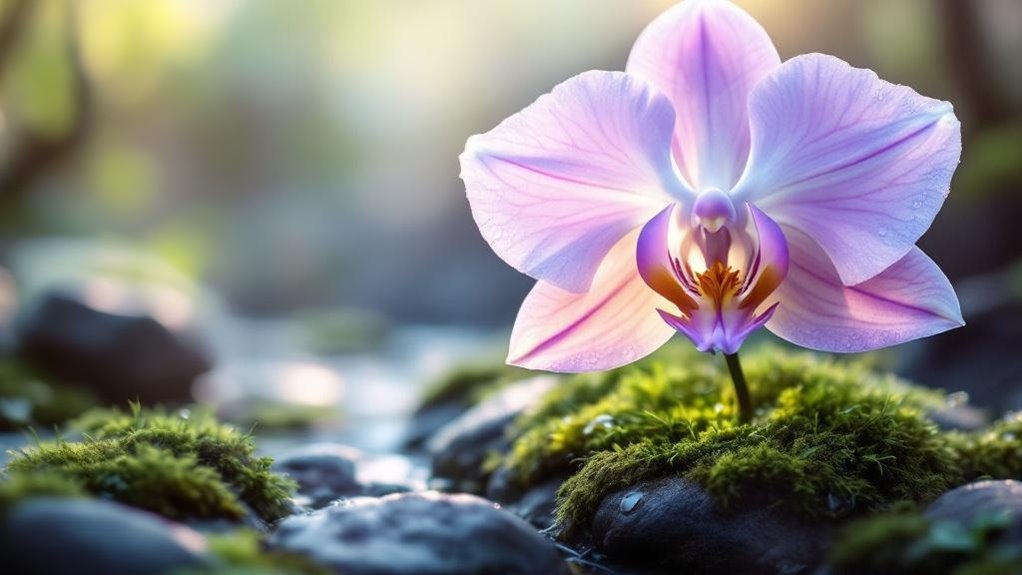
Orchids spiritually signify cultivated beauty, inner refinement, and the patient movement from stagnant states toward clarity; when you choose or observe one, you’re engaging a symbol of resilience, mindfulness, and disciplined growth. Across cultures, they also suggest purity, nobility, friendship, fertility, or liveliness, while color sharpens meaning: white for rebirth, pink or red for love, purple for admiration, yellow for renewal. Their quiet presence supports observational practice, and further context clarifies how to apply that symbolism.
- Key Takeaways
- What Is the Spiritual Meaning of Orchids?
- Why Orchids Represent Growth and Enlightenment
- What Do Orchids Mean in Different Cultures?
- What Does a White Orchid Mean Spiritually?
- What Do Red, Purple, and Yellow Orchids Mean?
- How to Choose an Orchid for Your Intention
- How to Use Orchids in Spiritual Practice
- Frequently Asked Questions
- Conclusion
Key Takeaways
- Orchids spiritually symbolize inner growth, cultivated beauty, enlightenment, and harmony through patience, resilience, and mindful unfolding.
- They are linked to purity, self-reflection, abundance, nobility, friendship, fertility, and vitality across different cultural traditions.
- White orchids represent purity and clarity, while pink, red, purple, and yellow express love, passion, admiration, and renewal.
- Orchids are often used in meditation spaces and altars to encourage stillness, prayer, healing, and spiritual focus.
- Choosing orchid colors and varieties can align with intentions, such as love, reverence, happiness, beauty, or resilience.
What Is the Spiritual Meaning of Orchids?
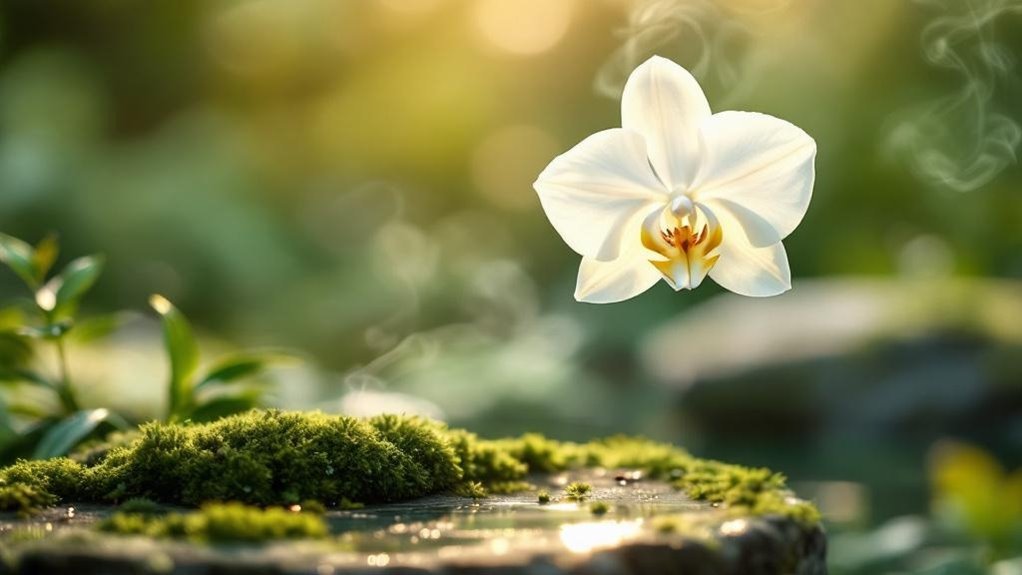
Meaning unfolds through the orchid with unusual clarity, because its cultivated beauty and intricate structure have long led people to see it as more than ornamental; across spiritual traditions, it symbolizes enlightenment, inner growth, and the steady pursuit of harmony, reminding you that refinement of the self rarely emerges from a stagnant mind.
When you consider Orchids, their spiritual meaning centers on symbolism tied to purity, mindfulness, and quiet self-observation; in Chinese thought, they suggest moral virtue and abundance, while Japanese readings connect them to life’s passing delicacy.
Color deepens that symbolism, as white Orchids evoke purity, pink suggests love and gratitude, and the flower as a whole supports reflection on personal growth, healing, and transformation. You read in them a cultivated reminder that spiritual refinement asks for attention, balance, and receptive awareness.
Why Orchids Represent Growth and Enlightenment
When you look to the orchid as a spiritual symbol, you recognize a cultivated model of personal growth, one that asks you to remain observational, resilient, and inwardly steady even when your surroundings would make lesser forms become stagnant.
As the orchid blooms in its own measured time, you see awakening not as a sudden event but as a disciplined unfolding, a movement toward inner peace, moral refinement, and a clearer understanding of your path.
In this way, the orchid reminds you that enlightenment grows through reflection and endurance, and that each stage of becoming carries its own quiet meaning.
Personal Spiritual Growth
Because orchids flourish in conditions that would leave many other plants stagnant, they’ve long represented personal spiritual growth and enlightenment, reflecting the cultivated strength required to endure difficulty, adapt without losing form, and continue unfolding toward a more complete inner life.
When you observe them closely, you see why orchids symbolize resilience, personal growth, and enlightenment; their refined structure suggests inner strength shaped through pressure, while the beauty of orchids encourages spiritual inspiration, tranquility, and disciplined self-awareness.
Across traditions, their complexity has prompted observational introspection, reminding you that development rarely appears linear, and that transformation often requires patience, composure, and a willingness to accept change without surrendering identity.
In this way, orchids quietly affirm that your spiritual path deepens through harmony, endurance, and careful attention to your evolving inner life.
Awakening Through Blooming
As an orchid opens, it comes to represent awakening through a process you can observe rather than merely imagine; its bloom doesn’t appear all at once, but unfolds with cultivated precision, suggesting that spiritual growth follows a similar pattern of gradual revelation, tested resilience, and steady movement away from what’s been inwardly stagnant.
When you study an orchid, you see transformation expressed through beauty and structure; its blooming reflects new beginnings, while its ability to thrive in varied conditions confirms the value of patience and perseverance.
In Chinese tradition, the orchid also signifies refinement and balance, directing you toward harmony rather than excess. Its intricate form supports self-discovery, because you recognize that growth requires observational care, disciplined adjustment, and acceptance of complexity; enlightenment, like the flower itself, develops deliberately, never by force.
What Do Orchids Mean in Different Cultures?
Across cultures, orchids carry meanings that reflect each society’s cultivated ideals and observational sense of beauty; in China, they’ve long signified refinement, nobility, friendship, and moral virtue, while in Japan they represent luxury, beauty, and the fleeting nature of existence through the quiet lens of *mono no aware*.
As you study orchid symbolism, you see the meaning of orchids expand through place and memory: in Japanese culture, these beautiful blooms remain associated with luxury, yet their delicate petals also suggest time’s passing rather than anything stagnant.
You can trace other meanings further back; Aztecs linked vanilla orchids to strength and liveliness, Greek tradition connected them to fertility and virility through regeneration, and the Victorian era treated orchids as rare treasures, rich in symbolism, status, and cultivated desire.
What Does a White Orchid Mean Spiritually?
When you consider the white orchid spiritually, you see a cultivated symbol of purity and rebirth, one that invites self-reflection, clears stagnant energy, and steadies your sense of inner peace.
Across cultures, you can observe its quiet association with reverence, enlightenment, and higher dimensions; its calm presence suggests harmony, balance, and a more observational way of moving through change.
When you give or receive a white orchid, you acknowledge respect and spiritual significance, and you recognize changes not as disruptions, but as measured beginnings.
Purity And Rebirth
Because its color carries little visual distraction, the white orchid has long been read as a symbol of purity and spiritual enlightenment, expressing innocence, unblemished beauty, and a cultivated state of inner clarity rather than anything stagnant or naive.
- You see how white orchids symbolize purity through restraint, where form and color suggest disciplined beauty.
- You may read rebirth in them, especially during weddings, changes, and other gifts that mark new beginnings.
- In spiritual contexts, their meanings often point toward elevated awareness, serene presence, and deep inward connection.
- Yet you should consider context carefully, since some cultures attach different meanings to white blooms, shaping how gifts are received.
Taken together, the white orchid reminds you that renewal isn’t dramatic; it’s observational, continuous, and quietly transformative.
Reverence Across Cultures
Although the white orchid often appears to speak a universal language of purity, spiritual enlightenment, and cultivated grace, you can’t assume its meaning remains fixed from one culture to another; in the United States, it commonly marks rebirth, weddings, and other significant changes, reinforcing the idea that spiritual renewal is observational rather than dramatic.
Yet in China, the same bloom may signify death, which gives it a more somber and reverential place within ritual and gift exchange.
When you consider how white orchids symbolize both beginnings and endings, you see why reverence matters across cultures; their spiritual meaning isn’t stagnant, but shaped by history, ritual, and social memory.
If you offer these flowers as gifts, you should weigh context carefully, because misunderstandings can obscure respect, while informed choices preserve purity, honor, and cross-cultural understanding.
What Do Red, Purple, and Yellow Orchids Mean?
Color often serves as the clearest guide to an orchid’s symbolic message, and red, purple, and yellow orchids each carry a distinct meaning that has been cultivated through both observational tradition and cultural use; as symbols of beauty, they express emotional connections without becoming stagnant, and their meanings among various cultures remain remarkably consistent.
- Red orchids signify passion and love, desire, and romance; in Japan, they also suggest peace and prosperity.
- Purple orchids reflect royalty and luxury, admiration, and elevated status shaped by rarity.
- Yellow orchids represent happiness and positivity, friendship, cheerful occasions, and new beginnings.
- In China, red orchids signal happiness and good fortune, showing how color deepens spiritual interpretation.
You can read these hues as quiet markers of feeling, memory, and intention.
How to Choose an Orchid for Your Intention
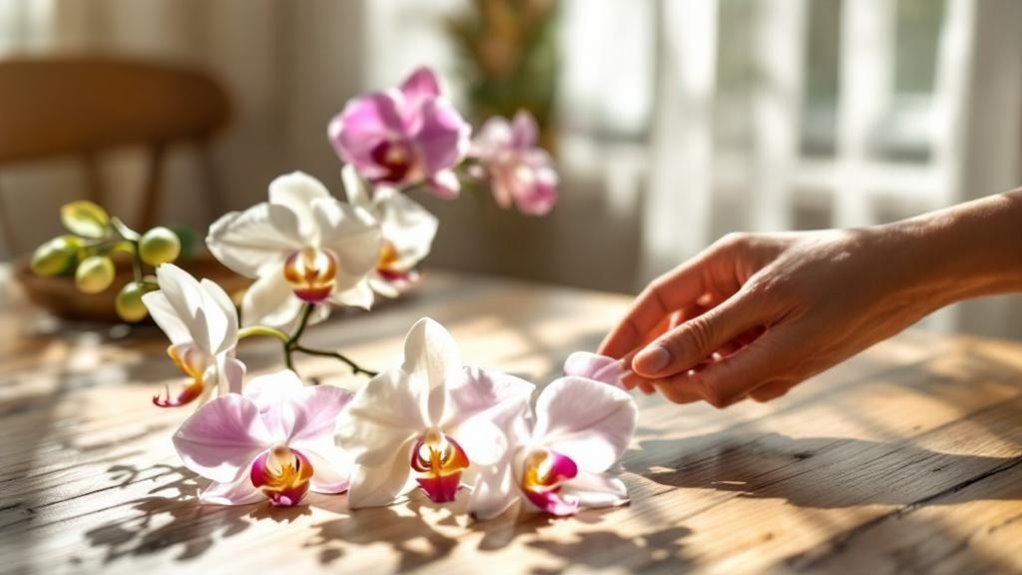
An orchid is best chosen by matching its cultivated symbolism to the intention you want it to carry, since the flower’s spiritual message doesn’t remain stagnant in appearance alone but extends through hue, variety, and context; if you want to express love or romance, pink and red orchids are the clearest choices, as they’ve long conveyed affection and deep feeling across cultures, while purple orchids suit respect, admiration, and dignified appreciation because their observational link to rarity has tied them to royalty and elevated regard.
Beyond that, white orchid meaning centers on purity and reverence, yellow or green forms suggest happiness and renewal, and orchids represent nuanced intentions; choose Cattleya when beauty matters, Phalaenopsis when resilience does, because orchids are associated with layered symbolism among flowers in the world.
How to Use Orchids in Spiritual Practice
Once you’ve chosen an orchid that aligns with your intention, its role in spiritual practice becomes more direct, because the flower doesn’t remain stagnant as a symbol on a surface but begins to shape the atmosphere in which reflection takes place.
Once chosen with intention, the orchid becomes more than a symbol, quietly shaping the atmosphere in which reflection deepens.
You can place orchids in a meditation space to cultivate stillness and inner composure, use them on an altar as an observational focal point for prayer or ritual, or keep them nearby as a cultivated reminder that spiritual growth often unfolds through patience, care, and steady attention rather than sudden change.
- Let the orchid flower refine a serene environment.
- Use essence for emotional healing and a calming atmosphere.
- Place it on altars for spiritual rituals and personal transformation.
- Tend it daily; patience and attention reveal delicate beauty, and self-knowledge.
Frequently Asked Questions
Where Should Orchids Be Placed in the House?
Place your orchids near an east-facing window or in bright, indirect light. Keep them out of direct sun, give them good airflow, and choose a humid room like a bathroom or kitchen for best health.
What Energy Do Orchids Bring?
Even if you’re skeptical, orchids bring calming, uplifting energy into your space. You invite beauty, refinement, renewal, and emotional healing while encouraging spiritual growth, mindfulness, and harmony, helping you feel more connected to yourself and nature.
What Color Orchid Means Healing?
Purple orchids most strongly mean healing, especially emotional and spiritual healing. You can also choose green orchids for renewal and recovery, or yellow orchids to lift spirits, encourage positivity, and bring comforting, cheerful energy.
What Color of Orchids Are Lucky?
You’ll find yellow orchids most widely symbolize luck, happiness, and prosperity. You can also choose red for good fortune, purple for wealth, green for harmony, or pink for positive energy and joyful admiration.
Conclusion
When you work with orchids, you aren’t merely arranging a decorative bloom and pretending enlightenment can be purchased at a florist; you’re choosing a cultivated symbol that reflects growth, refinement, and quiet resilience. Their colors guide your intention, their history deepens your observational practice, and their presence reminds you to resist stagnant habits. If you select them with care and use them consistently, orchids can steady your spiritual focus and clarify what you’re actually trying to become.