
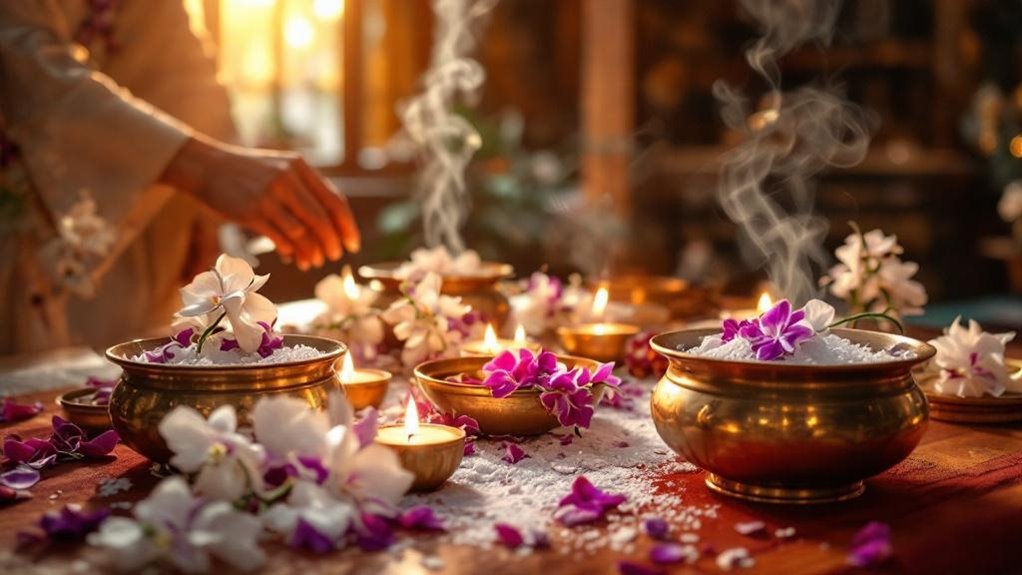
You use orchids in rituals to express reverence, love, renewal, and prosperity; across cultures, they appear on ancestor altars, in weddings, healing rites, and offerings because their cultivated beauty carries focused intention without feeling stagnant. You can choose white for purity and remembrance, pink for affection and gentle beginnings, green for harmony and abundance, and purple for admiration. Select healthy, vibrant blooms, since observational care and color alignment strengthen the ritual’s symbolic coherence, as the fuller uses become clearer ahead.
- Key Takeaways
- Orchid Rituals Across Cultures
- What Do Orchids Symbolize in Rituals?
- Orchid Colors in Rituals
- How to Choose Ritual Orchids
- Orchids in Wedding Rituals
- Using Orchids in Sacred Offerings
- Orchids in Healing Rituals
- Orchids in Love and Attraction Rituals
- Orchids for Luck and Prosperity
- Orchid Rituals for New Beginnings
- Frequently Asked Questions
- Conclusion
Key Takeaways
- Orchids are placed on altars and in offerings to express reverence, love, prosperity, and connection with ancestors or deities.
- Different orchid colors guide ritual intent: white for purity, pink for love, green for renewal, and purple for admiration.
- In Chinese, Hindu, and Japanese traditions, orchids mark rites, gifts, and ceremonies tied to virtue, prosperity, and family bonds.
- Orchids are used in healing and meditation rituals to encourage tranquility, emotional balance, and a sense of restoration.
- Healthy, vibrant orchids are chosen to strengthen ritual symbolism and align the flower’s energy with the ceremony’s purpose.
Orchid Rituals Across Cultures

Across cultures, orchids have entered ritual life not as stagnant decoration but as cultivated symbols that carry social and spiritual meaning, and their presence reveals an observational understanding of beauty as something that can also instruct, heal, and bind communities together.
You see this cultural significance in Chinese rituals that honor virtue, refinement, friendship, and family bonds; in Japanese celebratory ceremonial practices, orchids mark milestones and prosperity through formal gifting.
You also find orchids in Native American traditions, where spiritual healing joins medicinal belief and strengthened sacred connection.
In South America, communities place orchids in offerings that accompany ceremonial practices tied to fertility and abundance.
In Hawaii, you encounter orchids woven into leis for rituals surrounding love, beauty, and major life events, where shared participation reinforces continuity, memory, and belonging.
What Do Orchids Symbolize in Rituals?
Symbolism gives orchids their ritual force, because these flowers don’t remain stagnant ornaments but serve as cultivated signs of love, beauty, and refinement. This is why communities so often place them at weddings, spiritual observances, and other ceremonial gatherings where appearance, intention, and social meaning must align.
Orchids gain ritual power through symbolism, transforming beauty into a visible language of love, refinement, and ceremonial intention.
When you examine how orchids function in rituals, you find that orchids symbolize love, prosperity, renewal, and harmony; they also carry spiritual significance in healing practices, where people seek emotional balance and physical well-being.
In offerings and altars, they express respect and admiration, affirm relationships with ancestors or divine powers, and mark an observational awareness that ritual objects must communicate values clearly.
In many Asian traditions, orchids invite good fortune, while older love practices used them to strengthen attachment or attract partners.
Orchid Colors in Rituals
As you consider orchid colors in rituals, you can see that white orchids establish purity and reverence, which is why they remain cultivated choices for weddings and memorials, where sincerity matters and stagnant sentiment has no place.
You’ll also find that pink orchids support love and gentle new beginnings, shaping observational expressions of affection, motherhood, and emotional continuity without excess.
Green orchids, by contrast, direct your attention toward renewal and prosperity, reinforcing rituals for abundance and harmony, and giving your symbolic choices a steady, grounded intention.
White For Purity
Purity gives white orchids their ritual force, and that force remains cultivated rather than stagnant, because their pale blooms convey elegance, reverence, and restraint in a way few flowers do; for that reason, they’re often chosen for weddings and spiritual ceremonies, where you want the setting to reflect clear intention rather than distraction.
When you place white orchids on an altar, you reinforce a sacred atmosphere; their calm presence helps participants settle into rituals with greater focus, and their forms symbolize purity without visual excess.
You also see them at funerals, where they honor the departed through observational grace, expressing respect and admiration rather than display. In healing work, white orchids support your intention to restore balance and harmony within yourself or a space, making purity feel enacted, steadied, and quietly sustained.
Pink For Love
Pink orchids bring love into ritual work with a cultivated softness that doesn’t feel stagnant or ornamental; instead, their color carries grace, femininity, and quiet joy, so when you place them within romantic rites, you direct attention toward affection, warmth, and mutual regard rather than display.
| Use | Effect |
|---|---|
| Gifts | nurturing emotions |
| Spells | attraction |
| Oils | focused intent |
| Weddings | symbolizing joy |
| Altars | compassion |
In observational practice, you’ll see pink orchids anchor love rituals by steadying intention, especially during romantic occasions where bonds need tenderness rather than spectacle. You can pair them with essential oils in powders or potions, and that combination reinforces attraction and connection without diluting their cultivated symbolism. When you give pink orchids in ceremony, you strengthen compassion, affirm devotion, and invite nurturing emotions between partners.
Green For Renewal
Renewal gives green orchids their ritual force, and when you place them within rites for new beginnings, personal transformation, or recovery after stagnant periods, you direct the work toward steady growth, restored balance, and the cultivated sense that change can unfold without disorder.
In Chinese-informed rituals, you use green orchids to invite harmony, prosperity, and success, because their color carries an observational link to living systems, seasonal return, and measured abundance.
Their rarity strengthens that symbolism; you treat them as signs of health, good fortune, and positive energy rather than mere decoration.
In healing rituals, you position green orchids where you can contemplate renewal through nature’s restorative pattern, supporting emotional and spiritual growth.
During spring observances, they affirm hope, reinforce new beginnings, and stabilize your intention.
How to Choose Ritual Orchids

When you choose orchids for ritual use, you should first match color to intent, since pink supports love, purple reflects admiration, white conveys purity and reverence, and green suits growth, renewal, and prosperity within a cultivated, observational practice.
You should also select fresh, healthy blooms, because vibrant petals and unstagnant energy signal clear intention and strengthen the ritual’s symbolic force.
Finally, you should choose the species with care, as Cattleya can underscore passion, Phalaenopsis can suggest resilience, and cultural meaning often shapes which orchid best aligns with your purpose.
Match Color Intent
Color becomes the clearest guide as you choose orchids for ritual work, because each hue carries a cultivated set of associations that can sharpen your intent and keep the ceremony from feeling observational or stagnant; white orchids suit rites of purity, reverence, and healing, especially those that mark new beginnings or honor the memory of loved ones.
Pink orchids support intentions tied to love, femininity, and joy, making them well matched to creative practice and relationship-centered observances. Since orchids are often used in rituals to signal meaning without excess wording, you should match color intent carefully; purple orchids emphasize admiration, respect, and spiritual growth, yellow invites friendship, happiness, and fresh starts, and green directs attention toward renewal, good fortune, abundance, and a steadier sense of harmony in your life.
Select Fresh Healthy Blooms
Although meaning and symbolism guide your choice, the orchid itself should show clear signs of health, because ritual use depends as much on the condition of the bloom as on its cultivated associations; select flowers with vibrant color, firm petals, and clean edges free of wilting or brown spots.
Then look beyond the blossom to the roots, which should appear strong and healthy, since a vigorous root system signals a plant that isn’t depleted or stagnant.
- Select fresh healthy blooms with vibrant colors, because visual energy supports observational focus.
- Prefer orchids with strong root systems and organically grown origins, since cultivated purity matters.
- Use seasonal orchids when possible, because peak availability usually means stronger, steadier blooms.
You should also let color reinforce intention, whether pink suggests affection or white supports reverence during formal rites.
Choose Appropriate Species
Because each orchid species carries a distinct cultivated character as well as a practical pattern of growth, you should choose the flower that aligns with the rite’s purpose and the conditions in which you’ll keep it, rather than relying on appearance alone; Phalaenopsis suits many household rituals because it’s resilient, adapts well to indoor environments, and remains visually steady without demanding constant correction, while Cattleya is often reserved for love work, where its fuller form and long-standing association with sensuality support intentions centered on attachment and deep emotional connection.
| Species/Color | Ritual use |
|---|---|
| Phalaenopsis | Indoor steadiness |
| Cattleya | Love, devotion |
| White/Purple | Reverence, remembrance |
To choose appropriate species, note cultural meanings: orchids are associated with intention; orchids symbolize purity in white forms, while red orchids support passion, and green varieties prevent stagnant, unfocused energy.
Orchids in Wedding Rituals
When orchids appear in wedding rituals, they do more than decorate the ceremony; they establish a cultivated visual language of love, beauty, and refinement that has made them enduring choices for bridal bouquets, altar arrangements, and personal adornment.
You see why orchids remain a popular choice in wedding rituals, because they function as symbols of love while projecting purity and elegance. White orchids, in particular, align with marriage through their associations with innocence and commitment. Their observational presence also resists anything stagnant, since they elevate decor with measured luxury and refined form. In some traditions, you place orchids to suggest a future marked by fertility and prosperity.
- Bouquets express devotion.
- White blooms reinforce vows.
- Hairpieces and corsages signal status, grace, and cultivated taste.
Their effect remains formal, coherent, and quietly persuasive.
Using Orchids in Sacred Offerings
Across many ritual settings, orchids enter sacred offerings as deliberate instruments of reverence, and their cultivated beauty, apparent purity, and quiet link to the spiritual domain allow them to carry meaning without seeming excessive or stagnant. You see this across rituals, where orchids express devotion with observational clarity, whether placed before Hindu deities to invite blessings, set in ancient Chinese ancestral offerings to affirm respect, or woven into Hawaiian ceremonial leis that present love and hospitality.
| Culture | Offering use | Meaning |
|---|---|---|
| Hindu | Deity worship | Devotion, blessings |
| Chinese | Ancestor rites | Respect, veneration |
| Hawaiian | Ceremonial leis | Love, hospitality |
When you place orchids in meditation spaces, you support serenity and attune attention toward the spiritual dimension, making sacred offerings feel ordered, intentional, and inwardly coherent.
Orchids in Healing Rituals

Although orchids are often admired first for their cultivated beauty, many ritual traditions treat them as agents of restoration, incorporating them into healing ceremonies that address physical strain, emotional imbalance, and the quieter need for spiritual steadiness.
In this setting, the flower’s value doesn’t rest in ornament alone, but in a longstanding belief that its presence, roots, and medicinal preparations can help draw out stagnant influences, strengthen vigor, and return a person to a more coherent state of balance.
- In traditional practice, you see orchids in remedies that support detoxification and energy.
- In Native American cultures, healers use certain species for spiritual properties, seeking harmony.
- Across Central and South America, you find orchids in healing rituals, where observational knowledge links them with physical recovery and emotional steadiness.
Orchids in Love and Attraction Rituals
Because desire rituals often depend on symbolic concentration as much as on spoken intention, orchids came to occupy a distinct place in love and attraction practices, especially in Greek and Roman traditions that treated the plant as a stimulant of male virility and a reliable component in love spells. You see this symbolism clearly in cultivated rites.
| Use | Purpose |
|---|---|
| Powdered root | Desire |
| Magnetic sand | Attraction |
| Rose oil | Allure |
| Under mattress | Intimacy |
| Candle rite | Focus |
You can prepare observational love powder with four parts orchid root and one part magnetic sand or iron filings, then add rose or geranium oil. You apply it to personal items, or place it beneath a mattress, while red or pink candle rituals prevent intention from turning stagnant. Photographs sharpen focus.
Orchids for Luck and Prosperity
Orchids also move naturally from rites of attraction into rites of increase, since the same cultivated attention once directed toward desire can be turned toward fortune, household stability, and material growth; in many traditions, especially where green orchids carry associations with luck, prosperity, and renewal, the flower serves as a quiet emblem of conditions you want to strengthen rather than merely obtain.
You see this clearly in observational practice:
- In rituals, green orchids mark growth and steady prosperity.
- In Chinese culture, they support harmony, balance, wealth, and household success.
- As meaningful gifts, they bless weddings, ventures, and ancestor offerings.
Placed near an entryway, orchids symbolize luck, help keep energy from turning stagnant, and invite favorable opportunities; through disciplined use, you align domestic space, social exchange, and spiritual regard toward abundance.
Orchid Rituals for New Beginnings

When you use green orchids in rituals for renewal, you align yourself with a cultivated symbol of fresh starts, steady growth, and blessings that move stagnant energy toward more hopeful conditions.
You can place them in a new home, set them beside written intentions, or include them in seasonal observances; in each setting, they mark your commitment to personal change, abundance, and a more observational awareness of what must begin again.
If you offer or receive these orchids at the threshold of a new venture, you affirm good fortune, harmony, and health, and you give the moment a clear ritual form.
Green Orchids For Renewal
Among ritual flowers for transformation, green orchids hold a cultivated place, since they represent renewal, steady growth, and prosperity, and they give your intention a clear observational focus as you mark a new beginning.
In your rituals, green orchids direct attention away from stagnant patterns and toward orderly evolution; their presence in entryways, altars, and other sacred spaces supports abundance, health, and balanced momentum.
- Place green orchids near a threshold, and you invite harmonious movement, good fortune, and practical renewal into daily life.
- Set them on an altar, and you align private intention with visible growth, which steadies the mind and clarifies purpose.
- Offer them at milestones, and you acknowledge shifts with blessings, support, and a disciplined respect for what must now develop.
Blessings For Fresh Starts
Because a fresh start requires both intention and a visible sign of change, you can use orchid rituals to give renewal a cultivated form; green and yellow varieties are especially suited to this work, since they symbolize growth, prosperity, and the quiet promise that stagnant conditions needn’t govern what comes next.
In housewarmings, graduations, or weddings, you offer orchids as blessings, and the gesture carries observational weight because these flowers mark changes with disciplined beauty rather than spectacle. You might plant them in a new room, where their presence supports harmony and directs attention toward fresh starts; as you water and tend them, the practice mirrors personal renewal, reinforces patience, and helps you treat opportunity as something cultivated through steady care.
Such rituals also affirm prosperity, balance, and intentional forward movement.
Frequently Asked Questions
What Are Orchids Used for in Witchcraft?
You use orchids in witchcraft mainly for love, attraction, seduction, and desire work. You might grind roots into powders, add them to philters, dress candles, or sprinkle them on belongings to draw romance.
What Is the Spiritual Significance of Orchids?
Orchids carry earth-shaking spiritual significance: you see purity, renewal, balance, and profound connection in them. They remind you life constantly cycles, invite harmony into your spirit, and can symbolize healing, good fortune, reverence, and enlightenment.
Where Should Orchids Be Placed in the House?
Place orchids in north-facing windows or bright rooms with filtered light and good airflow. You’ll boost energy by setting green orchids in entryways or living rooms. Don’t keep them near drafts, vents, or direct sun.
What Does the Bible Say About Orchids?
You won’t find orchids named in the Bible; like Solomon’s splendor beside the lilies, they can still point you toward God’s artistry, provision, beauty, and life’s brevity, inviting you to reflect on creation and love.
Conclusion
Across cultures and ceremonies, you’ll find orchids serving as cultivated symbols of beauty, blessing, balance, and becoming; their colors and forms guide meaning with observational precision, whether you’re honoring love, seeking healing, inviting prosperity, or marking new beginnings. When you choose orchids with care, you avoid stagnant symbolism and create rituals that feel coherent, deliberate, and deeply rooted. In that quiet practice, orchids offer a steady, graceful presence, shaping sacred spaces through subtle strength and enduring significance.