
In spring, you can read orchids as cultivated signs of renewal, admiration, and quiet longing, because their blooms arrive as winter’s stagnant impression recedes and visible new growth restores a sense of continuity, beauty, and possibility. Across traditions, they also suggest fertility, prosperity, resilience, and inner transformation, with fresh shoots, roots, and blossoms serving as observational evidence of rebirth rather than mere decoration. Their colors and varieties refine that message further, as the meanings ahead clarify.
- Key Takeaways
- What Do Spring Orchids Symbolize?
- What Do Spring Orchid Colors Mean?
- Which Orchid Types Suit Spring Best?
- Why Do Orchids Represent Renewal in Spring?
- When Should You Gift Orchids in Spring?
- How History Influences Spring Orchid Meaning
- How Do You Care for Orchids in Spring?
- Frequently Asked Questions
- Conclusion
Key Takeaways
- In spring, orchids primarily symbolize renewal, rebirth, and new beginnings as growth returns after winter dormancy.
- They also represent resilience and enduring beauty, blooming gracefully through changing spring conditions.
- Across cultures, spring orchids are linked with fertility, abundance, prosperity, and the land’s restored generative power.
- Orchids carry spiritual meaning in spring, suggesting awakening, inner transformation, and restored possibility.
- Their colors refine the message: pink for tender affection, yellow for friendship, white for purity, and purple for admiration.
What Do Spring Orchids Symbolize?
Because so many orchid varieties bloom or rebloom as winter recedes, spring orchids generally symbolize new beginnings and renewal, expressing the season’s steady movement away from what’s dormant or stagnant and toward visible growth.
As winter recedes, spring orchids symbolize renewal, marking the quiet transition from dormancy toward visible growth.
When you give or display Spring orchids, you underscore resilience as well, since cultivated varieties, especially Phalaenopsis orchids, hold their blooms through variable spring conditions and thus suggest enduring beauty rather than brief display.
In homes, ceremonies, and seasonal observances, they also carry an observational sense of growth, prosperity, and restored possibility, aligning your space with calmer ideas of progress.
White Orchids can deepen that message through associations with purity and reverence, while spring gifting traditions may also connect orchids with friendship, affection, and quiet continuity, making them suitable symbols for shifts you want to mark with steadiness.
Orchids also carry spiritual significance in many traditions, linking them with awakening, inner transformation, and a sense of divine connection.
What Do Spring Orchid Colors Mean?
When you choose a spring orchid, you aren’t only selecting a flower; you’re signaling a cultivated meaning through color, and that observational choice shapes how your gift or display is received.
You can read pink as femininity, grace, and thoughtfulness, yellow as friendship, joy, and new beginnings, and white as purity, innocence, and reverence; these meanings keep spring occasions from feeling stagnant and give them clear symbolic direction.
You also see purple convey royalty, admiration, and respect, while orange and red express enthusiasm, pride, passion, and courage; together, these popular orchid colors help you match the season’s message to the moment with precision.
73% accuracy in recipient interpretation suggests orchid color symbolism is often understood intuitively, helping your spring message land with authenticity.
Spring Color Symbolism
What, then, do spring orchid colors mean in practice; they shape the message you send with quiet precision, turning a cultivated arrangement into an observational statement about feeling, occasion, and intent.
In spring color symbolism, Yellow Orchids let you express friendship, joy, and new beginnings without sentiment becoming stagnant; Pink orchids allow you to signal femininity, grace, and thoughtfulness, especially when you honor maternal bonds or emerging relationships.
White orchids present purity, innocence, and renewal, which makes them steady choices for weddings or commemorative settings; Orange orchids communicate enthusiasm, pride, and warmth, so you can mark achievements with measured confidence.
Purple Orchids, including lavender tones, introduce royalty, admiration, and refined beauty, helping you convey elegance and respect when the season calls for something composed, formal, and quietly luminous.
Their steady devotion also suits spring’s sense of renewal, where lasting affection can be expressed with restraint, clarity, and calm confidence.
Popular Orchid Color Meanings
Several spring orchid colors carry widely understood meanings, and in practice they let you shape a cultivated message with observational precision; pink orchids suggest femininity, grace, and thoughtfulness, which is why they remain steady choices for Mother’s Day and spring anniversaries, while white orchids convey purity, innocence, and new beginnings, giving them a composed place in weddings and baptism celebrations.
When you choose Pink spring orchids, you affirm care without sentimentality; White orchids mark shifts cleanly.
Yellow orchids introduce friendship, joy, and renewal, so they suit graduations, promotions, and rooms that might otherwise feel stagnant.
Purple orchids communicate royalty, admiration, and respect, allowing you to honor achievement with restraint.
Orange and red spring orchids signal enthusiasm, pride, passion, and courage; in spring, orchids symbolize intentions clearly when you match color to occasion.
Pink orchids also communicate hidden love, tender affection, and quiet admiration when you want the gesture to feel refined and understated.
Which Orchid Types Suit Spring Best?
Often, the orchid types that suit spring best are those whose natural bloom cycles and cultivated habits align with the season’s steadier light and moderate temperatures; Phalaenopsis, Dendrobium, Cymbidium, and Oncidium each meet that standard in a distinct way.
Phalaenopsis orchids work especially well because they flower from winter into early spring, hold blooms for weeks, and adapt to indoor rooms with bright indirect light. Dendrobium species extend color from early spring into mid-summer, giving you vigorous flowering and broad variety.
Cymbidium orchids suit cooler nights, avoid stagnant conditions, and produce large sprays that anchor arrangements. Oncidium orchids add lighter, observational texture through delicate sprays and yellow-orange tones.
For spring reblooming, you’ll get the best results by choosing reliable types, watering properly, ensuring drainage, and misting regularly for humidity. Their slow bloom also echoes the patience and steady cultivation often associated with orchids in Buddhist thought.
Why Do Orchids Represent Renewal in Spring?
Emerging each year with fresh shoots, roots, and blooms, orchids represent renewal in spring because their cultivated and natural cycles visibly mirror the season’s larger movement from dormancy into active growth; when many Phalaenopsis and Dendrobium varieties flower from late winter into spring, you can see that shift in concrete botanical terms rather than abstract symbolism alone.
In observational terms, orchids symbolize renewal through spring flowering, since renewed leaves and blossoms mark renewal and rebirth after stagnant months. You also see why cultures connect them with fertility and abundance; prolific displays suggest prosperity, while orchid blooms attract pollinators and support early ecosystem recovery.
Historically, orchid tubers vigor reinforced that meaning, because strong underground reserves, followed by visible emergence, made orchids reliable signs of seasonal regeneration, continuity, and abundance.
When Should You Gift Orchids in Spring?
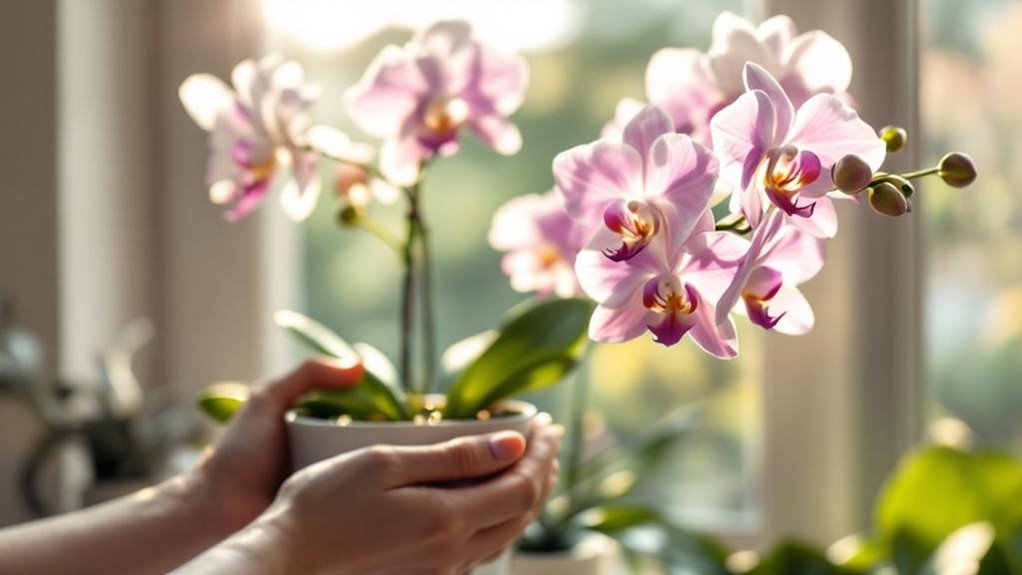
Because orchids already carry spring’s observational meaning of renewal, you should gift them during March through May when new beginnings, cultivated growth, and release from stagnant winter routines feel most visible in everyday life; in that setting, the flower’s symbolism aligns naturally with the season rather than being imposed on it.
If you gift orchids in spring, match timing to occasion and color: Yellow orchids suit friendships, new babies, and housewarmings, because they suggest joy, health, and prosperous starts; for spring graduations or promotions, yellow or orange blooms communicate pride and recognition without excess.
Choose white Phalaenopsis for weddings and anniversaries, since its pale form conveys purity and grace within spring’s blossom-filled setting.
For Mother’s Day, purple orchids offer admiration and respect, while deep-pink tones reinforce feminine grace during May’s reflective celebrations.
How History Influences Spring Orchid Meaning
When you trace spring orchid meaning through history, you can see an observational pattern emerge: in ancient Greece, orchids signaled fertility and rebirth, and that cultivated association with new life still shapes how you read their spring presence.
You can also see how Victorian England refined that meaning, because orchidelirium turned orchids into markers of luxury and desire during the spring social season, attaching status to blooms that might otherwise seem merely decorative.
As you consider these older influences together, spring orchids appear less stagnant in their symbolism; they carry forward a layered history of renewal, longing, and social meaning.
Ancient Spring Symbolism
Although orchid meanings vary by culture, their spring symbolism has long rested on a consistent observational pattern: people saw these blooms return as the year turned fertile again, and they cultivated stories around that renewal. In Ancient Greece, orchids symbolize fertility because orchid tubers were thought to shape unborn children’s sex and vigor, so you can trace a direct link between springtime blossoms and human renewal.
You can see the same logic elsewhere; in Chinese traditions, orchids marked new life and prosperity during spring festivals, while some Aztec and Mayan communities used orchids in seasonal rituals and healing preparations, connecting bloom cycles with life force. Across these early cultures, orchids opposed the stagnant impression of winter, and their timely flowering made them enduring signs of resilience, fertility, and the land’s restored generative power.
Victorian Orchid Influence
That older association between orchids and spring renewal didn’t disappear in the Victorian era; it was recast through wealth, taste, and cultivated display, so the flower came to signify not only fertility and new beginnings but also refinement, admiration, and social distinction. In that observational culture, Victorian “orchidelirium” made spring blooms coveted; orchids symbolize luxury, orchids represent fertility, and even orchids: Royalty.
| Aspect | Victorian reading | Your spring signal |
|---|---|---|
| Pink | Grace | Gentle esteem |
| Purple | Admiration | Respectful regard |
| Display | Conservatories | Cultivated status |
As you consider what orchid colors mean, you can see why orchids became a popular choice for romantic courtship, seasonal gifting, and conservatory display; they suggested leisure, horticultural skill, and a rejection of stagnant taste in spring.
How Do You Care for Orchids in Spring?
Adjust your orchid care with the season, and you’ll support the cultivated rhythm of spring growth by watering most Phalaenopsis and Dendrobium varieties about every five to seven days, while still allowing the potting mix to dry slightly between waterings so roots don’t sit in stagnant moisture and decline.
- Give Orchids bright, indirect light near east or west windows.
- Keep days 65°–80°F; nights should drop about 10°F.
- Raise humidity to 50–70% with trays, misting, and moving air.
- Start half-strength feed biweekly when new growth appears; Phalaenopsis orchids symbolize renewal through steady care.
- Repot after flowering if Potting mix breaks down, trimming dead roots.
When Caring for orchids, watch moisture closely, use balanced fertilizer, refresh air circulation, and provide enough water without saturation; observational habits support healthier spikes, roots, and reliable spring reblooming well.
Frequently Asked Questions
What Do Orchids Signify Spiritually?
Spiritually, orchids signify love, fertility, purity, resilience, and growth. You can see them as reminders to thrive through challenges, honor inner grace, and cultivate humility, wisdom, and reverence in your relationships, rituals, and daily life.
Where Should Orchids Be Placed in the House?
Like Goldilocks, you’ll want orchids in a just-right spot: bright, indirect light near an east- or west-facing window, warm rooms with humidity, airflow, and drainage—away from drafts, vents, radiators, harsh sun, and soggy saucers.
What Color Orchids Are Good Luck?
You’ll find green orchids bring the strongest good-luck symbolism, especially for health and prosperity. You can also choose purple for auspicious energy, white for fortunate new beginnings, yellow for cheerful luck, and red for bold romance.
What Is the Rarest Orchid Color?
Picture a moonlit bloom: you’ll find true blue orchids rank as the rarest color. You can also prize black, green, and deep red varieties, but many “blue” or “black” orchids you see aren’t naturally occurring.
Conclusion
In spring, you can read orchids as cultivated signs of renewal, balance, and quiet esteem; their colors refine that message, their history steadies it, and their seasonal growth resists anything stagnant. You choose them when you want a gift to suggest regard without excess, and you keep them well by matching light, water, and air to their natural rhythm. What image is clearer than an orchid opening as the season turns, measured, observational, and assured?