
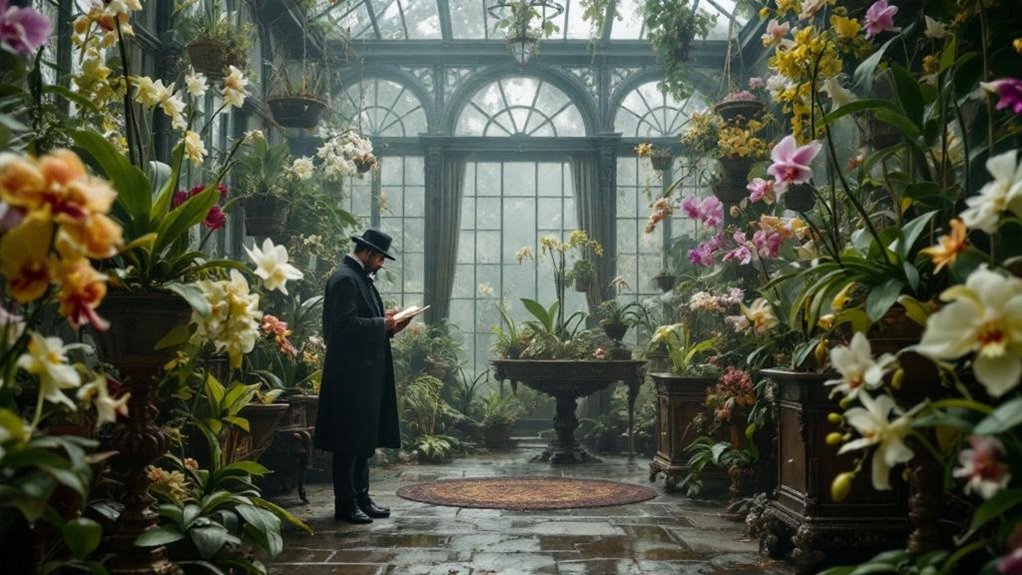
Victorian orchidelirium was a cultivated obsession among Britain’s wealthy, beginning after an exotic Brazilian orchid reached London in 1818 and turned observational interest into competitive collecting. You can understand it as botany mixed with status; rare orchids signaled wealth, taste, and scientific seriousness because supply stayed stagnant and care was difficult. That pursuit drove dangerous expeditions, illegal trade, and damage to wild habitats, while shaping elite culture in ways that become clearer with more context.
- Key Takeaways
- What Was Victorian Orchidelirium?
- How Orchidelirium Began in 1818
- Why Victorians Loved Exotic Orchids
- Why Orchids Became Status Symbols
- How Orchid Hunters Drove Orchidelirium
- The Real Dangers of Orchid Hunting
- Why So Many Imported Orchids Died
- How Orchidelirium Improved Orchid Growing
- How Darwin Studied Evolution Through Orchids
- How Orchids Shaped Victorian Art and Fiction
- How Orchidelirium Damaged Wild Orchids
- How Orchidelirium Still Influences Orchid Culture
- Frequently Asked Questions
- Conclusion
Key Takeaways
- Victorian orchidelirium was a 19th-century British obsession with collecting rare orchids as symbols of wealth, taste, and elite status.
- The craze began after a vivid Brazilian orchid reached London in 1818 and captivated collectors with its unusual color and form.
- Wealthy Victorians prized orchids because their rarity, exotic beauty, and difficulty of cultivation made them highly desirable status symbols.
- Orchid hunters risked disease, injury, and harsh jungle conditions while searching for specimens, often facing fierce competition from rivals.
- The obsession fueled illegal trade, habitat destruction, and severe declines in wild orchid populations, leaving a lasting conservation legacy.
What Was Victorian Orchidelirium?
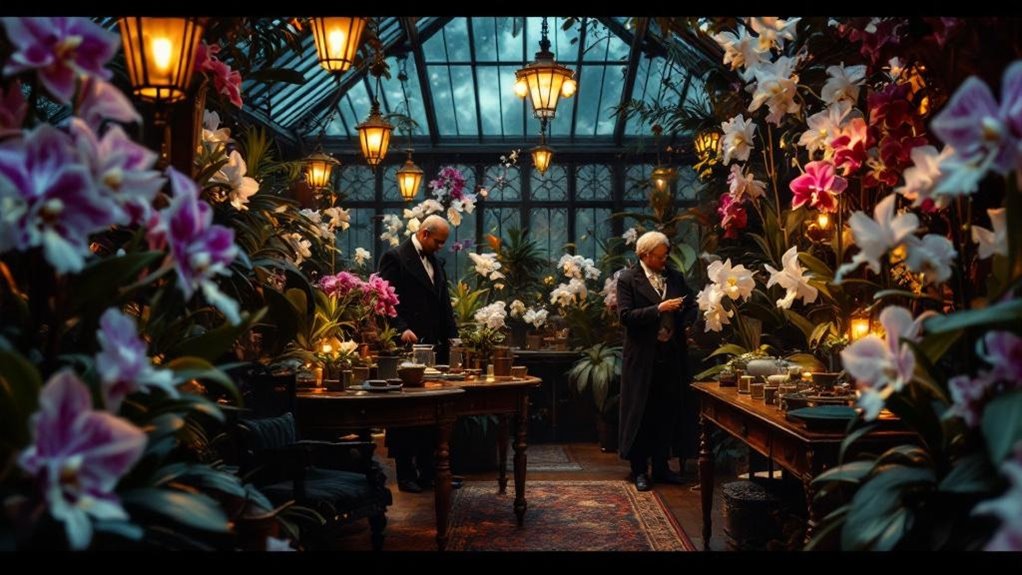
A cultivated mania, Victorian orchidelirium was the early 19th-century obsession with orchids that took hold among Britain’s affluent classes, turning a botanical interest into a status-driven pursuit of rare and exotic blooms.
You can understand orchidelirium as more than fashion; it was a cultivated system of prestige, display, and possession, in which wealth turned living plants into observational markers of rank and taste.
If you looked closely, you’d see how collectors treated orchids as trophies, commissioning perilous journeys into tropical forests, stripping habitats, and then paying astonishing sums at auction for specimens that often declined in stagnant glasshouses.
Collectors prized orchids as trophies, funding dangerous expeditions and lavish auctions for blooms that often withered in captivity.
The craze carried cultural force as well; it joined desire, empire, and rarity, and it encouraged literature, myth, and a refined belief that the most elusive bloom conferred distinction.
How Orchidelirium Began in 1818
You can trace the turning point to 1818, when John Swainson sent an orchid from Brazil as packing material, and its vivid bloom, once unpacked in London, broke through Europe’s previously cultivated but stagnant interest in the plant.
As you follow Swainson’s Brazilian shipment into London’s first orchid craze, you see how a single specimen, prized for its unusual shape and striking color, drew the wealthy elite into competitive collecting and gave orchidelirium its observational starting point.
From there, you can recognize how this early fascination hardened into a broader Victorian obsession, one that endured for decades and eventually encouraged destructive harvesting and illegal trade.
Swainson’s Brazilian Shipment
Although Orchidelirium would later swell into a cultivated obsession among Europe’s wealthy collectors, its beginning in 1818 was almost accidental, when British biologist William Swainson sent a single orchid bloom from Brazil to London as packing material.
That stray flower, an unnamed lavender Cattleya, immediately drew observational notice because its saturated color and sculptural form stood apart from the comparatively stagnant familiarity of local European flora.
From that moment, you can trace orchidelirium to a shipment never intended as a botanical revelation; yet the bloom’s exotic appearance altered taste, redirected collecting habits among affluent buyers, and encouraged future tropical expeditions.
What you see here isn’t merely curiosity, but the first clear signal that European markets would prize orchids as rare, transportable symbols of distance, prestige, and cultivated desire for decades.
London’s First Orchid Craze
From that accidental Brazilian shipment, London’s first orchid craze took shape in 1818, when a flower meant only to cushion specimens instead exposed collectors, nurserymen, and cultivated observers to a form of beauty that European gardens had rarely presented.
Its effect was immediate because the orchid’s saturated color, sculptural symmetry, and observational strangeness stood apart from the stagnant familiarity of local blooms.
You can trace orchidelirium to that moment, because once London saw what Brazil had concealed, demand widened beyond curiosity into status, acquisition, and display; wealthy patrons began funding searches for additional orchid species, sending hunters into distant tropical forests, where rarity determined value and damage often followed collection.
As interest spread, you see how admiration hardened into system, commerce, and environmental loss.
Why Victorians Loved Exotic Orchids
You can see why Victorians fixed their attention on exotic orchids: their rare, cultivated beauty seemed almost otherworldly, their unusual forms invited observational interest, and their scarcity kept desire from growing stagnant.
You can also trace how orchids became markers of status, since wealthy collectors paid heavily for uncommon specimens, turned auctions into social theater, and used possession to signal refinement and reach.
At the same time, you can recognize how science and obsession reinforced each other, because intricate pollination, difficult cultivation, and literary myths made orchids feel both knowable and elusive, which sustained their hold on the Victorian imagination.
Exotic Beauty And Rarity
Splendor drew the Victorians to orchids because these flowers offered something their cultivated gardens and stagnant countryside hedgerows rarely could: forms that looked almost unreal, colors that seemed richer than familiar blooms, and a diversity so striking that each new specimen appeared to enlarge the known world.
As you look at the period through this observational lens, you can see why exotic beauty mattered so much; tropical orchids arrived from distant climates with petals flared, spotted, twisted, and layered in ways local flowers rarely matched.
Their rarity deepened the appeal, because scarcity sharpened attention and made each plant feel singular rather than merely decorative. You wouldn’t have mistaken them for ordinary blooms; they suggested remote forests, unfamiliar weather, and living forms that resisted easy classification, which made them enduring objects of cultivated desire.
Status, Science, And Obsession
Although their unusual forms first caught the eye, orchids held Victorian attention because they gathered prestige, scientific meaning, and private fixation into a single cultivated object. Wealthy collectors displayed rare specimens as evidence of reach, taste, and money, while the difficulty of obtaining them, often through dangerous expeditions into remote landscapes and direct competition with rival hunters, made possession itself a social claim.
You can see how orchidelirium spread beyond elite conservatories, because Queen Victoria’s interest gave orchids public legitimacy, and because their scarcity prevented them from becoming socially stagnant. Darwin’s observational work gave them scientific authority, showing adaptation in precise, cultivated structures, while literature and art turned them into emblems of beauty, desire, and obsession, fixing them firmly within Victorian culture.
Why Orchids Became Status Symbols
Because orchids were rare, visually arresting, and notoriously difficult to cultivate outside their native environments, they came to signify far more than botanical interest in Victorian society; they signaled access, money, cultivated taste, and the kind of observational patience associated with elite leisure.
You displayed them to prove wealth, refinement, and reach; orchidelirium turned possession into public rank, especially after Queen Victoria’s approval made orchids unmistakably prestigious. Their high prices, stagnant supply, and exacting care separated affluent collectors from ordinary admirers.
| Cause | Effect | Meaning |
|---|---|---|
| Rarity | High prices | Wealth |
| Exotic form | Attention | Taste |
| Difficult cultivation | Exclusivity | Leisure |
| Royal approval | Wider prestige | Status |
| Competitive buying | Extravagance | Sophistication |
To own orchids, you didn’t simply garden; you announced standing, discipline, and entry into upper-class cultural life.
How Orchid Hunters Drove Orchidelirium
As demand for rare orchids intensified, hunters such as Benedikt Roezl and Frederick Sander pushed deep into places like the Amazon, where difficult terrain, disease, and isolation made collection a hazardous trade. Yet wealthy buyers kept financing these expeditions because each new specimen promised distinction in a market defined by scarcity, cultivated taste, and stagnant supply.
You can see how orchid hunters turned private desire into commercial momentum; they supplied auction rooms and glasshouses, fed rivalry among collectors, and made rarity seem measurable by possession alone.
Because early collectors understood little about habitat, transport, or cultivation, vast numbers of plants died before flowering, which only encouraged further collecting. That cycle, observational rather than accidental, converted botany into extraction, rewarded aggressive acquisition, and steadily widened the damage to wild populations and surrounding ecosystems.
The Real Dangers of Orchid Hunting
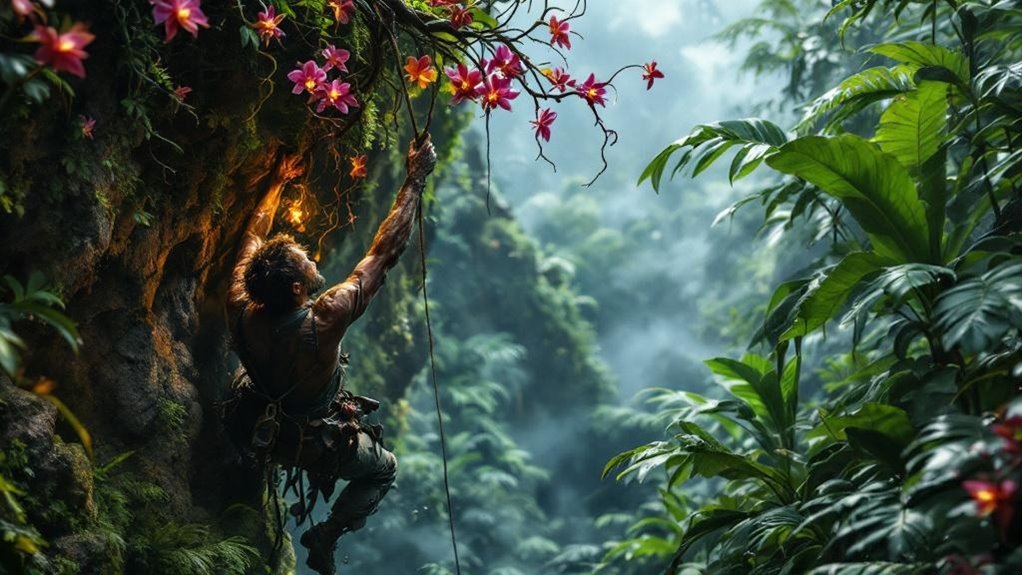
When you look past the cultivated glamour of Victorian orchid mania, you find hunters pushing into stagnant jungles and rough mountain passes, where disease, injury, and deadly wildlife made each expedition an observational record of obsession rather than romance.
You also see collector rivalries harden into sabotage and violence, because rare specimens carried status and profit, and men sometimes ruined a competitor’s finds or risked bloodshed rather than surrender an advantage.
And when you follow the trade beyond the field, you find smuggling and legal peril close behind, since orchids crossed borders through dubious channels, ownership remained contested, and even the plants that survived the journey often died from inadequate care.
Jungle And Disease Hazards
Although the Victorian orchid hunt often appeared cultivated and refined in letters and catalogues, the work itself unfolded in jungle landscapes that were observational only from a distance, where steep ravines, stagnant swamps, sudden floods, and oppressive heat turned each expedition into a sustained physical trial and made simple movement dangerous.
As you pursued rare orchids through remote forests, every climb, crossing, and descent carried the chance of a disabling fall, while insects, snakes, and larger animals could wound or kill without warning.
Disease shadowed you just as persistently; malaria and yellow fever spread through humid lowlands, weakened judgment, delayed travel, and often ended collecting journeys before specimens ever reached Europe.
These conditions, more than the elegant image of commerce suggested, made orchid hunting a severe contest with terrain, climate, wildlife, and the body itself.
Violent Collector Rivalries
Because rare orchids could command money, prestige, and access to elite horticultural circles, the danger of the Victorian hunt didn’t end with stagnant swamps or fevered camps, but extended to the collectors themselves, whose rivalries could turn cultivated ambition into direct sabotage and, at times, violence.
In that observational world, you didn’t merely race weather or terrain; you faced other men who might spoil a hard-won orchid, destroy a marked site, or confront you physically when a specimen promised status and profit.
Some accounts describe collectors urinating on rival discoveries, a crude but calculated act meant to ruin value and deny triumph.
These networks of competition, shaped by money and prestige, made every expedition less predictable; injuries, animal encounters, and fatal accidents became more likely when judgment narrowed under obsessive pressure and cultivated envy.
Smuggling And Legal Risks
The hazards of orchid hunting didn’t stop with cultivated rivalries in the field; they followed the plant across borders, into ports, private collections, and auction rooms, where smuggling exposed collectors and dealers to fines, confiscation, and imprisonment under tightening international rules such as CITES.
If you pursued rare orchids, you didn’t merely risk fever, injury, stagnant camps, or hostile terrain; you also entered an observational world of permits, inspections, and customs law, where a mislabeled crate or undocumented specimen could mark you as a poacher.
Because illegal collecting pushed many species toward endangerment, governments strengthened conservation rules, and enforcement increasingly treated smuggling as ecological harm rather than a private indulgence.
Even after surviving wildlife, sabotage, and deadly accidents, you could still lose everything at the border, your cultivated obsession reduced to evidence in a case file.
Why So Many Imported Orchids Died
Why did so many of these prized orchids die almost as soon as they reached Britain, despite the money, labor, and observational attention lavished on them; in most cases, they passed from one unsuitable environment to another, first enduring long voyages in cramped cases with erratic moisture, poor ventilation, and stale air, then entering cultivated interiors where owners still misunderstood what they had bought. Orchid Culture remained crude; you often confused terrestrial orchids with epiphytic ones, trusted misleading habitat reports, and shut plants inside stagnant stove-houses.
| Problem | Effect |
|---|---|
| Cramped transport | Rot, dehydration |
| Bad Orchid Culture | Misplaced conditions |
Even after Williams published *The Orchid Growers Manual* in 1851, knowledge spread slowly, so you still misjudged light, air circulation, and moisture, and many imported specimens declined before better methods reached ordinary growers.
How Orchidelirium Improved Orchid Growing
As Orchidelirium matured, it improved orchid growing by forcing collectors, nurserymen, and botanists to move beyond display and toward methodical cultivation, since repeated losses made crude assumptions too costly to ignore.
Observational attention shifted from merely acquiring rare plants to studying how they lived in the wild, and that change gradually corrected earlier mistakes about heat, moisture, air, and rooting habits.
Collectors began watching orchids in habitat, and those observations slowly corrected errors of heat, moisture, air, and root treatment.
You can see the results in practical guides, especially B.S. Williams’s 1851 manual, which gathered cultivated experience into usable instruction.
Growers refined stove-houses, reduced stagnant conditions, and compared orchids in their natural settings with glasshouse environments, improving survival rates.
As demand favored vigorous plants rather than brief curiosities, you also get hybridization, which broadened available forms while reflecting a more disciplined, ecologically informed approach to successful orchid culture.
How Darwin Studied Evolution Through Orchids
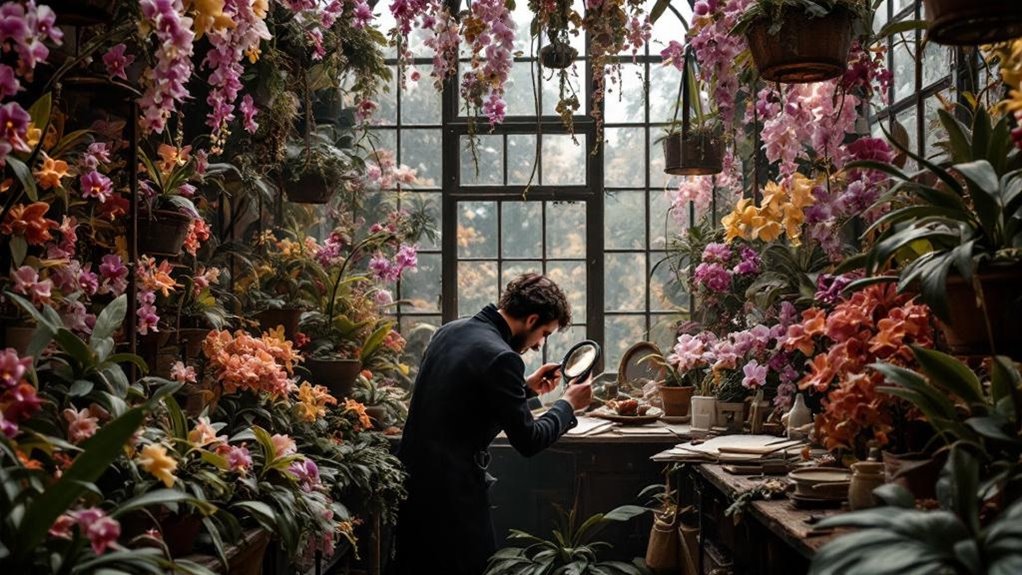
By turning from cultivated spectacle to reproductive structure, Darwin used orchids to test evolution in a form you can follow closely, because their flowers displayed unusually exact arrangements of spurs, pollen masses, and landing surfaces that seemed too coordinated to be accidental; in *Fertilisation of Orchids* (1862), he argued that these features had developed through natural selection, with each shape and mechanism improving the chances that a particular insect would remove and deposit pollen efficiently.
You can see his method in his exchanges with Joseph Hooker, where observational detail led him to predict a moth for *Angraecum sesquipidale*; forty-one years later, discovery confirmed him.
That result showed co-evolution clearly, prevented stagnant speculation, and helped the public grasp adaptation; even orchids in Fakahatchee Strand State Preserve invite the same disciplined attention today.
How Orchids Shaped Victorian Art and Fiction
Although collectors first prized orchids as cultivated rarities, Victorian artists and writers turned them into a broader cultural language, using their intricate forms, foreign associations, and observational precision to signify exotic beauty, refined taste, and, at times, a faint threat beneath elegance.
In Victorian England, you can trace that language across paintings, botanical studies, and decorative arts; artists such as Margaret Dickinson rendered orchids with cultivated exactness, while designers repeated their vivid structures in textiles, wallpaper, and jewelry to signal taste without stagnant convention.
Fiction deepened the effect: in H.G. Wells’ *The Flowering of the Strange Orchid* and Fred M. White’s *The Purple Terror*, you see orchids carry desire, obsession, and peril, shaping the man-eating plant myth and proving that floral beauty could suggest mystery as readily as social polish itself.
How Orchidelirium Damaged Wild Orchids
When orchidelirium reached its height, it didn’t merely elevate orchids into objects of cultivated prestige; it stripped countless plants from their native environments, damaged the forests and mountain habitats that sustained them, and pushed many wild populations into sharp decline, because collectors valued rarity over continuity and treated remote ecosystems as reservoirs for private display rather than living systems with their own limits.
You can trace the damage clearly:
| Practice | Effect |
|---|---|
| Overharvesting | Wild numbers collapsed |
| Illegal collecting | Ecosystems destabilized |
You see how Endangered Species of Wild orchids emerged from relentless extraction, observational ignorance, and stagnant care methods; many seized plants died in transit or in glasshouses, so demand only intensified, while conservation remained eclipsed, and biodiversity losses deepened across exploited regions, for decades.
How Orchidelirium Still Influences Orchid Culture
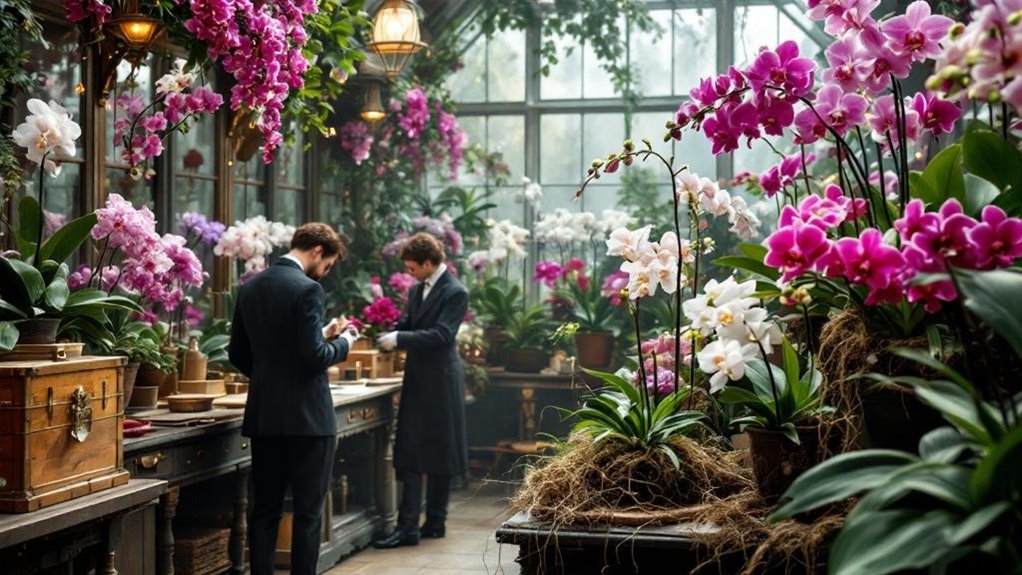
Even now, orchidelirium shapes orchid culture in ways that are easy to recognize, because modern collectors still compete for uncommon specimens. Cultivated prestige still gathers around rarity, and the old belief that an orchid’s value rises with its scarcity hasn’t disappeared, even after propagation methods made many varieties widely available.
You can still observe that legacy in several settings:
- Collectors pursue rare species, sustaining competitive habits.
- Supermarket orchids broaden access, yet mystique doesn’t become stagnant.
- Festivals, including Naples shows, turn observational interest into public display.
- Conservation groups protect native species from poaching, because demand persists.
When you look closely, you see continuity rather than rupture; cloning increased supply, but it didn’t erase status, beauty, or the cultivated appeal of unusual orchids in modern culture today.
Frequently Asked Questions
What Is an Orchidelirium?
Orchidelirium is a feverish obsession with collecting orchids, especially among wealthy Victorians. You’d see people paying huge sums, funding dangerous expeditions, and stripping habitats for rare blooms, until cultivation improved and wild collecting finally declined.
Why Are Slipper Orchids Illegal?
Slipper orchids are illegal to collect or trade because you’d endanger rare wild populations. Poachers target them for high demand, so laws like CITES protect species, restrict wild harvesting, and support conservation and habitat recovery.
What Does Baking Soda Do for Orchids?
Baking soda can feel like a miracle for your orchids: you use it to fight fungus, curb powdery mildew, and nudge pH toward balance. Use it sparingly, though, or you’ll upset soil chemistry and roots.
What Does the Bible Say About Orchids?
The Bible doesn’t mention orchids specifically. You can connect orchids to biblical flower imagery, especially lilies and blossoms in Song of Solomon, which highlight beauty, love, God’s creation, and life’s brief, fragile nature, much like orchids.
Conclusion
When you look back at Victorian orchidelirium, you see more than a cultivated fashion; you see how curiosity, status, science, and commerce intertwined, shaping observational habits and leaving damaged habitats behind. Its legacy remains, like roots holding in shallow soil, in modern collecting, conservation, and orchid display, reminding you that admiration can deepen knowledge or turn stagnant, depending on whether desire is restrained by care, patience, and a clearer sense of responsibility toward living things.