
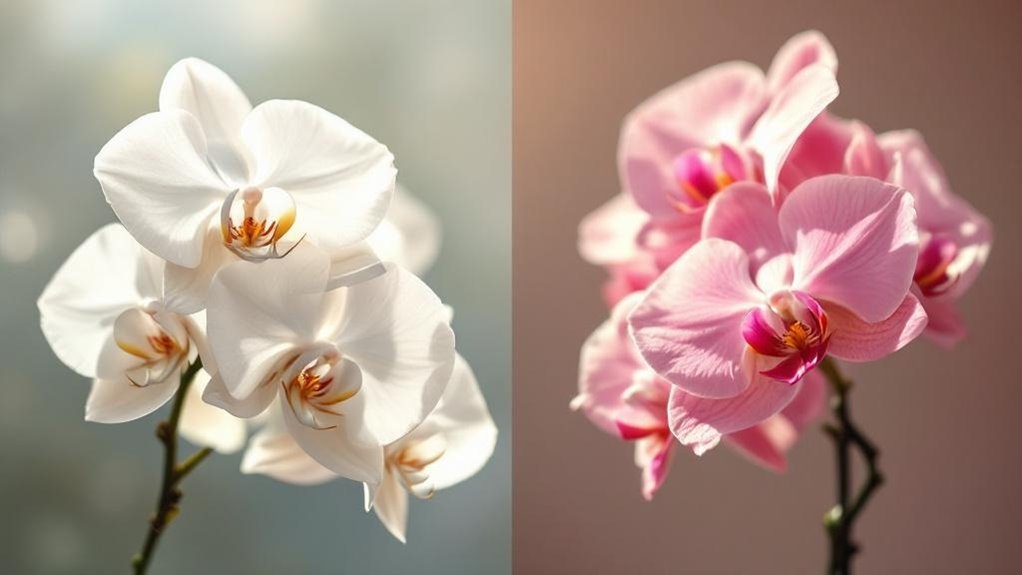
Choose white orchids when you want purity, calm sophistication, and cultivated neutrality; they suit professional gifts, sympathy, weddings, offices, and unknown recipients because they feel observational, polished, and restrained. Choose pink orchids when you want warmth, admiration, or gentle romance; they fit partners, close friends, birthdays, and get-well gifts because they signal personal feeling more clearly. Bloom life and price are typically the same, so color carries the decision, and the distinctions become clearer just ahead.
- Key Takeaways
- How to Choose Between White and Pink Orchids
- White vs Pink Orchids at a Glance
- What Do White Orchids Symbolize?
- What Do Pink Orchids Symbolize?
- Which Orchid Color Works Best for Sympathy?
- Which Orchid Color Is Best for Birthdays?
- Which Orchid Color Suits Get-Well Gifts?
- Why Choose White Orchids for Work Gifts?
- When Are Pink Orchids Better Personal Gifts?
- How to Match Orchid Color to the Recipient
- Which Orchid Color Is Best for Men?
- Do White Orchids Suit Neutral Interiors?
- Do Pink Orchids Suit Warm Colorful Rooms?
- Do White and Pink Orchids Cost the Same?
- Do White and Pink Orchids Last as Long?
- Should You Choose White Orchids With Pink Accents?
- Frequently Asked Questions
- Conclusion
Key Takeaways
- White orchids suggest purity, calm sophistication, and professional restraint, making them better for formal, neutral, or unknown-recipient situations.
- Pink orchids express warmth, affection, gentle admiration, and celebration, making them better for partners, close friends, birthdays, and personal thanks.
- White-with-pink orchids offer a balanced message, preserving versatility while adding softness when you want warmth without strong sentiment.
- For sympathy, memorials, weddings, offices, or corporate gifts, white usually fits better because it conveys peace, dignity, and cultivated neutrality.
- Color changes emotional tone, not value or longevity; white and pink phalaenopsis generally cost similar amounts and bloom for 8–12 weeks.
How to Choose Between White and Pink Orchids
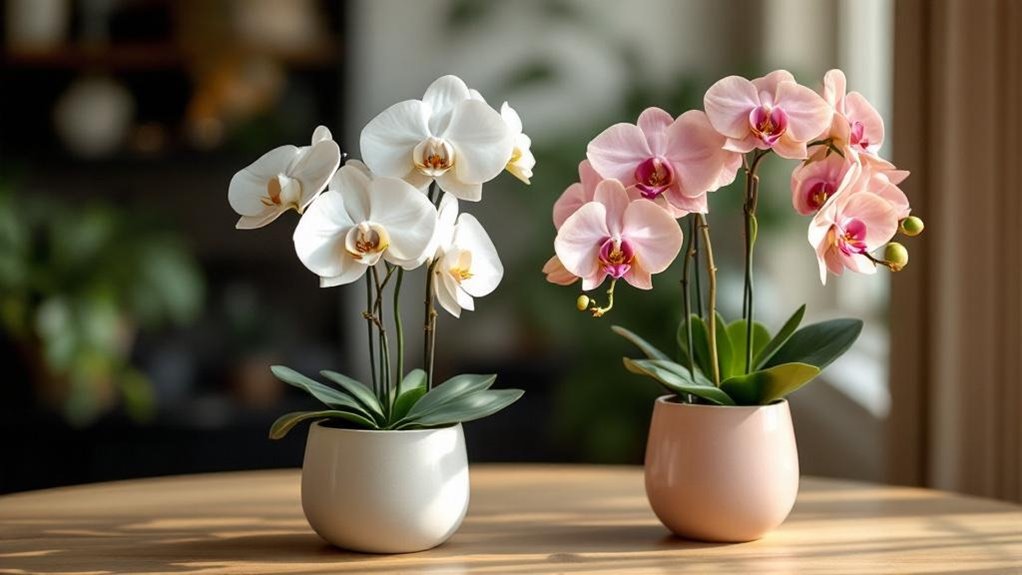
Context matters most when you’re choosing between white and pink orchids, because each color carries a distinct social signal, and the right choice depends less on the flower itself than on the relationship, setting, and message you want to send; white orchids are the more universally appropriate option, suited to professional gifts, sympathy arrangements, and situations where the recipient’s taste is unknown, since they convey purity, restraint, and cultivated sophistication while blending easily into neutral, minimalist, coastal, mid-century, and Scandinavian interiors without appearing intrusive or stagnant.
Choose pink orchids when your gesture is personal, observational, and intentionally warm; blush reads gentle and romantic, while deeper pinks feel more expressive. If you’re uncertain, select white orchids with pink accents, which preserve versatility while adding warmth. In memorial settings, white orchids can also communicate peace, remembrance, and quiet dignity without forcing sentiment.
White vs Pink Orchids at a Glance
When you compare white and pink orchids at a glance, you’ll notice that the real difference lies in meaning and tone rather than cost or longevity, since both offer the same cultivated bloom performance and comparable pricing.
You can rely on white orchids when you need a versatile, observational choice that conveys purity, sophistication, and understated elegance, especially in professional settings or when the recipient’s preferences remain unknown and a more personal signal could feel stagnant or misplaced.
You’ll find pink orchids better suited to close relationships and celebratory gifts, where their warmth, femininity, and range from blush romance to hot pink energy create a more affectionate impression; if you want balance, a white orchid with pink accents gives you a measured compromise.
In many traditions, white orchids are also favored for weddings and new beginnings, while pink orchids lean more toward steady affection and heartfelt celebration.
Meaning And Tone
Although white and pink orchids often share the same phalaenopsis form, their meanings diverge in tone rather than in practicality, since both typically offer the same 8 to 12 week bloom life and similar pricing; white orchids project purity, sophistication, and respectful elegance, which makes them the most versatile and observational choice for professional settings, uncertain recipients, and interiors where a cultivated look matters more than personal sentiment, whereas pink orchids introduce warmth, femininity, and clearer affection, with pale blush shades reading as more romantic and restrained and deeper pinks signaling greater emotional investment.
When you compare White Orchids and Pink Orchids, you should let message guide the decision; white remains neutral, polished, and never stagnant, while pink feels more personal, expressive, and intentionally affectionate overall.
For a more deliberate gift, consider how color clarity shapes whether the orchid reads as pure and elegant or warm and romantic.
Best Use Cases
Because white and pink phalaenopsis orchids cost the same and usually bloom for the same 8 to 12 weeks, you shouldn’t treat durability or price as the deciding factor; the better choice comes from the message you want the plant to carry, the degree of familiarity you have with the recipient, and the visual tone of the setting where it will be placed.
- Choose White when you need cultivated restraint, especially for professional gifts, sympathy gestures, unknown recipients, or observational spaces with mixed, stagnant tones.
- Choose Pink when you want clear personal feeling, particularly for birthdays, partners, close friends, or get-well gifts in warm, colorful interiors.
- Choose a White-and-Pink compromise when you need neutrality with softness; it preserves elegance, yet adds warmth without becoming overly intimate or visually dominant.
Pink orchids also convey hidden love and gentle admiration, making them especially fitting when you want affection to feel sincere but understated.
What Do White Orchids Symbolize?
Restraint defines the symbolism of white orchids; they represent purity, innocence, and an understated elegance that feels cultivated rather than ornamental, which is why you’ll see them so often at weddings and other formal occasions where the message must remain clear, refined, and free of stagnant sentiment.
When you choose White orchids, you communicate respect, reverence, and composure, so they suit sympathy gifts, memorial arrangements, and professional settings where emotional ambiguity would feel misplaced.
You can rely on white phalaenopsis orchids especially, because their versatility lets them align with nearly any recipient, interior, or occasion without introducing romantic implication. Their blooms also last eight to twelve weeks with proper care, which gives your gesture an observational quality of endurance, reinforcing grace, consistency, and refined taste long after presentation.
In many cultures, white orchids also symbolize new beginnings and quiet loyalty, making them especially meaningful when you want elegance without excess.
What Do Pink Orchids Symbolize?
Something shifts when you choose pink orchids; they symbolize femininity, grace, and gentle affection, so the message feels more personal than ceremonial, more invested than neutral, and better suited to relationships where warmth should be visible rather than restrained.
You signal cultivated care, whether you’re honoring a partner, close friend, or family member.
- Blush tones suggest soft romance and tenderness, an observational choice when you want affection to feel quiet, not stagnant.
- Medium pink expresses warmth and cheerful admiration, which suits birthdays, baby showers, anniversaries, and get-well gifts.
- Hot pink orchids read bolder, more energetic, and more declarative; they also photograph well in warm-toned or colorful interiors, though they may jar against cool, strictly neutral rooms.
You use pink orchids when personal connection, not distance, should define the gesture.
Which Orchid Color Works Best for Sympathy?
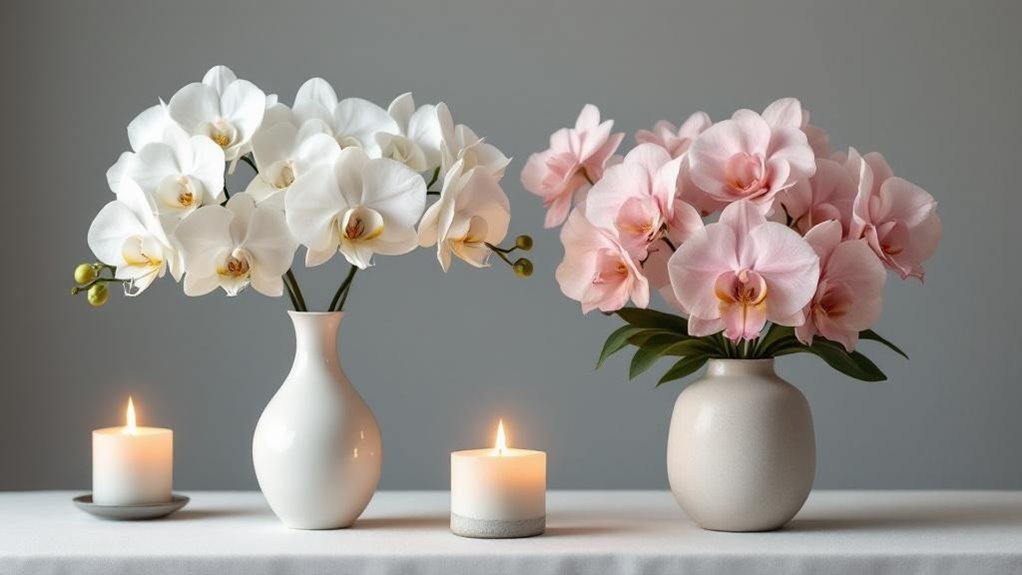
When the occasion shifts from personal affection to loss, white orchids work best for sympathy; they communicate purity, reverence, and understated elegance without introducing a tone that feels overly personal, celebratory, or observational in the wrong way.
If you’re choosing between white or pink orchids, select white for funerals, memorials, and corporate condolences, where cultivated restraint matters and stagnant sentimentality does not. White phalaenopsis orchids are especially suitable because their blooms can last 8–12 weeks, giving you a tribute that remains composed and present long after cut flowers fade.
Pink orchids should usually be reserved for situations where you know the family’s preferences well, since even pale pink can read as warmer and more personal. You should also research cultural customs, because funeral color meanings vary, and assumptions can misfire badly.
Which Orchid Color Is Best for Birthdays?
For birthdays, pink orchids are usually the better choice, because their range from blush to fuchsia conveys joy, celebration, and personal affection more clearly than white, and that warmer spectrum suits a gift meant to feel observant rather than merely cultivated.
- Choose bright or medium pink orchids for milestone birthdays; they read energetic, clear, and never stagnant.
- Choose blush pink orchids when your relationship is closer; they feel softer, more personal, and quietly romantic.
- Choose white orchids when taste is uncertain, or when the setting is professional; if undecided, select white orchids with pink accents.
Since color doesn’t change price or bloom longevity, and both phalaenopsis typically last 8–12 weeks, you should decide by sentiment, the recipient’s décor, and the degree of elegance or warmth you want to emphasize.
Which Orchid Color Suits Get-Well Gifts?
Usually, pink orchids suit get-well gifts better, because their warmer tones, especially in the blush to medium-pink range, project optimism and recovery-minded encouragement more clearly than white, and that visual warmth tends to feel less formal, less stagnant, and more emotionally supportive in a home or hospital room.
| Color | Signal | Best Use |
|---|---|---|
| Pink orchids | Positivity | General recovery |
| White orchids | Calm sophistication | Minimalist taste |
| Both phalaenopsis | 8–12 weeks | Equal longevity |
| Pink contrast | Lifts spirits | Home or hospital |
| White with pink accents | Balanced tone | Safe compromise |
You should choose pink orchids when you want a cultivated, observational message of encouragement; choose white orchids only if the recipient clearly prefers tranquil restraint, since color changes mood, not bloom life, and both varieties remain bright for weeks.
Why Choose White Orchids for Work Gifts?
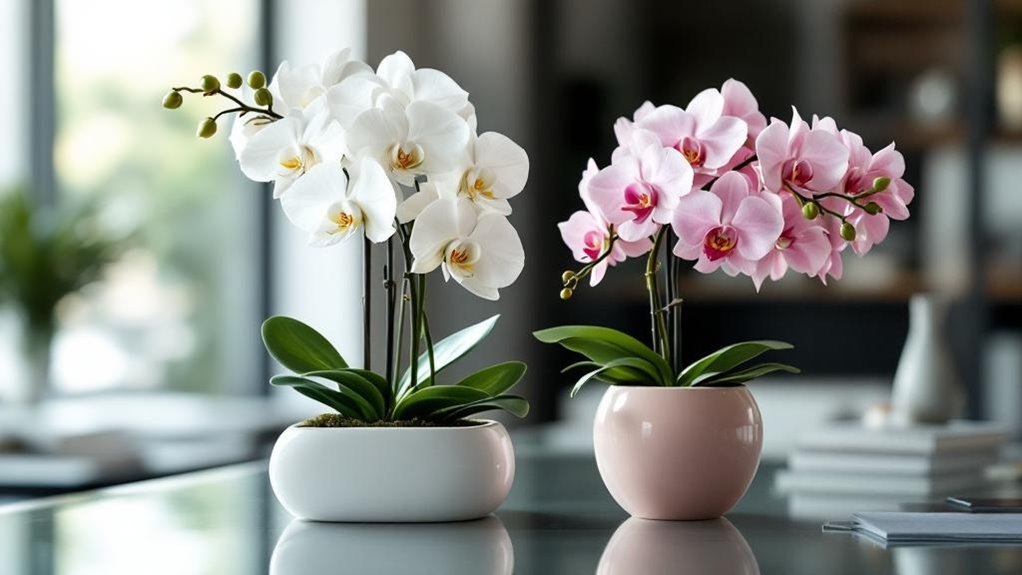
When you choose a work gift, white orchids give you the most professionally neutral option, since their color signals sophistication, respect, and a cultivated elegance without drifting into anything overly personal or romantically coded.
You also don’t give up practicality; white phalaenopsis last just as long as pink varieties, typically 8–12 weeks, cost about the same, and, in observational terms, outsell pink orchids by roughly 2:1 in corporate and office purchases. Their clean, minimalist look fits modern, Scandinavian, mid-century, and coastal offices with ease, and it won’t appear visually stagnant or clash with the neutral, cool-toned palettes common in shared workspaces.
Professional Neutrality
Because workplace gifting works best when the message stays clear, white orchids remain the most professionally neutral choice; they convey purity, sophistication, and understated elegance, and they do so without suggesting personal affection or cultivated intimacy.
When you need professional neutrality, White orchids give you the safest signal; in formal markets, white phalaenopsis outsell pink roughly two to one, an observational indicator that buyers trust their universal appropriateness.
- You avoid misinterpretation with colleagues, bosses, and clients.
- You get identical bloom longevity, usually eight to twelve weeks.
- You pay no premium for choosing white over pink.
You also don’t sacrifice durability or value, since pricing and lifespan remain equal; instead, you choose a polished, non-stagnant presentation that respects boundaries, fits varied recipient tastes, and keeps your message precise.
Office-Friendly Elegance
Often, white orchids give you the most office-friendly form of elegance, since they present purity, sophistication, and professional respect in a way that feels cultivated rather than personal, and that restraint matters in workplaces where gifts must read clearly across roles, departments, and personalities.
When you choose White Orchids, you also choose practicality; white phalaenopsis varieties last the same 8–12 weeks as pink orchids and usually cost the same, so your decision stays observational, not stagnant or sentimental. Their neutral palette settles easily into modern minimalist, mid-century, coastal, and Scandinavian offices, which means you won’t disrupt a coworker’s space or a shared reception area. Market behavior supports that judgment, since white orchids outsell pink by roughly two to one in corporate settings, where formal neutrality protects your intent from misinterpretation across professional relationships.
When Are Pink Orchids Better Personal Gifts?
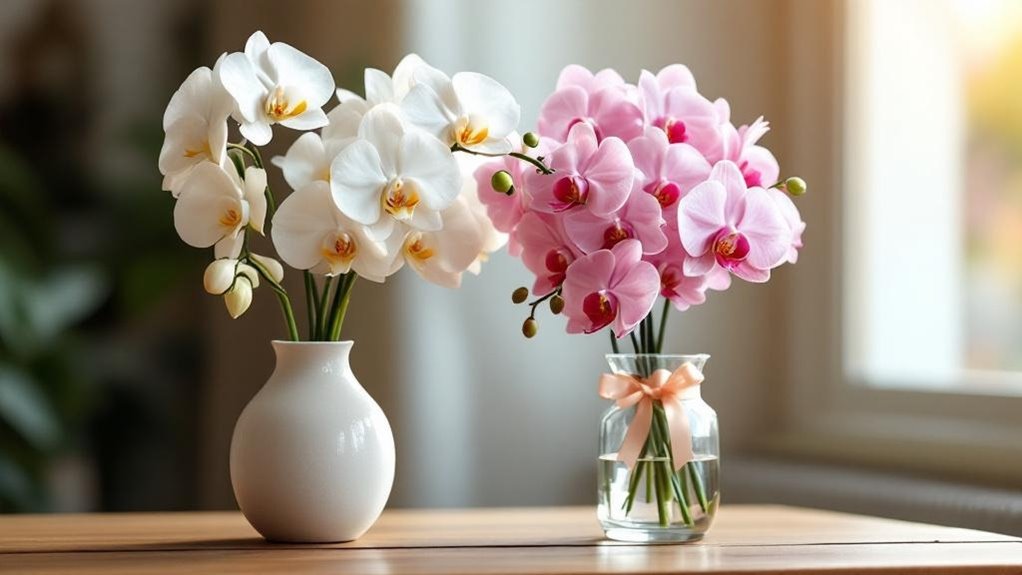
Some gifts carry a more cultivated sense of personal investment, and pink orchids fit that role best when your relationship is close enough that warmth, gentle affection, and quiet familiarity won’t feel misplaced; they suit partners, best friends, and family members especially well, since their color reads as more intimate than white without becoming visually stagnant or emotionally heavy.
- You should choose blush or medium pink orchids for anniversaries, dates, or baby showers, because they suggest romance and sentiment without red’s intensity.
- You can use pink orchids as a personal gift for birthdays, get-well wishes, or celebrations, since they lift mood with more observational cheer than white.
- You should avoid them for formal workplace giving; pink suits warm interiors and colorful decor better, where its contrast photographs cleanly and feels naturally integrated.
How to Match Orchid Color to the Recipient
You should match orchid color to the recipient by starting with certainty rather than preference; if you don’t know their taste, home palette, or comfort with decorative color, white remains the safest choice, since it suits nearly every recipient, reads appropriately in professional settings, and avoids the cultivated but more personal signal that pink inevitably carries.
| Recipient cue | Best choice |
|---|---|
| Unknown taste, observational gap | white orchids |
| Neutral, cool, minimalist home | white orchids |
| Warm, colorful interior | pink orchids |
| Romantic partner, gentle message | blush pink orchids |
Use occasion as a final check; choose white for sympathy, corporate gifts, or housewarmings when neutrality matters, and choose pink for birthdays, get-well wishes, or personal thanks, because color should support the recipient without feeling stagnant, imposed, or overly intimate.
Which Orchid Color Is Best for Men?
If you want the most reliable orchid color for a man, you should choose white, because it presents a cultivated, sophisticated neutrality that works in both professional and casual settings and rarely feels misplaced.
You can also consider green as a strong alternative, since it carries an observational, botanical calm and a gender-neutral character that suits many men without appearing stagnant or overly formal.
If you don’t know his personal taste, white remains the default; it consistently aligns with corporate gifting, while green offers variety without the risks that brighter pink tones can introduce.
White As Safest Choice
Because white orchids carry a neutral elegance that rarely feels misplaced, they remain the safest choice when you’re selecting an orchid for a man, especially in professional, formal, or minimalist contexts where cultivated restraint matters more than decorative color.
White Orchids project purity, sophistication, and understated refinement; orchids are often associated with beauty, yet white avoids the stagnant sentimentality that brighter tones can imply when preferences remain unknown.
- You can give white phalaenopsis to colleagues or clients, and it will photograph cleanly in office settings.
- You can rely on broad appeal; market patterns show white outsells pink by about two to one.
- You won’t sacrifice practicality, because white varieties usually match pink in price and maintain blooms for eight to twelve weeks.
If you need the most universally appropriate option, white remains the observational, dependable standard.
Green As Strong Alternative
Restraint still matters, yet green orchids offer a credible alternative for men when white feels too generic, since they retain a cultivated, composed presence while introducing a more botanical character that doesn’t drift into the stagnant sentimentality often associated with vivid pink or fuchsia.
If you want something slightly more distinctive than white orchids, Green Orchids let you signal health, harmony, and taste without abandoning appropriateness, especially in professional or mixed-gender contexts where overtly personal color choices can feel misread.
You’ll also find that green suits masculine interiors, plant-forward rooms, and recipients who notice foliage, texture, and natural tones with an observational eye.
Even so, when preference remains unknown, white orchids stay safest; green works best when you want restraint, but with more nature and quiet individuality, and cultivated distinction.
Do White Orchids Suit Neutral Interiors?
Elegance often depends on what doesn’t intrude, and white orchids suit neutral interiors exceptionally well because they carry a clean, cultivated presence that settles into minimalist, Scandinavian, mid-century, coastal, and traditional rooms without making the palette feel stagnant or forced.
In your observational assessment, White orchids work because they add brightness, structure, and restraint; they sharpen cool neutrals, photograph cleanly, and hold attention without disturbing visual harmony.
- You can place white phalaenopsis in gray, beige, or off-white rooms for contrast that remains disciplined.
- You should use them in offices or lobbies, where sophistication matters and varied décor requires a safer floral choice.
- If hesitation remains, you can choose a white bloom with faint pink striping or a pink lip, preserving neutral interiors while introducing measured warmth and subtle variation.
Do Pink Orchids Suit Warm Colorful Rooms?
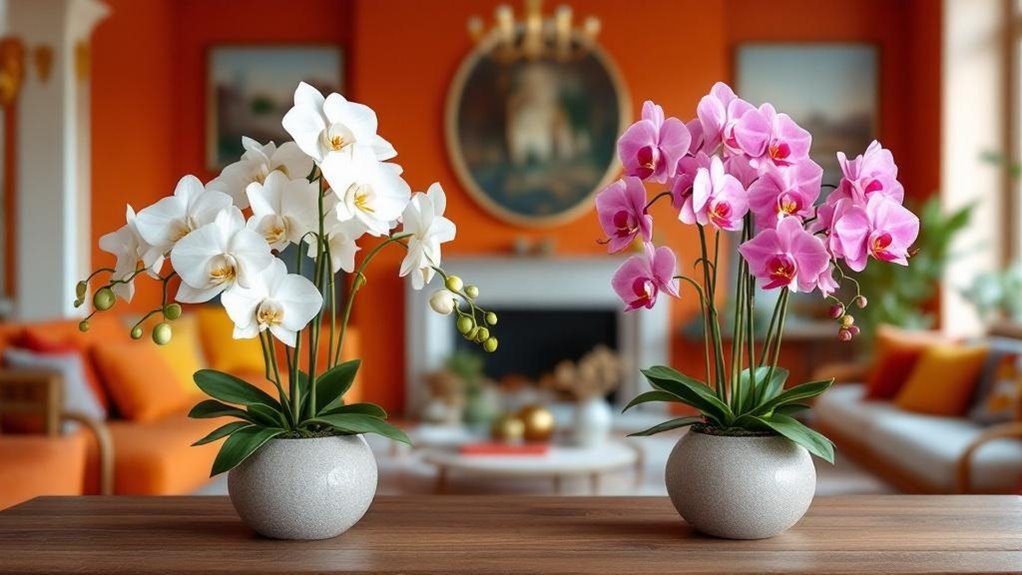
Why do pink orchids suit warm colorful rooms so reliably, even when the palette already carries strong personality; they echo the room’s underlying warmth, from beige and terracotta to honeyed wood and brushed gold, and they add cultivated color without making the setting feel crowded or stagnant.
| Shade | Best setting | Effect |
|---|---|---|
| Blush | Patterned walls | Softens |
| Medium pink | warm-toned rooms | Lifts |
| Hot pink | Eclectic palettes | Anchors |
You’ll get the most cohesive result when you choose pink orchids with warm undertones, especially peachy or medium warm pink, because cool pinks can look observational rather than integrated. In mixed-pattern spaces, select solid-petal phalaenopsis; heavily spotted blooms often compete visually. If your room already feels layered, blush maintains harmony, while medium pink adds energy.
Do White and Pink Orchids Cost the Same?
When you compare white and pink phalaenopsis orchids, you’ll usually find that color doesn’t set the price; single-stem and multi-stem plants are typically priced the same across quality levels, and any difference you notice tends to come from size, spike count, or cultivated presentation rather than hue.
You also get the same bloom value from both colors, since their flowers commonly last 8 to 12 weeks, so an observational price premium based on longevity doesn’t hold, even when white sells in higher volume and pink remains less stagnant in certain seasonal assortments.
If one orchid costs more than another, you can usually trace that difference to care standards, packaging, supply conditions, or boutique styling, because longevity depends on how you maintain the plant, not whether the blooms are white or pink.
Pricing By Color
Compare white and pink phalaenopsis orchids at the same quality level, stem count, and florist, and you’ll generally find that they cost the same, because bloom color itself doesn’t change how long the plant flowers, how it’s cultivated, or how it’s graded for sale; both colors typically bloom for about 8 to 12 weeks, so pricing stays tied to the observational factors that actually affect value, including plant size, number of stems, root and leaf quality, and pot presentation.
- Your chosen orchid color rarely changes price.
- Across orchid colors, equivalent premium tiers match.
- Seasonal supply, packaging, or variegation shift prices.
If you notice stagnant differences, they usually reflect availability, decorative containers, gift wrapping, or bulk-order customization, not pigment; even when white sells more than pink, per-plant value remains aligned.
Same Bloom Value
At the register, white and pink phalaenopsis orchids hold the same bloom value, and you won’t usually pay more for one standard color than the other if the plants come from the same florist, carry the same stem count, and meet the same quality tier; their flowers last for the same 8 to 12 weeks, so color alone doesn’t change usefulness, display life, or replacement timing.
When you compare White Orchids and Pink Orchids, observational pricing stays aligned across single-stem and multi-stem plants, because retailers base increases on cultivated size, stem count, and finish rather than pigment.
You may see different listings during seasonal swings or among striped and bi-color forms, yet plain standard selections remain economically equivalent, and any stagnant value assumptions tied to color simply don’t reflect the market.
Care Drives Longevity
Focus on care, and the value question becomes clearer: white and pink phalaenopsis orchids don’t diverge in price or flowering potential because of color, and both will usually hold their blooms for 8 to 12 weeks if you give them bright indirect light, measured watering, stable humidity, and moderate temperatures.
- You’ll see identical bloom duration when roots stay firm and leaves remain cultivated, never stagnant.
- You protect long-term value through observational watering, occasional fertilizer, and timely repotting after growth declines.
- You extend display life with post-bloom spike care; care drives longevity, while color changes nothing.
When you compare total cost-effectiveness, florists price single-stem white and pink plants the same across quality levels, so your maintenance practices, not petal color, determine repeat blooming, survival, and overall longevity over time.
Do White and Pink Orchids Last as Long?
In practice, white and pink phalaenopsis orchids last just as long, with blooms that typically hold for 8 to 12 weeks in each flowering cycle when the plants receive proper care; the color itself doesn’t influence longevity, plant health, or reblooming potential, because those outcomes are shaped by the cultivated variety and by observational factors such as light, watering habits, temperature, humidity, and whether the growing medium stays well draining rather than stagnant.
When you compare White Orchids and pink orchids at the same quality level, you also won’t find a price advantage tied to longer life, because pigment doesn’t buy durability. You can keep either color for years as a potted plant, and you can expect annual reblooming if you maintain bright indirect light, moderate humidity, airy media, and slight drying between waterings for strongest performance.
Should You Choose White Orchids With Pink Accents?
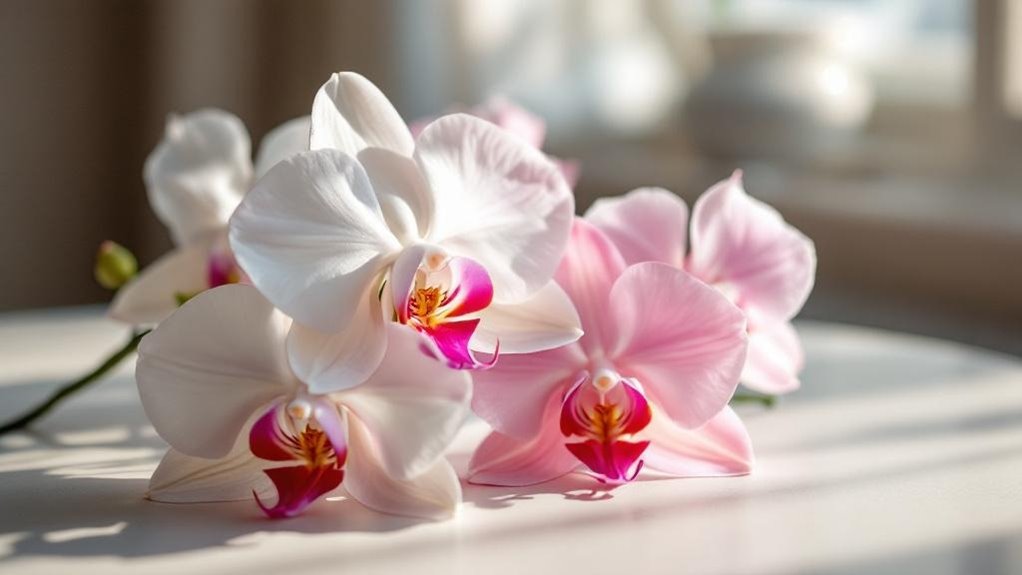
Why choose a white orchid with pink accents rather than a single-color bloom, if your goal is to balance polish with personality; these bi-colored phalaenopsis varieties combine white’s universal elegance and professional versatility with pink’s quieter warmth, so they work especially well when the occasion sits between formal and personal, or when you’re unsure how strongly the recipient will respond to a fully pink flower.
- White orchids with pink accents feel cultivated, neutral, and gently affectionate.
- A white-with-pink-accent orchid photographs better than pure white, yet stays observational and clean.
- You won’t pay more, and blooms still last 8–12 weeks, never stagnant.
You should choose them for corporate thanks, housewarmings, or mixed decor, because the pink striping, lips, or centers soften formality without reducing versatility, and they suit modern, minimalist, and professional interiors equally well.
Frequently Asked Questions
What Do Pink Orchids Symbolize?
Pink orchids symbolize warmth, gentle affection, femininity, joy, and admiration. You’d give them to show emotional investment, celebrate someone special, or express romantic feelings, especially in blush tones, while brighter pinks convey cheerful appreciation and energy.
What Do White Orchids Symbolize?
White orchids symbolize purity, innocence, respect, and elegant simplicity. You’d choose them when you want to express reverence, offer sympathy, or give a timeless, versatile gift that feels calm, graceful, and appropriate for almost anyone.
What Color Orchid Is Good Luck?
Green orchids bring the best luck, and yellow ones also signal prosperity. Like a jade charm tucked in your pocket, you’ll send renewal and fortune. If you’re gifting thoughtfully, choose green or yellow over white or pink.
What Is the Difference Between Pink and White Orchids?
Pink orchids express warmth, joy, and affection, while white orchids signal purity, elegance, and versatility. You’ll choose white for safer, formal settings, and pink when you want a more personal, intimate, cheerful message.
Conclusion
When you choose between white and pink orchids, you’re really choosing the atmosphere you want to cultivate; white carries a quiet, observational grace that suits sympathy, restraint, and uncluttered spaces, while pink offers measured warmth, soft affection, and a gentle answer to rooms that might otherwise feel stagnant. If you want balance, orchids with pink accents can bridge both meanings, like light moving across still water, giving you symbolism that feels composed, flexible, and clear.