
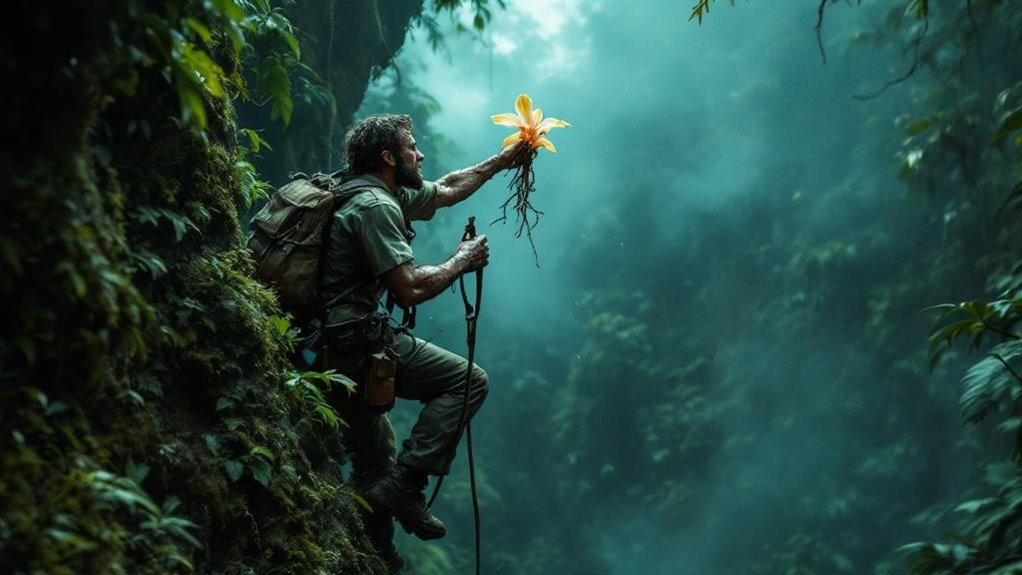
You can trace orchid hunting from Victorian Europe, where cultivated desire turned rare blooms into status goods, prices soared because fragile plants often died in transit, and collectors funded dangerous expeditions through humid forests and colonial frontiers. Hunters faced disease, venomous animals, violence, and shipboard losses, while repeated extraction thinned wild populations and ignored local histories. Today the practice persists in tighter, more observational forms, shaped by law, science, and stewardship; the fuller pattern follows.
- Key Takeaways
- How Orchid Hunting Began in Victorian Europe
- Why Orchids Became So Expensive
- Where Orchid Hunters Searched
- What Made Orchid Hunting So Dangerous?
- How Orchid Hunting Fed Colonial Expansion
- How Orchid Hunting Destroyed Wild Habitats
- How Orchid Hunting Survives Today
- Frequently Asked Questions
- Conclusion
Key Takeaways
- In Victorian Europe, rare tropical orchids became luxury symbols, turning orchid hunting into a secretive and lucrative imperial trade.
- Extreme demand and heavy transit losses made orchids enormously valuable, with rare specimens selling for astonishing prices at auction.
- Orchid hunters faced lethal dangers, including disease, venomous animals, harsh terrain, shipwreck risks, and violent conflict during expeditions.
- Mass removal of wild orchids devastated habitats, reduced biodiversity, and ignored the ecological and human costs of colonial extraction.
- Modern orchid collecting is more regulated, emphasizing conservation, scientific collaboration, ethical sourcing, and protection of wild populations.
How Orchid Hunting Began in Victorian Europe
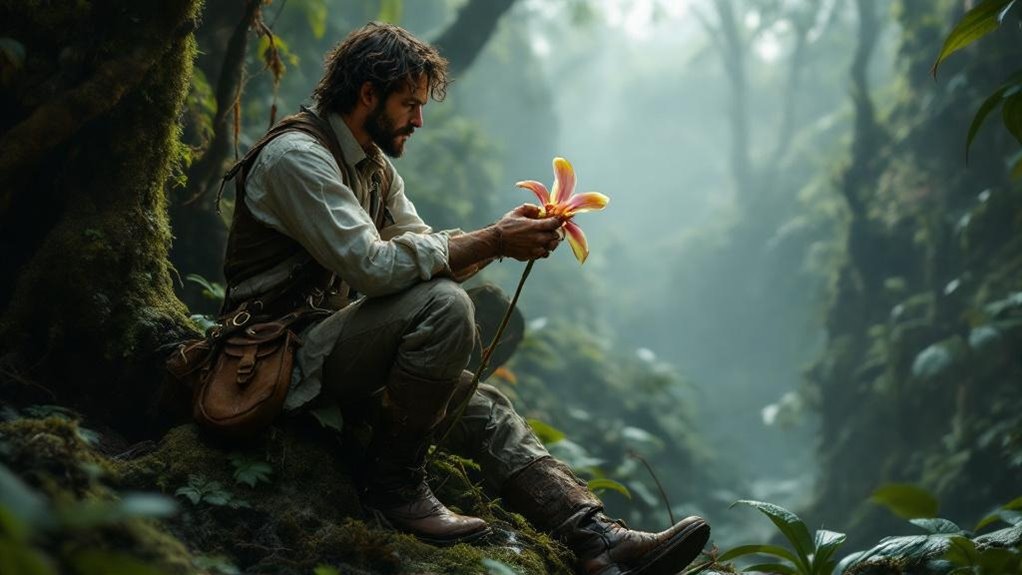
When tropical orchids began arriving in Victorian Europe in the early 1800s, public fascination took shape quickly, and the flowering of lavender cattleya gave that interest a cultivated focus, turning a botanical curiosity into a visible social desire.
Lavender cattleya transformed early orchid arrivals into a distinctly Victorian longing, where botanical novelty quickly became social desire.
You can trace orchid hunting from that observational moment, when wealthy patrons in Victorian Europe stopped treating exotic plants as novelties and began pursuing them as markers of taste, rarity, and controlled knowledge.
As orchidelirium spread, collectors financed trained hunters, sent them into tropical regions, and encouraged secrecy, because concealed sources protected profits and prestige.
You’d also notice the trade’s stagnant practical limits; many orchids died in transit, damaged by poor packing and long voyages, yet losses didn’t slow demand, and the search for rarer blooms pushed collecting toward increasingly extractive habits in wild habitats.
Why Orchids Became So Expensive
You can trace orchid prices to two forces working together: a cultivated surge in elite demand during 19th-century orchidelirium, and a perilous supply chain in which roughly half the plants sent from the tropics to Europe died before arrival.
As wealthy collectors competed for distinction, and as hunters risked more to secure unfamiliar species, rarity stopped looking accidental and became an observational fact of the market; Frederick Sander’s 1890 sale of a Cattleya warscewiczii for £2,000 makes that financial logic plain.
You can also see why prices didn’t turn stagnant, because orchids carried the polished image of sophistication, and their beauty, fragility, and costly losses in transit kept their value elevated in affluent circles.
Perilous Supply Chains
Because orchids had to move from humid tropical forests to European glasshouses through a long, poorly understood chain of collection, packing, and sea transport, their price rose not simply from fashion but from loss; roughly half of the specimens gathered in the field died before they ever reached a buyer, undone by stagnant air, badly designed crates, salt exposure, and handlers who hadn’t yet cultivated even a basic observational sense of what these plants required to survive.
As you trace that perilous journey, you see why orchid hunters charged dearly: disease, animal attacks, hostile encounters, and sabotage thinned shipments before departure, then months at sea reduced them further.
Elite Demand Surge
Scarcity alone didn’t make orchids expensive; elite demand turned loss into spectacle, and in the 19th century the phenomenon later called orchidelirium pushed wealthy collectors in Europe and America to treat rare blooms as proofs of cultivation, reach, and taste.
You can see how prices rose beyond botanical value, because prestige attached itself to survival, rarity, and the observational claim of possessing what others couldn’t secure.
When half of shipped orchids died before reaching Europe, each surviving species entered a cultivated market that refused to stay stagnant; collectors hid locations, chased clandestine finds, and bid against one another until a single Cattleya warscewiczii sold for £2,000 in 1890.
In that economy, elite demand made orchids into luxury emblems, and cost itself became part of their authority among affluent buyers.
Where Orchid Hunters Searched
Across the tropical belt, orchid hunters searched where heat, rainfall, and dense elevation changes cultivated extraordinary botanical variety, and they accepted landscapes that were as dangerous as they were rich; fever, stagnant swamps, difficult mountain routes, and sometimes hostile encounters with indigenous groups shaped the work as much as any observational skill.
| Region | Note | Result |
|---|---|---|
| Philippines | 1901 expedition | one survivor |
| Colombia | secret routes | guarded finds |
| Papua New Guinea | conflict zones | disrupted collecting |
| Europe-bound ports | delayed crates | high losses |
You follow the Orchid trade into the Philippines, Colombia, and Papua New Guinea, where the profession of orchid hunter depended on secrecy, because rivals would steal locations and strip wild orchids before collectors returned. Even when specimens survived collection, transport often undid the work.
What Made Orchid Hunting So Dangerous?
When you follow orchid hunters into the field, you find that deadly jungle hazards shaped every step, because tropical disease, predators, fire, and stagnant travel conditions could end an expedition before a single cultivated specimen reached port.
You also see that the danger wasn’t only environmental; ruthless collector rivalries turned orchid hunting into a disciplined but observational contest in which sabotage, coercion, and violence could decide who returned with the rarest blooms.
As you consider these risks together, you understand why orchid hunting demanded more than botanical skill, since survival depended on endurance, caution, and a willingness to move through landscapes and competitions that offered little mercy.
Deadly Jungle Hazards
Although the rare blooms drew collectors deeper into the tropics, the work itself was often lethal, because orchid hunters moved through stagnant swamps and steep forests under punishing rain, carried limited medical supplies, and had to endure tropical diseases, venomous snakes, biting insects, and exhaustion long before they ever reached a promising valley.
You faced deadly jungle hazards at every step; in 1901, only one of eight hunters returned alive from the Philippines, despite reports of 7,000 new orchid species.
- Stagnant water bred fever and infection.
- Venomous snakes and insects struck without warning.
- Steep, rain-soaked ground turned travel into attrition.
You also entered regions where observational misunderstandings with indigenous groups could turn fatal, a cultivated reminder that danger came from landscape, illness, weather, and human contact alike.
Ruthless Collector Rivalries
Because rare orchids could bring prestige and substantial profit, collectors didn’t merely race the jungle’s stagnant heat and disease; they also worked against one another in a cultivated atmosphere of distrust, where sabotage, concealment, and deliberate destruction became part of the profession itself.
In these ruthless collector rivalries, you couldn’t assume fellowship; employers urged men like William Arnold to ruin competitors’ finds, and the market for rare orchids rewarded whoever returned alone with the prize. Such pressures produced life-threatening confrontations, observational records of violent retaliation, and an occupational culture where friendship scarcely survived.
How Orchid Hunting Fed Colonial Expansion
As orchid collecting hardened into a cultivated obsession among Europe’s wealthy classes, the trade didn’t merely reflect imperial power; it helped extend it, since collectors financed professional hunters who moved through colonized and contested regions in search of rare blooms, mapping terrain, opening routes, and turning remote habitats into commercial frontiers for metropolitan markets.
Orchid collecting did not just mirror empire; it advanced it, converting distant habitats into mapped, marketable frontiers for European desire.
You can see how orchidelirium translated desire into colonial expansion:
- a professional orchid hunter entered exotic locations as commerce’s advance guard;
- secrecy concealed discoveries, protecting profits and turning knowledge into power;
- collectors framed extraction as cultivated duty, masking stagnant moral costs.
When you follow this observational pattern, you see empire operating through taste, money, and movement, while local people and landscapes were reduced to resources, their histories subordinated to European prestige, market advantage, and control.
How Orchid Hunting Destroyed Wild Habitats

When orchid hunting became a cultivated industry rather than a private curiosity, it did more than remove beautiful plants from distant forests; it reorganized fragile habitats around extraction. Since wealthy collectors financed repeated expeditions into rare ecosystems, hunters stripped orchids from trees, rocks, and moss beds with little regard for the stagnant balance that allowed those species to persist.
You can trace the ecological damage through practice as much as scale; hunters pursuing new species and exotic orchids often concealed sites, returned repeatedly, and emptied the same observational corridors until biodiversity thinned.
Because collectors demanded volume, not understanding, hundreds of thousands of plants were taken, while many died in transit to Europe. This made each surviving shipment rest on wider destruction, and left wild populations diminished before science had even learned how to keep them alive.
How Orchid Hunting Survives Today
That destructive legacy hasn’t ended so much as changed form, since orchid hunting still survives today as both a cultivated passion and a working profession, shaped by tighter laws, better botanical knowledge, and a market that continues to reward rarity.
You can still trace modern orchid hunting through careful expeditions and greenhouse networks; a plant hunter may now work with scientists, permits, and conservation laws, yet danger hasn’t gone stagnant.
Modern orchid hunting moves through permits and science, but the old risks still breathe at the edge of every expedition.
- You see poachers, remote terrain, and unstable politics still shadow collecting trips.
- You recall Tom Hart Dyke, kidnapped for nine months in 2000 while searching for rare orchids.
- You also see ethical sourcing and habitat programs guiding observational practice.
Americans spend over $1 billion on orchids each year, so rarity still carries value, although responsible collectors increasingly link trade to protection and long-term stewardship.
Frequently Asked Questions
Why Can’t You Touch Orchids?
You can’t touch orchids because your skin transfers oils, dirt, and bacteria that can bruise petals, spread disease, and stress the plant. You also risk shortening its lifespan and harming fragile ecosystems that orchids depend on.
What Is the Smartest Flower?
The orchid is the smartest flower: you can picture its velvet petals luring insects with perfume and illusion. It tricks pollinators through mimicry, transfers pollen in precise clumps, and adapts signals to match local partners.
What Do Coffee Grounds Do for Orchids?
Coffee grounds feed your orchids nitrogen, improve drainage and aeration, and slightly acidify potting mix. You can also use them as mulch to discourage pests and fungus, but don’t overdo it or you’ll stress roots.
What Does the Bible Say About Orchids?
The Bible doesn’t mention orchids specifically. You can connect them to verses about flowers, like lilies in Matthew 6:28–30, which show God’s care, beauty, and provision. Orchids can still remind you of creation’s wonder.
Conclusion
When you look back at orchid hunting, you see more than cultivated taste; you see an observational record of status, extraction, and loss, shaped by stagnant ideas about empire and ownership. One statistic remains telling: in the Victorian era, a single rare orchid could sell for the equivalent of several thousand dollars today, which explains why collectors accepted extreme risk and why distant forests were stripped so methodically. That history still lingers, and your attention helps keep it visible.