
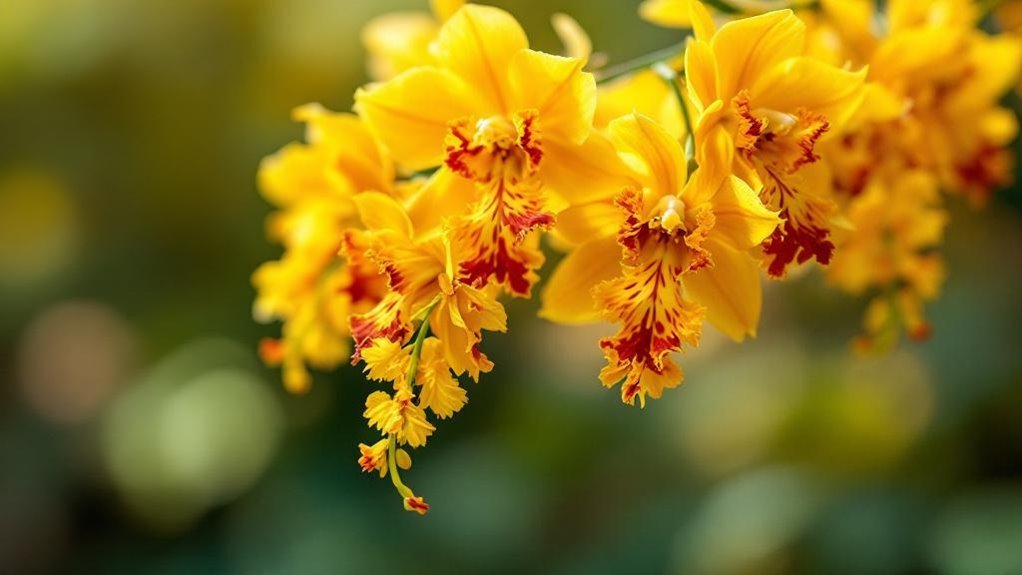
You can see the Dancing Lady Orchid, or cultivated Oncidium, as a symbol of joy, creativity, and prosperity; its ruffled golden blooms, reddish accents, and skirt-like labellum suggest graceful motion, which explains its enduring cultural appeal. Native to humid forests from Mexico to South America, it thrives without stagnant air, supports bees and hummingbirds, and carries a quiet vanilla scent. You’ll also notice that its meaning deepens through gift-giving, art, and regional tradition.
- Key Takeaways
- What Is the Dancing Lady Orchid?
- Why Is It Called the Dancing Lady Orchid?
- What Does the Dancing Lady Orchid Look Like?
- Where Does the Dancing Lady Orchid Grow?
- What Does the Dancing Lady Orchid Mean?
- How Does Dancing Lady Orchid Symbolism Vary by Culture?
- What Do Dancing Lady Orchid Colors Symbolize?
- What Makes the Dancing Lady Orchid Unique?
- How Is the Dancing Lady Orchid Used in Art?
- How Does the Dancing Lady Orchid Help Pollinators?
- When Should You Gift a Dancing Lady Orchid?
- Frequently Asked Questions
- Conclusion
Key Takeaways
- Dancing Lady Orchid, or Oncidium, symbolizes joy, celebration, creativity, and graceful beauty because its blooms resemble a dancer in motion.
- Its golden-yellow flowers with reddish accents suggest happiness, energy, artistry, and festive charm across many cultural traditions.
- In Western culture, it often represents beauty and creativity, while some Asian traditions associate it with prosperity and fertility.
- Indigenous and local traditions connect the orchid with ceremony, nature’s vitality, and values shaped by regional meanings.
- Its elegant form, light fragrance, and cheerful symbolism make it a popular gift for weddings, birthdays, anniversaries, and housewarmings.
What Is the Dancing Lady Orchid?
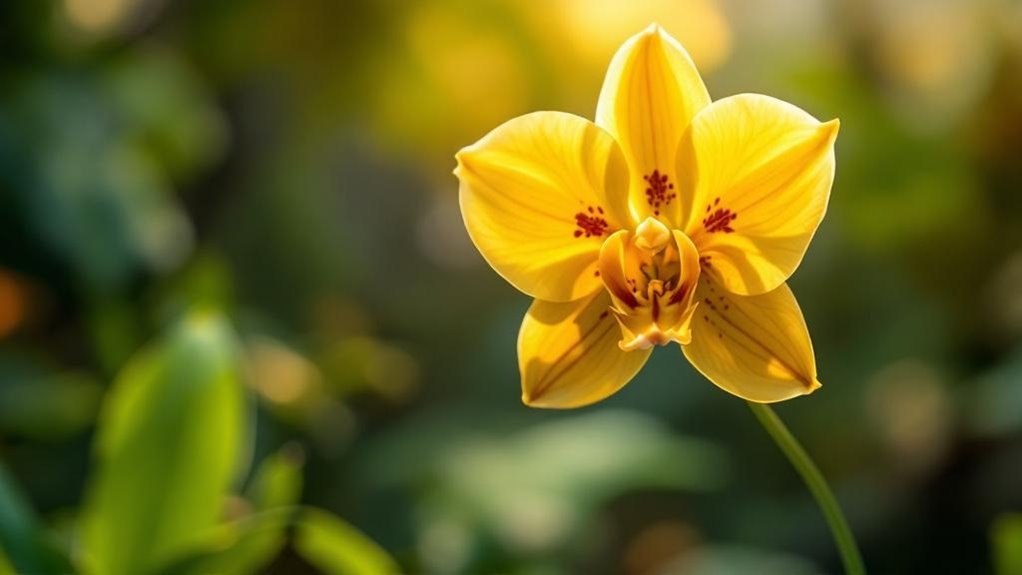
Graceful by design, the dancing lady orchid, or Oncidium, is an epiphytic orchid that grows by attaching itself to tree trunks and branches rather than rooting in stagnant soil. It’s cultivated across tropical and subtropical regions of the Americas, from lowland forests to cloud forests rising to about 1,500 meters.
When you observe dancing lady orchids, you notice a prominent labellum, elongated sepals and petals, and vibrant colors, often golden yellow marked with brown or reddish tones. You may also detect a light vanilla-like fragrance, subtle yet persistent.
As Oncidium grows in these forest systems, it supports bees, butterflies, and hummingbirds, which strengthens pollination networks and ecological balance. Its form, habitat, and pollinator relationships make it both observationally distinctive and horticulturally valued across cultivated collections worldwide today.
Why Is It Called the Dancing Lady Orchid?
When you look at the Dancing Lady Orchid, you can see why its name endured, because the broad, ruffled labellum reads like a skirt caught in motion, and the flower’s overall form suggests a cultivated dancer poised mid-step.
You also find that this observational resemblance isn’t accidental in effect, since the bloom’s layered structure creates a graceful, unstagnant silhouette that has long invited comparisons to a lady in a flowing gown.
Even its scientific name, Oncidium, carries an origin of its own, as botanists traced it to the Greek word “onkos” for swelling, a reference to the bulbous base that distinguishes the flower’s structure while the common name reflects its dancer-like appearance.
Ruffled Skirt Shape
At the center of the name lies the flower’s ruffled labellum, a broad lower petal that reads like the skirt of a cultivated Victorian dancer caught in motion, while the narrower petals and sepals extend above and around it, reinforcing the figure-like outline that gives Oncidium its common identity.
When you observe this unique structure closely, you see why growers emphasize the skirt shape first; the ruffled margin directs attention downward, colors and patterns deepen the impression, and the bloom avoids any stagnant appearance even in still air.
This observational appeal also helps explain its cultural reach, because the form can symbolize joy, celebration, and creativity without relying on overt ornament.
You also benefit from a flower built for resilience, since its complex morphology supports adaptation across varied environments and sustains displays for weeks.
Dancer-Like Flower Form
Look closely at an Oncidium bloom, and you can see why it’s called the Dancing Lady Orchid; the broad, ruffled labellum reads as a cultivated dancer’s skirt caught in motion, while the narrower petals and sepals rise and extend around it like lifted arms and trailing fabric, creating a figure that appears poised rather than stagnant.
- You notice the dancer-like flower form immediately.
- Oncidium orchids carry blossoms along arching stems.
- Golden-yellow tones deepen the observational illusion.
- Brown markings reinforce their unique beauty.
As you study the bloom, the elongated sepals and petals suggest movement rather than symmetry alone.
That structure also serves pollinators, guiding access with practical precision; across varied eco-niches, this adaptive morphology preserves the same cultivated, dynamic impression, so the flower never reads as merely decorative.
Origin Of The Name
The name “Dancing Lady Orchid” comes directly from what you observe in an Oncidium bloom, because the broad, ruffled labellum resembles the skirt of a Victorian lady’s gown while the smaller floral segments frame it like an uplifted figure in motion.
That cultivated image explains the “lady,” and the flower’s tendency to sway along arching stems in moving air completes the “dancing” impression, giving the name an observational basis rather than a merely poetic one.
If you look deeper, the oncidium dancing lady orchid also carries botanical history, since Olaf Swartz described the genus in 1800 and linked Oncidium to the Greek onkos, meaning swelling.
That detail anchors the name in structure rather than stagnant ornament, while its cultural significance connects grace, festivity, and the quiet joy of dance.
What Does the Dancing Lady Orchid Look Like?
You notice the dancing lady orchid first by its ruffled golden blooms, whose wavy petals resemble a dancer’s skirt in motion, often marked with brown or reddish tones that sharpen the flower’s cultivated, observational appeal.
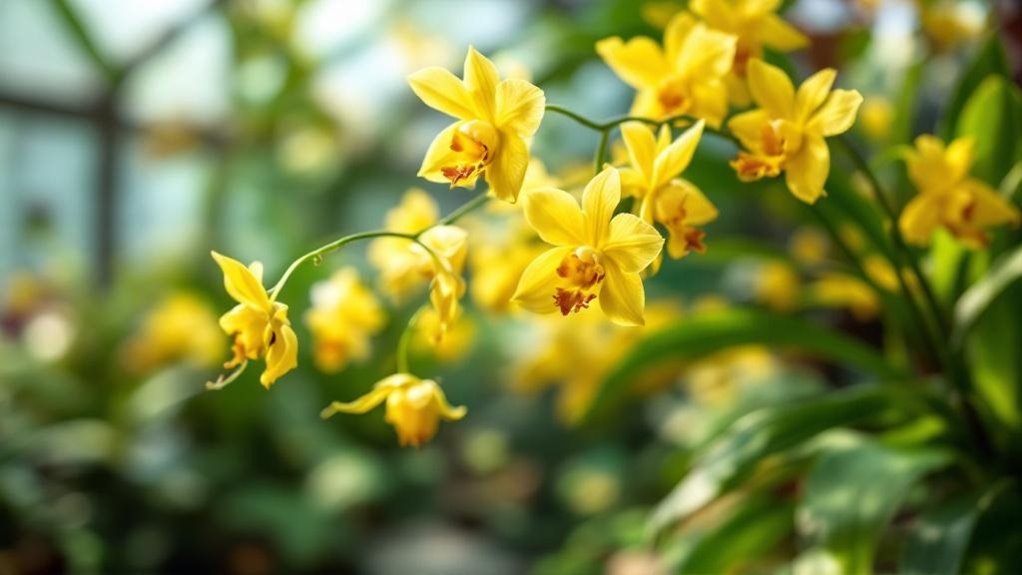
As you look closer, you see the blossoms carried on slender, arching stems that form a graceful spray, and this cascading structure keeps the display from appearing stagnant while giving the plant its familiar sense of movement.
You also find notable variation in the size of individual blooms, a feature that reflects the orchid’s structural complexity and helps explain why its form remains so distinctive across different growing conditions.
Ruffled Golden Blooms
Grace gives the Dancing Lady Orchid its name, because its cultivated blooms open in luminous golden yellow, often brushed with brown or reddish markings. Each flower carries a broad, ruffled lower petal that suggests a skirt caught in motion.
As you observe the Dancing Lady Orchid, you notice vibrant blooms that vary from a few centimeters to more than ten, a range that deepens its observational interest and reinforces the symbolism of orchids through cultivated complexity rather than stagnant uniformity.
- Golden petals hold brown or reddish accents.
- Ruffled lips create the impression of motion.
- Flower size varies noticeably across blossoms.
- Complex forms suit diverse tropical eco-niches.
You read these details as visual evidence of adaptation, because the flower’s layered structure supports varied habitats while preserving the poised, recognizable silhouette that gives this orchid its cultural distinction.
Arching Spray Structure
Elegance defines the Dancing Lady Orchid’s arching spray structure, because slender cultivated stems rise and curve outward, then carry numerous small blossoms in a loose cascade that gives the plant its poised, observational character. When you study the dancing lady orchid, you see how this unique flower balances delicacy with reach, presenting an elegant cascading effect rather than a stagnant cluster.
Along each spray, golden-yellow blooms appear with brown or reddish markings, and their sizes vary from a few centimeters to more than ten, which broadens the visual rhythm you perceive. The petals ripple and ruffle like a dancer’s skirt, reinforcing motion within a still form; that structural complexity also supports adaptation, allowing the plant to occupy diverse tropical and subtropical eco-niches without losing its refined, cultivated presence in changing native conditions.
Where Does the Dancing Lady Orchid Grow?
Although the Dancing Lady Orchid, or Oncidium, appears delicate, it grows across a wide span of the Americas in habitats that remain humid, shaded, and biologically complex, including lowland tropical forests, cloud forests, and even mangrove margins where air movement prevents conditions from turning stagnant.
You’ll find its natural habitat from Mexico through South America, usually from sea level to about 1,500 meters, where moisture, filtered light, and stable forest structure support cultivated and wild populations alike.
From Mexico to South America, it thrives where humidity, filtered light, and stable forests support growth from sea level upward.
- Lowland tropical forests support steady humidity.
- Cloud forests offer cool, misted elevation.
- Shaded mangroves provide airflow without stagnant conditions.
- Reserves and botanical gardens protect native stands.
In places like Mexico’s Riviera Maya, your observational understanding deepens; conserved forests and ecological reserves sustain pollinators, reinforce biodiversity, and anchor ongoing conservation work.
What Does the Dancing Lady Orchid Mean?
When you consider what the Dancing Lady Orchid means, you can see why it stands for joy and celebration; its bright, cultivated blooms and dancer-like form suggest movement, beauty, and the kind of happiness that never feels stagnant.
You can also read in it a graceful feminine symbolism, since its soft, flowing shape conveys elegance, appreciation, and a quiet sense of heartfelt affection.
At the same time, you recognize creativity and vibrancy in its striking colors and expressive structure; together, these qualities make it a flower that reflects artistic energy, emotional warmth, and renewal.
Joy And Celebration
Delight sits at the center of the Dancing Lady Orchid’s meaning, because its blossoms suggest motion rather than stillness, and that visual rhythm gives the plant a cultivated association with joy, grace, and celebration.
When you encounter the Dancing Lady Orchid, you read an observational language of flowers that can symbolize joy without seeming forced, because its lively form and vivid color resist anything stagnant, and its cultural significance supports that reading.
- You see movement, energy, and brightness.
- You connect it with weddings and anniversaries.
- You place it in festive arrangements with confidence.
- You recognize Mexico’s floral heritage within it.
Because this orchid appears during milestones and in tropical landscapes, you understand why people value it as a positive emblem, one that reinforces celebration, natural beauty, and shared identity across public and private settings.
Graceful Feminine Symbolism
Beyond its festive character, the Dancing Lady Orchid carries a cultivated feminine symbolism, because its arching sprays and skirt-like blooms suggest poise, beauty, and controlled movement rather than anything rigid or stagnant. When you read its form observationally, you see why orchids symbolize refinement, cultivated beauty, and feminine power; in gifts and interiors, it marks achievement with a graceful presence.
| Trait | Visual cue | Meaning |
|---|---|---|
| Skirt-like bloom | Flowing outline | Grace |
| Arching spray | Lifted posture | Poise |
| Refined form | Luxurious presence | Beauty |
In several Asian traditions, you may also encounter associations with prosperity and fertility, which deepen its feminine appeal without diminishing its elegance. As a result, you can regard this orchid as an emblem of composed strength, social esteem, and cultivated womanhood.
Creativity And Vitality
Although its feminine elegance is often the first quality you notice, the Dancing Lady Orchid also signifies creativity and energy, because its wavy petals, lifted spray, and prominent lip create the observational impression of motion held in form, as if the flower itself refuses anything stagnant.
- You read creativity in its dancer-like silhouette.
- You see vibrant color shaping artistic meaning.
- You give it to mark joy, vivacity, and enthusiasm.
- You connect it with Mexico’s cultivated floral heritage.
When you consider its meaning, you encounter more than beauty; golden-yellow tones, often layered with brown or reddish markings, suggest lively expression, while its use in celebration arrangements reinforces liveliness.
In cultural settings, you recognize associations with dance, inspiration, biodiversity, and aesthetic value.
How Does Dancing Lady Orchid Symbolism Vary by Culture?
When you compare cultural interpretations of the Dancing Lady Orchid, you find a cultivated symbolism that shifts with local values while remaining anchored in the flower’s observational qualities, especially its dancer-like form, vivid color, and intricate patterning.
In many Western settings, it stands for beauty and creativity, which explains its steady use in elegant bouquets and refined gifts, while in several Asian traditions, the same bloom carries associations with prosperity and fertility, reflecting a belief that abundant, vibrant flowers invite good fortune rather than stagnant energy.
In Indigenous cultures across the Americas, you see the Dancing Lady Orchid tied to joy, ceremony, and nature’s essence; its moving silhouette supports cultural symbolism linked to grace and artistic expression, while its presence among elegant flowers strengthens meanings of admiration within communities and across generations.
What Do Dancing Lady Orchid Colors Symbolize?
Because color often directs floral meaning more immediately than form, the Dancing Lady Orchid’s palette carries a cultivated symbolism that reinforces the flower’s broader associations with joy, energy, and creativity; its most familiar golden-yellow tones suggest happiness, celebration, and social brightness, while the reddish markings introduce a note of liveliness and artistic complexity, preventing the bloom from feeling merely decorative or stagnant.
When you choose a dancing lady orchid, you signal more than taste; you emphasize observational symbolism through color.
- Golden yellow conveys happiness and festivity.
- Red markings suggest artistry and movement.
- Mixed tones support elegant wedding arrangements.
- Lasting brightness can imply resilience.
Among beautiful flowers, this palette helps you express cultivated optimism, refined beauty, and adaptable strength, especially when floral meaning needs quiet clarity.
What Makes the Dancing Lady Orchid Unique?
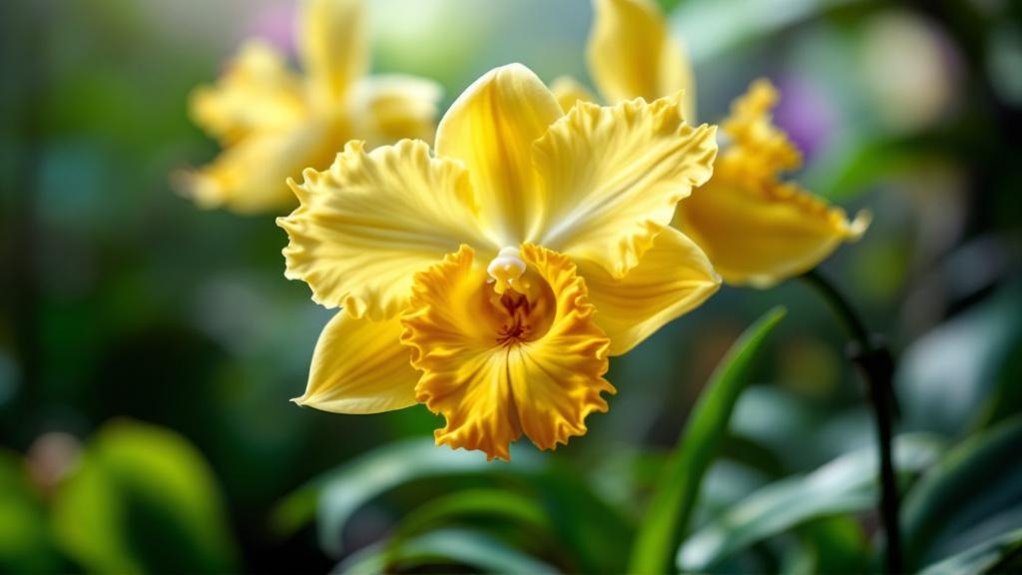
Beyond its color symbolism, the dancing lady orchid stands apart through form, habitat, and cultural resonance; its Oncidium flowers carry a distinctly animated structure, with a broad, ruffled labellum that reads like a skirt caught in motion, so the plant rarely appears static or stagnant even at rest.
You notice how the dancing lady orchid pairs stunning flowers with observational complexity, since golden-yellow petals, marked with brown or reddish tones, create cultivated contrast and visual depth.
It also grows as an epiphyte in shaded tropical lowlands and cloud forests, which gives it an adaptive character many houseplants don’t display. Its subtle fragrance during peak bloom extends that appeal without excess, while its rich history of symbolism, tied to joy, creativity, and celebration, gives the plant a cultural identity that feels enduring, rather than merely decorative.
How Is the Dancing Lady Orchid Used in Art?
Although the dancing lady orchid belongs to the natural world, artists repeatedly draw it into visual culture, since its flower already suggests motion, balance, and cultivated theatricality without becoming visually crowded or stagnant.
You see the dancing lady orchid translated across media because its flower structure offers clear rhythm, bright contrast, and observational nuance, which support artistic designs without losing botanical identity.
Artists use it in:
- paintings and sculpture, where the dancer-like form implies grace
- textiles, wallpaper, and decor, where color adds tropical richness
- photography, where intricate petals reward close framing and light
- traditional crafts and regional artwork, where place and culture meet
Its recurring presence also reflects meaning; when you encounter it in exhibitions or crafted objects, you often read joy, creativity, movement, and natural elegance, rendered with enough precision to remain recognizable and composed.
How Does the Dancing Lady Orchid Help Pollinators?
When the dancing lady orchid blooms, it helps pollinators in direct, practical ways, offering nectar that draws bees, butterflies, and sometimes hummingbirds to the flower while its broad, prominent labellum gives them a stable landing surface from which they can feed efficiently.
When dancing lady orchids bloom, they reward pollinators with nectar and a stable landing platform for efficient feeding.
As you observe these orchids, you can see how their cultivated structure supports precise contact between visiting bodies and reproductive parts, which improves pollination while reducing wasted effort.
Their flowering season coincides with warmer months, so pollinators are active, mobile, and more likely to transfer pollen and support later seed dispersal.
Because these orchids grow as epiphytes in forest microhabitats, they create observational opportunities where biodiversity remains balanced rather than stagnant.
With proper care, you help sustain those interactions and the broader reproductive health of surrounding plants and forest communities.
When Should You Gift a Dancing Lady Orchid?
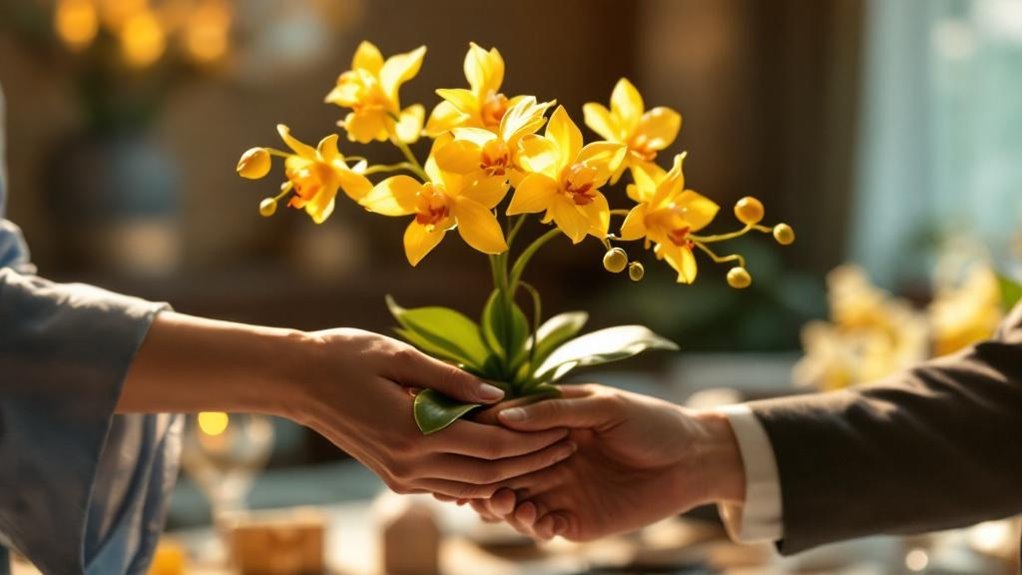
Because its blooms suggest movement, brightness, and cultivated elegance, a Dancing Lady Orchid works especially well as a gift for occasions that mark happiness, change, or recognition. You can give it at weddings and anniversaries to reflect joy and creative energy, at birthdays for someone who values natural beauty, or as a gesture of appreciation toward friends, relatives, or colleagues whose support deserves clear acknowledgment.
- Weddings and anniversaries suit its joyful symbolism.
- Birthdays benefit from its refined, observational beauty.
- Housewarmings reflect prosperity, fertility, and cultural appeal.
- Mother’s Day honors care with fragrance and grace.
You can also present a Dancing Lady Orchid during holidays or milestones when you want your gift to avoid stagnant predictability. Its form feels distinctive, and in some traditions, it carries wishes for abundance, making it especially appropriate for new homes and maternal figures.
Frequently Asked Questions
What Does the Dancing Lady Orchid Symbolize?
You can see the dancing lady orchid symbolizes joy, energy, creativity, and celebration. It also conveys warmth, admiration, and happiness. In some cultures, you’d recognize it as a sign of prosperity, good fortune, and lively human connection.
What Is the Cultural Significance of Orchids?
You see orchids carry cultural significance as symbols of elegance, status, love, and harmony across societies. You find them in rituals, gifts, and art because they express refinement, spiritual connection, admiration, and emotional meaning.
Why Are Lady Slipper Orchids Illegal in the US?
Because overharvesting and habitat loss threaten them, you can’t legally collect or sell many lady slipper orchids in the U.S. Why risk fines? You protect vulnerable native species when you leave them undisturbed in nature.
What Is the Cultural Significance of the Vanda Orchid?
You see the Vanda orchid symbolize beauty, elegance, and luxury across Asia. In Thailand, you recognize it as a sign of respect, strength, and dignity. Its vivid blooms also represent prosperity, fertility, and auspicious spiritual beginnings.
Conclusion
As you consider the dancing lady orchid, you see why its cultivated form, symbolic meaning, and observational charm continue to hold cultural appeal; it isn’t merely decorative, because its shape suggests movement, its presence resists anything stagnant, and its long use in art and gifting gives it lasting relevance. When you give or display one, you’re choosing a flower that carries a thousand quiet associations, and that breadth of meaning explains its enduring place across settings and traditions.