
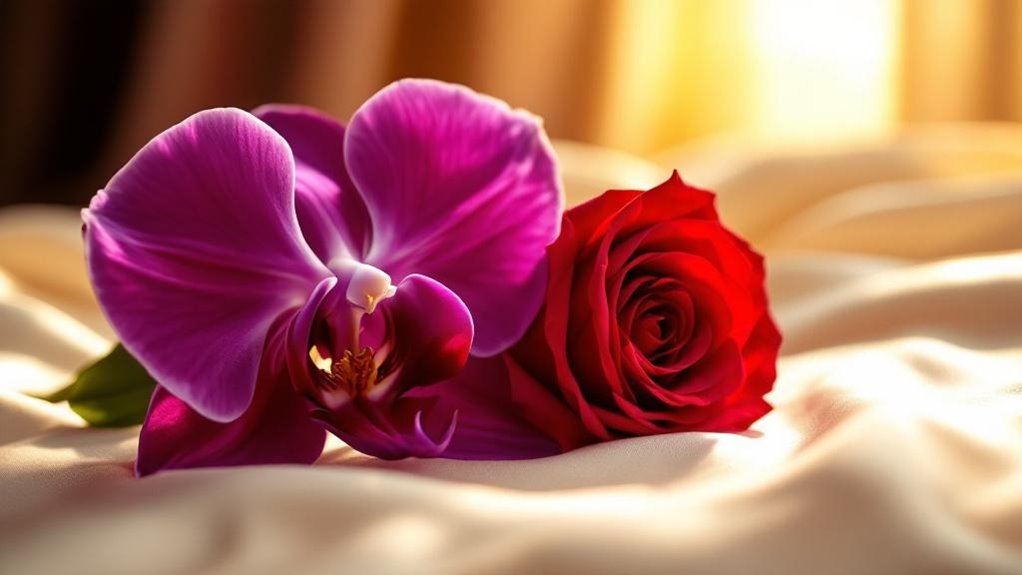
You choose roses when you want love to register as immediate, passionate, and unmistakable; red roses declare desire and devotion with visible warmth, fragrance, and little ambiguity. You choose orchids when you want romance to feel cultivated, observational, and enduring; they suggest admiration, refinement, patience, and steady care rather than dramatic intensity. Roses suit moments that need clarity, while orchids suit affection that shouldn’t feel stagnant, and the distinctions become more useful once occasion, color, and longevity enter the choice.
- Key Takeaways
- Orchid vs Rose Meaning at a Glance
- Rose Meaning in Love
- Orchid Meaning in Romance
- Rose vs Orchid: Passion or Admiration?
- Rose vs Orchid for Valentine’s Day
- Rose vs Orchid: Longevity, Care, and Value
- Rose or Orchid by Relationship
- When to Give Roses, Orchids, or Both
- Frequently Asked Questions
- Conclusion
Key Takeaways
- Red roses symbolize immediate, passionate romantic love, making them the clearest choice for direct declarations of desire and devotion.
- Orchids represent refined admiration, uniqueness, and steady affection, expressing love with elegance rather than overt intensity.
- Roses feel warm, fragrant, and emotionally explicit, while orchids feel composed, sophisticated, and more restrained in romantic tone.
- Cut roses usually last 5–10 days, whereas Phalaenopsis orchids bloom for 8–12 weeks and can rebloom for years.
- Pairing roses with orchids combines passionate romance with lasting presence, balancing bold emotion and enduring appreciation.
Orchid vs Rose Meaning at a Glance
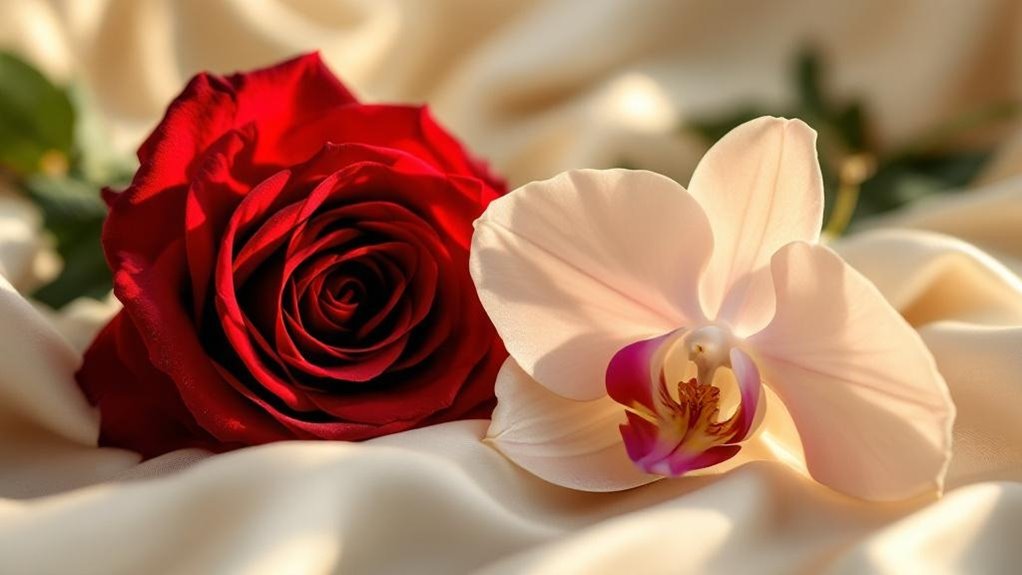
While both flowers carry romantic meaning, they don’t speak in the same register; roses, especially red ones, signal immediate and passionate love with a directness that has made them the standard choice for Valentine’s Day and other clear declarations, whereas orchids convey a more cultivated form of affection, one rooted in admiration, rarity, elegance, and enduring appreciation rather than overt intensity.
In practical flower symbolism, you choose roses when you want visible warmth and orchids when you want refined admiration expressed through composed, observational restraint; a bouquet fades within days, but an orchid plant can bloom for weeks and rebloom for years, giving you a lasting reminder of romantic love without a stagnant tone.
For milestone gifts, pairing red roses with orchids balances passionate romance and sustained presence with clarity.
Orchid symbolism also emphasizes steady devotion, making orchids especially meaningful when you want love expressed with patience, endurance, and refined care.
Rose Meaning in Love
When you choose a rose to express love, you align yourself with a cultivated symbol of passion and devotion, and the red rose remains the clearest sign of romantic desire, shaped by long tradition and reinforced by its association with Valentine’s Day, anniversaries, and proposals.
You also communicate through shade with observational precision, since pink suggests admiration and gratitude, white signals purity, yellow stays outside romantic intensity in favor of friendship, and deep crimson or burgundy conveys a more transcendent, less stagnant form of devotion.
For romantic occasion fit, you can rely on roses when you want your message understood at once, especially in refined garden or luxury varieties whose fragrance and beauty make your intention feel elevated, even if their cut blooms offer a briefer expression than longer-blooming plants.
For a quieter gesture, white orchids can also convey purity, peace, and lasting regard when romance calls for sincerity rather than overt display.
Passion And Devotion
Consider how a red rose works in love: it states passion and devotion with unusual efficiency, drawing on centuries of cultivated meaning tied to Aphrodite and Venus, and it does so in a form most people recognize at once as a declaration of romantic commitment.
When you choose red roses, you signal passionate romantic love, deep desire, and steady devotion without stagnant ambiguity; a rose bouquet on Valentines Day, at an anniversary, or during a proposal gives emotional clarity quickly, because color, fragrance, and abundance register at once.
Each shade of love adjusts your message, with classic red suggesting timeless love, deep crimson implying stronger desire, and burgundy indicating quieter, profound attraction.
Still, cut roses are observational in another way: their impact is vivid yet brief, usually lasting five to ten days with proper care.
Orchids, by contrast, often carry cultivated rarity and a sense of refined status that makes them feel more exclusive and deliberate.
Red Rose Symbolism
Often, a red rose says more about love than any other flower, because it carries a cultivated symbolism that Western culture has tied for centuries to Aphrodite and Venus, and it delivers that meaning with unusual clarity as the direct floral equivalent of “I love you.” In romantic settings, you don’t have to explain it; red roses already signal passionate love, desire, and devotion in a form that resists stagnant ambiguity, which is why they remain the established choice for Valentine’s Day, anniversaries, and proposals, where emotional precision matters as much as beauty.
You also read shade observationally: classic red affirms passionate romantic love, deep crimson suggests stronger desire, while David Austin roses add rose fragrance, and their cut blooms create immediate impact that usually endures only five to ten days, intensifying meaning for an anniversary. Orchids, by contrast, often convey lasting affection with a quieter elegance that suits love, admiration, and meaningful milestones.
Romantic Occasion Fit
Usually, roses fit romantic occasions best when you need the clearest, most observational declaration, because red roses function as the universal symbol of romance and signal passionate romantic love without ambiguity; for a proposal, an anniversary, or any romantic occasion where hesitation would feel stagnant, they deliver the message immediately.
You can also refine that message through rose color, since classic red suggests timeless devotion, deep crimson implies stronger desire, pink conveys admiration, and white expresses reverent purity more directly than a white orchid in most cultivated traditions.
A rose delivery works especially well when you want a romantic gesture that feels culturally legible, fragrant, and visually emphatic, whether you’re marking Valentine’s Day, offering apology, or choosing flowers that won’t leave your intent open to interpretation at all.
Like roses, red orchids also communicate passionate love, but with a more deliberate sense of strength, devotion, and composed resolve.
Orchid Meaning in Romance
Refinement defines the orchid’s meaning in romance; it signals a cultivated, sophisticated kind of love that centers on admiration for a partner’s uniqueness and exceptional beauty, rather than the raw, immediate passion associated with more dramatic flowers.
When you give orchids, the orchid meaning in romance becomes observational and deliberate, shaped by rarity, Victorian prestige, and thoughtful intent; you signal refined love that resists anything stagnant, while honoring individuality with quiet precision.
A Phalaenopsis bloom lasts 8–12 weeks, so it serves as enduring affection and a lasting reminder.
White orchids convey pure respect, pink orchids express gentle tenderness, and purple orchids communicate deep admiration and enchantment.
You choose them for a partner who values design, longevity, and understated elegance, and for sentiment that remains composed, lasting, and clear.
Rose vs Orchid: Passion or Admiration?
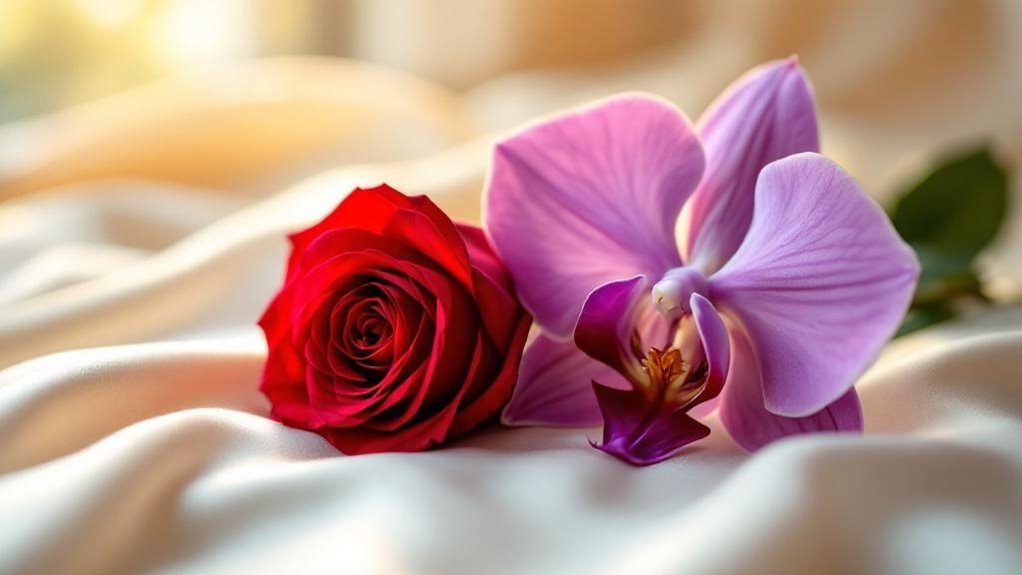
Set against the orchid’s cultivated, observational form of romance, the rose states something more immediate; if you want to signal passion and desire without ambiguity, the red rose remains the clearer choice, while the orchid speaks in the register of admiration, refined affection, and regard that doesn’t feel impulsive or stagnant.
If you choose red roses, you present passionate romantic love through fragrance and fleeting intensity, a language suited to romantic gestures and anniversary vs long-term distinctions; if you choose orchids, especially white or purple phalaenopsis, you communicate enduring admiration through composure, long-lasting blooms, and design-forward restraint.
In fragrance vs elegance, roses feel warmer, while orchids remain cooler and more architectural. If your message needs both immediacy and duration, a combined bouquet lets you express desire now, and continued regard later.
Rose vs Orchid for Valentine’s Day
For Valentine’s Day, you can treat the choice between roses and orchids as a choice between immediacy and duration; red roses remain the culturally legible answer when you want to say “I love you” without dilution, because they deliver passionate romantic meaning through bold color, fragrance, and dramatic visual impact, even if cut stems typically hold for only 5 to 10 days with proper care.
If you want symbolism that reads instantly as romantic love, choose red roses, especially for an anniversary, a proposal, or traditional flower delivery. If your recipient prefers cultivated restraint, minimalist design, or a more observational expression of lasting affection, choose orchids, particularly Phalaenopsis. For a milestone Valentine’s Day gesture, you can pair roses with orchids; the first avoids ambiguity, and the second prevents the memory from feeling stagnant.
Rose vs Orchid: Longevity, Care, and Value
Although both flowers can carry romantic weight, they differ sharply in how long they remain present, how much attention they ask of you, and how much value they return over time; cut roses usually last 5 to 10 days with proper care, and grocery-store bouquets often fade closer to 4 or 5, so you’ll need to check water daily and trim stems every few days to preserve their brief peak, whereas a Phalaenopsis orchid commonly holds its blooms for 8 to 12 weeks per cycle and can rebloom for years with little more than indirect light and a few minutes of weekly care.
If you compare longevity and maintenance, the orchid delivers stronger lasting value in romance; a $100 rose bouquet may average about $14 per day, while a Phalaenopsis averages near $1.40, avoiding stagnant expense.
Rose or Orchid by Relationship
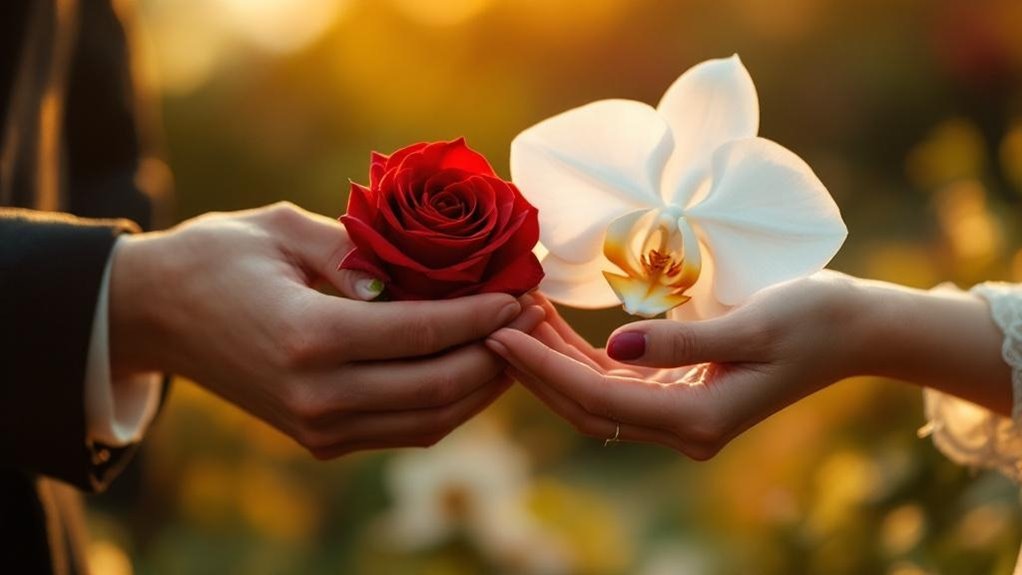
You choose more confidently when you match the flower to the relationship, because roses state romance with little ambiguity while orchids project a more cultivated, observational restraint.
For romantic partners, roses usually suit moments that call for passion, apology, or unmistakable intent, whereas orchids fit established bonds, design-conscious tastes, and affection that shouldn’t feel stagnant or overstated.
For professional and platonic connections, you usually arrive at the better choice with orchids, since their cool elegance communicates respect and thoughtfulness without implying overt desire.
Romantic Partners
In romantic partnerships, the choice usually turns on whether the moment calls for an unmistakable declaration or a more cultivated, enduring signal of attachment; red roses remain the clearest cultural shorthand for passionate love, which is why they suit Valentine’s Day, anniversaries, proposals, and any occasion where ambiguity would feel stagnant rather than observational.
- Choose red roses for romantic love and high-drama impact.
- Choose orchids for long-term admiration and refined taste.
- Choose garden roses for fragrance, though beauty fades quickly.
- Choose Phalaenopsis when you want a gift that lasts weeks.
If you want passionate love stated plainly, roses are decisive; if you want enduring affection conveyed with restraint, orchids serve better.
For a major anniversary, pair both, since roses provide immediate ceremony, while an orchid plant extends the sentiment.
Professional And Platonic
Where the relationship is professional or plainly platonic, orchids usually make the safer and more cultivated choice, because their long-lasting blooms, restrained fragrance, and architectural form convey respect, sophistication, and thoughtful regard without drifting into romantic implication; roses can still work in friendship, but color controls the message, with yellow suggesting friendship, pink signaling admiration, and peach expressing gratitude, while red remains too culturally fixed to passionate love for most workplace or nonromantic contexts.
| Choice | Feeling |
|---|---|
| orchids | neutral elegance |
| yellow roses | platonic friendship |
| pink roses | admiration |
| peach roses | gratitude |
In professional gifting, choose orchids for sympathy and housewarming, or add non-red roses for observational warmth; same-day delivery options help. Avoid a romantic message; stagnant signals can unsettle recipients.
When to Give Roses, Orchids, or Both
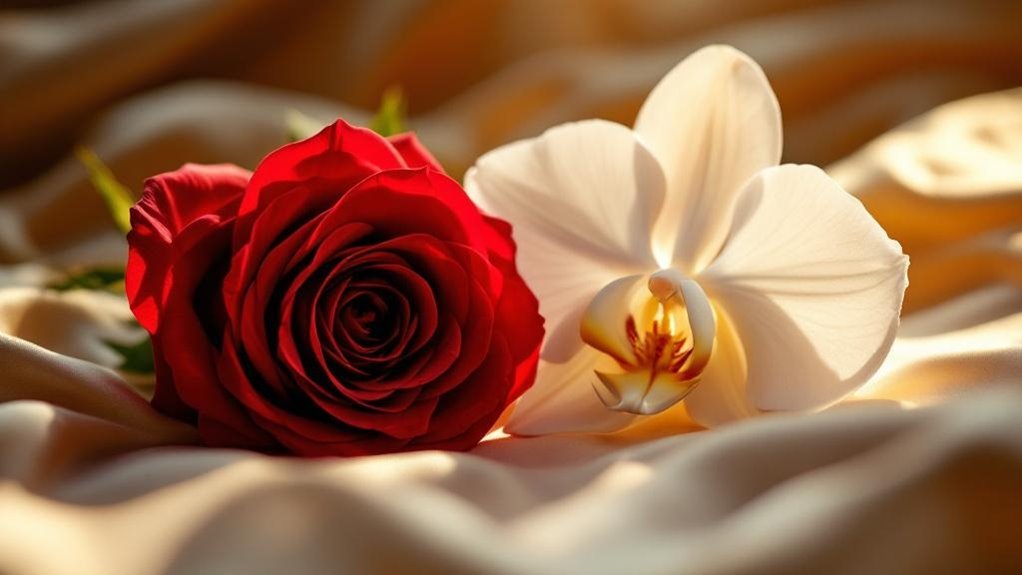
Although the occasion usually decides the flower, the message matters just as much; give red roses when you want a clear, culturally legible declaration of passionate romantic love, especially for Valentine’s Day, anniversaries, proposals, apologies, or spontaneous gestures that depend on immediate visual impact and fragrance rather than cultivated longevity.
- Choose red roses for passionate apologies and immediate effect.
- Select a Phalaenopsis orchid as a long-lasting gift with refined admiration.
- Use orchids for corporate thanks, bosses, or observational, gender-neutral settings.
- Give both for couple milestones, weddings, and significant achievements.
If you want intensity, roses avoid stagnant ambiguity; if you want enduring affection, an orchid offers cultivated presence, often blooming for months.
For major anniversaries or couple milestones, combine both, since you signal immediate feeling and lasting value.
Frequently Asked Questions
What Does an Orchid Symbolize in Love?
An orchid symbolizes refined, lasting love. You give it to show admiration for someone’s unique beauty, deep respect, and thoughtful devotion. Its elegant form and long blooms suggest your affection is steady, mature, and intentionally enduring.
What Do Orchids and Roses Symbolize?
You’ll see orchids symbolize refined love, admiration, luxury, and lasting affection, while roses symbolize romantic love, passion, and desire. You’d choose orchids for elegant, enduring gestures and roses for bold, heartfelt declarations of love.
Which Flower Symbolizes Love and Romance?
Like Cupid’s arrow, you’ll find roses symbolize love and romance most directly. You can choose red roses for passionate declarations, while orchids speak to enduring admiration and refined affection when you want something subtler.
Which Flower Is Best for a Relationship?
You’ll choose based on your relationship: pick roses when you want a bold, unmistakable romantic message, or choose an orchid when you want lasting admiration and elegance. For milestone moments, you can’t beat giving both together.
Conclusion
When you choose between roses and orchids, you’re deciding how you want love to be read: as cultivated passion, immediate and classic, or as observational admiration, refined and enduring; what image do you want to place in someone’s hands, a velvet bloom that speaks quickly, or an elegant stem that lingers without turning stagnant? If the relationship is new, established, or layered, your choice should follow its character, because the flower matters most when its meaning matches the bond.