
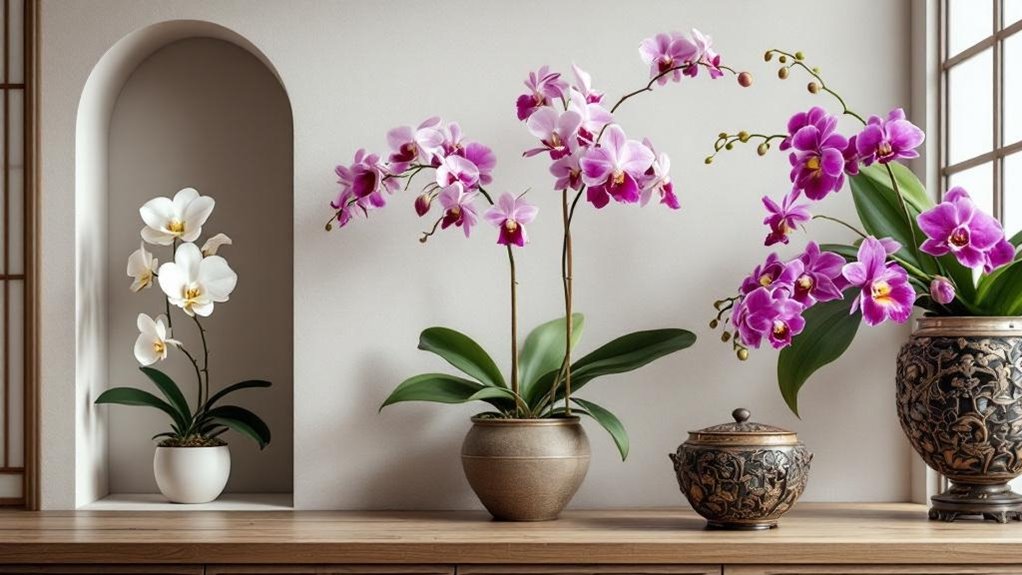
Across cultures, you’ll find orchids treated as more than ornament: in Greece they signaled fertility and romantic power; in China they were cultivated as emblems of virtue, refinement, and friendship; in Japan they suggested respect, discipline, and status; in Aztec life, vanilla orchids carried ritual and economic weight; in Hawaii they conveyed admiration and spiritual regard. Even color shapes meaning, so your choice needn’t be stagnant when occasion, relationship, and custom can guide it more precisely.
- Key Takeaways
- What Orchids Mean Around the World
- Greek Orchid Myths and Fertility
- Aztec Orchid Rituals and Vanilla
- Orchids in Chinese Culture and Virtue
- Orchids in Japanese Culture and Nobility
- Orchids in Hawaiian Tradition and Honor
- Victorian Orchids and Social Status
- What Orchids Meant in Ancient Rome
- Orchid Color Meanings
- How to Give Orchids Across Cultures
- How to Choose an Orchid by Meaning
- Why Orchid Symbolism Appears Worldwide
- Frequently Asked Questions
- Conclusion
Key Takeaways
- Orchids commonly symbolize beauty, refinement, and admiration, though their meanings vary widely across cultures and historical periods.
- In Chinese culture, orchids represent moral integrity, friendship, and elegant character, reflecting deep literary and philosophical values.
- Greek and Roman traditions linked orchids with fertility, virility, love, and celebration, often giving them sensual or civic significance.
- Aztec and Hawaiian cultures viewed orchids as spiritually meaningful, using them in rituals, leis, and symbols of respect, strength, and sacred connection.
- Orchid colors shape gifting meanings globally: white for purity, pink for grace, purple for respect, and yellow for friendship or new beginnings.
What Orchids Mean Around the World

Although orchids appear delicate, cultures around the world have given them meanings that are remarkably enduring, shaped by myth, ritual, philosophy, and status. As you look across traditions, you find that orchids symbolize far more than ornament: in China, they express beauty, refinement, and virtuous character, a cultivated ideal Confucius linked to worthy company; in Aztec practice, the vanilla orchid carried sacred force when blended with cacao, suggesting strength and liveliness rather than stagnant decoration.
In Victorian society, orchids marked luxury and exclusivity, their rarity reinforcing status and observational beliefs about noble blood.
Color deepens this global language, because white orchids indicate purity and reverence, while pink ones convey grace and joy, showing how one flower can hold distinct, stable meanings without losing its quiet authority.
Greek Orchid Myths and Fertility
When you turn to ancient Greece, the orchid’s meaning becomes more explicitly bodily and generative, because its very name comes from the Greek *orchis*, or “testicle,” an observational link to the paired tubers that led people to associate the plant with virility, fertility, and erotic power rather than with stagnant ornament alone.
You also encounter the legend of Orchis, a young man punished by the gods and transformed after death into an orchid; through that change, you see punishment joined to renewal, and desire redirected into cultivated myth.
In Orchis’s fate, punishment becomes renewal, and unruly desire is transformed into enduring myth.
Greek practice reinforced the symbolism, since people consumed orchid tubers to influence fertility, believing one part favored sons while another favored daughters.
In that world, the orchid, not Vanilla, signified aphrodisiac force, masculine vigor, and the persistent hope that human generation could be guided.
Aztec Orchid Rituals and Vanilla
As you turn to the Aztecs, you find that the vanilla orchid was cultivated as more than a fragrant plant; it stood as a divine gift, and that symbolism shaped ritual life, social practice, and observational ideas about favor from the gods.
You can see this most clearly in the sacred drink made from vanilla and cacao, which wasn’t treated as a stagnant luxury but as a purposeful mixture believed to grant strength, energy, and a closer spiritual bond.
When you place that belief within Aztec culture, you recognize why orchids carried such high esteem; they joined beauty, ceremony, and practical value in a single revered form.
Sacred Vanilla Drink
Reverence shaped the Aztec understanding of the vanilla orchid, *Vanilla planifolia*; they treated it as a divine gift with a cultivated spiritual force, and that belief carried directly into a sacred drink made from vanilla, cacao, and chili, which they regarded not as a stagnant luxury but as a ritual substance that could strengthen the body and restore energy.
As you observe this practice, you see how the vanilla orchid joined beauty, healing, and exchange within Aztec life, giving ceremonies an observational depth and practical value through medicine and commerce alike.
- You sense steadied strength.
- You recognize cultivated care.
- You witness ritual continuity.
- You understand quiet liveliness.
Through this drink, orchids held a visible place in society, reinforcing reverence through repeated use and confirming their importance within ceremonial and economic order.
Divine Gift Symbolism
One belief anchored Aztec orchid symbolism: the vanilla orchid, *Vanilla planifolia*, wasn’t regarded as a stagnant luxury or a mere pleasant flavoring, but as a cultivated gift from the gods, and that conviction shaped how you can read its place in ritual, medicine, and exchange.
When you trace Aztec practice, you see Orchids carrying more than decorative value; they marked beauty, pleasure, and a spiritual bond with divine forces.
You also find vanilla joined with cacao in a sacred drink, an observational clue that ritual consumption promised strength and importance rather than simple indulgence. The plant’s parts also entered medicinal use, which shows that reverence rested on perceived benefit as well as symbolism.
In commerce, orchids moved through trade networks, confirming that sacred status didn’t isolate them from daily life; it elevated their worth within it.
Orchids in Chinese Culture and Virtue
In Chinese culture, you see the orchid as more than a flower; it stands for beauty, refinement, and virtuousness, and its cultivated presence reflects the Confucian ideal that noble character should remain steady rather than stagnant.
You can trace this connection in Confucius’s observational comparison between good company and a room filled with orchids, which links the flower to moral integrity while also suggesting that solitude need not diminish virtue.
As orchids announce spring, invite careful cultivation, and carry associations with good fortune, you can recognize why they came to represent integrity that endures in quiet settings and remains intact beyond public praise.
Confucian Ideals
Because Chinese thought ties moral worth to cultivated conduct, the orchid came to signify far more than beauty; it stands for refinement, virtuousness, and the highest standards of character, its quiet presence suggesting integrity that doesn’t turn stagnant under pressure.
In Confucian thought, you encounter Orchid as an observational emblem of moral cultivation; Confucius compared worthy men to a room full of orchids, implying that true character elevates everyone nearby through disciplined example.
- You sense beauty joined to righteousness.
- You see spring’s arrival and fortunate renewal.
- You recognize cymbidium in poetry praising cultivated character.
- You understand scholarly friendship through floral metaphor.
For centuries in China, orchids have signaled not mere decoration but a measured ideal, one that asks you to value conduct, learning, and companionship as visible expressions of virtue in daily life.
Solitude And Integrity
Although the orchid’s fragrance is delicate, Chinese tradition treats it as a stern observational emblem of integrity, especially when no audience is present; Confucius’s praise of orchids, and his comparison of virtuous men to a room filled with them, frames cultivated character as something that doesn’t depend on recognition, applause, or favorable conditions.
When you consider orchids in this tradition, you see beauty joined to refinement and virtuousness, a standard for noble conduct that resists stagnant compromise; even the Lady’s Slipper orchid can suggest disciplined grace.
As a scholar’s flower, the orchid asks you to value moral character as carefully as learning, and as a sign of spring it reminds you that renewal remains possible.
In contemporary China, its continued cultivation confirms these values still hold public authority today.
Orchids in Japanese Culture and Nobility
While Japan’s floral traditions reach across many classes and eras, orchids hold a distinctly elevated place within them, symbolizing respect and admiration since the 17th century and reflecting a cultivated social ideal rather than a stagnant decorative taste.
You see this esteem in noble cultivation, where orchid flowers were used to express discipline, refinement, and status, and where dendrobiums gained favor for their composed beauty.
You notice noble cultivation shaping orchids into emblems of discipline, refinement, and status, with dendrobiums favored for their composed grace.
- You sense respect in each careful display.
- You notice bravery and peace in wind orchids.
- You recognize goodwill in business gifts.
- You observe continuity across traditional and modern life.
If you follow Japanese history closely, you find Neofinetia falcata, the wind orchid, especially revered among samurai, because it joined courage with tranquility; even today, businessmen present orchids to affirm good fortune, peace, and dependable relations.
Orchids in Hawaiian Tradition and Honor

In Hawaiian tradition, orchids carry an honor that reaches beyond ornament, for they’re tied to royalty, divine beauty, and the ceremonial language of respect; you see this most clearly in leis, where orchid blossoms mark significant occasions and convey admiration, affection, and esteem with a cultivated restraint that never feels stagnant.
When you consider the orchid plant in Hawaii, you also encounter spirituality, because Pele, the volcanic goddess bound to the islands’ creation, stands in quiet association with orchids, linking bloom, land, and sacred presence.
You can observe this value in rituals and celebrations, where orchids are offered to honor love, welcome, and remembrance, and in lei-making, where cherished Dendrobium varieties, with vivid color and fragrance, deepen their observational significance as enduring emblems of esteem within Hawaiian society.
Victorian Orchids and Social Status
In Victorian society, you can see orchids become cultivated emblems of beauty, harmony, and luxury, their rarity aligning them with affluent taste and with an observational culture that measured status through visible refinement.
You also encounter the noble blood legend, which held that these flowers wouldn’t thrive for just anyone, and that belief, though stagnant in reason, reinforced their exclusivity and made ownership appear almost hereditary.
As rare specimens moved through a lucrative trade and into the collections of figures such as Frederick Sander, you can recognize how orchids were gifted and displayed to confirm wealth, rank, and social distinction.
Noble Blood Legend
Because Victorian society treated rarity as a visible measure of rank, orchids came to signify more than cultivated taste; they embodied luxury, exoticism, and the social authority of those who could obtain and sustain them.
In the Victorian Era, you encountered a persistent legend: orchids flourished only near noble blood, and that claim gave each bloom an observational aura of inherited distinction rather than stagnant ornament.
- You saw wealth mirrored in fragile petals.
- You sensed lineage attached to cultivated beauty.
- You recognized collectors as arbiters of status.
- You understood rarity as a social language.
As expeditions multiplied and trade expanded, figures such as Frederick Sander gathered immense collections, and you could read those displays as evidence of class, discipline, and reach; orchids didn’t merely decorate Victorian life, they confirmed who seemed born to possess refinement.
Luxury And Exclusivity
Victorian orchid culture carried that legend of noble blood into a broader social code, and you can see how the flower’s rarity, difficulty, and foreign origins made it a cultivated sign of luxury rather than a stagnant ornament of taste; as newly discovered species entered European markets, wealthy patrons financed collecting expeditions, filled conservatories with specimens few others could secure, and turned orchid ownership into observational proof of money, reach, and social authority.
You can trace this luxury and exclusivity through Frederick Sander, the Orchid King, whose vast holdings displayed prestige as plainly as any estate; among the wealthy, orchids signaled elegance, romantic beauty, and deep passion. When you encountered them in elaborate social arrangements, you weren’t simply seeing flowers, you were seeing status disciplined into form, scarcity, and ritual display.
What Orchids Meant in Ancient Rome
Two ideas shaped the Roman meaning of orchids: public prosperity and private essence, and you can trace both through archaeology, cultivated landscapes, and literary taste. Orchid forms appear in Roman decorative programs, including the Ara Pacis, where they contribute to a visual language of celebration, abundance, and civic renewal.
Their unusual structure also encouraged associations with fertility, virility, and the recurring force of rebirth.
You encounter Orchids revered in:
- monuments, where prosperity feels durable
- gardens, where nature seems cultivated, not stagnant
- literature, where exotic beauty invites observational admiration
- memory, where Roman renewal still lingers
As you read Roman culture closely, you see orchids marking delight and continuity; later religious shifts reduced their visibility, yet Renaissance artists restored them by returning to classical models and Roman ideals.
Orchid Color Meanings
As orchid symbolism moves from ancient public meanings into more intimate acts of selection and display, color becomes the clearest guide, shaping how you read the flower’s message and why it appears in cultivated settings that aren’t merely decorative but socially and emotionally precise.
In orchid color meanings, white signals purity, elegance, and reverence, so you notice it in ceremonies marked by solemnity or refined devotion; pink carries grace, femininity, and joy, which lets you express affectionate regard without becoming sentimental or stagnant.
Purple conveys admiration, royalty, and respect, giving your observational reading a tone of honor, while yellow suggests friendship, happiness, and new beginnings, and orange communicates warmth, enthusiasm, and creativity, making the flower’s presence feel purposeful, measured, and culturally legible across many cultivated contexts today.
How to Give Orchids Across Cultures

Giving orchids across cultures requires more than noticing their cultivated beauty, because the gesture is read through local habits of respect, ceremony, and occasion; in Japan, for example, an orchid often communicates deep admiration in business or formal settings, while in many Western contexts you’d give one to mark an anniversary, promotion, or graduation, where the flower signifies achievement and appreciation rather than stagnant ornament.
If you’re learning how to give orchids across cultures, observe context carefully:
- Offer white orchids at funerals to express sympathy and comfort.
- Choose purple orchids when you mean respect and admiration.
- In Hawaii, honor ritual by giving orchids through leis.
- Present them thoughtfully, so beauty suggests good fortune, memory, and regard.
Your observational care prevents misunderstanding and lets the gift carry dignity across traditions.
How to Choose an Orchid by Meaning
Once you’ve considered the cultural setting, you can choose an orchid by meaning, because color shapes the message with a precision that cultivated beauty alone can’t supply; pink orchids speak most clearly of love and romance, purple orchids express admiration and respect, and white orchids carry purity and grace, which is why they so often appear in sympathy and remembrance rather than stagnant decorative use.
| Color | Meaning | Best Use |
|---|---|---|
| Yellow | Friendship | Graduations |
| Green | Renewal | Encouragement |
| White | Purity | Remembrance |
Use yellow when you want a flower made for friendship or fresh milestones, such as promotions; choose green when you want to encourage someone through change, since it signals renewal and good fortune with observational clarity and restraint.
Why Orchid Symbolism Appears Worldwide
Breadth helps explain why orchid symbolism appears worldwide, because this plant family includes more than 25,000 species spread across forests, mountains, and tropical regions.
That range lets different societies attach their own meanings to forms they could actually observe, cultivate, and exchange rather than treat as distant curiosities.
- You see Greek links to virility, fertility, and love.
- You recognize Aztec vanilla as a divine gift.
- You note Chinese praise for beauty, virtue, and friendship.
- You remember Victorian luxury, rarity, and cultivated status.
Through those layers, you understand why orchids revered in many places never became stagnant symbols; instead, observational contact, trade, ritual, and social aspiration kept renewing their meanings, while each culture projected familiar hopes onto flowers that seemed elegant, potent, and spiritually available.
Frequently Asked Questions
What Do Orchids Symbolize in Different Cultures?
You’ll find orchids symbolize fertility and virility in Greek myth, sacred strength for Aztecs, beauty and virtue in China, royalty and respect in Hawaii, and luxury and status during the Victorian era.
What American Country Has the Greatest Diversity of Orchids?
Colombia does, and you’d find it amazing: it hosts over 4,000 recorded orchid species, more than any other American country. You can thank its wildly varied climates and ecosystems, which let orchids thrive from rainforests to paramos.
Why Are Lady Slipper Orchids Illegal in the US?
Lady slipper orchids are illegal in the U.S. because they’re endangered, and if you harvest or trade them, you worsen habitat loss and overcollection. You also break federal protections, risking heavy fines, imprisonment, and ecological damage.
What Does the Bible Say About Orchids?
Zero verses mention orchids by name, so you won’t find them specifically in the Bible. Still, you can connect orchids to passages like Matthew 6:28-29, where Jesus praises flowers’ beauty as evidence of God’s craftsmanship.
Conclusion
When you look at orchids across cultures, you see more than ornament; you see a cultivated language of fertility, virtue, nobility, and restraint, shaped by local belief yet never stagnant. Their meanings move from Greece to China to Japan like a quiet river, carrying different reflections on the same surface; that reach explains their lasting place in ritual and gift-giving. If you choose orchids by meaning, you give with greater observational care, and your gesture holds.