
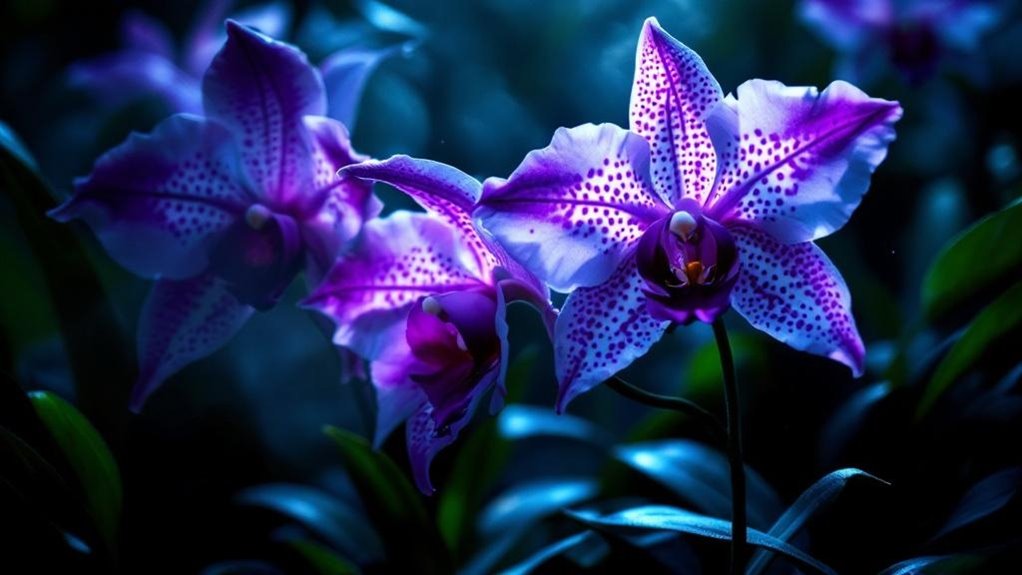
You associate orchids with mystery because their intricate forms resist easy classification, their habitats and histories were often hidden, and myths cast them as signs of transformation, desire, and guarded power; across cultures, they symbolize virtue, fertility, beauty, and the unknown, while rare varieties became cultivated emblems of luxury, secrecy, and status. Even now, their observational appeal never turns stagnant, because beauty and opacity remain inseparable, as the fuller symbolism becomes clearer just ahead.
- Key Takeaways
- Why Do Orchids Seem So Mysterious?
- How Myths Made Orchids More Mysterious
- What Orchids Symbolize Across Cultures
- How Orchid Colors Change Their Meaning
- Why Rare Orchids Symbolize Secrecy
- Why Orchids Became Signs of Luxury and Power
- Why Orchids Still Symbolize Mystery Today
- Frequently Asked Questions
- Conclusion
Key Takeaways
- Orchids grow in hidden, difficult habitats, so people historically encountered them rarely and associated them with secrecy and the unknown.
- Their unusual, intricate shapes resist easy interpretation, giving orchids an enigmatic beauty that invites curiosity and prolonged attention.
- Victorian orchidelirium turned rare orchids into guarded status symbols, linking them with exclusivity, private collections, and controlled access.
- Myths and rituals across cultures connect orchids with transformation, divine power, love, and sacred meanings beyond ordinary flowers.
- Their rarity and layered symbolism preserve a sense of distance, so orchids remain elegant emblems of luxury, intrigue, and unresolved meaning.
Why Do Orchids Seem So Mysterious?
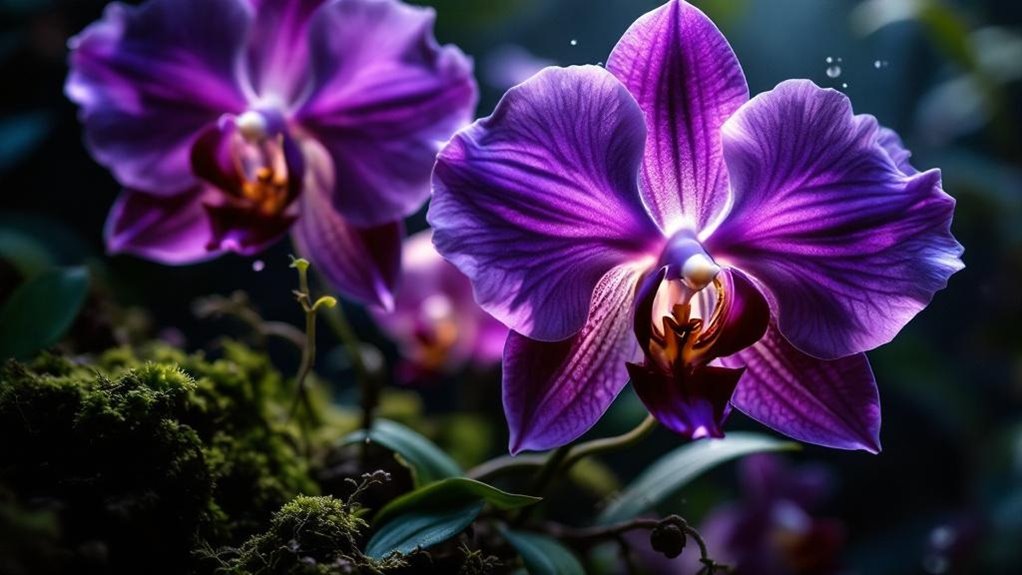
Why do orchids seem so mysterious? You notice it first in their intricate forms, which resist easy classification, and in their exotic presence, which feels cultivated yet never stagnant.
Orchids appear rich in symbolism because their unusual shapes, hidden habitats, and immense age suggest meanings beyond ordinary flowers; across cultures, you find them treated as symbols of beauty, transcendence, and refined emotion.
You also sense mystery in their rarity and difficulty. During the Victorian Era, collectors prized elusive species, and that challenge gave orchids an air of luxury, exclusivity, and observational fascination.
When you consider that they’ve survived for over 100 million years, adapting across remote forests and varied ecosystems, their allure deepens, and their quiet associations with love and desire make them feel layered, reserved, and enduring.
How Myths Made Orchids More Mysterious
Across many cultures, myth made orchids seem less like ordinary flowers and more like signs of transformation, favor, and hidden power; when you trace the stories attached to them, you find that their mystery doesnt rest only in appearance but in the meanings people cultivated around them.
Through legend and ritual, you can see why orchids never felt stagnant, because each story deepened orchid symbolism and enlarged the symbolism of orchids beyond simple beauty.
- Greek mythology ties the Greek word Orchis to punishment and transformation.
- Aztec ritual treated vanilla orchids as divine gifts with strengthening power.
- Confucian thought made orchids observational emblems of virtue in solitude.
- Hawaiian reverence linked orchids with royalty, Pele, and ritual esteem.
Later, Orchidelirium proved that myth and rarity could merge, making orchids seem almost unreachable to collectors everywhere.
What Orchids Symbolize Across Cultures
As you trace orchid symbolism across cultures, you find an observational pattern: in Chinese thought, these flowers reflect cultivated virtue, beauty, and good taste, while in other traditions they rise above stagnant ornament and signal status, refinement, and moral character.
You also see orchids aligned with power and energy; Ancient Greeks tied them to fertility and virility, and the Aztecs treated the vanilla orchid as a divine gift with strength-giving force, which placed it within ritual and sacred belief.
Even color sharpens what you perceive, because white suggests purity and reverence, purple conveys royalty and respect, and pink carries grace and femininity.
Eastern Ideals And Virtue
Orchids carry a cultivated moral weight in many Eastern traditions, where they don’t merely signify beauty but also refinement, virtuousness, and the quiet integrity that marks a noble person. In China especially, this symbolism took deep root through Confucian thought, since Confucius praised the flower’s elegance and resilience as qualities worthy of honorable men. That comparison gave orchids an enduring place in philosophical and cultural life.
You can see how orchids symbolize ideals that resist stagnant materialism:
- In China, they’re often linked to virtue and moral character.
- In Japan, they suggest purity, elegance, and cultivated prosperity.
- Across Asia, they mark spring, renewed life, and observational hope.
- In Eastern thought, they connect physical and spiritual balance.
When you consider these meanings together, you understand why orchids seem mysterious, because they imply inner order beyond appearance.
Power, Beauty, And Ritual
Why do orchids so often gather meanings of power, beauty, and ritual wherever they appear, if not because their uncommon forms resist easy familiarity and invite cultures to treat them as signs of something more than decorative life; you can trace that pattern from ancient Greece, where the word *orchis* tied the flower to fertility and male virility, to Mesoamerica, where the Aztecs regarded the vanilla orchid as a divine gift and used it in a sacred drink associated with strength and liveliness.
And onward to China, where cultivated admiration for the orchid settled into an ethical symbol of beauty joined to virtue, with Confucian thought presenting the flower as an image of personal honor rather than stagnant display.
Later, you see orchids symbolize luxury, rarity, and cultivated status in Victorian collecting culture, where possession itself suggested power and disciplined taste.
How Orchid Colors Change Their Meaning
As you consider how orchid colors shift meaning, you see that white often carries purity and innocence across many traditions, while pink suggests grace, admiration, and joy. This observational contrast shapes how each flower is received.
You also recognize that purple conveys royalty, power, and respect, whereas yellow points to happiness, friendship, and new beginnings. These cultivated associations don’t remain stagnant because cultural ideals continue to refine what each hue expresses.
When you choose an orchid color with care, you align the flower’s visible beauty with the sentiment you intend, and you give floral gifting a more precise, quietly resonant meaning.
Color Symbolism Across Cultures
Meaning shifts with color, and in cultivated traditions across cultures, that shift gives the orchid an observational richness that few flowers sustain; white orchids commonly signal purity and innocence, which is why they appear so often in weddings and formal ceremonies where grace, restraint, and an unstagnant sense of order matter.
Through color symbolism, you can read social intent with unusual clarity:
- white orchids suggest innocence, ceremonial calm, and moral clarity.
- pink orchids convey femininity, joy, admiration, and measured affection.
- purple orchids denote dignity, royalty, and formal respect in remembrance.
- red orchids express passion; yellow orchids imply fortune, renewal, and cheerful beginnings.
When you notice these shifts, the orchid stops being merely decorative and becomes culturally legible, carrying values that communities preserve, repeat, and recognize across gifts, commemorations, greetings, and intimate exchanges.
Choosing Meaningful Orchid Hues
How you choose an orchid’s hue determines what the gift will seem to say, because color directs interpretation before form or fragrance does, and in cultivated settings that observational cue rarely feels accidental.
In choosing meaningful orchid hues, you shape flower meaning with precision: white signals purity and reverence; pink suggests grace and femininity; purple conveys royalty, power, and admiration, so it suits honors and milestones without appearing stagnant.
Yellow orchids represent happiness, friendship, and new beginnings, which makes them appropriate for goodwill and celebrations.
Red orchids represent love, passion, and strength, a popular gift when you want romance to appear deliberate rather than merely decorative.
Orange carries enthusiasm and creativity, while green implies renewal, harmony, and good fortune; together, these shades let you communicate prosperity, respect, affection, or change without speaking.
Why Rare Orchids Symbolize Secrecy
Because rare orchids unite unusual form with scarcity, they’ve long symbolized secrecy; their cultivated intricacy invites sustained observational attention, while their limited presence in the world keeps them just beyond ordinary reach. You sense that tension in every hidden bloom, where beauty resists easy access and meaning refuses stagnant certainty.
- Their intricate structures make you look longer, deepening intrigue.
- Their hidden habitats keep discovery private and uncertain.
- Victorian collectors treated them as highly sought possessions, guarded closely.
- Ancient beliefs linked them to divine thresholds and secrecy.
When you consider rare orchids across cultures, you see why they symbolized luxury in passing yet more powerfully suggested concealment; Orchidelirium rewarded exclusivity, secretive cultivation protected prized specimens, and their elusive presence made them seem like treasures withheld from ordinary view, known fully only to the few.
Why Orchids Became Signs of Luxury and Power
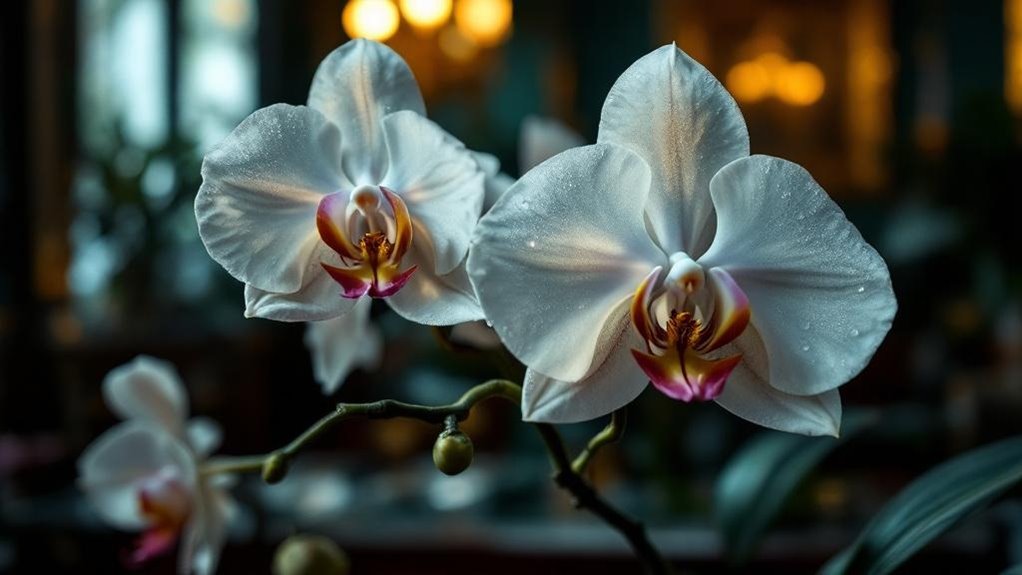
That same aura of guarded rarity also made orchids visible markers of luxury and power, since objects that resist ordinary access often become tools of social display; in the Victorian era, wealthy collectors pursued them not simply for their cultivated beauty but for what their possession announced about reach, money, and control.
Orchidelirium intensified that message by turning the search for uncommon specimens into a performance of privilege.
When you trace why orchids are associated with elite status, you find older roots in Ancient Greece, where they signaled fertility, virility, and noble lineage; later, people even claimed only noble blood could keep orchids in their homes from turning stagnant, an observational belief that reinforced luxury, exclusivity, and authority, while modern branding and ceremonial display preserved those associations across society.
Why Orchids Still Symbolize Mystery Today
Something about orchids still resists complete familiarity, and that resistance keeps them aligned with mystery today; their intricate structures, cultivated symmetry, and often observational strangeness make them seem less like ordinary flowers than like forms arranged by a logic you can study without ever fully exhausting.
- An Orchid presents visible complexities.
- Rarity still suggests distance from the stagnant ordinary.
- Victorian Orchidelirium lingers in cultural memory.
- Spiritual associations keep meanings partially veiled.
When you encounter Phalaenopsis, known as moth orchids, you see why mystery persists; beauty doesn’t cancel opacity, and symbolism remains layered.
Their luxury history, exotic reputation, and collectors’ old obsessions still inform how you read them. Across cultures, they often point toward love, beauty, and the unknown, so you don’t merely admire a bloom; you confront meanings that stay elegant, suggestive, and unresolved.
Frequently Asked Questions
What Do Orchids Mean in Witchcraft?
In witchcraft, orchids mean beauty, power, fertility, and desire—you feel their energy blazing, blooming, bewitching everything. You use them to amplify love spells, healing work, and sensual magic, while strengthening spiritual connection and your personal power.
What Does the Bible Say About Orchids?
The Bible doesn’t mention orchids specifically. You can connect them to verses celebrating flowers, beauty, and God’s creation, like Song of Solomon 2:12, where you see nature’s splendor reflecting divine artistry and life’s fragile beauty.
What Do Orchids Symbolize?
Orchids symbolize elegance, strength, beauty, refinement, and good fortune. Like Confucius praising orchids as noble friends, you can see them as living emblems of virtue, love, fertility, luxury, and rare devotion across cultures worldwide.
What Is the Deception of Orchids?
Orchids deceive by mimicking female insects, food sources, or shelter, so you’ll see pollinators approach them under false cues. They exploit attraction without rewards, helping you understand how these flowers survive and reproduce so effectively.
Conclusion
When you consider orchids, you see why mystery stays attached to them; their cultivated beauty, rare habits, and layered symbolism meet in a coincidence that feels almost designed, because what is hardest to find is often what cultures protect with meaning. You notice, too, that their colors shift interpretation while their elegance remains constant, so they resist stagnant definition, and that resistance, more than any single myth, keeps orchids observational, elusive, and quietly powerful today.