
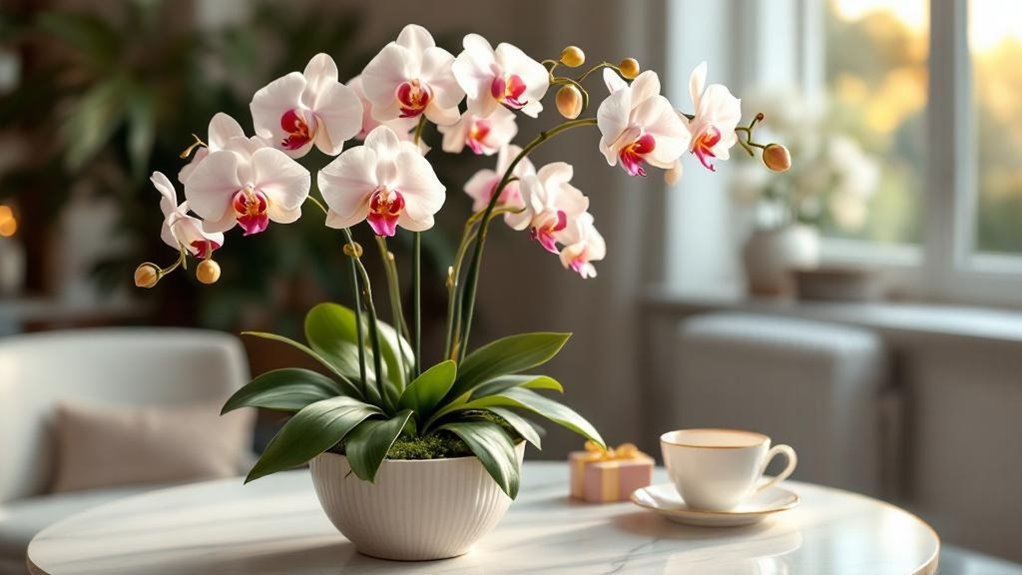
Yes, you can choose an orchid for Mother’s Day with confidence, because a Phalaenopsis combines cultivated elegance, meaningful color symbolism, and a bloom life of two to four months; it feels more considered than cut flowers, which often fade within days. You can also match bloom and pot to her taste, then add concise care notes, since these orchids need bright indirect light, weekly watering, and no stagnant roots. A closer look clarifies the best choices and care.
- Key Takeaways
- Are Orchids Good Mother’s Day Gifts?
- Why Mother’s Day Orchids Last Longer
- Why Orchid Gifts Feel More Thoughtful
- Are Orchids Easy to Care For?
- Which Orchid Is Best for Mother’s Day?
- Is Phalaenopsis the Best Orchid Gift?
- When Should You Choose Vanda or Dendrobium?
- What Orchid Colors Mean for Mom
- Are Orchid Gifts Safe for Pets and Allergies?
- How Do You Care for a Mother’s Day Orchid?
- How to Personalize a Mother’s Day Orchid
- Where to Buy Mother’s Day Orchids Locally
- Frequently Asked Questions
- Conclusion
Key Takeaways
- Orchids, especially Phalaenopsis, make excellent Mother’s Day gifts because they look elegant, meaningful, and are easy to care for.
- Their blooms often last two to four months, far longer than cut flowers that usually fade within one to two weeks.
- Orchid colors add meaning: white shows respect, pink suggests gentle affection, purple signals admiration, and yellow feels cheerful.
- Phalaenopsis is the best practical choice for most mothers, while Dendrobium and Vanda suit fuller or more distinctive styles.
- A decorative pot, handwritten note, and simple care instructions make the gift feel personal, thoughtful, and ready to display.
Are Orchids Good Mother’s Day Gifts?
Elegance makes orchids particularly well suited to Mother’s Day, because they combine beauty with practicality in a way few floral gifts do; unlike cut flowers that become stagnant within a week or two, Phalaenopsis orchids can bloom for two to four months, which gives your gift a cultivated, lasting presence rather than a brief display.
As a Mothers Day Gift, orchids also suit ordinary households with minimal effort, since you need only weekly watering, bright indirect light, and protection from hot direct sun; their broad color range, from white and pink to purple, yellow, peach, and dyed blue, lets you align the plant with her style.
You can also choose orchids when sensitivities or pets matter, and their symbolism, centered on love, beauty, strength, elegance, and femininity, adds observational meaning without excess.
For an especially serene option, white orchids convey purity, peace, and thoughtful affection.
Why Mother’s Day Orchids Last Longer
Because Mother’s Day orchids are living plants rather than cut stems, they last longer by design; Phalaenopsis blooms commonly remain present for two to four months, while most traditional bouquets become stagnant within one to two weeks, and that difference gives the gift a more cultivated, sustained presence in the home.
Unlike cut bouquets that fade in days, Mother’s Day Phalaenopsis orchids offer months of cultivated, lasting beauty in the home.
With phalaenopsis orchids, you’re also giving a plant that doesn’t end at one flowering; many are epiphytes, so after a resting cycle, they can rebloom months later under ordinary indoor conditions.
If you provide bright, indirect light, water every week or two, avoid standing water, and keep the plant away from drafts and direct hot sun, you support both bloom longevity and overall health.
After flowering, careful spike management and moderate temperatures can promote future spikes, extending the display again.
Historically, orchids also carried meanings of integrity and friendship in ancient China, which helped make them feel especially thoughtful and refined as gifts.
Why Orchid Gifts Feel More Thoughtful
That extended bloom life also changes how the gift is perceived; when you give an orchid, especially a Phalaenopsis, you signal attention that lasts for months rather than a fleeting gesture that turns stagnant within days, and that duration makes the offering feel more cultivated and intentional.
You also make a more observational choice, because a beautiful orchid can be matched to her taste through color, form, and variety, which makes the gift feel selected rather than defaulted.
When you present it in an attractive pot, the arrangement looks considered from every angle, sits naturally within her home, and often invites notice from visitors, giving her repeated opportunities to connect your name with the gesture.
Orchids also carry established associations with love, beauty, and strength, so your gift communicates esteem with unusual precision and quiet depth.
Purple orchids can also add a sense of royalty and sophistication, making the gift feel especially refined and memorable.
Are Orchids Easy to Care For?
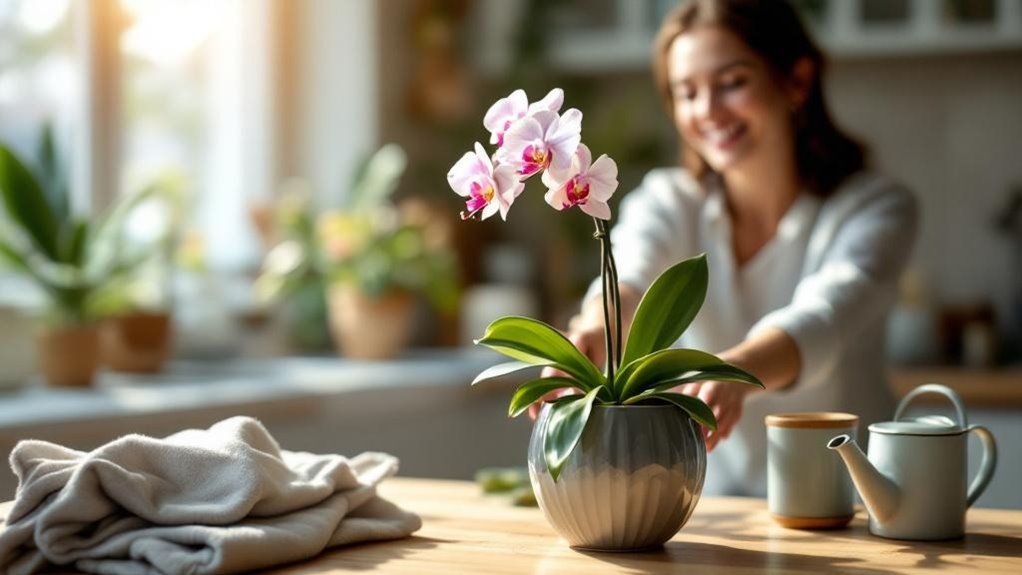
You’ll find that Phalaenopsis orchids are especially easy to care for, because they usually need water only once a week and do best when you keep them in bright, indirect light rather than harsh sun or drafty spots.
You can maintain a simple routine by soaking the pot for about 10 minutes and letting it drain fully, or, with pre-packaged orchids, by using three ice cubes once a week; in either case, you’ll avoid the stagnant conditions these cultivated plants don’t tolerate well.
Even after the flowers fade, you won’t need to replace the plant, because with steady, observational care and restraint around watering, it can rest and later rebloom from a new spike.
In orchid lore, Vanilla planifolia became sacred through the story of forbidden lovers and the native pollinators that helped it endure.
Simple Weekly Watering
Often, Phalaenopsis orchids need water only about once a week, or every 7 to 14 days in a more humid home, which makes them particularly easier to manage than many cultivated houseplants; a simple observational routine is usually enough, whether you submerge the pot in a shallow layer of water for about 10 minutes or pour water through the mix until it drains freely, provided you let all excess moisture escape so roots never remain stagnant.
If your orchid came as a packaged “Just Add Ice®” plant, you can follow the common three-ice-cube weekly method, which melts gradually and helps you avoid overwatering. After flowering, reduce watering slightly during its resting phase, yet continue your weekly check, because consistent restraint protects roots and supports healthy reblooming later. Well-drained orchid mix and generous drainage are especially important for preventing stagnant moisture that can weaken roots.
Bright Light, Little Fuss
Usually, Phalaenopsis orchids ask for far less than their refined appearance suggests, because they thrive in average household temperatures and bright, indirect light, they don’t require greenhouse conditions or constant intervention, and they tolerate the small observational inconsistencies that come with ordinary indoor care.
You can place Orchids near a bright window, provided hot direct sun doesn’t strike the leaves, and you should keep them away from draughts or stagnant air that unsettles cultivated blooms.
Their needs remain modest: water about once a week, or every seven to fourteen days, then let excess moisture drain fully. After flowering, you shouldn’t assume decline; most simply rest, and with reduced watering, steady light, and ordinary household conditions, they often rebloom months later, which makes them suitable even if you aren’t an avid gardener.
Which Orchid Is Best for Mother’s Day?
You’ll usually find that Phalaenopsis is the best Mother’s Day orchid, since its cultivated elegance suits most homes, its blooms can last for months, and its care remains undemanding rather than stagnant or exacting.
You can also choose by color meaning, with white expressing respect and perfection, pink suggesting beauty and femininity, and purple or blue Vanda offering a more observational signal of admiration, royalty, or peace.
If you want the gift to match her style more closely, choose a clean, single- or multi-stem Phalaenopsis for simplicity, or select Dendrobium or a rare blue Vanda when her taste is more distinctive and considered.
Best Varieties For Mom
For Mother’s Day, the best orchid for most mothers is the Phalaenopsis, or butterfly orchid, because it pairs cultivated elegance with practical ease, it’s widely available, and its blooms can remain fresh for two to four months rather than fading into a stagnant display after a week or two.
Choose an orchid that matches your mother’s habits, household, and observational preferences:
- Phalaenopsis suits you if you want reliability, allergy-friendly beauty, pet-safe practicality, and a refined form.
- Dendrobium works when you prefer a fuller, multi-stem presentation; it carries a more demonstrative sense of thoughtfulness and refinement.
- Vanda fits if you want a regal, specialist selection that makes a stronger visual statement, though you’ll accept slightly higher care demands.
This approach keeps the gift precise, durable, and appropriate.
Choosing By Color Meaning
In many cases, color is what gives a Mother’s Day orchid its clearest meaning, because the bloom’s form already suggests cultivated elegance, while its hue directs the message toward respect, admiration, warmth, or individuality; white orchids remain the most classic choice when you want to express respect and a sense of quiet perfection, pink orchids suit mothers who prefer beauty and femininity in softer, more graceful tones, purple Vanda orchids carry a more elevated meaning of royalty and admiration, yellow orchids introduce a cheerful, friendly character without becoming visually stagnant, and blue selections, whether dyed Phalaenopsis or the rarer true blue Vanda, work best when your mother’s taste is distinctly observational and drawn to uncommon color.
For Mother’s Day, you can consequently choose with precision, letting color carry your intention clearly.
Match Her Style
Begin with her aesthetic rather than the bloom alone, because the best Mother’s Day orchid is usually the one that looks native to her rooms and habits: Phalaenopsis remains the most dependable choice when her taste is classic, minimalist, or traditionally refined, since its arching stems and orderly flowers feel cultivated without becoming stagnant, and its long bloom period of roughly two to four months gives the gift a sustained presence in white, pink, or purple.
- Choose pink Phalaenopsis, or pale peach and yellow, when you need to match her style in warm, feminine interiors.
- Select Dendrobium for cottage, eclectic spaces; its clustered blooms feel observational, varied, and enduring.
- Use purple Vanda, then refine the pot: white ceramic for modern rooms, textured planters for bold taste, baskets for sentimental presentation and balance.
Is Phalaenopsis the Best Orchid Gift?
Often, Phalaenopsis is the best orchid gift for Mother’s Day because it combines recognition, longevity, and ease of care in a way few other orchids do; you can find it almost anywhere, its cultivated blooms usually last two to four months rather than fading like cut flowers within days, and it adapts well to average indoor light and temperatures without becoming demanding or stagnant in a typical household routine.
| Quality | What you see | What it means |
|---|---|---|
| Familiarity | Butterfly shape | She recognizes it |
| orchid blooms | Lasting sprays | You give weeks more |
| Care | Gentle light | You won’t fuss |
| Colors | White, pink, purple | You match her style |
| Meaning | Graceful strength | Your gift feels thoughtful |
You can choose one confidently.
When Should You Choose Vanda or Dendrobium?
When you want to move beyond the familiarity of Phalaenopsis, choose Vanda for a more rare and showy gift, especially if your mother appreciates cultivated color in blue or purple tones and has a bright, humid setting where the plant won’t become stagnant; its associations with peace and royalty give it a distinct symbolic weight, but its availability is narrower, so you’ll usually need a specialised florist or garden centre rather than a standard gift display.
- Choose Vanda if your observational sense tells you her home offers bright, indirect light and humidity.
- Choose Dendrobium when you need durable, multi-flowered stems; they suggest love, refinement, and fertility.
- Choose Dendrobium for busy mothers or beginners, since it tolerates ordinary household conditions and often reblooms with minimal fuss, creating lasting Mother’s Day presence.
What Orchid Colors Mean for Mom
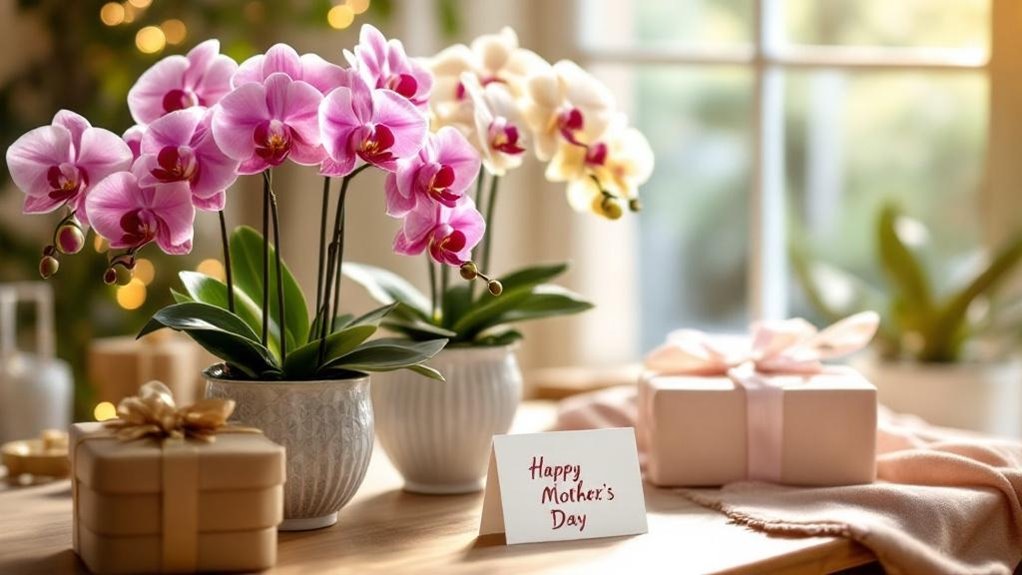
You can treat orchid color as a quiet layer of meaning within the gift, because each hue carries a slightly different message, and that symbolism helps you choose a plant that feels observational rather than generic.
White orchids suggest respect and cultivated perfection, so they suit a mother whose grace never feels stagnant or overstated.
White orchids honor a mother whose grace feels refined, steady, and never remotely overstated.
Pink orchids convey beauty and femininity, which lets you express affection with flowers that feel gentle rather than conventional.
Purple orchids, including many Vanda varieties, imply royalty and admiration; if you see your mother as the household’s steady center, that association feels precise.
Yellow orchids speak to friendship and ease, making them appropriate for a mom friend or colleague.
Still, symbolism shifts across cultures and species, so you should match the orchid to her favorite hue when possible, because preference often carries the clearest meaning.
Are Orchid Gifts Safe for Pets and Allergies?
Although no houseplant is entirely without risk, orchids are usually a considerate choice for homes with pets or allergy concerns, because they release very little airborne pollen, carry minimal fragrance in most common gift varieties, and therefore create fewer problems for people who react to abundant floral scent or drifting pollen.
- If you need an allergy-friendlier gift, choose cultivated Phalaenopsis or Dendrobium; orchids come with minimal scent and limited pollen transfer, so observational concerns are usually lower.
- If cats or dogs share the home, many common orchids are considered pet-safe, though chewing leaves, roots, or bark can still cause mild stomach upset.
- If severe allergies or pet conditions exist, confirm the species with the seller, then consult an allergist or veterinarian; that prevents stagnant uncertainty and supports a measured decision.
How Do You Care for a Mother’s Day Orchid?
You’ll keep a Mother’s Day orchid steady and cultivated by watering it about once a week, or every 7–14 days, soaking the pot briefly and letting it drain fully so moisture doesn’t turn stagnant around the roots.
You should place it in bright, indirect light, keep it away from harsh sun and cold drafts, and maintain an observational routine that favors consistent temperatures and gentle air movement.
When the blooms fade, you can trim the spike to the second healthy node for a possible rebloom, then allow the plant its resting period, because patience usually supports stronger flowering later.
Watering Basics
Usually, a Mother’s Day orchid, especially a Phalaenopsis, does best when it’s watered about once a week, or every 7 to 14 days, with the potting mix allowed to dry slightly between waterings so roots don’t sit in stagnant moisture and begin to rot; the most reliable method is to soak the pot in a shallow layer of water for about 10 minutes, then let it drain completely before returning it to its saucer.
- Use bark, sphagnum, or another well-draining medium; that’s why these cultivated orchids are often considered easy to care for.
- Check roots and leaves observationally; mushy, brown roots and yellowing foliage usually indicate excess water.
- Fertilize at half strength every 2 to 4 weeks during active growth, then reduce feeding after blooming and during rest.
Light And Placement
Once you’ve established a steady watering routine, light and placement determine how well a Mother’s Day orchid holds its blooms and prepares for reblooming; place it in bright, indirect light, ideally near an east- or north-facing window, where it receives enough illumination to support healthy growth without the direct midday sun that can scorch leaves and weaken the plant.
| Placement | Why it works |
|---|---|
| East/north window | Gentle, cultivated light |
| Desk/table, airy spot | Visible blooms, roots avoid stagnant conditions |
Keep it away from cold drafts and heating vents, because stable household temperatures, around 65–75°F, support stronger growth. An observational approach helps: position the pot where you can enjoy the flowers, yet maintain air circulation around the roots. With proper placement, your orchid becomes a gift that keeps its elegance longer.
Reblooming And Rest
Although the flowers may last for 2–4 months, a Phalaenopsis orchid naturally shifts into a rest phase afterward, and that quieter period, which often extends 9–12 months before dependable reblooming, doesn’t signal decline so much as a normal pause in the plant’s cycle.
- Keep conditions cultivated and steady: bright indirect light, stable temperatures, and water about once every 7–14 days, never letting roots sit in stagnant water, even if blooms can last a week longer in cooler rooms.
- Feed observationally, using a balanced orchid fertilizer at half strength every 2–4 weeks during active growth, then reduce or stop feeding while the plant rests.
- After flowering, trim the spike an inch above a visible node, or cut it to the base if it browns; repot every 2–3 years after rest.
How to Personalize a Mother’s Day Orchid
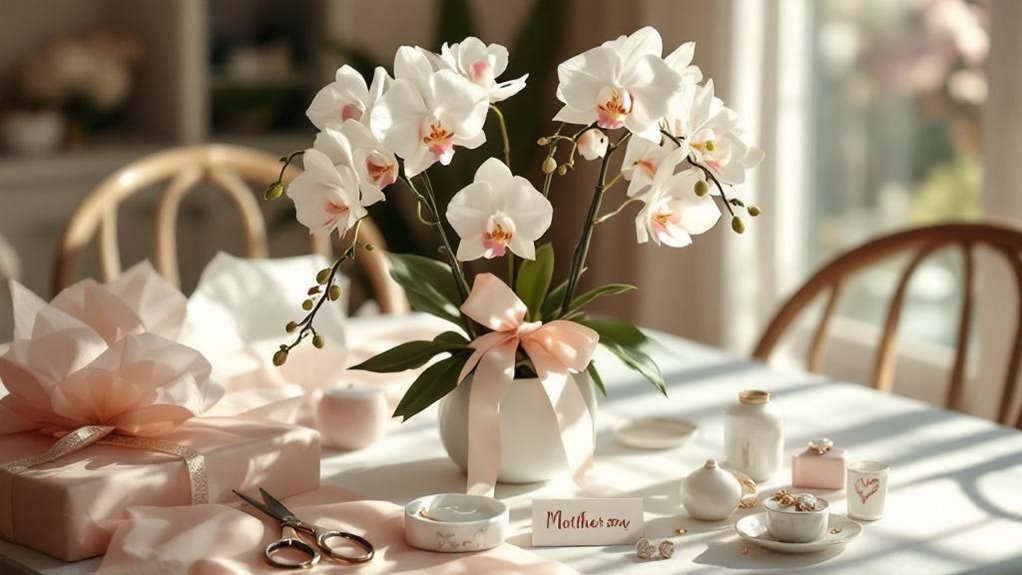
For a more cultivated Mother’s Day gift, personalize the orchid in ways that reflect both her taste and the plant’s long presence in her home; a handwritten tag, a custom pot decoration, or a ribbon in her favorite color gives the Phalaenopsis a clear personal context, while the bloom color itself can carry an observational layer of meaning, with white suggesting respect and perfection, pink indicating beauty and femininity, purple Vanda expressing admiration with a regal cast, and yellow keeping the gesture light rather than stagnant.
| Touch | Meaning | Extra |
|---|---|---|
| Tag | memory | message |
| Color | sentiment | style |
| Kit | ease | rebloom |
When you give your mom an orchid, include a care kit, add macaroons or a candle, and outline watering, light, drafts, and reblooming.
Where to Buy Mother’s Day Orchids Locally
Start close to home by checking local garden centers and specialized florists across the Triangle—Raleigh, Cary, Durham, Apex, Chapel Hill, and Wake Forest—because they commonly stock display-ready Phalaenopsis and Dendrobium orchids, and they tend to maintain plants with a more cultivated presentation than mass retail inventory.
Begin with Triangle garden centers and specialty florists for display-ready orchids with a more cultivated presentation than mass retail.
- You’ll find affordable Phalaenopsis at big-box and home improvement stores; they’re practical, though selection can feel observational rather than curated, unlike cut flowers.
- If you want blue Vanda or other uncommon varieties, visit orchid nurseries or boutique florists, where handling is careful and care advice prevents stagnant conditions.
- Before visiting, review websites and social feeds for photos, availability, and multi-stem colors; many florists also offer Mother’s Day pairings, guaranteed local delivery, and ordering windows worth respecting.
Frequently Asked Questions
What Is the Best Flower to Give for Mother’s Day?
Phalaenopsis orchids make the best Mother’s Day flower because you give beauty that lasts for months, not days. You can match colors to your mom’s personality, and she’ll enjoy an elegant, low-maintenance gift all season.
What Do Orchids Symbolize as a Gift?
Like a handwritten love note, orchids symbolize your admiration, beauty, strength, and refined appreciation. You also convey thoughtfulness, lasting affection, and respect, while their colors can personalize your message with femininity, friendship, royalty, or peace.
Is an Orchid an Appropriate Gift?
Yes, you can give an orchid confidently; it’s appropriate, elegant, and thoughtful. You’ll offer long-lasting blooms, meaningful symbolism, easy care, allergy-friendly beauty, and plenty of colors and styles to match the recipient’s personality perfectly.
What Flower Is Traditionally Given on Mother’s Day?
At the heart of it, you’ll find carnations as the traditional Mother’s Day flower, especially pink for living mothers and white for remembrance. You can also give roses or lilies now, but carnations carry the strongest historical meaning.
Conclusion
If you want a Mother’s Day gift that feels cultivated rather than routine, an orchid is a sound choice; you give lasting bloom, measured care, and a presence that doesn’t turn stagnant after a week. In one observational retail survey, potted flowering plants were kept significantly longer than cut bouquets, which suits the point: like a steady note held through a room, an orchid remains, quietly confirming your attention long after the day itself has passed.