
Orchid lore shows you how cultures turned orchids into cultivated signs of fertility, desire, beauty, virtue, luxury, and remembrance; Greek myth tied órkhis to virility, Confucian thought praised orchid fragrance as moral character, and Victorian society treated rare blooms as status. You can also trace orchids through Roman ornament, Mesoamerican vanilla ritual, Buddhist contemplation, and gift customs, where color and context keep meaning observational rather than stagnant. Continue, and those shifts become clearer.
- Key Takeaways
- What Does Orchid Lore Actually Mean?
- What Do Orchids Symbolize Overall?
- Why Do Orchids Mean Love and Desire?
- Why Are Orchids Linked to Fertility?
- Why Do Orchids Represent Beauty and Luxury?
- What Do Orchid Colors Symbolize?
- What Do Orchid Gifts Say?
- How Does Orchid Meaning Change by Culture?
- What Did Orchids Mean in Ancient Greece?
- How Did the Aztecs Use Orchids?
- What Do Orchids Mean in Chinese Culture?
- How Did Orchids Shape Japanese Tradition?
- Why Did Victorians Love Orchids?
- How Did Orchids Appear in Ancient Rome?
- What Do Orchids Mean in Spiritual Traditions?
- How Do Orchids Appear in Art and Literature?
- How Does Context Change Orchid Meaning?
- Frequently Asked Questions
- Conclusion
Key Takeaways
- Orchid lore is the collection of meanings, myths, and symbolic uses attached to orchids across cultures, art, ritual, gifts, and domestic display.
- In Greek tradition, orchids signified virility and fertility, linked to the word órkhis and the myth of Orchis’s transformation.
- In Chinese and broader East Asian symbolism, orchids represent moral integrity, refined character, friendship, harmony, and quiet strength.
- In Victorian Europe, orchids became emblems of luxury, rarity, status, beauty, and exotic desire during the era of orchidelirium.
- Orchid meanings shift by context and color: white suggests purity and respect, while pink or purple signal grace, admiration, and prosperity.
What Does Orchid Lore Actually Mean?
Although the phrase can sound ornamental, orchid lore simply names the cultivated body of meanings, myths, and symbolic associations that people have attached to orchids across time, and it matters because those meanings shape how you interpret the flower in art, ritual, gifts, and domestic space rather than how you grow it.
When you encounter Orchid lore, you’re entering an observational tradition, not a stagnant list of labels; it gathers Greek fertility ideas tied to órkhis, Confucian praise of moral refinement, stories like Orchis’s transformation, and historical episodes such as Victorian orchidelirium. You also use Orchid lore to read distinctions among colors and species, from white orchids in mourning contexts to vanilla orchids in Aztec ritual, and to understand why certain settings, placements, or exchanges carry cultivated significance today.
Across cultures, orchids have also stood for fertility and status, which helps explain why their meanings often cluster around desire, rank, beauty, and admired refinement.
What Do Orchids Symbolize Overall?
Taken as a whole, orchids symbolize refined beauty brought under discipline, perfection shaped by symmetry, and value that feels cultivated rather than merely abundant; across cultures, you see them used to express not only aesthetic excellence but also fertility, nobility, integrity, spiritual resilience, and social distinction.
| Tradition | Core meaning | Emphasis |
|---|---|---|
| Greece | Fertility, virility | Generative force |
| East Asia | Integrity, friendship | Cultivated character |
| Victorian Europe | Luxury, status | Social distinction |
Orchids symbolize excellence that never appears stagnant; when you encounter them in lore, you’re usually being asked to notice balance, rarity, and observational care. Spiritual readings add resilience and inner beauty, while white orchids can suggest purity. Together, these meanings present orchids as emblems of disciplined grace rather than excess. Orchids also signal prosperity and abundance in many spiritual and cultural traditions.
Why Do Orchids Mean Love and Desire?
Why do orchids so often come to signify love and desire, even when their beauty feels more disciplined than overtly sensual; the answer lies in a long cultural history that ties the flower to fertility, virility, and cultivated affection rather than to anything impulsive or stagnant.
In ancient Greece, you see the earliest layer, where órkhis connected Orchids with virility, while later courtship traditions favored their symmetrical, exotic blooms and unusual longevity.
By the Victorian period, Orchids had become emblems of refined attachment, exchanged to express patient devotion, rarity, and observational care rather than reckless passion.
Color deepens that language: pink suggests graceful admiration, white conveys pure love and elegance, and purple carries dignity, restraint, and longing.
Across cultures, Orchids persist as courtship symbols, so you inherit a meaning both sensual and cultivated.
Their orchidelirium era popularity also helped turn orchids into prized markers of discernment, wealth, and exclusive taste.
Why Are Orchids Linked to Fertility?
That language of love extends naturally into fertility, because orchids entered cultural memory not simply as beautiful flowers but as signs of generative power, their meaning shaped by anatomy, medicine, and ritual at once. You can trace this to the Greek órkhis, “testicle”; that name made the orchid plant an observational emblem of virility, while tubers inspired folk predictions about sons and daughters. Ancient writers, including Theophrastus, reinforced that link through cultivated medicinal and aphrodisiac uses.
| Source | Fertility link |
|---|---|
| Greek name | Male potency |
| Folk medicine | Conception aid |
| Marriage rites | Blessing |
| Seeds and pollination | Fecund mystery |
Across China and Hindu traditions, you see orchids offered for prosperity, marriage, and procreation, while myth, remedies, and prolific yet stagnant-looking reproductive strategies deepened enduring symbolic ties. In Chinese tradition, orchids also served as blessings for procreation, reinforcing hopes for family continuity and many children.
Why Do Orchids Represent Beauty and Luxury?
Because orchids unite observational precision with cultivated rarity, they’ve long come to represent beauty and luxury at the same time, their bilateral symmetry, intricate petals, and often long-lasting blooms suggesting a nearly perfected form, while their exacting needs for humidity, light, and sometimes hidden fungal partnerships made them difficult to grow and consequently costly to possess.
- You see symmetry and delicacy.
- Victorian collectors paid fortunes.
- Nobility endorsed their elegance.
- Orchid Colors shaped elite taste.
- Rare forms elevated interiors.
In Victorian England, imported orchids signaled wealth, and Frederick Sander’s conservatories made exclusivity visible; in China and Japan, scholars and nobles valued their restrained refinement, while Rome and the Renaissance linked them with prosperity.
You can also trace their luxury through fashion and design, where cattleyas and slipper orchids avoided anything stagnant, remaining emblems.
What Do Orchid Colors Symbolize?
Across cultures and periods, orchid colors have carried distinct meanings, and when you read those meanings closely, you can see how color extends the flower’s cultivated symbolism beyond form alone; white orchids most often signify purity, innocence, and spiritual reverence, which is why they appear in weddings and funerals alike, where they can mark both a beginning and a passage, while pink orchids suggest femininity, grace, and gentle admiration, making them appropriate for maternal affection, early romance, or measured gratitude.
| Color | Meaning | Use |
|---|---|---|
| Purple | Royalty, dignity, luxury | Status |
| Yellow | Friendship, joy, beginnings | Cheer |
| Green | Health, longevity, renewal | Balance |
As you compare orchid species, you’ll notice these meanings remain observational rather than stagnant, shaped by history, ritual, and cultivated taste.
What Do Orchid Gifts Say?
When you give an orchid, you don’t send a stagnant gesture; you signal cultivated intention, whether you mean romantic affection, enduring love, or a wish for prosperity and shared continuity.
You also communicate respect and admiration through your choice, as purple orchids carry an observational sense of dignity and achievement, while the flower’s long association with rarity and luxury suggests careful regard.
When sympathy and remembrance are called for, you can rely on a white orchid to express purity, reverence, and solemn respect with quiet precision.
Romantic Intentions
Giving an orchid tends to signal more than passing attraction; it presents your interest as cultivated, patient, and deliberate, an observational gesture that suggests you value steadiness over anything impulsive or stagnant.
In romantic contexts, orchids are associated with refined love, so your gift implies intention, not flirtation.
- Pink orchids suggest gentle interest in early courtship.
- White orchids express pure, formal, enduring love.
- Purple orchids convey serious, elevated romantic devotion.
- Their history suggests patient attachment over sudden passion.
- In older traditions, they may imply family-minded desire.
When you choose one carefully, you indicate that your feelings have structure, that you prefer continuity to spectacle, and that, in some traditions, you may even be signaling openness to intimate commitment, fertility, or a shared future built with care.
Respect And Admiration
Orchids also speak with restraint rather than intimacy alone, and in this register they communicate respect, admiration, and cultivated regard; you’re not merely acknowledging someone’s presence, you’re recognizing character, effort, or standing with an observational care that feels deliberate rather than stagnant.
Pink orchids suit mentors, teachers, and maternal figures, because they frame admiration as graceful rather than possessive; white orchids state pure, formal respect, especially when you wish to honor integrity. Purple orchids elevate your message, linking esteem with dignity, achievement, and distinguished service.
In Japan, presenting orchids, particularly dendrobiums, marks high respect in professional settings and honors valued partnerships. Orchids became, in Victorian etiquette, refined emblems of appreciation; when you gave unusual varieties, you signaled respect for the recipient’s discernment, cultivation, and taste.
Sympathy And Remembrance
Remembrance asks for restraint, and orchid gifts meet that demand by expressing sympathy through dignity rather than display; in Victorian and contemporary Western floral language, they convey refined sorrow, deep respect, and the sense that memory can remain cultivated without becoming stagnant in overt grief.
- White orchids signify purity, reverence, resurrection.
- Pink and mauve suggest affection, gratitude.
- In China and Japan, they honor integrity.
- Potted orchids endure as living memorials.
- This reflects the significance of orchids.
When you send them, you offer an observational, lasting tribute; white forms suit Christian remembrance, while pink and mauve acknowledge continuing admiration for the deceased.
You also recognize a life well-lived, especially for elders or respected figures, and because orchids persist for months or years, your gesture remains present, cultivated, and quietly sustaining.
How Does Orchid Meaning Change by Culture?
Across cultures, the orchid’s meaning shifts with the values a society has cultivated, so you can trace in the flower an observational record of power, virtue, and desire rather than any stagnant, universal symbolism.
In China, its meaning and symbolism center on nobility, integrity, and scholarly refinement; Confucian thought and classical painting place the orchid among disciplined virtues.
In Japan, especially around Neofinetia falcata, you encounter associations with bravery, peace, and samurai prestige, shaped by elite cultivation.
In Victorian England, orchids marked luxury, status, and acquisitive obsession, since rare specimens demanded money, travel, and social display.
Among the Aztecs, the vanilla orchid carried ceremonial and culinary weight, while other native orchids served medicinal and adhesive purposes, so symbolism remained closely tied to practical value and ritual use.
What Did Orchids Mean in Ancient Greece?
Look first to the name itself, because in ancient Greece the orchid entered meaning through the body: the Greek word órkhis, from which “orchid” descends, literally means “testicle,” a term Theophrastos applied to species with paired tubers, and that physical observation anchored the plant to ideas of male virility, sexual potency, and reproduction rather than to any stagnant floral sentiment.
- You see virility in form.
- You find fertility in medicine.
- You encounter aphrodisiac uses.
- You meet the myth of Orchis.
- You trace continuity in Roman art.
In ancient Greece, people consumed orchid tubers as cultivated fertility remedies; larger ones supposedly favored sons, smaller ones daughters.
The myth of Orchis added divine punishment, while ritual and folk practice tied orchids to conception, potency, and enduring Mediterranean symbolic continuity.
How Did the Aztecs Use Orchids?
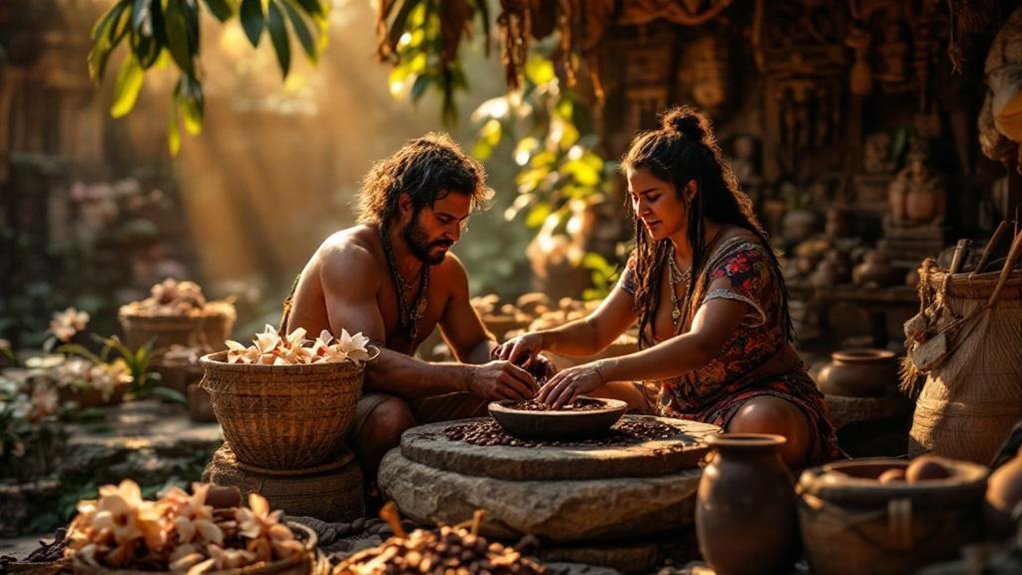
You can see the Aztecs’ most prized orchid in vanilla, which they cultivated and cured for a ceremonial chocolate-and-chili drink, a measured indulgence tied to nobility, warriors, and sacred observance rather than stagnant daily habit.
You can also trace a broader, more observational pattern in their use of orchids, since healers applied them to wounds and respiratory complaints, while artisans processed certain varieties into adhesive gels and resins for repairs and craftwork.
When you place these uses alongside market exchange and tribute, you find that orchids carried economic, ritual, and social value at once, moving through Aztec trade networks as flavoring, medicine, practical material, and symbolic offering.
Vanilla In Sacred Drinks
To understand how the Aztecs used orchids, it helps to begin with vanilla, the cultivated pod of *Vanilla planifolia*, which they steeped with cacao, water, chili, and sometimes honey to make xocolatl, a ritual drink whose aroma and bitterness signaled status, discipline, and ceremonial purpose.
You can trace the vanilla orchid through Aztec life:
- nobles drank it ceremonially
- warriors associated it with vigor
- traders valued pods with cacao
- regions macerated pods for stronger aroma
- some presentations added maize or flowers
When Spaniards encountered this preparation, they carried both pods and method to Europe, where demand slowly expanded.
If you look past stagnant modern sweetness, you see an observational pattern: vanilla marked cultivated taste, elite exchange, and sacred consumption, rather than ordinary indulgence, within Mesoamerican society and ceremony.
Medicinal And Practical Uses
Beyond the cup, orchids served the Aztecs as working plants as much as ceremonial ones, and that broader use matters because it shows an observational culture that valued cultivated effects, tested materials, and practical results rather than a stagnant attachment to ornament alone.
If you look past Orchid vanilla in cacao, you find healers turning roots and flowers into poultices and infusions, applying them to wounds, easing respiratory strain, and settling digestive complaints with remedies grounded in repeated use.
You also see orchid gels and resins processed into adhesives and sticky pastes for repairs and craftwork, which confirms that these plants supplied useful materials as well as symbolic value.
Some species entered tonics credited with strengthening the body and supporting virility, revealing how Aztec plant knowledge linked utility, potency, and disciplined observation.
Orchids In Aztec Trade
Because orchids carried flavor, medicine, and material usefulness at once, they moved through Aztec trade as more than decorative plants; they held value in market exchange precisely because their cultivated effects were observable, repeatable, and far from stagnant.
You can trace that value through markets and ritual life, where Aztecs revered orchids for practical and sacred reasons:
- Vanilla pods flavored cacao and chili drinks for nobles and rites.
- Healers used wild orchids in poultices, tonics, and remedies.
- Processed orchid gel served as adhesive in repairs and craftwork.
- Aromatic and medicinal traits raised orchids’ exchange worth locally.
- Ceremonial use linked certain orchids with strength and vitality.
When you view Aztec commerce through this observational lens, orchids appear not peripheral but integrated, traded because they answered cultivated needs across elite ritual, healing practice, and ordinary labor.
What Do Orchids Mean in Chinese Culture?
Refinement sits at the center of orchid symbolism in Chinese culture, where the flower, especially the cymbidium, represents moral integrity, cultivated taste, and the ideal character of the scholar; as one of the Four Gentlemen in classical art, it stands for quiet strength rather than stagnant display, and that association deepened through Confucius, who praised orchids as a likeness for virtuous people whose influence, like fragrance in an empty room, remains perceptible without self-assertion.
When you encounter the Orchid in Chinese poetry, painting, or gift-giving, you see more than beauty; you see spring, friendship, family harmony, and good fortune. Recorded by Shen Nong for medicinal use, it also carries practical value. White orchids suggest purity and elegance, while pink or purple blooms convey grace, admiration, nobility, and wishes for lasting prosperity.
How Did Orchids Shape Japanese Tradition?
In Japan, orchids took on a distinctly cultivated role, shaped by aristocratic taste, samurai discipline, and an observational aesthetic that favored suggestion over stagnant display; by the 17th century, prized kinds such as Dendrobium and Neofinetia falcata, the wind orchid, had become markers of refinement and bravery, admired not only for their fragrance and finely poised flowers but also for the restraint their care demanded.
- You see samurai and nobles prize them.
- You find wind orchids in tokonoma alcoves.
- You notice ornate fukuro-yoese signal status.
- You connect them with tea and ikebana.
- You recognize modern gifts express respect.
Across Japanese culture, orchids taught disciplined cultivation, minimalist presentation, and seasonal awareness; through moss, mounting, and careful placement, you can trace wabi-sabi values, while formal gifting still conveys peace, prosperity, and congratulations today.
Why Did Victorians Love Orchids?
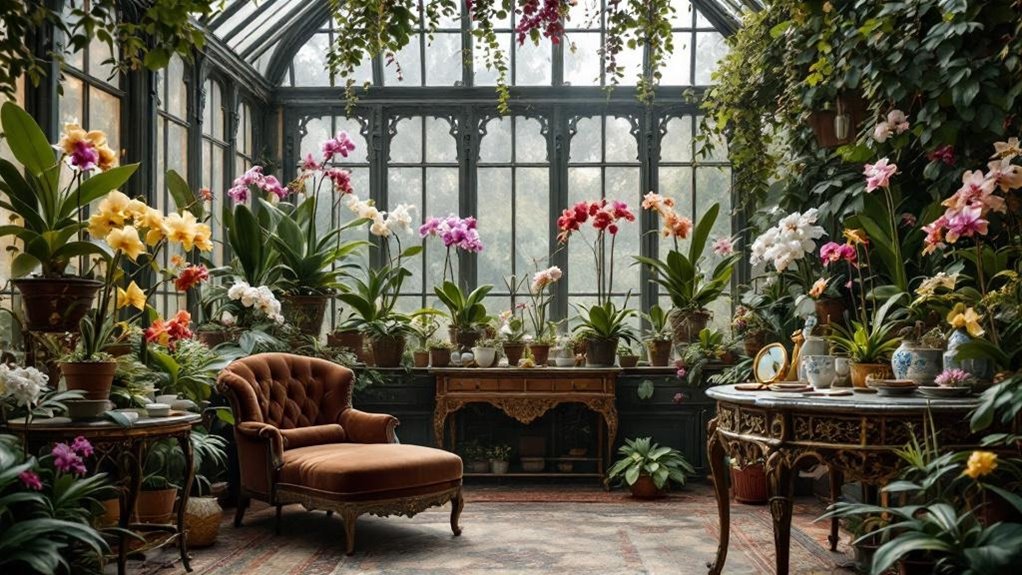
You can see why Victorians prized orchids: they signaled status and prestige, because rare specimens came from costly, hazardous expeditions and survived only with cultivated care in specialized glasshouses, so ownership marked you as wealthy, observational, and far from stagnant taste.
You can also trace orchidelirium to a culture fixated on classification and novelty, where collectors and horticultural societies competed for unusual plants, and each new arrival from abroad sharpened demand.
As orchids spread through conservatories and drawing rooms, you can recognize how their beauty, rarity, and associations with luxury and exoticism made them objects of both disciplined collecting and social display.
Status And Prestige
Because orchids were rare, difficult to transport, and even harder to keep alive under Victorian conditions, they came to stand for far more than botanical interest; they signaled wealth, cultivated taste, and access to the newest forms of scientific and imperial knowledge. In the Victorian era, if you displayed thriving orchids, you demonstrated means, observational discipline, and freedom from stagnant domestic limits.
- You needed costly glasshouses.
- You employed skilled gardeners.
- You followed elite fashion closely.
- You signaled access to empire.
- You displayed cultivated refinement.
Royal patrons and suppliers such as Frederick Sander strengthened that message, since prestige flowed through conservatories, art, décor, and gift culture; when you possessed orchids, you didn’t merely own flowers, you occupied a visible social position, one confirmed by rarity, expense, and scientific modernity alike.
Orchidelirium And Collecting
As orchids moved from scientific curiosities into elite fashion, Victorian collectors turned them into objects of pursuit, and orchidelirium grew from a cultivated taste into a costly system of acquisition driven by rarity, imperial reach, and the desire to display observational discipline through thriving greenhouse specimens.
| Driver | Effect | Meaning |
|---|---|---|
| Rarity | High prices | Prestige |
| Expeditions | New imports | Empire |
| Glasshouses | Estate display | Discipline |
You can see why the Victorian orchid craze spread: fortunes funded voyages to South America, Southeast Asia, and the Caribbean, nurseries such as Sander’s expanded trade, and taxonomic novelty kept desire from becoming stagnant. Yet collecting damaged habitats, wasted countless plants in transit, and eventually encouraged propagation and early conservation, because luxury, science, and possession had become tightly joined.
How Did Orchids Appear in Ancient Rome?
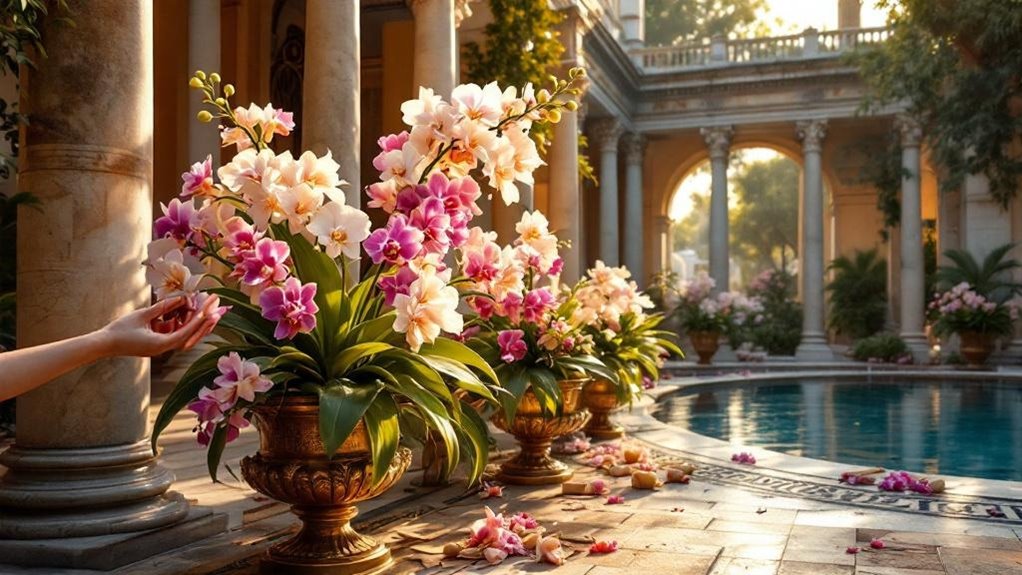
Although orchids never held the central literary place that laurel, olive, or rose did in Roman culture, they appeared in Ancient Rome through cultivated visual motifs, imported luxury imagery, and the observational habits of elite patrons who encountered exotic plants through Mediterranean trade; recent archaeological study of the Ara Pacis, dated to 13–9 BCE, has identified orchid carvings among its floral reliefs, which suggests that Augustan artists and patrons valued the flower as part of a broader language of celebration, rebirth, and prosperity.
- elite trade contacts spread awareness
- frescoes showed orchid-like blooms
- mosaics favored decorative accuracy less
- texts rarely treated orchids fully
- later eras left imagery stagnant
You can also infer orchids as gifts within luxury culture, where cultivated rarity, foreign prestige, and visual distinction shaped Roman taste strongly.
What Do Orchids Mean in Spiritual Traditions?
While orchids carry different meanings across spiritual traditions, they consistently mark qualities that people regard as cultivated and inwardly powerful, whether that means moral refinement, fertility, prosperity, or contemplative calm; in Confucian thought, especially around Cymbidium, the orchid stands for integrity and scholarly virtue, echoing Confucius’s comparison of noble character to a room filled with fragrance, whereas Buddhist symbolism turns toward mindfulness and non-attachment, treating the flower’s brief and precise beauty as an observational prompt for inner stillness rather than possession.
| Tradition | Meaning | Practice |
|---|---|---|
| Confucian | virtue | cultivation |
| Buddhist | calm | contemplation |
| Hindu | prosperity | offerings |
| Feng shui | harmony | placement |
You also find orchids used as symbols of beauty in Hindu devotion, Greek fertility beliefs, and feng shui, where placement counters stagnant energy.
How Do Orchids Appear in Art and Literature?
Orchids move through art and literature as cultivated signs of power, beauty, and moral meaning, and each tradition selects a different aspect of the flower to emphasize. As you trace the History of orchids, you see an observational record of human ideals, never stagnant, always revised through image and verse.
- In Greece, poets and painters linked órkhis with virility, fertility, and the myth of Orchis.
- In China, cymbidiums signaled scholarly virtue, moral refinement, and cultivated character.
- In Mesoamerica, vanilla orchids entered codices beside cacao, marking ceremonial and culinary importance.
- In Renaissance Europe, ornament and still life used orchids for rebirth, beauty, and prosperity.
- In Victorian print culture, orchids embodied luxury, erotic fascination, and imperial collecting, as botanical plates and catalogues spread their forms widely through novels and periodicals alike.
How Does Context Change Orchid Meaning?
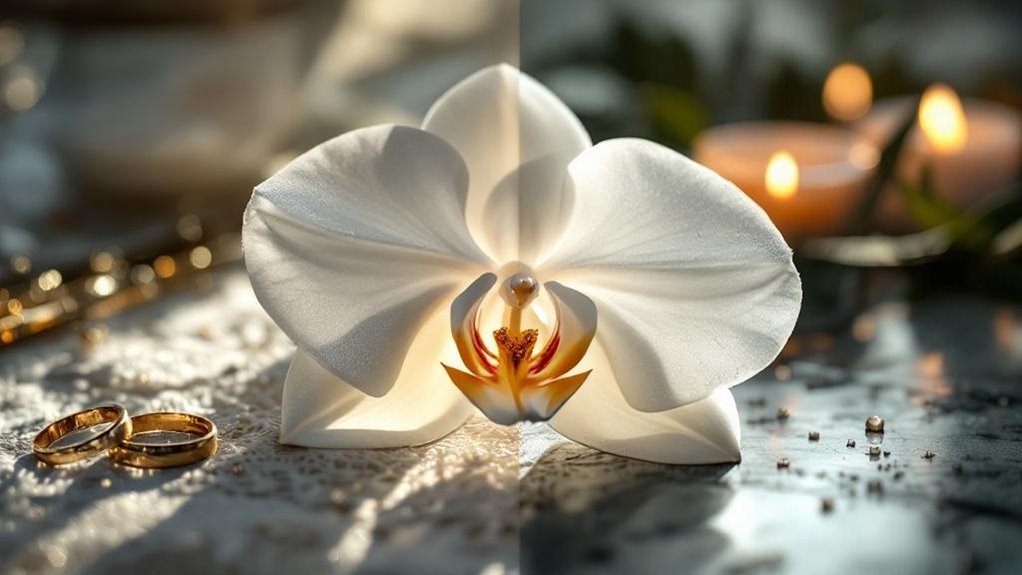
Because orchid symbolism is never stagnant, its meaning changes with the cultural, visual, and ritual setting that surrounds it, and the same flower can move from an emblem of bodily fertility to a sign of cultivated virtue, from sacred offering to decorative prestige, without any change in its physical form. You see this cultural significance clearly:
| Context | Orchid meaning | Example |
|---|---|---|
| Greece/China | Virility or cultivated virtue | órkhis; Confucian ideals |
| Color | Purity or dignity | white; purple |
| Placement | Fertility or creativity | bedroom; office |
You read orchids observationally, because setting governs interpretation; Victorian gifting implied wealth, while today it suggests refined taste, Aztec vanilla signaled sacred strength, and Japanese Neofinetia falcata joined bravery with peace, and shifting meanings remain historically grounded, not arbitrary or merely decorative at all.
Frequently Asked Questions
What Is the Symbolism Behind an Orchid?
An orchid symbolizes love, beauty, resilience, and refinement. You can also read specific colors differently: white suggests purity, pink signals grace, and purple conveys dignity. Across cultures, you’ll often see orchids linked with fertility, virtue, prestige.
What Is the Myth of the Orchid Flower?
Mythic, mysterious, and magnetic, you trace the orchid’s myth to Greek lore: Orchis, a youth destroyed for offending gods, becomes the flower. You also find beliefs linking orchids with virility, fertility, transformation, and divine favor.
Why Put Cinnamon on Orchids?
You put cinnamon on orchids to lightly protect cut roots and wounds from infection, because it’s mildly antifungal and antibacterial. Dust only exposed tissue; don’t overuse it. It won’t fix serious rot without better care.
What Does the Orchid Symbolize in Greek Mythology?
Like a charged talisman, you can see the orchid in Greek mythology symbolizing virility, fertility, and masculine potency. It also reflects rustic healing beliefs and the transformed fate of Orchis, whose story explains the flower’s origin.
Conclusion
If orchid lore seems too ornate or culturally tangled to be useful, you can still read it clearly; when you attend to setting, color, gift context, and historical use, the symbolism becomes observational rather than stagnant. You see why orchids have been cultivated as signs of desire, fertility, refinement, and spiritual attention, and you leave with a steadier sense of how one flower can carry many meanings at once, without becoming vague or contradictory in practice.