
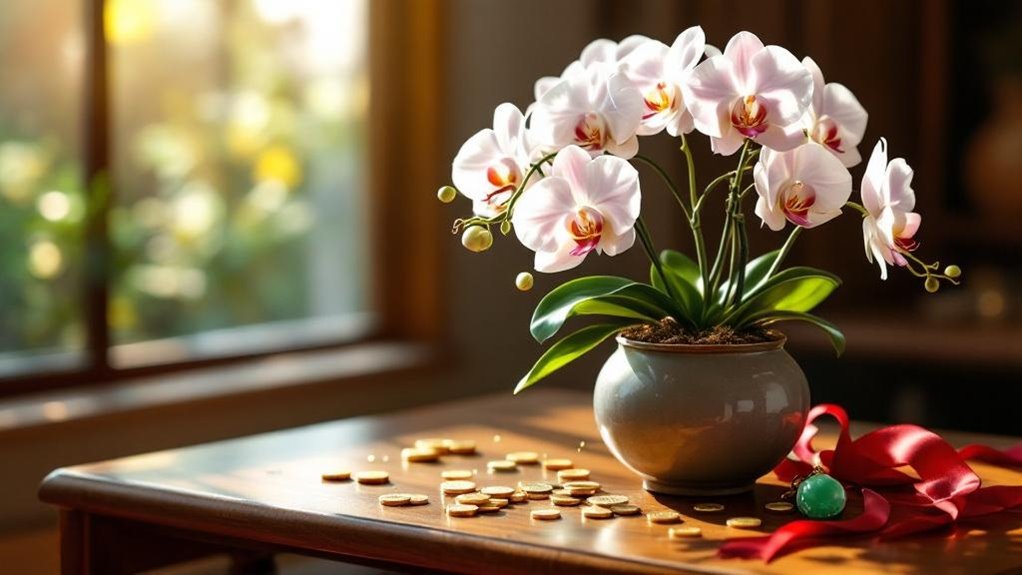
Yes, you can regard orchids as lucky plants, because they’ve long symbolized wealth, harmony, love, and cultivated prosperity across Chinese, Japanese, and broader floral traditions; their lasting blooms, balanced form, and healthy leaves suggest abundance rather than stagnant energy. You’ll strengthen that association when you place them in bright indirect light, especially in an office, study, or orderly east sector, and choose colors like purple, yellow, white, pink, or green with intention.
- Key Takeaways
- Are Orchids Lucky Plants?
- Why Are Orchids Linked to Luck?
- What Do Orchids Mean in Feng Shui?
- Which Orchid Colors Bring Good Luck?
- Are Green Orchids the Luckiest?
- Where to Place Orchids for Good Luck
- Are Orchids Good Luck in the Office?
- Are Orchids Good for Bedroom Luck?
- Can Orchids Attract Love and Abundance?
- Which Orchid Types Are Considered Lucky?
- Orchids vs Other Lucky Plants
- How to Keep Lucky Orchids Healthy
- What Mistakes Block Orchid Good Energy?
- When Should You Gift Orchids for Luck?
- Frequently Asked Questions
- Conclusion
Key Takeaways
- Yes, orchids are widely considered lucky plants, symbolizing wealth, good fortune, abundance, love, and refined beauty across many cultures.
- In Feng Shui, orchids are believed to attract positive chi, prosperity, harmony, and emotional balance when placed in suitable locations.
- Place orchids in an office, study, or east sector to support career growth, calm focus, harmony, and steady energy flow.
- Orchid colors carry added meaning: purple suggests wealth, yellow joy, white purity and new beginnings, pink affection, and green renewal.
- Healthy orchids are considered luckier, so provide bright indirect light, airflow, humidity, and avoid overwatering, clutter, and dusty leaves.
Are Orchids Lucky Plants?

Why are orchids so often regarded as lucky plants; across many cultures, and especially within Chinese tradition, they’ve long been associated with wealth, good fortune, love, and cultivated refinement, which gives them a meaning that reaches beyond mere decoration.
When you bring one into your home, you’re not simply choosing an elegant flower; you’re selecting a plant whose form, rarity, and enduring blooms suggest abundance rather than stagnant decline.
Bringing an orchid home means choosing enduring elegance, rare beauty, and a quiet symbol of flourishing abundance.
In observational terms, orchids symbolize prosperity through visible traits: multiple blossoms imply increase, fuller leaves imply liveliness, and uncommon beauty implies status.
Color deepens that reading, since purple suggests wealth and royal beauty, while yellow points toward joy and friendship.
As a result, you can reasonably view orchids as lucky plants, valued for beauty, cultural resonance, and positive energy alike.
Why Are Orchids Linked to Luck?
Because orchids have long appeared in settings where beauty, rarity, and cultivated status carried social meaning, many traditions came to treat them as signs of luck rather than as merely ornamental plants; in Chinese and Japanese contexts especially, they symbolize wealth, prosperity, and favorable outcomes, and that reputation has endured because their poised form, lasting blooms, and uncommon elegance suggest increase instead of decline or stagnant energy.
| Aspect | Association | Effect |
|---|---|---|
| Beauty | Love, status | You read promise |
| Rarity | Value, distinction | orchids bring good luck |
| Purple/yellow | Abundance, joy | You expect fortune |
When you give orchids at milestones, you reinforce their observational link with success; even Feng Shui recommendations, though broader in purpose, support their image as cultivated plants that attract favorable conditions and quietly affirm prosperity in homes and social rituals alike.
What Do Orchids Mean in Feng Shui?
In Feng Shui, orchids signify more than ornament, as they’re treated as cultivated symbols of love, beauty, and refinement that help invite balanced, positive energy into a home rather than allowing the atmosphere to feel stagnant or emotionally thin.
- Orchids are associated with harmony and well-being.
- Place them in the Yan Nian area for balance.
- In workspaces, they support prosperity and innovation.
- Good lighting and airflow strengthen their influence.
- They elevate home decor and bring good fortune.
You’ll often notice their observational role in a room, since they soften emotional edges and support steadier relationships.
When you position them thoughtfully, especially where energy needs renewal, you encourage growth aligned with the wood element, which Feng Shui regards as essential, restorative, and quietly productive.
Which Orchid Colors Bring Good Luck?
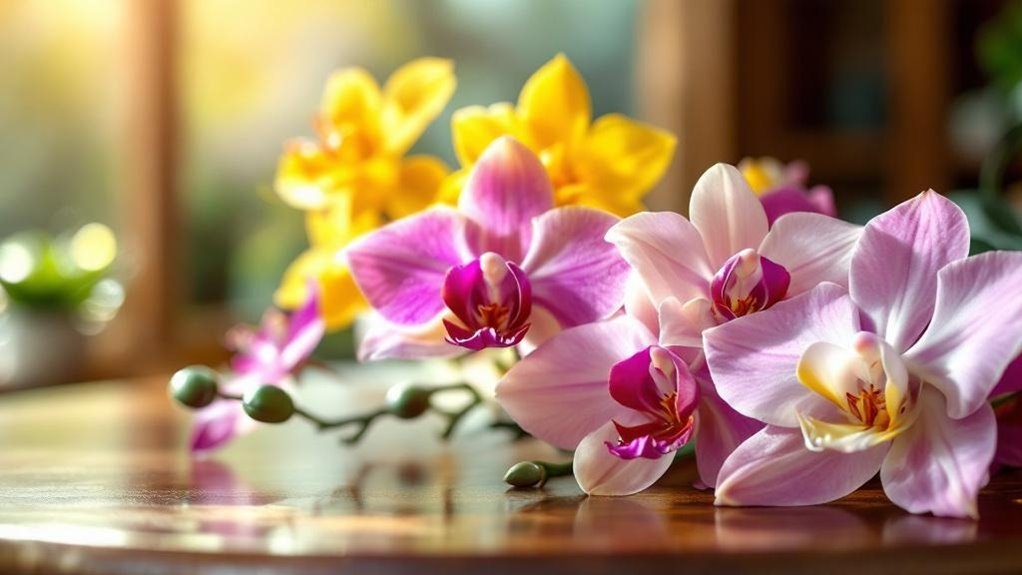
Color shapes how an orchid’s luck is understood, so once you’ve considered placement and energy flow, it makes sense to look at the bloom itself, since different shades carry distinct associations that can subtly influence the atmosphere you’re cultivating.
If you want fortune linked with status and abundance, purple orchids carry that message clearly; across many Asian traditions, they suggest wealth and royal beauty.
White orchids offer a quieter kind of luck, one tied to grace, purity, and relational renewal, which is why you’ll often see them connected with weddings and new beginnings.
Pink orchids support affection and meaningful bonds, making them suitable when you want good luck in personal connections.
Yellow orchids also matter, because their warmth, prosperity, and joy help keep cultivated spaces from feeling emotionally stagnant or observational.
Are Green Orchids the Luckiest?
Perhaps more than any other orchid shade, green invites the strongest association with luck, since it gathers several favorable meanings into one cultivated image: prosperity, steady growth, renewal, and a kind of balanced energy that keeps a space from feeling stagnant or purely observational.
If you ask whether green orchids are the luckiest, the answer often leans yes, because they unite rare beauty with symbolism that feels unusually complete.
If any orchid suggests the fullest kind of luck, it is green, where rarity and rich symbolism meet in one graceful bloom.
- They signify prosperity.
- They suggest renewal.
- They reflect positive energy.
- In Chinese culture, they represent harmony.
- They suit meaningful gifts.
You see good fortune attached to green orchids because green echoes nature’s cycles, measured growth, and continuity; when you give them for weddings or housewarmings, you extend blessings for stable beginnings and enduring balance in a home.
Where to Place Orchids for Good Luck
When you want orchids to function as more than ornamental accents, placement matters, because feng shui treats their cultivated elegance as a way to direct energy rather than merely decorate a room; the study or office is often the strongest position if your aim is career progress and clear momentum, while a bedside table supports love and romance by softening the atmosphere without letting it turn stagnant.
To strengthen good luck throughout your home, place orchids in the East sector, where the wood element encourages harmony and balance, and use a Bagua map to make your choices observational rather than arbitrary.
If you’re focusing on wealth, position orchids in the appropriate prosperity area and pair them with fresh chrysanthemums or bulb flowers, which reinforce steady growth and keep chi moving with cultivated consistency there.
Are Orchids Good Luck in the Office?

Why do orchids suit an office so well as lucky plants, despite their delicate appearance, if not because they unite cultivated beauty with the kind of symbolism feng shui associates with prosperity, harmony, and professional success?
Placed in a workspace, they don’t merely soften the visual field; they help create an observational sense of order and steady movement, which can keep the atmosphere from feeling stagnant and support clearer focus throughout the day.
In a workspace, orchids suggest calm order and gentle movement, easing stagnation and encouraging clearer, steadier focus.
- Orchids are often linked with success.
- Purple orchids can bring prosperity.
- You encourage harmony among colleagues.
- They support creativity and good health.
- Placement may strengthen career progress.
In your office, orchids align with feng shui principles, attract balanced energy, and reinforce a productive mood.
When you position them carefully, you support collaboration, steadier concentration, and a setting that quietly favors advancement.
Are Orchids Good for Bedroom Luck?
Orchids also suit the bedroom as lucky plants, because they carry associations with love, beauty, and quiet strength. These qualities align well with a space meant for rest, intimacy, and emotional balance; in many traditions, especially feng shui, they’re valued for supporting yin energy, which helps the room feel calmer rather than stagnant, more cultivated than merely decorative.
When you place an orchid near the bed or on a dresser, you encourage tranquility, visual order, and a softer emotional tone. Pink or purple blooms are often considered especially favorable for harmony; this observational effect matters, because a peaceful bedroom supports deeper rest, clearer moods, and the steady good fortune that follows physical and mental renewal.
Orchids also purify the air, improving well-being and helping positive chi move cleanly through the room.
Can Orchids Attract Love and Abundance?
Because they’ve long symbolized love, beauty, and refined affection, orchids are widely regarded as plants that can attract both romance and abundance, not as a mechanical source of luck, but as cultivated symbols that shape the mood of a space and the intentions you bring to it; their balanced form and vivid color create an observational sense of harmony, which supports emotional openness, steadier relationships, and the kind of orderly atmosphere that prosperity tends to follow.
- You invite affection through beauty.
- Pink suggests grace and tenderness.
- Green surroundings reduce stagnant energy.
- They’re associated with purity.
- They remain valuable symbols.
When you place orchids in a bedroom or study, you reinforce calm focus, relational steadiness, and practical ambition; as living decor, they encourage attentiveness, signal care, and quietly support abundance.
Which Orchid Types Are Considered Lucky?

Although nearly every orchid carries some favorable symbolism, certain colors are more consistently treated as lucky, and you’ll usually see that belief tied to the quality each variety appears to cultivate within a space; among orchid types, purple is believed to bring good fortune through wealth, prosperity, and a quietly royal presence. White suggests purity and grace, so you’d place it near weddings or new beginnings; pink supports affection, keeping personal rooms from feeling stagnant.
| Orchid color | Lucky association |
|---|---|
| Purple, White | Prosperity; pure beginnings |
| Pink, Yellow, Green | Love; friendship, renewal |
Yellow carries warmth, joy, and friendship, and in Chinese observational traditions, it’s tied to happiness and luck. Green, rare and cultivated in appearance, represents health, balance, renewal, and enduring prosperity across cultures.
Orchids vs Other Lucky Plants
When you compare orchids with other lucky plants, you notice a clear difference in symbolism; money trees and lucky bamboo are cultivated for financial gain and prosperity, while orchids are more often tied to love, beauty, harmony, and an observational sense of refined abundance.
You should also consider care and placement, because orchids adapt well to varied spaces and help soften a stagnant room with elegance, whereas other lucky plants often come with more fixed placement traditions or narrower symbolic uses.
If you want a plant that supports specific wealth intentions, you may prefer a money tree or bamboo; if you want balanced energy, graceful presence, and color-based meanings such as purple for wealth and royal beauty, an orchid serves that purpose with greater range.
Symbolism Across Popular Plants
While many lucky plants are valued for what they’re thought to attract, orchids stand apart for the kind of symbolism they cultivate; across Chinese and Japanese traditions, they’ve come to represent love, beauty, and strength, which gives them a broader, more relational meaning than plants such as the Money Tree or Jade Plant, both of which are tied more directly to prosperity and financial stability.
- Orchids deepen emotional connections.
- Their color symbolism broadens interpretation.
- Purple suggests wealth; pink suggests grace.
- Bamboo offers peace; orchids add cultivated elegance.
- Their cultural significance symbolizes strength, not stagnant luck.
When you compare them with Peace Lily, Snake Plant, or Lucky Bamboo, you notice orchids don’t just promise outcomes; they reflect personal growth, observational refinement, and a quieter form of good fortune, one rooted in meaning.
Care And Placement
Three factors shape how orchids function as lucky plants in a home: light, moisture, and placement, and each one asks for more observational care than you’d give hardier choices such as snake plants, jade plants, or lucky bamboo. Orchids do best in low to bright indirect light and a well-drained potting mix. They need regular watering followed by a slight drying period rather than stagnant moisture, and they respond poorly to drafts or sudden temperature shifts, which makes their positioning more deliberate than that of peace lilies or other adaptable indoor plants.
For stronger Feng Shui fortune, you should place orchids in the east sector, where their cultivated presence supports prosperity. By comparison, snake plants, jade plants, and lucky bamboo usually accept broader care routines and more flexible placement indoors.
Best Plant For Intentions
Care and placement shape whether an orchid remains healthy, but intention changes which lucky plant best suits your space; if you want a cultivated symbol for love, harmony, prosperity, and emotional steadiness, orchids stand apart from other popular choices because their form, color, and refined presence direct attention toward beauty and positive energy rather than only toward protection or material gain.
- Orchids help bring serenity, clarity, and emotional balance.
- Their blooms support love, abundance, fortune, and happiness.
- Money Tree energy emphasizes wealth and elemental balance.
- Jade plant symbolism centers on financial growth and stability.
- Snake Plants resist stagnant influence, favoring health and protection.
If your intention is observational, relational, and aesthetic, choose orchids; if you seek primarily material success, select jade or Money Trees instead.
How to Keep Lucky Orchids Healthy
A few steady habits will keep lucky orchids healthy, and most of them depend on restraint rather than constant attention; place your orchid where it receives bright, indirect sunlight, because direct exposure can scorch the leaves and weaken the cultivated balance the plant needs for steady growth.
Use an orchid-specific potting mix, since stagnant moisture around roots invites decline, and let that medium dry slightly before you water again, usually every one to two weeks, adjusting through observational attention to heat and humidity.
Keep humidity near fifty to seventy percent with light misting or a nearby tray, because orchids are associated with moist air even when their roots need drainage.
Trim spent blooms and remove dead tissue promptly, and you’ll support vigor, cleaner structure, and the steady return of firm, green leaves.
What Mistakes Block Orchid Good Energy?

When orchids seem to lose their cultivated sense of harmony, the cause is often not mystery but routine error; overwatering leaves roots sitting in stagnant conditions that invite rot, direct sun scorches leaves and creates visible stress, and dry air steadily weakens the observational balance these plants need to hold their energy.
- You block vitality by overwatering orchids; roots fail first.
- You reduce harmony when harsh sun burns leaves.
- By neglecting humidity, you deny the 50–70% range orchids prefer.
- In cluttered areas, movement and disorder disturb calm chi.
- Dusty leaves photosynthesize poorly, so the plant’s strength declines.
If you want steady good energy, keep conditions measured, bright but indirect, humid, orderly, and clean, because your orchid’s health governs the refined presence it contributes to a room each day.
When Should You Gift Orchids for Luck?
Good fortune in orchids isn’t tied only to how well you keep them; it also follows the moment and intention behind the gift, because these plants carry a cultivated symbolism that suits milestones, unions, and fresh starts. You should give Orchids at weddings, anniversaries, graduations, promotions, housewarmings, and business launches, because they symbolize wealth, love, joy, achievement, and new beginnings, while helping redirect stagnant, uncertain atmospheres toward steadier, observational hope.
| Occasion | Meaning |
|---|---|
| Wedding, anniversary | Wealth, love, joy |
| Housewarming, venture | Positive energy, success |
| Graduation, promotion | Achievement, recognition |
| Funeral, change | Purity, respect |
Choose purple or yellow for celebration, white for changes and new beginnings, and pink when you intend admiration, affection, and quiet esteem. Timing matters because symbolism settles perception, and perception influences care.
Frequently Asked Questions
Which Color Orchid Is Lucky?
Purple orchids are luckiest if you want prosperity and wealth. You’ll also find white orchids bring grace and fresh beginnings, yellow ones attract joyful relationships, and green orchids support growth, abundance, and renewal in your space.
Is It Good to Keep an Orchid at Home?
Yes, you should keep an orchid at home because it adds beauty, promotes calm, and may attract positive energy. You’ll also appreciate that it’s low-maintenance, thrives indoors, and can brighten your space with elegant color.
What Is the Luckiest Plant to Have?
Prosperous, powerful orchids are your luckiest plant, especially purple varieties. You attract wealth, beauty, and balance when you keep them at home. Place one in your office or study, and you’ll invite success and soothing energy.
What Does the Bible Say About Orchids?
The Bible doesn’t mention orchids specifically, but you can connect them to biblical flower imagery that reflects God’s beauty, care, and creativity. When you admire orchids, you’re appreciating creation’s elegance, much like lilies and roses.
Conclusion
If you keep orchids with intention, you invite more than decoration into your space; you cultivate a quiet emblem of luck, balance, and renewal, one that reflects how steady care often shapes favorable outcomes. Their blooms suggest prosperity without excess, their roots warn against stagnant neglect, and their presence supports an observational approach to harmony. When you choose healthy plants, place them thoughtfully, and avoid careless errors, you strengthen the symbolic current they’re meant to carry.