
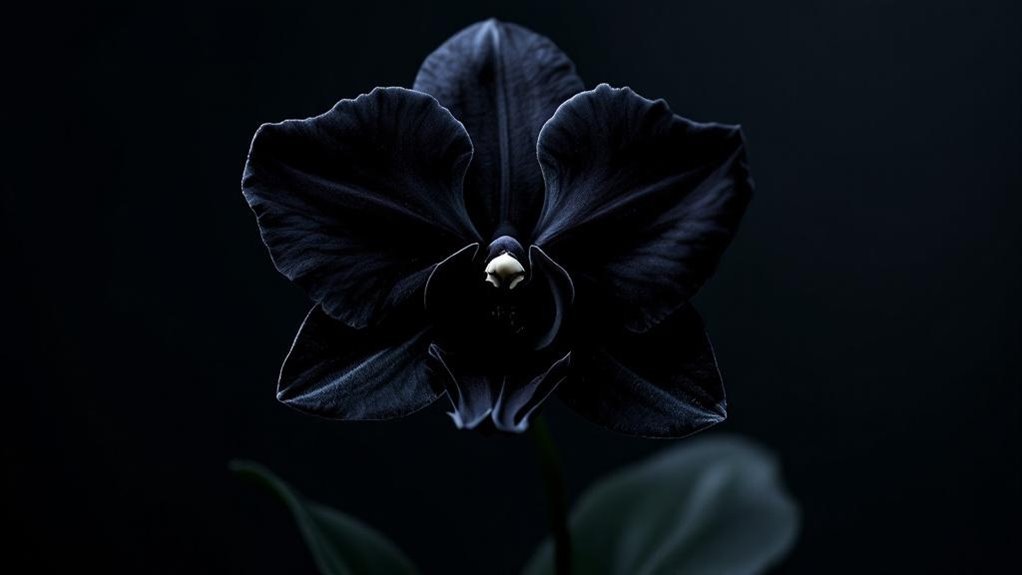
Black orchid symbolism tells you that rarity, mystery, and power are cultivated together; because the bloom only appears black through deep red-purple saturation, shadow, and observational light, its authority feels refined rather than stagnant. You can give it to mark love, loss, achievement, or change, since it also suggests resilience, prosperity, and quiet transformation. Across cultures, it may signal integrity, wealth, friendship, or ritual strength; the meanings become clearer just ahead.
- Key Takeaways
- What Black Orchid Symbolism Means
- Are Black Orchids Really Black?
- Why Rarity Shapes Black Orchid Symbolism
- Why Black Orchids Symbolize Mystery and Power
- How Black Orchid Symbolism Varies by Culture
- Black Orchid Meanings in Love, Loss, and Growth
- When to Give a Black Orchid
- Frequently Asked Questions
- Conclusion
Key Takeaways
- Black orchids symbolize mystery, allure, and the quiet power of the unknown.
- They represent status, prosperity, and refined taste because their rarity suggests exclusivity and luxury.
- Their near-black petals are actually deep red-purple, with lighting and pigmentation creating the black illusion.
- In love and loss, black orchids express deep passion, resilience, grief, and personal transformation.
- They are meaningful gifts for weddings, anniversaries, achievements, and new beginnings, conveying admiration, strength, and good fortune.
What Black Orchid Symbolism Means

Mystery defines much of what black orchid symbolism means, because the flowers dark, uncommon appearance draws you toward what isnt easily explained and, in doing so, it comes to represent the allure of the unknown and a cultivated respect for unconventional beauty.
Black orchid symbolism invites you toward mystery, where uncommon beauty reflects the quiet allure of what resists easy explanation.
You read this Black Orchid symbolism as an observational statement about life: beauty needn’t be familiar to matter, and what seems rare often carries unusual weight.
Because rarity shapes perception, the flower also signals power, status, and prosperity; when you choose it, you align yourself with refinement rather than stagnant convention. Its deep tones suggest strength and resilience, so the Orchid becomes a measured emblem of determination, elegance, and admiration.
Across cultural narratives, this symbolism endures because you recognize in it both quiet fortune and disciplined presence.
Are Black Orchids Really Black?
You may call them black, yet what you’re often seeing is an illusion of black, created by petals so heavily saturated with pigment that deep red and purple tones appear nearly lightless under certain observational conditions.
As you look closer, you can trace that effect to an overabundance of anthocyanins and to the cultivated petal tone itself, which layers texture, pattern, and shadow rather than producing a flat, stagnant black.
In most cases, their so-called black color begins in deep purple origins, and that near-black appearance helps explain why you associate these rare orchids with mystery, power, and sophistication.
The Illusion Of Black
At first glance, the black orchid appears to justify its name, yet what you’re seeing isn’t a truly black flower but an observational effect created by exceptionally deep red or purple pigmentation, which can read as black when light falls across the petals and the surrounding colors remain pale or stagnant by comparison.
You encounter an illusion, not a botanical exception; the Black Orchid seems rare because its over-pigmented surface absorbs your attention and deepens the sense of mystery and power around it.
Consider what shapes that impression:
- Light sharpens dark petals against pale backgrounds.
- Contrast makes cultivated blooms seem darker than they are.
- Their uncommon appearance sustains demand and fascination.
Known also as *Oncidium atropurpureum*, this flower holds you through appearance alone, and its value grows because true black blooms in nature remain exceptionally rare.
Pigment And Petal Tone
Viewed in natural light, black orchids aren’t truly black; their petals carry unusually dense red and purple pigmentation, and that over-pigmented surface, combined with shadow, contrast, and the delicate curvature of the flower, produces the observational effect that makes the bloom seem darker than it is.
When you examine Black Orchids closely, you’ll notice tones of deep red or purple rather than a stagnant, absolute black, and that distinction matters because their unique coloration shapes both their rarity and their meaning; cultivated forms use pattern, sheen, and petal structure to intensify visual allure.
This layered tone helps explain why they’re treated as symbols of mystery and why they project a strong sense of power, elegance, and restraint, especially in collections and floral displays where subtle contrast, not literal blackness, defines their presence and value.
Deep Purple Origins
Appearance often misleads here, because so-called black orchids aren’t truly black in the botanical sense; in species commonly labeled this way, including Prosthechea cochleata and other dark-blooming orchids such as Oncidium atropurpureum, the petals carry such concentrated purple and red pigmentation that shadow, curvature, and surface depth create an observational effect of blackness.
When you study Black Orchids closely, you find deep purple origins rather than stagnant darkness, and that distinction explains their mystery, power, and rarity.
In tropical habitats, their delicate blooms and cultivated, hearty leaves reinforce an exotic nature that feels composed rather than theatrical.
- You notice wine-red undertones beneath shadow.
- You see curved petals deepen apparent blackness.
- You understand why arrangers prize their elegance.
That visual intensity, not true black pigment, sustains their symbolic authority in decor and memory.
Why Rarity Shapes Black Orchid Symbolism
Few flowers show more clearly how rarity becomes meaning than the Black Orchid, because its uncommon presence, its over-pigmented dark bloom, and its cultivated reputation among collectors combine to make it signify exclusivity, luxury, and quiet power rather than simple beauty.
When you consider Black Orchid symbolism, you see how rarity shapes value; within a vast orchid family, this cultivated specimen resists the stagnant ordinary, so collectors prize it, and observers connect it with wealth, distinction, and refined taste.
Its dark coloration deepens that observational effect, not by spectacle alone, but by signaling something scarce in nature and as a result difficult to possess. Across traditions, people have also treated uncommon flowers as carriers of good fortune, so the Black Orchid gathers prestige through scarcity itself, becoming an emblem of selective abundance rather than mere decoration.
Why Black Orchids Symbolize Mystery and Power

Because their dark petals seem to hold back full disclosure, Black Orchids have come to symbolize mystery and power at once; their coloration is rarely true black and instead emerges as dense red or purple over-pigmentation. Yet that near-black effect alters the observational experience, making the flower seem more concealed, more cultivated, and less available to ordinary reading.
Their near-black petals suggest withheld meaning, making Black Orchids feel mysterious, cultivated, and quietly powerful.
You see their symbolism through several linked qualities:
- Their shadowed tones suggest mystery, resisting stagnant interpretation.
- Their rarity and uniqueness make black orchids feel reserved for discernment, not familiarity.
- Their unusual, octopus-like structure reinforces power, suggesting strength, control, and resilience.
You also inherit older associations; Victorian collectors treated them as luxury objects, and that history still shapes black orchids symbolism, where rarity, mystery, and power converge in a single, quietly commanding bloom today.
How Black Orchid Symbolism Varies by Culture
Although black orchid symbolism often centers on mystery and power, its meaning shifts noticeably across cultures, and those variations show how a single cultivated bloom can carry distinct social and moral weight depending on the observational framework around it; in Chinese tradition, it has been associated with integrity, elegance, and friendship, which gives the flower a more refined and relational character than the stagnant reading of darkness alone would suggest.
| Culture | Meaning | Social signal |
|---|---|---|
| China | Integrity, elegance | Admiration, friendship |
| Aztec | Power, strength | Ritual mystique |
| Japan | Symbols of wealth | Royal status |
| Latin America | Mystery, peace | Presence, authority |
Across various cultures, you see the black orchid as rare, so it also suggests good fortune, cultivated taste, and visible rank.
Black Orchid Meanings in Love, Loss, and Growth
When you consider black orchid meanings through the linked experiences of love, loss, and growth, the flower presents more than a cultivated emblem of rarity; it signifies deep passion in relationships, resilience after hardship, and the quiet transformation that follows grief.
Beyond rarity, the black orchid embodies deep love, resilient grief, and the quiet transformation that follows loss.
You read the Black Orchid as an observational sign that deep love isn’t simple, because mystery often surrounds commitment, longing, and recovery; its dark beauty refuses stagnant interpretations.
- In love, it reflects devotion, intensity, and enduring attachment.
- In loss, it points to personal strength, especially through grief and rebirth.
- In growth, it suggests good fortune, healing, and transformation across cultures.
Taken together, these meanings show you how affection matures under pressure, how sorrow can refine perception, and how renewal often emerges without spectacle, yet with lasting inner change.
When to Give a Black Orchid
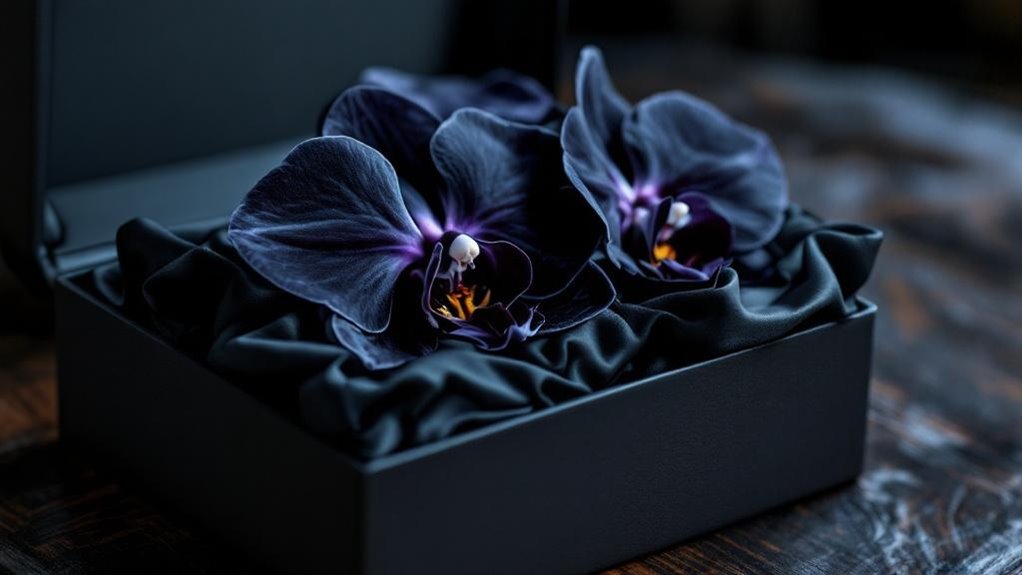
Timing matters with a Black Orchid, since you don’t give it for ordinary exchanges or stagnant gestures; you present it at moments that call for cultivated symbolism, such as weddings, anniversaries, major achievements, or the beginning of a new venture. Here, its rare appearance and dark elegance carry an observational sense of luxury, strength, and mystery.
You choose black orchids for special occasions when you want your gift to communicate more than beauty; they convey respect, admiration, and quiet confidence, making them fitting symbols of good regard for achievements and milestones. If someone is starting a business, moving, or entering a new phase, you can offer one to wish good fortune, prosperity, and strength and courage.
In many Asian traditions, they also suit major celebrations, where their rarity reflects wealth, refinement, and measured sophistication.
Frequently Asked Questions
What Does the Black Orchid Symbolize?
You can see the black orchid symbolizes mystery, power, rarity, and sophistication. It also reflects elegance, prosperity, renewal, and strength, so when you choose it, you express intrigue, luxury, resilience, and a distinctive sense of beauty.
How Rare Is a Black Orchid?
Rare as hen’s teeth, you’d find black orchids exceptionally rare. You won’t see true black blooms often, and Prosthechea cochleata itself stays uncommon because you need specific pollination conditions and cultivation expertise to grow it.
What Is the Rarest Color of Orchid?
The rarest orchid color is blue. You’ll find only a few naturally occurring blue species, while most “blue” orchids are dyed. That scarcity makes them highly prized, and you can expect collectors to value them greatly.
What Color Orchid Represents Strength?
Red orchids represent strength most directly, so you’ll often choose them to express fortitude, passion, and desire. You can also see yellow and purple orchids reflecting emotional resilience, dignity, and inner strength in different traditions.
Conclusion
You might expect a flower called black to speak only of endings, yet its cultivated rarity suggests the opposite; it asks you to notice what remains hidden, what refuses stagnant meaning, and what gains force through restraint. In black orchid symbolism, you find an observational truth: mystery isn’t emptiness, power isn’t noise, and rarity doesn’t diminish value, it clarifies it. When you give or receive one, you acknowledge complexity with quiet confidence, and that recognition lasts.