
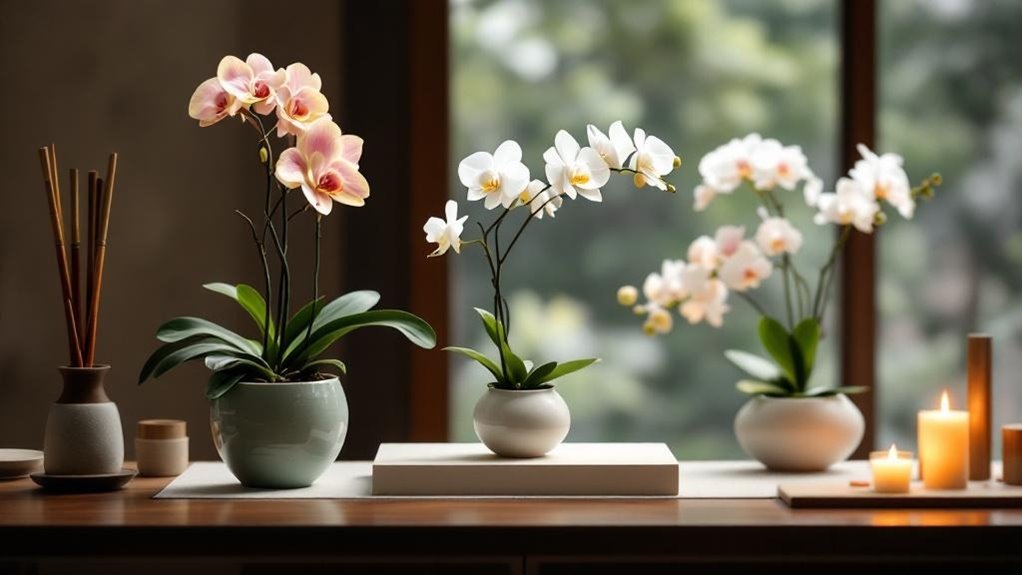
You can compare orchid symbolism this way: in Chinese tradition, it centers on cultivated integrity, nobility, scholarly refinement, and enduring friendship; in Japanese culture, it shifts toward rank, respectful exchange, prosperity, and understated elegance; in Buddhist thought, it emphasizes purity, reverence, impermanence, detachment, and gradual awakening. Across all three, orchids signal refined character rather than mere display, and color nuances sharpen the message; a closer look shows how those distinctions work.
- Key Takeaways
- Orchid Meanings in Chinese, Japanese, and Buddhist Traditions
- Chinese Orchid Meaning: Nobility, Friendship, Integrity
- Japanese Orchid Meaning: Respect, Simplicity, Prosperity
- Buddhist Orchid Meaning: Purity, Detachment, Awakening
- Shared Orchid Meanings Across Traditions
- How Orchid Symbolism Differs Across Traditions
- What Orchid Colors Symbolize in Each Tradition
- Frequently Asked Questions
- Conclusion
Key Takeaways
- Across all three traditions, orchids symbolize refinement, purity, and cultivated character rather than mere decorative beauty.
- In Chinese symbolism, orchids emphasize integrity, scholarly nobility, moral virtue, and enduring friendship, especially in Confucian and literati traditions.
- In Japanese contexts, orchids often signal status, prosperity, noble simplicity, and respectful formal exchange without excessive ostentation.
- In Buddhist meaning, orchids represent spiritual purity, reverence, impermanence, patience, and nonattachment through their brief, delicate bloom.
- Color meanings differ: white suggests purity or elegance, purple implies Japanese nobility, and green in Chinese contexts suggests renewal and health.
Orchid Meanings in Chinese, Japanese, and Buddhist Traditions
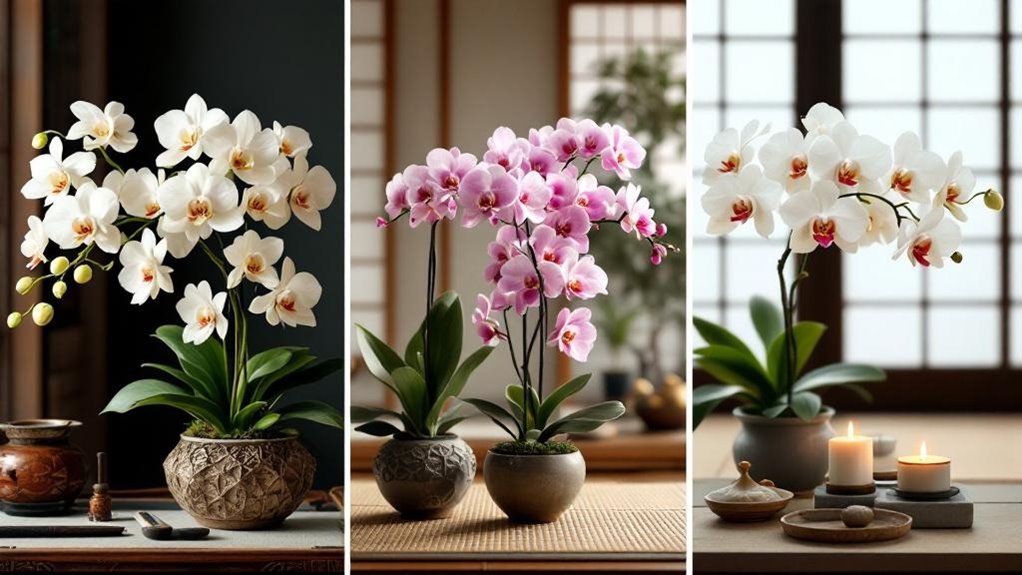
Across Chinese, Japanese, and Buddhist traditions, the orchid carries a remarkably consistent core meaning, yet each culture has cultivated its symbolism in a distinct moral and aesthetic direction; in China, lan signifies integrity, nobility, scholarly refinement, and enduring friendship, a status reinforced by its place among the Four Gentlemen and by more than two millennia of praise in poetry and painting.
In China, lan embodies integrity, nobility, scholarly refinement, and enduring friendship, honored for centuries in poetry, painting, and the Four Gentlemen.
You can read Orchids across Chinese culture, Japanese culture, and Buddhist symbolism as signs of cultivated character rather than stagnant ornament.
In Japan, elite varieties such as Neofinetia falcata once marked rank, courage, and respectful exchange among samurai and nobles.
In Buddhist symbolism, orchids in offerings and meditative art direct you toward purity, impermanence, and inner discipline.
Their color meanings refine that message: white suggests purity and mourning, purple respect or royalty, green renewal; together they preserve elegance and integrity/nobility (Four Gentlemen).
Orchids also appear in Chinese New Year gifting and wedding traditions as auspicious signs of prosperity, renewal, and graceful good fortune.
Chinese Orchid Meaning: Nobility, Friendship, Integrity
Refinement sits at the center of Chinese orchid meaning, where the orchid, especially Cymbidium, has long represented nobility, cultivated taste, and moral integrity; for more than two thousand years, scholars and collectors have treated it not as stagnant ornament but as an observational sign of character, a view reinforced by Confucius, who compared virtuous people to orchids whose fragrance persists even in seclusion.
When you read Chinese poetry or study brush painting, you find the Orchid aligned with integrity, humility, and self-restraint, one of the Four Gentlemen that model cultivated conduct. You also see friendship in its history, since people gave orchids to trusted companions and mentors as signs of sincere affection. Beyond symbolism, medicinal varieties linked the flower to health, while elite collections confirmed scholarly status and refinement. Orchid imagery also became a model of cultivated self-cultivation in scholar painting and poetry, where restraint and quiet fragrance signaled inner virtue.
Japanese Orchid Meaning: Respect, Simplicity, Prosperity
In Japan, you see orchids as cultivated emblems of respect and admiration, especially in historically prized varieties such as *Neofinetia falcata*, which carried high esteem and, in observational terms, reflected disciplined taste rather than stagnant display.
You also find that their meaning rests in noble simplicity, since Japanese aesthetics valued understated elegance and subtle fragrance, and samurai associations added quiet force, dignity, and restraint.
At the same time, you can recognize orchids as signs of prosperity and good fortune, given to mark business openings and success, while elite cultivation and formal display affirmed their lasting social value.
Their ceremonial use is also strengthened by tatefuda name placards and careful presentation, which help express respect and auspicious intent.
Respect And Admiration
You can trace one of the clearest orchid meanings to respect and admiration, especially in Japan, where cultivated varieties such as Neofinetia falcata and dendrobiums have long served as formal gifts of esteem, presented to businessmen, honored figures, and even samurai, not as decorative excess but as measured signs of regard.
When you compare Japanese, Chinese, and Buddhist traditions, you see orchids used with similar observational restraint; in Chinese thought, they honor moral character and cultivated friendship, while in Buddhist practice, they mark reverence for the Buddha and bodhisattvas, joining respect with spiritual purity.
You also notice how color supports meaning without becoming stagnant symbolism: purple orchids suggest dignity and honor, white orchids signal purity and reverence, and together they let you express admiration through disciplined, culturally legible beauty.
In Chinese literati culture, orchids also belong to the Four Gentlemen, where their beauty signifies integrity, humility, and disciplined inner character.
Prosperity And Noble Simplicity
Because Japanese orchid symbolism joins social status to disciplined restraint, varieties such as Neofinetia falcata came to signify prosperity without drifting into stagnant display, cultivated by samurai and merchants alike as markers of wealth, discernment, and an observational respect for form.
When you encounter these orchids in Japanese culture, you see refined taste expressed through noble simplicity; their uncluttered lines embody wabi-sabi, and their careful presentation, often in specialized pots with exposed roots, suggests prosperity governed by humility rather than excess.
When you give or receive one, you acknowledge respect and good fortune, especially in openings or successful ventures, yet the gesture remains measured.
In a Buddhist inflected context, the modest blossom directs your attention inward, where cultivated virtue matters more than ostentation, and where beauty remains quietly disciplined, enduring, and composed.
Buddhist Orchid Meaning: Purity, Detachment, Awakening
When you consider Buddhist orchid meaning, you see purity and reverence joined, since the flower’s clear form and restrained fragrance reflect the cultivated, unblemished mind that Buddhist practice seeks.
You can also read its epiphytic growth as an observational lesson in detachment, because it thrives through wholesome support without clinging, drawing your attention away from grasping and stagnant desire.
In this way, the orchid becomes a quiet sign of awakening, its gradual bloom suggesting wisdom unfolding with patience, inner calm, and disciplined awareness.
Purity And Reverence
Although orchid meanings vary across cultures, Buddhist interpretations consistently place the flower within a quieter moral and spiritual frame, where its delicate form, clean lines, and restrained fragrance suggest purity, disciplined detachment, and the cultivated clarity of awakening.
In Buddhist symbolism, you encounter orchids as signs of purity and spiritual awakening, yet here the emphasis rests on moral refinement and reverence; white orchids in temples and monastic gardens embody respectful devotion, while their observational stillness suggests a mind kept clear of stagnant impulse.
In Chinese and Japanese settings shaped by Buddhist aesthetics, you also see Confucius echoed through ideals of upright character, and you recognize non-attachment not as withdrawal, but as disciplined composure, a cultivated beauty that nobles, samurai, and worshippers alike treated with measured reverence and lasting esteem.
Detachment And Awakening
That reverence naturally extends into detachment, for Buddhist orchid meaning doesn’t stop at moral purity; it also points you toward an observational awareness in which beauty is fully perceived yet not possessed, admired yet not turned into a stagnant object of craving.
- In Buddhist gardens, the orchid teaches detachment; you witness form, fragrance, and passing bloom without clinging.
- In Chinese sutras and poems, its brief flowering embodies impermanence, guiding you toward awakening through cultivated attention.
- In Japanese temple displays, understated elegance suggests spiritual refinement; mindful presence replaces ownership, and purity becomes practice.
Across East Asian devotion, monks place orchid offerings in halls and shrines because the flower joins purity with spiritual aspiration, reminding you that awakening matures when desire loosens, perception clears, and beauty remains luminous precisely because it can’t last.
Shared Orchid Meanings Across Traditions
Across Chinese, Japanese, and Buddhist traditions, orchids carry a remarkably stable cluster of meanings, and this consistency shows how the flower’s cultivated form, restrained beauty, and seasonal renewal invited similar readings in different settings; in each tradition, orchids point to refinement and noble character, to purity and spiritual cultivation, and to the respect one offers toward what’s morally or spiritually elevated.
You see this continuity in Confucius, who treated orchids as emblems of virtue, in the Four Gentlemen tradition, which made them models of cultivated integrity, and in Buddhist offerings, where their quiet presence signals reverence rather than stagnant display.
You also find longevity and renewal attached to orchids across these settings, whether through health, prosperity, or spiritual rebirth, so their observational symbolism remains strikingly consistent for you.
How Orchid Symbolism Differs Across Traditions
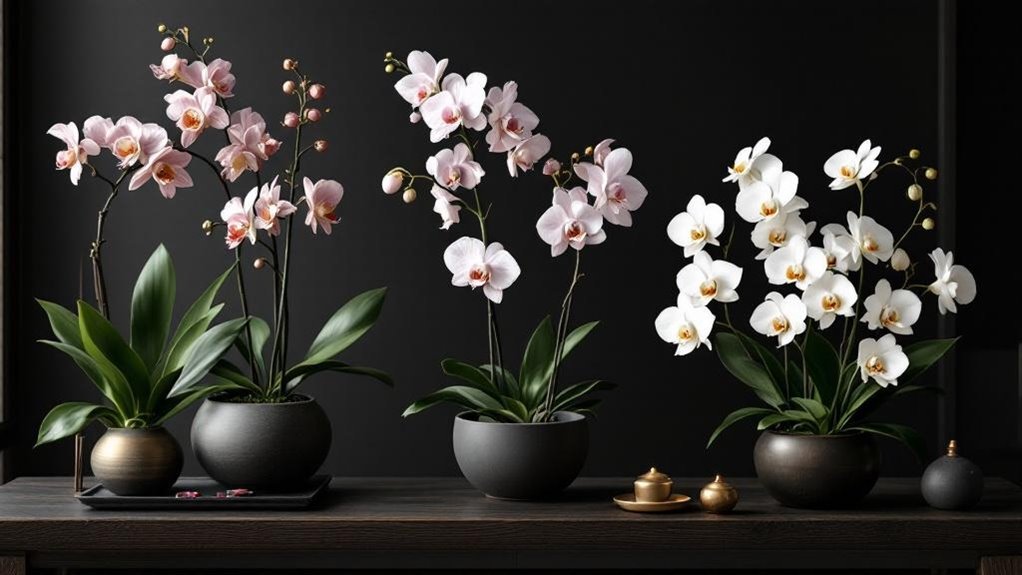
Where their shared meanings suggest continuity, their differences reveal what each tradition most wants the flower to express; Chinese symbolism centers orchids within an ethical and literary world, where lan marks spring, cultivated restraint, and the moral refinement Confucius associated with noble companionship, while Japanese symbolism turns more visibly toward rank, auspicious display, and elite taste, especially in the case of Neofinetia falcata, whose prestige among samurai and aristocratic collectors linked the orchid to bravery, wealth, and social distinction rather than primarily to scholarly virtue.
- In Chinese usage, you read the orchid through virtue, integrity, and cultivated taste.
- In Japanese symbolism, you notice status, prosperity, and observational signs of distinction.
- In Buddhist practice, you meet purity, impermanence, reverence, and nonattachment, which keep meaning contemplative, never stagnant, and spiritually direct.
What Orchid Colors Symbolize in Each Tradition
Color sharpens the distinctions already visible in orchid symbolism, because each tradition keeps many of the same blooms yet assigns emphasis through hue, ritual use, and cultivated taste; in Chinese practice, white orchids suggest purity and reverence, but they don’t carry the same wedding-centered associations familiar in many Western settings, while green orchids point instead to renewal, health, and good fortune, an observational link strengthened by long-standing medicinal associations.
| Color | Meaning |
|---|---|
| white orchids | China: purity; Japan: elegance |
| purple orchids | Japan: nobility, admiration |
| yellow orchids | cheer, prosperity, beginnings |
| red orchids | passion, essentialness, affection |
In Buddhism, white orchids mark spiritual purity; pale pink suggests compassion. You also find yellow orchids tied to balance and monastic robes, while red orchids stay more secular, never stagnant in meaning across regions.
Frequently Asked Questions
What Does the Orchid Symbolize in Japan?
In Japan, you see orchids symbolize refinement, nobility, respect, and prosperity. You’d give them to express admiration or celebrate success. They also reflect disciplined beauty, good fortune, and, with Samurai orchids, bravery and peace.
What Does the Orchid Symbolize in Buddhism?
In Buddhism, you see orchids symbolize purity, spiritual refinement, and impermanence so vividly they almost shout wisdom. They remind you to cultivate an awakened mind, honor humility, and appreciate life’s fleeting beauty with mindful devotion.
What Do Orchids Symbolize in China?
In China, you’ll find orchids symbolize integrity, humility, refinement, and noble character. They also represent friendship, renewal, good fortune, and longevity. Their subtle beauty and fragrance reflect the self-restraint and virtue you’d admire.
What Is Japan’s Most Sacred Flower?
Japan’s most sacred flower is the chrysanthemum. At first glance, you might expect another bloom, but you’d be wrong. It represents the Imperial Family, appears on official emblems, and anchors festivals, ceremonies, and national identity.
Conclusion
When you compare Chinese, Japanese, and Buddhist orchid meanings, you see a cultivated pattern: each tradition uses the same flower to steady human conduct, whether through nobility, respect, or detachment; importantly, China is home to more than 1,200 native orchid species, a statistic that deepens why the flower became such an observational symbol of refined character rather than a stagnant ornament. You’re left with a clear conclusion: orchid symbolism endures because it joins beauty to disciplined moral attention.