
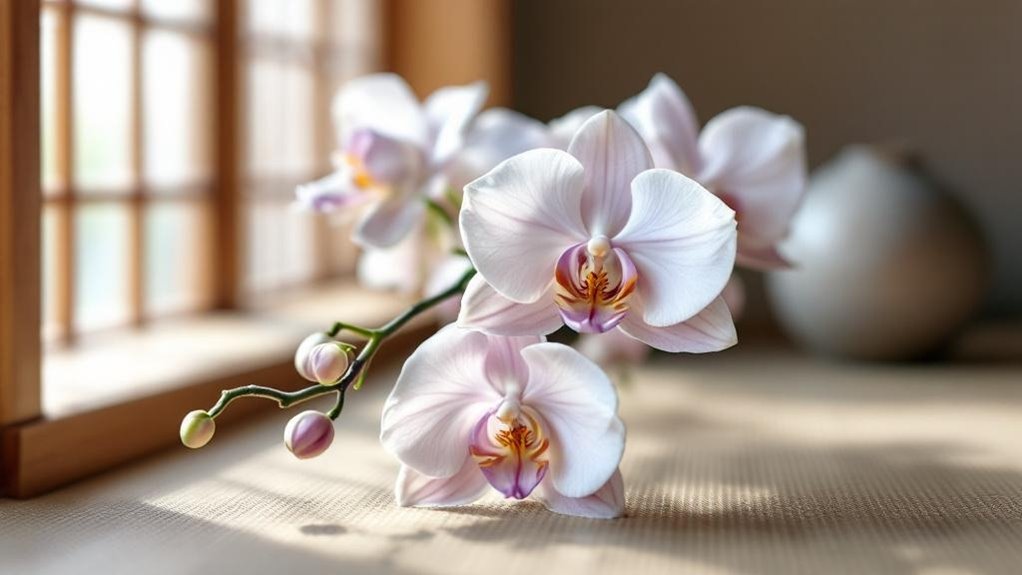
In Japanese aesthetics, you can read the orchid as a cultivated sign of refinement, disciplined care, and quiet prestige; it rewards patience, observational judgment, and continual improvement rather than abundance or display. In hanakotoba, it carries elegance, nobility, and rare regard, while white orchids add purity, calm, and ceremonial dignity. Samurai patronage, fuukiran display, and wabi-sabi values all reinforce its restrained excellence, and its poetry, art, and etiquette reveal how that meaning is practiced.
- Key Takeaways
- What Does Orchid Symbolism Mean in Japan?
- What Do Orchids Mean in Hanakotoba?
- What Does a White Orchid Symbolize in Japan?
- Why Are Orchids Linked to Refinement?
- Why Did Samurai Value Orchids?
- What Is Fuukiran in Japanese Orchid History?
- How Do Orchids Reflect Wabi-Sabi Beauty?
- How Do Orchids Appear in Japanese Poetry and Art?
- When Are Orchids Given in Japanese Etiquette?
- How Is Orchid Symbolism Used in Modern Japan?
- Frequently Asked Questions
- Conclusion
Key Takeaways
- In Japanese aesthetics, orchids symbolize cultivated taste, disciplined care, and prestige earned through patient refinement.
- Fuukiran orchids became elite status symbols in the Edo period, especially among samurai patrons and collectors.
- Orchids express wabi-sabi through understated flowers, irregular growth, seasonal change, and visible marks of age.
- In hanakotoba, orchids signify elegance, nobility, integrity, calm, and rare social refinement.
- White orchids convey purity, reverence, and dignified beauty, making them suitable for weddings, memorials, and formal offerings.
What Does Orchid Symbolism Mean in Japan?
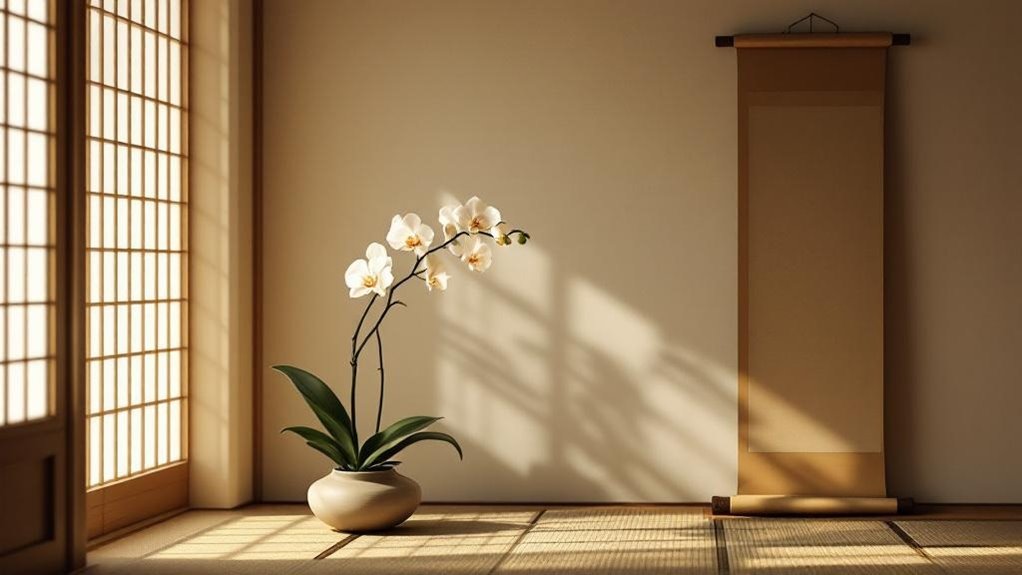
Refinement sits at the center of orchid symbolism in Japan, where the flower has long represented cultivated taste, continual aesthetic improvement, and a disciplined resistance to anything stagnant.
In Japan, orchids signify refinement through cultivated taste, continual self-improvement, and a disciplined refusal of stagnation.
When you encounter Neofinetia falcata, you’re seeing more than a plant; you’re seeing an elite ideal, shaped by samurai patronage, exacting display etiquette, and the observational discipline of growers who treated prized specimens as living art.
White orchids deepen that meaning, because their delicacy carries purity, sacredness, and reverence, qualities traditional thought aligned with divine whiteness and ceremonial cleanliness.
You also find orchids functioning as emblems of nobility and good character in poetry, decorative arts, and even protective motifs, so their symbolism doesn’t rest on beauty alone; it asks you to recognize restraint, status, cultivated judgment, and moral poise in one form.
This enduring meaning reflects the junzi ideal, in which quiet presence and moral self-command matter more than display.
What Do Orchids Mean in Hanakotoba?
In hanakotoba, the orchid carries the meanings that Japanese aesthetics already suggest, but it states them in a more codified form: elegance, cultivated refinement, and the rare status of something made precious through continual improvement rather than sudden display. You read the flower as an observational emblem of noble taste, disciplined care, and prestige that never appears stagnant, because value emerges through patient cultivation, display etiquette, and connoisseurship.
- It signals refinement shaped by practice.
- It implies nobility and social discernment.
- It can suggest integrity and enduring friendship.
- It may offer quiet protection and calm.
Within hanakotoba, even a white orchid can reinforce this atmosphere of elevated regard, yet the broader orchid meaning remains centered on cultivated excellence, elite association, and the authority conferred by sustained perfection. In Japanese ceremonial life, orchids are also valued for good fortune and lasting prosperity.
What Does a White Orchid Symbolize in Japan?
Purity stands at the center of the white orchid’s meaning in Japan, yet that purity doesn’t read as empty innocence; it carries the more exact sense of sacredness, cleanliness, and an uncontaminated presence that Japanese hanakotoba treats as dignified and almost godly. When you encounter a white orchid in Japanese culture, you read respect in it, not something stagnant or decorative; its cultivated restraint suggests spiritual beauty, and literary images of pale petals and faint fragrance support that observational reading.
You also see why it suits weddings, memorials, and offerings, where serene dignity matters. In older fortune traditions, the white orchid guardian reassures worries about daughters or younger women, implying protection, good character, and safe passage through uncertainty. Its symbolism remains reverent, clear, and quietly protective.
In keeping with measured comfort, white orchids in Japanese settings can also express restrained admiration and a calm presence that steadies moments of change.
Why Are Orchids Linked to Refinement?
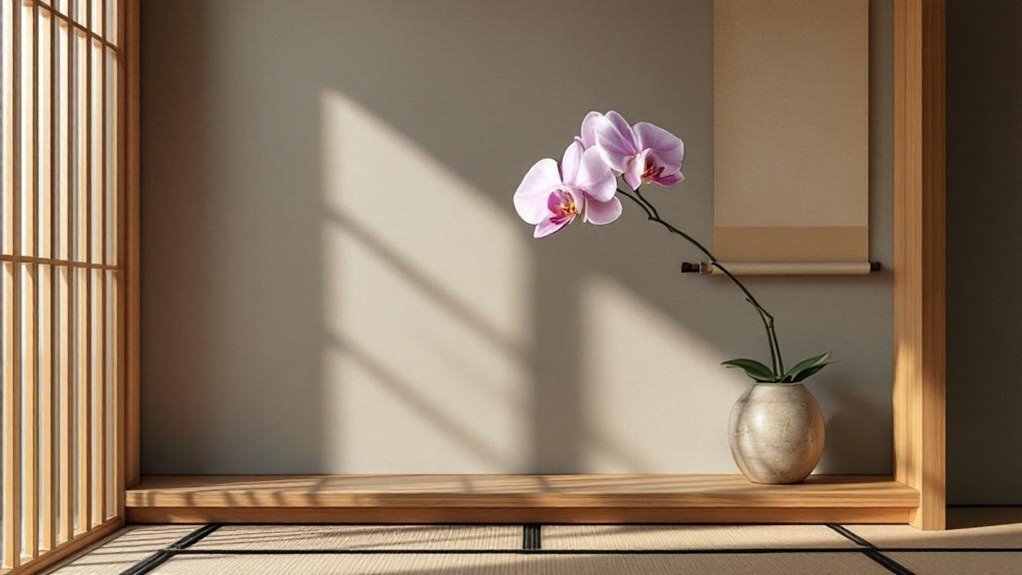
That sacred cleanliness helps explain why orchids came to signify refinement in Japan, because the flower never stood only for beauty; it also signaled cultivated judgment, disciplined care, and the ability to recognize value in what remained rare, controlled, and observational rather than showy.
- You see fuukiran as proof that rarity, cost, and restraint shaped prestige.
- You recognize Japanese aesthetic values in exact cultivation and patient self-improvement.
- You notice refined display in special pots, gold-thread nets, and careful etiquette.
- You hear elegance echoed through poetry, ceremony, and elite objects, never stagnant.
When you follow these practices, orchids become more than decoration; they reflect a mind trained to prize subtle excellence, sacred purity, and perfection pursued through steady attention.
In that way, refinement appears practiced, not merely possessed.
In Chinese literati tradition, the Four Gentlemen placed orchids beside plum blossom, bamboo, and chrysanthemum to affirm integrity, humility, nobility, and self-restraint.
Why Did Samurai Value Orchids?
You can see why samurai valued orchids when you note that exceptional fuukiran signaled prestige and nobility, marked cultivated taste and rank, and, through rare specimens traded at high prices or offered to the shogun, affirmed both wealth and political allegiance.
You can also observe that orchid keeping wasn’t stagnant ornament but a disciplined art, since mounting methods, protective nets, and formal display practices required control, restraint, and exact etiquette that mirrored samurai ideals.
As you consider their quiet fragrance and brief seasonal bloom, you can recognize how these plants joined status to ritual practice, giving the warrior class an observational model of refinement ordered by hierarchy and impermanence.
In Thai culture, orchids signify respect and esteem, reinforcing how these flowers can carry dignity as well as beauty.
Prestige And Nobility
Because status in Edo Japan had to be seen as cultivated rather than merely possessed, samurai valued Neofinetia orchids, or fūkiran, as rare objects that joined rank, taste, and discipline in a single display; elite specimens were shown in formal settings, exchanged by feudal lords as prestigious gifts, and governed by strict etiquette that limited their cultivation to the warrior class, which made the plants observational markers of hierarchy rather than stagnant ornaments.
- Orchids became a symbol of refined authority.
- Fuukiran signaled wealth, nobility, and trained taste.
- Rare varieties commanded astonishing prices at auction.
- You see bushidō mirrored in restraint and perfection.
You’d read these orchids as living art, not luxury; their value rested in scarcity, connoisseurship, and the quiet proof that nobility had been cultivated through exacting standards.
Ritual Cultivation Practices
Although a fuukiran could be admired for its rarity alone, samurai valued orchids most fully through the ritual of cultivation, where disciplined care made refinement visible and turned ownership into an observational proof of character; growers regulated humidity and temperature with exacting attention, packed roots in sphagnum moss, followed seasonal cycles of damp growth and cold dormancy, and staged each plant in hand-painted pots on lacquer stands so that beauty appeared cultivated rather than stagnant.
When you tended such orchids, you enacted elite discipline; you protected fragrance, sometimes with gold-thread nets, and treated display as ceremony.
Because exceptional specimens moved as gifts among lords and the shogun, your care signaled rank, restraint, and moral steadiness. Registration and ranking preserved standards, while high prices confirmed that refinement, once cultivated visibly, carried authority and prestige.
What Is Fuukiran in Japanese Orchid History?
Refinement defines fuukiran, a Japanese tradition in which select orchids—most closely associated with Neofinetia falcata and later related Vanda classifications—were cultivated not simply as botanical specimens but as objects of rank, taste, and disciplined observation, especially during the Edo period, when samurai households and their patrons elevated these plants into a formal culture of collecting, naming, and display.
You encounter Fuukiran as the Orchid of wealth and nobility, where cultivated prestige shaped ownership and exacting display.
- Fragrant blooms, variegated leaves, and balanced form guided judgment.
- Hand-painted pots or mounts turned specimens into observational artworks.
- Lords exchanged rare plants; auctions confirmed enduring social value.
- Registries enforced names, etiquette, moss culture, humidity control, and protection.
You also confront conservation, because threatened wild strains now deepen fuukiran’s historical gravity.
How Do Orchids Reflect Wabi-Sabi Beauty?
When you view orchids through a Japanese aesthetic lens, you don’t meet them as lush emblems of abundance so much as as studies in restraint, where the wild Neofinetia, or furan, expresses wabi-sabi through small, understated flowers, irregular epiphytic growth, and a cultivated refusal of anything too finished or stagnant.
Seen through Japanese aesthetics, furan becomes an orchid of restraint, where irregular growth and modest bloom quietly embody wabi-sabi.
You notice how Orchids gain beauty through modest display, mounted carefully in plain clay pots, shielded by nets, and positioned with observational discipline; nothing shouts, and that silence matters.
Their seasonal blooming and dusk fragrance ask you to attend to passing moments, not permanence.
Even aged roots, scars, and restrained variegation carry value, because they register time honestly.
As you cultivate them patiently, you recognize a refinement shaped by steady practice, where imperfection isn’t corrected away but preserved, observed, and quietly honored.
How Do Orchids Appear in Japanese Poetry and Art?
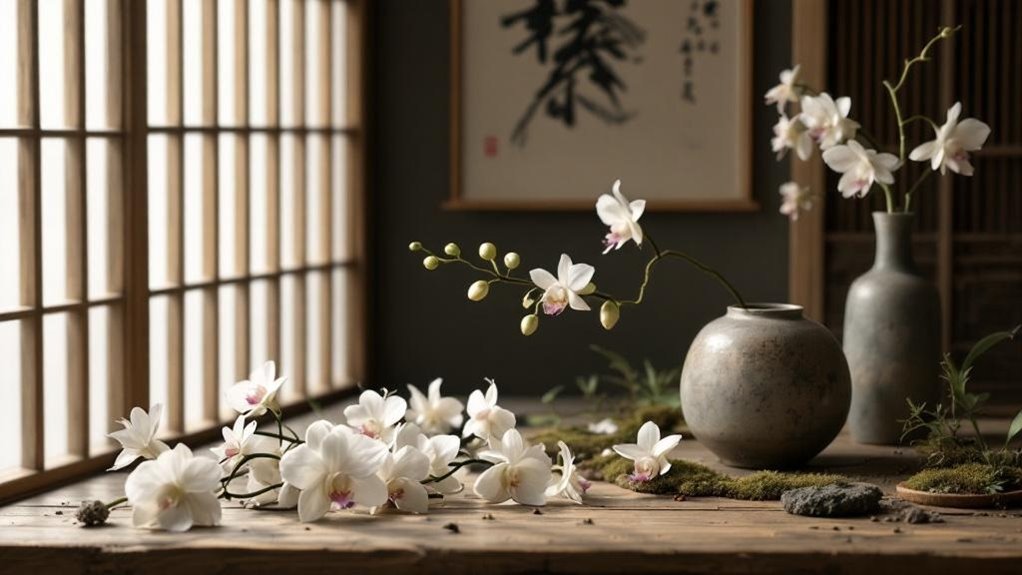
You can see orchids enter Japanese poetry through haiku and other short forms, where a white bloom or a hidden fragrance creates an observational image of purity, restraint, and refined beauty rather than any stagnant display of feeling.
You can also trace the orchid through visual arts, where paintings, woodcuts, and carefully cultivated display practices, including prized pots and nets, present the flower as a sign of class, discipline, and ritual care.
As you read these works together, you find that poets and artists use the orchid’s scent, color, and presentation to suggest nobility, spiritual refinement, and a cultural symbolism that continues into modern songs and popular commentary.
Haiku And Fragrance
Often, Japanese poetry and art place the orchid at the edge of perception, where its cultivated beauty emerges less through display than through atmosphere; in haiku and classical verse, poets dwell on the flower’s faint, nocturnal fragrance and pale form, as in Yosa Buson’s evening orchid, whose scent seems to occupy the air before the blossom fully appears, turning observation into an exercise in restraint.
You encounter Orchids as presences that disturb stagnant air, especially fuukiran, whose dusk fragrance carries aristocratic nuance and refined brevity.
- Buson makes scent precede sight.
- White blossoms suggest purity, sacredness.
- Evening perfume marks cultivated transience.
- Song and verse braid sensory longing.
Through such observational poetry, you register fragrance, whiteness, and silence together; the orchid doesn’t announce itself, and that reserve becomes its meaning.
Orchids In Visual Arts
That same restraint carried by fragrance in poetry becomes visible in Japanese visual art, where orchids appear through sparse ink lines, controlled negative space, and carefully observed form; in sumi-e and related painting traditions, artists render Neofinetia falcata with an economy of brushwork that emphasizes arching leaves, pale blossoms, and poised asymmetry, so the plant reads not as decorative excess but as cultivated refinement.
You also see orchids in Buson and other poets, where whiteness, scent, and evening atmosphere guide your observational sense toward purity and sacredness rather than stagnant ornament; in Edo woodblocks and botanical prints, prized specimens receive scientific attention and aesthetic framing, reflecting samurai taste, fuukiran culture, and miyabi, while variegated leaves and dusk fragrance make each mounted plant appear as a living artwork too.
When Are Orchids Given in Japanese Etiquette?
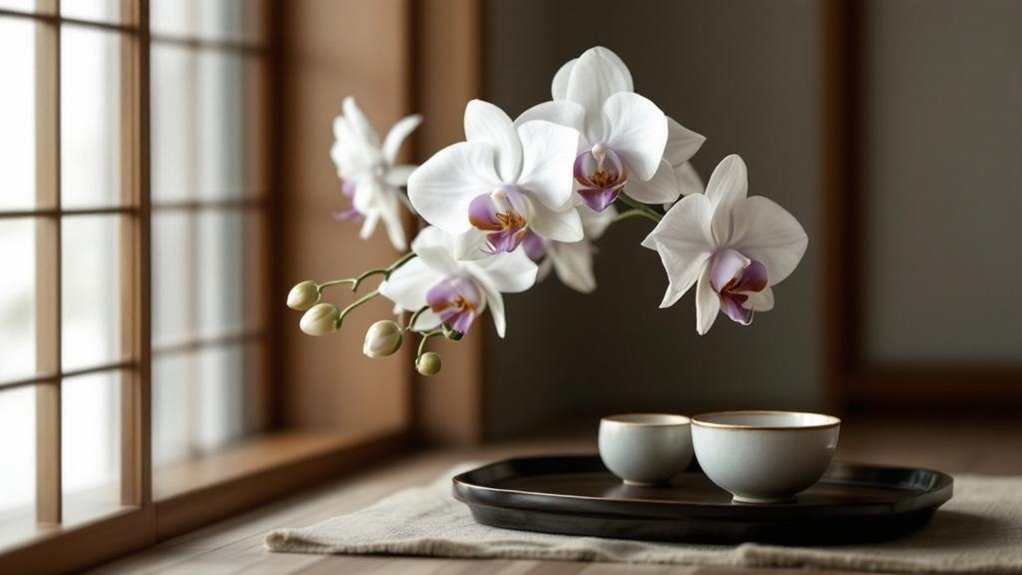
Typically, orchids are given in Japanese etiquette when the occasion calls for cultivated respect rather than casual affection, and their use is especially clear in formal, observational settings such as business openings, promotions, weddings, funerals, and milestone celebrations.
In Japanese etiquette, you present Orchids as gifts when admiration must appear disciplined, visible, and enduring rather than sentimental or stagnant.
- At business openings or promotions, you send large phalaenopsis displays to honor status and signal respect.
- For weddings and funerals, you choose white orchids, since they convey purity, reverence, and solemnity.
- For births, graduations, or housewarmings, you match color and variety to sentiment, including pink admiration or yellow beginnings.
- In elite historical exchange, you’d reserve rare fuukiran for patronage, superiority, and invited circles.
Their long-lasting blooms reinforce esteem.
How Is Orchid Symbolism Used in Modern Japan?
Modern Japan still treats orchid symbolism as a cultivated language of refinement, status, and aesthetic discipline, and you can see this most clearly in the ways orchids circulate through elite collecting, formal gifting, and carefully staged public interiors; rare Neofinetia falcata hybrids appear at specialty auctions where exceptional specimens command striking prices, not because the flower’s meaning has grown stagnant, but because rarity, lineage, and presentation still carry social weight.
You also encounter Orchid symbolism in white orchids at weddings, memorials, and shrine offerings, where they symbolize purity and ritual cleanliness; businesses send them for openings and promotions to signal prosperity, respect, and restraint. If you follow collectors, you’ll see societies enforce display etiquette, register prized varieties, and judge seasonal exhibitions. In magazines, hotel lobbies, and packaging, orchids symbolize elegance, minimalism, and controlled taste today.
Frequently Asked Questions
What Do Orchids Represent in Japanese Culture?
In Japanese culture, you’d see orchids represent refinement, nobility, purity, and hidden beauty. You can also link them to sacred elegance, elite status, poetic subtlety, and today, careful cultivation and conservation of rare native species.
What Flower Symbolizes Beauty in Japan?
Like a whispered jewel, you’d point to the orchid as Japan’s flower of beauty. It represents refined elegance, purity, and cultivated grace. You can also see cherry blossoms symbolize fleeting beauty, but orchids embody disciplined perfection.
What Does It Mean if a Japanese Person Sends You Orchids?
If a Japanese person sends you orchids, they’re showing respect, esteem, and refined regard. You might also read purity, congratulations, or protective goodwill, especially in formal situations, rather than assume they’re expressing casual romance or flirtation.
Why Do Asians Love Orchids?
You love orchids because they embody purity, refinement, virtue, and status. You also value their rarity, fragrance, seasonal beauty, and the skill they demand, so they feel meaningful, prestigious, and deeply connected to cultivated taste.
Conclusion
In Japan, you can read the orchid as a quiet emblem of cultivated character, its poised form signaling refinement, discipline, and a beauty that never turns stagnant; whether it appears in hanakotoba, samurai ideals, wabi-sabi thought, or modern gifts, it asks you to notice what is restrained yet enduring. Like a pale lantern in a still room, the orchid carries observational meaning, showing that elegance, honor, and humility often speak most clearly when they don’t insist.