
Spiritually, you can view orchids as signs of cultivated beauty, inward refinement, love, and patient transformation; their balanced form, restrained presence, and adaptive growth suggest clarity without stagnant excess. Superstitious meanings developed later from rarity, unusual tubers, and slow blooming, so orchids became linked in some places to luck, fertility, mourning, or fate through local anecdote rather than stable doctrine. Color and species further shift interpretation, and the distinctions become clearer with context.
- Key Takeaways
- What Do Orchids Mean Spiritually?
- Why Do Orchids Have Superstitions?
- Spiritual vs Superstitious Orchid Meanings
- Orchid Meaning: Transformation
- Orchid Meaning: Love and Fertility
- Orchid Meaning: Beauty and Purity
- What Do White Orchids Mean?
- What Do Red and Pink Orchids Mean?
- What Do Purple Orchids Symbolize?
- What Do Yellow and Green Orchids Mean?
- What Do Orchids Mean in China and Japan?
- What Do Orchids Mean in Europe?
- What Do Orchids Mean in the Americas?
- Orchid Gifting Across Cultures
- Common Orchid Symbolism Mistakes
- How to Choose the Right Orchid
- Frequently Asked Questions
- Conclusion
Key Takeaways
- Spiritually, orchids symbolize refined beauty, inner purity, patience, and gradual personal transformation rather than sudden dramatic change.
- Superstitious meanings arise from folklore, where orchids may be seen as omens tied to fertility, luck, passion, jealousy, or death.
- Color often separates spiritual and superstitious readings: white suggests purity spiritually, yet can imply mourning or funerary associations in some cultures.
- In Asian traditions, orchids often represent noble character, harmony, respect, and prosperity, especially in ritual, gifting, and meditative spaces.
- Meanings vary by culture, species, and setting, so orchid symbolism should be interpreted contextually rather than as fixed universal truth.
What Do Orchids Mean Spiritually?
Symbolically, orchids are understood as spiritual emblems of love, beauty, refinement, and inward growth, and people place them in rituals and meditative spaces because their cultivated form and balanced structure are thought to encourage harmony, soften stagnant emotional atmospheres, and support a more observational state of mind.
Spiritually, Orchids also suggest virtue and noble character; in Chinese tradition, you can read them as reminders to cultivate integrity, restraint, and quiet dignity, much as Confucius framed moral refinement. Across other practices, you may see orchids linked with fertility, creativity, sensual liveliness, abundance, and prosperity, because their history carries associations with life force and elevated status. When you use dried petals or living plants in spiritual work, you’re seeking clearer feeling, steadier communication, and subtler energetic resonance in relationships. Their cultivated clarity also reflects the orchid’s symbolism of purity, patience, and gradual inner development rather than dramatic display.
Why Do Orchids Have Superstitions?
Orchid superstitions grew out of a convergence of rarity, form, and cultural projection, because people have long treated unusual plants as carriers of meaning, and orchids, with their exotic appearance, slow blooming habits, and once-restricted availability, seemed especially fitted to beliefs about hidden influence and personal fate.
Orchid lore emerged where rarity, uncanny form, and human imagination made beauty seem capable of shaping fate.
- During Victorian orchidelirium, orchids acquired superstitious meanings because scarcity and cost made them observational markers of luxury, mystery, and omen.
- In Greek, Chinese, and Aztec traditions, orchids are associated with fertility, virility, health, and cultivated remedies.
- Their strange tubers, body-like forms, and stagnant blooming cycles encouraged ritual use in charms and folk medicine.
- Conflicting customs, plus occult practice and media, taught you that gifting or placing orchids could shape luck, love, illness, or mourning across generations worldwide.
- Victorian collectors also fed this mystique through orchidelirium, a craze that linked orchids with wealth, rarity, and elite status.
Spiritual vs Superstitious Orchid Meanings
Although the same flower can carry both kinds of meaning, spiritual interpretations of orchids usually ask you to read them as cultivated signs of refined beauty, love, moral character, and inward growth, while superstitious meanings treat them more instrumentally, as observational markers of luck, fertility, protection, or loss that can influence events through charms, placement, or gifting.
| Lens | Orchid meaning | Example |
|---|---|---|
| Spiritual | Beauty, virtue, growth | Confucian nobility |
| Superstitious | Omens, charms, outcomes | Love spells |
You see the difference most clearly in color: a white orchid can suggest purity and new beginnings spiritually, yet folklore may treat that same gift as inauspicious, even stagnant, especially in China, where death associations persist. Spiritual meanings stay contemplative and culturally anchored; superstitions remain regional, practical, and transmitted through personal ritual. Orchids also carry cultural refinement in traditions that link them to royalty, moral integrity, and disciplined elegance.
Orchid Meaning: Transformation
Because their life cycle depends on adaptation, patience, and highly specific relationships with the environments that sustain them, orchids have come to represent transformation as a cultivated process of renewal rather than a sudden break from the past; spiritually, they point to personal growth, inward refinement, and rebirth, especially in Asian traditions where white and green blooms mark new beginnings, while in feng shui and related practices they’re placed to strengthen positive energy around self-improvement and creative evolution.
- You see resilience in epiphytic growth across varied microclimates.
- You find white and green blooms often linked to renewal.
- You use orchids in observational, cultivated spaces to resist stagnant habits.
- You may carry dried stems as talismans for transformation in career or spiritual direction.
Their history also shows meanings shifting with cultural exchange over time.
Orchid Meaning: Love and Fertility
When you consider orchid meaning through the lens of love and fertility, you find a cultivated symbolism that reaches across civilizations; in Chinese thought it reflects refined affection and idealized feminine beauty, while Victorian culture recast it as a sign of passion, luxury, and courtship.
You also see that fertility symbolism never remained stagnant or merely ornamental, because Greeks read orchid tubers as signs of future offspring, and Mesoamerican traditions linked certain species with virility and sexual strength in ritual use.
As you move through these meanings, an observational pattern becomes clear: orchids consistently carry romantic significance and reproductive symbolism, whether they appear in poetry, gifts, or spiritual practices.
Modern gift-giving also reflects color symbolism and occasion, with white orchids often used for new beginnings and yellow orchids chosen to express joy, growth, and hopeful wishes for family expansion.
Romantic Symbolism
Devotion sits at the center of orchid symbolism, and across many cultures the flower has come to represent refined romantic love, cultivated admiration, and the kind of long-term attachment that doesn’t turn stagnant under time’s pressure; purple orchids, in particular, have long carried meanings of deep respect, which is why they’ve often been given not merely to flatter a lover, but to honor the person within the bond.
In romantic symbolism, you can read orchids with observational nuance:
- Purple orchids signal esteem, loyalty, and cultivated devotion.
- Victorian lovers used orchids to imply desire discreetly, while displaying status.
- Pink and red orchids let you distinguish gentle affection from passionate love.
- White orchids emphasize purity, restraint, and spiritual dimensions within romance.
When you choose orchids carefully, you communicate admiration that feels deliberate, enduring, and quietly serious.
Fertility Across Cultures
Across cultures, orchids have carried a persistent fertility symbolism, and that meaning doesn’t arise from vague sentiment alone; it grows from long-standing medical beliefs, reproductive rituals, and observational traditions that linked the flower’s form, rarity, and cultivated sensuality to human potency and conception.
In fertility across cultures, you see Ancient Greece tie orchis to virility, with tubers read as signs of unborn sex and strength; Aztecs blended orchids with vanilla and cocoa to steady desire, vigor, and conception before battle and ritual.
In Chinese medicine, you find Dendrobium prescribed to nourish Yin and address stagnant libido and infertility; in Victorian Europe, orchids signaled erotic luxury in courtship, while South American healers prepared infusions from select species to increase potency and support conception.
Orchid Meaning: Beauty and Purity
Beauty, in the spiritual language often attached to orchids, doesn’t point to surface charm alone; it suggests a cultivated harmony of form, restraint, and presence that many Asian traditions connect with inner purity, a view reflected in Confucius’s comparison of the orchid’s delicate scent and composed appearance to noble, virtuous character.
You can read this symbolism through several observational lenses:
- In Asian thought, orchids are often associated with moral refinement, not vanity.
- In Western practice, they lift beauty toward grace, offerings, and spiritual elevation.
- Their adaptive, epiphytic growth suggests resilience, a purity that avoids stagnant excess.
- Across many interpretations, purity joins beauty as disciplined presence; cultural readings still vary.
Seen this way, the orchid asks you to notice beauty that has been tested, clarified, and inwardly sustained.
What Do White Orchids Mean?
Reverence often sits at the center of white orchid symbolism, because the color’s spare clarity and the orchid’s cultivated form together suggest purity, spiritual renewal, and a quiet kind of sacred order that people often seek in weddings, meditation spaces, and other ceremonial settings.
When you choose white orchids, you usually signal calm, respect, and enduring grace, especially with long-blooming Phalaenopsis varieties whose elegance resists anything visually stagnant. In Western settings, you’ll often see them used for sympathy, remembrance, and condolence, because their restrained beauty supports an observational mood of honor rather than display.
Yet context governs meaning; in parts of East Asia, especially China, white orchids can imply funerary associations, so you should read local custom carefully, since the same flower may mark celebration in one setting and solemnity in another.
What Do Red and Pink Orchids Mean?
When you choose a red orchid, you signal deep passion, romantic love, and importance; in spiritual practice, you may also use it to invite desire, strength, courage, and cultivated respect.
When you choose a pink orchid, you express grace, femininity, joy, and gentle affection, and you may also recognize its quieter association with healing, comfort, and emotional recovery when life feels observational rather than stagnant.
You should also note the cultural symbolism differences, because red orchids can suggest temptation or intense sexual energy while pink orchids may imply innocence or harmless attraction, and that context shapes how your gift is understood.
Red Orchids And Passion
Often, red orchids carry the clearest spiritual charge of passion, desire, and deep romantic love; if you give or display them, you’re signaling not only attraction but a cultivated form of emotional intensity, one that many traditions link to vigor, confidence, and the life force rather than to anything stagnant or merely decorative.
- You present red orchids when you want passion understood as deliberate, not impulsive.
- You invoke desire, yet you also project liveliness, strength, and self-possession.
- You may notice observational tension around them; some conservative settings treat their symbolism as provocative, even taboo.
- You should read their spiritual meaning as inward and energetic, because red orchids emphasize emotional heat, romantic seriousness, and confidence rather than mere ornament.
Used thoughtfully, they mark anniversaries and intimate celebrations with unusual specificity.
Pink Orchids And Grace
Grace defines the spiritual atmosphere of pink orchids, because they don’t press toward the charged intensity of red but instead express admiration, femininity, joy, and a cultivated form of affection that feels steady rather than consuming; if you give them, you signal gratitude, gentle love, and emotional regard, which is why they’re so closely tied to birthdays, maternal milestones, and anniversaries, including the traditional fourteenth.
When you place pink orchids in a reflective room, you invite grace, compassion, and emotional healing rather than stagnant longing; their presence supports self-acceptance, nurtures an observational calm, and reinforces affection that remains measured, sincere, and sustainable. You’d choose Phalaenopsis or Cattleya when you want elegance to carry the message, because pink orchids communicate appreciation without implying urgent desire, making them appropriate when your regard is clear, respectful, and enduring.
Cultural Symbolism Differences
Although red and pink orchids may look universally legible, their meanings shift noticeably across cultural settings, and you can’t assume that color alone carries a fixed message; in Western traditions, red orchids usually signal passion, romantic love, and desire, much like red roses, while pink orchids suggest grace, femininity, joy, and a more cultivated form of affection.
- In China, red orchid colors often mark happiness, fortune, and weddings.
- Across East Asia, pinks can imply refinement, admiration, or noble restraint.
- Lighter pinks lean toward innocence; deeper pinks indicate gratitude and respect.
- You should read cultural symbolism differences carefully, because a gift can seem romantic in one setting, yet respectful or celebratory in another, and observational awareness keeps your intention from becoming stagnant, misplaced, or misunderstood.
What Do Purple Orchids Symbolize?
Few flowers carry status as clearly as purple orchids; spiritually, they symbolize royalty, dignity, admiration, and a cultivated connection to higher wisdom, which is why people have used them in rituals, offerings, and formal acts of respect for figures whose character or position commands esteem.
Purple orchids, often associated with nobility in Japan and China, let you signal strength, virtue, and observational respect rather than stagnant display; when you give them for anniversaries, promotions, or formal milestones, you communicate lasting admiration, luxury, and esteem with disciplined clarity.
Their rarity also shaped superstition, because costly purple blooms became markers of exclusivity and high value, so if you present them too ostentatiously, some people may read them as invitations to envy or social scrutiny rather than as sincere honors.
What Do Yellow and Green Orchids Mean?
Where purple orchids speak to rank, admiration, and cultivated esteem, yellow and green orchids carry a lighter but no less intentional message; spiritually, yellow orchids symbolize joy, friendship, and new beginnings, while green orchids point to renewal, harmony, good fortune, and a steady connection to healing or nature-based energy.
- Choose yellow orchids when you want to mark milestones, encourage optimism, or prevent a moment from feeling stagnant.
- Choose green orchids when you want to suggest recovery, prosperity, balance, or an observational respect for nature.
- Pair yellow orchids and green orchids to express cheerful growth, making arrangements suitable for housewarmings or get-well gifts.
- Consider cultural background before gifting; meanings shift, and your cultivated intention should remain clear, precise, and thoughtfully received by others.
What Do Orchids Mean in China and Japan?
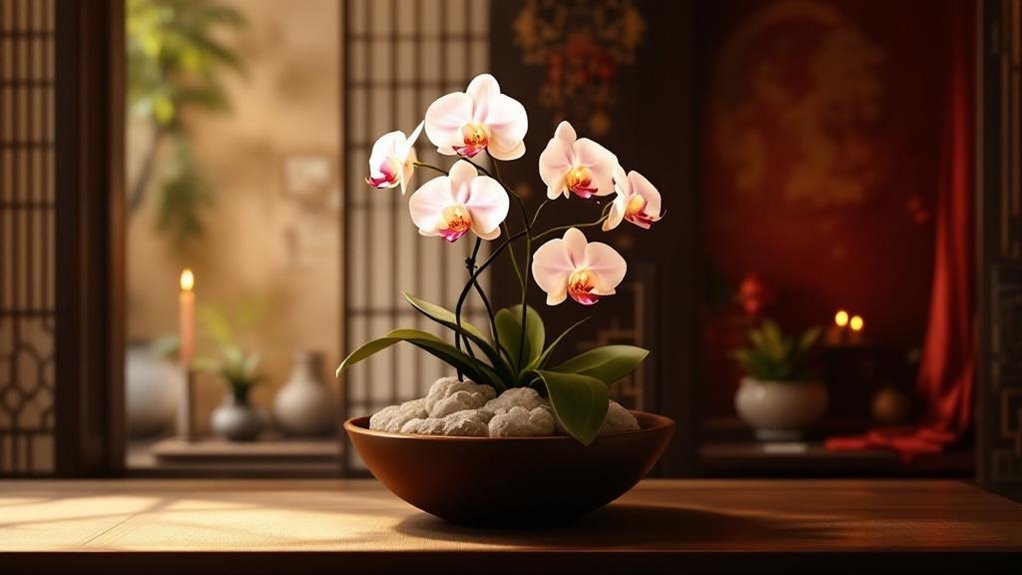
Tradition gives orchids a cultivated weight in both China and Japan, yet each culture frames that weight through its own history, values, and ceremonial habits; in China, orchids have long signified refinement, noble character, and friendship, a meaning shaped in part by Confucian thought, which treated their restrained fragrance and elegance as observational signs of virtue rather than display.
You also see links to ideal feminine beauty, while white orchids can, in certain Chinese contexts, suggest death rather than stagnant innocence. In Japan, orchids often signal wealth, prosperity, bravery, and status; some were once reserved for warriors and nobility. Purple orchids in both cultures communicate respect and nobility, while white orchids in Japan more often convey purity and elegance. When you give orchids ceremonially, color and context determine the message.
What Do Orchids Mean in Europe?
Across Europe, orchids came to signify cultivated luxury, sensual admiration, and social distinction, and that meaning developed through several layers of history rather than a single stagnant tradition. You can trace that symbolism through changing European tastes and social codes.
- In Victorian society, orchids are often prized as rare luxuries, typically associated with wealth, sophistication, and exotic beauty.
- In romantic contexts, you’d see them express admiration, deep passion, and refined sensual desire.
- In classical thought, influenced by Greece, orchids carried links to fertility and virility through the name orchis.
- By the 20th century, you’d find orchids in elegant arrangements, where color sharpened meaning: purple suggested royalty, white reverence or purity, and red signaled romantic passion. Their status became social, aesthetic, and ceremonial.
What Do Orchids Mean in the Americas?
Meaning in the Americas reflects both reverence and usefulness, and that dual character keeps orchid symbolism from becoming stagnant; in many Central and South American indigenous traditions, orchids have signified strength, power, and healing, not only as cultivated emblems in ceremonial life but also as plants tied to practical remedies and observational knowledge of the natural world.
You can see that heritage continue in Latin American rituals, where orchids remain associated with ceremony and local medicine, joining spiritual regard to lived practice. In the United States, you encounter a different emphasis, since orchids became popular as signs of beauty, admiration, strength, and refined taste, especially after Victorian flower culture marked them as rare luxuries. Even vanilla, drawn from an orchid pod, shows you how orchid meaning in the Americas joins elegance, utility, and enduring cultural value.
Orchid Gifting Across Cultures
When you give an orchid, you’re not only offering a cultivated plant but also stepping into a set of social signals that can shift markedly from one culture to another; in China and Japan, orchids commonly express respect, refinement, and wishes for prosperity, an observational pattern rooted in long-standing literary and courtly associations, from Confucius’s comparison of orchids to virtuous people to the historical link between certain orchids and samurai nobility.
- In Western settings, orchids are often given for anniversaries, romance, and achievement, since Victorian taste tied them to luxury.
- Color matters; white suits U.S. weddings and sympathy, but can seem stagnant elsewhere.
- Yellow and green suggest friendship and new beginnings; purple conveys admiration.
- For versatility, choose Phalaenopsis; an orchid makes a durable, widely accepted indoor gift.
Common Orchid Symbolism Mistakes
You can misread orchid symbolism when you treat color meanings as fixed, because white may suggest purity in one setting and mourning in another, and that observational error often leads to stagnant assumptions rather than cultivated understanding.
You also create confusion when you ignore cultural context, since a Phalaenopsis given as a modern, elegant gift doesn’t carry the same historical weight as a Neofinetia, and Western florist shorthand won’t reliably travel across regions or occasions.
Most importantly, you shouldn’t mix spiritual meaning with superstition, because an orchid can represent love, renewal, strength, or ancestral reverence in one tradition while signaling localized funeral associations in another.
Confusing Color Meanings
Often, confusion around orchid color symbolism comes from treating one cultivated meaning as universal, even though spiritual associations shift across regions, eras, and species, and stagnant assumptions about a single “correct” interpretation tend to produce avoidable mistakes. When you face confusing color meanings around an orchid flower, use observational care.
- White orchids suggest purity or sympathy, yet they may also imply death, so your gift can misfire.
- Purple orchids express admiration and royalty, but superstition may exaggerate them into promises of wealth or status.
- Yellow orchids usually signal friendship and new beginnings, although broad bad-luck beliefs about yellow can distort that reading.
- Pink and red orchids convey love and passion, while intense red may attract judgments about jealousy or impropriety.
You avoid errors when you test assumptions against species, era, and recipient expectations.
Ignoring Cultural Context
Misreadings around orchid symbolism don’t stop at color, because cultural context governs how any cultivated meaning is received, and stagnant assumptions about universal symbolism can turn a thoughtful gesture into a social error.
You shouldn’t assume white orchids signal purity everywhere; in China, they may suggest death, while Western funeral etiquette can welcome them. You also flatten meaning when you treat orchids as merely romantic, because Confucius praised them as virtuous scholars, and Aztecs valued them for strength and ritual. Purple orchids don’t always signify royalty either; Victorian luxury often reflected rarity and production difficulty. Meanings stay observational and regional, especially across 25,000 species.
| Assumption | Better reading | Example |
|---|---|---|
| White means purity | meanings vary | China, funerals |
| Orchids mean romance | roles differ | Confucius, Aztecs |
Mixing Spirit And Superstition
Although orchids carry cultivated spiritual meanings in many traditions, confusion begins when symbolic associations such as refinement, love, fertility, or a connection to the divine are treated as if they were the same as superstitions about luck, curses, love spells, or spirit contact, because the first usually emerges from cultural and historical interpretation while the second rests on localized anecdote, folk practice, or stagnant repetition without consistent historical basis.
- You shouldn’t treat one color’s spiritual meaning as universal; white shifts across cultures.
- You shouldn’t confuse folk amulets with doctrine; localized practices aren’t broad spiritual truths.
- You shouldn’t mistake rarity or price for potency; luxury symbolism isn’t sacred authority.
- You shouldn’t flatten species differences; Vanilla and Neofinetia carry distinct associations.
These observational distinctions help you separate symbolism from superstitions with greater precision.
How to Choose the Right Orchid
Start by matching the orchid’s color and variety to your intention, because the symbolic charge people cultivate around orchids tends to follow clear patterns: white orchids suit purity, healing, and spiritual renewal; pink or red orchids align with love, affection, and emotional warmth; green or yellow orchids support renewal, happiness, and good fortune; and purple orchids, especially Vanda or Cattleya, carry a long association with dignity, respect, and ceremonial regard.
When choosing the right orchid, also weigh use and setting; for a beautiful orchid in ritual space, select Phalaenopsis or Cymbidium, since both remain reliable indoors, resist stagnant conditions better than fussier types, and ask only bright, indirect light and weekly watering in bark.
For gifts, choose stems with multiple buds, and verify cultural meanings before gifting white blooms abroad.
Frequently Asked Questions
What Do Orchids Signify Spiritually?
Orchids spiritually signify purity, refined beauty, love, prosperity, and inner growth. You can see them as symbols of moral virtue, creative energy, and renewal, helping you invite calm, harmony, and positive transformation into your life.
Is It Bad Luck to Give Someone an Orchid?
No—you won’t usually bring bad luck by giving someone an orchid. That belief doesn’t hold up broadly; culture shapes it. You should check local customs, since white orchids can signal mourning in some places.
What Color Orchids Are Good Luck?
You’ll find green, yellow, purple, red, and pink orchids commonly bring good luck. Choose green for renewal, yellow for fortune, purple for success, and red or pink to boost love, energy, and relationship harmony.
What Do Orchids Symbolize in Witchcraft?
In witchcraft, you’ll find orchids symbolize love, attraction, fertility, beauty, and prosperity. You can use them in spells, charms, or offerings to strengthen romance, boost sensual energy, invite abundance, and deepen ancestor or spirit communication.
Conclusion
As you weigh the spiritual meaning and the superstitious meaning of orchids, you may notice a coincidence: the same bloom that some cultivated as a sign of love, others treated as a warning, which shows how belief often reflects the observer more than the flower; if you choose with observational care, you won’t become stagnant in borrowed symbolism, and you’ll understand that orchids most often signify transformation, intimacy, and intention, shaped by culture, history, and the context you give them.