
Winter orchids let you signal resilience, refined beauty, and quiet luxury at once, because they bloom through cold, sparse conditions, store water in thick leaves and pseudobulbs, and hold their flowers for weeks or months when other displays grow stagnant; across Chinese and Victorian associations, they also suggest cultivated virtue, dignity, and discreet exclusivity. Color shifts the message, with white for renewal, pink for gratitude, purple for nobility, and yellow or green for fortune, as the rest explains.
- Key Takeaways
- What Do Winter Orchids Symbolize?
- Why Winter Orchids Symbolize Quiet Luxury
- Winter Orchid Meanings Across Cultures
- Why Winter Orchids Symbolize Resilience
- How Winter Orchid Colors Change the Message
- White Winter Orchids for Peace and Purity
- Pink Winter Orchids for Warmth and Care
- Purple Winter Orchids for Grace and Nobility
- Yellow and Green Winter Orchids for Hope
- Best Winter Orchid Varieties and Meanings
- When to Gift Winter Orchids
- How to Choose the Right Winter Orchid Gift
- How to Care for Winter Orchids Indoors
- Frequently Asked Questions
- Conclusion
Key Takeaways
- Winter orchids symbolize resilience, blooming through cold months with water-storing leaves and roots adapted to harsh, low-light conditions.
- Their long-lasting flowers represent enduring affection, thoughtful care, and a steady emotional presence throughout winter.
- Winter orchids convey refined beauty and quiet luxury, prized for rarity, muted elegance, and historical ties to exclusivity.
- In Chinese tradition, orchids symbolize perseverance, moral integrity, noble character, and good fortune, especially during Lunar New Year.
- Color deepens meaning: white for renewal, pink for gratitude, purple for dignity, and yellow or green for hope and prosperity.
What Do Winter Orchids Symbolize?
Resilience defines much of what winter orchids symbolize, because these cultivated blooms open during the coldest stretch of the year, when gardens often appear stagnant and few other flowers remain willing to persist; for that reason, they’ve long represented perseverance, refined beauty, and a quiet form of luxury that doesn’t depend on abundance to make its presence known.
You also see purity in white and pale varieties, which suggest new beginnings and make these flowers fitting for winter ceremonies and seasonal interiors. In observational traditions, including feng shui, winter orchids encourage calm, creativity, and steady fortune, aligning with the inward character of the season. When you give one, you communicate lasting affection and thoughtful endurance, because its blooms remain present for weeks, offering a composed reminder that beauty, resilience, and care can continue through winter. Their enduring presence also reflects the inner strength orchids are often said to symbolize across cultures.
Why Winter Orchids Symbolize Quiet Luxury
When you notice winter orchids blooming while most plants remain stagnant, you see refined winter elegance in its clearest form, because their rare seasonal display, cultivated beauty, and muted tones suggest luxury that doesn’t need spectacle.
You also recognize that their long-lasting flowers endure in low-light indoor conditions with observational steadiness, and that resilience gives them an understated authority that feels composed rather than showy.
When you give or arrange them, you signal careful taste and quiet investment, since their exacting care and long cultural ties to dignity and refinement make their beauty feel rare, lasting, and discreet.
Their association with Victorian orchidelirium helped cement orchids as enduring symbols of exclusivity and luxury.
Refined Winter Elegance
Because winter-blooming orchids, especially select Cymbidium and Phalaenopsis cultivars, flower while much of the indoor garden turns stagnant, they create an immediate impression of cultivated abundance without display, and that contrast is central to their quiet luxury. When you place these orchids in a restrained interior, their ivory shades, muted blush, or deep jewel tones read as observational rather than ornamental, and the effect feels composed, not indulgent.
You notice how clean lines, neutral surfaces, and quality materials sharpen each arching stem, allowing winter-blooming orchids to carry a room with sculptural presence alone. That refined winter elegance also draws on older associations, especially in East Asian traditions, where Cymbidium suggests restraint, cultivated character, and gentlemanly virtue; together, those meanings let quiet luxury feel grounded, stable, and culturally resonant in winter. In Confucian reading, the orchid became a living emblem of modesty and nobility, reinforcing its association with quiet strength and cultivated grace.
Rare Beauty Endures
Although winter light is thin and much of the indoor garden appears stagnant, a blooming orchid still holds its form, extends color across weeks or even months, and turns endurance itself into an observational sign of luxury.
You recognize quiet luxury in winter-blooming orchids because they persist, cultivated against seasonal decline, and their restraint reads more clearly than abundance.
- Cymbidium and Phalaenopsis hybrids flower through cold months.
- Their blooms last indoors, proving resilience.
- Victorian collectors prized winter specimens during orchidelirium.
- Pale white, cream, and blush tones suggest understatement.
- Care demands warmth, humidity, indirect light, and measured watering.
Darwin’s orchid studies helped explain why these flowers feel so purposeful, revealing intricate pollination patterns that match form to function.
When you keep one well, you don’t display excess; you demonstrate attention, patience, and taste, and that deliberate stewardship makes rare beauty feel earned, not merely owned through winter’s long interior stillness.
Winter Orchid Meanings Across Cultures
As you trace winter orchid meanings across cultures, you find an observational thread that begins in Ancient Greece, where orchids carried ideas of fertility and cultivated life force, then shifts toward China, where winter blooms came to represent resilience, refined character, and moral steadiness against a stagnant season.
You also see how Chinese symbolism, shaped by Confucian ideals, treats the winter orchid as a sign of gentlemanly virtue, calm endurance, and inner balance rather than mere ornament. By the Victorian period, you recognize a different emphasis; winter-flowering orchids signaled luxury, rarity, and social distinction, because collectors paid heavily for greenhouse specimens that bloomed when most gardens stood bare. In Chinese culture, The Four Gentlemen place orchids alongside plum blossom, bamboo, and chrysanthemum as enduring symbols of refinement and strength.
Ancient Greece Beliefs
While winter orchids may now suggest refinement or cultivated beauty, their oldest recorded meanings in ancient Greece were far more physical and observational, rooted in fertility, virility, and reproductive health; the flower’s very name comes from the Greek *orkhis*, meaning “testicle,” a reference to the paired tubers that shaped how Greeks interpreted the plant’s power.
- You encounter ancient Greece through herbal logic.
- You see orchids linked to fertility and virility.
- You find tubers roasted, stewed, or mixed with wine.
- You notice remedies aimed at potency, not ornament.
- You understand these claims lack modern support.
In this worldview, you wouldn’t read the orchid as quiet luxury; you’d read bodily strength, hoped-for conception, and a medicinal answer to stagnant uncertainty through practical ritual.
Chinese Winter Symbolism
Chinese tradition recasts the winter orchid from a bodily remedy into a moral emblem, and you see that change most clearly in the idea of *lan* as one of the Four Gentlemen, where a bloom appearing in cold weather stands for perseverance, moral integrity, and the quiet strength of a cultivated person who endures hardship without display.
In Chinese culture, Confucian thought lets you read the orchid as refined character made visible, an observational sign of inner beauty that doesn’t depend on acclaim. During Lunar New Year and winter festivals, you find Cymbidium displayed for good fortune, longevity, and harmonious family ties, while its bloom in cool, low-light rooms resists stagnant winter conditions and affirms resilience.
When you give white, pink, yellow, or green varieties, you express respect, filial care, prosperity, or remembrance.
Victorian Luxury Traditions
Because Victorian taste prized rarity as visible proof of cultivated judgment, the winter orchid became more than a flower in mid-19th-century Britain; it served as an observational marker of status, refinement, and refined love, especially during the period historians call orchidelirium, when collectors paid extreme sums and financed dangerous expeditions to obtain unusual species.
- In the Victorian era, you displayed orchids in heated conservatories.
- Their winter bloom prevented rooms from appearing stagnant or ordinary.
- A gifted orchid signaled exclusivity, admiration, and resources.
- Trade with Asia expanded winter displays of Cymbidium and Phalaenopsis.
- Floral language linked orchids to luxury and refined love.
When you read these traditions, you see how winter orchids carried social prestige through cultivated care, visible expense, and seasonal courtship, making beauty appear disciplined, not merely decorative, within elite households.
Why Winter Orchids Symbolize Resilience
Although winter can seem inhospitable to flowering plants, winter orchids symbolize resilience with unusual clarity; many species have evolved to bloom in cooler months, shifting their peak display to a season marked by lower temperatures and fewer pollinators, and that timing alone reflects an observational logic of survival rather than fragility.
| Trait | Winter condition | Meaning |
|---|---|---|
| Blooming cycle | Sparse pollinators | Adaptation |
| Thick leaves | Colder, drier air | Stored reserves |
| Microclimates | Sun, airflow | Disease control |
You see resilience in winter-blooming orchids through cultivated endurance; thicker leaves and pseudobulbs hold water and nutrients, while roots anchor into branches or rocky crevices where light stays useful and air never turns stagnant. Certain Cymbidium and Phalaenopsis selections extend flowering for months, reinforcing enduring beauty through persistence.
How Winter Orchid Colors Change the Message
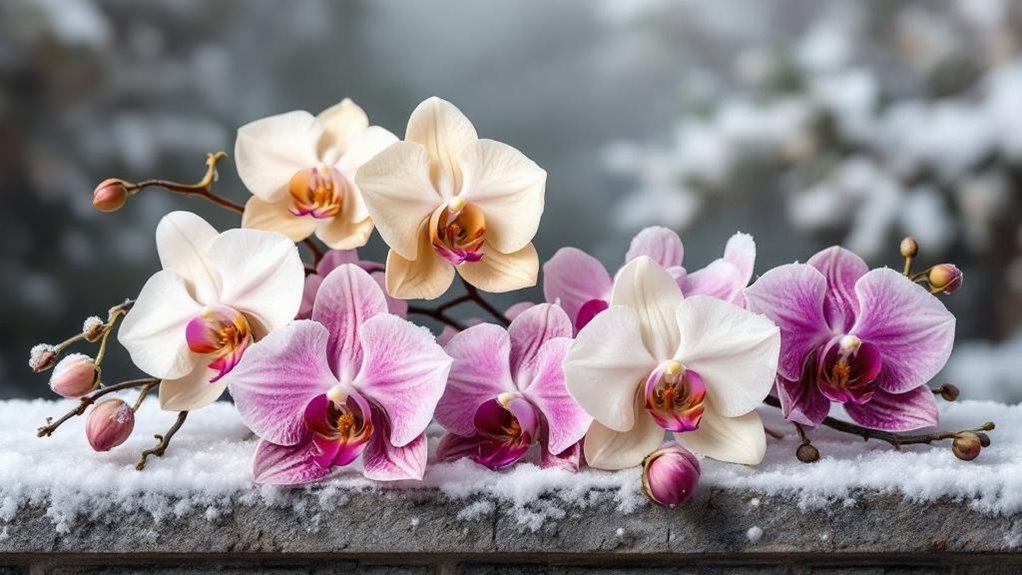
Resilience explains why winter orchids matter, yet color determines how that endurance is read, shaping the message from restrained comfort to cultivated prestige; a white bloom carries purity and new beginnings, which is why it appears so often in winter weddings and holiday décor, where its clean tone steadies a room rather than competing with it.
- White orchids suggest calm, order, renewal.
- Pink tones offer gentle warmth, maternal regard.
- Purple orchids signal nobility, quiet luxury, formality.
- Yellow orchids brighten stagnant rooms with friendship.
- Red and orange convey passion, contrast, creative force.
When you choose by color, you direct the observational meaning: pink suits December birthdays and post-holiday gatherings, yellow or green supports renewal and good fortune, and deeper shades lend corporate gifts or winter tables a more cultivated, prestigious tone.
White Winter Orchids for Peace and Purity
Anchor a winter room with a white orchid, and you set a clear observational message of peace, purity, and renewal; Phalaenopsis and Cymbidium varieties appear so often in winter weddings, holiday décor, and seasonal ceremonies for precisely that reason, their pale blooms reading as calm rather than decorative excess, their form suggesting a new beginning that feels cultivated and orderly instead of sentimental.
If you place white orchids in a living room, feng shui treats them as agents of calm, helping family interactions remain harmonious rather than stagnant through winter. Their blooms also use weak daylight well, reflecting it softly while thriving in bright, indirect light, ideally near an east-facing window. Because many hold flowers for eight to twelve weeks and accept cooler nights, you read in them resilience, solemn respect, and quiet endurance.
Pink Winter Orchids for Warmth and Care
When you choose pink winter orchids, you bring in a cultivated sense of gentle warmth and care, since their soft color and graceful form suggest maternal tenderness, gratitude, and quiet admiration during the most stagnant part of the season.
You can also see why they suit thoughtful winter gifting, especially for a new mother or someone recovering, because their long-lasting blooms offer steady visual comfort and an observational reminder that care can remain present for weeks indoors.
If you keep them in bright indirect light, water them moderately each week, and maintain humid air, you’ll preserve that reassuring presence through winter and strengthen the meaning they carry.
Gentle Warmth Symbolism
Gentleness defines the symbolism of pink winter orchids, especially Phalaenopsis varieties, because they join the cultivated elegance of the orchid form with the steady warmth that pink conventionally conveys; in winter settings, that combination has long marked them as flowers of maternal care, thoughtful affection, and quiet emotional support, which is why people often give them at winter birthdays, after childbirth, and during periods of change.
You read pink orchids as observational signs of gentle warmth:
- maternal care
- steady emotional support
- feminine grace and renewal
- calm companionship through winter
- soothing balance with soft greenery
Because winter orchids often bloom for weeks, you don’t encounter a stagnant gesture; you see care sustained, especially in minimalist interiors, where pale pink petals and restrained foliage create a composed atmosphere that quietly reassures without demanding attention.
Thoughtful Winter Gifting
In winter gifting, a pink orchid offers a cultivated way to express warmth, maternal care, and gentle affection; you give something observational rather than extravagant, and because pink Phalaenopsis often hold their blooms for two to four months indoors under typical winter light, the gesture doesn’t become stagnant after the occasion passes.
You make winter gifting more intentional when you pair the pink orchid with a simple pot and a care card; bright indirect light, weekly watering, and 50–70% humidity show practical support as well as beauty.
In colder months, that steadiness suggests resilience, since the plant continues to flower through low light and dry indoor air.
You can choose soft pink for sympathy or comfort, brighter pink for celebration, and add a note: avoid overwatering, keep it near an east window always.
Purple Winter Orchids for Grace and Nobility
Although winter arrangements often rely on red or white for seasonal effect, purple winter orchids, especially Phalaenopsis and Cymbidium varieties, carry a more cultivated message, signaling grace, nobility, and measured respect in a form that never feels stagnant or overly ceremonial.
Purple winter orchids offer a cultivated expression of grace and nobility, refined enough to honor without feeling rigid or ceremonial.
You choose purple orchids when you want admiration without romance; their symbolism remains formal, observational, and precise.
- Deep violet suggests royalty, dignity, and esteem.
- Lilac tones imply refinement, calm, and grace.
- Winter blooms last well indoors in bright, indirect light.
- They suit hosts, elder relatives, and professional gifts.
- In Chinese tradition, they reflect noble character and good fortune.
Kept around 65–75°F, these orchids reinforce quiet luxury, and when you present them during winter celebrations, you communicate thoughtful respect with restraint, never excess or sentimentality.
Yellow and Green Winter Orchids for Hope
Few winter orchids read as clearly hopeful as yellow and green varieties, because they shift seasonal symbolism away from solemnity and toward friendship, recovery, and the cultivated promise of a new beginning; yellow orchids have long marked joy, good fortune, and fresh starts, which is why you often see them given at New Year, while green orchids suggest health, growth, luck, and longevity, their relative rarity making the message feel more observational than sentimental.
When you choose Yellow winter orchids or Green orchids in winter, you place hope against stagnant light; in Feng Shui, they’re said to strengthen positive energy and support recovery, family harmony, and career renewal. Yellow Phalaenopsis and green hybrids hold blooms for months, so you keep that message visible, steady, and quietly persuasive through the season.
Best Winter Orchid Varieties and Meanings
Beyond color alone, the best winter orchid varieties carry meanings that come from both their season of bloom and their cultivated habits, so your choice can reflect not just hope but happiness, endurance, resilience, or quiet renewal with unusual precision.
- Phalaenopsis orchids bloom through winter; they signify happiness and fulfillment, and their flowers persist for months.
- Cymbidium favors cooler seasons; it conveys nobility, friendship, and endurance with cultivated steadiness.
- Dendrobium tolerates cooler rooms; it represents strength and resilience through clustered, lasting winter blooms.
- White winter orchids suggest purity, new beginnings, and quiet luxury in observational seasonal design.
- Miniature cold-tolerant orchids suit winter windowsills; they express delicate beauty and adaptability in cool, ventilated spaces, avoiding stagnant air.
When to Gift Winter Orchids
Through the winter months, orchids become especially appropriate gifts for occasions that call for beauty with staying power, since winter-blooming types such as Cymbidium and certain Phalaenopsis hybrids often reach their peak between December and February and can hold their flowers for 6 to 12 weeks or longer, which gives holiday gatherings, seasonal parties, and New Year observances a cultivated elegance that doesn’t fade quickly.
You can gift winter-blooming orchids for housewarmings, recovery periods, anniversary dinners, and other observational winter milestones, because their indoor-friendly care prevents rooms from feeling stagnant while their repeated flowering suggests steadiness.
For winter weddings and New Year’s, white or pale-colored orchids suit the season’s visual restraint and symbolism; during colder weeks, deeper tones add quiet luxury and warmth, especially when travel makes sturdy potted forms practical.
How to Choose the Right Winter Orchid Gift
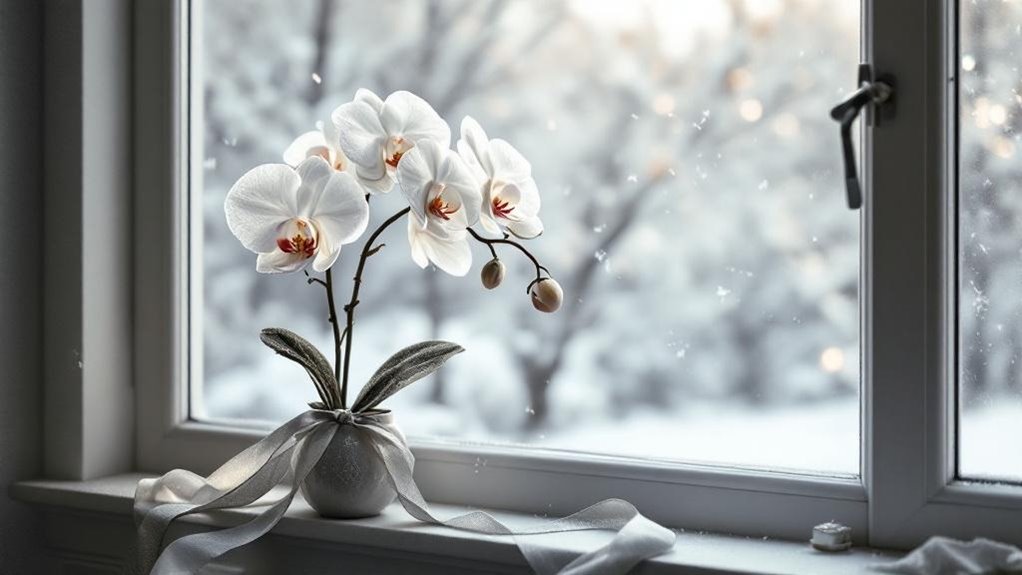
Start by matching the orchid to the recipient’s setting, experience, and the occasion’s symbolism, because a winter gift works best when its care demands remain manageable indoors and its meaning feels observational rather than generic; Phalaenopsis is usually the safest choice, since its blooms often last two to four months in household conditions, it tolerates lower winter light, and it carries associations with happiness and fulfillment that suit cold-season celebrations without feeling overstated.
- Choose Cymbidium for Lunar New Year or cultivated, tradition-aware giving.
- Let orchid color guide meaning: white, pink, or purple.
- Select a hardy hybrid if the recipient lacks experience.
- Confirm well-draining bark, avoiding stagnant roots and avoid decorative cachepots.
- Include clear instructions, plus a humidity tray or simple fertilizer schedule.
These choices keep the gift precise, appropriate, and durable.
How to Care for Winter Orchids Indoors
Because winter light is weaker indoors, you’ll care for winter orchids most effectively by stabilizing the few conditions that matter most, namely bright, indirect exposure, moderate temperature shifts, measured watering, and humidity that stays elevated without turning the air stagnant; place Phalaenopsis or Cymbidium near an east- or north-facing window where they can receive roughly 8 to 12 hours of gentle light, keep daytime temperatures around 65 to 75°F and allow nights to fall to 55 to 65°F so blooming remains supported by a cultivated seasonal rhythm, then water thoroughly about once every 7 to 10 days while letting the bark mix dry slightly between applications, reducing that frequency if indoor humidity is already high.
Maintain 50 to 60% humidity, add airflow, fertilize lightly monthly at quarter strength, and repot bark every one to two years.
Frequently Asked Questions
Do Orchids Symbolize Resilience?
Yes, orchids symbolize resilience. You can see it in how they adapt across climates, endure drought, and bloom slowly yet lastingly. They don’t need constant care, so you often read them as signs of perseverance.
What Does the Wintersweet Flower Symbolize?
Wintersweet symbolizes resilience, hope, purity, and renewal; like a lantern in snow, it reminds you that beauty can thrive through hardship. Its fragrance also suggests quiet elegance, inner strength, and contemplative grace when you’re alone.
What Flowers Symbolize Quiet?
You’ll find flowers symbolizing quiet include white orchids, lilies, camellias, baby’s breath, and waxflower. Choose single-stem or sparse arrangements in muted tones, and you’ll convey calm, simplicity, restraint, and an understated, lasting elegance beautifully.
What Do Different Orchids Symbolize?
Different orchids symbolize emotions like stars signaling moods: you’ll find Phalaenopsis means happiness and grace, Cymbidium stands for nobility and friendship, white suggests purity, purple conveys admiration, and green or yellow bring renewal, health, and joy.
Conclusion
Just as winter narrows the garden and your eye seeks what still endures, the orchid appears, almost by coincidence, as the exact emblem of what the season teaches: cultivated beauty, measured resilience, and luxury that never turns loud or stagnant. If you choose one with intention, you give more than color; you give an observational message of steadiness, refinement, and care, a living form of meaning that holds its poise indoors when much else has gone still.