
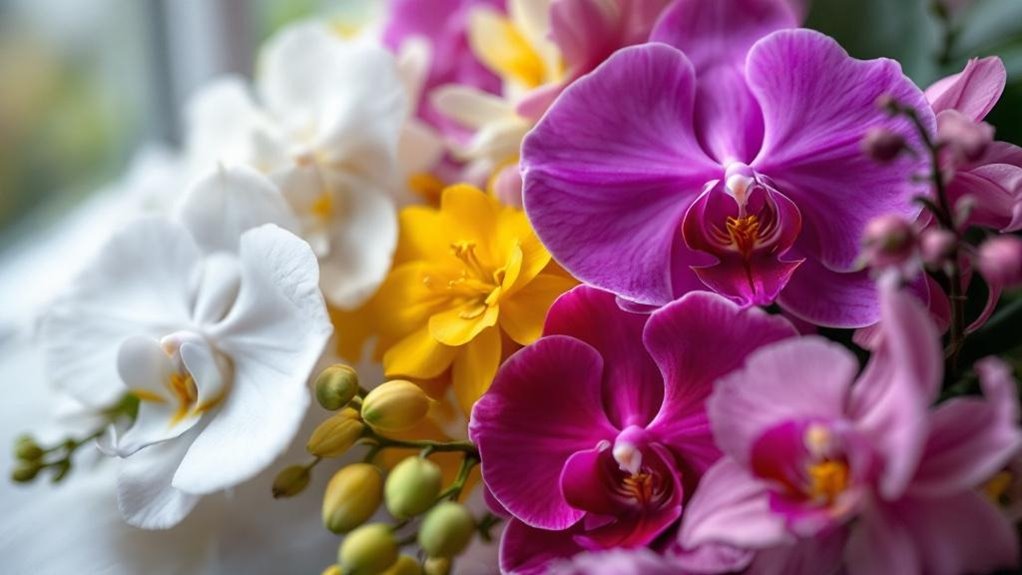
You can understand orchid symbolism as cultivated beauty, patient love, resilience, remembrance, and quiet prestige; its meaning comes from refined symmetry, long-lasting blooms, and adaptive growth on trees or rocks, which suggest endurance without stagnant display. You can also match orchids to occasions with precision, since white signals purity or tribute, pink conveys thoughtful affection, and purple implies admiration and status. Continue, and you’ll see how species, color, placement, and care sharpen each meaning.
- Key Takeaways
- What Does Orchid Symbolism Mean?
- What Do Orchids Generally Symbolize?
- Why Do Orchids Symbolize Love?
- Why Do Orchids Represent Beauty?
- Why Do Orchids Represent Strength?
- Why Do Orchids Symbolize Luxury?
- Why Do Orchids Symbolize Devotion?
- Do Orchids Symbolize New Beginnings?
- Do Orchids Symbolize Remembrance?
- What Does an Orchid Gift Mean?
- Are Orchids Romantic Flowers?
- What Do Orchids Mean in Relationships?
- When Should You Gift Orchids?
- Is an Orchid a Thoughtful Gift?
- Which Orchid Color Fits Your Message?
- How Do Orchid Colors Change Meaning?
- What Do White Orchids Symbolize?
- What Do Pink Orchids Symbolize?
- What Do Purple Orchids Symbolize?
- What Do Yellow Orchids Symbolize?
- What Do Red Orchids Symbolize?
- What Do Blue Orchids Symbolize?
- What Do Green Orchids Symbolize?
- What Do Orchids Symbolize in Ancient Greece?
- What Does Orchid Symbolism Mean in China?
- What Do Orchids Symbolize in Japan?
- What Do Orchids Mean in Thailand?
- Why Did Victorians Prize Orchids?
- What Is the Spiritual Meaning of Orchids?
- What Do Orchids Symbolize in Buddhism?
- What Do White Orchids Mean in Christianity?
- What Do Orchids Symbolize in Hinduism?
- What Do Orchids Mean in Feng Shui?
- What Do Orchids Symbolize for Fertility?
- Do Orchids Suit Sympathy Gifts?
- Are White Orchids Good for Funerals?
- What Do Orchids Symbolize at Weddings?
- What Does a White Orchid Gift Mean?
- Does Orchid Type Affect Symbolism?
- What Does a Phalaenopsis Orchid Symbolize?
- What Does a Dendrobium Orchid Symbolize?
- What Does a Cymbidium Orchid Symbolize?
- What Does an Oncidium Orchid Symbolize?
- Why Are Orchids Linked to Resilience?
- Why Do Orchids Symbolize Perfection?
- Why Do Orchids Represent Personal Growth?
- Why Do Orchids Suit Homes and Offices?
- What Makes Orchid Arrangements Versatile?
- How Do You Choose a Meaningful Orchid?
- How Do You Care for an Orchid Gift?
- Frequently Asked Questions
- Conclusion
Key Takeaways
- Orchids symbolize refined love, lasting affection, beauty, and quiet luxury rather than fleeting passion.
- They also represent resilience, patience, and strength because they thrive in difficult conditions through remarkable adaptation.
- Different colors shift meaning: white suggests purity, pink grace, purple admiration, and red desire.
- As gifts, orchids suit anniversaries, birthdays, housewarmings, promotions, memorials, and other meaningful milestones.
- Living orchids express thoughtful, enduring sentiment because their elegant blooms often last for weeks or months.
What Does Orchid Symbolism Mean?

Although orchid symbolism shifts slightly across traditions, it consistently points to refined love, thoughtfulness, and a cultivated form of affection that endures without becoming stagnant or impulsive.
Across traditions, orchids suggest refined love, quiet thoughtfulness, and an affection carefully cultivated to endure with grace.
When you ask what orchid symbolize, you find an observational pattern: they reflect beauty, perfection, and luxury, yet they also imply restraint, patience, and care shaped over time. Orchid Meaning consequently extends beyond appearance, because historical associations with fertility, virility, and even lineage gave the flower a serious human significance.
You also read meaning through orchid color, since white suggests purity and remembrance, pink conveys grace, yellow marks friendship and joy, and red indicates desire.
In spiritual contexts, orchids direct you toward resilience, inner beauty, prosperity, and creative renewal, so their symbolism remains elegant, layered, and quietly durable across many interpretive systems.
Orchids also stand as a symbol of resilience because they flourish in conditions that demand adaptability and patient care.
What Do Orchids Generally Symbolize?
Elegance anchors what orchids generally symbolize, because these flowers gather several admired qualities into one cultivated image: refined love and desire, beauty approaching perfection, resilience under pressure, and the quiet prestige that comes from rarity and care. When you ask what orchids symbolize, you find an observational pattern across cultures: refined love, beauty shaped by balance, strength and resilience proven in difficult habitats, and status earned through scarcity.
You can also read orchids as signs of thoughtfulness, because giving one suggests attention rather than stagnant habit; with more than 25,000 species, their symmetry and variation support associations with perfection, while epiphytic growth and enduring blooms justify strength and resilience. Historical prestige, intensified during Victorian orchid collecting, still colors their meaning with luxury, fertility, virility, and cultivated distinction today. Their orchid rarity and difficult cultivation helped turn them into lasting symbols of exclusivity and status.
Why Do Orchids Symbolize Love?
You can trace the orchid’s link to love back to ancient Greece, where its rare, exotic form carried romantic and familial meaning, and where fertility rituals tied the flower to desire in ways that still shape observational readings of its symbolism. You also see love in the orchid’s cultivated rhythm, because its long-lasting blooms and slow, deliberate flowering suggest affection that matures with patience and resists anything fleeting or stagnant. As a result, when you read orchids as symbols of love, you’re recognizing both an ancient romantic association and a refined, lasting affection that has endured across time. In modern floral language, orchids also express steady devotion and deep emotional connection.
Ancient Romantic Associations
Because orchids gathered meaning across very different cultures, they came to symbolize love not through a single myth but through a cultivated set of associations with fertility, beauty, devotion, and social intention; in ancient Greece, the plant’s very name, *orkhis*, reflected the shape of its tubers and tied orchids to virility and reproduction, while later traditions in China and Japan emphasized refined beauty and moral integrity, linking the flower to an idealized affection that endures rather than turns stagnant.
When you trace how orchids symbolize attachment, you find observational patterns rather than accident: their long blooms, precise symmetry, and uncommon colors made them natural romantic flowers, and courtship customs strengthened that reading; in weddings and gifts, white suggested purity, pink and red suggested love, and these repeated uses gave desire a visible social form. The name itself comes from the Greek word paired tubers, a reminder that orchid symbolism began with botanical observation before it became a language of romance.
Refined Lasting Affection
What turns these older romantic associations into a more precise symbol of love is the orchid’s ability to suggest affection that has been cultivated and sustained over time, not merely felt in a passing moment; from ancient Greek links to fertility and virility to later Asian ideals of refinement and inner beauty, the flower kept gathering meanings that favored attachment with depth, patience, and form.
When you give orchids, you signal refined love rather than impulsive desire, because their balanced symmetry, exotic restraint, and observational elegance imply care that doesn’t become stagnant. Their blooms last for weeks, sometimes months, so you can read them as lasting affection made visible, a commitment held steadily.
The color of orchid you choose sharpens that message; pink suggests grace, red intensifies romance, and white affirms purity, letting devotion appear nuanced, deliberate, and enduring. Cymbidium orchids are often linked with eternal love, refined beauty, and bonds that grow stronger over time.
Why Do Orchids Represent Beauty?
Although orchid symbolism varies across cultures, orchids consistently represent beauty because you see unusual precision in them, from bilateral symmetry to carefully shaped labella, and that observational balance reads as aesthetic perfection rather than something random or stagnant.
Orchids signify beauty through exacting symmetry and sculpted detail that feel less accidental than exquisitely composed.
Across more than 25,000 species, you encounter an immense range of colors, markings, and silhouettes, so orchids become a cultivated standard for exotic beauty, not a narrow floral ideal.
You also notice their graceful form, especially in epiphytic orchids, whose sculptural lines seem suspended in light and air, refined without appearing fragile. When blooms remain fresh for weeks or months, you connect orchids with enduring beauty instead of fleeting charm.
Cultural traditions reinforce that response; Chinese refinement and Victorian luxury both framed orchids as visible signs of elegance, taste, and disciplined admiration across generations.
In Victorian society, Orchidelirium turned rare orchids into powerful symbols of prestige, taste, and social distinction.
Why Do Orchids Represent Strength?
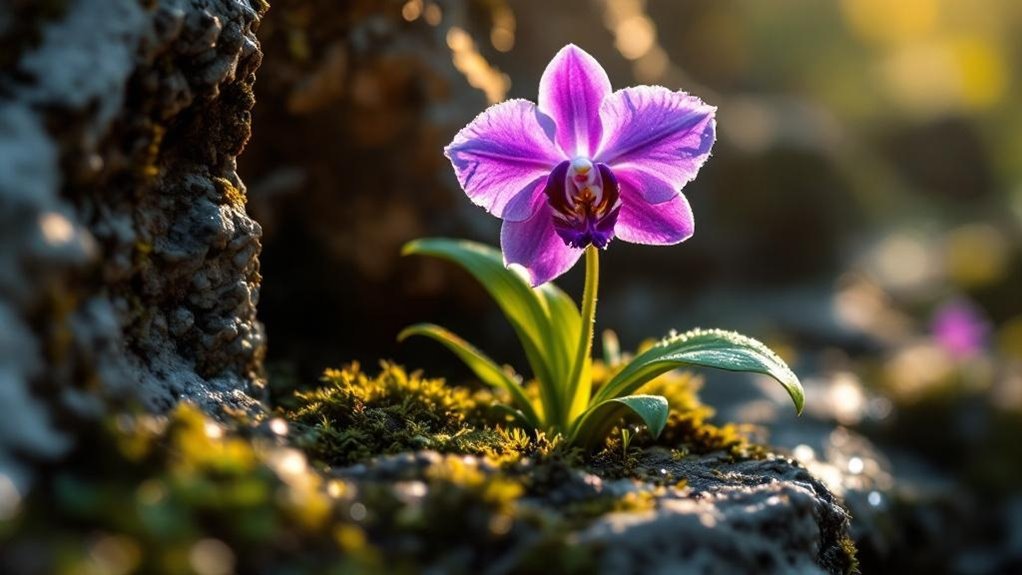
When you consider why orchids represent strength, you can see it in their resilient growing conditions; many species anchor themselves to trees or rocks, endure harsh tropical shifts, and draw moisture and nutrients from the air and surrounding debris rather than stagnant soil.
You can also observe their enduring bloom power, because their flowers often last for weeks or months and return year after year, which gives them a cultivated symbolism of persistence rather than brief display.
As your observational view widens, their protective roots and leaves, along with long-standing cultural associations in China, Japan, and Western traditions, confirm that orchids signify quiet perseverance and moral strength.
In China, orchids also stand for moral refinement, showing how endurance can be linked with integrity, humility, and cultivated character.
Resilient Growing Conditions
Consider how orchids persist where many cultivated plants would fail: countless species live as epiphytes on tree branches, drawing moisture and nutrients from rain, air, and drifting debris rather than stagnant soil, and that adaptive habit makes them a clear symbol of strength. You see a resilient, observational model of endurance; orchids prefer flexibility, not fixed conditions.
| Trait | Condition | Strength |
|---|---|---|
| Epiphytic growth | Little soil | Adaptive survival strategy |
| Dustlike seeds | Dormancy | Patient resilience |
| Velamen roots | Drought, humidity shifts | Rapid water capture |
You can also note how some species tolerate 50–90°F and varied light, from lowland forests to cool cloud habitats, while tiny seeds wait for mycorrhizal fungi, proving strength through timing, partnership, and cultivated restraint, not force alone.
Enduring Bloom Power
Because an orchid keeps its flowers intact long after many ornamental plants have spent themselves, it represents strength as sustained presence rather than force; you see endurance in blooms that commonly hold for six to eight weeks in Phalaenopsis and, in some species, for several months, maintaining form and color without lapsing into a stagnant display.
As you observe that enduring bloom, you understand why orchids symbolize strength: they persist where resources stay limited, often perched as epiphytes, drawing moisture from air and debris, adapting across cool Cymbidium nights and warmer Phalaenopsis days.
Their cultivated beauty rests on practical design, with fungal alliances aiding germination and nutrient uptake, while pseudobulbs and leathery leaves store water against drought; through that observational lens, strength appears as persistence, restraint, and lasting performance under pressure.
Why Do Orchids Symbolize Luxury?
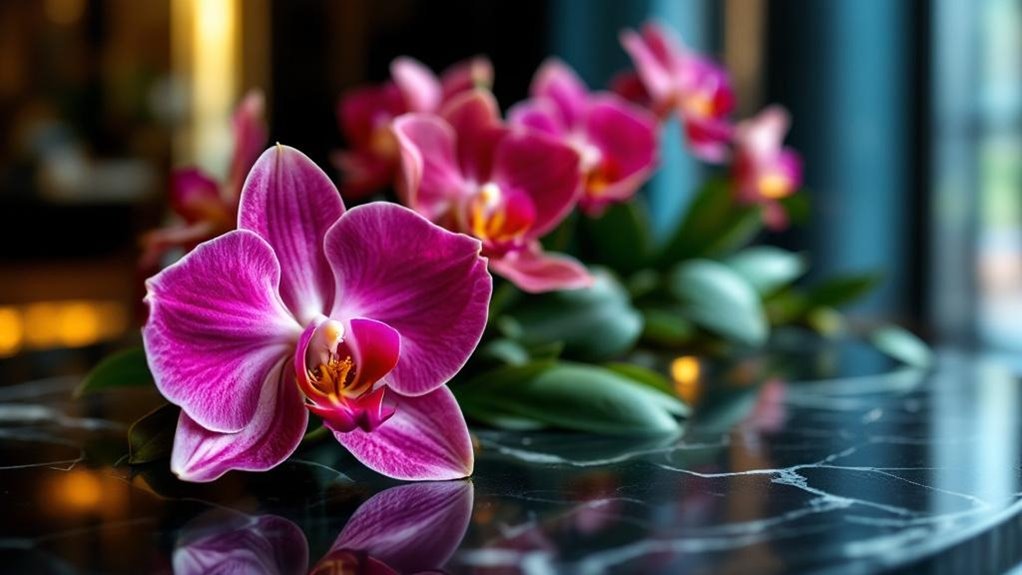
Orchids came to stand for luxury through a cultivated mix of rarity, cost, and social display; in Victorian England, wealthy collectors drove prices to extravagant levels during “orchid mania,” and rare specimens became visible proofs of status rather than merely decorative plants.
You can see why orchids symbolize luxury: many species were difficult to transport, expensive to cultivate, and tied to distant tropical trade, so owning them suggested wealth, leisure, and observational access to a rich history of empire and exchange.
Their refined symmetry, long-lasting blooms, and resistance to looking stagnant matched elite preferences for elegance that endured beyond common garden flowers.
Purple orchids, with their royal associations, strengthened this prestige, while white varieties entered formal settings, preserving the flower’s cultivated reputation for sophistication, permanence, and unmistakable high social standing.
Why Do Orchids Symbolize Devotion?
You can see why orchids symbolize devotion in their long-lasting blooms, which remain cultivated and present for weeks or months, offering an observational reminder that real commitment doesn’t turn stagnant with time.
You also recognize their meaning in the way orchids have been given as thoughtful gifts, since their rarity and refined status have long marked them as signs of serious attachment rather than casual affection.
When you consider the steady care orchids require—measured watering, indirect light, proper humidity, and in varieties like Phalaenopsis, reliable reblooming year after year—you understand why they’ve come to represent steady love.
Long-Lasting Blooms
Often, the orchid’s link to devotion begins with duration: many species hold their blooms for weeks or even months, and Phalaenopsis commonly flowers for 6 to 12 weeks, so the plant comes to represent affection that doesn’t fade quickly or turn stagnant under time’s pressure.
As you observe orchids, their long-lasting blooms suggest lasting devotion because their growth stays slow, deliberate, and cultivated; they flower infrequently, yet when they do, beauty endures. You also see commitment in their reblooming habit, since proper repotting every one to two years and light monthly fertilization can bring flowers back again.
Even their resilience supports this symbolism: as epiphytes, orchids persist in demanding conditions, drawing sustenance from air and bark, which gives their endurance an observational, steadfast quality.
Thoughtful Gift Meaning
Intention gives an orchid its force as a gift, because it doesn’t merely decorate a room for a day; it remains present for weeks or months, becoming a sustained, living sign of care that resists anything casual or stagnant. When you choose an orchid gift, you signal cultivated attention, since orchids carried luxury status in Victorian England and, earlier, linked family continuity and patient affection in Ancient Greece.
| Aspect | Meaning |
|---|---|
| Lasting blooms | Continued care |
| Victorian rarity | Intentional devotion |
| Greek associations | Family regard |
| Phalaenopsis | Prosperity support |
| Dendrobium care | Wisdom; symbolize strength |
You can also tailor devotion through variety, making your message observational rather than generic, while the plant’s need for light, humidity, and measured watering quietly confirms that attentive maintenance, not neglect, sustains what you value over time well.
Steady Love Symbolism
Because an orchid remains in bloom for weeks and sometimes months, it signifies devotion as something sustained rather than declared once and left to turn stagnant, its presence functioning as a quiet, living proof that care continues beyond the moment of giving.
- You see why orchids symbolize steady love: their blooms persist, creating an observational reminder that affection can remain cultivated, visible, and deliberate over time.
- Many varieties, especially Phalaenopsis, rebloom each year when you tend them properly, so they suggest enduring commitment, patience, and fidelity rather than intensity that fades quickly.
- Their symbolism also deepens through history; roots in family and fertility, plus wedding and anniversary use across cultures, connect orchids to lasting bonds, lineage, and devotion.
Do Orchids Symbolize New Beginnings?
While orchids carry many meanings across traditions, they do symbolize new beginnings, and white orchids in particular have become a cultivated emblem of fresh starts, which is why you’ll see them chosen for weddings, graduations, and housewarming gifts.
When you give White orchids, you signal renewal without sentimentality; in China and Japan, orchids also suggest moral refinement, so they suit personal shifts and disciplined growth. Their long-lasting blooms keep that observational message visible for weeks or months, preventing a new chapter from feeling fleeting or stagnant.
If you choose Phalaenopsis, you add associations with health and prosperity, which strengthens the sense of favorable new beginnings. In feng shui practice, placing orchids in a bedroom or living room is thought to encourage fertility, creative energy, and fresh opportunity, aligning the plant with onward movement.
Do Orchids Symbolize Remembrance?
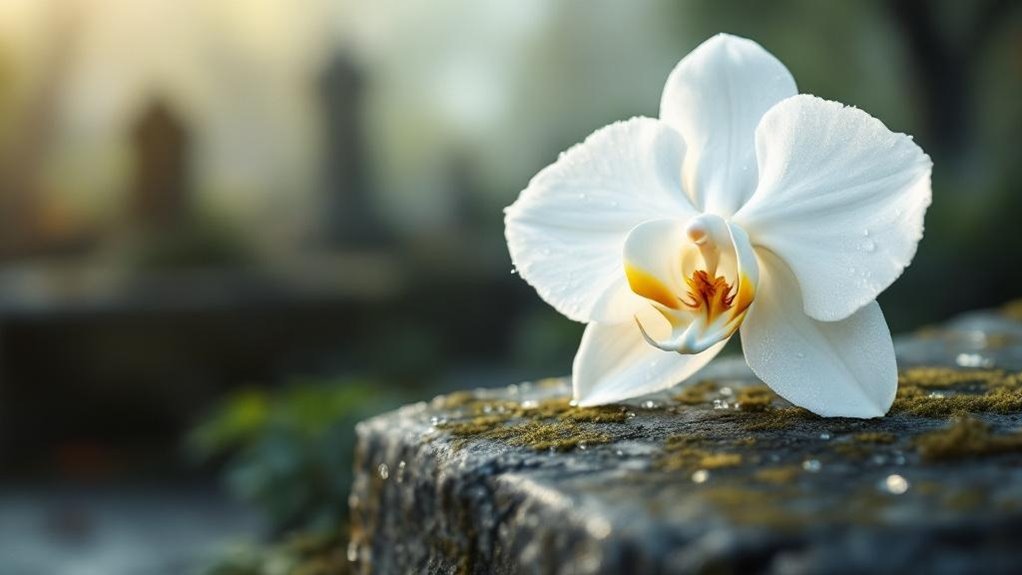
Although orchids carry many associations, they also symbolize remembrance, and white orchids in particular have become a cultivated expression of peace, reverence, and enduring tribute at funerals and memorials.
You see this meaning reinforced by their long-lasting blooms, which resist a stagnant sense of finality and suggest enduring memory rather than disappearance.
- In memorial settings, white orchids communicate dignity, purity, and respect with observational clarity.
- In some Christian traditions, they echo resurrection and spiritual remembrance, deepening their commemorative role.
- Historical associations, including Aztec links to strength and remembrance, support their funerary symbolism.
When you encounter orchids at a service, you can read them as a quiet sign of ongoing tribute, one that honors the deceased through elegance, continuity, and restrained reverence.
What Does an Orchid Gift Mean?
When you give an orchid, you usually express refined love and lasting affection, and because its blooms remain fresh for weeks or even months, your message doesn’t turn stagnant after the occasion passes.
You also shape the meaning through color and context; white orchids convey purity, grace, or condolence for weddings and memorials, while pink and purple varieties suggest admiration, cultivated femininity, luxury, and respect in ways that suit anniversaries, formal gifts, and observational gestures of esteem.
At the same time, an orchid’s older ties to fertility and virility let your gift imply prosperity or new beginnings, which is why it serves so well when you want a thoughtful, enduring present for housewarmings, corporate events, or personal milestones.
Romantic And Emotional Meaning
Because an orchid blooms with unusual discipline and longevity, giving one usually signals a cultivated kind of love, one grounded in patience, deep admiration, and emotional steadiness rather than the more immediate passion that flowers like red roses often represent; in romantic contexts, you give an orchid to say that your feelings aren’t stagnant or impulsive, but refined, enduring, and serious enough to suit anniversaries, proposals, and other milestone moments when ordinary language feels insufficient.
- An orchid symbolizes commitment; orchids symbolize health, stability, and lasting regard.
- Pink orchids suggest thoughtful affection and grace, while white and purple deepen reverence and admiration.
- Historically, orchids also carried associations with fertility and desire, adding an older, observational layer.
When words fail, you choose one to communicate profound appreciation with restraint and permanence.
Occasion-Based Gift Messages
Since an orchid lasts far longer than most cut flowers, the message it carries tends to feel deliberate rather than fleeting, and the color you choose shapes that message with unusual precision.
In gifting, pink suggests femininity, grace, and cultivated admiration, so you’d choose it for birthdays, anniversaries, or personal achievements; White orchids are often selected for weddings and changes because they signal purity, new beginnings, and respectful regard.
If you want to mark authority or honor, purple conveys luxury, admiration, and reverence, which suits promotions, milestones, or observational tributes to someone you deeply respect.
Yellow avoids anything stagnant; it communicates cheer, appreciation, and encouragement, making it fitting for friendships, housewarmings, and recovery.
Orchids’ long-lasting blooms also suit anniversaries and established relationships, where stable affection matters most over time.
Thoughtfulness And Lasting Impact
Although an orchid may appear simply elegant at first glance, giving one signals a more deliberate kind of regard, one grounded in duration, cultivated taste, and the intention to leave a steady impression rather than a fleeting one. Orchids represent thoughtfulness because their blooms often last 6–8 weeks, and with proper care, they rebloom for years, never becoming a stagnant gesture.
- You choose color with observational care; white suggests purity or condolence, pink conveys grace and thoughtfulness, and yellow expresses appreciative warmth.
- You give a living plant, not cut flowers, so its long-lasting presence in a home or office keeps your sentiment visible.
- You heighten impact by including care guidance—bright, indirect light, weekly watering, moderate humidity—which shows refined intention and helps the gift endure, with visible value.
Are Orchids Romantic Flowers?
Yes, orchids are romantic flowers, and they’ve carried that meaning for centuries; in ancient Greece and later throughout Victorian England, people prized them as cultivated symbols of love, refined affection, and luxury, which gave them a distinct place in courtship and intimate gift-giving.
When you choose an orchid, you signal observational care rather than stagnant habit, because these blooms symbolize romance through elegance, resilience, and duration. Pink suggests grace and thoughtfulness, red conveys desire and passion, and white expresses purity and deep respect within a romantic setting.
Phalaenopsis and Cymbidium are especially favored when you want a cultivated gesture that endures, since their flowers often last six to eight weeks or longer. Compared with red roses, they present love as patient, sophisticated, and quietly committed, which suits anniversaries and meaningful milestones.
What Do Orchids Mean in Relationships?

When you give an orchid in a relationship, you signal deep affection that feels cultivated rather than impulsive, and you show admiration with an observational restraint that avoids the fiercer message often carried by roses.
Because its blooms last, the orchid also tells your partner you value enduring commitment, steady devotion, and a bond that won’t turn stagnant when early novelty fades.
You can refine that meaning further through color and species, yet the central message remains consistent: your love is thoughtful, patient, and meant to hold.
Deep Affection
Devotion gives orchids their distinctive place in relationships, because they symbolize a cultivated, patient form of love that feels more refined than overtly dramatic, and their meaning rests not in a sudden gesture but in steady affection, thoughtful commitment, and an observational kind of care that doesn’t turn stagnant with time.
Their deep meaning lets you represent deep affection with restraint, not excess.
- Pink orchids suggest romance; red ones indicate desire, while white marks purity and purple signals admiration.
- Phalaenopsis can bloom six to eight weeks, so your gift implies thoughtfulness rather than fleeting emotion.
- Phalaenopsis, Cymbidium, and Dendrobium each carry distinct values—prosperity, strength, and devotion—which sharpen relational nuance.
Across cultures, from Victorian gifting to ancient Greek associations, orchids sustain a quietly elevated romantic language.
Enduring Commitment
Because orchids hold their blooms for weeks and maintain their form with a cultivated steadiness, they symbolize enduring commitment in relationships more convincingly than flowers tied to brief intensity; they suggest that love doesn’t need to announce itself loudly to remain serious, and that lasting attachment is built through patient regard, respectful loyalty, and an observational care that doesn’t turn stagnant under ordinary time or shared difficulty.
When you give orchids, you signal refined intention and lasting devotion, not impulse; phalaenopsis blooms persist for six to eight weeks, so they naturally represent stability between partners. Color deepens that meaning: white suggests pure respect, pink conveys tender care, and purple marks admiration joined to long-term loyalty. Across Chinese and Victorian traditions, orchids expressed serious regard, while their resilience mirrors how you sustain commitment through challenge.
When Should You Gift Orchids?

You can turn to orchids for occasions that call for a gift with cultivated meaning and a measured presence; their long-lasting blooms, often holding for six to eight weeks or more, make them especially suited to anniversaries and other romantic milestones, where they suggest enduring affection without slipping into anything stagnant or overly demonstrative.
- You gift orchids at housewarmings and beginnings; white orchids or green varieties convey purity, prosperity.
- For birthdays, choose pink or purple blooms; pink suggests grace, while purple signals admiration, luxury, and respect.
- In professional or solemn settings, orchids remain appropriate; they suit corporate events through refinement, and white orchids at memorials express remembrance, purity, and spiritual peace.
This observational range lets you match occasion and color with unusual precision, without resorting to common bouquets or decorative excess.
Is an Orchid a Thoughtful Gift?
An orchid stands out as a thoughtful gift because it keeps giving its message over time; with blooms that commonly last six to eight weeks or longer, it offers a continual reminder of care and intention rather than the fleeting gesture of ordinary cut flowers.
You give more than beauty; you give cultivated elegance, observational care, and a symbol that doesn’t turn stagnant after a few days. Orchids Are Perfect for anniversaries, promotions, and housewarmings because they’re often chosen when you want refinement without excess.
Their meanings across different cultures, especially around strength, resilience, and enduring affection, let your gift suggest lasting appreciation.
They also ask little in return, needing bright indirect light, weekly watering, and occasional feeding, so your recipient can enjoy the gesture without feeling burdened by difficult upkeep or concern.
Which Orchid Color Fits Your Message?
When you choose an orchid color, you shape the message with cultivated precision; pink suggests femininity, grace, and thoughtful admiration, while white signals purity, innocence, and new beginnings in an observational, non-stagnant way.
You can match emotion more carefully by considering purple for royalty and admiration, yellow for friendship and appreciation, and red for romance, desire, or courage, because each color directs your intent without excess.
You’ll also find that occasion matters; weddings, sympathy arrangements, congratulations, casual milestones, and intimate declarations each call for a different shade, and the right choice keeps your gesture clear, appropriate, and composed.
Color Meanings Explained
Often, orchid color shapes the message more clearly than the flower’s form alone, because each hue carries a cultivated set of associations that helps your gift feel intentional rather than observational or stagnant.
- Pink orchids signal femininity, grace, and thoughtfulness, so you choose them when you want admiration to appear gentle rather than excessive, particularly in romance or congratulations.
- White orchids communicate purity, innocence, and reverence; you use them where respect must remain central, including weddings, memorials, and formal acknowledgments.
- Yellow orchids express friendship, joy, and new beginnings, while purple suggests royalty, admiration, and luxury, and red conveys passion, desire, and courage.
When you select by color, you clarify tone immediately, allowing the orchid to speak with precision before its rarity, symmetry, or setting begins to influence interpretation for the recipient.
Matching Emotions Thoughtfully
Because the emotion behind a gift matters as much as its appearance, you should match orchid color to message with deliberate care; pink supports admiration, gentle love, and congratulations without seeming excessive, white keeps purity, innocence, or respectful sympathy at the center, purple suits deep respect and recognition by carrying cultivated associations of luxury and esteem, yellow keeps the tone bright and observational rather than intimate by signaling friendship, joy, and appreciation, and red should be reserved for romance, desire, or bold affection, since its meaning is the least ambiguous and the least likely to remain stagnant in interpretation.
When you choose among various emotions, Pink orchids communicate grace and thoughtfulness, white steadies serious sentiment, purple confers esteem, yellow avoids implications that symbolize love, and red makes your intention unmistakably direct and personal.
Occasion-Based Color Choices
Usually, the most reliable way to choose an orchid is to begin with the occasion itself, since the setting clarifies your message and keeps the color from feeling vague, overly intimate, or stagnant in interpretation.
- Choose White orchids for weddings, funerals, and new beginnings; you signal purity, reverence, innocence, and a cultivated sense of spiritual growth.
- Select Pink orchids for anniversaries, gratitude, and restrained romantic gestures; you communicate grace, femininity, thoughtfulness, and gentle affection without pressing beyond the moment.
- Use Purple orchids for promotions, milestones, and formal recognition; you express admiration, respect, and luxury, which suits achievement with observational precision.
If the mood should lighten, yellow supports friendship and congratulations, while red carries desire, courage, and unmistakable romantic intent when a bolder declaration becomes appropriate.
How Do Orchid Colors Change Meaning?

Although orchid symbolism begins with the flower’s cultivated elegance, its color changes the message in clear and sometimes highly observational ways; white orchids suggest purity and new beginnings, which is why they suit weddings, memorials, and other shifts, while pink orchids convey femininity and grace, making them appropriate for birthdays, gentle romance, or gestures meant to feel affectionate without becoming stagnant or overly dramatic.
Beyond that, you’ll notice purple often signals royalty and admiration, yet its MEANING shifts by culture, expressing respect and bravery in Japan; yellow carries friendship and joy, while red suggests passion and desire. Mixed palettes deepen the message, since one color can temper another, creating graceful purity or joyful admiration, and newer blue-toned hybrids emphasize tranquility, uniqueness, and a more contemporary intent when you choose them thoughtfully.
What Do White Orchids Symbolize?
When you choose a white orchid, you signal purity and innocence first, which is why you so often see it at weddings and sacred ceremonies, where its cultivated beauty supports an observational sense of order and grace.
You also present peace and remembrance, especially in memorial settings, because its calm color and long-lasting blooms offer consolation without becoming stagnant, and they suggest respect that endures.
At the same time, you convey spiritual grace, since many traditions connect white orchids with reverence, inner strength, and quiet growth, allowing the flower to carry meaning beyond simple elegance.
Purity And Innocence
Because their color carries a cultivated sense of clarity rather than anything stagnant or ornamental, white orchids symbolize purity and innocence with unusual force, and that meaning explains why you so often see them at weddings and christenings, where they mark new beginnings, spiritual virtue, and the quiet dignity of a life or union just commencing.
- You choose White orchids when you want purity and innocence stated without excess; their symmetry and pristine petals support an observational impression of discipline, elegance, and refined beauty.
- At weddings, they steady the visual field, suggesting sincere vows, humility, and intention rather than spectacle.
- As gifts, they keep their white hue for weeks, so you communicate steadfast purpose, cultivated restraint, and innocence that doesn’t fade quickly under ordinary conditions or social pressure.
Peace And Remembrance
Where white orchids move from celebration into memorial use, their meaning doesn’t diminish; it settles into peace and remembrance, carrying sympathy, reverence, and a cultivated sense of farewell that feels composed rather than stagnant.
When you choose White orchids for a service, you signal more than courtesy; you mark remembrance with restraint, and you represent peace through form, color, and duration, which gives grief an observational focus rather than a dramatic one.
Their long-lasting blooms support that message, because a tribute that endures suggests memory can remain present without becoming oppressive.
You also acknowledge humility and inner strength, qualities that suit mourning with dignity.
In Christian settings, some read white orchids as signs of resurrection and divine design, so your arrangement may quietly support hope while keeping the farewell measured and calm.
Spiritual Grace Meaning
Although white orchids appear delicate, they carry a cultivated symbolism of spiritual grace, joining purity and innocence with dignity, humility, and inner steadiness; you see that meaning in their use at weddings and baptisms, where they mark fresh beginnings and spiritual cleanliness, and in memorial settings, where Christian readings connect them to resurrection, divine design, and a peaceful continuation beyond loss.
- In China and Japan, White orchids suggest dignity, moral virtue, and observational restraint.
- In Buddhist thought, you read their spare beauty as spiritual mindfulness, non-attachment, and calm.
- When you give one during hardship, you signal strength, hope, and resilience rather than stagnant sorrow.
Taken together, these meanings let you treat white orchids as quiet emblems of spiritual grace, suitable for passage, remembrance, contemplation, and renewal.
What Do Pink Orchids Symbolize?
Many pink orchids symbolize femininity, grace, and gentle affection, so they’re often chosen when you want to express admiration that feels sincere rather than overly dramatic; they also carry strong associations with thoughtfulness and gratitude, which explains their place in birthday arrangements, thank-you gifts, and cultivated gestures of friendship.
When you give Pink orchids, you signal refined care rather than stagnant sentiment, because their meaning blends compassion with resilience, and that balance feels both observational and lasting.
Lighter shades suggest innocence and joy, making them suitable when you want your message to remain gentle, while deeper pink tones convey appreciation and heartfelt recognition with more weight. Pink Phalaenopsis, especially, support anniversaries and new-baby gifts, since their blooms often last six to eight weeks, extending the gesture without excess and reinforcing femininity with quiet steadiness.
What Do Purple Orchids Symbolize?

Purple orchids symbolize royalty, luxury, and admiration, so they’re often chosen when you want to express esteem that feels elevated without becoming stagnant; their color carries a cultivated sense of rarity, which is why they suit formal recognitions, milestone celebrations, and gifts meant to honor talent or character with precision rather than display.
- You signal royalty and prestige, especially with darker blooms, when you want admiration to read as dignified rather than merely affectionate.
- You emphasize refinement and grace with lavender tones, which frame rare beauty through a quieter, more observational lens.
- You also acknowledge individuality, creative spirit, and spiritual wisdom, making Purple orchids appropriate when respect includes originality, calmness, and thoughtful introspection.
In practice, Purple orchids let you communicate esteem that feels polished, deliberate, and enduring.
What Do Yellow Orchids Symbolize?
Brightness defines the meaning of yellow orchids, which typically symbolize friendship, joy, and new beginnings; they let you express appreciation and platonic affection with clarity, so they’re especially fitting for milestones, recoveries, congratulations, and other moments when support should feel warm, cultivated, and free of romantic implication.
When you choose Yellow orchids, you signal steady regard rather than romance, which makes them appropriate for colleagues, friends, and hosts; in observational floral language, they suggest optimism and, in some Asian traditions, good fortune, so they suit celebrations and housewarmings without becoming emotionally ambiguous.
Yellow Phalaenopsis and Oncidium varieties strengthen that message because their bright blooms persist for weeks, resisting anything stagnant; in mixed arrangements, they add warmth, contrast, and positive energy, helping you communicate happiness, friendship, and quiet confidence with precision.
What Do Red Orchids Symbolize?
When you choose a red orchid, you signal passion and desire with unusual clarity, because its cultivated elegance tempers the intensity of red and keeps the message from feeling stagnant or careless. You also convey courage and devotion, since red orchids often stand for bold admiration, inner strength, and a steady romantic commitment that remains observational rather than theatrical. As a romantic gift, you use them to mark serious milestones, especially anniversaries and other intimate occasions, because their long-lasting blooms suggest enduring passion, beauty, and respect.
Passion And Desire
Red orchids signal passion with unusual precision, pairing the orchid’s cultivated elegance with the color red’s longstanding ties to desire, courage, and strength; as a result, they don’t suggest a passing attraction but a deeper, more intentional romantic force that feels mature rather than stagnant.
- You communicate passionate love, not infatuation, when you choose Red orchids for a partner or anniversary.
- You imply refined, enduring desire, because red orchids feel more exotic and observational than red roses.
- You also convey admiration and respect alongside sensuality, which lets the gesture remain appropriate for esteemed loved ones.
When you give red Cattleya or red-dyed Phalaenopsis, you present intense affection with cultivated restraint; the message is romantic, serious, and clearly meant to honor lasting connection through meaningful milestones and shared time.
Courage And Devotion
Because they unite the orchid’s cultivated poise with the color’s longstanding ties to bravery, red orchids symbolize courage and devotion at once, suggesting that love can remain steady under pressure and still retain its observational elegance rather than harden into something stagnant.
You read Red orchids as signs of strength, admiration, and refined desire; they carry courage without losing restraint, and they express devotion with more cultivated permanence than red roses often imply.
| Aspect | Meaning |
|---|---|
| Color | Courage, bravery |
| Form | Devotion, enduring desire |
When you encounter red Phalaenopsis or Cattleya hybrids, you’re seeing symbolism shaped by bold color and disciplined beauty; together, those qualities suggest respect for achievement as well as steadfast feeling, presented with sophistication, not excess, and with a calm, enduring confidence.
Romantic Gift Meaning
If you give red orchids as a romantic gift, you signal passionate love and deliberate desire, yet you do so through a cultivated form that tempers intensity with refinement. Red orchids communicate deep attraction, not casual interest; you present beautiful flowers that unite sensuality, strength, and admiration, so your message feels serious rather than stagnant or impulsive.
- You express enduring passion, since orchid blooms last, making them suitable for anniversaries, milestones, and serious romantic intent.
- You show romantic courage, because these flowers declare desire openly while preserving dignity, prestige, and observational restraint.
- You shape meaning through variety; deep crimson Phalaenopsis or Cymbidium suggest refined luxury, while brighter red hybrids appear bolder, more flirtatious, and slightly less formal.
They differ from red roses by implying respect as well as longing.
What Do Blue Orchids Symbolize?

Serenity defines much of what blue orchids symbolize; their cultivated, uncommon color suggests peace, tranquility, and calm, so they’re often chosen when you want a space to feel less crowded by noise and less vulnerable to stagnant tension.
When you give Blue Orchids, you also signal uniqueness, because their rarity and exotic appearance feel deliberate, observational, and refined rather than ordinary. They can suggest mystery without heaviness, and they often point inward, encouraging introspection, spiritual growth, and attention to inner beauty.
Since true blue tones are unusual in orchids, these blooms also imply luxury and careful selection, which makes your gift seem considered rather than routine. You’ll often see them used where harmony and balance matter, including offices, meditation corners, and home interiors designed to support quiet focus.
What Do Green Orchids Symbolize?
When you choose green orchids, you signal health, good fortune, and cultivated prosperity, which is why they’re often given to mark recovery, encourage abundance, or acknowledge a steady upward turn.
You also invoke renewal and natural harmony, since their green hue reflects growth, balance, and an observational connection to nature; in this way, they help a space feel calm rather than stagnant.
As symbols, they further suggest vitality and new beginnings, so you can use them to represent quiet confidence during life changes, housewarmings, or other shifts.
Health And Good Fortune
Because green carries strong associations with nature, balance, and steady growth, green orchids symbolize health, renewal, and good fortune; they’re often given to express a cultivated wish for recovery, long-term wellness, and continued success.
When you give Green orchids, you signal more than courtesy; you offer an observational message of health, stability, and prosperity that resists anything stagnant.
- You can send them after illness, when recovery and emotional steadiness matter.
- You can present them at a housewarming or business opening, where good fortune and measured growth are desired.
- You can place them in a living room or workspace, where feng shui traditions link them with importance, balance, and productive energy.
Their rarity also helps you convey success with restraint, joining orchid luxury to auspicious green symbolism.
Renewal And Natural Harmony
Beyond health and good fortune, green orchids also speak to renewal and natural harmony, since their color carries an immediate association with living systems, steady adaptation, and the kind of cultivated growth that resists anything stagnant.
When you give Green orchids for a housewarming, a recovery, or any fresh start, you signal faith in renewal, nature, and the quiet return of balance after disruption.
In Feng Shui, you place them in living rooms or workspaces to support creativity, emotional harmony, and an observational sense of order that steadies the mind.
Their presence suggests calm rejuvenation rather than display, and that message can reduce stress while reinforcing youthful growth, fertility, and the long view of sustained well-being, where prosperity develops gradually, in alignment with your environment and routines.
What Do Orchids Symbolize in Ancient Greece?
In ancient Greece, orchids symbolized fertility, virility, and the cultivated hope of family continuity, a meaning rooted in the Greek word *orkhis*, or “testicle,” which referred to the shape of certain orchid tubers and gave the plant an explicitly reproductive cast in Greek thought; from that observational link, folk beliefs developed that treated the tubers as influences on conception itself, with larger ones said to favor male offspring and smaller ones female, while herbal and aphrodisiac uses further reinforced the orchid’s association with sexual potency, inheritance, and the desire to prevent a stagnant lineage.
In ancient Greece, orchids embodied fertility, virility, and the urgent hope of preserving the family line.
- You can see how orchids mean more than beauty in ancient civilizations.
- Their form was linked to virility, medicine, and heirs.
- Classical botanical writings preserved these meanings and shaped later European symbolism traditions.
What Does Orchid Symbolism Mean in China?
Restraint and cultivation shape orchid symbolism in China, where the flower stands not chiefly for sensuality or reproductive force but for refinement, moral integrity, and the disciplined grace of the cultivated person; as one of the Four Gentlemen in classical art, alongside plum, bamboo, and chrysanthemum, the orchid came to represent the scholar’s inner character, especially when virtue remains steady in obscurity rather than seeking display.
In that tradition, orchids are known as signs of noble friendship and modest conduct, because Confucian thought often associated their quiet fragrance with the ideal gentleman. When you encounter them in poetry, painting, or feng shui, you read an observational emblem of purity, household harmony, and cultivated life rather than stagnant ornament; white flowers suggest respect, pink ones feminine grace, and both sustain refinement.
What Do Orchids Symbolize in Japan?
Where Chinese tradition often reads the orchid as a sign of moral cultivation and quiet integrity, Japanese symbolism gives the flower a slightly different emphasis, pairing refinement with bravery, noble beauty, and the disciplined bearing admired in samurai culture; for that reason, orchids came to suggest not only cultivated taste but also courage under control, a quality expressed through composure rather than display.
In Japanese symbolism, orchids unite refinement with disciplined bravery, expressing noble beauty through composed, restrained strength.
- You see bravery and refinement joined, since samurai admired orchids as restrained emblems of courage.
- You recognize elegance and noble beauty in ikebana, where graceful lines reward observational, cultivated attention.
- You also encounter orchids during special occasions, from business openings to celebrations, where they convey respect, prosperity, and good fortune.
Collectors prized rare varieties seasonally; aristocrats valued subtlety, never stagnant display.
What Do Orchids Mean in Thailand?
You can read the orchid in Thailand as a sign of national pride shaped by daily visibility and economic importance, since the flower is cultivated across the country, tied to one of the world’s leading export trades, and treated not as a rare, distant luxury but as an abundant emblem of cultivated beauty that remains socially accessible.
When you see orchids in Thailand, you also see ceremony, prestige, and practical esteem; they appear in decorations, formal gifts, currency, and official emblems, which gives their symbolism an observational clarity rather than a stagnant mystique.
The Vanda and Dendrobium especially carry weight, because growers value them commercially while communities retain traditional uses.
Festivals and shows, including Chiang Mai’s, confirm that orchids represent beauty, abundance, and national standing to visitors and citizens alike.
Why Did Victorians Prize Orchids?
You can see why Victorians prized orchids: they marked status and prestige, since rare specimens were costly to secure, difficult to cultivate, and impressive in private glasshouses and botanical collections.
You can also trace the era’s rarity and obsession in orchid mania, when wealthy collectors spent fortunes and backed hazardous expeditions, turning each new bloom into an observational sign of cultivated taste rather than a stagnant ornament.
You can further note the pull of their exotic beauty, because in the Victorian language of flowers, orchids conveyed refined admiration and social distinction, so displaying or gifting them carried both aesthetic and social weight.
Status And Prestige
Because orchids were rare, costly to import, and difficult to keep alive in England’s stagnant winter climate, Victorians came to treat them as cultivated proofs of status rather than as mere ornamental flowers.
You signaled status and prestige through ownership, display, and expertise; orchid arrangements in drawing rooms implied disciplined taste, while orchidomania showed you could finance collectors, conservatories, and skilled gardeners.
- You funded heated glasshouses, an observational marker of wealth.
- You acquired newly described species, aligning yourself with scientific patronage.
- You followed auctions, catalogs, and illustrated magazines, which validated elite refinement.
In that setting, orchids mattered because they demonstrated cultivated command over expense, distance, and technique; when you possessed them, you weren’t simply decorating a house, you were presenting social rank, botanical seriousness, and the means to sustain both.
Rarity And Obsession
Although rarity lay at the center of Victorian orchid culture, obsession sustained it; a flower that had to be found in distant forests, purchased at extraordinary cost, transported across oceans, and then kept alive through England’s stagnant winters acquired a value that went far beyond ornament.
You can see why Victorian orchid mania hardened into an observational discipline and a collector’s obsession; wealthy buyers financed hazardous expeditions across South America, Asia, and Africa, accepted losses from disease, shipwreck, and death, and still paid fortunes for a single rare specimen.
Because cultivation remained difficult, flowering plants stayed scarce, which let you display not only money but cultivated knowledge and scientific standing. Dealers reinforced this hierarchy through named species, hybrids, and steep price tiers, turning orchids into speculative commodities whose rarity seemed to justify ever greater devotion.
Exotic Beauty Appeal
What set orchids apart for Victorian admirers wasn’t rarity alone, but the way their forms seemed to gather distant worlds into a single bloom; intricate petals, unusual structures, and colors that departed from familiar English garden flowers gave them an exotic beauty that signaled refinement, cultivated taste, and a worldly gaze.
- You saw exotic beauty appeal in flowers that resisted stagnant convention; Orange orchids especially suggested imported splendor, observational curiosity, and disciplined cultivation.
- You displayed orchids in parlors and conservatories because their cost, colonial origins, and greenhouse demands marked social rank without blunt declaration.
- You also read them through floriography; as gifts or images, they conveyed admiration, romantic intrigue, and sometimes obsession, while botanical advances widened access yet preserved elite distinction through skill.
What Is the Spiritual Meaning of Orchids?

Stillness often defines the spiritual meaning of orchids; across traditions, they signal mindfulness, inner beauty, purity, fertility, and transformation, and they do so with a cultivated grace that feels observational rather than ornamental.
When you encounter orchids in spiritual settings, you’re often being directed toward steadier attention and a less stagnant interior life; their forms suggest refinement without excess, and their presence implies order, balance, and reverence. White orchids can point you toward purity and renewal in Christian practice, while Hindu ritual connects them with fertility and prosperity through sacred offering. In Feng Shui, you use orchids to encourage creativity, emotional balance, and cleaner energy flow in living spaces. Their resilience deepens this message, because they thrive under pressure and quietly embody transformation across difficult conditions and changing seasons.
What Do Orchids Symbolize in Buddhism?
Within Buddhism, orchids take on a more disciplined symbolic role, one that aligns their cultivated elegance with mindfulness, moral refinement, and the steady shaping of inner beauty through practice; their balanced form and deliberate growth make them apt observational emblems for a mind that resists distraction and a character that doesn’t become stagnant under pressure.
- You see white orchids as signs of purity, spiritual awakening, and the lucid intention sought along the path.
- You read their resilience in difficult conditions as perseverance, the steady energy that sustains meditation and ethical effort.
- You recognize their blooms, lasting yet transient, as reminders of impermanence, encouraging present attention, gratitude, and nonattachment.
When orchids appear on Buddhist altars or in ceremonies, you understand them as offerings of respect, devotion, and aspiration toward sīla, expressed through cultivated beauty.
What Do White Orchids Mean in Christianity?
In Christianity, you’ll often see white orchids as signs of purity and holiness, because their cultivated whiteness reflects innocence, moral cleanliness, and the quiet dignity associated with sacred worship.
You can also read them as emblems of resurrection and hope; in funerals, memorials, and Easter décor, they resist any stagnant sense of finality and instead point toward consolation, eternal life, and spiritual renewal.
When you notice white orchids placed in churches, at weddings, or before the altar, you’re seeing divine beauty symbolism expressed with observational clarity, humility, and reverence before God.
Purity And Holiness
Purity shapes the Christian meaning of white orchids, and the association isn’t incidental; white flowers have long signaled innocence, holiness, and moral cleanliness in church tradition, so white orchids naturally carry those same ideas while adding a more cultivated, observational sense of grace through their poised form.
- You see purity expressed through their color, which aligns with baptismal innocence, moral clarity, and sanctity rather than anything stagnant or merely decorative.
- You find them in church rites, where they suit baptisms, confirmations, and weddings because they communicate reverence, discipline, and spiritual commitment with quiet authority.
- You also notice them at Christian funerals, where white Phalaenopsis orchids often appear; their lasting blooms suggest dignified remembrance, the soul’s cleanliness before God, and continual prayer without spectacle.
Resurrection And Hope
Because Christian teaching ties death to promised renewal rather than final extinction, white orchids often signify resurrection and hope, especially in funerals, memorials, and Easter settings, where their calm white blooms recall Christ’s victory over death, the restoration of the faithful soul, and the assured continuity of spiritual life.
When you place white orchids near an altar, you emphasize humility, reverence, and the Christian conviction that life doesn’t become stagnant at death but continues through God’s promise. Their cultivated, long-lasting blossoms support this observational meaning, since they suggest endurance beyond earthly limits and reinforce belief in eternal life.
During Easter, and even in late winter as churches prepare for renewed liturgy, they mark new beginnings with restraint rather than spectacle, reminding you that resurrection and hope remain central to Christian remembrance and worship.
Divine Beauty Symbolism
Reverence shapes the Christian reading of white orchids as signs of divine beauty, since their balanced form, luminous color, and cultivated restraint direct your attention to God’s perfection in creation rather than to mere ornament.
- You see white orchids as emblems of purity and innocence, aligning their quiet whiteness with spiritual cleanliness, virtue, and an observational refusal of stagnant moral compromise.
- You find their symmetry and lasting blooms persuasive, because they suggest divine design, showing that beauty in creation can witness to order, intention, and cultivated holiness.
- You encounter them at funerals, weddings, and altars, where they signify resurrection, faithful love, reverence, and the soul’s return to God; consequently, they serve devotion without excess, solemn yet never severe, within Christian practice.
What Do Orchids Symbolize in Hinduism?

Although orchid symbolism varies across Hindu communities, these flowers are widely associated with fertility, prosperity, and auspicious domestic life, and they’re often cultivated for temple offerings, wedding ceremonies, and household devotional spaces where their presence is believed to invite abundance rather than stagnant fortune. You’ll often see white or pink blooms linked to Lakshmi, with fertility and prosperity emphasized in garlands, devotional displays, and wedding observances.
| Setting | Meaning | Use |
|---|---|---|
| Temple | Blessings | Offerings |
| Wedding | Abundance | Garlands |
| Home | Harmony | Puja decor |
You may also notice observational traditions that place orchids in puja rooms or bedrooms, where indirect sunlight supports cultivated plants, and where enduring blooms suggest marital harmony, essentiality, reproductive health, and quietly sustained spiritual well-being in some regional practices.
What Do Orchids Mean in Feng Shui?
In Feng Shui, orchids represent refined growth, creativity, and balanced prosperity, so you’ll often find them placed with clear intent rather than treated as purely decorative plants. You use orchids to cultivate focused, observational energy in workspaces, while their poised form supports growth without feeling forceful or stagnant.
- Place orchids in a home office or studio when you want clearer thinking, steadier creativity, and more disciplined output.
- Set them in the living room or southeast prosperity area to encourage abundance, advancement, and a cultivated sense of refinement.
- Choose white or pale blooms for meditation spaces, and keep every plant healthy, blooming, in bright indirect light, with good airflow.
You should avoid overcrowding with too many flowers, since excess can unsettle chi rather than harmonize it.
What Do Orchids Symbolize for Fertility?
Tracing orchid symbolism through fertility traditions reveals a consistent theme: these flowers have long represented virility, conception, and the continuation of family lines, with that meaning grounded in both bodily association and cultivated belief. You can trace that idea to ancient Greece, where the word orchid came from orkhis, and tubers were tied to masculinity in observational folklore about offspring.
Across Asia and Mesoamerica, you find orchids in fertility rites, remedies, and foods, especially species with nutritious tubers valued for reproductive strength rather than stagnant ornament. In China and nearby cultures, you see orchid displays used to bless marriages, support family harmony, and encourage descendants.
In floral language, long-lasting blooms and prolific offsets reinforce fertility and virility, suggesting a life force that continues, renews itself, and extends beyond a single season.
Do Orchids Suit Sympathy Gifts?

If you choose orchids as a sympathy gift, you offer a cultivated sign of purity, reverence, and remembrance, and you avoid the stagnant brevity of cut flowers because their lasting blooms extend your message of condolence for weeks or months.
You’ll usually find white and other pale-toned orchids most appropriate, since they carry an observational sense of dignity, peace, and spiritual grace that suits memorials, funerals, and quiet home displays.
If you send a potted orchid, you also give the grieving family a living memorial they can keep, and you should include simple care instructions so the gesture remains comforting rather than burdensome.
Gentle Sympathy Meaning
Restraint gives orchids their sympathy meaning, and that quality is precisely why they suit condolence gifts: white orchids, especially, symbolize purity, reverence, and peaceful remembrance, so they support the tone of a funeral or memorial without becoming visually stagnant or emotionally overstated.
- You offer an observational gesture, not a dramatic one; orchids feel cultivated, refined, and appropriately restrained.
- You give a tribute that endures, since the blooms often last for weeks or months, extending comfort beyond the service itself.
- You acknowledge spiritual themes many recipients recognize; in Buddhist and Christian settings, orchids can suggest inner beauty, resurrection, and non-attachment.
If you choose pale, quiet arrangements and place them on a memorial table or in a bedroom, you reinforce sympathy through presence, continuity, and calm, rather than display.
Best Orchid Colors
Usually, white orchids serve best as sympathy gifts, because they carry the clearest association with purity, reverence, and remembrance, and they appear at home in funerals and memorials without feeling stagnant or overly ceremonial; pale pink and cream can work in much the same way, since they preserve dignity while softening the arrangement into something more personal and quietly consoling.
| Color | Meaning | Best Use |
|---|---|---|
| White | Purity, remembrance | Standard condolence |
| Pink/Cream | Consolation, dignity | Gentle sympathy |
| Purple/Red | Respect, admiration | Formal tribute |
If you choose orchids for condolence, favor cultivated, long-lasting varieties such as Phalaenopsis, because their steady bloom offers an observational reminder of care; reserve yellow or orange unless the family wants uplift, and weigh cultural customs before selecting colors carefully.
Are White Orchids Good for Funerals?

Because white orchids carry a cultivated sense of purity, innocence, and reverence, they’re a fitting and widely accepted choice for funerals, where their calm presence supports an observational mood of peaceful remembrance rather than anything ornate or stagnant.
White orchids bring purity and reverence to funerals, offering a calm, graceful presence suited to peaceful remembrance.
If you choose white orchids, you express sympathy with dignity, and their lasting blooms continue that message for days after the service.
- In many funerals, white orchids reflect purity and enduring respect.
- In Christian settings, they may suggest resurrection and divine design.
- Their elegant form suits chapels, gravesides, and home memorial displays.
You can pair them with ferns or peace lilies for restraint and balance.
Families, workplaces, and institutions often select them when they want a thoughtful condolence gift that conveys honor, refinement, and lasting regard without excess.
What Do Orchids Symbolize at Weddings?
At weddings, orchids symbolize refined love, commitment, and the kind of enduring affection couples want their ceremony to reflect, since their long-lasting blooms, often holding for six to eight weeks or more, reinforce the idea that devotion should remain cultivated rather than fleeting.
When you choose orchids, you signal steadiness and observational grace rather than stagnant ornament, especially with Phalaenopsis varieties, whose symmetry, durability, and bloom cycle through winter and early spring suit formal settings.
Color deepens the message without changing its core. White orchids support purity and new beginnings in bouquets and altar designs, purple orchids introduce admiration, luxury, and composed elegance, while pink and red orchids express romance, femininity, and passion in vows, centerpieces, or boutonnières.
Their presence can brighten someones impression of the ceremony, lending it poise and continuity.
What Does a White Orchid Gift Mean?
When you give a white orchid, you present purity and grace, and you signal innocence, elegance, and a cultivated kind of admiration that suits weddings, baptisms, and other formal milestones.
You also express respect and remembrance, since its long-lasting blooms suggest enduring regard rather than stagnant sentiment, making the gift fitting for condolences, memorials, and quiet acts of continued support.
At the same time, you recognize new beginnings symbolism, as a white orchid carries hope, humility, and spiritual reverence, which gives your gesture deeper meaning across both personal and cultural contexts.
Purity And Grace
A white orchid gift carries a cultivated sense of purity and grace, signaling innocence, spiritual reverence, and a quiet respect that suits weddings, baptisms, and other moments shaped by meaning rather than display; it also conveys dignity, which is why you’ll often see white orchids in sympathy arrangements and memorial services, where their restrained beauty avoids anything overly ornate or stagnant.
- You choose it to evoke a sense of purity, humility, and inner strength, qualities many Asian traditions connect with moral grace.
- Its long-lasting blooms suggest sustained admiration, so it’s a great choice when you want your regard to remain visible and steady.
- You can also give one for housewarmings or promotions, since white orchids mark new beginnings and peacefulness with observational elegance, never excess.
Respect And Remembrance
Because its color and form carry an unmistakably cultivated restraint, a white orchid gift signals respect and remembrance with unusual clarity, making it especially appropriate for funerals, memorials, and condolence offerings where you want to honor a life without drifting into anything ornate or stagnant.
You communicate calm support, not spectacle; the bloom’s lasting nature suggests enduring remembrance and steady respect, which gives your gesture observational weight rather than fleeting sentiment.
In Christian settings, a white orchid may quietly suggest resurrection and divine design, while in Eastern traditions it can indicate humility and spiritual growth, reinforcing a dignified tone.
If you pair it with ferns or peace lilies, you preserve that understatement, and you offer condolences in a manner that remains composed, reverent, and unmistakably considerate to grieving families and close friends.
New Beginnings Symbolism
Seen from the other side of remembrance, a white orchid also speaks with quiet precision about new beginnings, and that meaning rests not in novelty alone but in the flower’s purity, cultivated form, and refusal to feel either extravagant or stagnant.
When you give a white orchid, you mark change with observational care; its associations remain clear:
- weddings and christenings, where innocence and purity frame new beginnings;
- graduations or promotions, where dignity, elegance, and respect acknowledge earned change;
- homes, bedrooms, funerals, or memorials, where a long-lasting bloom suggests calm intention, enduring support, and peaceful continuity.
Because orchids flower so steadily, your gift doesn’t vanish after the moment passes; it affirms that change can remain composed, auspicious, and supported, whether you’re honoring arrival, achievement, spiritual renewal, or a life remembered.
Does Orchid Type Affect Symbolism?
Although orchids share a broad association with beauty and rarity, the type you choose does affect symbolism, since each genus has cultivated its own set of meanings through form, cultural use, and long observation; Phalaenopsis is often linked with health and prosperity, Dendrobium with wisdom and beauty, and Cymbidium with strength and nobility.
When you select among these flowers, you work within a wide range of cultivated signals, and that flexibility makes them perfect for precise gifting. Color deepens the message; purple Cymbidiums suggest royalty and admiration, while white forms emphasize purity and reverence.
Cultural context matters too, since Cymbidiums in China reflect refinement and moral integrity. You can also read form observationally: Oncidium sprays imply light-hearted love and talent, whereas Cattleya blooms indicate luxury, status, and a refusal to feel stagnant.
What Does a Phalaenopsis Orchid Symbolize?
If you choose a Phalaenopsis orchid, you usually send a message of health and prosperity, since its long-lasting blooms have made it a standard way to wish someone well while also suggesting stability, continuity, and a life that remains visibly in order over time.
You also signal refined beauty, cultivated elegance, and thoughtful admiration, which is why this moth orchid appears at weddings and in formal gifts, offering affection that feels enduring rather than intense, never stagnant.
- White suggests purity and remembrance.
- Pink conveys grace and femininity.
- Purple indicates admiration and quiet luxury.
Because it grows indoors with simple care, you imply resilience and steady love; that observational meaning matters, especially when repeated times per season in homes, ceremonies, and carefully chosen gestures of regard.
What Does a Dendrobium Orchid Symbolize?
Dendrobium orchids carry a slightly broader message than Phalaenopsis, pairing beauty with wisdom, respect, and admiration; when you give one, you usually recognize cultivated character as much as outward elegance, and that observational meaning comes from a plant long valued across Asia and the Pacific for its poise under varied conditions.
You also imply strength and resilience, since many Dendrobiums flourish across diverse climates rather than remaining stagnant under narrow conditions, and their clustered, long-lasting blooms suggest endurance, health, prosperity, and affection that holds over time.
Color refines your message: white points to purity and humility, pink conveys grace and thoughtfulness, and purple signals admiration with a more noble tone. Taken together, a Dendrobium lets you honor both inner steadiness and visible refinement with uncommon balance.
What Does a Cymbidium Orchid Symbolize?

Few orchids project dignity as clearly as the Cymbidium, which traditionally symbolizes strength, nobility, and virtue; when you give one, you usually express respect for cultivated character and steady conduct as much as appreciation for beauty, and that meaning follows naturally from its upright growth, stately flower spikes, and long-standing prestige across Asia.
- In Chinese culture, you also signal refinement, morality, and friendship, an observational echo of its place among the Four Gentlemen.
- Because its sprays often last, you suggest endurance and lasting affection rather than anything fleeting or stagnant.
- You can sharpen the message through color: white supports purity, pink conveys grace, and purple communicates admiration.
For mentors, elders, and formal occasions, it remains a particularly respectful gift.
What Does an Oncidium Orchid Symbolize?
Energy defines the Oncidium orchid’s symbolism; when you give one, you usually express love and talent at once, recognizing creative achievement or encouraging artistic promise while also acknowledging a lively intelligence that doesn’t feel ornamental or stagnant.
Giving an Oncidium honors love, talent, and a bright creative energy that feels vividly alive rather than merely decorative.
Its many small flowers create a festive, observational effect, so you also communicate joy, celebration, and cultivated appreciation, especially when marking success, milestones, or public congratulations.
If you choose yellow or orange varieties, you sharpen that message toward friendship, happiness, and warm regard, which makes your intention easier to read without becoming sentimental.
Because Oncidiums hold their sprays for an extended period, they further suggest endurance and sustained admiration, letting your gift imply that your respect isn’t momentary, performative, or tied only to a single accomplishment or passing season.
Why Are Orchids Linked to Resilience?
Beyond their cultivated beauty and observational charm, orchids are linked to resilience because many of them live where less adaptable plants would become stagnant or fail; as epiphytes, they anchor themselves to trees or rocks and draw moisture and nutrients from rain, air, and scattered organic debris rather than relying on rich soil.
- You see endurance in velamen-covered roots, which absorb and store water quickly, sustaining the plant through dry intervals.
- You recognize resilience in species that persist from Andean heights to deserts, using CAM photosynthesis and other adaptations to conserve resources.
- You understand durability through their slow growth and seasonally persistent blooms; across climates, centuries in the wild and cultivation have tied orchids to strength, steadiness, and perseverance in human imagination.
Why Do Orchids Symbolize Perfection?
Order defines much of the orchid’s symbolic force, because its bilateral symmetry, its precisely arranged petals and sepals, and its distinctive lip and column present a flower that appears carefully resolved rather than accidental; when you consider that visual balance alongside the family’s remarkable diversity and the exacting pollination strategies many species have evolved, the orchid comes to signify perfection not as mere prettiness but as an uncommon fit between form and function.
You also see perfection in cultivated standards: uniform color, stable form, and inflorescences that remain elegant for six to eight weeks or longer. Classical readers treated those flawless outlines as signs of ideal beauty and refined taste, while Chinese and Victorian observational traditions linked rare, immaculate specimens with moral and aesthetic excellence, never something stagnant.
Why Do Orchids Represent Personal Growth?
Because many orchids begin as slight seedlings clinging to bark or emerging from dormant bulbs and keikis, then slowly extend roots, leaves, and flowering spikes in measured sequence, they represent personal growth as a disciplined process of ascent rather than a sudden transformation.
Like orchids, personal growth rises slowly—root by root, leaf by leaf—through disciplined, patient becoming.
- You see steady development; epiphytic beginnings become complex roots and blooms through cultivated effort.
- You recognize patience; long bloom cycles, often six to eight weeks, and decades of life resist stagnant expectations.
- You understand resilience; orchids adapt across mountains, rainforests, and dry forests, while spiritual traditions link them with observational mindfulness and creativity.
As you observe each stage, from dormancy to flowering, you encounter a precise metaphor for learning, recovery, and eventual flourishing, one that confirms growth usually deepens quietly, intentionally, and over time.
Why Do Orchids Suit Homes and Offices?
Orchids fit into homes and offices with unusual ease, offering long-lasting blooms that remain presentable for weeks, tolerating the bright, indirect light and moderate temperatures common to indoor spaces, and occupying very little room on desks, shelves, or reception tables while still providing cultivated visual structure.
You can keep Phalaenopsis in bloom for six to eight weeks, and Oncidium for several more, so your rooms avoid a stagnant, neglected look without demanding constant attention. Most indoor settings already provide the 65–75°F range orchids prefer, and simple humidity trays or office humidifiers usually meet their needs. Because many varieties stay compact, you preserve working space while adding observational interest and a calmer atmosphere. You’ll also place them confidently around pets, and their air-purifying qualities support a cleaner, more balanced environment overall.
What Makes Orchid Arrangements Versatile?
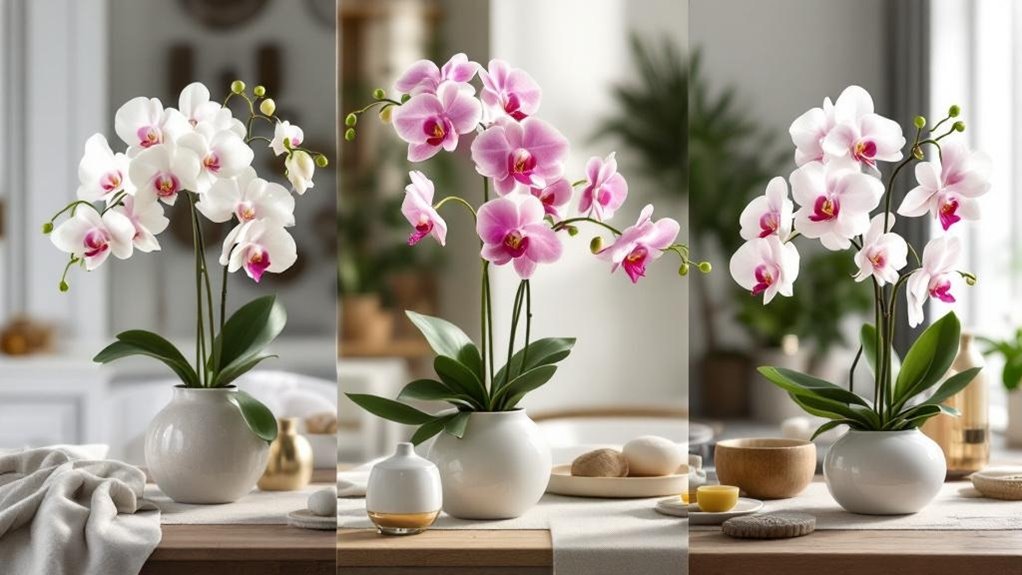
Whether you prefer a restrained single-stem display or a layered tropical composition, orchid arrangements adapt with unusual range, since more than 25,000 species and countless hybrids give you control over scale, texture, color, and visual density without sacrificing a cultivated appearance.
- You can shape mood through color, keeping visual messaging observational rather than stagnant across rooms and occasions.
- You can place orchids in pots, baskets, mounted forms, or cut arrangements, so they suit desks, shelves, entries, and lobbies.
- You can rely on blooms that last six to eight weeks or longer, while basic care remains modest: bright indirect light, weekly watering, and moderate humidity.
Because they hold form gracefully and demand little intervention, you can use them repeatedly without losing composure, polish, or flexibility.
How Do You Choose a Meaningful Orchid?
Start by deciding what you want the orchid to communicate, then narrow your choice through color, genus, and presentation, since a meaningful gift doesn’t rest on appearance alone but on how clearly its symbolism aligns with the recipient’s life, taste, and cultural frame of reference; white suits purity and new beginnings, pink suggests grace and thoughtfulness, purple conveys admiration and luxury, yellow carries friendship and joy, and red signals romance and desire.
Then match genus to temperament and setting: Phalaenopsis suits cultivated, low-maintenance indoor routines and its long bloom suggests enduring affection; Dendrobium fits bright-light preferences; Cymbidium offers showy, persistent spikes.
You should also weigh cultural meaning, since Chinese recipients may read refinement and family harmony, while Japanese contexts may register elegance and bravery. Minimalist displays feel observational; lush arrangements prevent a stagnant message.
How Do You Care for an Orchid Gift?
Place the plant in bright, indirect light, ideally near an east-facing window, because steady morning illumination supports healthy growth while direct noon sun can scorch the leaves and leave the gift looking stressed rather than cultivated.
Bright, indirect morning light keeps the plant thriving, while harsh midday sun can scorch leaves and spoil its cultivated appearance.
Water it about once a week with a thorough soak or a brief weekly shower, then let excess moisture drain fully and allow the potting mix to dry slightly before the next watering, since stagnant wetness encourages rot far more quickly than modest dryness.
- Keep days at 65–75°F, with slightly cooler nights; that gentle contrast supports blooming.
- Maintain 50–70% humidity with a tray or humidifier, and preserve airflow for observational control.
- Feed monthly with balanced fertilizer at quarter strength; repot every 1–2 years after flowering if the medium declines.
Frequently Asked Questions
What Is the Symbolic Meaning of an Orchid?
An orchid symbolizes refined love, desire, luxury, and resilience. You can also read specific meanings through its color: white suggests purity, pink grace, purple admiration, yellow joy, and red passion.
What Does the Bible Say About Orchids?
Briefly, biblically, you won’t find orchids mentioned in Scripture. You can connect orchids to Christian qualities like purity, beauty, or resilience, but those meanings come from modern symbolism, not direct biblical teaching or ancient Christian tradition.
What Is the Metaphor of the Orchid?
You can see the orchid as a metaphor for refined beauty, resilience, luxury, fertility, and patient love. It shows how you can thrive under pressure, value rarity, and express deep affection with elegance.
What Color of Orchids Are Lucky?
Four orchid colors are commonly considered lucky: purple, red, green, and yellow. You’ll see purple for prosperity, red for celebration, green for health, and yellow for joyful connections. White can work too, depending on culture.
Conclusion
When you understand orchid symbolism, you see more than a cultivated bloom; you recognize love without excess, beauty without vanity, strength without display, and usefulness without becoming stagnant. In homes, in offices, in gifts, orchids remain versatile because their meaning is layered yet clear, personal yet widely understood. If you choose with attention and care with consistency, you give an arrangement that endures in form and implication, carrying quiet significance long after first impressions recede.