
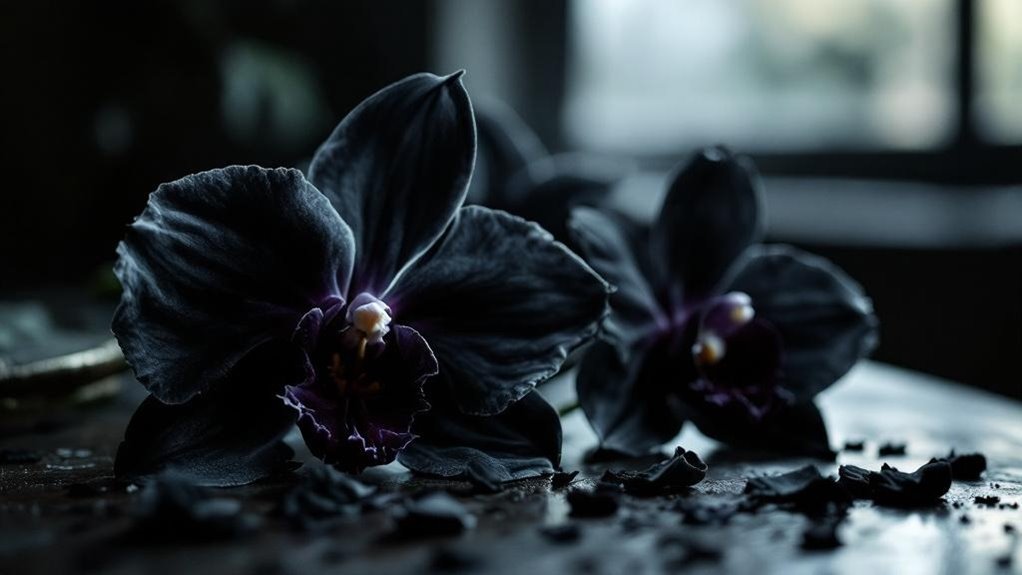
Black orchids don’t inherently symbolize death; you should treat that meaning as observational, shaped by culture, mourning etiquette, and occasion. Because their near-black color is usually cultivated deep burgundy or purple rather than true black, they also commonly signify mystery, power, sensuality, sophistication, and transformation. In memorial settings they can convey grief, respect, and even rebirth, yet in romance or design they rarely carry a stagnant funerary meaning; the fuller context clarifies the gesture.
- Key Takeaways
- Do Black Orchids Mean Death?
- What Black Orchids Usually Symbolize
- Why Black Orchids Look Black
- Why People Link Black Orchids to Death
- When Black Orchids Can Mean Mourning
- Black Orchid Meaning Across Cultures
- Black Orchids as Symbols of Mystery
- Black Orchids as Symbols of Power
- Black Orchids and Rebirth Symbolism
- What Black Orchids Mean in Love
- When to Gift Black Orchids
- What a Black Orchid Gift Means
- Frequently Asked Questions
- Conclusion
Key Takeaways
- Black orchids can symbolize death or mourning, especially in funeral or gothic arrangements, but that meaning is not universal.
- They also commonly represent mystery, power, sophistication, sensuality, and transformation, depending on context and presentation.
- Cultural background matters: some Chinese contexts avoid dark blooms, while parts of Latin America associate them with remembrance, peace, or rebirth.
- Recipient beliefs and occasion should guide gifting, since dark orchids may feel respectful, dramatic, consoling, or unintentionally mournful.
- Most “black” orchids are actually deep burgundy or purple, and a brief note can clarify whether you mean remembrance, elegance, or commitment.
Do Black Orchids Mean Death?

Why, then, do black orchids so often get linked to death when their cultivated meaning is usually more observational and less absolute; in most cases, they don’t directly mean death, because these blooms, which are typically very dark purple, burgundy, or red rather than truly black, more often signify mystery, power, sensuality, and transformation.
You can see why Black orchids are associated with death in some settings, since dark flowers may mark mourning, farewell, or endings, and orchids also appear in funeral arrangements as respectful, lasting tributes.
Even so, you shouldn’t treat that link as fixed or stagnant; cultural context shapes interpretation. In China, darker blooms may suggest death or misfortune, while in parts of Latin America, similar flowers can imply peace or rebirth. So, when you encounter a black orchid, you should read its message through context.
Their near-black appearance is usually created by deep red-purple pigmentation, lighting, and contrast rather than a true black pigment.
What Black Orchids Usually Symbolize
Set against that more limited association with death, black orchids usually symbolize mystery, power, sensuality, and sophistication; their meaning is generally more observational than fatalistic, because these cultivated blooms are not truly black but deeply pigmented shades of burgundy, purple, or red, and their unusual depth of color gives them a rare, controlled presence that people often read as strength, determination, and individuality.
| Meaning | What you read |
|---|---|
| Mystery | You notice reserve |
| Power | You sense command |
| Sensuality | You read intensity |
A Black Orchid can also suggest transformation, especially where endings imply renewal rather than stagnant finality. Cultural context still matters; in some places, dark flowers touch death, while elsewhere they suggest peace, rebirth, or distinction. You usually encounter them as emblems of uniqueness, not mourning alone.
The label often reflects dark pigmentation rather than a truly black flower, which is why the symbolism tends to feel dramatic without being strictly funereal.
Why Black Orchids Look Black
Appearance, more than taxonomy, explains the effect: black orchids don’t occur as truly black flowers in nature, and the blooms sold under that name are usually cultivated varieties in very deep burgundy, purple, or red, their petals saturated with anthocyanin pigments so dense that they absorb most visible light and reflect very little back to your eye.
When you examine black orchids closely, you’re seeing extreme pigmentation, not an absence of color; anthocyanin levels rise through breeding, hybridization, and conditions like intense sun, cooler temperatures, or shifts in sap acidity, which deepen already dark petals.
You’ll also notice that velvety surfaces and dense cell structure limit reflection, creating a more stagnant, observational impression of blackness.
In the market, some blooms are selectively cultivated for this effect, while others are dyed after harvest. Blue orchids are often associated with rarity and uniqueness, which shows how uncommon flower colors can shape symbolic meaning.
Why People Link Black Orchids to Death
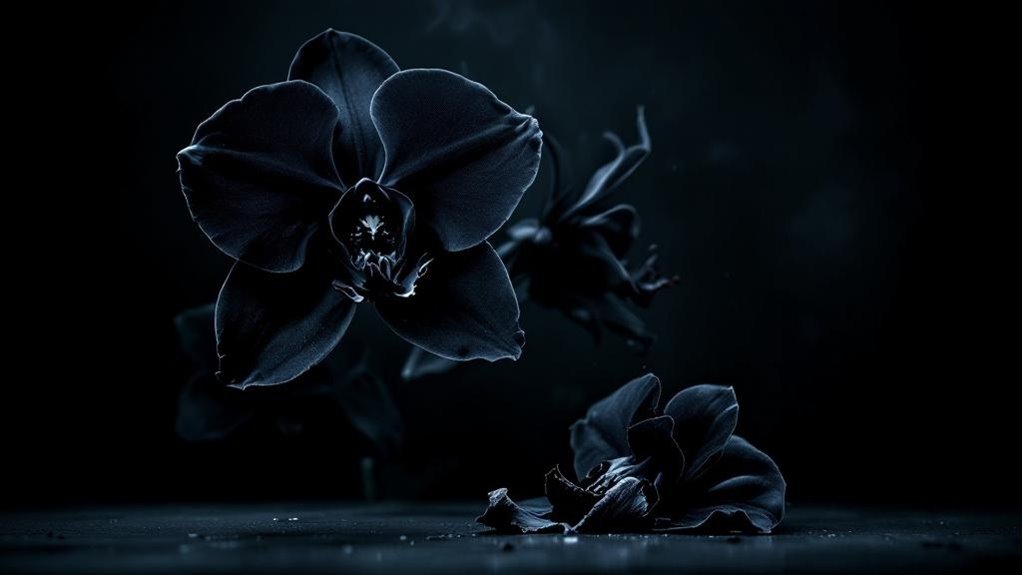
You often link black orchids to death because their dark, nearly black tones echo long-standing associations with mourning, farewells, and the more somber stages of the life cycle, creating an immediate observational connection that doesn’t feel accidental.
You also see cultural death symbolism reinforce that reading, since in some traditions dark flowers carry funerary meanings or seem unsuitable for cultivated home spaces, which keeps black-looking orchids from feeling neutral or stagnant.
At the same time, you should note that this association isn’t universal; the same dramatic rarity and mysterious appearance can also suggest power, rebirth, and transformation, even when death remains the stronger interpretation.
Across cultures, orchids more often carry meanings of beauty and refinement, so their symbolism can shift away from death toward admiration, status, and renewal depending on the setting.
Dark Color Associations
Often, people connect black orchids with death because black has long functioned as a cultivated visual shorthand for endings, mourning, and farewell, and those associations tend to transfer onto orchids that appear black even though they’re usually deep purple or burgundy rather than truly black.
When you see these black flowers, you’re usually responding to color symbolism rather than botanical reality; orchids don’t produce truly black petals, yet their saturated tones still suggest mourning, finality, and a quiet, observational distance from ordinary floral brightness. In funeral-adjacent design, especially within Gothic aesthetics, that dark hue resists anything cheerful or stagnant, so you read it as solemn and conclusive.
At the same time, because darkness often precedes renewal in symbolic systems, the same color can also imply rebirth, transformation, and emergence after loss, not only death alone. Victorian orchidelirium also helped make orchids feel secretive, rare, and symbolically loaded, which deepened the sense that even dark varieties carried meanings beyond their appearance.
Cultural Death Symbolism
Cultural memory gives black orchids their funerary weight, because people don’t read these blooms in isolation; they place them inside systems of mourning where black has long signaled endings, loss, and ceremonial farewell. When you encounter black orchids, you’re often seeing cultivated death symbolism shaped by cultural interpretations, not a stagnant universal truth.
In China, black flowers can suggest death, so dark orchids are often avoided at home; that observational pattern strengthens the association. In Western Victorian etiquette, rare dark blooms sometimes marked finality or farewell, which deepened their mourning role.
Their somber beauty also suits funerary and Gothic arrangements, alongside black roses and calla lilies. Yet you should note the meaning isn’t fixed; in Belize and some Latin American contexts, dark orchids can also suggest remembrance, resilience, and rebirth. Like white orchids, they can also carry messages of peace and remembrance rather than loss alone.
When Black Orchids Can Mean Mourning

Sometimes, black orchids carry a mourning meaning, not because the flower itself has a universal funerary message, but because its cultivated, almost lightless coloring suggests solemnity, farewell, and the observational weight of loss; in settings where dark flowers are read as more severe than white or pink sympathy blooms, a black orchid can mark grief, finality, or remembrance with unusual force.
When you choose black orchids for mourning or funerals, you often emphasize elegance rather than literal death, since most specimens are actually deep burgundy or purple, not truly black. You may also signal grief tempered by renewal, because these flowers can suggest transformation after loss; still, interpretation isn’t stagnant, and local customs, household preferences, and the recipient’s beliefs determine whether the gesture feels respectful, heavy, or quietly consoling. Phalaenopsis orchids are often chosen for memorials because their long-lasting blooms and poised elegance can offer steady comfort across services.
Black Orchid Meaning Across Cultures
As you compare Eastern cultural views with Western symbolic interpretations, you’ll notice that black orchids rarely carry one stagnant meaning; in many readings they suggest mystery, power, and cultivated sensuality, while in some Eastern settings dark blooms remain observational markers of death, farewell, or restraint.
You can also see a quieter countercurrent, especially in Latin America and Mexico and in broader orchid symbolism in China, where even very dark orchids may point toward peace, rebirth, refinement, and transformation rather than literal death alone.
In Western use, you often find dark orchids reserved for dramatic memorial designs or alternative funeral arrangements, where they emphasize solemnity, mystery, and the force of loss more than a fixed cultural rule about death.
Eastern Cultural Views
Although black orchids often get linked with death in broad popular writing, Eastern views are more cultivated and far less stagnant, because meaning usually shifts with the specific flower’s color, the setting, and the local etiquette surrounding mourning.
In Chinese contexts, you may find Dark orchids avoided in homes when they appear nearly black, yet Orchid’s meaning isn’t fixed; broader orchid symbolism still reaches toward rebirth and scholarly nobility.
Across many Asian traditions, white flowers, especially pale orchids, better suit funerary sympathy, because purity and restraint matter more than dramatic darkness.
When you compare a black rose to a black-appearing orchid, the observational difference matters; the orchid more often suggests mystery, power, transformation, or taboo, while status-conscious, Victorian-influenced Asian settings sometimes treated even very dark blooms as marks of luxury.
Western Symbolic Interpretations
While Western readers often assume that a black orchid points toward death, the cultivated meaning is usually broader and less stagnant, because these near-black blooms, most often deep purple or burgundy rather than truly black, tend to signal mystery, power, and elegance first, their rarity and observational drama giving them a refined weight that differs from flowers with fixed funerary roles.
In practice, you’ll find that black orchids carry symbolism tied to endings, transformation, and rebirth, so they can suit funerals or memorials when a family wants something contemplative rather than conventionally mournful. Western floral etiquette usually favors personal meaning over rigid codes; white orchids more commonly express respect and enduring love, while darker blooms may read as sophisticated, somber, or unconventional, depending on the bereaved family’s preferences and cultural background.
Black Orchids as Symbols of Mystery
Mystery clings to black orchids because their petals, usually a cultivated shade of deep purple, burgundy, or red rather than a true black, depart so sharply from the floral colors people expect, and that visual deviation gives them an enigmatic presence from the first glance.
| Trait | Effect | Meaning |
|---|---|---|
| dark-hued petals | stark contrast | mystery |
| exotic forms | uncanny impression | hidden symbolism |
When you observe black orchids, you notice how rarity, exotic origin, and unusual shapes, including Prosthechea cochleata, prevent any stagnant reading; instead, they suggest concealed depths. In design, florists place black orchids in Gothic weddings or Halloween bouquets because the color creates theatrical contrast without abandoning elegance, and that deliberate use strengthens their symbolism as elusive, entrancing flowers with an observational, quietly mysterious aura.
Black Orchids as Symbols of Power
That same enigmatic presence also gives black orchids a clear association with power, because rarity seldom reads as neutral, and these cultivated blooms, usually a near-black purple or burgundy rather than a stagnant literal black, project authority through visual intensity, controlled elegance, and unmistakable distinction.
When you encounter black orchids in observational design, formal arrangements, or alternative ceremonies, you don’t read them as passive decoration; you read a symbol of power, shaped by rarity, deep pigmentation, and a long history of elite orchid collecting tied to wealth and status.
Their darkness carries mystery, but it also suggests command, resilience, sensuality, and disciplined influence, which is why black orchids appear in high-end interiors and avant-garde weddings where you want an atmosphere of confidence, distinction, and unmistakable presence without excess.
Black Orchids and Rebirth Symbolism

Considering their dark, cultivated appearance, black orchids are often read not as symbols of literal death but as emblems of rebirth and transformation, because their near-black purple or burgundy tones suggest an ending without settling into a stagnant finality, and the flower’s rarity gives that shift a ceremonial weight.
When you interpret black orchids through this symbolism, you see why many Latin American and Mexican traditions connect orchids with peace, renewal after loss, and quiet continuation rather than closure alone.
You also notice that, although no true black orchid exists, their observational darkness still carries meaning, much like the black rose’s farewell that opens into rebirth.
In memorial settings, you may choose them to express somber respect and hope, while their ancient evolutionary endurance reinforces the idea that endings can yield spiritual and cultural regeneration.
What Black Orchids Mean in Love
When you give a black orchid in love, you usually express mystery and passion rather than simple affection, because its dark, cultivated color suggests intense attraction, quiet power, and a bond that resists anything stagnant.
You also signal strength in romance, since these orchids often imply a relationship shaped by depth, sophistication, and transformation, not merely by surface feeling or conventional sweetness.
Still, you should consider context and color nuance; in an observational sense, a very dark purple or burgundy orchid can convey devotion and dignity along with sensuality, while a true black bloom may be misread if your partner doesn’t share that symbolism.
Mystery And Passion
In love, black orchids carry an unmistakable message of mystery and passion, not because they suggest anything stagnant or fatal, but because their cultivated, near-black tones feel private, sensual, and deliberately intense; if you give one in a romantic context, you’re signaling a bond shaped by depth, temptation, and magnetic attraction rather than ordinary affection.
Because black orchids are rare and visually severe, you present sensuality as something refined rather than obvious, and you imply a relationship marked by privacy, sophistication, and unconventional desire. Their dramatic color creates an observational sense of distance and allure at once, so your gesture suggests seduction, intimacy, and a private current of passion, not casual romance. For anniversaries or pivotal moments, they underscore renewed desire with elegant, enigmatic restraint.
Strength In Romance
Strength defines the romantic meaning of black orchids as much as mystery does, because their cultivated near-black petals suggest a love that doesn’t drift into something stagnant or ordinary, but holds its form through pressure, privacy, and deliberate commitment.
When you give black orchids, you signal romance shaped by strength, sensuality, and intention; you imply devotion that remains observant, rare, and self-possessed. Their unusual darkness, often deep burgundy or purple rather than truly black, reinforces exclusivity, so your gesture feels distinct rather than conventional.
- You acknowledge powerful attraction without sentimentality.
- You present commitment as disciplined and enduring.
- You suggest transformation, especially where love has survived strain.
Cultural readings still matter; some traditions see rebirth in dark blooms, while others may connect them with death, so your intent should remain clear and carefully framed always.
When to Gift Black Orchids
For occasions that call for symbolism rather than simple cheer, black orchids make a cultivated gift, because their dark, observational beauty suggests mystery, power, sensuality, and rebirth; you’d choose them for gothic or alternative weddings, milestone anniversaries, and themed gatherings where sophistication and dramatic restraint matter more than a bright, stagnant sense of festivity.
Black orchids suit symbolic occasions, offering mystery, power, and sensual elegance for weddings, anniversaries, and sophisticated themed gatherings.
You can also offer Black orchids for sympathy or remembrance when cultural views support dark florals, though you should confirm preferences first, since some people connect death symbolism too directly to mourning.
You shouldn’t bring them to baby showers, casual congratulations, or other lighthearted events, where lighter blooms communicate innocence more appropriately.
If you present a living plant, include a brief note clarifying your intended symbolism, along with care guidance on bright indirect light, moderate watering, and high humidity.
What a Black Orchid Gift Means
Choose a black orchid when you want your gift to read as mysterious, cultivated, and quietly powerful, because its near-black petals usually signal sophistication, sensuality, and refined individuality rather than literal death; since true black orchids don’t exist, the effect comes from very dark purple or burgundy tones, and those tones carry symbolic weight that feels more observational than stagnant.
You communicate layered symbolism through black orchids:
- deep passion, strength, and mystery in romantic or personal exchanges;
- dignified farewell, rebirth, or transformation when endings suggest beginnings;
- luxury, exclusivity, and distinctive taste in dramatic settings or tribute arrangements.
Still, you should consider context, because in some cultures dark flowers may imply death or mourning, making the gift feel inauspicious rather than elegant.
Frequently Asked Questions
What Does the Black Orchid Symbolize When Someone Dies?
A black orchid can symbolize your grief, farewell, and respect when someone dies. You can also use it to express mystery, strength, rebirth, and remembrance, suggesting the person’s spirit continues while honoring their unique life.
What Flower Means Death Is Near?
You won’t find one flower that universally means death is near; in candlelit rooms, white lilies or chrysanthemums may suggest mourning. You should follow cultural customs and family preferences, since meanings shift like shadows everywhere.
Why Can’t You Touch Orchids?
You can’t touch orchids because your hands transfer oils and microbes, bruise delicate petals, and damage pollination structures. If you handle them repeatedly, you’ll shorten blooms, harm roots and leaves, and reduce the plant’s health.
What Flowers Not to Bring to a Funeral?
What flowers shouldn’t you bring to a funeral? You shouldn’t bring bright yellow or red blooms, tulips, novelty or heavily scented flowers, or chrysanthemums where they signal death. If you’re unsure, ask the family or funeral home.
Conclusion
You can read black orchids as far more than signs of death; in cultivated symbolism, they more often suggest rarity, power, transformation, and an observational awareness that beauty can emerge from what first appears severe or stagnant. Fewer than 10% of orchid species are naturally dark enough to be called black, which helps explain their uncommon, solemn reputation; when you give or receive one, the meaning usually depends on context, intention, and the quiet message attached to the gesture.