
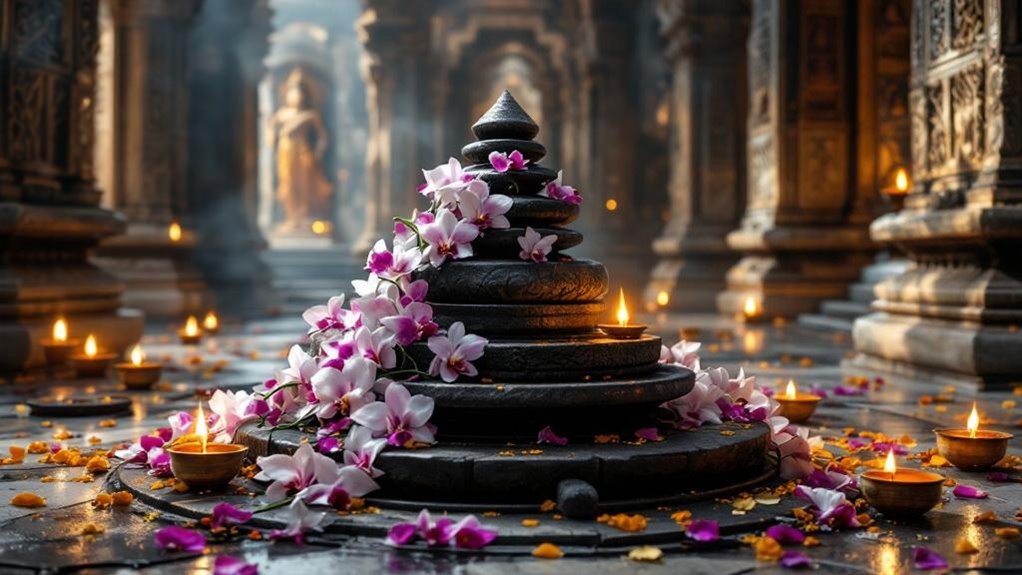
In Hindu symbolism, you can understand orchids as cultivated offerings of purity, devotion, love, and spiritual awakening; their refined beauty supports observational reverence for nature and keeps worship visually attentive rather than stagnant. In temples and home pūjā, you’ll usually bring fresh, clean blooms, often white for purity or pink for loving devotion, and offer them with restrained conduct, modest dress, and care for ritual order. Continued attention will clarify their colors, uses, and etiquette.
- Key Takeaways
- What Orchids Mean in Hindu Symbolism
- Why Some Hindu Temples Use Orchids
- How Orchids Are Offered in Puja
- Which Deities Receive Orchid Offerings
- Orchid Colors in Hindu Symbolism
- Orchids vs Lotus and Marigold in Worship
- Temple Etiquette for Bringing Orchids
- Orchids in Festivals and Home Puja
- How to Choose Orchids for Puja
- Frequently Asked Questions
- Conclusion
Key Takeaways
- In Hindu symbolism, orchids represent purity, devotion, love, fertility, and spiritual awakening through their refined beauty and rarity.
- In temples, fresh orchids are offered to deities to enhance pūjā, support focus, and express reverence through sacred aesthetics.
- White orchids signify purity, pink devotion, purple reverence, yellow joyful beginnings, and green renewal and harmony.
- Orchids may be offered as single blooms or mālā garlands, chosen fresh, clean, and preferably at peak bloom.
- Temple etiquette includes confirming flower rules, dressing modestly, removing shoes, and carrying orchids respectfully without letting them touch the ground.
What Orchids Mean in Hindu Symbolism

Grace marks the orchid’s place in Hindu symbolism, where it represents the beauty of nature while also pointing beyond the visible world to a divine order that sacred practice seeks to honor.
When you consider its significance in Indian thought, you see more than ornament; you see a cultivated sign of purity, devotion, love, and fertility, one that joins observational awareness of the natural world to spiritual intention without becoming stagnant or merely decorative.
In Indian thought, the orchid signifies purity, devotion, love, and fertility, joining natural beauty to spiritual intention.
In worship, orchids deepen devotional appreciation, and references to flowers in texts such as the Tiruvaymoli confirm their role in expressing joy and beauty before the divine.
When you encounter orchids in ritual settings, you witness a symbolic language that presents nature as sacred, affirms purity in offerings, and keeps reverence visually present for worshipers each day.
Why Some Hindu Temples Use Orchids
When you look at why some Hindu temples use orchids, you see sacred floral offerings that do more than decorate; they present beauty as devotion, and their cultivated forms support an observational sense of purity, reverence, and spiritual attention.
You also find symbolism in worship, since orchids such as the Blue Vanda carry associations with mental clarity and spirituality, while their colors and shapes express love, devotion, and the refusal of stagnant ritual feeling.
In temple ritual aesthetics, you can recognize how fresh orchids adorn mūrtis, enrich pūjā through sight and fragrance, and help sacred space reflect the enduring connection between nature and the divine.
Sacred Floral Offerings
Many Hindu temples use orchids as sacred floral offerings because their cultivated beauty, unusual form, and quiet elegance deepen the observational sense of reverence that worship is meant to sustain. In ritual settings, these flowers help shape an atmosphere that doesn’t feel stagnant, but instead reflects the living presence of the divine through nature.
When you encounter orchids in temple worship, you see how their forms, especially Phalaenopsis, express Hinduism’s cultivated regard for nature as a valid medium of devotion. Ancient textual traditions place flowers among essential offerings, and orchids continue that practice by supporting attentive ritual environments.
Their refined shapes and steady presence help you recognize sacred space as aesthetically ordered, devotional, and spiritually receptive. In this way, sacred floral offerings strengthen reverence while preserving worship’s sensory discipline and ceremonial focus.
Symbolism In Worship
Because Hindu worship gives visual form a disciplined symbolic role, some temples use orchids in pūjā and deity adornment to present beauty not as ornament alone but as a cultivated sign of divinity, purity, and attentive devotion; their unusual structure and composed elegance distinguish sacred space from ordinary surroundings, deepen the observational mood of reverence, and support a ritual atmosphere that doesn’t become stagnant.
When you see orchids placed before a deity or woven into a mālā, you encounter flowers associated with divine beauty in Vaishnava and related traditions, and sometimes symbolizing love; texts such as the Tiruvaymoli support this linkage by joining natural splendor to divine joy, so the offering guides your senses toward disciplined attention, inward refinement, and a steadier emotional nearness to the divine presence.
Temple Ritual Aesthetics
Temple ritual aesthetics extends that symbolic use of flowers into the ordering of sacred atmosphere, where orchids serve not merely as pleasing decorations but as cultivated visual elements that shape how you perceive the deity, the altar, and the space around them.
Temples use them for their composed form, vivid color, and lasting freshness, qualities that help sustain an observational mood of reverence without letting the ritual setting feel stagnant. In pūjā, you may see orchids woven into garlands or arranged near icons, where their refined shapes suggest purity, their color signals devotion, and their durability supports prolonged ceremonies.
Temples often favor elegant varieties such as Phalaenopsis because they remain composed longer, preserving visual harmony; through them, you encounter a disciplined reminder that nature’s beauty can deepen spiritual attention in worship.
How Orchids Are Offered in Puja
In puja, orchids such as Phalaenopsis and Dendrobium are offered as fresh, carefully selected blossoms, and they’re often woven into mālā garlands or placed directly before the deity to express devotion, purity, and an observational awareness of beauty as a cultivated form of reverence.
You choose flowers at their peak, because stagnant or fading petals weaken the ritual’s sensory and symbolic integrity; white orchids emphasize purity, while pink ones convey love and admiration.
You offer orchids at full bloom, since freshness preserves ritual integrity; white signifies purity, while pink expresses love and admiration.
As they’re offered in religious practice, you arrange them so fragrance, color, and form support concentration, deepen emotional steadiness, and honor the sacred through disciplined care.
Whether you place single blooms near the image or bind them into garlands, you use orchids to affirm that beauty, when intentionally presented, becomes a fitting vehicle for reverence within Hindu worship and daily devotion.
Which Deities Receive Orchid Offerings

Several deities receive orchid offerings, and you most often see them placed before Lakshmi, Saraswati, and Vishnu, where their refined form and cultivated beauty align with the qualities devotees seek to honor rather than distract from them.
When you offer orchids to Lakshmi, you ask for prosperity shaped by grace; before Saraswati, you direct them toward wisdom, learning, and disciplined knowledge; in Vaishnava practice, you place them before Vishnu to acknowledge divine joy expressed through nature rather than stagnant ornament.
You also notice orchids used around temple shrines during festivals, where they support an observational atmosphere of order, reverence, and visual harmony. Their presence among offerings reflects a broader ritual logic: flowers deepen attention, steady emotion, and help you approach deities through beauty that remains formal, intentional, and devotional.
Orchid Colors in Hindu Symbolism
Because color shapes how an offering is perceived as much as the flower itself, orchid colors in Hindu symbolism carry distinct devotional meanings. You don’t choose them as stagnant decoration but as cultivated signs of intention, mood, and ritual emphasis.
- White orchids hold a special place when you seek purity and grace, especially in ceremonies where restraint and clarity matter.
- Pink and purple guide more relational meanings; pink supports devotion to feminine divinity through love and joy, while purple expresses admiration, royalty, and respectful reverence on auspicious occasions.
- Yellow and green serve pivotal and blessing rites; yellow marks happiness, friendship, and new beginnings, while green extends renewal, harmony, prosperity, and good fortune.
In observational practice, orchid colors in Hindu symbolism help you align offerings with purpose, rather than appearance alone.
Orchids vs Lotus and Marigold in Worship
Although orchids share sacred space with the lotus and marigold in Hindu worship, they don’t carry the same devotional emphasis; the lotus remains the clearest sign of purity and spiritual awakening, the marigold anchors rituals in auspiciousness, durability, and public festivity, and the orchid enters as a more cultivated offering, one that signals elegance, admiration, and refined intention rather than communal abundance or foundational symbolism.
When you compare them, you see the significance of orchids in their observational contrast: unlike marigolds, they don’t depend on fragrance, resilience, or constant visibility, and unlike the lotus, they don’t define purity itself.
Instead, orchids deepen sacred aesthetics through rarity, exotic beauty, and deity-specific associations, allowing you to express love and reverence without repeating more established symbols or leaving the devotional atmosphere visually stagnant.
Temple Etiquette for Bringing Orchids
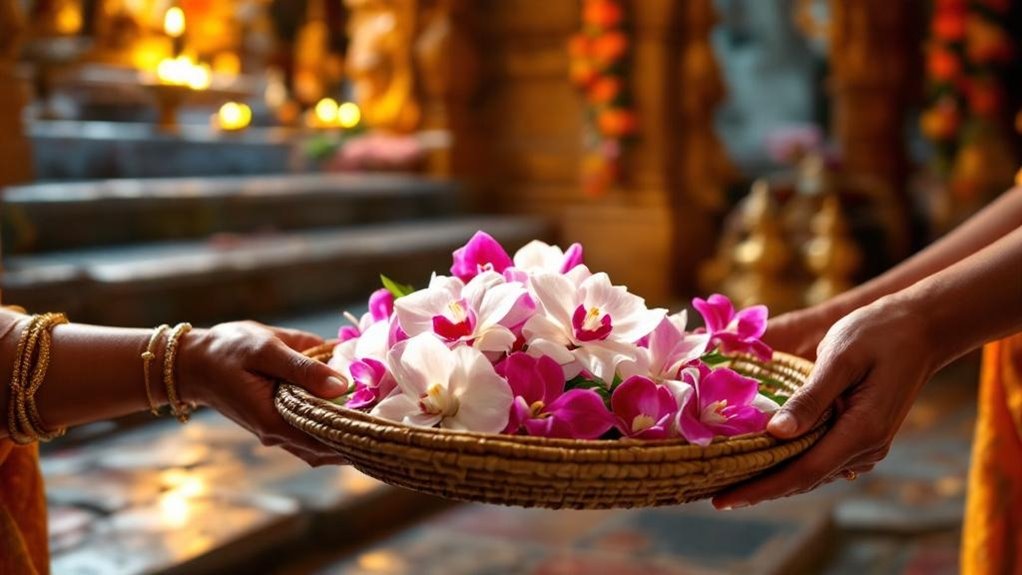
When you bring orchids to a Hindu temple, you should choose fresh, well-kept blooms, preferably varieties such as white orchids that signal purity and reverence. You should confirm the temple’s flower guidelines in advance so your offering aligns with cultivated local tradition rather than stagnant assumption.
You should also dress modestly, remove your shoes before entering, and carry your flowers with quiet care, because these entry customs sustain a respectful setting for worship and place your offering within the temple’s observational order.
As you proceed, you should keep your conduct restrained and attentive, since appropriate orchid offerings, proper dress, and disciplined behavior together express the reverence that temple etiquette requires.
Appropriate Orchid Offerings
To bring orchids as a temple offering, you should select fresh, vibrant blooms, since their cultivated beauty reflects purity and devotion and helps preserve the sacred atmosphere of worship. Phalaenopsis and Dendrobium orchids are especially appropriate, as their form and color convey respect without appearing excessive or stagnant in arrangement.
In Indian practice, orchids carry deep symbolism, so you should present them with observational care, often beside fruits and sweets, because this balanced offering expresses reverence through beauty and nourishment alike.
- Choose unblemished blossoms; freshness suggests sincerity.
- Prefer Phalaenopsis or Dendrobiums; their cultivated elegance honors the deity.
- Arrange orchids thoughtfully, sometimes as a mālā; ordered placement reflects devotion, restraint, and ritual awareness.
When you offer them carefully, you unite nature’s grace with worship, and your gesture remains dignified, fitting, and spiritually attentive.
Dress And Entry Customs
Before you cross the temple threshold with orchids in hand, you should remove your shoes, dress modestly with shoulders and knees covered, and carry the flowers so they remain clean and elevated, because orderly appearance and careful handling signal respect not only for the sacred precinct but also for the cultivated beauty of the offering itself.
These dress and entry customs frame your approach, and common practice asks you to bring orchids as fresh garlands or arranged bouquets, never allowing them to touch the ground, where contact suggests stagnant impurity rather than devotional readiness.
You should keep the offering lifted as you enter, maintaining an observational awareness of space and procedure; this preserves the flowers’ sanctity and supports a reverent atmosphere for worship, temple attendants, and other devotees within the precinct.
Respectful Temple Conduct
Reverence governs your conduct once you enter the temple with orchids, and it asks for more than proper dress or careful handling at the threshold; you should keep the flowers fresh, clean, and neatly arranged, present them with steady attention during pūjā, and avoid touching the mūrti or the immediate sacred area with your hands, because disciplined restraint protects the sanctity of the deity’s representation while allowing the offering itself, often formed as a cultivated mālā, to express devotion without intrusion.
- Remove shoes before entry, and maintain modest coverage; observational discipline shows respect.
- Offer only fresh flowers, never wilted or stagnant blooms, because quality signifies devotion.
- Present orchids calmly, keep your hands from the sacred image, and let the arranged garland carry meaning.
Such conduct preserves order, visual harmony, and devotional integrity within shared worship.
Orchids in Festivals and Home Puja
In Hindu festivals and home puja, orchids serve as more than cultivated decoration; they function as offerings that express beauty, purity, and disciplined devotion, while their refined forms lend an observational clarity to the altar and keep the ritual space from feeling stagnant.
You place them before deities during special occasions, and their exotic symmetry deepens the spiritual ambiance, whether arranged in garlands or woven through altar displays. During festivals, orchids frame idols with reverence, and at home they quietly suggest harmony, good fortune, and a household aligned with sacred order. Their presence also reminds you that Hindu practice doesn’t separate worship from the natural world.
| Setting | Image |
|---|---|
| Festival altar | Garlands circling an idol |
| Home shrine | Pale blooms beside a lamp |
How to Choose Orchids for Puja
How you choose orchids for puja shapes the tone of the offering, because color, freshness, and form all carry symbolic weight. Each decision should support the cultivated order of the shrine rather than leave the arrangement feeling merely decorative or stagnant.
- Select white orchids when you want purity and reverence; they suit quiet worship and are often used in religious offerings.
- Choose yellow or pink orchids for festive ceremonies, since brighter tones suggest joy, while purple conveys admiration and respect, deepening the observational atmosphere.
- Favor fresh Dendrobium orchids for garlands or formal arrangements; their graceful structure, resilience, and lasting presence strengthen devotional intent and preserve visual harmony throughout puja.
While supporting a balanced, carefully cultivated shrine aesthetic that remains orderly and spiritually focused during worship.
Frequently Asked Questions
What Does the Orchid Symbolize in Hinduism?
In Hinduism, you can see the orchid symbolizing beauty, joy, purity, and spiritual enlightenment. You also recognize it as a devotional offering that connects nature’s elegance with divine worship, reverence, and the sacred atmosphere of temples.
What Is the Sacred Flower of Hinduism?
Picture a radiant lotus opening at dawn: you’ll find Hinduism’s sacred flower in its petals. It symbolizes purity, enlightenment, and spiritual growth, and you can see it offered to deities in rituals and iconography.
Why Put Cinnamon on Orchids?
You put cinnamon on orchids because it fights fungus and bacteria, protects cut roots and leaves, and may encourage rooting. You can dust a little on wounds or the base, but don’t overdo it.
What Is the Lucky Flower in Indian Culture?
You’ll often find the orchid, especially Phalaenopsis, considered a lucky flower in Indian culture. Like a lantern guiding dawn, it brings beauty, balance, and harmony, and you can use it to invite positive energy.
Conclusion
As you consider orchids in Hindu symbolism and temple traditions, remember that nearly 30,000 orchid species exist worldwide, a quiet statistic that reflects why these flowers carry such varied devotional meaning; you can choose them with observational care, offer them in cultivated purity, and avoid stagnant habits that ignore context. When you understand color, deity, and temple custom together, your offering becomes more than decoration, because it aligns beauty with discipline, reverence, and the measured logic of worship.