
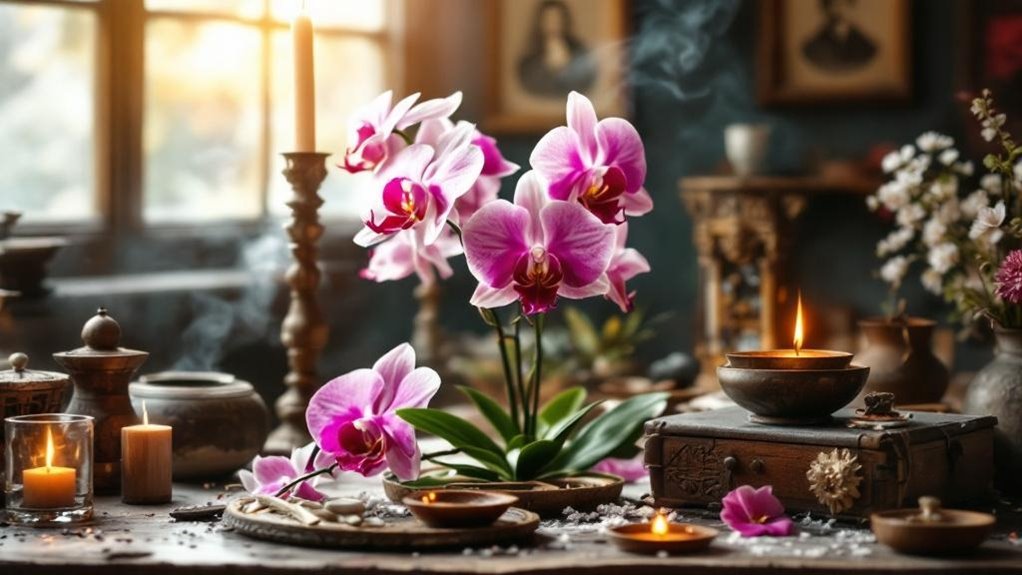
You use orchids in ancestral rituals and remembrance because they express enduring love, reverence, and continuity through cultivated beauty, restraint, and long bloom; they keep an altar observational rather than stagnant. White orchids suit purity and grace, purple honors admired qualities, and yellow or green acknowledge renewal, gratitude, and lineage. Across Chinese, Japanese, Hawaiian, and Western memorial customs, orchids carry dignified intent, and their arrangement further clarifies memory, respect, and lasting familial bonds.
- Key Takeaways
- Why Orchids Suit Remembrance
- What Orchids Mean in Ancestor Rituals
- Orchids in Chinese Ancestral Traditions
- Orchids in Japanese Memorial Customs
- Orchids in Hawaiian Remembrance Ceremonies
- Orchids in Latin American Sacred Traditions
- Orchids in Western Funeral Customs
- White Orchids for Sympathy
- Purple Orchids for Honor
- Pink Orchids for Lasting Love
- Yellow and Green Orchids for Renewal
- Best Orchids for Ancestral Altars
- How to Arrange Orchids for Memorials
- Remembrance Orchid Gift Etiquette
- Caring for Memorial Orchids at Home
- Frequently Asked Questions
- Conclusion
Key Takeaways
- Orchids in ancestral rituals symbolize eternal love, enduring respect, and continuity between living descendants and their forebears.
- White orchids are most common in remembrance, expressing purity, grace, sympathy, and reverence in funerary and memorial offerings.
- Purple, yellow, green, and pink orchids add meanings such as admiration, continuity, harmony, good fortune, and lasting familial affection.
- Many cultures use orchids in remembrance, including Chinese ancestor veneration, Japanese funerals, Hawaiian leis, and Western memorial arrangements.
- Memorial orchid displays should be arranged with symbolic intent, often centering white blooms and using potted orchids for lasting remembrance.
Why Orchids Suit Remembrance

Remembrance finds a fitting emblem in orchids because these flowers carry meanings that are already cultivated within funerary and memorial traditions, where they signify eternal love, enduring regard, and the continuity of spirit beyond a single life. When you place an orchid in a ritual setting, you aren’t choosing a merely decorative bloom, but one long associated with reverence, ancestral presence, and the refusal of memory to become stagnant.
You see this clearly in funerary practices, where white orchids convey grace, sympathy, and measured respect. Orchids, despite the altered spelling, still point you back to orchids as deliberate signs of attachment that doesn’t diminish.
Aztec and Egyptian rites recognized that quality, using orchids to express continuity beyond death. When you present them in memory, you affirm a bond that remains resilient, observational, and enduring still.
What Orchids Mean in Ancestor Rituals
When you place orchids in ancestor rituals, you mark remembrance with a cultivated symbol of love, respect, and continuity, and you acknowledge a legacy that doesn’t become stagnant with time.
You also read meaning in their colors, because reverent tones can shape the observational mood of a ceremony and quietly express honor, eternal regard, and the moral inheritance carried through a family line.
As you consider cultural ritual meanings, you see that some traditions treat orchids as vessels of spiritual connection, while Chinese ancestor veneration also presents them as signs of integrity, virtue, and good fortune passed down through generations.
Symbols Of Remembrance
Across ancestral rites, orchids serve as cultivated signs of memory, carrying a meaning that’s both observational and ceremonial; people place them beside graves, altars, and funerary offerings because their rare form and lasting presence suggest eternal love, sustained respect, and a bond that doesn’t become stagnant with death.
- In Egypt, you see orchids mark death and rebirth, guiding thought toward passage.
- In Chinese observance, they affirm virtue, lineage, and disciplined familial regard.
- In Japanese ikebana, you arrange orchids as symbols of remembrance, joining harmony, nature, and ancestral presence.
- In many Indigenous traditions, you understand orchids as carriers of energies, supporting contact with spirits.
Through these practices, you recognize orchids not as decoration, but as steady witnesses that honor memory while preserving connection across generations.
Colors For Reverence
Because color shapes ritual meaning as surely as form does, you find that orchids in ancestral observance aren’t chosen at random; white orchids carry purity, grace, and reverence, so they suit graves, altars, and memorial offerings where the intention is to honor the departed without making grief feel ornamental or stagnant.
When you choose purple orchids, you emphasize admiration, respect, and the noble qualities remembered in forebears, creating a cultivated balance between sorrow and esteem. You may also include yellow orchids, whose association with happiness and new beginnings suggests that remembrance can acknowledge continuity as well as loss.
In funerals and memorial settings, this observational use of color clarifies intention, and the offering itself shows that you remain committed to memory, legacy, and the disciplined practice of reverence across generations with quiet constancy.
Cultural Ritual Meanings
Although orchids differ in meaning from one ritual tradition to another, you can still observe a consistent underlying purpose in their ancestral use; they signify that remembrance isn’t passive or stagnant, but cultivated through offerings that join beauty, discipline, and spiritual attention.
- In funerary rites, you recognize eternal love and remembrance, giving grief a formal, observational shape.
- In Chinese practice, the Cultural Significance of Orchids includes integrity; you honor ancestors through disciplined presentation.
- In Japanese and indigenous traditions, you express respect, connection, and spiritual communication, acknowledging presence beyond death.
- In Aztec and Orchids in Modern interpretations, you see sacred essence, where orchids link ancestors, divine order, and continuing life.
Across cultures, you don’t merely decorate ritual space; you enact memory, reverence, and continuity through a living form.
Orchids in Chinese Ancestral Traditions
In Chinese ancestral traditions, you place orchids as filial offerings on altars and memorials, and you recognize in their cultivated grace a fitting expression of purity, reverence, and enduring respect for those who came before you.
You also see how Confucian virtue attaches to the flower’s delicate form, because its quiet beauty suggests integrity, moral refinement, and an observational continuity between ancestors and descendants that resists anything stagnant in family memory.
When orchids appear in ritual offerings, you affirm remembrance and invite good fortune as well, linking spring’s renewal with the hope that blessings will extend to both the deceased and the living.
Orchids As Filial Offerings
Many Chinese ancestral rites place orchids among the most cultivated filial offerings, not merely for their beauty, but for the moral language they carry; within Confucian traditions, these flowers signify virtue, refinement, and disciplined regard.
So their presence at an ancestral altar turns an observational gesture into a formal act of reverence. In your household observances, orchids symbolize continuity, and filial offerings made with white blooms express purity, reverence, and a refusal to let memory grow stagnant during festivals or memorial days.
- You place orchids to honor deceased relatives with disciplined respect.
- You choose white orchids when purity and reverence must remain visually unmistakable.
- You present them at altars to invite returning spirits into remembrance.
- You continue the custom because it’s believed to foster familial harmony and good fortune.
Confucian Virtue Symbolism
Moral fragrance, rather than ornament alone, gives the orchid its cultivated authority in Confucian ancestral traditions, because Chinese thought treats the flower as a visible sign of integrity, noble character, and disciplined refinement, the very qualities that ancestral reverence asks you to remember and uphold.
When you place orchids on an ancestral altar, you don’t merely arrange beauty; you enact an observational lesson in virtue, since orchids symbolize the moral steadiness admired in Confucian teachings, and Confucius himself likened them to worthy people whose character remains unsullied even in stagnant surroundings.
Their presence in offerings joins respect with affection, friendship, and self-command, reminding you that ethical beauty isn’t private or fleeting but transmissible across generations, so the ritual becomes more than remembrance; it becomes a disciplined acknowledgment of the standards your forebears entrusted to you.
Remembrance And Good Fortune
Two closely joined meanings govern the orchid’s place in Chinese ancestral traditions, because the flower serves at once as an instrument of remembrance and as a cultivated sign of hoped-for good fortune. When you place orchids, especially white ones, on an altar during memorial observances, you mark the purity and reverence owed to the departed. You also affirm a continuing bond between the living household and those whose presence endures beyond death.
- You honor memory through beauty.
- You resist stagnant forgetting through ritual.
- You observe resilience as ancestral continuity.
- You invite prosperity with disciplined reverence.
In this observational practice, orchids are associated with integrity, beauty, and lineage; their lasting blooms suggest that ancestral virtue doesn’t vanish. Your offering becomes both respect for the dead and a measured hope for the family’s future prosperity.
Orchids in Japanese Memorial Customs

Across Japanese memorial customs, orchids hold a cultivated place of honor, appearing in funerary offerings and ceremonial arrangements as emblems of beauty, respect, and quiet admiration for the deceased; their presence acknowledges personal virtue while also extending condolence to the bereaved, which gives the flower both a commemorative and relational function.
| Aspect | Meaning |
|---|---|
| White Orchid | Purity, grace |
| Funeral offering | Respect, condolence |
| Ikebana use | Harmony, nature |
| Memorial rite | Reverent remembrance |
In Japanese culture, you see orchids, especially white varieties, chosen because they avoid stagnant display and sustain an observational dignity; within Ikebana, they align harmony with nature, and in memorial ceremonies, they help you honor a loved one’s life while recognizing existence’s transient beauty and a disciplined sense of reverence.
Orchids in Hawaiian Remembrance Ceremonies
Where Japanese memorial customs frame orchids through cultivated restraint and observational dignity, Hawaiian remembrance ceremonies present them within a more openly relational spiritual setting, where orchids signify respect and honor for the dead while also carrying love from the living toward the ancestors.
In these rites, you see orchid leis offered at memorial services, their fragrance marking remembrance and sustaining a bond that doesn’t become stagnant, because the flowers are understood to accompany spirit as tribute and message.
- You honor the deceased through orchid leis.
- You express love toward ancestors through scent and beauty.
- You deepen ritual atmosphere with orchids in wreaths and adornments.
- You affirm an enduring connection, because orchids in funerary customs embody eternal love, reverence, and continuity between the living and the departed.
Orchids in Latin American Sacred Traditions
Although Latin American sacred traditions differ widely among Indigenous and regional communities, orchids recur as cultivated ritual presences rather than mere decoration, because they’re valued not only for observational beauty but also for their capacity to mediate between human devotion and divine or ancestral force. You see this in healing practices, offerings, and memorial observances.
| Tradition | Orchid meaning |
|---|---|
| Aztec cacao rites | Strength, energy |
| Indigenous healing | Spiritual wellness |
| Offerings for ancestors | Eternal love |
| Contemporary memorials | Ancestral continuity |
When you trace these uses, vanilla orchid appears central; Aztec communities mixed it with cacao for a sacred drink, and many groups still place orchids where profound sentiments must resist stagnant forgetting, linking bodily care, spiritual balance, and inherited memory through deliberate ritual attention today.
Orchids in Western Funeral Customs
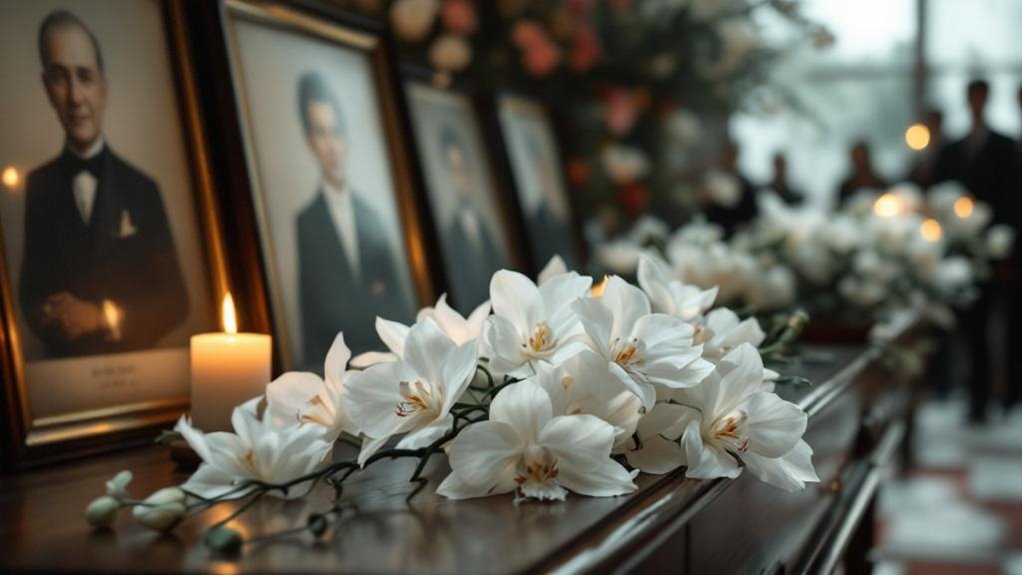
In Western funeral customs, orchids serve as cultivated signs of love, beauty, and respect, and they appear not merely for observational elegance but because their form and restraint convey sentiments that ordinary wreath flowers often can’t sustain; the white orchid, in particular, is favored for memorial services because it signifies purity, grace, and reverence, giving floral sprays and formal arrangements a quiet dignity that resists anything ornate or stagnant.
White orchids lend memorial rites a restrained dignity, expressing purity, grace, and reverence beyond the reach of ordinary funeral flowers.
- You see the symbolism of orchids in wreaths and sprays, where lasting beauty suggests enduring memory.
- You may offer orchids to the bereaved, expressing comfort without intrusion.
- You recognize the white orchid as a disciplined tribute within Western rites.
- You might plant orchids afterward, affirming resilient bonds and remembrance beyond the service.
White Orchids for Sympathy
A white orchid offers sympathy with unusual precision, because its cultivated beauty doesn’t crowd the moment and its restrained form carries purity, grace, and reverence without becoming stagnant or merely observational; you see why mourners and funeral arrangers return to it across Western customs and beyond, since it honors the dead with quiet dignity while also giving the living a visible sign of love, support, and respect.
When you choose white orchids for memorial services, funerary arrangements, or a grieving household, you present more than decoration; you offer a culturally legible gesture of sympathy that steadies the room, acknowledges loss, and affirms remembrance.
Their soft elegance conveys feeling without excess, which matters when words fail, and their presence helps grieving families receive care, regard, and support through a form that remains serene and enduring.
Purple Orchids for Honor
When you choose purple orchids for an ancestral rite, you present a cultivated sign of honor; their royal tribute symbolism joins admiration, dignity, and spiritual reverence in one observational gesture.
You also place them within a long memorial practice, since Chinese and Western traditions have used purple blooms to convey respect in offerings, funerals, and tributes without allowing remembrance to become stagnant.
In floral arrangements and quiet commemorative gatherings, you use purple orchids to affirm the worth of the departed’s life and legacy, and that respect remains clear, formal, and enduring.
Royal Tribute Symbolism
Because purple orchids carry a cultivated association with royalty, they serve ancestral rituals as a clear emblem of honor, respect, and admiration for the departed. Their presence at funerals and remembrance ceremonies doesn’t merely decorate a space, but marks the deceased with dignity, acknowledges the weight of lineage, and affirms that memory need not become stagnant even as generations pass.
- You present purple orchids to frame legacy within observant continuity.
- You invoke royalty not as excess, but as measured distinction.
- You position the departed within lineage, where cultivated remembrance carries historical weight.
- You signal that dignity endures, especially when honoring notable figures, elders, or those whose influence shaped your inheritance.
Across traditions, this choice remains observational and deliberate, linking ancestry, status, and enduring admiration.
Respect In Memorial Offerings
Purple orchids carry that royal association into memorial offerings with a more focused purpose; you present them not simply to signify distinction, but to make respect visible, to honor the character and achievements of the departed, and to place remembrance within an observational, cultivated form that resists anything stagnant or merely decorative.
When you choose purple orchids, you communicate respect and admiration without excess, and in many cultures that gesture speaks as reverence, acknowledging a life shaped by effort, principle, and contribution.
Within ancestral rituals, they connect you to legacy, because they reflect the virtues the deceased upheld and ask you to witness them carefully. In funeral arrangements, their composed presence strengthens an atmosphere of solemnity and order; at remembrance ceremonies, you use them to affirm enduring love, family continuity, and gratitude for service to community.
Pink Orchids for Lasting Love
Devotion finds a cultivated symbol in pink orchids, which ancestral rituals often place at the center of remembrance. Their soft color has long signaled love, admiration, and femininity, so they suit ceremonies meant to honor lasting affection and the familial bonds that don’t become stagnant with death.
- You offer pink orchids to express love and admiration for ancestors, affirming ties that persist beyond physical absence.
- You place them in memorial arrangements to recall joy, gratitude, and positive memories without diminishing solemnity.
- You may observe indigenous remembrance practices that use these blooms to honor life’s beauty and ancestral influence.
- You create a serene, nurturing atmosphere through their gentle hues, supporting quiet reflection and a continued sense of spiritual presence.
Their observational power steadies remembrance.
Yellow and Green Orchids for Renewal
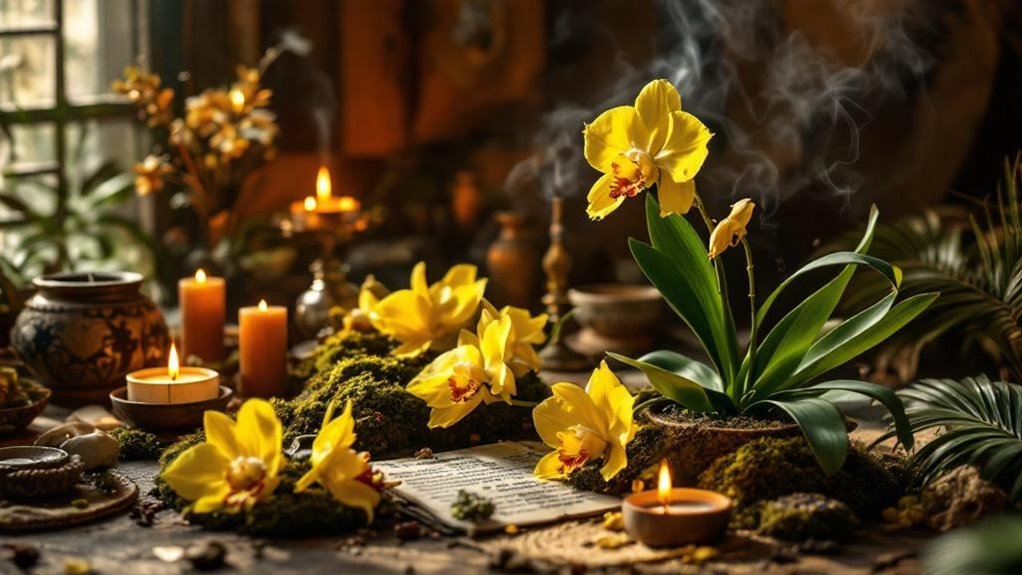
Renewal enters ancestral ritual through yellow and green orchids, whose cultivated colors carry more than ornament; yellow marks friendship, happiness, and new beginnings, while green steadies the ceremony with associations of harmony, good fortune, and the observational truth that life moves in cycles rather than becoming stagnant at the threshold of death.
When you choose yellow orchids, you affirm continuity with gratitude rather than sorrow alone, and you frame remembrance as a practice that strengthens familial bonds across generations.
When you include green orchids, you reinforce balance within the rite, inviting a sacred atmosphere where renewal seems disciplined, not sentimental.
Together, these colors help you honor forebears while acknowledging that remembrance also serves the living, sustaining hope, kinship, and spiritual renewal without breaking the ceremony’s reflective composure and continuity.
Best Orchids for Ancestral Altars
When you select orchids for an ancestral altar, the best choices are usually white, purple, yellow, and green varieties, because each cultivated color supports remembrance in a distinct way while preserving the altar’s observational dignity.
White orchids are often preferred for their purity, grace, and reverence, which suit the quiet act of honoring loved ones, while purple orchids deepen the arrangement with signals of respect, admiration, and an enduring bond to those who’ve passed.
- White orchid species affirm reverence.
- Purple steadies memory and respect.
- Yellow introduces friendship, hope, renewal.
- Green counters stagnant feeling, signifies lineage.
Across ancestral altars, these offerings convey love and remembrance; you choose them not only for appearance, but for the values they declare, the continuity they suggest, and the spiritual atmosphere they sustain.
How to Arrange Orchids for Memorials
Although memorial orchid arrangements should remain visually restrained, you should compose them with clear symbolic intent, placing white orchids at the center for purity, grace, and reverence. Then introduce green orchids where they can lighten the design with signals of renewal and good fortune, so the overall tribute feels cultivated rather than crowded, hopeful rather than stagnant.
Around that structure, add complementary flowers associated with sympathy and remembrance, keeping lines balanced and observational rather than decorative; this lets orchids’ good associations remain primary while surrounding blooms support them as symbols of beauty and quiet honor.
If you want a more personal tribute, weave in purple orchids sparingly to express respect and reflect the departed person’s character. You may also choose a potted orchid, since its continued growth can embody enduring memory without disturbing the arrangement’s disciplined visual harmony.
Remembrance Orchid Gift Etiquette
How you present a remembrance orchid matters as much as the flower itself, because the gift doesn’t function as decoration alone; it signals respect for the deceased, acknowledges the grief of the family, and offers support in a form that feels cultivated rather than intrusive.
- Choose white orchids for funeral settings when you wish to express grace, reverence, and quiet admiration without appearing observational or stagnant.
- Select brighter tones only when the family welcomes remembrance centered on joyful memories rather than solemn reserve.
- Present the orchid with a brief card, because restraint preserves dignity and keeps your gesture focused on solidarity.
- Offer the gift at an appropriate moment, neither before formal rites begin nor during private family exchanges, so your tribute affirms life’s beauty and fragility with composure.
Caring for Memorial Orchids at Home
A memorial orchid asks for only a few steady conditions, yet those conditions matter, because the plant’s continued health turns remembrance into a cultivated household practice rather than a stagnant display. Choose memorial orchids such as white phalaenopsis, then give them four hours of indirect light each day; water only when the top inch feels dry, because excess moisture weakens roots and shortens bloom life.
Keep temperatures between 65°F and 75°F by day, with slightly cooler nights, since that pattern supports stable growth. In dry rooms, increase humidity with a pebble tray or light misting, which improves resilience without saturating the pot.
Maintain observational care by checking leaves and roots for pests or disease, and use natural remedies or suitable treatments when needed; such care preserves the dignity you’re honoring.
Frequently Asked Questions
What Do Orchids Symbolize in Witchcraft?
Orchids symbolize love, fertility, beauty, protection, and transformation in witchcraft. Like a key opening a hidden garden, you use them to attract romance, strengthen personal power, invite wisdom, and shield yourself from negative energies.
Why Do People Give Orchids When Someone Dies?
You give orchids when someone dies because they symbolize enduring love, remembrance, purity, and grace. You can offer comfort through their beauty, while their resilience suggests life’s continuity and honors the lasting presence of the deceased.
Why Put Cinnamon on Orchids?
You put cinnamon on orchids because it fights fungus, helps prevent rot, and can encourage new root growth. You’ll also enjoy its warm scent, and when you use it carefully, your orchids can stay healthier longer.
What Do Orchids Symbolize Spiritually?
Orchids spiritually symbolize love, beauty, strength, renewal, and hope. You can also see them as signs of purity, grace, fertility, and eternal connection, so they often help you express reverence, healing, and heartfelt remembrance.
Conclusion
When you place orchids within remembrance, you do more than decorate a space; you establish a cultivated order against stagnant forgetting, and that quiet act can feel larger than the room, larger than the season, almost larger than time itself. If you choose them with observational care, arrange them with restraint, and tend them steadily at home, you give memory a visible form, and in that form, ancestral presence remains composed, enduring, and unmistakably near.