
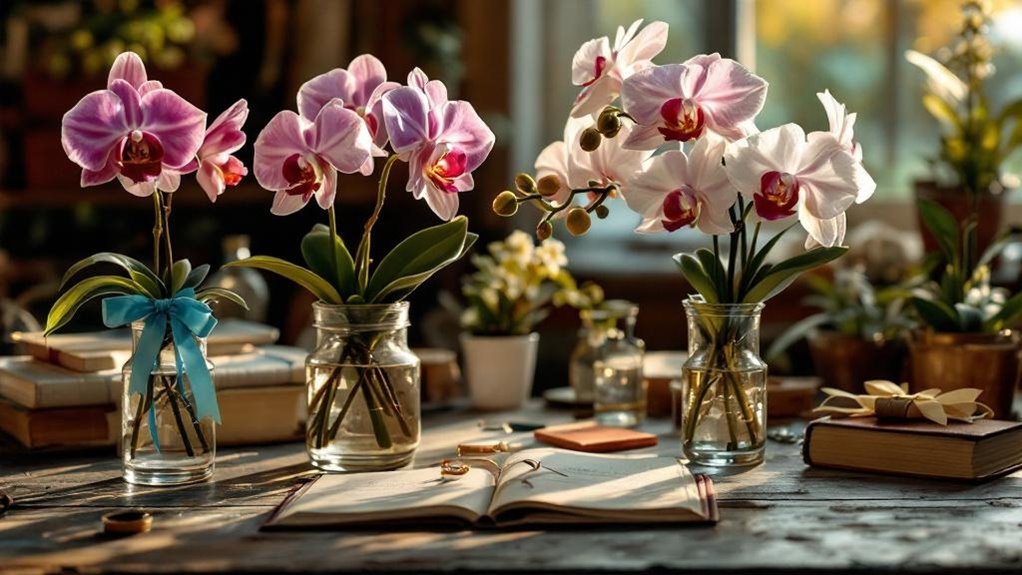
Modern orchid meaning lists are only moderately reliable; you should treat them as observational shorthand, not stagnant fact, because orchid symbolism varies by culture, historical period, flower color, and social occasion. Many modern lists are cultivated from Chinese, Japanese, Greek, Victorian, and recent commercial sources, then blended into simplified claims that often conflict. You can trust broad themes more than exact messages, especially when a list names a specific culture or era; the distinctions become clearer ahead.
- Key Takeaways
- Are Orchid Meanings Universal?
- Why Do Orchid Meanings Conflict?
- Which Orchid Meanings Are Credible?
- How Do China and Japan Shape Orchid Symbolism?
- How Did Ancient Greece Influence Orchid Meaning?
- Why Does Victorian Orchid Symbolism Still Matter?
- Which Orchid Colours Have Shared Meanings?
- How Reliable Are White and Purple Orchids?
- How Reliable Are Pink, Yellow, and Red Orchids?
- What Do Blue and Green Orchids Really Mean?
- How Should You Use Orchid Meaning Lists?
- Frequently Asked Questions
- Conclusion
Key Takeaways
- Modern orchid meaning lists are moderately reliable at best and work as flexible shorthand, not fixed symbolic truths.
- Meanings vary by culture, historical period, flower color, species, region, and gifting occasion, so consistency is limited.
- Many lists mix Chinese, Japanese, Greek, Victorian, and retail traditions into simplified claims that can conflict or lose context.
- More credible meanings come from primary texts, museum archives, botanical records, and long-standing cultural use rather than uncited color charts.
- Use orchid meaning lists cautiously: confirm local associations, cross-check reputable sources, and prioritize recipient preference and context.
Are Orchid Meanings Universal?

Although orchid meaning lists often appear definitive, they aren’t universal; the symbolic value of an orchid depends on the culture, period, color, and occasion shaping the interpretation. When you examine orchid symbolism across various cultures, you find a cultivated, observational pattern rather than a stagnant rule: in China, orchids can suggest refinement and friendship, while Ancient Greeks linked them with fertility, and Aztec traditions connected them with strength.
You also need to weigh orchid color carefully, because color symbolism shifts by region and custom; white may imply purity in many Western settings, yet elsewhere it can accompany funerary associations, while purple often conveys royalty or respect. If you treat modern meaning lists as flexible summaries instead of fixed truths, you’ll interpret orchids with greater precision, cultural awareness, and better judgment overall. Confucian thought also helped shape orchid symbolism in China, where the flower was linked to virtuous cultivation and moral character.
Why Do Orchid Meanings Conflict?
You see orchid meanings conflict because symbolism isn’t stagnant; it shifts with cultural context, so a white orchid may suggest purity in one tradition and mourning in another, and those differences are cultivated over time rather than resolved into one universal rule.
You also encounter contradiction when historical eras and local customs emphasize different traits, while color charts flatten distinct species and regional associations into broad labels that don’t hold up under observational scrutiny.
When marketers standardize meanings for gifts and sales, you get simplified claims that can overshadow older ritual, linguistic, and ethnobotanical traditions, which is why competing lists often sound certain while remaining inconsistent.
Orchid meanings also diverge because Victorian orchid lore tied rare blooms to power, status, and exclusive ownership, while other cultures emphasized virtue, fertility, or good fortune instead.
Cultural Context Shifts
Because orchid symbolism has been cultivated across distinct cultures and historical periods, meaning lists often conflict; they merge Ancient Greek associations with fertility, Confucian ideals of refinement, and Victorian signals of luxury into a single stagnant entry, even though those meanings arose from different social values and weren’t meant to function as universal equivalents.
When you compare Ancient Greece, Confucian China, and Victorian England, you can see how cultural context shifts reshape interpretation rather than preserve one fixed essence.
You also need to treat color carefully; white may suggest purity in many Western settings, yet it can signal mourning elsewhere, so identical flowers accumulate divergent readings.
If you want a more reliable observational meaning, you should ask which culture, period, and practice produced it, and whether the claim is symbolic, medicinal, or later commercial.
In China, The Four Gentlemen place orchids alongside plum blossom, bamboo, and chrysanthemum as classical symbols of refinement and moral character.
Marketing Vs Tradition
When orchid meaning lists conflict, the tension usually comes from a quiet merger of tradition and marketing; modern guides often pull Ancient Greek fertility symbolism, Confucian ideals of refinement, and Victorian luxury codes into one stagnant catalog, then add color labels such as white for purity, purple for royalty, or yellow for friendship to match current gift-buying habits rather than documented historical use.
| Source | Image | Effect |
|---|---|---|
| Greece | fertile roots | inherited symbolism |
| China | cultivated fragrance | refinement |
| Retail | polished bouquet | sales appeal |
You can see how orchids are often associated with whatever a seller needs to emphasize; Victorian “orchidelirium” reinforced status, while color meanings flatten cultural variation, so you should check primary sources before trusting observational, market-shaped lists. The rise of orchidelirium shows how quickly orchid symbolism could be reshaped by wealth, rarity, and display.
Which Orchid Meanings Are Credible?
You can treat orchid meanings as credible when they rest on historical sources, because meanings linked to cultivated cultural traditions—such as refinement in China or luxury in Victorian England—have observational support in texts rather than stagnant repetition in modern lists.
You should also expect culture to shape meaning, since many claims reflect local customs and regional lore, not universal botanical truths, and their reliability depends on whether you can place them within a specific social context.
You can be more cautious with color claims, because while associations like white with purity or purple with royalty are familiar, they usually arise from cultural convention and later interpretation rather than consistent historical evidence.
A strong example is the Victorian orchid tradition, where rarity, transport difficulty, and elite collecting helped turn orchids into reliable signs of status and admiration.
Historical Sources Matter
Although orchid meaning lists often look settled and universal, the credible ones usually come from identifiable historical records rather than stagnant repetition, and that distinction matters if you want symbolism that reflects cultivated cultural use instead of modern retail convention.
You should test claims against historical sources, including Confucian texts, Ancient Greek references to fertility, and Victorian-era horticultural records that document orchids’ social uses rather than merely repeat decorative sentiment.
You can also rely on ethnobotanical studies, museum archives, botanical catalogs, and primary horticultural literature, because they connect symbolism to observable use, as with Dendrobium in traditional Chinese medicine and documented Aztec orchid applications for strength support.
When a list offers color codes without citations, you should treat it as provisional, then verify it through primary texts, scholarly translations, and archival evidence.
In Confucian tradition, orchid symbolism became credible through repeated literary and artistic use that linked the flower to modesty, restraint, and cultivated character.
Culture Shapes Meaning
Because orchid symbolism develops inside particular social and historical settings, the most credible meaning lists don’t treat the flower as if it carried one stagnant message everywhere; they distinguish cultivated regional traditions from generalized modern summaries, and that distinction changes what you can responsibly claim. You should weigh cultural interpretations against regional histories and historical sources; Confucian China links orchids with refinement and friendship, while Ancient Greece tied them to fertility, and mythic claims deserve only anecdotal status.
| Tradition | Credibility cue |
|---|---|
| China | refinement, friendship |
| Greece | fertility, mythic anecdotes |
| Victorian Europe | luxury, status |
You can trust color-based meanings more when they recur across documented traditions and observational records, yet you should remain cautious with novel claims that appear detached from provenance, consensus, or long-standing usage altogether. In Chinese literati culture, Four Gentlemen framing gives orchid meanings extra credibility because it ties them to long-standing ideas of virtue, humility, and disciplined character rather than to modern decoration.
Color Claims Vary
Often, orchid color meanings deserve more caution than flower guides suggest, since associations such as white with purity, purple with royalty, or yellow with friendship arise from cultivated social convention rather than any botanical fact, and their credibility changes with the culture, period, and source behind the claim.
- You’ll find white orchids linked to weddings and purity; that reading appears often, yet it remains observational rather than universal.
- Purple orchids more consistently suggest respect or luxury, because Victorian taste and courtly traditions reinforced that cultivated association.
- Yellow orchids may imply friendship, but that claim shifts across regions; it’s less stable than stagnant lists imply.
- For orchid colors, trust meanings grounded in Chinese, Japanese, or Victorian usage more than florist marketing; check your recipient’s context first.
How Do China and Japan Shape Orchid Symbolism?
When you compare China and Japan, orchid symbolism takes shape through two cultivated but distinct traditions; in China, orchids such as Cymbidium came to signify virtue, refined friendship, and scholarly integrity because Confucius linked their fragrance to the character of noble people, and that association gave the flower a durable moral and literary force, while in Japan, appreciation centered more visibly on purity, elegance, and status, especially through Neofinetia falcata, the so-called Samurai orchid, which samurai and nobility prized as an emblem of bravery, peace, and elite standing.
As you assess meaning lists, you should note that white, purple, and yellow shift by context; medicinal Dendrobium, elite cultivation, gifting customs, and observational taste tied orchids to health, longevity, status, and seasonal refinement, so any stagnant, universal definition remains unreliable.
How Did Ancient Greece Influence Orchid Meaning?
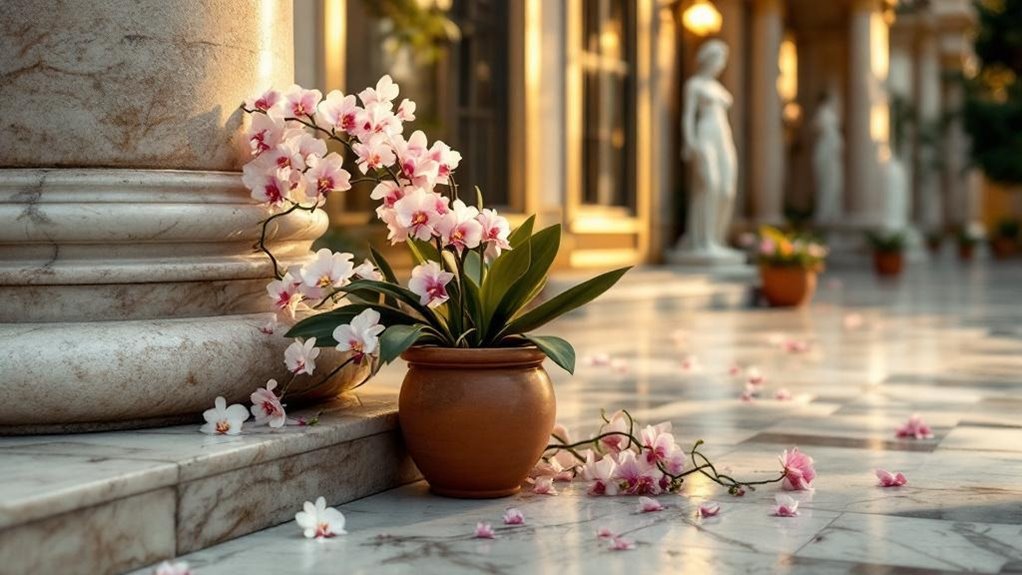
When you trace orchid meaning back to Ancient Greece, you find that fertility and virility stand at the center, because Greek writers connected the plant’s tubers to human reproduction and treated those observational claims as more than stagnant folklore.
You also encounter the cultivated belief that tuber size could shape an unborn child’s sex, with larger, rounded tubers linked to male offspring and smaller ones to female offspring, a notion reinforced by Theophrastus and later classical texts.
As you assess modern meaning lists, you can see how these Greek ideas endured, merged with later traditions, and helped fix orchids within a lasting symbolic framework of potency, lineage, and sexual power.
Fertility And Virility
- You see orchids tied to fertility through etymology, shape, and longstanding folklore.
- You find Orchisnamed from paired orchid tubers, not stagnant abstract symbolism.
- You encounter classical and herbal texts claiming medicinal, aphrodisiac value.
- You should treat these meanings as cultural inheritances, not scientific fact.
When modern lists call orchids symbols of virility, you’re seeing Greek myth endure, reinforced by herbal tradition across centuries; no evidence shows orchids alter human fertility, despite the old symbolic weight.
Tuber Gender Beliefs
Greek influence becomes even clearer in the old tuber-gender beliefs, because classical writers didn’t stop at treating orchids as signs of fertility and virility; they also used the paired, testicle-like tubers of *Orchis* to make specific claims about reproduction, arguing in observational but deeply analogical terms that larger tubers favored male children and smaller ones female.
When you trace this idea through Dioscorides and later herbals, you see how orchis, named for the testicle-shaped root, encouraged a tuber-gender doctrine grounded in humoral logic rather than botanical evidence.
The belief remained cultivated across medieval and early modern Europe, yet its authority was stagnant, repeated more than tested. So when modern meaning lists present it as established symbolism, you should read it as historical metaphor, not reliable or universal meaning today.
Legacy In Symbolism
- Dioscorides records tubers as remedies linked to health and generation.
- Large and small tubers supported beliefs about male or female offspring.
- Later Europe inherited these meanings, then refined them into luxury and rarity.
- Modern color symbolism stayed largely separate; Greek symbolism wasn’t color-coded.
Why Does Victorian Orchid Symbolism Still Matter?
Although orchid meanings seem timeless, Victorian symbolism still matters because it shaped the version of the flower that most people inherit today; during the mid-19th century craze often called orchidelirium, wealthy collectors turned rare orchids into cultivated markers of luxury, refinement, and access, and that observational link between ownership and status spread through literature, art, and horticultural catalogues rather than remaining stagnant inside elite conservatories.
When you read modern orchid meaning lists, you still encounter Victorian “orchidelirium” in softened form, because sellers, florists, and gift guides preserve associations with status, exclusivity, luxury, and refined taste to position orchids as elevated purchases.
You should recognize that inheritance, but you shouldn’t treat it as complete truth, since it reflects class bias, commerce, and selective circulation rather than the flower’s only cultural past or present.
Which Orchid Colours Have Shared Meanings?
Across modern orchid meaning lists, certain colour associations recur with enough consistency that you can treat them as shared conventions rather than stagnant one-off claims; white orchids usually indicate purity, innocence, and new beginnings, which helps explain their steady use in weddings and funerals, while pink orchids point to femininity, grace, joy, and admiration, making them a cultivated choice for anniversaries and baby-related gifts.
White orchids mark pure beginnings and solemn milestones, while pink orchids offer graceful admiration suited to tender celebrations.
- white orchids suggest rites of passage, solemnity, and clean beginnings.
- pink orchids convey affectionate regard, gentle celebration, and cultivated admiration.
- purple orchids signal royalty, dignity, respect, and observational prestige.
- yellow orchids express friendship, happiness, good luck, and fresh starts.
You can also observe recurring support for blue as rarity and uniqueness, and for green as renewal and harmony, which broadens, rather than unsettles, the overall pattern today.
How Reliable Are White and Purple Orchids?

While white and purple orchids do carry some of the most stable meanings in modern flower symbolism, their reliability is only moderate rather than absolute, because repeated listings in floriculture guides, retailer descriptions, and historical summaries do show a durable pattern, yet that pattern still depends on region, occasion, and the source’s method of interpretation.
| Color | Common meaning | Reliability note |
|---|---|---|
| white orchids | purity, innocence | shifts across cultural contexts |
| purple orchids | royalty, dignity | cultivated convention, not botanical fact |
You should treat these meanings as observational, not stagnant; white orchids often suggest new beginnings, yet funerary uses in parts of Asia complicate certainty, while purple orchids consistently imply admiration and nobility, though marketing often repeats inherited claims without provenance. If accuracy matters, you should favor scholarly, historical, or ethnobotanical sources.
How Reliable Are Pink, Yellow, and Red Orchids?
Consistency is limited here, because pink, yellow, and red orchid meanings circulate as observational conventions rather than fixed standards, and you can trace their relative stability to repetition in florist guides, gift-language summaries, and retailer copy rather than to any botanical or historical authority that would make them stagnant.
- pink orchids usually signal grace, femininity, joy, or gratitude.
- yellow orchids often suggest friendship, happiness, and new beginnings.
- red orchids commonly imply desire, passion, strength, or respect.
- color-meaning lists work best when your audience already recognizes them.
You should treat these associations as cultivated social habits, not empirical facts; if you give pink orchids, yellow orchids, or red orchids, you communicate through familiar patterns, yet those patterns still shift across regions, subcultures, and personal experience.
For clearer intent, match color with a direct message.
What Do Blue and Green Orchids Really Mean?
Blue and green orchids follow the same general pattern as pink, yellow, and red ones, yet their meanings depend even more clearly on observational habit, botanical rarity, and retail framing than on any stagnant symbolic code.
If you encounter True blue orchids, you should read them chiefly as rare flowers linked to tranquility, spiritual calm, and cultivated uniqueness, since long historical symbolism remains thin and context changes across cultures.
By contrast, green orchids appear naturally in several genera, so you can more plausibly connect them with renewal, balance, health, serenity, and good fortune, all associations grounded in visible growth and harmony.
Store-bought blue blooms, however, are often dyed rather than botanically authentic, which means you’re usually responding to aesthetic novelty, not rarity itself; in both cases, meaning stays flexible, modern, and culturally informed.
How Should You Use Orchid Meaning Lists?

Because orchid meaning lists compress a wide range of historical, cultural, and retail interpretations into tidy categories, you should use them as flexible guides rather than stagnant rules; a white orchid may suggest purity in one setting and mourning in another, and a purple one may carry cultivated associations with royalty, luxury, or simply preference, depending on region, era, and audience.
Orchid color meanings are useful guides, but context, culture, and audience determine what any bloom actually communicates.
- confirm local or recipient-specific associations before gifting
- cross-check color symbolism with reputable horticultural and cultural sources
- choose Phalaenopsis (moth orchids) when durability matters
- note whether meanings are historical versus contemporary
In practice, you should prioritize the recipient’s taste, care realities, and context, especially for weddings, funerals, and corporate gifts; this observational approach reduces avoidable mistakes, and it keeps symbolism secondary to appropriateness.
Frequently Asked Questions
What Is the Deeper Meaning of Orchids?
Orchids symbolize refined beauty, love, resilience, and rare devotion; you can also read them as signs of luxury and enduring connection. Their deeper meaning shifts with culture, color, and your intention, so you give them personal significance.
What’s the Biggest Mistake When Repotting Orchids?
About 70% of orchid repotting failures start with damaged roots: your biggest mistake is disturbing healthy roots, especially aerial ones. Repot just after flowering, use loose orchid mix, and don’t cram roots into oversized pots.
Why Put Cinnamon on Orchids?
You put cinnamon on orchids because it can suppress fungi and bacteria on cuts, wounds, and exposed roots. You should use only a light dusting, since too much can harm roots, change media, and trap moisture.
What Is the Rarest Orchid Color?
Rarest is true blue; you can picture it as chasing a twilight jewel through a glass jungle. You’ll also find near-black orchids among the scarcest, while true red trails behind, and green appears far more often.
Conclusion
You can treat modern orchid meaning lists as cultivated guides, not laws, because symbolism shifts across places, periods, and markets, and the flower itself has been asked, rather ironically, to stay perfectly consistent while people keep revising the script. If you want a meaning that won’t turn stagnant, start with culture, color, and context together; then use the list as a reference, not a verdict, and your reading will stay observational, credible, and usefully modest.